-
-
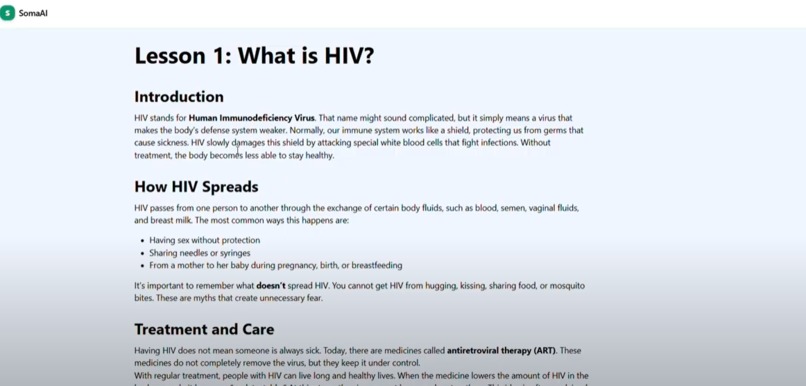
Lessons
-
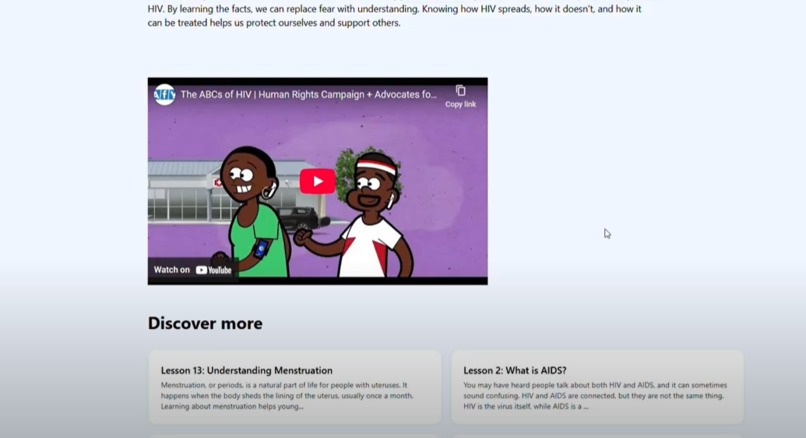
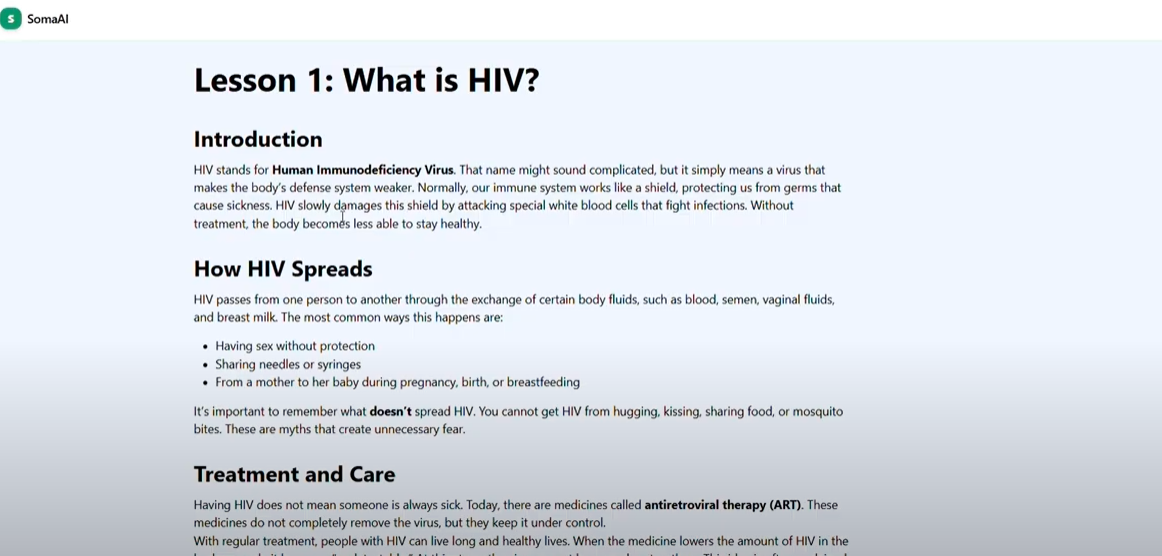
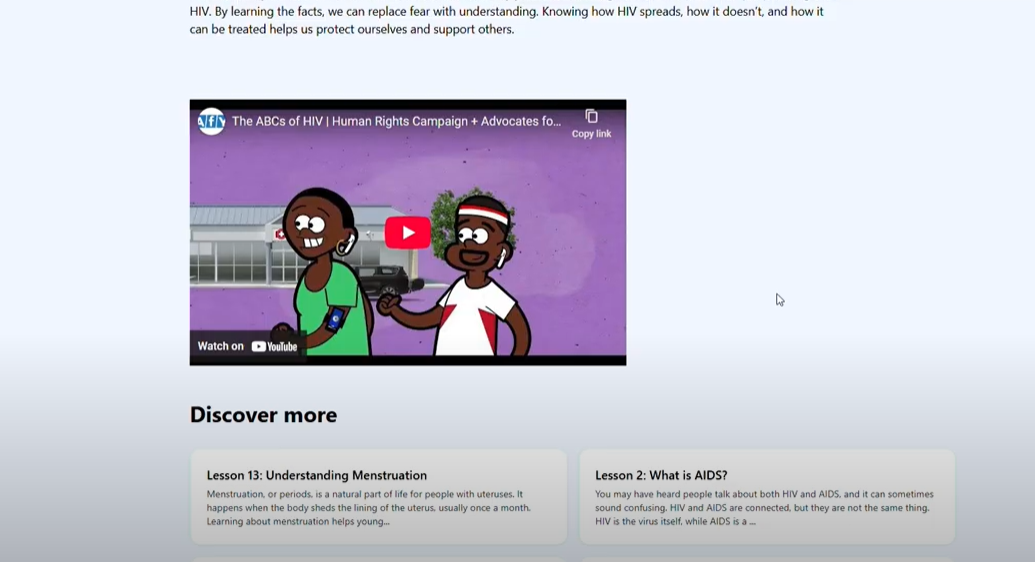
Showing Youtube Video Link
-
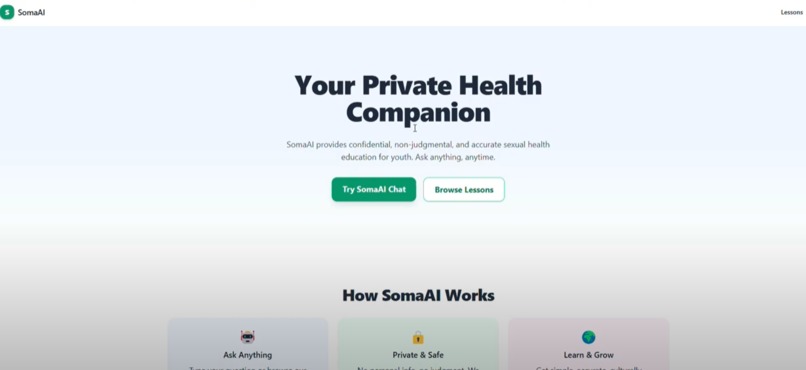
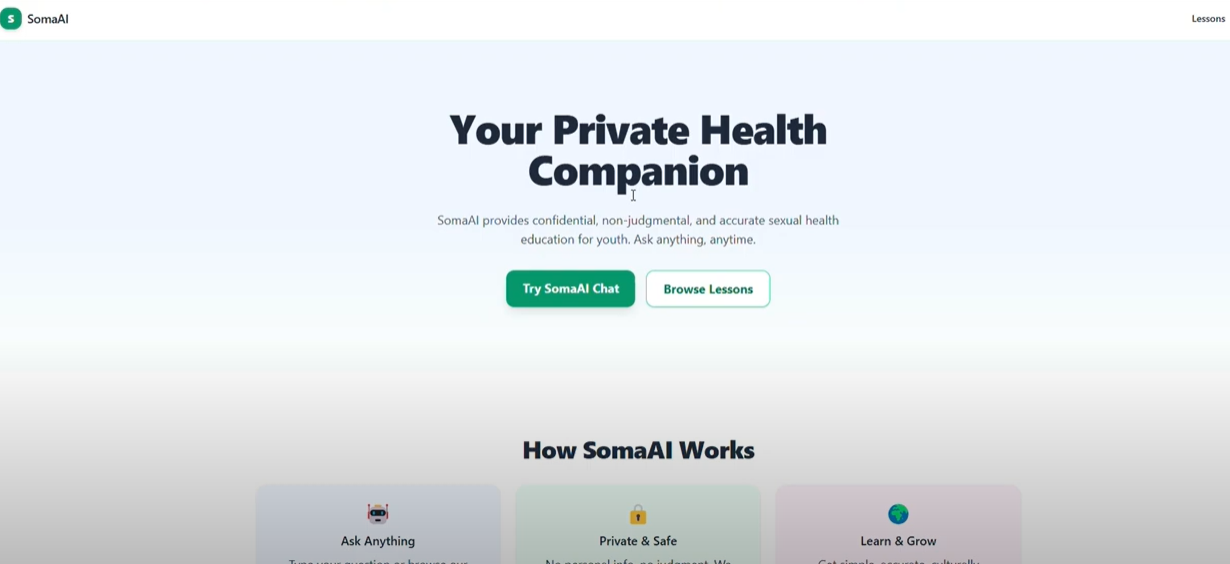
Landing Page
-
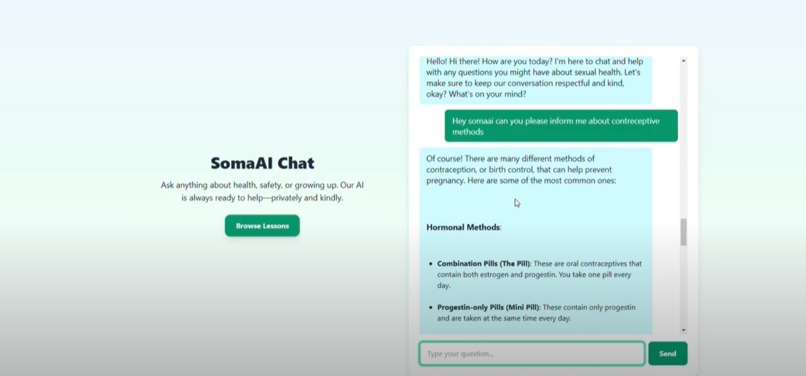
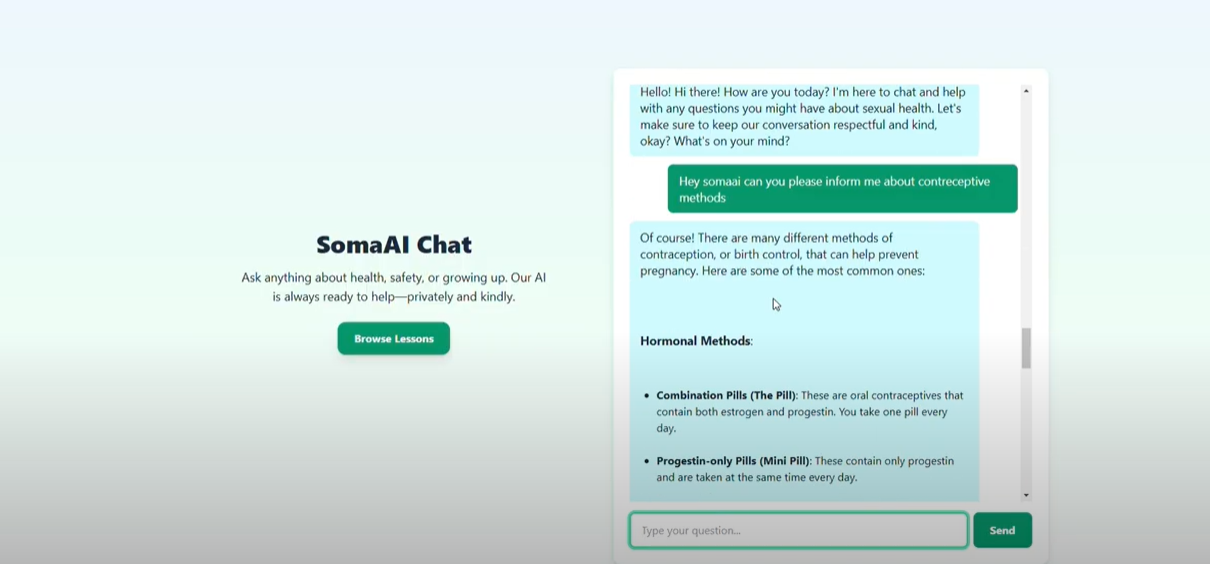
Talking to AI
-
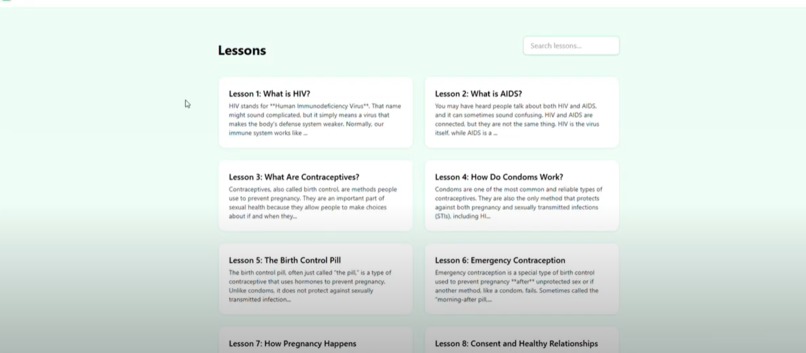
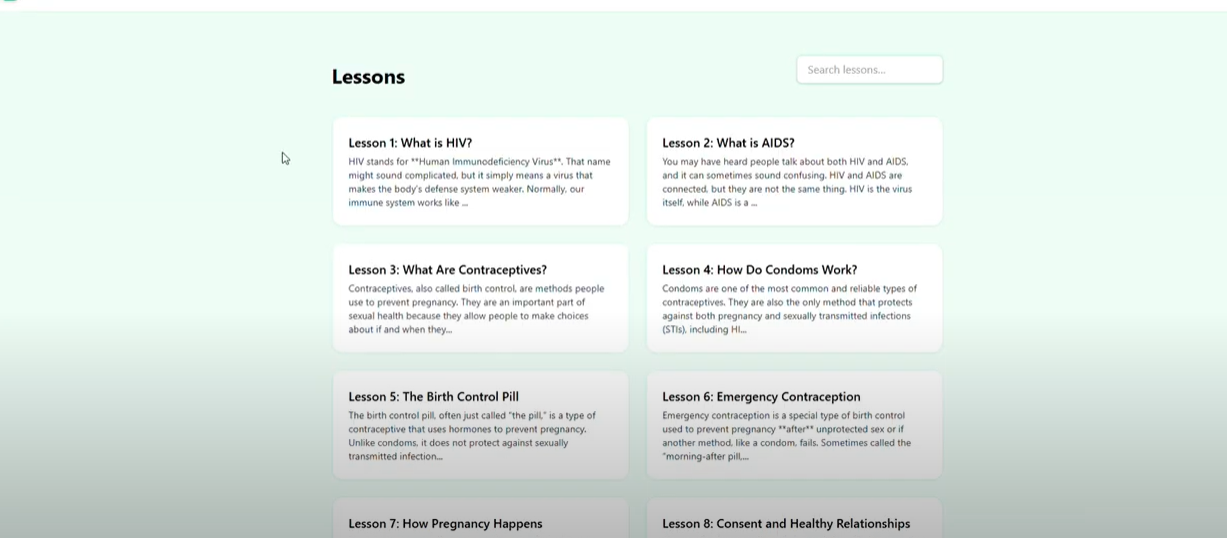
List of Lessons
Inspiration
In Sub-Saharan Africa, 1 in 5 girls aged 15-19 becomes pregnant, and HIV is still a leading cause of death among youth. Many young people cannot turn to parents, teachers, or community leaders due to stigma.
Being from India, access to knowledge about sexual health is typically inaccessible, and is often looked down upon. This lack of knowledge results in teen pregnancies, as young people are often unaware of what they are doing. We wanted to create a safe space where
After realizing this issue existed, we asked ourselves: "What if every young person had a safe, private space to ask questions about their health - anytime, anywhere?" This is why we decided to create SomaAI
What it does
SomaAI is an AI-powered sexual health education platform designed for youth in low-resource settings. It's features include a(n):
- Anonymous AI Chat - Youth can ask sensitive questions privately, without any worry of being judged for their curiosity.
- Lesson Page - Youth can learn about their bodies and how to have healthy relationships. The information is from trusted sources like the WHO and UNFPA guidelines to ensure accuracy.
- Youth-Friendly Design - Mobile-first web app with simple navigation
- Multi-language support - Available in English, Swahili, French, Hindi and Portuguese. We are currently adding more languages.
How we built it
We started by conducting extensive research to combat this issue. We wanted to figure out and narrow down the specific areas where intervention is needed the most.
For the backend, we built a Flask application in Python, organized around Blueprints so each feature could live in its own route. We used OpenRouter to connect to multiple large language models, primarily Mistral Nemo and Llama 3.3, and added a routing layer that decides which model to use depending on the user’s intent and safety context. All inputs are screened by a custom safety and intent layer that detects sensitive cases like consent or emergencies and adjusts responses accordingly. To keep everything quick, we stored user sessions in memory using a session manager instead of a firebase database, while still tracking preferences like language, reading level, and conversation history. We also added hooks to adapt responses to different reading levels, inline glossary definitions, and stubs for YouTube lessons that can later be swapped with the real API. Configuration is handled through environment variables, including API keys, language options, and feature flags. Finally, we built telemetry and admin routes to monitor usage, giving us live insight into the number of sessions, languages, and intents.
Challenges we ran into
One of our biggest challenges was cultural sensitivity, as when creating the lessons, it was quite challenging to find the right balance between scientific accuracy and language that feels approachable in different contexts. We also had to try hard to train the models and address their reliability of large language models, which can generate inaccurate or unsafe responses. We also found it quite challenging to manage latency with the two different models, and also ensuring that they both were accurate and non-judgemental. We also faced quite a bit of challenges with committing to GitHub, whether that be through the file structure being messed up or trouble committing itself.
Accomplishments that we're proud of
We are proud that this week, we were able to create a working MVP that feels safe, approachable, and practical for our users. Our dual-model setup shows a balance between speed, multilingual reach and deep reasoning. The addition of Firebase allowed us to create a smoother backend with authentication and real-time features. However, the result that we are most proud of is the platform, which has the potential to truly help young people with questions they may have no other way of asking.
What we learned
This project taught us that for health education tools, privacy and empathy are just as important as accuracy. We learned how to use multiple AI models effectively, using each model’s strengths and learning its weaknesses. We also saw firsthand how pre-curated content dramatically improves both safety and user trust. On the technical side, we gained experience in building lightweight, mobile-friendly apps that can handle multilingual content, work with Firebase, and remain usable even under low-bandwidth conditions.
What's next for SomaAI - An AI-powered health education platform
We plan to add a true offline mode so that the app is truly accessibly anywhere and everywhere, and we would like to turn SomaAI into a progressive web app that caches key FAQs and recent conversations. We would also like to make it more engaging through gamified quizzes and interactive features. Partnering with NGOs and schools will allow us to expand our reach and continue localizing the tool for different communities. We also would like to expand beyond sexual health, and also focus on areas in mental health.


Log in or sign up for Devpost to join the conversation.