-
-
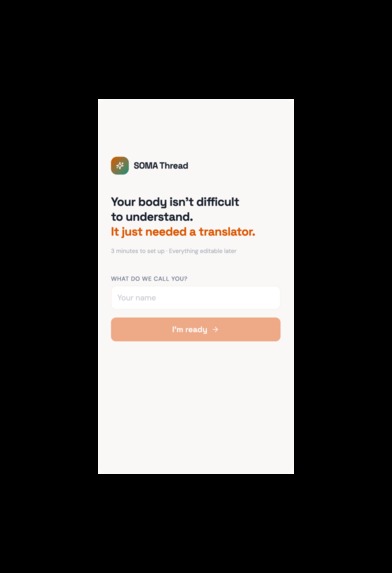
Splash Screen
-
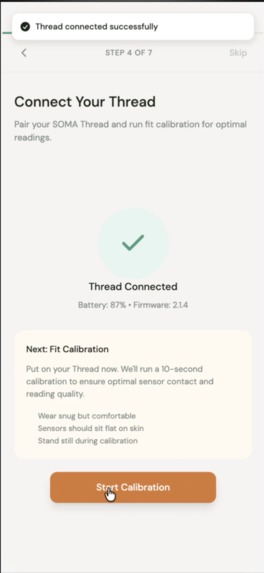
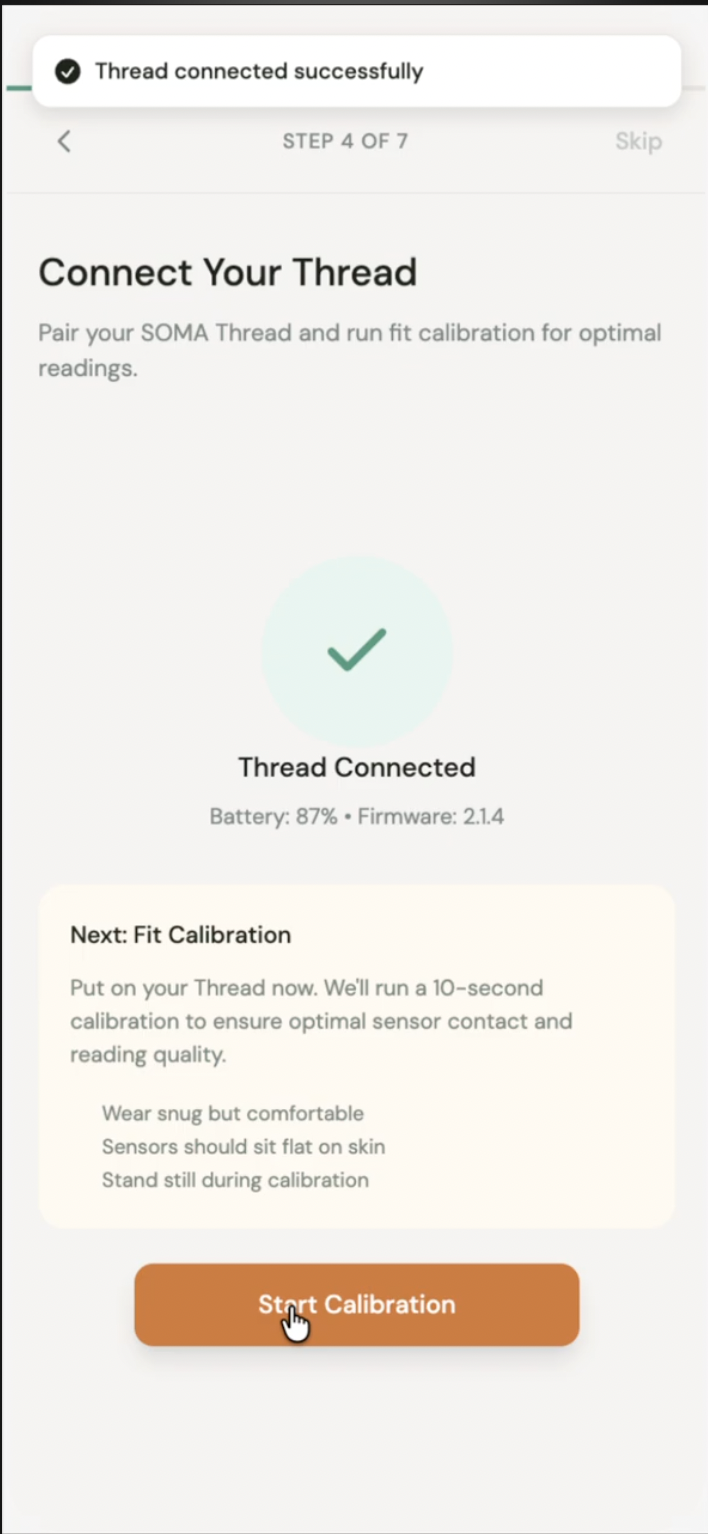
App connecting with SOMA Thread
-
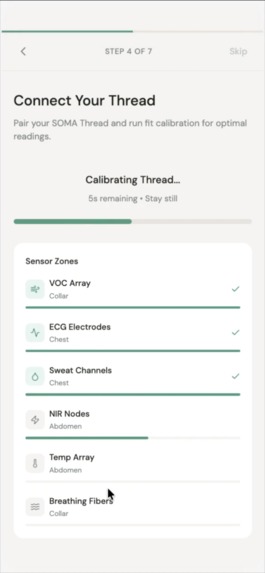
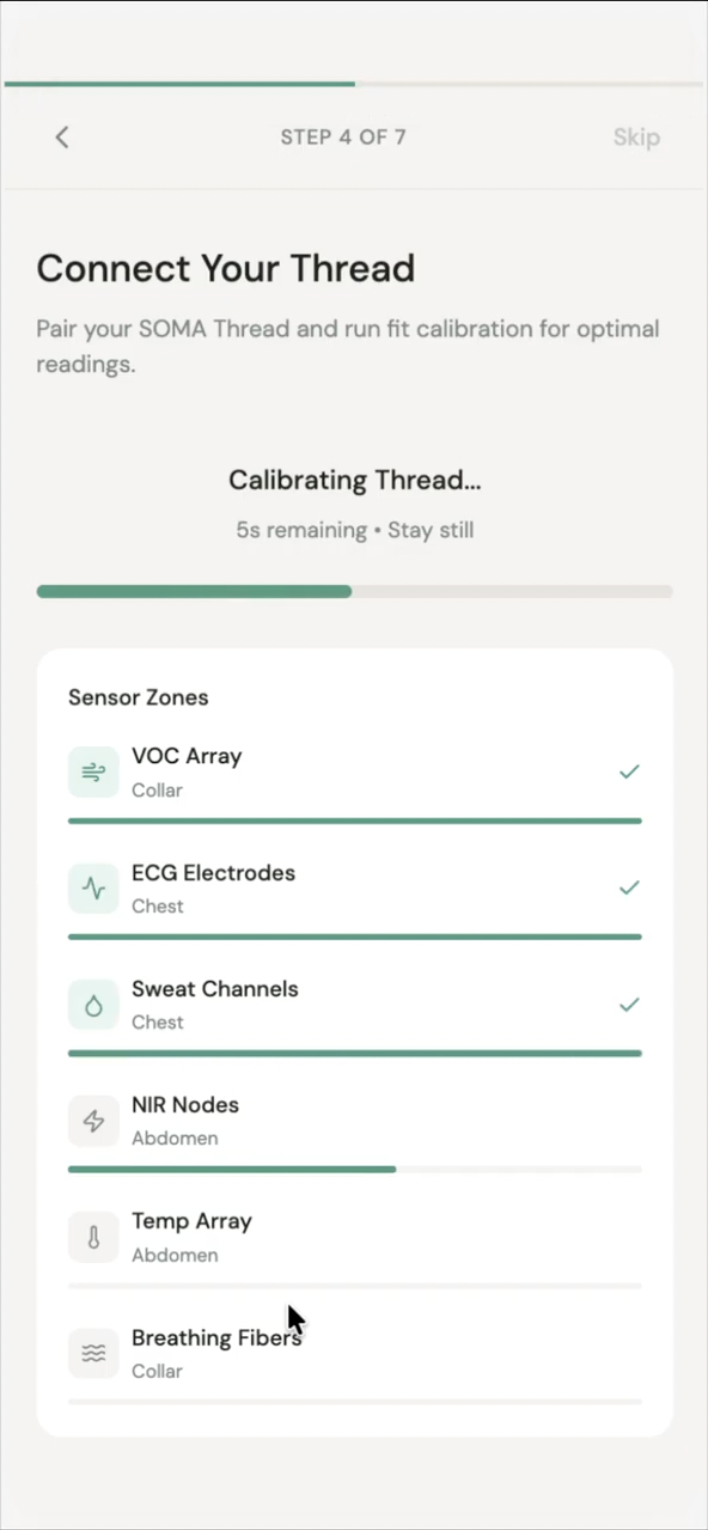
Fit Caliberation
-
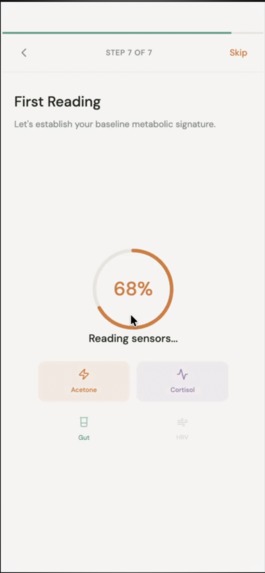
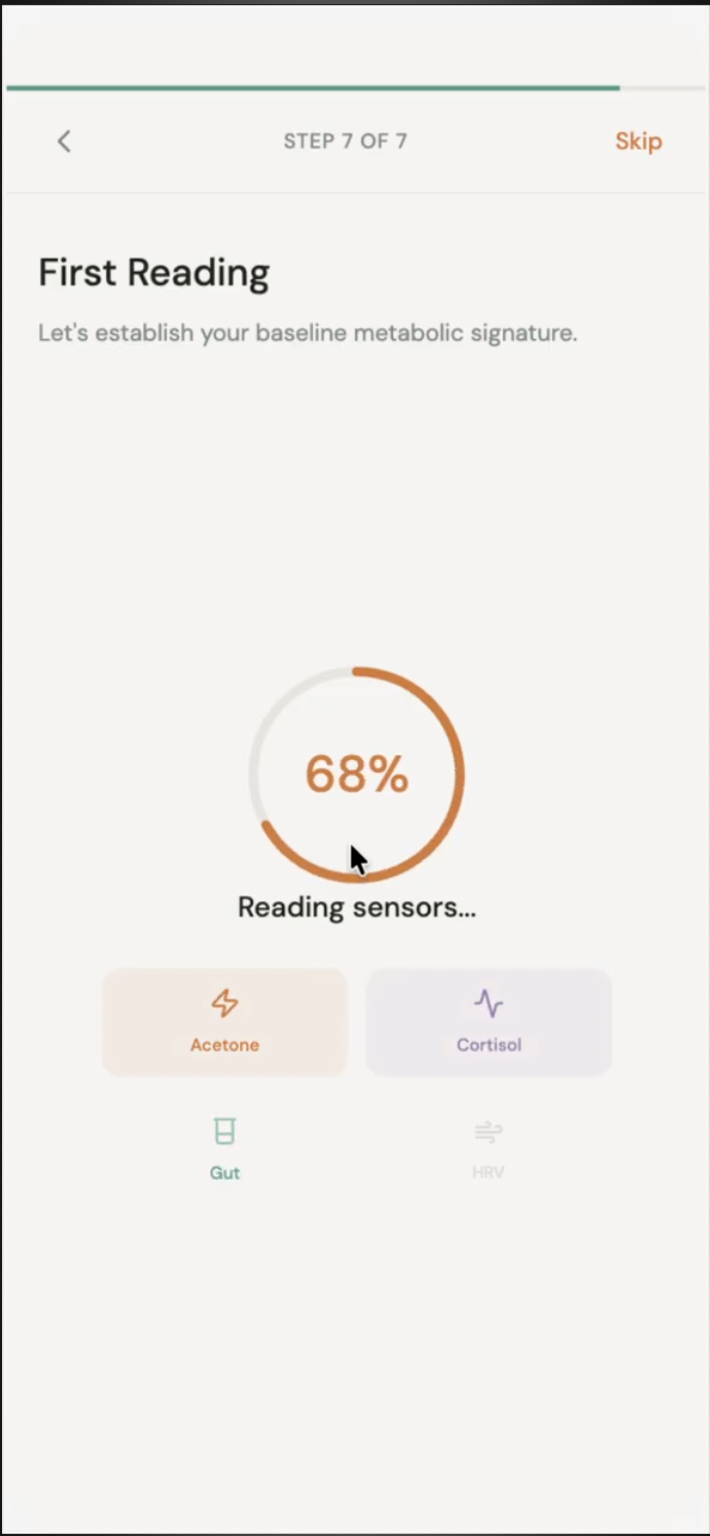
Body scan
-
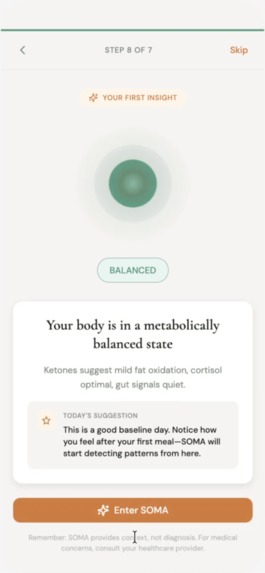
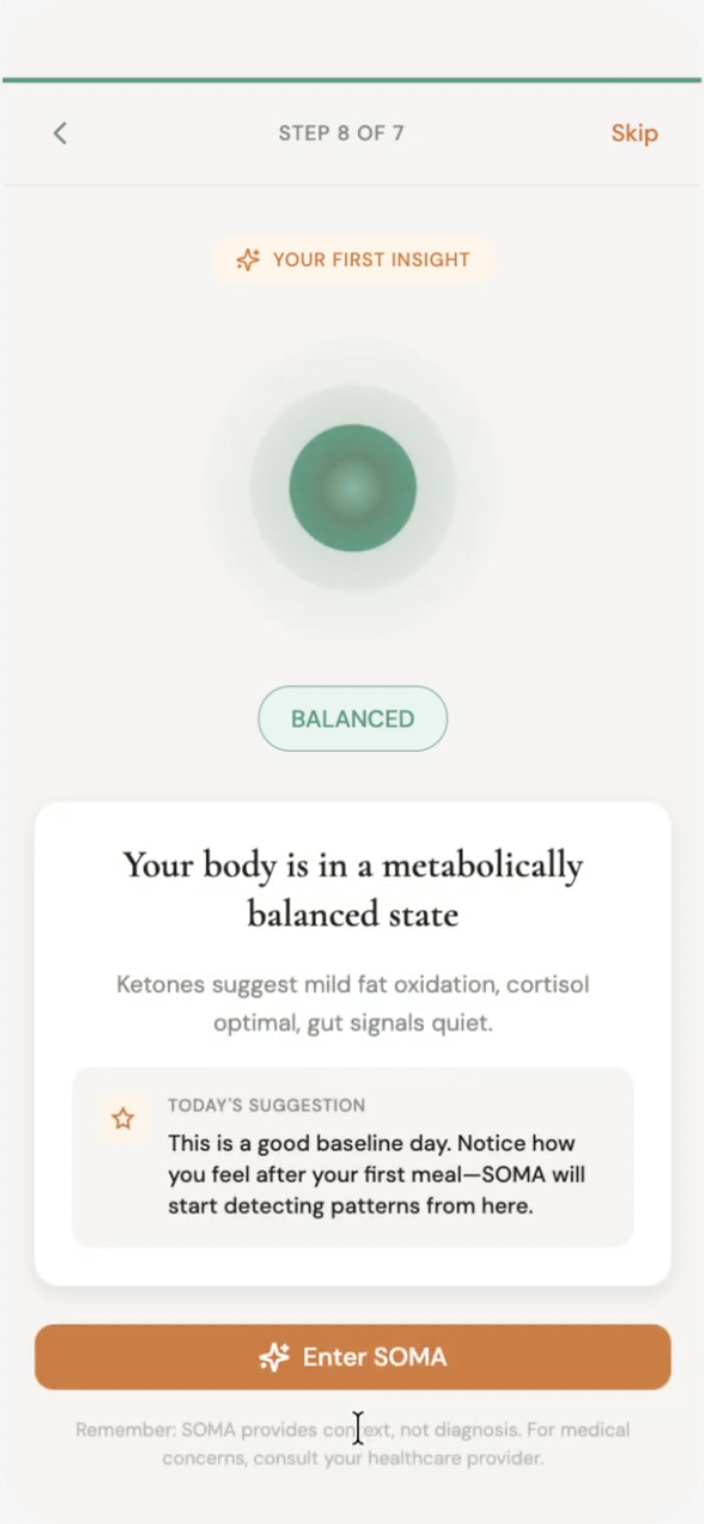
Metabolic scan result
-
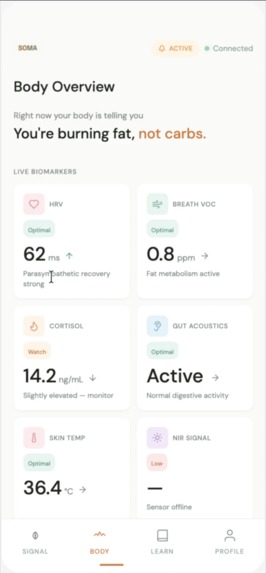
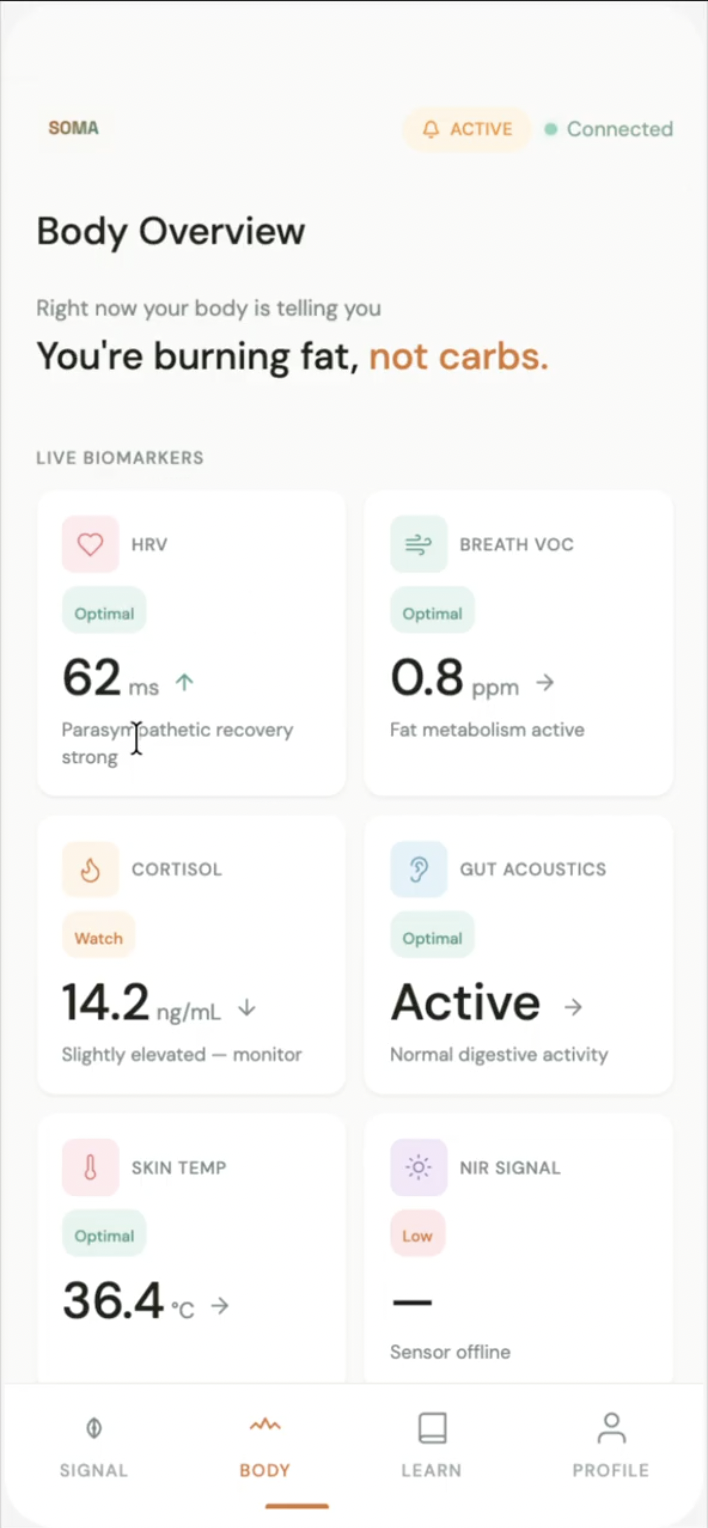
Body Status Overview
-
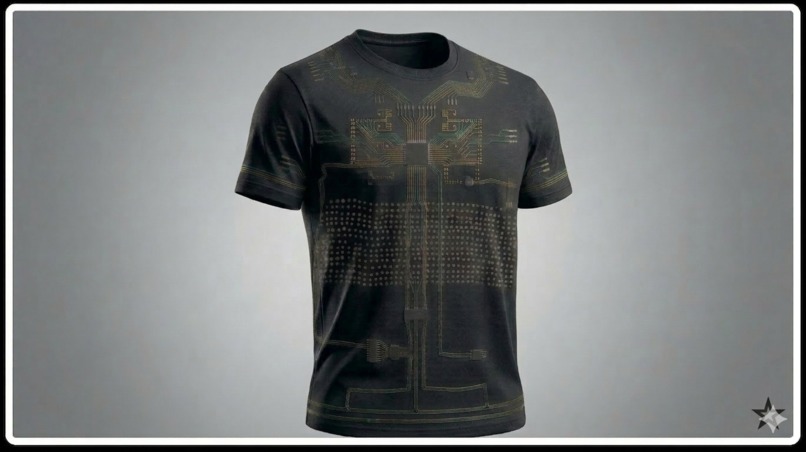
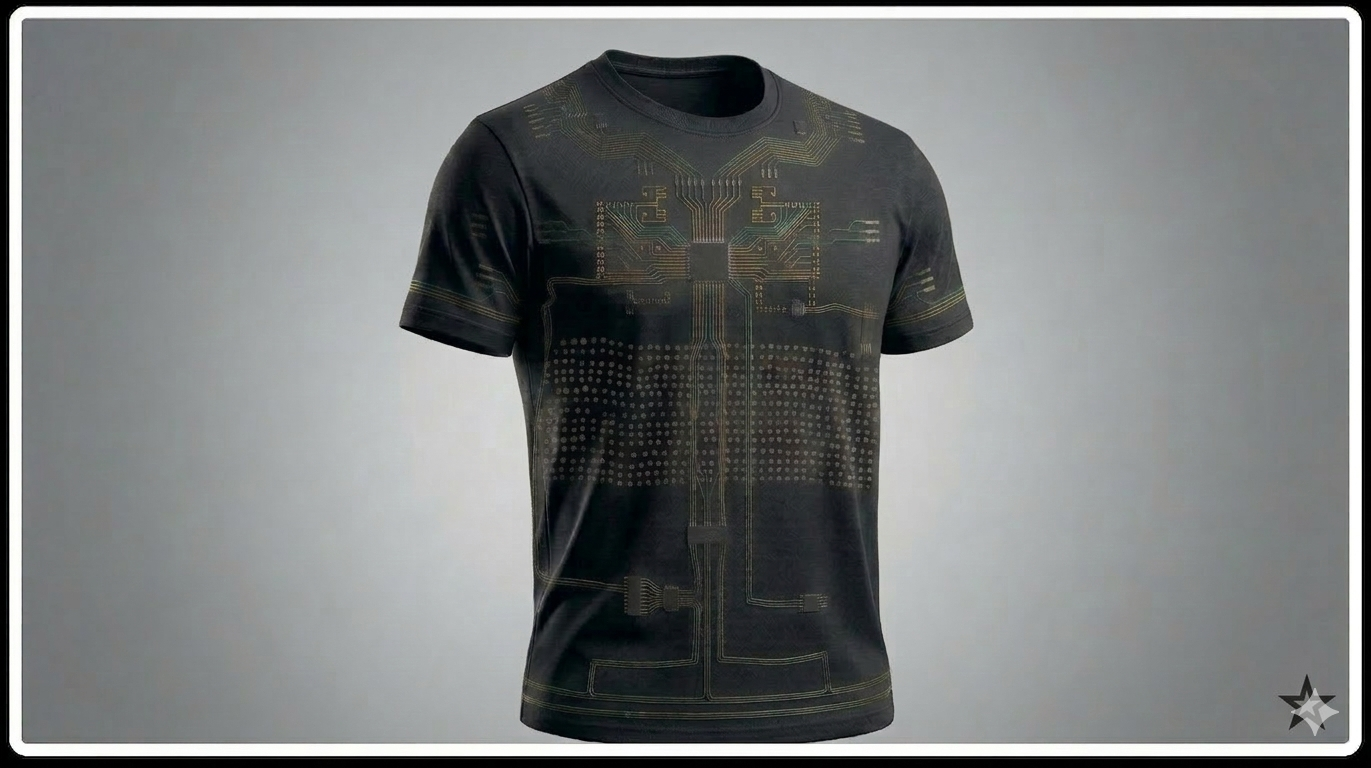
SOMA Thread apparel with sensors
Inspiration
We started with a simple observation: people don't actually know what their body needs to eat at any given moment. Not really.
You know what you crave. You know what your meal plan says. You know what the nutrition label shows. But none of that tells you what your body's chemistry is doing right now — whether you're actually depleted in something, whether that 3pm hunger is real or just stress, whether your gut is inflamed before you feel it.
We looked into whether the body generates signals about this. It does. Measurably. Your breath chemistry changes based on what your metabolism is lacking. Your sweat carries cortisol before you consciously feel stressed. Your gut makes sounds that correspond to hunger and digestive state. These signals exist — they just never reach you in a form you can act on.
We got more specific about who this problem actually hurts. Women with PCOS whose metabolism shifts with their cycle, making the same meal affect them completely differently week to week. People with Crohn's disease who face serious nutritional deficiencies that are invisible until they become dangerous. Athletes who currently manage metabolic precision through guesswork and fixed meal plans.
For all of them, the information gap has real consequences. That's what we decided to design for.
What it does
SOMA is a smart garment and app that reads metabolic signals your body already produces — and tells you what they mean before you eat.
The hardware is a fitted base layer tee with sensors woven into the fabric. It reads five things continuously and passively, just from being worn:
Breath chemistry from the collar area — VOC sensors pick up compounds in exhaled air that shift based on metabolic state. Fat burning, gut fermentation activity, inflammatory load — all leave chemical traces in breath.
Sweat composition from a small analysis node clipped to the side seam — reads cortisol, electrolytes, and lactate from sweat routed through microfluidic channels in the fabric.
Heart rate variability from graphene electrodes in the chest band — gives a continuous read of nervous system state, which tells you whether hunger is metabolic or stress-driven.
Gut acoustics from a flexible sensor on the abdominal panel — the sounds your gut makes carry real information about hunger and digestive phase.
Skin temperature mapping across the abdomen — inflammation in the gut produces detectable surface temperature changes before symptoms appear.
The app takes all of this, cross-references it against your condition profile, medications, dietary restrictions, and cycle phase if relevant, and surfaces one plain-language insight. Not a dashboard. Not fifteen metrics. One thing worth knowing right now.
For a Crohn's patient it might be: "Your iron signal has been declining for three days. Not symptomatic yet — but worth acting on this morning."
For a woman with PCOS: "You're in your luteal phase. Your insulin sensitivity is lower than last week. Your body will respond better to complex carbs today."
For an athlete: "Your electrolyte depletion is running faster than your intake plan assumes. Adjust before training."
How we built it
We mapped what biosensing technology already exists. Breath VOC analysis exists clinically. Sweat electrolyte readers are early-stage consumer products. HRV monitoring is in every smartwatch. Gut acoustic research exists in academic literature. None of it has been integrated into a single garment. None of it has been connected to a nutritional AI layer that knows your specific condition and cycle.
We designed the sensing system around one constraint: it should require zero behavior change beyond getting dressed. Every previous metabolic tool requires a ritual — exhale into a device, dissolve a strip, wear a separate patch. Rituals create friction and friction creates abandonment. The tee removes that entirely.
We built the app interface around one principle: one signal, not a dashboard. Health apps fail users by showing everything. We designed against that — one insight per reading, detail available if you want it but never forced on you, and a daily reading limit to prevent obsessive checking. We used Figma Make for prototyping and built out the full information architecture, onboarding flow, and Signal tab interface. We tested the design logic against three specific user personas — a Crohn's patient, a woman with PCOS, and a performance athlete — and used their distinct failure points with existing tools to drive every design decision.
For data security we designed a zero-knowledge model. The most sensitive data — your condition, medications, cycle, raw readings — is encrypted on your device before it reaches any server. We cannot read it. If our servers were breached tomorrow, an attacker would get encrypted data with no key to open it.
Challenges we ran into
Designing against obsession. A device that reads your body chemistry all day could easily make health anxiety worse, not better. We had to build the safeguards into the design itself — reading limits, simplified output modes for users with eating disorder history, language that never tells the user what to feel about their signal. This took more design iteration than any other part of the project.
Cycle-dependent metabolism is not a feature, it's foundational. PCOS affects one in ten women of reproductive age. Their nutritional needs shift week to week with their hormonal cycle. Every existing nutrition tool ignores this because it was built on male metabolic baselines. We had to rethink personalization from the ground up to design for this correctly, not bolt it on as an extra option.
One chart, not two. We went through several failed visualization attempts for the Body tab before landing on a single solution — a pill shape where fill height encodes score magnitude and fill color encodes state. Simple shapes that carry two variables cleanly without requiring a complex legend or a data background to read. Too many components. Our first hardware concept had five separate devices — breath sensor, saliva strip, dermal patch, smart tee, ingestible capsule. We simplified down to the tee alone. The torso is where most of the relevant biology is anyway, and one garment with zero extra devices is a real product. Five devices is a science project.
Accomplishments that we're proud of
Built a complete product concept — hardware architecture, app IA, onboarding flow, and core screens — grounded in published biosensing research and clinical nutritional science. Designed for a population the entire quantified self industry has ignored. Cycle-dependent metabolic intelligence for women with hormonal conditions is not an add-on in SOMA. It is core logic. Built real safeguards, not disclaimers. The anti-obsession design — reading limits, ease mode, language guidelines, eating disorder pathways — is embedded in the product structure, not added as a legal footnote. Simplified a complex multi-sensor hardware concept down to a single garment that requires no behavior change, no ritual, and no extra devices.
What we learned
The body was never the problem. It generates the right signals constantly. The gap is always the translation layer — turning what the body already knows into something the conscious mind can act on. Designing that layer well is mostly about restraint. The hardest calls were always about what not to show. Designing for people whose bodies are already a source of stress — chronic illness, hormonal conditions — is a different challenge from designing for healthy optimization. The safeguards matter as much as the features. Probably more.
What's next for SOMA - Your body already knows what it needs.
Validating the multi-sensor tee architecture with materials scientists and biosensor researchers to establish realistic accuracy benchmarks per sensor type. Expanding condition coverage beyond Crohn's and PCOS to celiac, endometriosis, thyroid conditions, and perimenopause. Building the on-device ML layer for pattern recognition so that the zero-knowledge data architecture stays intact — processing happens on your device, not our servers. Honest limitations: Sensor accuracy depends on tee fit and skin contact. VOC reading from ambient collar air is less precise than a dedicated breath test. The system gets more useful over time as it builds your personal baseline — the first week is less accurate than week eight. These are solvable engineering problems. The underlying science is real.
Built With
- chatgpt
- claude
- figma
- figmamake
- lovable


Log in or sign up for Devpost to join the conversation.