-
-
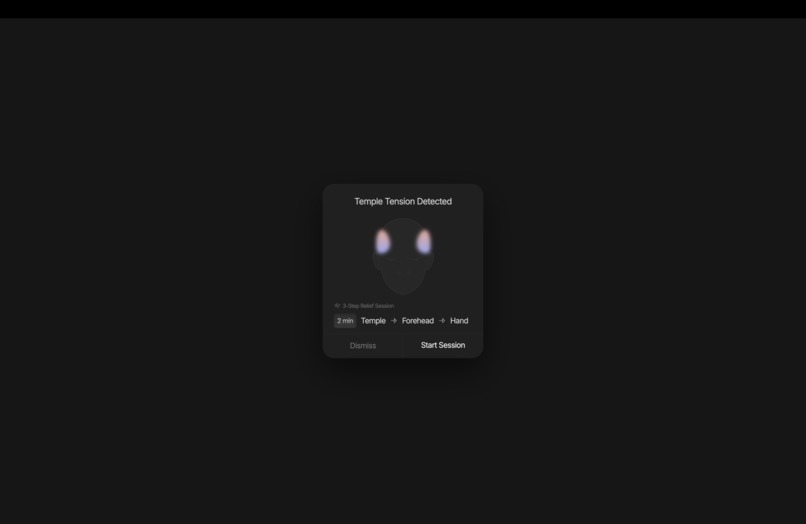
To begin the session
-
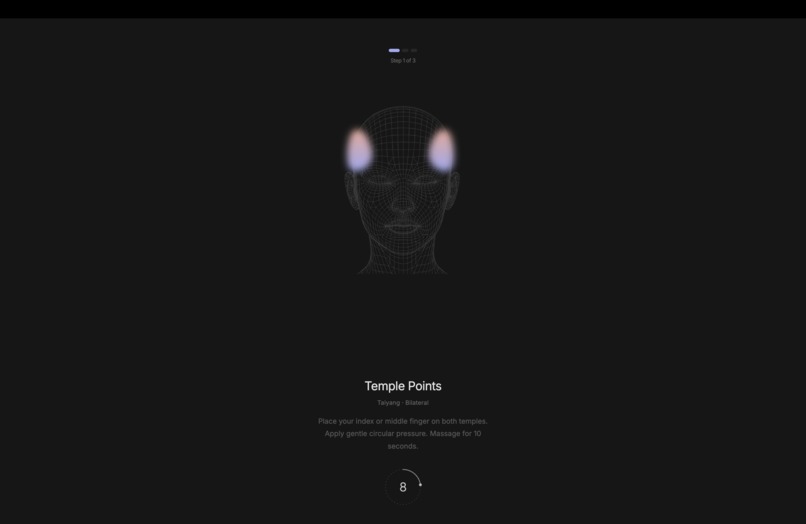
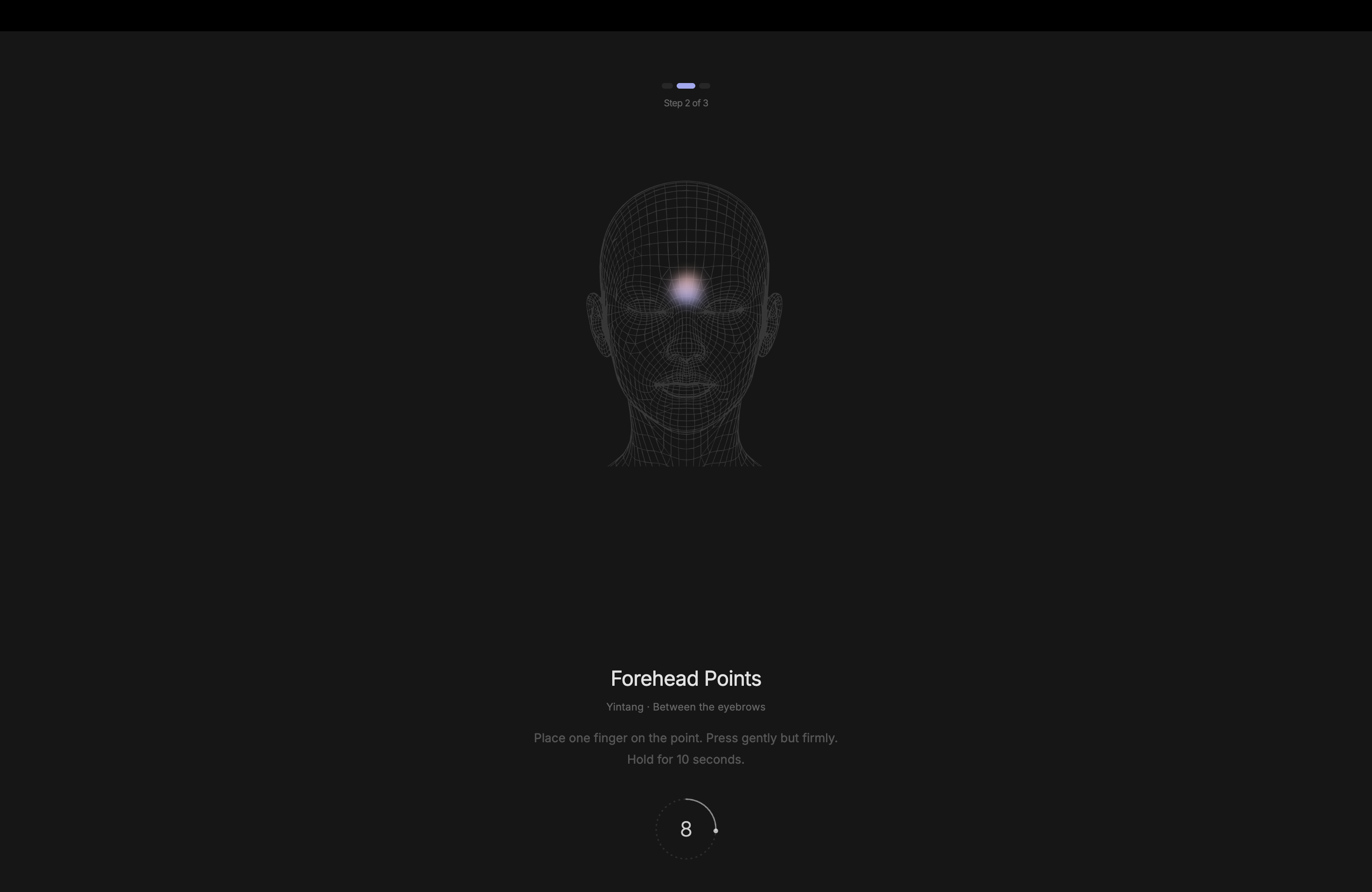
step 1 (camera disabled)
-
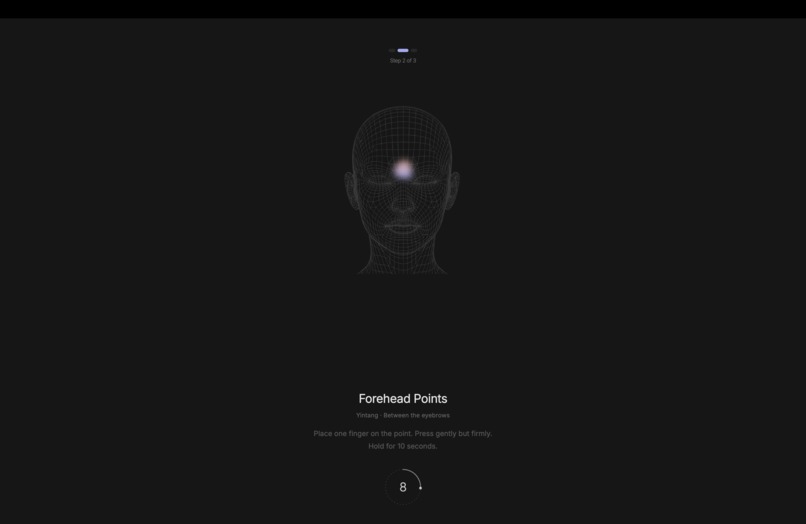
step 2 (camera disabled)
-
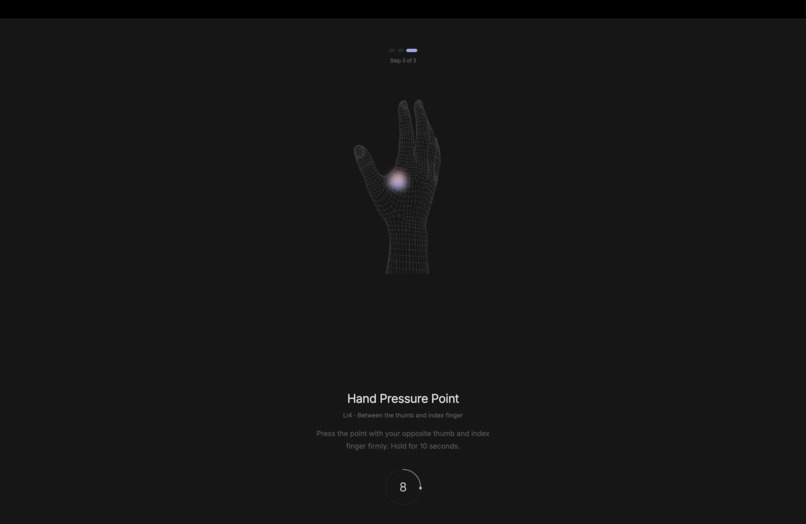
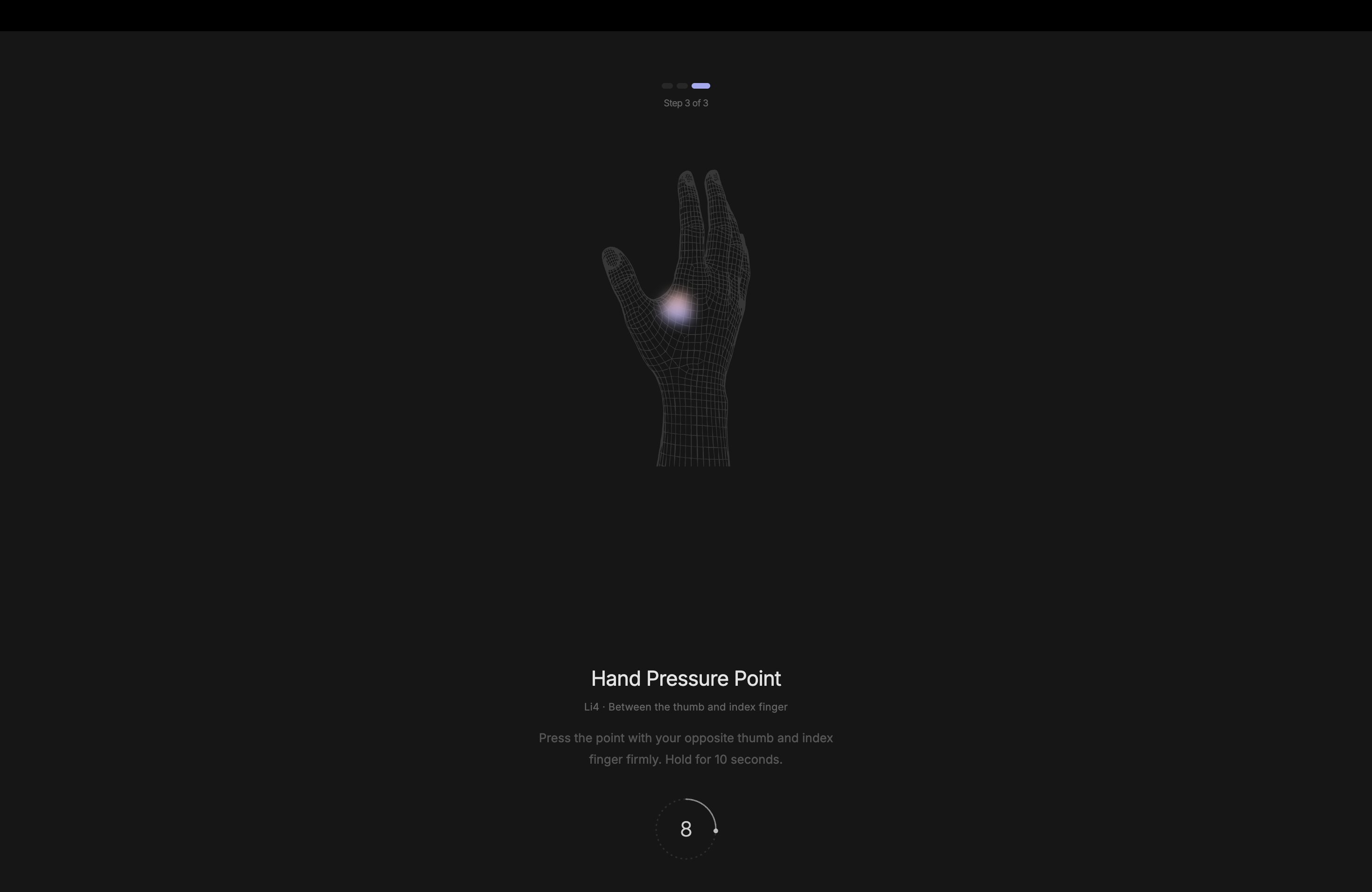
step 3 (camera disabled)
-
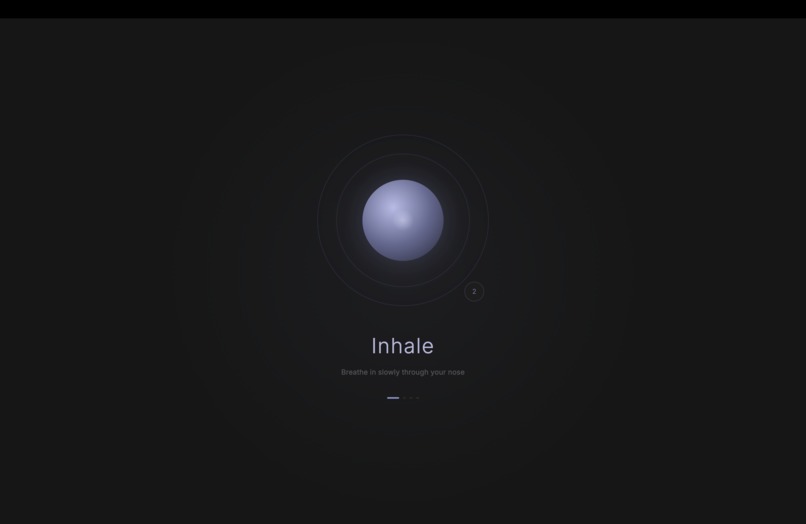
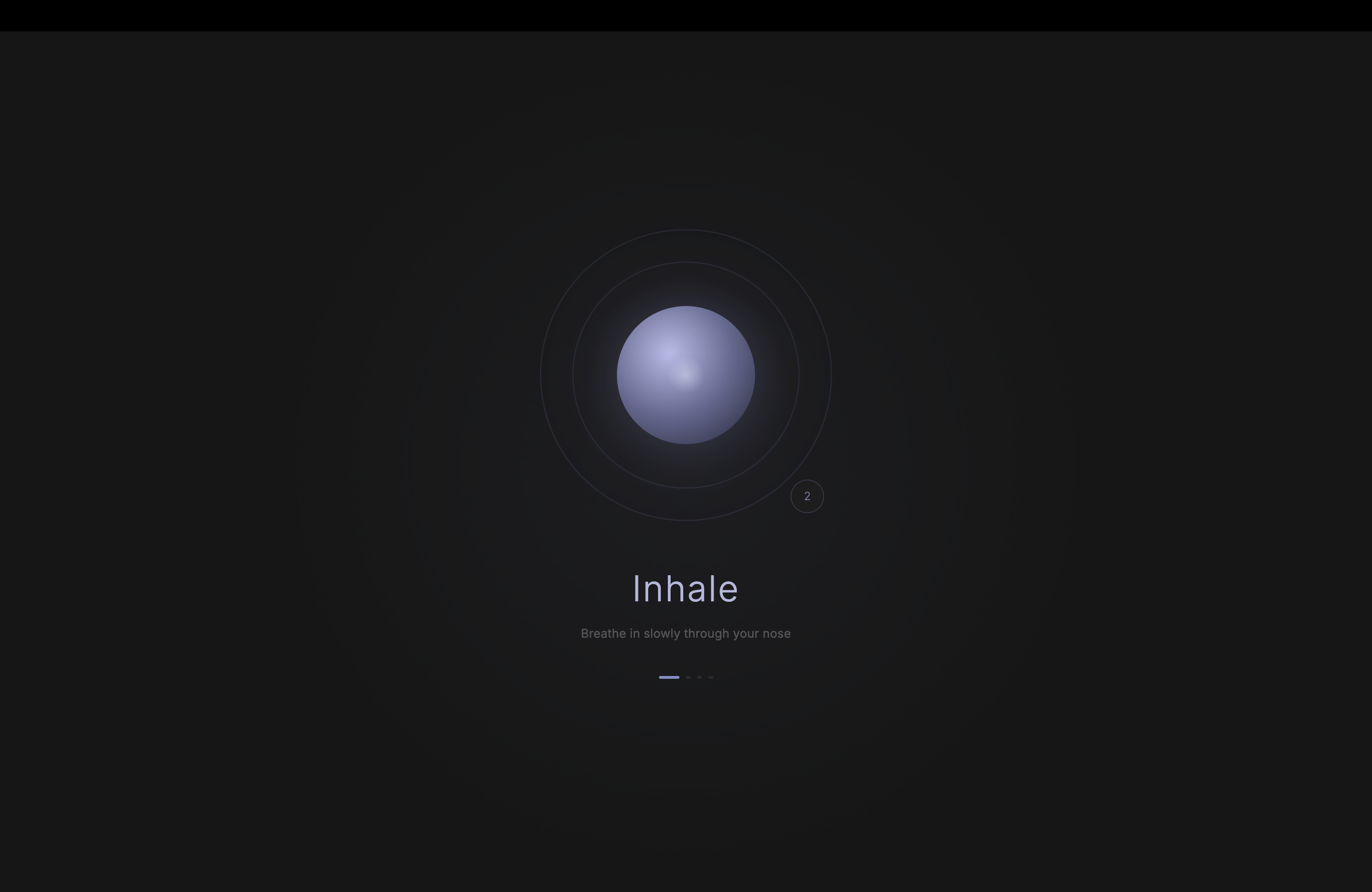
breathing
-
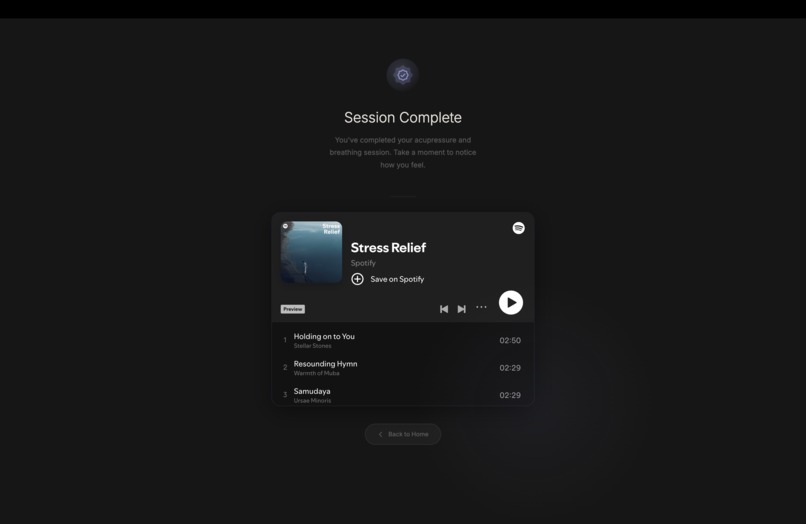
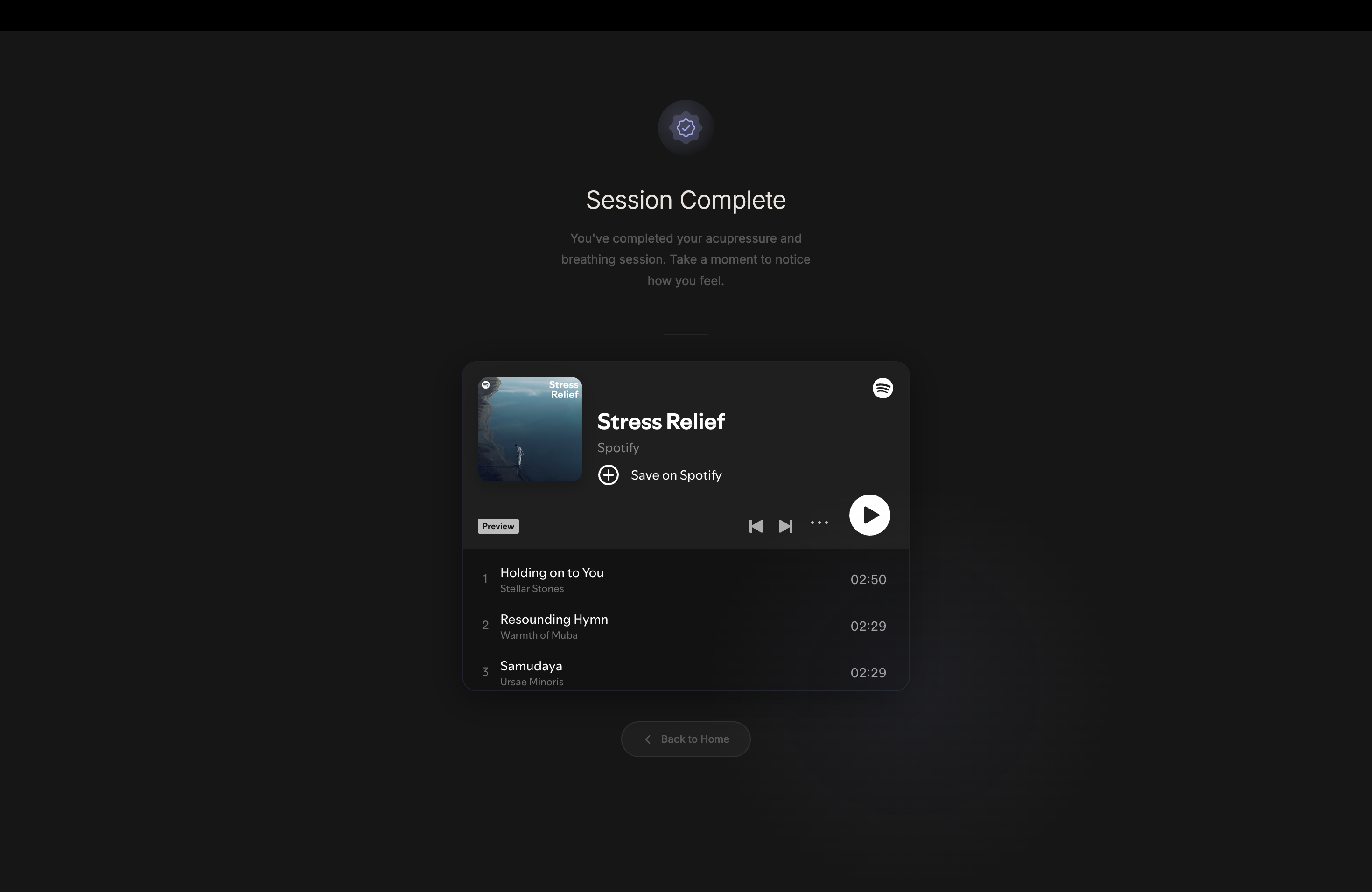
spotify playlist for calm music
SOMA — Understanding Pain, Guiding Natural Relief
Inspiration
I have personally struggled with severe migraines and hormonal issues that often cause pain in different parts of my body. Over the past few years, I discovered that applying pressure to specific points, a practice rooted in acupressure, helped reduce the intensity of these pains and made it easier to manage everyday discomfort.
This experience made me realise that many people face similar struggles but may not always know simple, natural techniques that can help them find relief. I began wondering how technology could make these methods more accessible.
SOMA was inspired by the idea that if devices we use every day could interpret signals related to discomfort, track our hormones, they could guide people toward natural relief techniques such as pressure points and breathing exercises. Something that has helped improve my own quality of life could potentially help others understand and respond to their pain as well.
What it does
SOMA is a speculative system that helps users understand patterns of discomfort and suggests natural ways to relieve them.
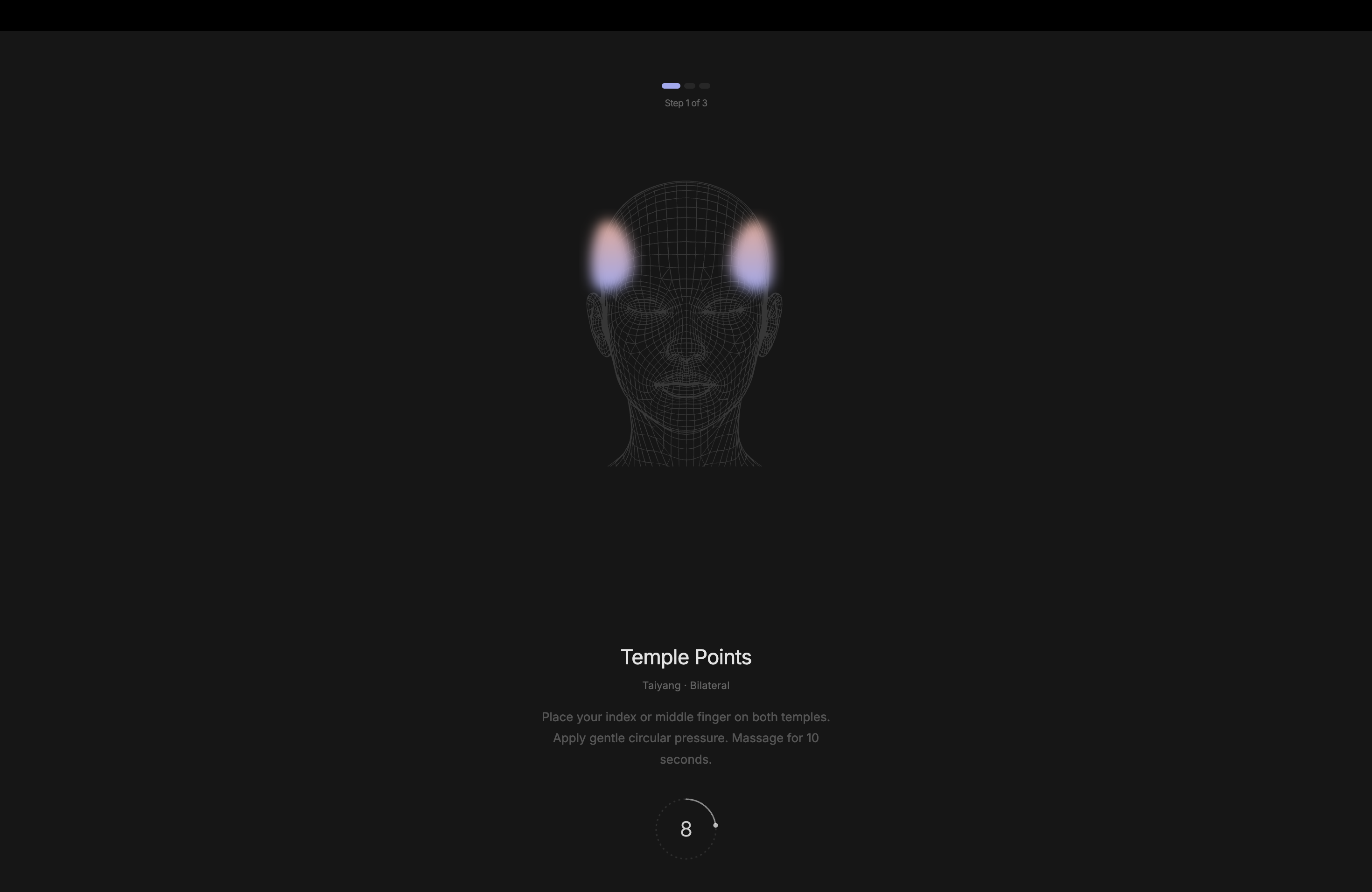
By interpreting signals such as posture changes, stress indicators, muscle tension, and physiological rhythms, the system can recognise possible discomfort patterns. Instead of presenting complex health data, SOMA translates these signals into simple actions such as guided pressure points that may help reduce tension, breathing exercises that help regulate stress, and visual guidance to help users locate the correct pressure points.
The goal is to make natural relief techniques easier to access and understand.
How we built it
SOMA was developed as a speculative design prototype that demonstrates how such a system could work in everyday devices like laptops, phones, or wearables.
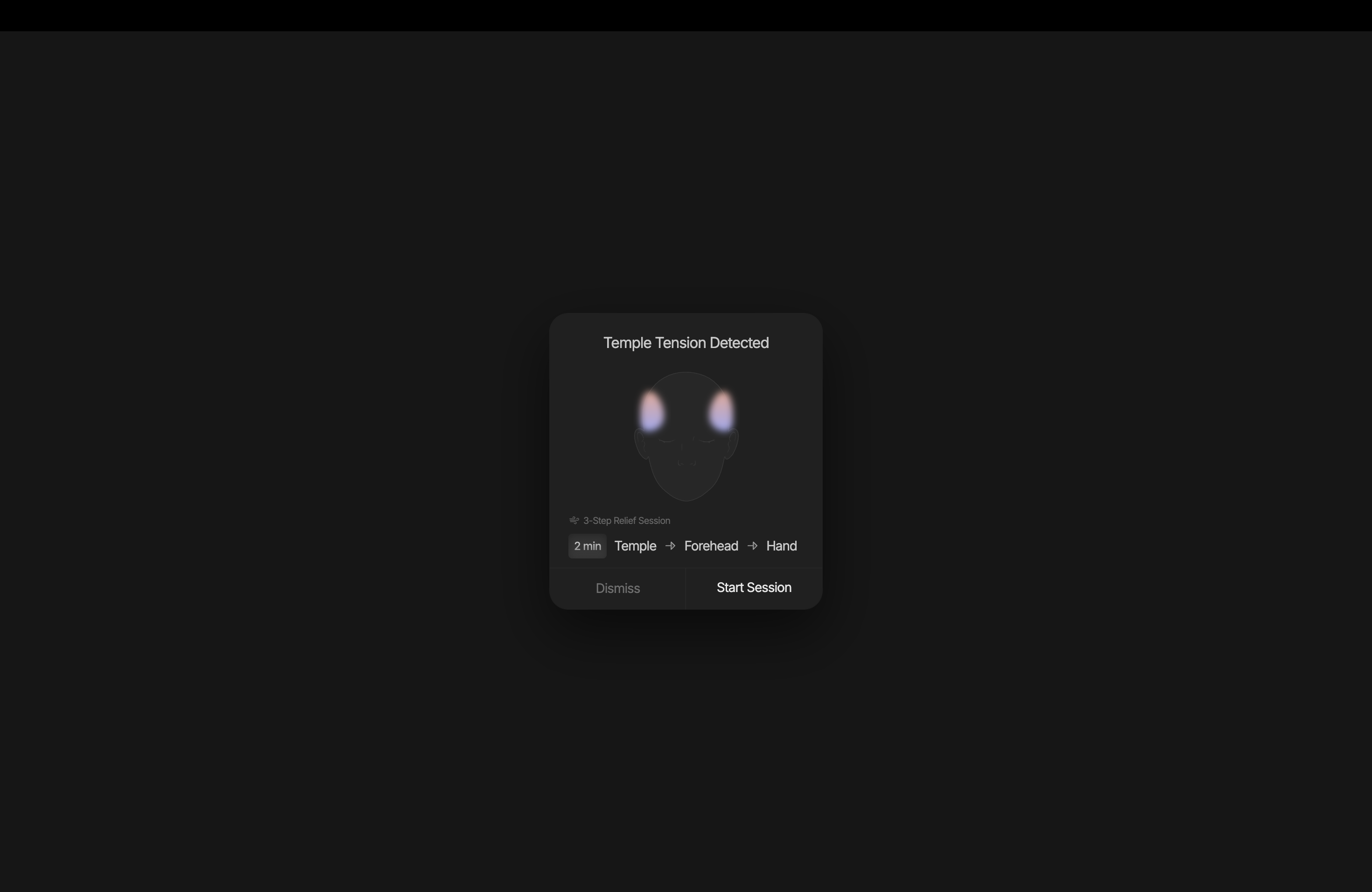
The prototype includes a notification system that suggests relief sessions, visual guides for pressure points, AR-assisted positioning using the camera to locate the correct points, and timers with breathing guidance to help regulate stress.
The design focuses on creating a calm, minimal interface that prioritises clear guidance instead of overwhelming users with raw health data.
Challenges we ran into
One of the biggest challenges was balancing speculation with realism. The project imagines future sensing capabilities where devices could interpret body signals, but the design still needed to feel believable and grounded.
Another challenge was avoiding a medical diagnostic tone. SOMA is not meant to diagnose health conditions, but to provide simple relief techniques for everyday discomfort.
We also had to carefully think about privacy and consent, especially when imagining features like camera-based AR guidance.
Accomplishments that we're proud of
We are proud of creating a concept that connects personal wellbeing with emerging sensing technologies.
Some highlights include designing a system that translates complex signals into simple actions, integrating AR guidance to help users locate pressure points accurately, creating a calm interface focused on relief instead of overwhelming data, and building a concept inspired by real personal experiences with pain.
What we learned
This project taught us that collecting data is not enough, people need help interpreting it.
We learned that the most meaningful design solutions often come from personal experiences and real needs. Designing SOMA helped us understand how technology can bridge the gap between physiological signals and human awareness.
It also reinforced the importance of designing for trust, simplicity, and privacy when dealing with sensitive health-related information.
What's next for SOMA
The next step would be exploring how this concept could connect with real wearable sensors and health monitoring technologies.
Future possibilities include smarter recognition of different discomfort patterns, deeper personalization based on individual health signals, additional relief techniques such as stretching, posture adjustments, or guided relaxation, and more advanced AR guidance for locating pressure points accurately.
SOMA imagines a future where technology helps people better understand everyday discomfort and respond with simple, natural ways to feel better.


Log in or sign up for Devpost to join the conversation.