-
-
 GIF
GIF
Welcome to SOMA
-
 GIF
GIF
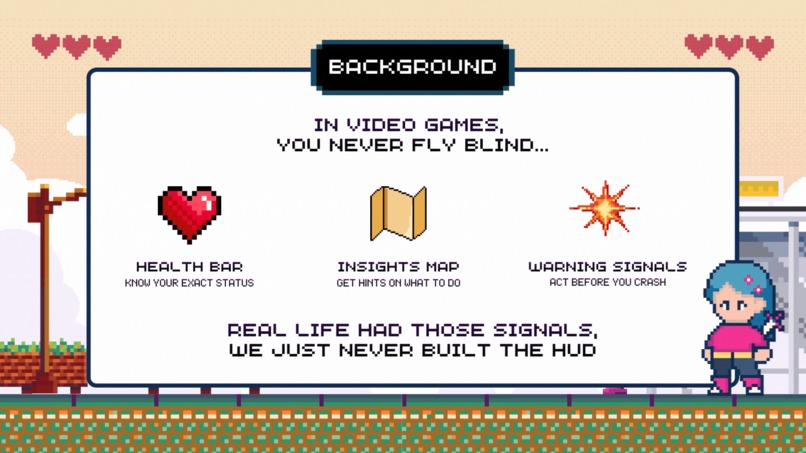
Have you ever wanted an in-game HUD but for real life?
-
 GIF
GIF
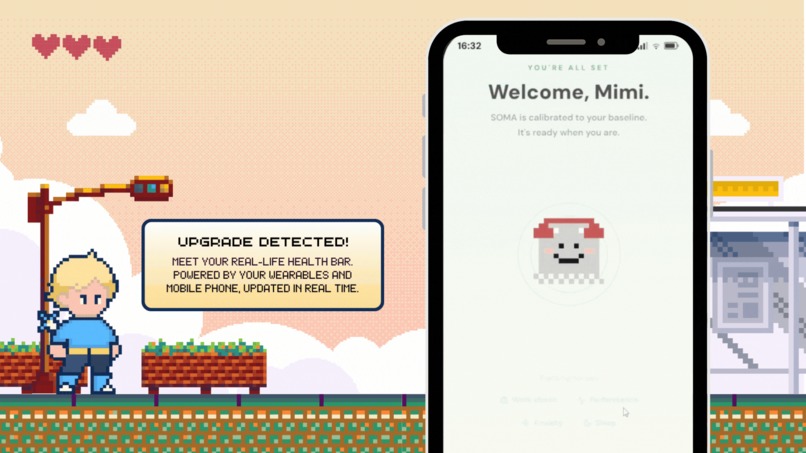
Translating environmental and bio-data signals into clear insights and plans to help you tackle your main mission of getting through the day
-
 GIF
GIF
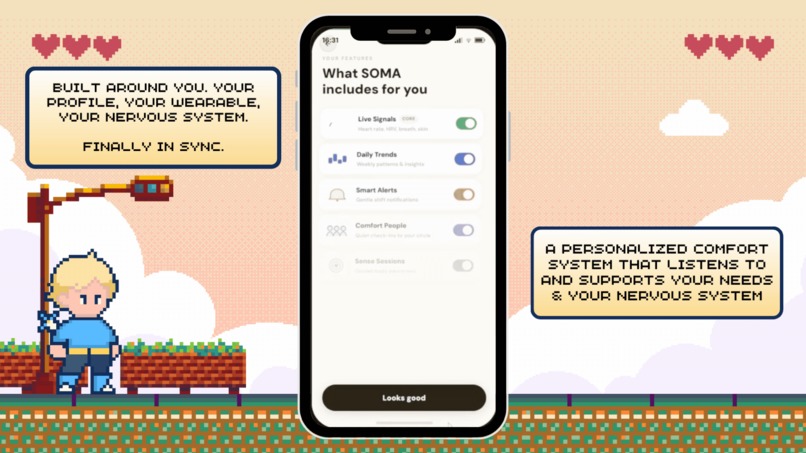
Your body and environment send signals. We listen to them for you.
-
 GIF
GIF
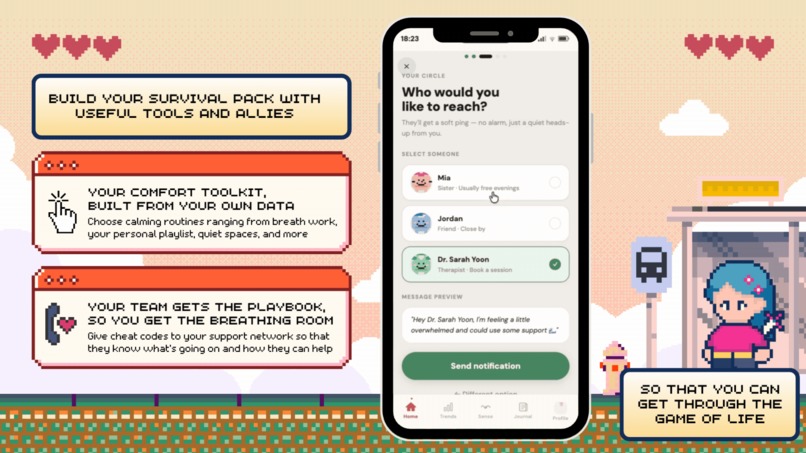
Get cheat codes that support you and your support network to bring comfort to your nervous system.


SOMA — Your In-Game Health Bar for Real Life
🎮 The Inspiration
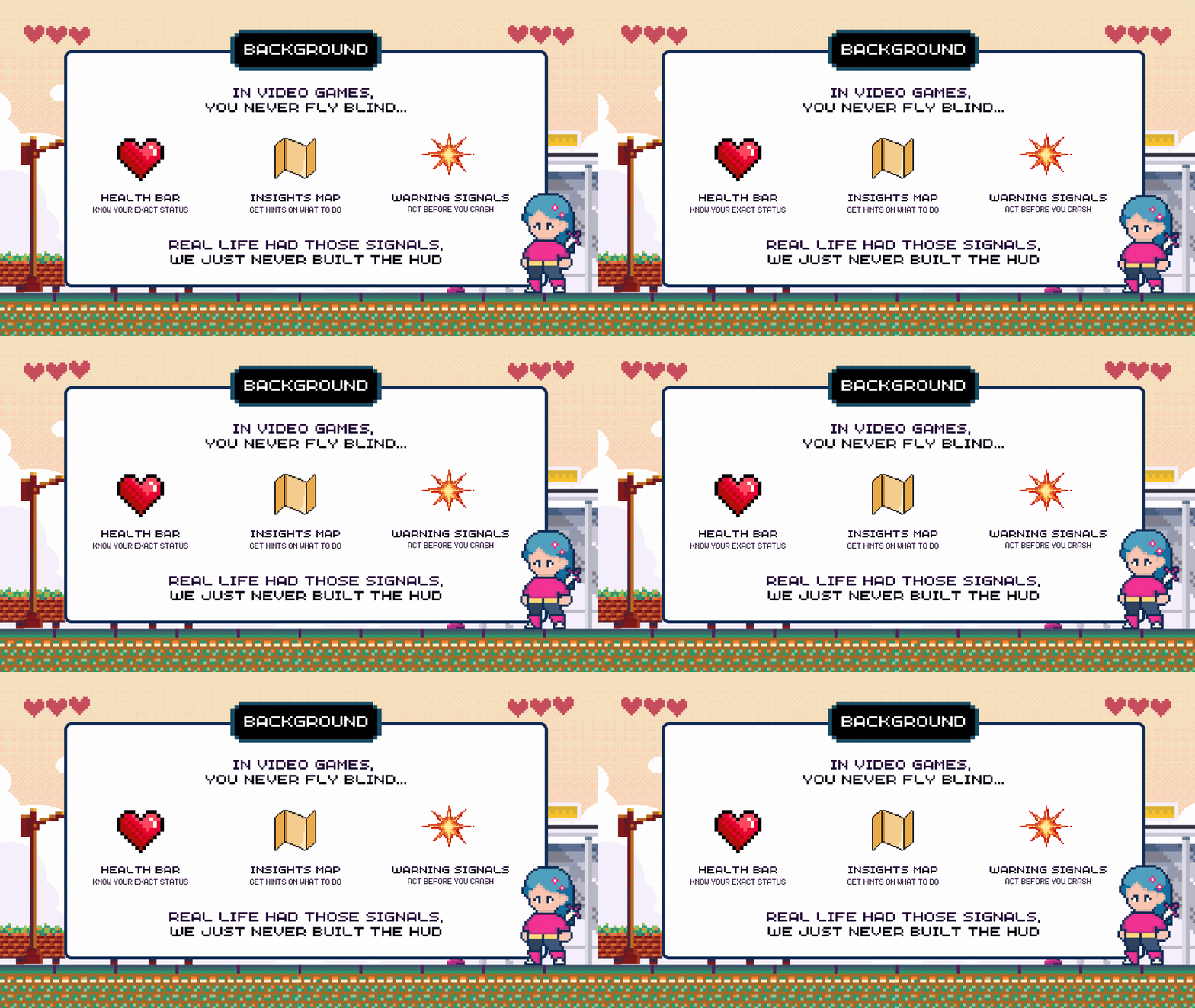
We've all played video games where you never fly blind. You have a health bar, a minimap and warning signals before the boss fight hits.
Real life doesn't come with any of that.
For people who experience sensory overwhelm, whether they're neurodivergent, highly sensitive, or just chronically overstimulated, the crash always comes without warning. One moment you're fine. The next, you're gone.
What struck us wasn't just how common this is (33% of people experience regular sensory overwhelm without any warning), but how preventable it could be — if someone was actually listening to the signals.
"Overstimulation feels like I'm constantly holding my breath... my brain feels like static."
"Like being stuck in a tube — my body is muffled but everything else is super loud."
"Bees in my bones and I can feel every inch of my skin... as if I can feel each cell."
These weren't edge cases. These were people describing their Tuesday. We've all had the moments where we didn't see it coming until it was already too late — overstimulated, overwhelmed, offline.
That's what built SOMA. Not a brief. Not a persona. It's a problem we've been respawning throughout our whole lives.
🛠️ How We Built It
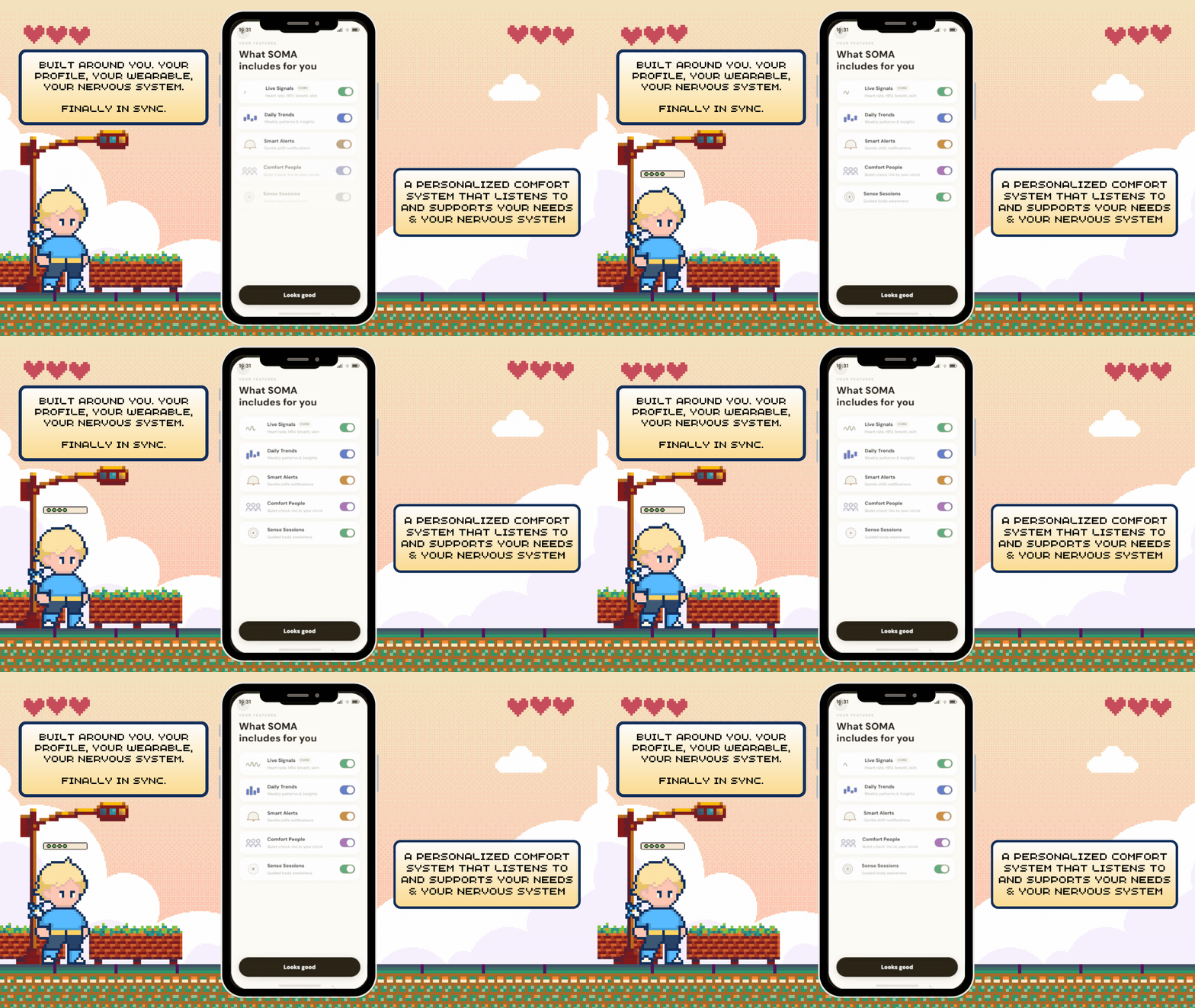
We approached SOMA as a translation problem: take raw biometric signals, surrounding environmental cues, and render them as something emotionally legible — a health bar, a battery level, a status card that actually means something.
The product runs on three core systems:
1. The Health Bar — a real-time SOMA Index score derived from HRV, EDA, and HR. No medical jargon. No anxiety-inducing graphs. Just your status, rendered like a game UI: how are you actually doing right now.
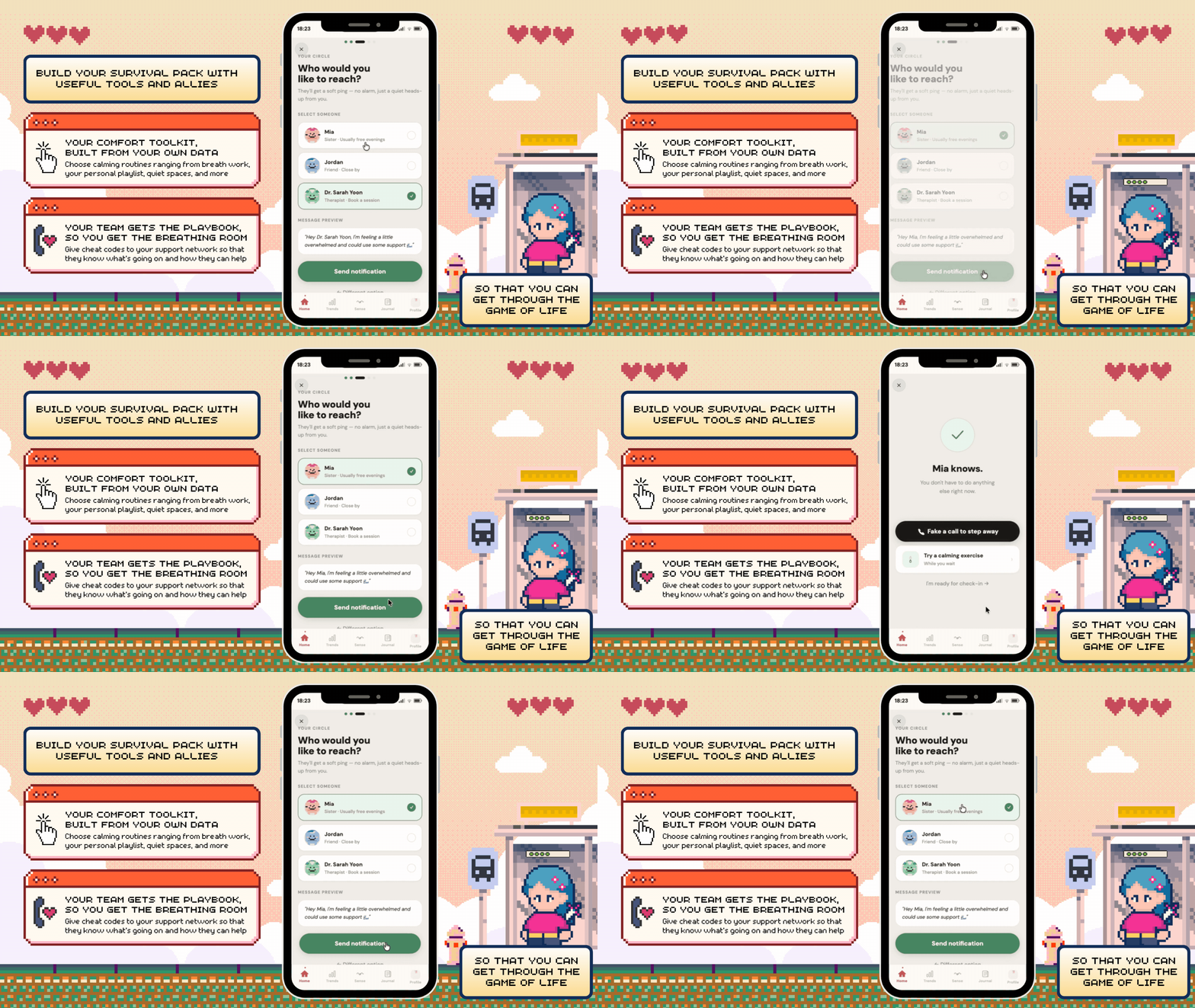
2. The Survival Pack — a personalized comfort toolkit built from your own pattern data. Breathwork, playlists, quiet spaces — power-ups that work with your nervous system, not someone else's default settings.
3. The Playbook — an auto-brief dispatched to your support network the moment your battery drops critical. Your allies get the cheat codes. You get the breathing room. No explaining yourself mid-meltdown required.
We prototyped the full experience in Figma, built the visual language around a retro pixel/game HUD aesthetic, and grounded everything in primary research (n=65) plus peer-reviewed literature from American Psychological Association, CASAT and wearables studies on biometric stress detection.
The science hit different once we saw it clearly. Your body doesn't crash without warning — it broadcasts the incoming attack up to 60 minutes before you consciously register it:
The warning window has always existed. Nobody built the HUD to display it. Until now
⚠️ Challenges We Ran Into
Respawning in a new map. FigMake was completely new territory — and there's nothing quite like learning a tool's quirks while you're trying to ship something real. We hit walls, found workarounds, and spent more time than we'd like to admit just figuring out what was even possible before we could start building what we actually wanted.
Prompting is its own skill tree. We used AI heavily to translate our design vision into a working prototype — and learned fast that getting useful output isn't just about asking. It's about how precisely you can describe the feeling of something that doesn't exist yet. Prompting SOMA's UI into existence required us to develop a whole new language for communicating intent. Turns out, "make it feel like a health bar but emotionally safe" is not a complete prompt.
Designing calm for people who can't stop thinking. SOMA is built for people whose brains don't have an idle mode. Which means every feature we added came with a question: does this help, or does this just add another thing to monitor? Balancing genuine awareness against the risk of turning the app into its own source of anxiety was the hardest design constraint we faced — and one we had to keep revisiting every time we added something new.
🏆 Accomplishments We're Proud Of
We shipped something we'd actually equip. This wasn't a solution built for a hypothetical user. We are the user. We've all had the crashes — the days that went sideways without warning, the overstimulation that came out of nowhere, the exhaustion of constantly trying to read a status bar that doesn't exist. Building SOMA felt like finally giving ourselves the HUD we've always needed. If this existed when we were growing up, a lot of hard days would have gone differently.
We debugged like it mattered. Some of us got to brush up on our coding skills the hard way — tracking down the small but load-bearing issues that AI-generated code quietly introduces. Vibe coding gets you 80% of the way there. The other 20% is reading error messages at 2am and figuring out why one specific interaction breaks only when the battery icon is in a certain state. We found the bugs. We fixed them. Side quests completed.
💡 What We Learned
We learned that the hardest boss in any build isn't the code — it's the language.
How do you describe an internal state that most people can't see, to an app that has to read it from your wrist? How do you make biometric data feel like something a person would actually want to open first thing in the morning? How do you design a warning system that alerts without alarming?
We also learned that lived experience is the best debug tool. Every design decision got stress-tested against our own patterns, our own triggers, our own moments of wishing we'd seen the HP drop coming.
And the most important patch note from this whole build: the best tools disappear into the background. SOMA shouldn't feel like something you manage. It should feel like something quietly running in the background — reading the room, watching your stats, ready to ping you before the level gets too hard.
That's the version we're building toward. That's the version we need.
🏁 The Vision
Everything else treats the crash. SOMA prevents it.
Not by telling you to breathe more. Not by flooding you with graphs. But by finally turning on the minimap — giving you the same situational awareness in real life that you'd never play a game without.
Life doesn't have to be a blind playthrough. Not when you have SOMA


Log in or sign up for Devpost to join the conversation.