Clear problem statement and motivation
As a Computer Science Master's student, I know the "LeetCode Grind" is a universal rite of passage. However, I realized that blindly practicing is the enemy of mastery. Without a systematic approach, hundreds of hours of effort can yield minimal results.
I built SolveNext to address three critical failures in the current interview preparation landscape:
- The "Illusion of Competence": Statistics suggest that even after immediately correcting a mistake, there is still a 70% probability of repeating the same error in future attempts. Yet, manually tracking these specific "weak spots" and finding similar variations for reinforcement is incredibly difficult and time-consuming.
- The "Analysis Paralysis" of 3000+ Problems: Random practice is inefficient, yet static problem lists (like Blind 75) often don't match an individual's dynamic skill level. Students waste time solving what they already know or getting crushed by problems they aren't ready for.
- The "All-or-Nothing" Guidance Gap: When stuck, official hints are often vague, missing, or confusing. This forces students to look up the full solution immediately, which kills the learning process. There was no middle ground—until now.
Motivation: I wanted to design an interface that leverages the reasoning power of LLMs to fix these pain points. SolveNext was born from my own struggle—to transform aimless drilling into a personalized, intelligent, and efficient path to interview success.
Explanation of the solution and how it works
SolveNext is far more than a simple coding log; it is a personalized practice engine designed to cut through the noise of massive problem libraries. It eliminates the "needle in a haystack" frustration by curating a tailored problem stream based on your specific needs. Acting as an intelligent coach, SolveNext provides superior, context-aware guidance that outperforms vague official hints, helping you overcome blockers efficiently.
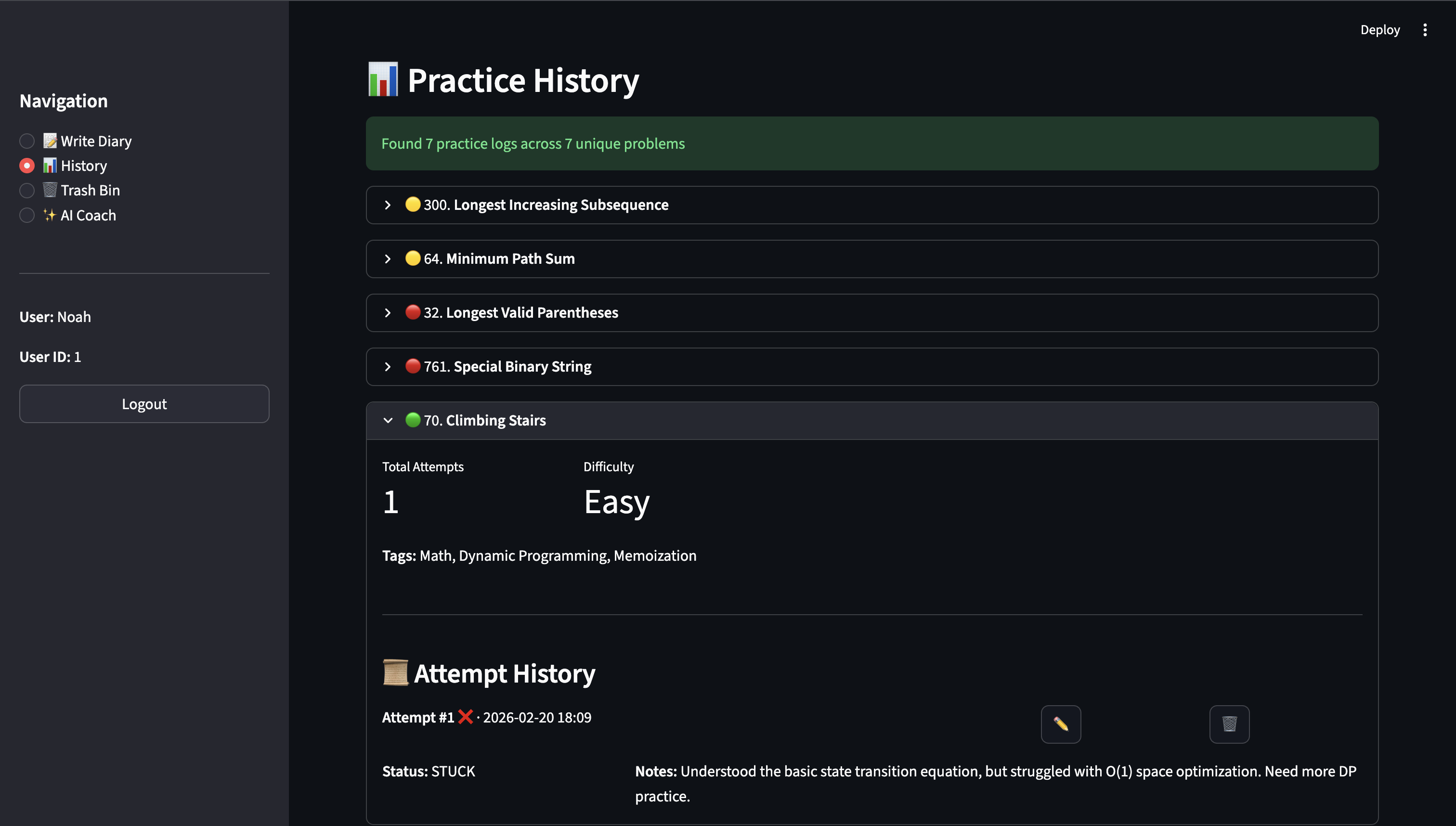
- Diagnostic Proficiency Tracki: SolveNext transforms standard progress logs into a personal diagnostic profile. By recording your self-assessment and learning notes, the system builds a comprehensive "health record" of your algorithmic skills. It uses this data not just to archive history, but to actively diagnose your weak points and determine exactly what you need to strengthen next.
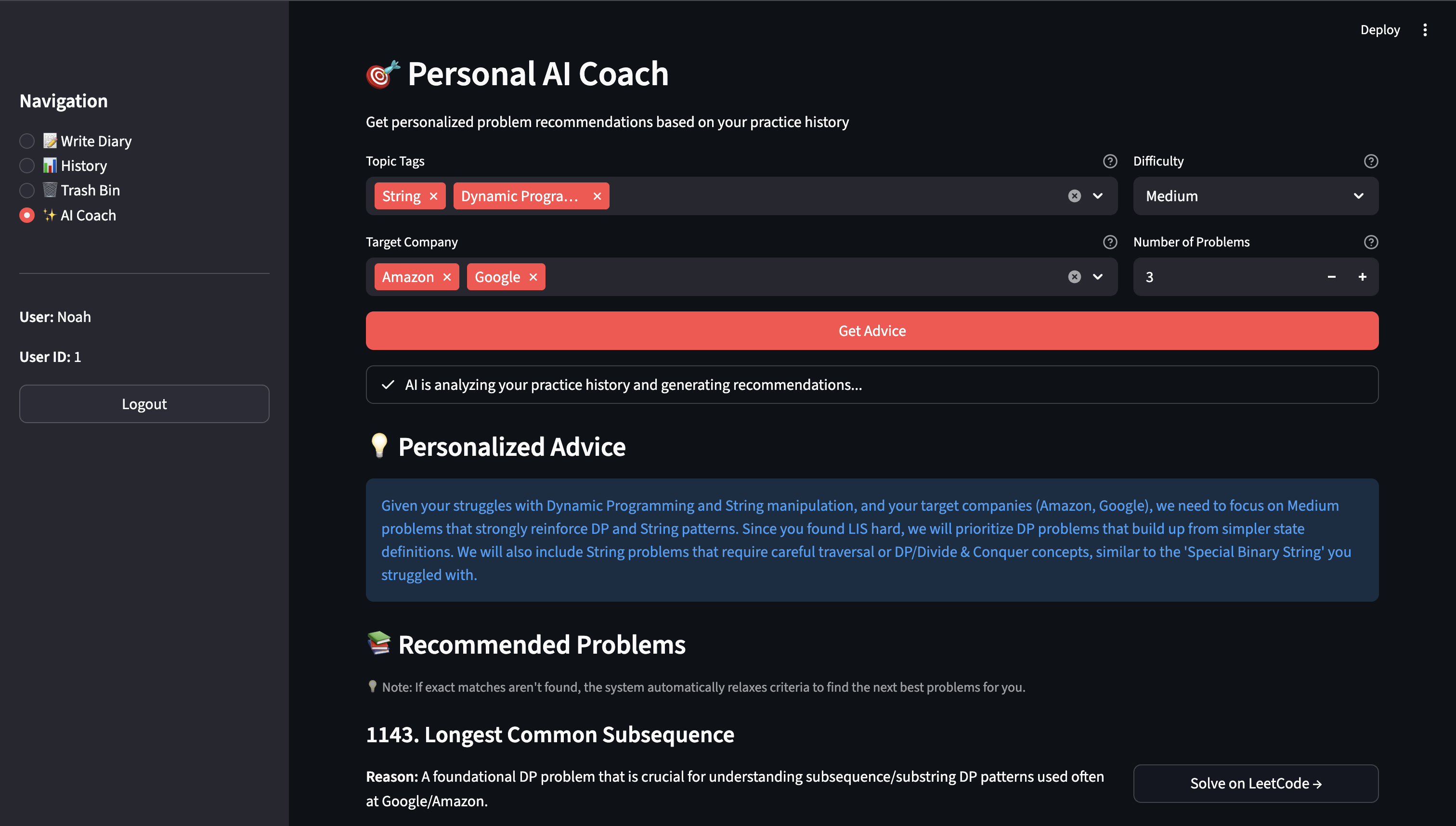
- Precision Recommendation Engine:
Stop wasting time deciding what to solve. Users simply define their focus e.g., Topic: DP, Difficulty: Medium, Company: Google. The backend's Smart Buffer Strategy analyzes your diagnostic profile to:
- Curate the most relevant challenges for your current level.
- Filter out irrelevant or already mastered questions.
- Eliminate decision paralysis, letting you focus purely on problem-solving.
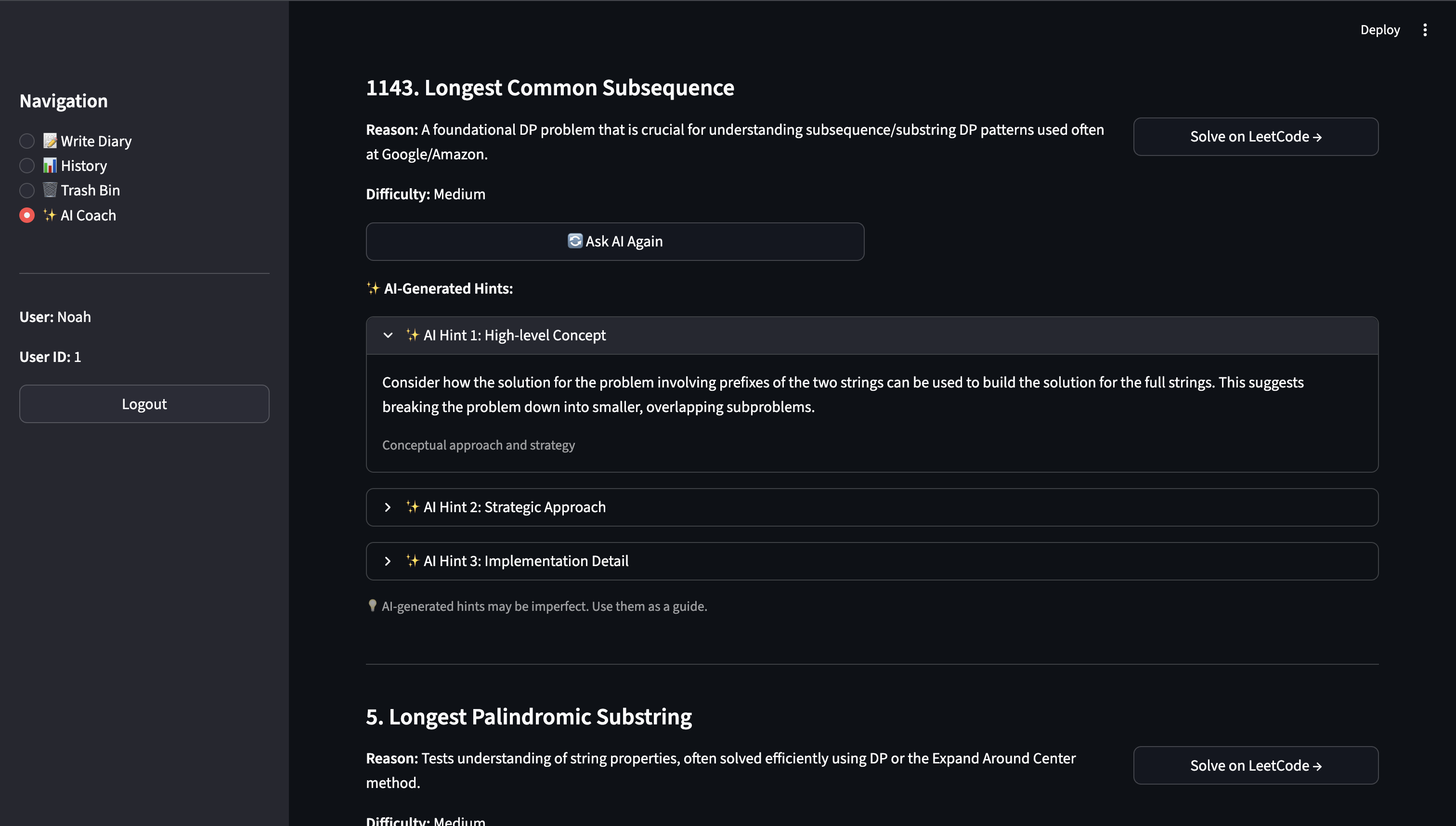
- Superior AI Guidance: Official hints are often obscure or non-existent. SolveNext replaces them with a Progressive Hint System powered by LLMs. It delivers guidance in three logical tiers—Concept → Approach → Implementation—offering the clarity of a senior engineer's explanation without giving away the answer directly. This ensures you get the "nudge" you need without losing the learning opportunity.
Technologies, tools, APIs, or frameworks use
Languages & Frameworks
- Python: Core programming language
- Streamlit: Interactive Frontend & UI
- FastAPI: High-Performance Backend API
- SQLite & SQLModel: Database & ORM
AI & Services
- Google Gemini API: Core AI Logic & Hint Generation
- Google Gemini Pro: AI Coding Assistant / Development Agent
Development Tools
- Git & GitHub: Version Control
- VS Code: Primary Code Editor
Team member roles and contributions
Noah Huang - Solo Developer
- Concept & Ideation: Conceived the project idea to solve the "LeetCode Grind" pain points.
- System Architecture: Designed the modular codebase structure and core application workflows.
- AI Integration: Integrated Google Gemini API for personalized problem recommendations and progressive hint generation.
- Full-Stack Development: Coded the complete application using Python, FastAPI, and Streamlit.
- Documentation: Authored technical documentation and presentation materials.
Future scope or roadmap
Phase 1: Advanced Analytics Dashboard
- Enhance the diagnostic profile with deeper insights, such as "Time Complexity Analysis" of user solutions and specific topic weakness heatmaps
Phase 2: Browser Extension Integration
- Develop a Chrome/Edge extension to bring the "AI Coach" directly into the LeetCode or HackerRank interface, offering real-time hints without switching tabs.

Log in or sign up for Devpost to join the conversation.