-
-
-
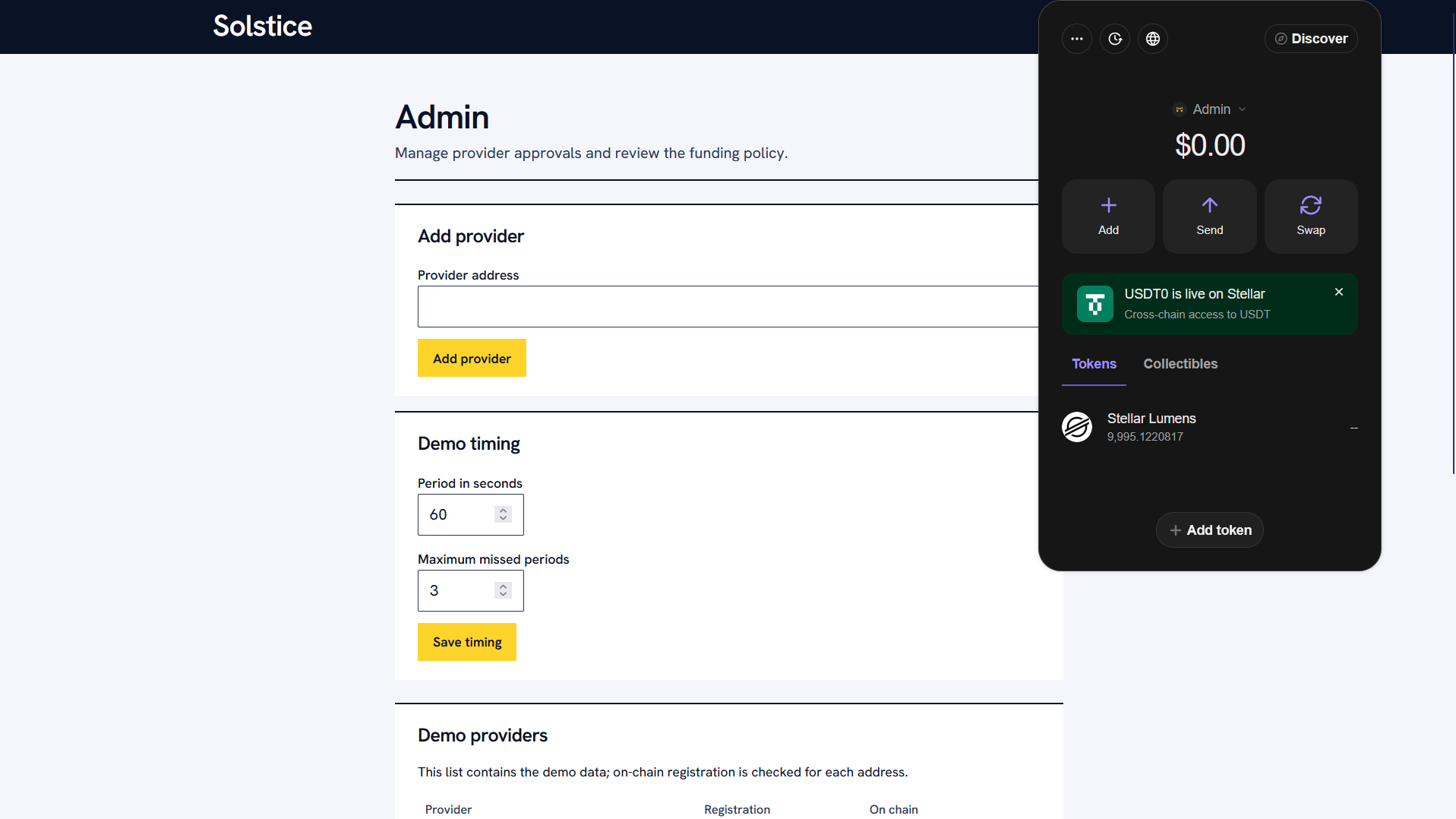
Admin
-
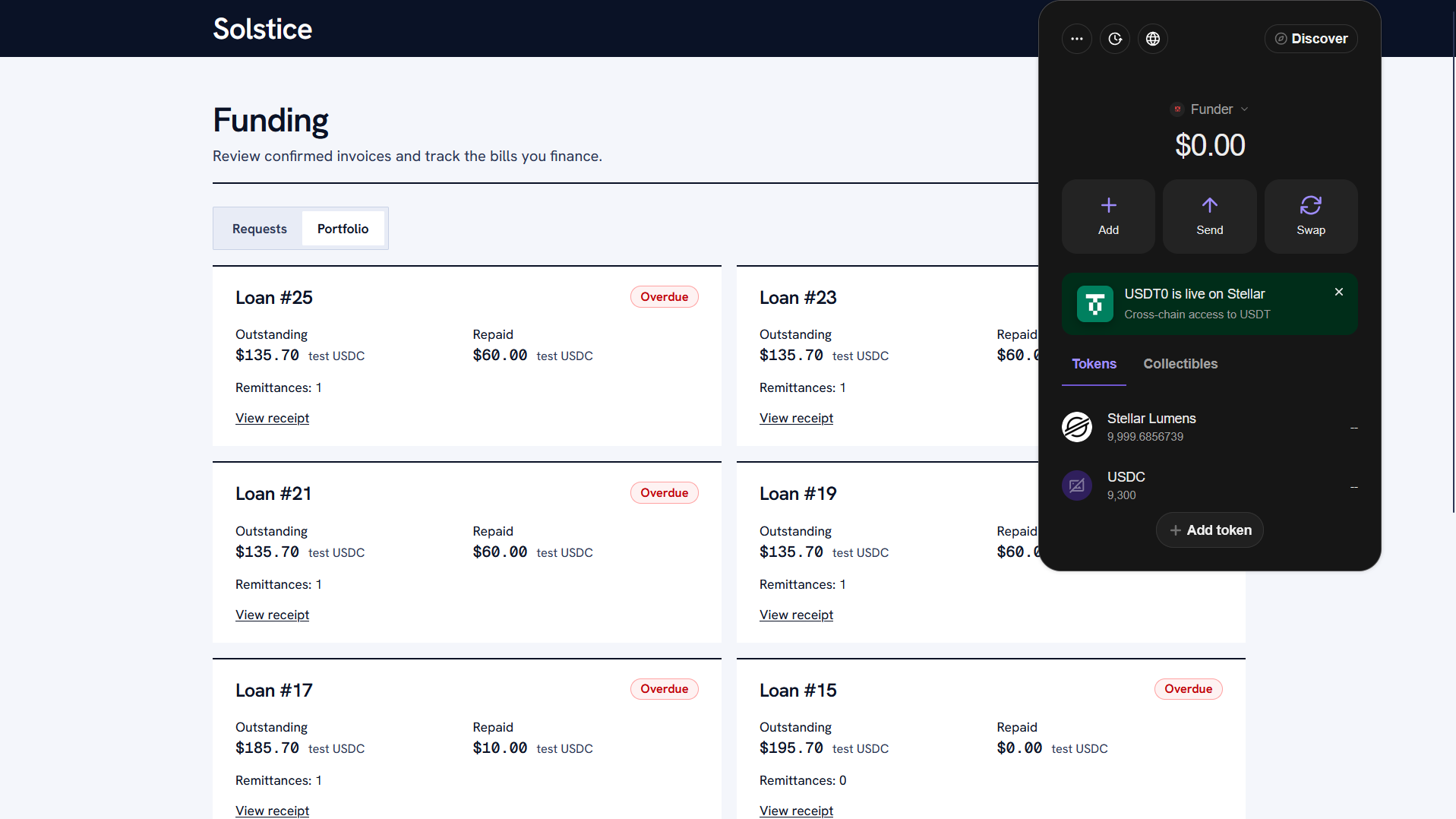
Funder
-
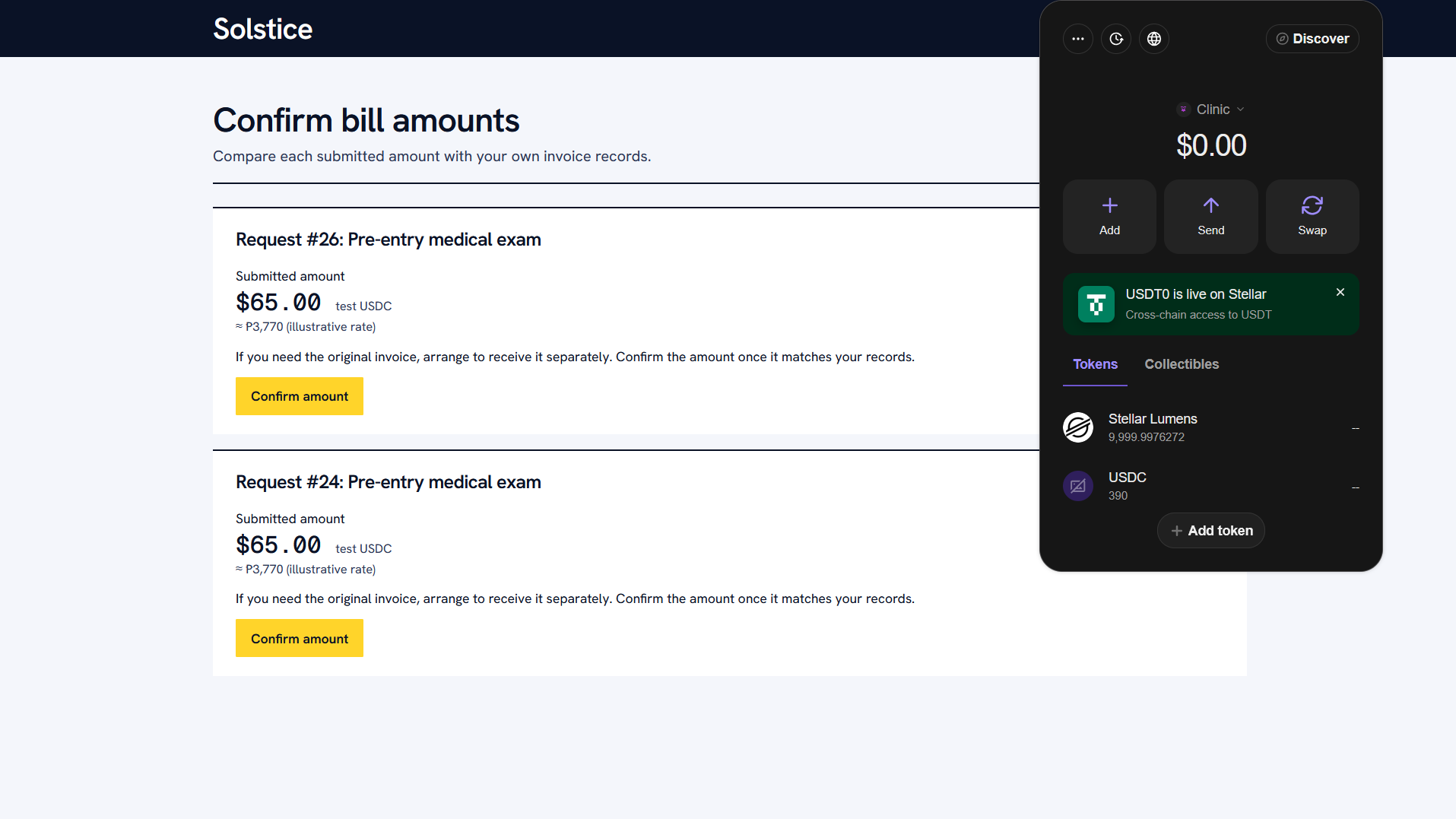
Clinic
-
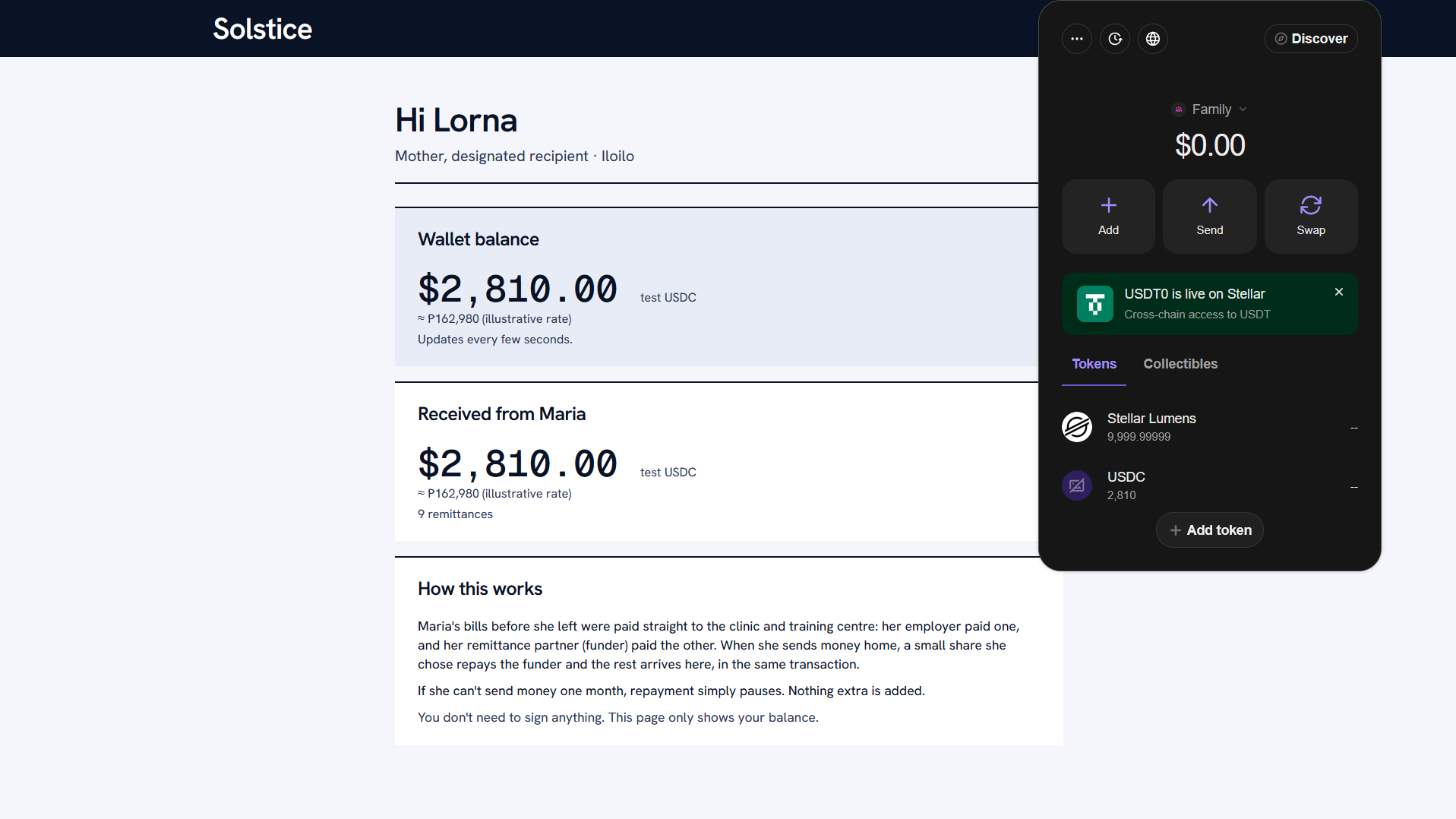
Family
-
Main Page
-
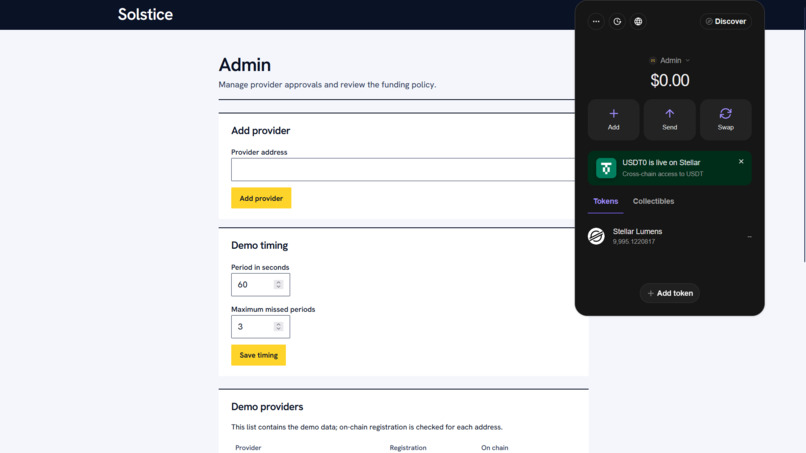
Admin (rulebook)
-
-
Worker
-
-
Worker
Inspiration
Hong Kong employers owe a helper's medical exam, visa and insurance costs, but reimburse them later, on demand, with receipts (Labour Department guide). Until then, the worker has to find the money. Recruitment costs on this route came to about 1.8 months of earnings in 2019 survey data (ILO and Philippine Statistics Authority), and Philippine lenders and labor agents have been reported charging workers 61% to 578% a year (ICIJ).
The debt follows workers to Hong Kong. Collectors harassing employers over helpers' debts were reported in 15 cases between January 2024 and April 2025 (The Standard), and an early quit costs an employer about HK$14,000 to 26,000 in agency fees and flights (SCMP).
What it does
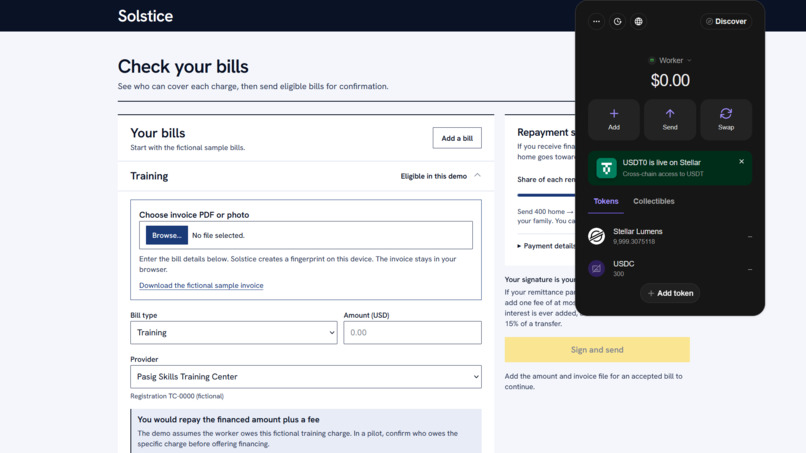
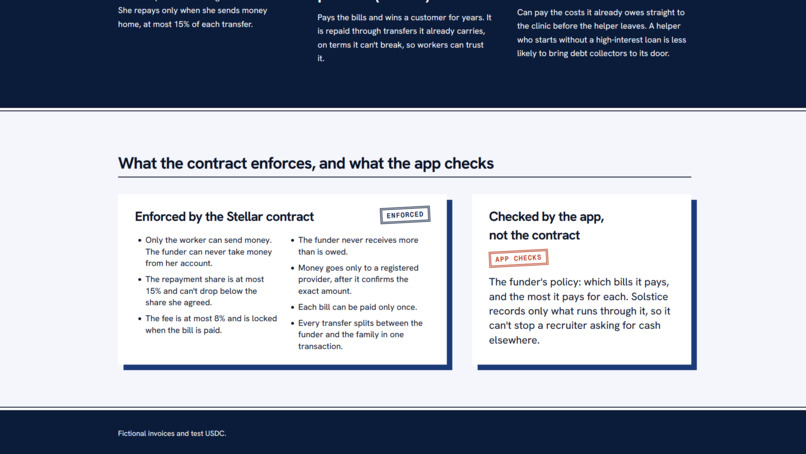
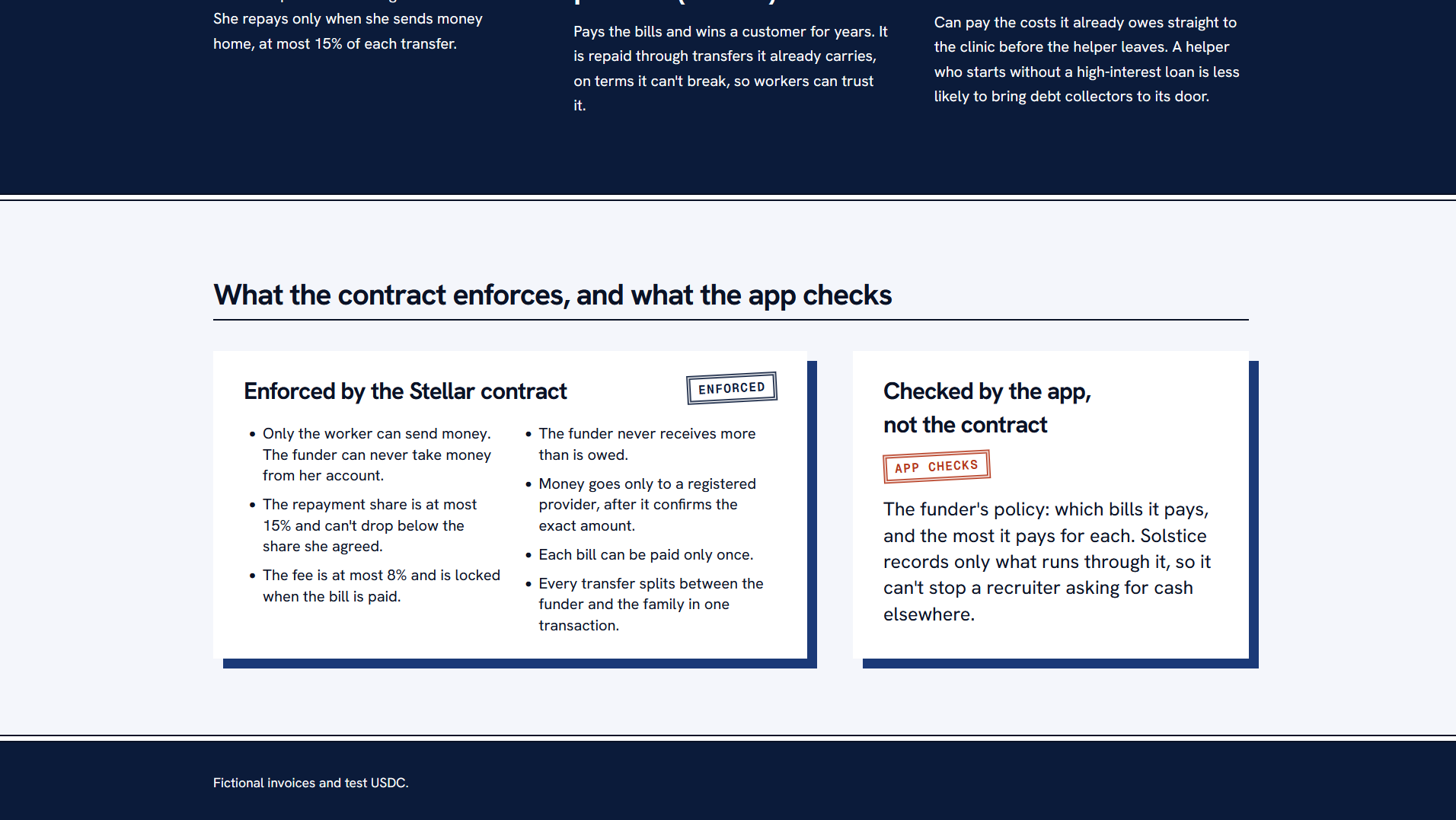
Solstice pays a worker's pre-departure bills straight to the provider, and she repays a capped share of each transfer home. The contract enforces the money terms, and the app checks the funder's policy, meaning which bills it pays and the most it pays for each.
Who we serve first: Filipino domestic workers going to Hong Kong.
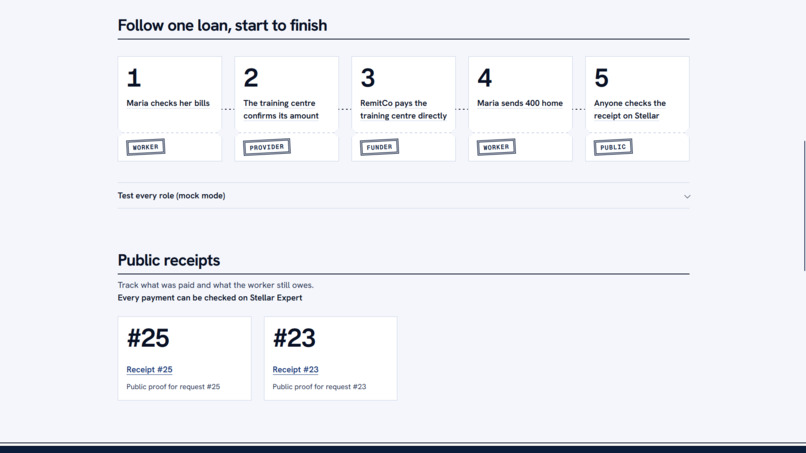
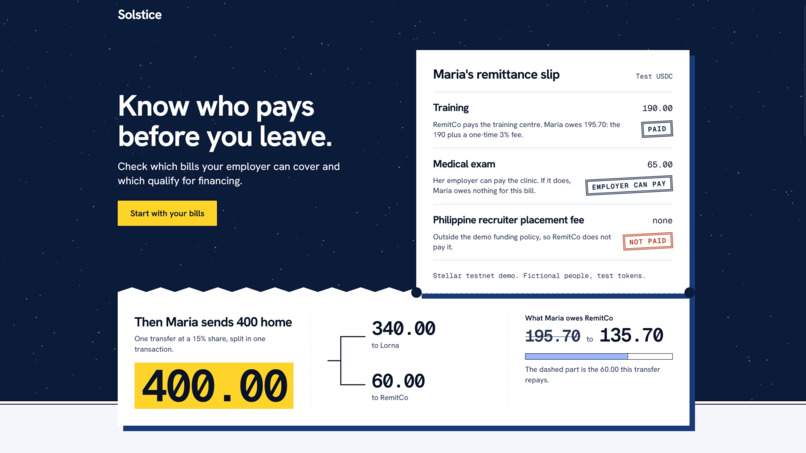
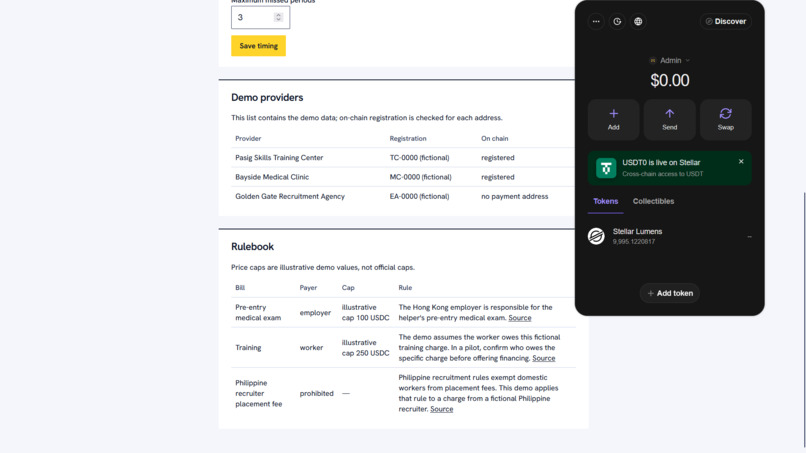
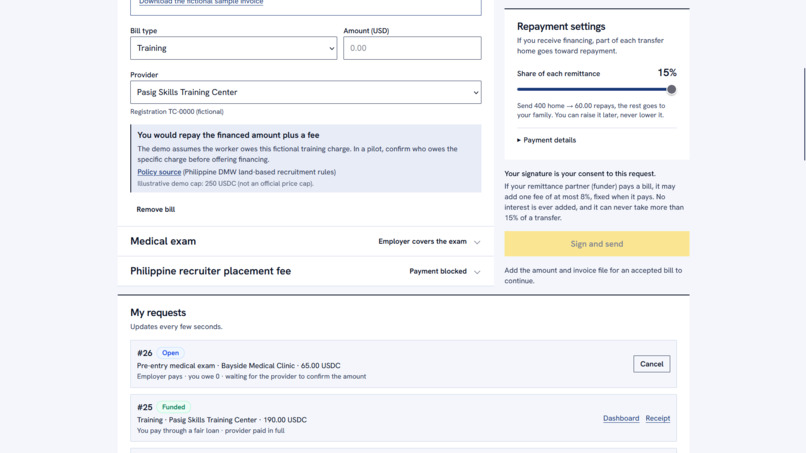
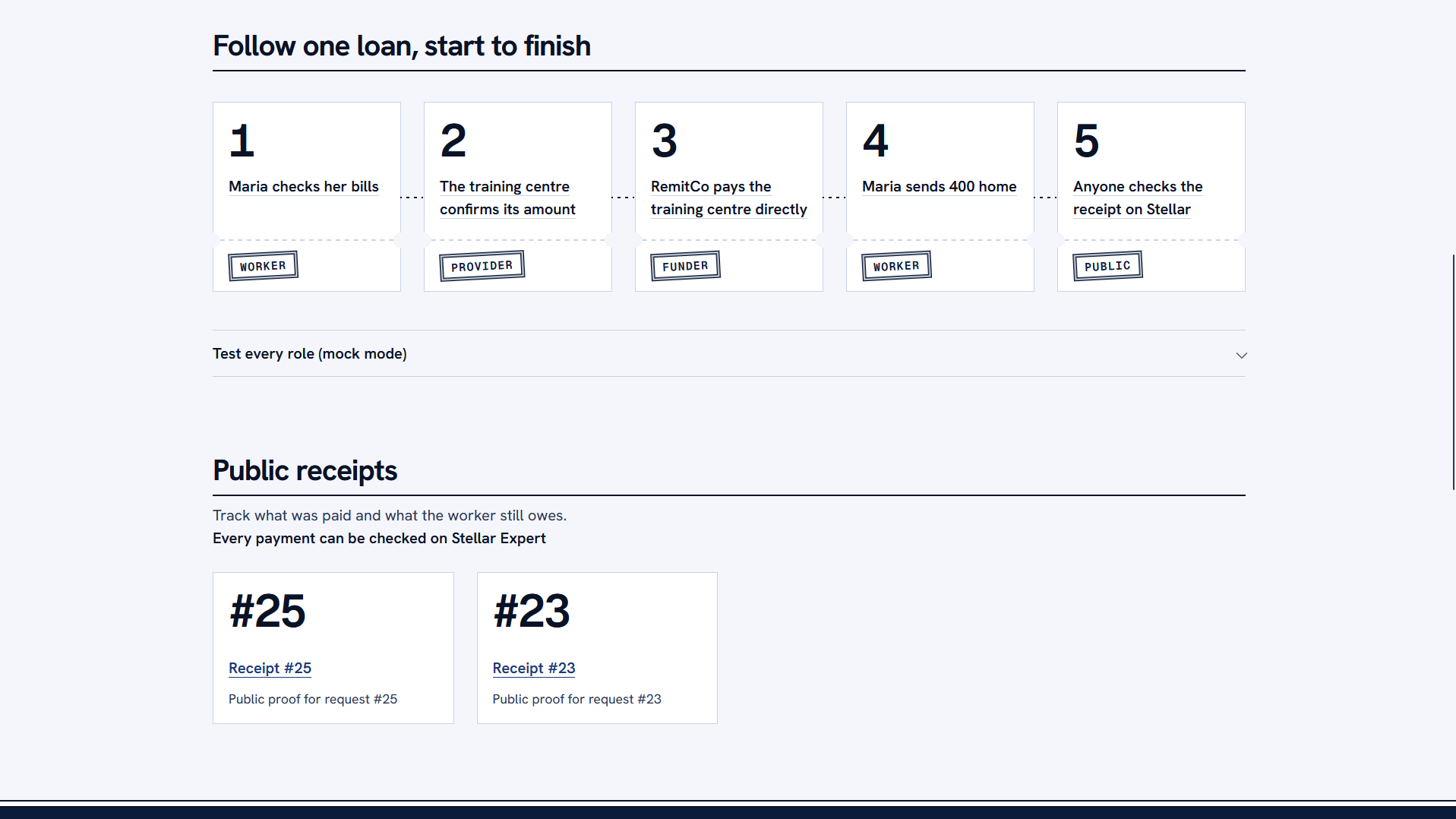
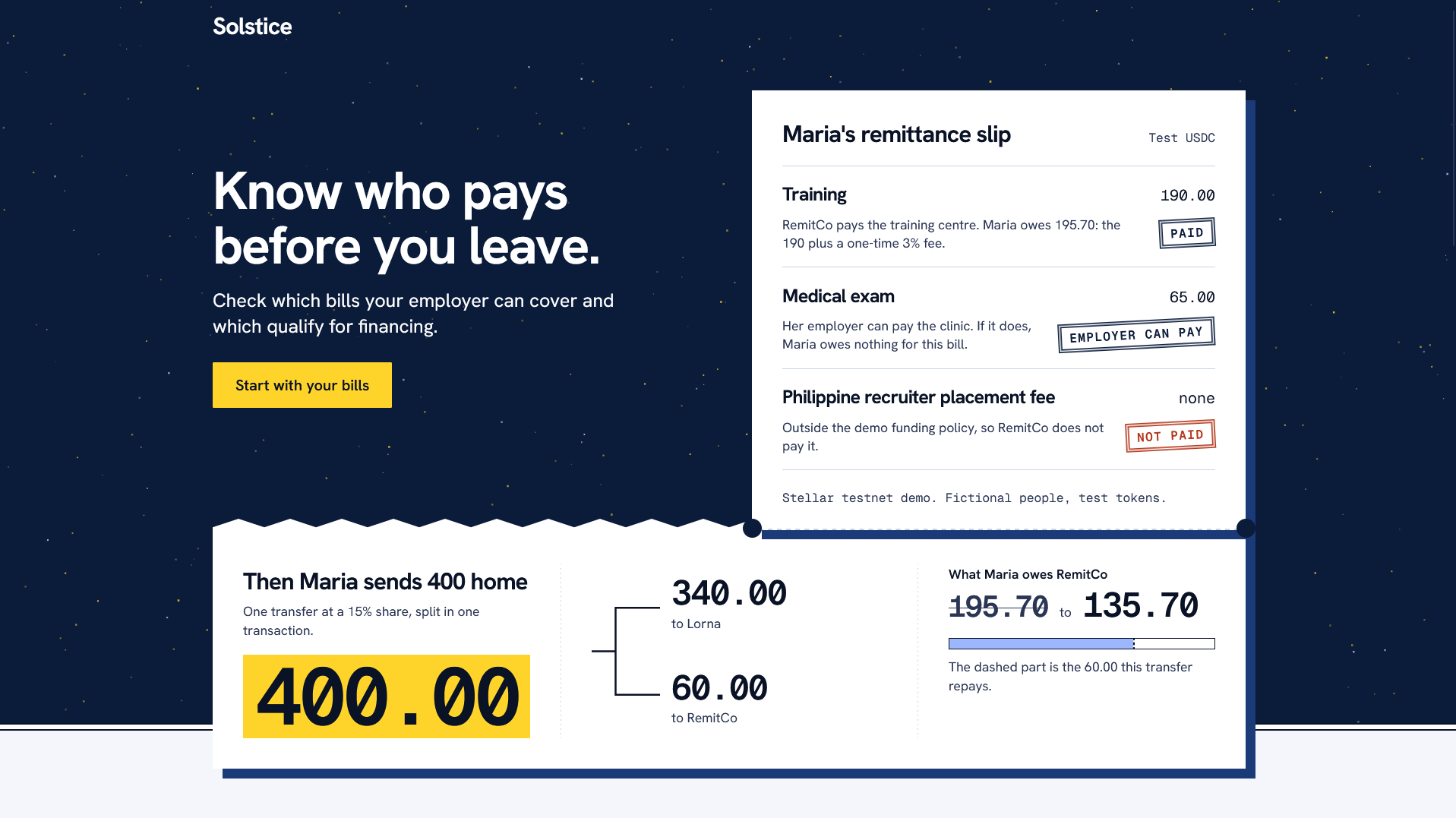
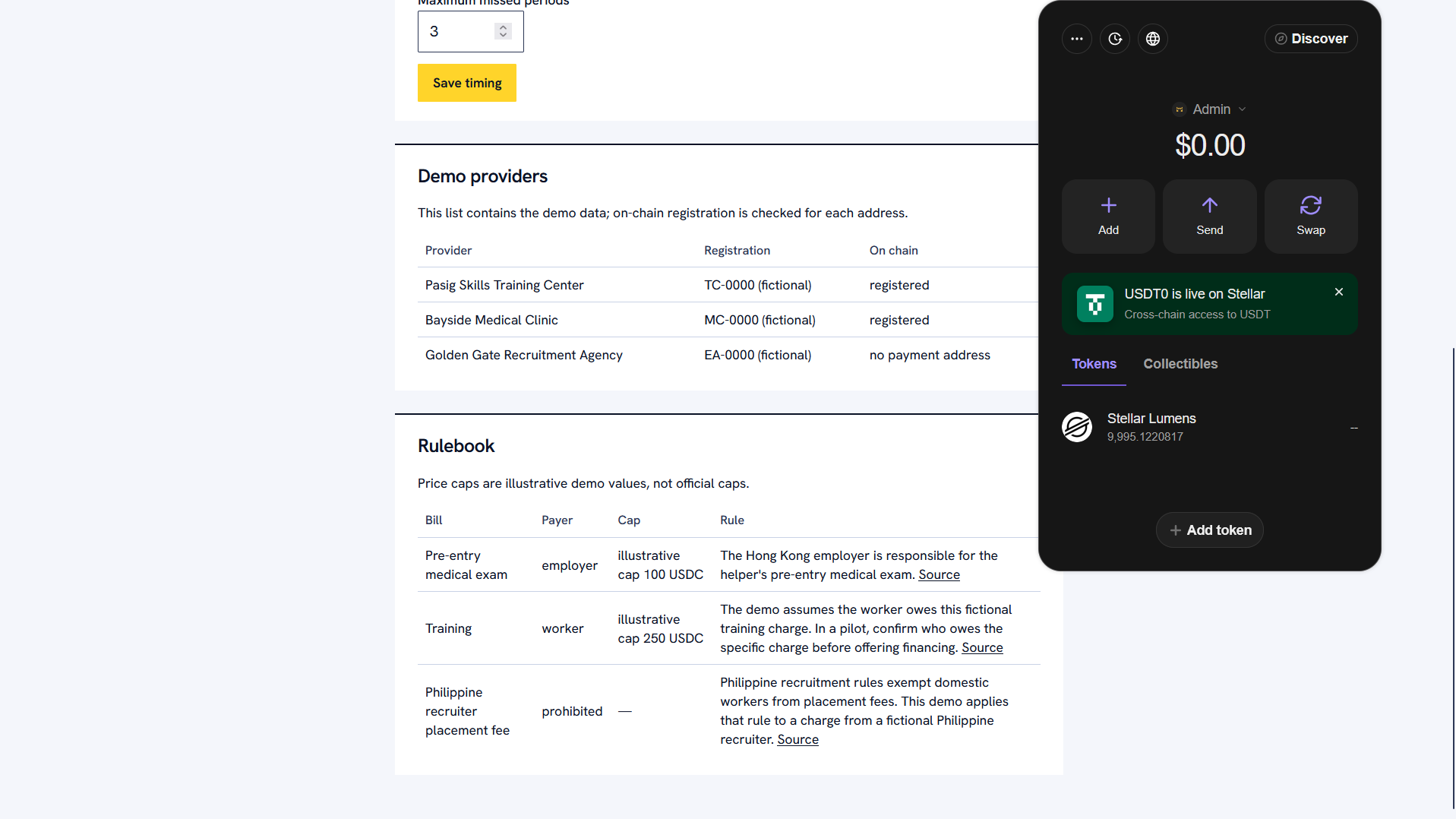
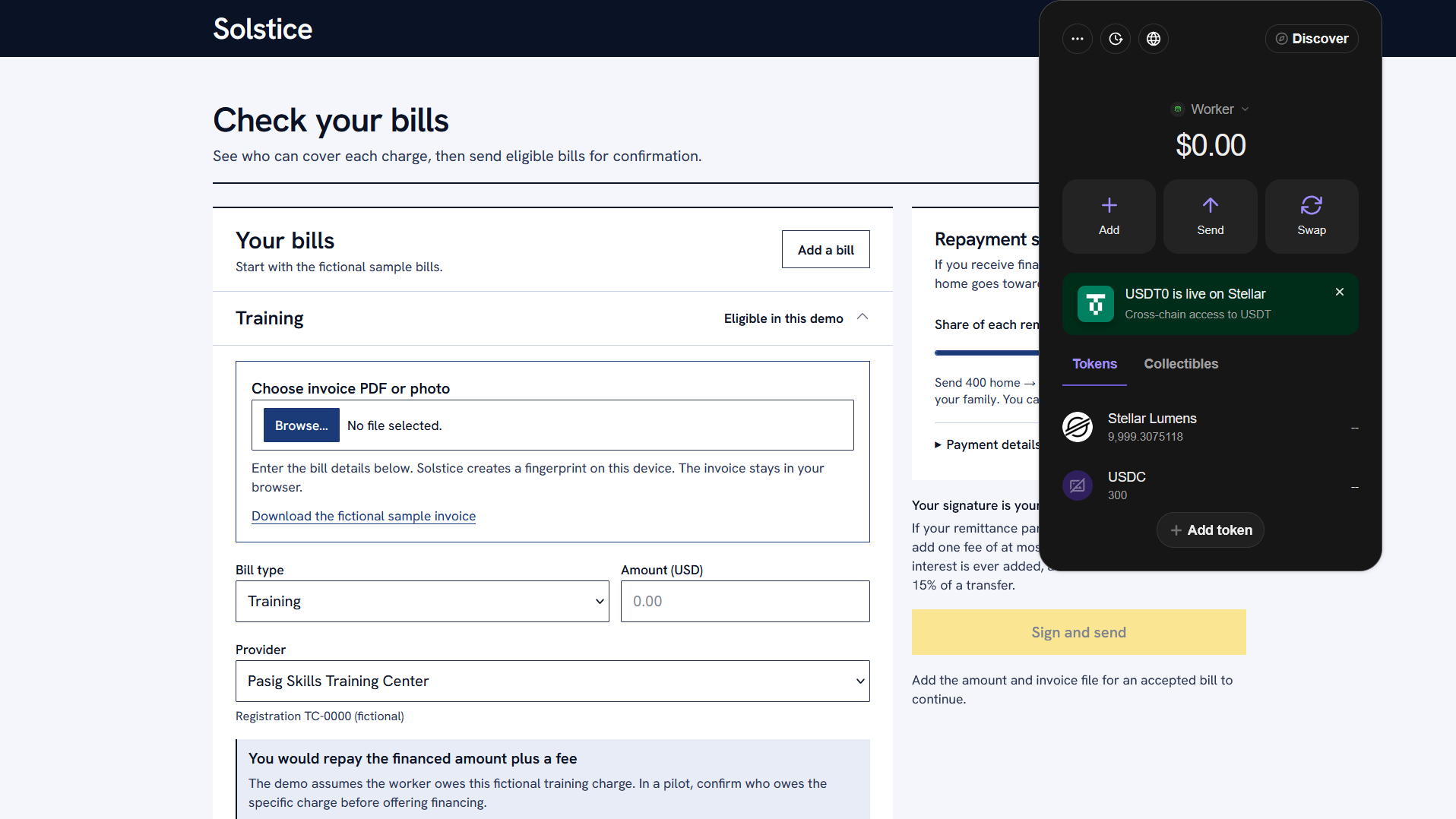
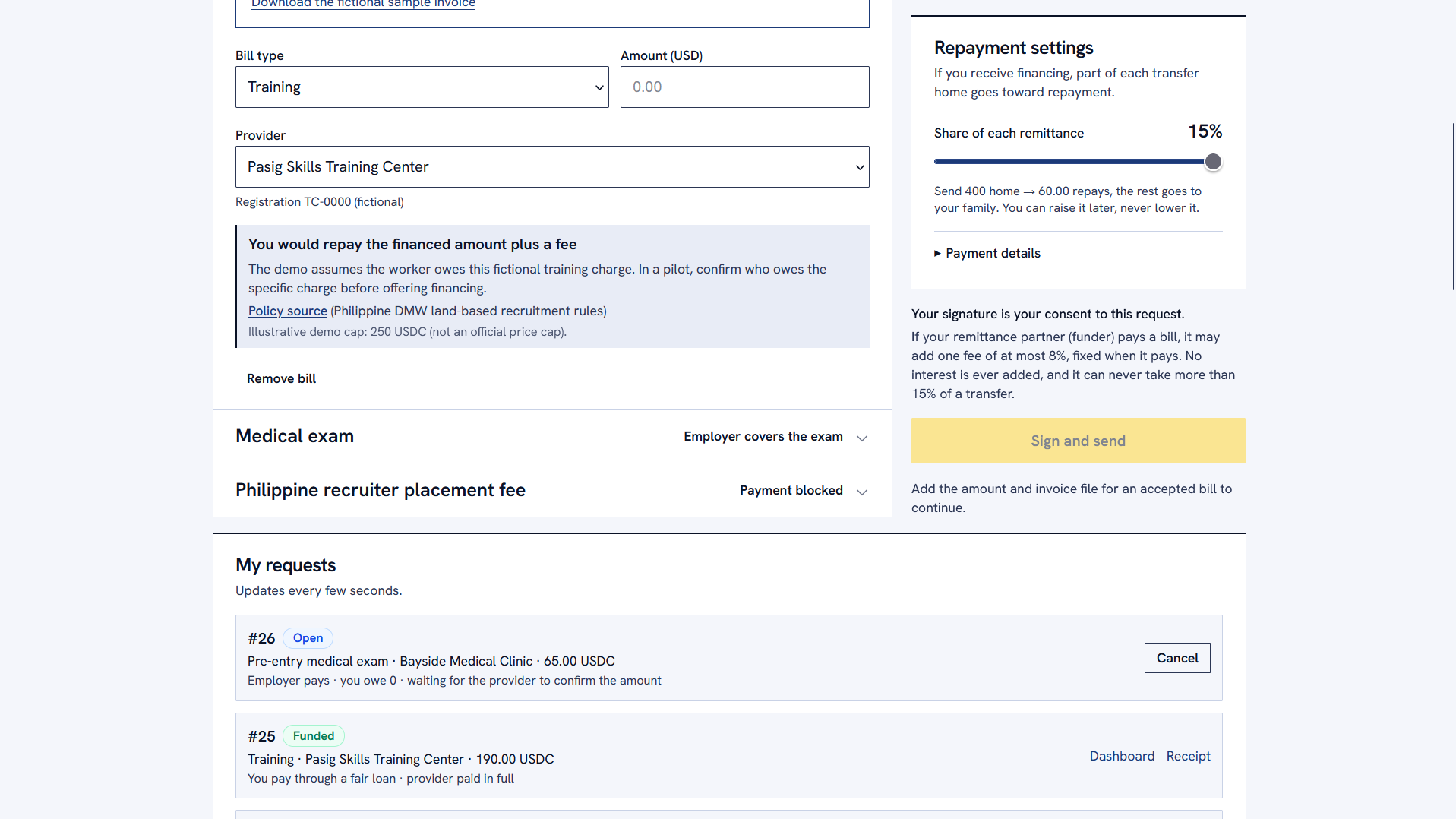
- Sort the bills. Maria (fictional) lists three. Her medical exam goes to the employer, and her 190 test-USDC training bill can be financed. A placement fee is refused on screen, because the funder's policy excludes it, in line with the Philippines' zero placement fee policy for domestic workers (DMW Circular 01-2023).
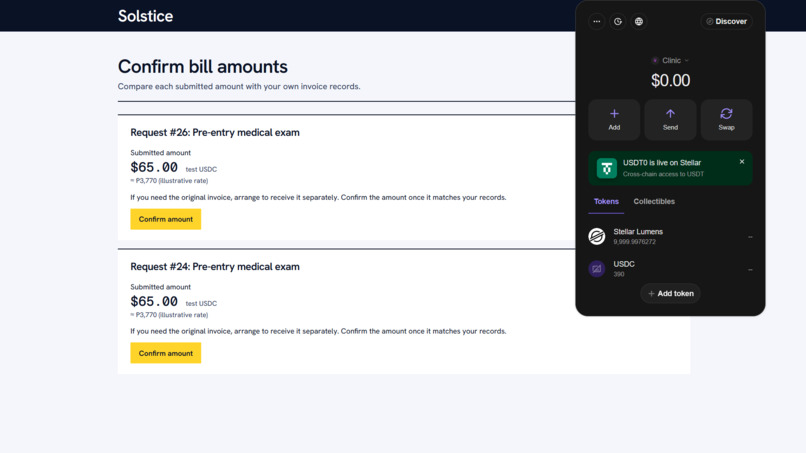
- Pay the provider directly. The school confirms 190 with its own signature, and the funder pays it. At the demo's 3% flat fee, Maria owes 195.70. The employer can pay the clinic 65 as a Grant, and she owes nothing for it.
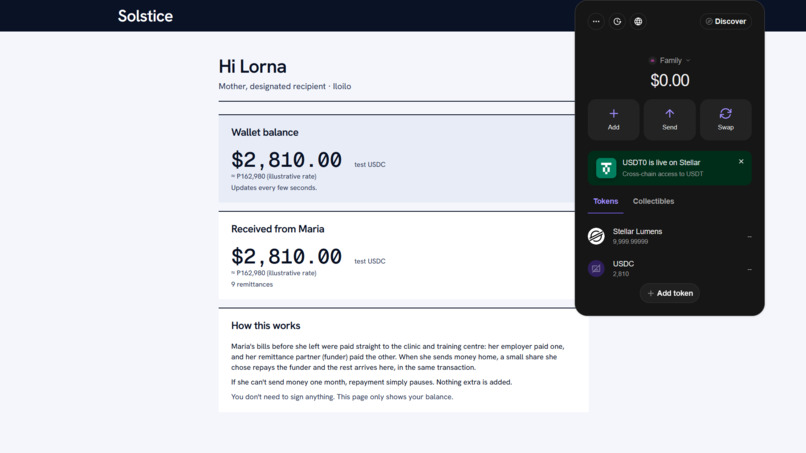
- Repay while sending money home. She sends 400 at a 15% share. In one transaction her family receives 340, the funder 60, and she now owes 135.70.
- Public receipt. No wallet needed. It shows the rule, payer, provider confirmation, invoice fingerprint and Stellar Expert links.
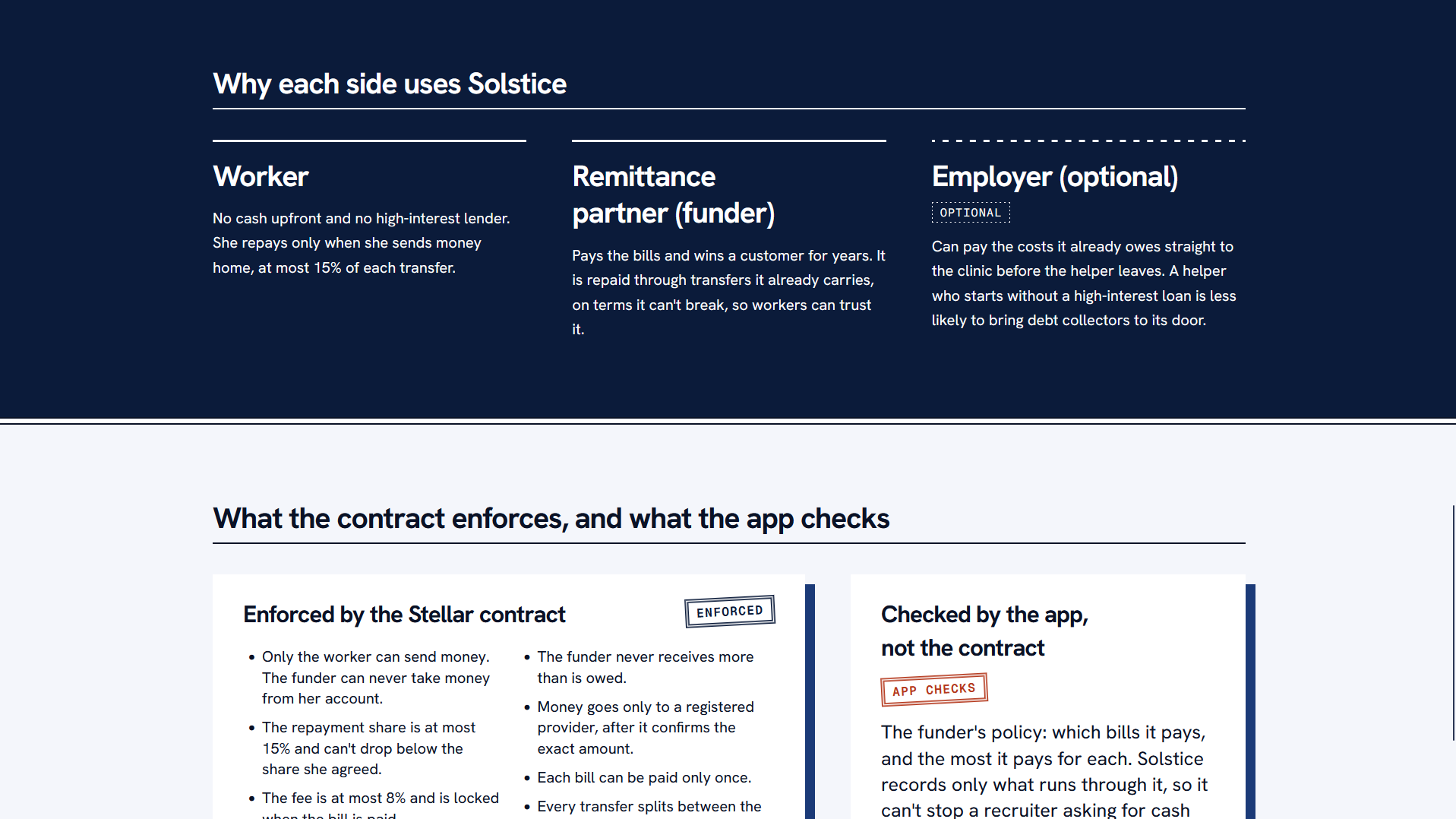
Why each side would use it:
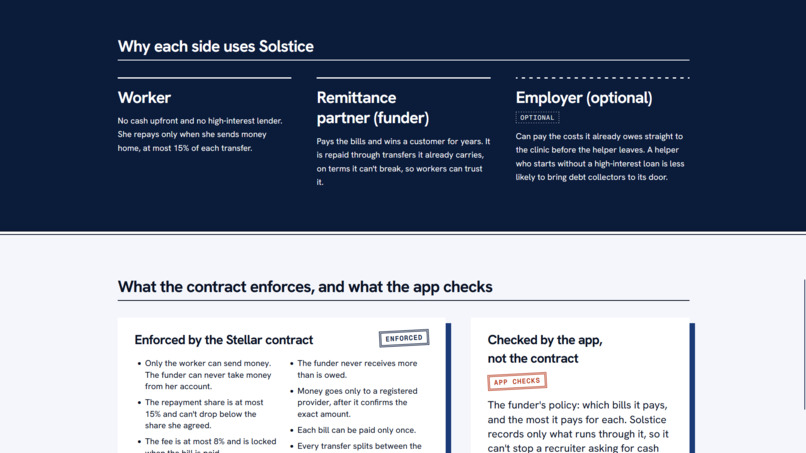
- Worker: her bills get paid without a high-rate loan, and she owes only the principal plus one flat fee.
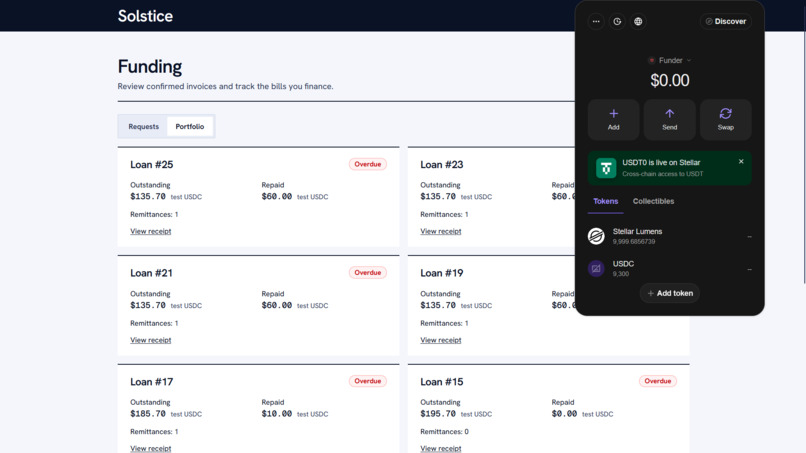
- Funder: it lends knowing the money went to a provider that confirmed the bill, with repayment split from each transfer automatically.
- Employer: it can pay what it already owes up front, with a receipt instead of reimbursement later, and can help its helper avoid the high-rate debt that has led collectors to call employers.
The track's four questions:
- All-in cost: the principal plus one flat fee locked at funding (3% in the demo). No interest, no late fees.
- Repayment: 1–15% of each transfer home, set by the worker and never below the agreed floor. The funder never receives more than what's owed.
- Falling behind: nothing is taken and the balance doesn't change. After more than 3 missed periods, the loan is flagged for the funder to follow up, with no penalty.
- Who holds the assets: each party keeps its own funds. The funder pays the provider directly, and only the worker can move her money.
How Solstice differs: reimbursement makes the worker pay first, high-rate lenders charge far more, and there is no government loan today for a first-time worker's pre-departure costs. A 2008 one was suspended after borrowers didn't repay, and a 2026 interest-free loan is only a Senate bill. Bank OFW loans need a Hong Kong ID and job contract. Remittance-linked repayment exists elsewhere (DFCC in Sri Lanka). Solstice is designed to fix that gap, and our difference is direct payment to the provider, on terms the funder can't break.
How we built it
A Rust smart contract on Stellar's Soroban platform, and a Next.js and TypeScript app that signs through the Freighter wallet.
On-chain vs off-chain: the contract holds the registered providers, requests, confirmations, loans and repayment splits. The funder's policy and provider names live in the app. Invoices stay on the worker's device, and only their SHA-256 fingerprint goes on-chain.
Security and trust, enforced by the contract:
- payments go only to registered providers, after they confirm the amount;
- paying the provider and creating the loan happen in one transaction, so a failed payment leaves no loan;
- the fee is locked at funding;
- the repayment share is capped at 15%;
- each transfer home is split atomically, never paying the funder more than what's owed;
- the funder can never pull money from the worker.
Why Stellar: one transaction splits each transfer between family and funder for a fraction of a cent, and anyone can verify the receipt without trusting us.
User experience: a page for each role, amounts in USD with an illustrative peso equivalent, and receipts that open with no wallet.
Challenges we ran into
- Proof without exposing invoices. A fingerprint shows a file is unchanged, not that it's genuine, so the provider's signed confirmation covers the amount.
- One error number, two causes. On testnet, a low funder balance fails inside the USDC token with error #10, the same number as our fee error. We documented it so the app can tell them apart.
- An expiring token. Our test-USDC token's data would have expired before the showcase. We extended it and automated the check.
Accomplishments that we're proud of
- A working build on Stellar testnet, run end to end with Freighter: request, confirmation, Loan and Grant, a split transfer, a missed period, and the receipt.
- A Soroban contract built from scratch, with 93 unit tests. They cover every number in our spec (195.70 down to 0), every error and its limits, a failed funding leaving no loan, wrong-signer checks, and the full demo.
- Mock and chain agree. One scripted flow passes on both with identical numbers, and the app has 160 tests.
What's next for Solstice
- Sustainability: one flat fee per loan (3% in the demo) is the revenue, and employer-paid bills cost the worker nothing. How that fee is split between the funder and running Solstice is still to be tested. A real launch needs a lending partner, identity checks by that partner, and a cash-out partner in the Philippines. No remittance company, employer or agency has signed up.
- Measuring impact: the amount borrowed compared with the total bill, the all-in cost, the days until the provider is paid, and how much of each transfer reaches the family.
- Stellar roadmap: anchors and SEPs for cash-out, path payments, and fee-bump transactions so workers don't need XLM.
Testnet only. All people, organizations and invoices are fictional; all money is test USDC.
Built With
- css
- freighter
- next.js
- rust
- shadcn/ui
- soroban
- stellar
- tailwind
- typescript
- vitest
