
Inspiration
Perimenopause arrives sideways. Fatigue, brain fog, sleep that falls apart, cycles that stop following any rule. The apps women reach for are fertility trackers with a "perimenopause mode" bolted on — they keep saying your period is late, which is the single most useless thing you can tell someone whose cycle is destabilizing.
The bigger problem shows up at the doctor's office. Fewer than 20% of US doctors have any menopause training, and the most common thing women hear is "it's probably just stress." Women in forums describe scrolling through apps taking screenshots in the exam room, trying to prove what's happening to them. I wanted to hand the doctor one page of evidence instead.
What it does
Solstice is a perimenopause tracker that expects your cycle to be irregular.
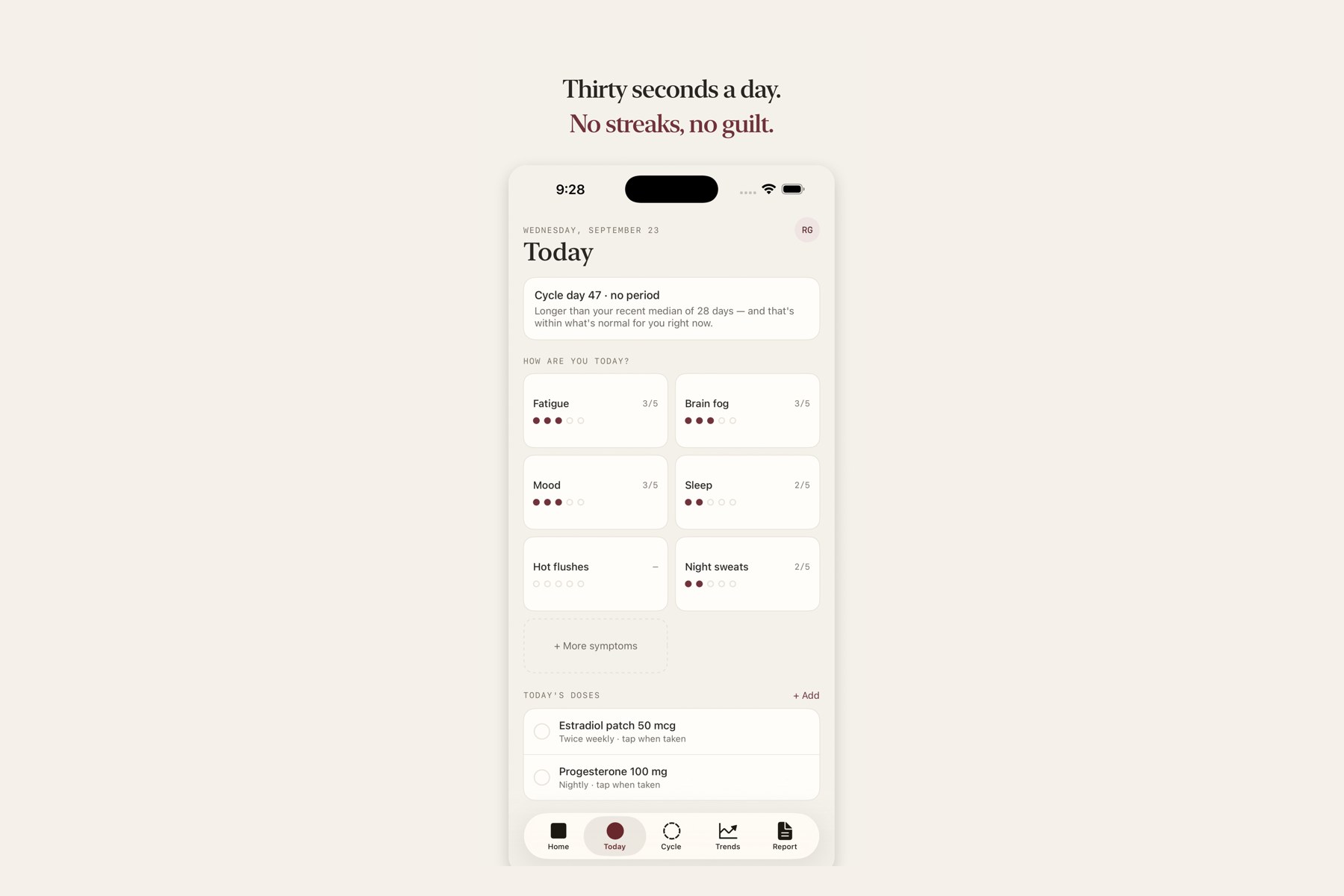
- 30-second daily logging. Tap a tile to rate fatigue, brain fog, mood, sleep, hot flushes — the symptoms women actually report most (from a Mayo/Flo study of 17,494 women), not the ones pop culture expects. No streaks, no guilt.
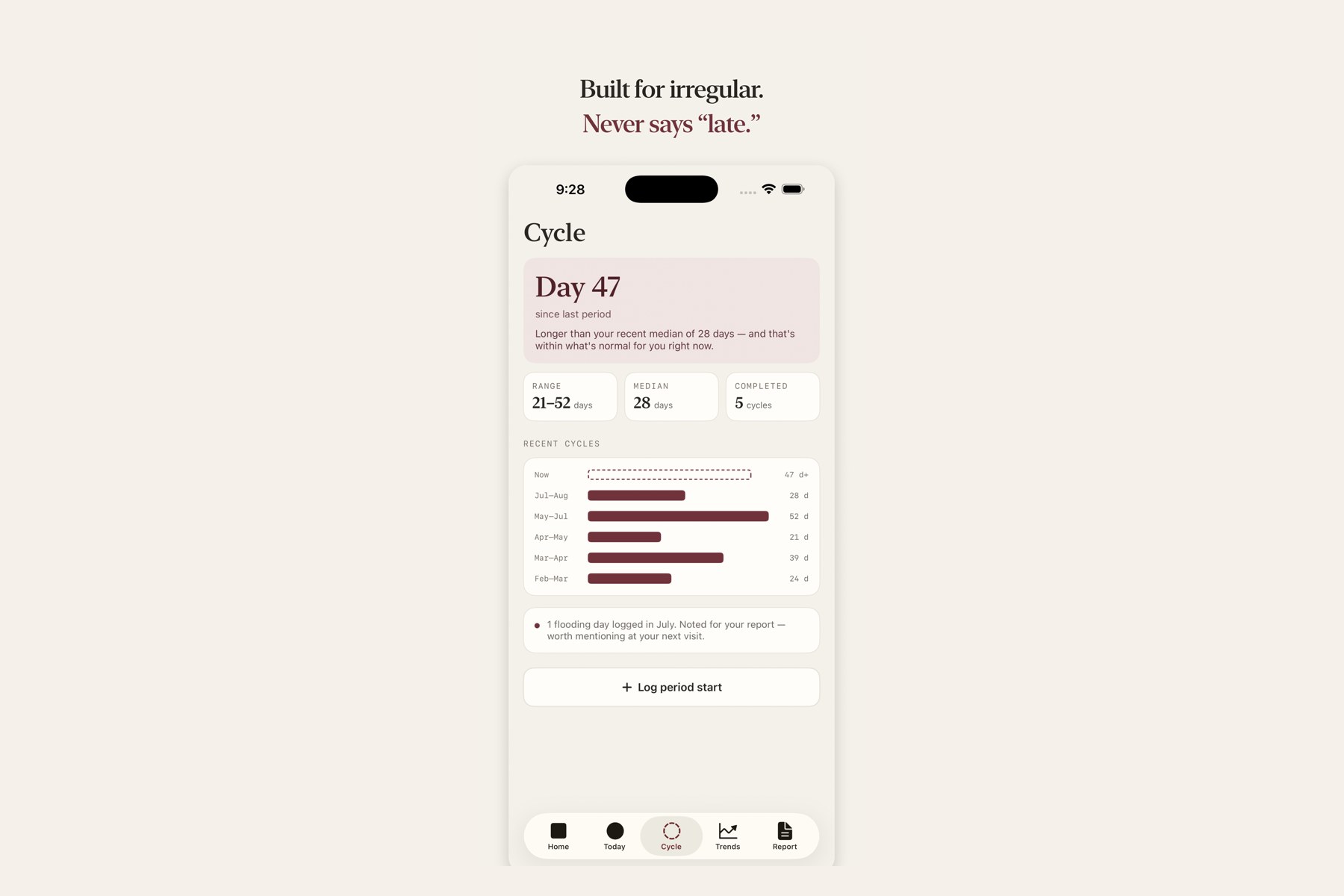
- Cycles built for irregularity. Stats only count completed cycles, so your median doesn't creep up every day you wait for a period. It never says "late."
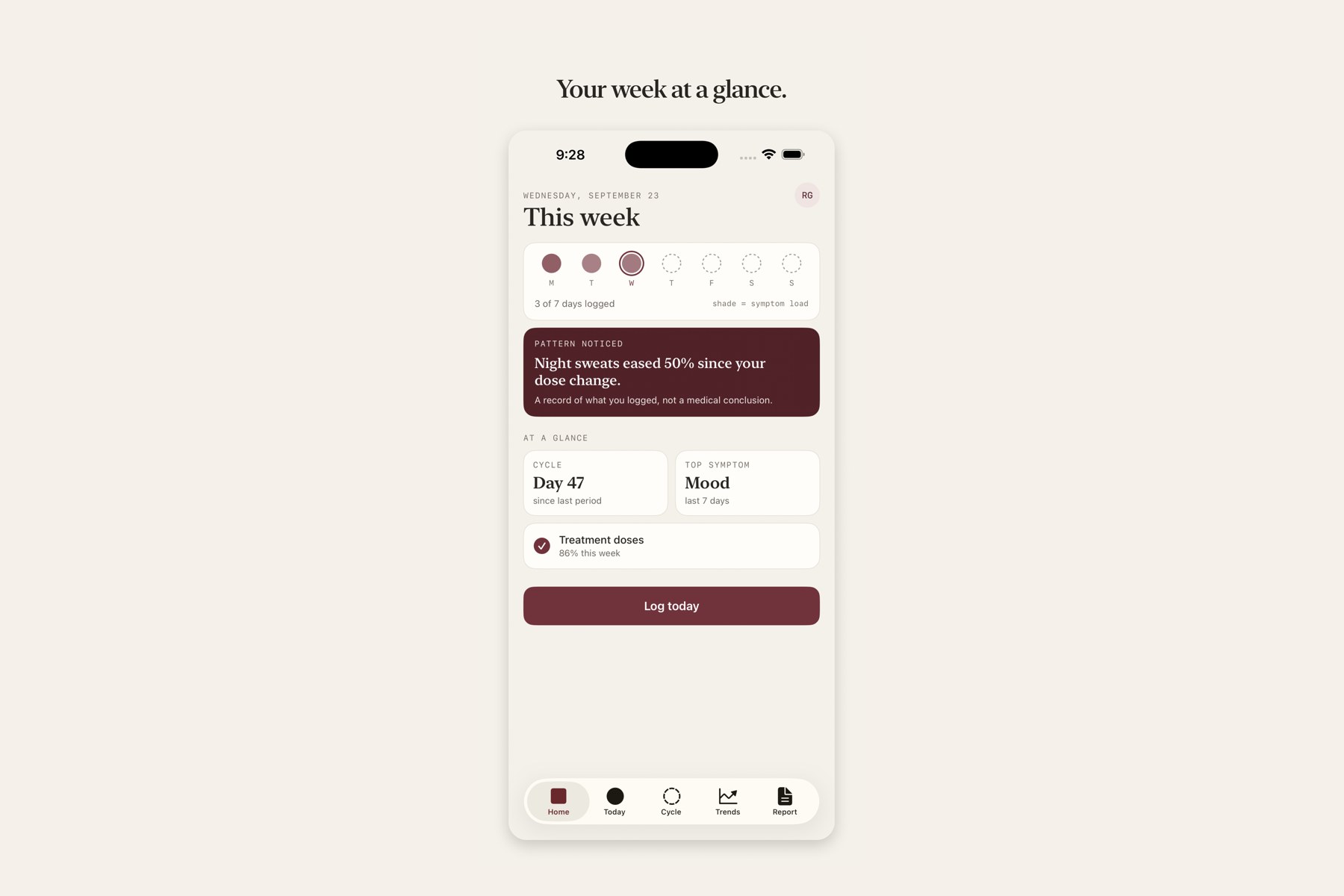
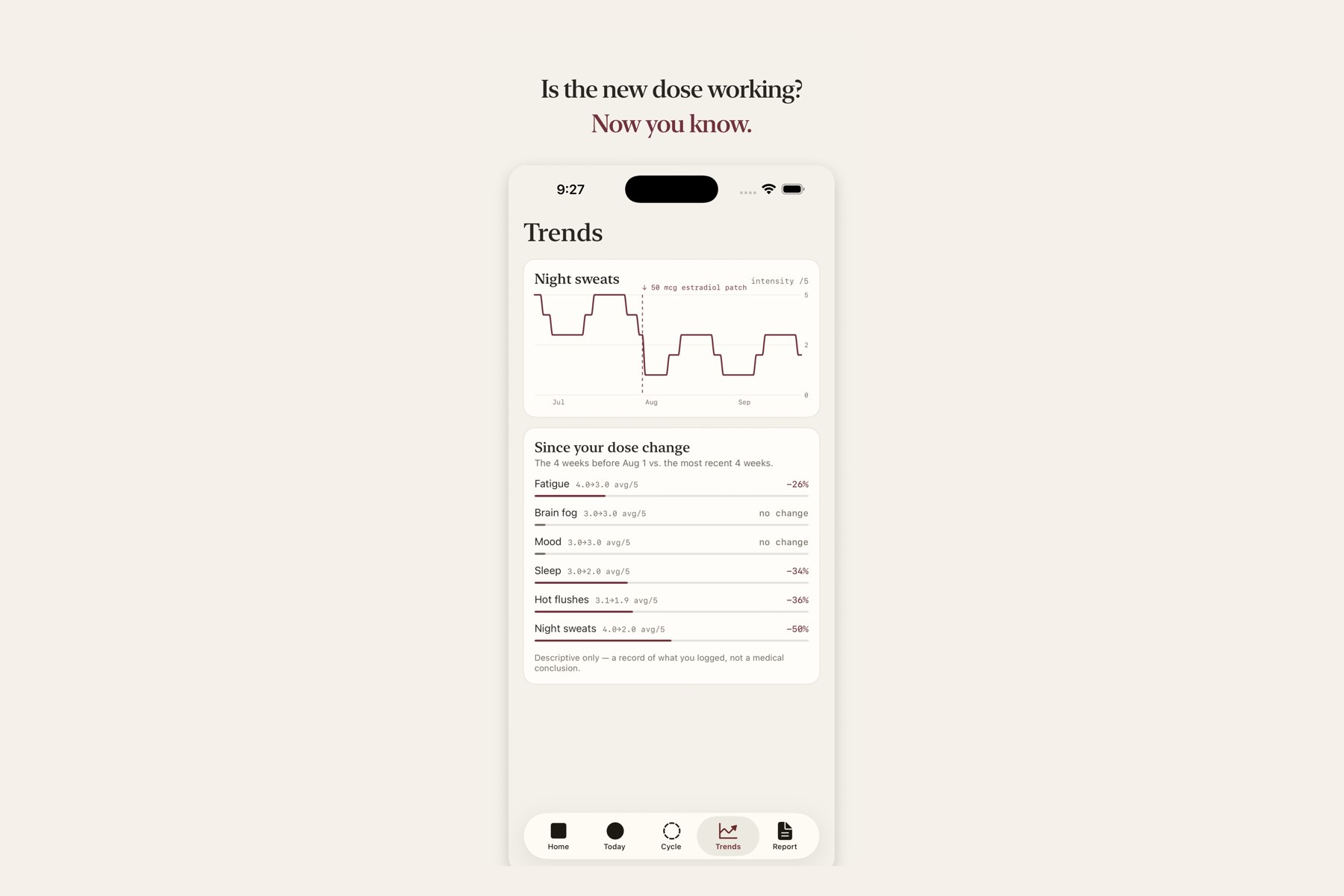
- "Is it working?" Add HRT or any treatment with a start date and Solstice compares the 4 weeks before the change with your most recent 4 weeks, symptom by symptom — the question every titration conversation turns on.
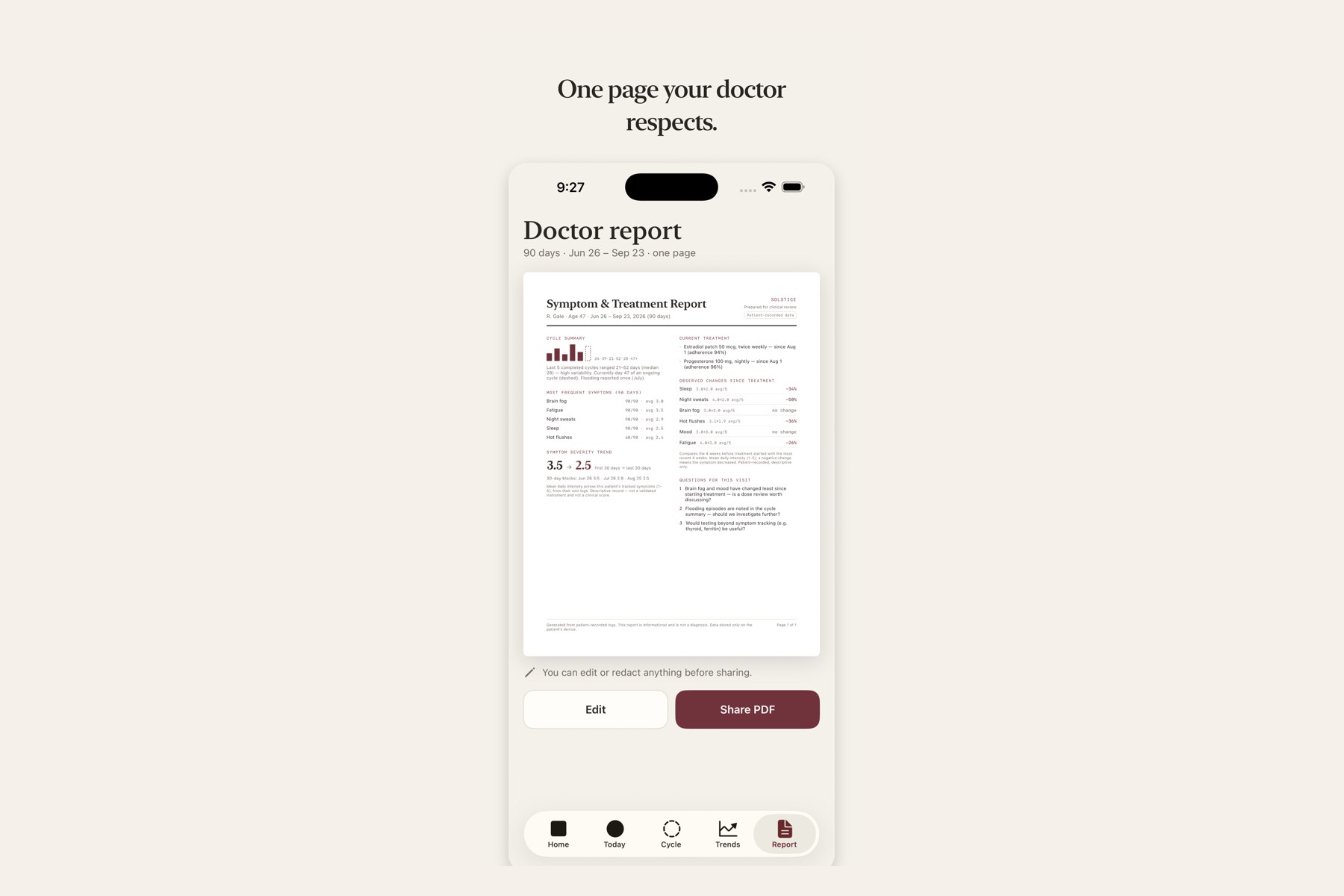
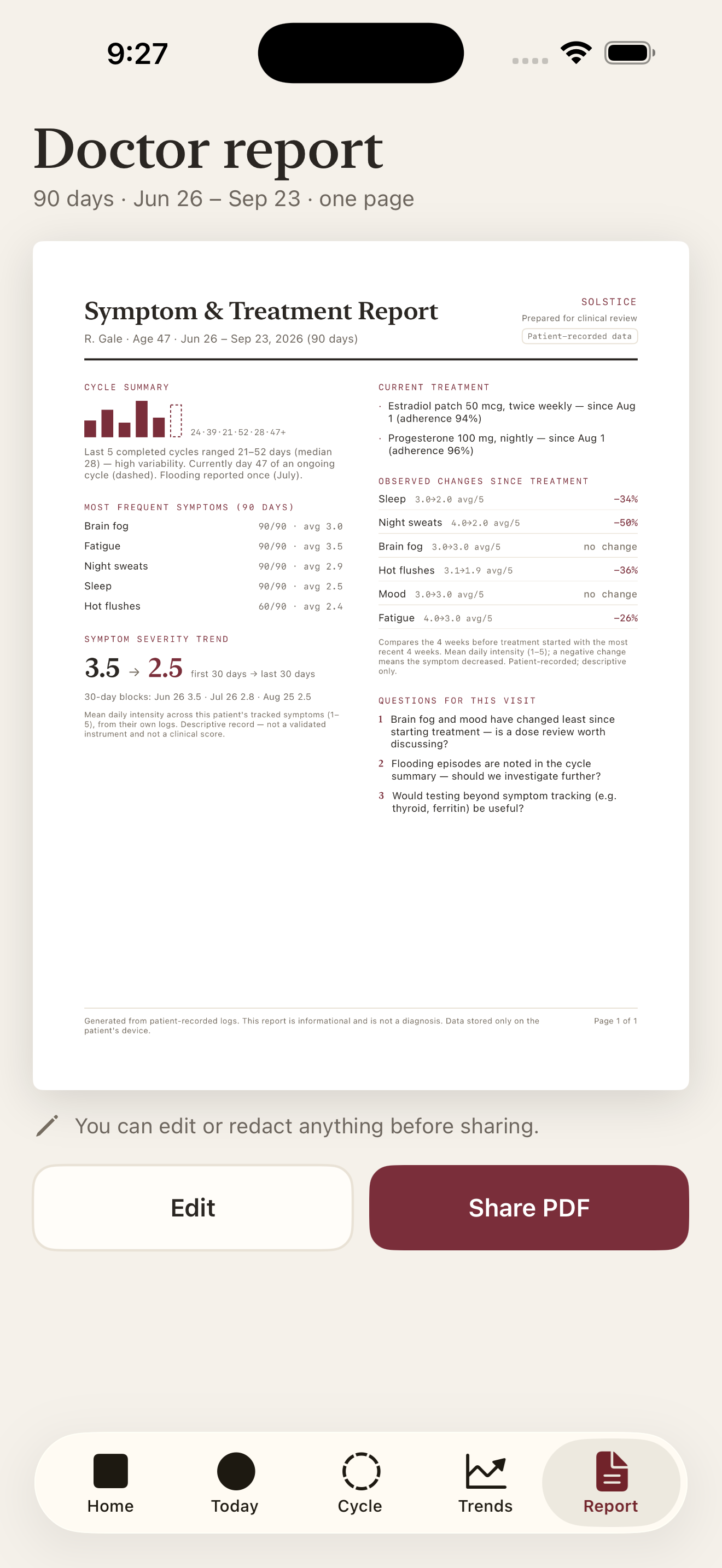
- The doctor report. A one-page PDF formatted for a 10-minute appointment: cycle history, most frequent symptoms with real numbers, treatment and adherence, observed changes, and three suggested questions for the visit. Redact anything before sharing.
- Private by design. No account, no servers, no analytics. Health data stays on the phone. Export everything as CSV — free, forever — and delete everything instantly.
How I built it
Native SwiftUI + SwiftData on iOS, with Swift Charts for trends and a vector PDF renderer for the report. There is no backend at all — that's the product, not a shortcut.
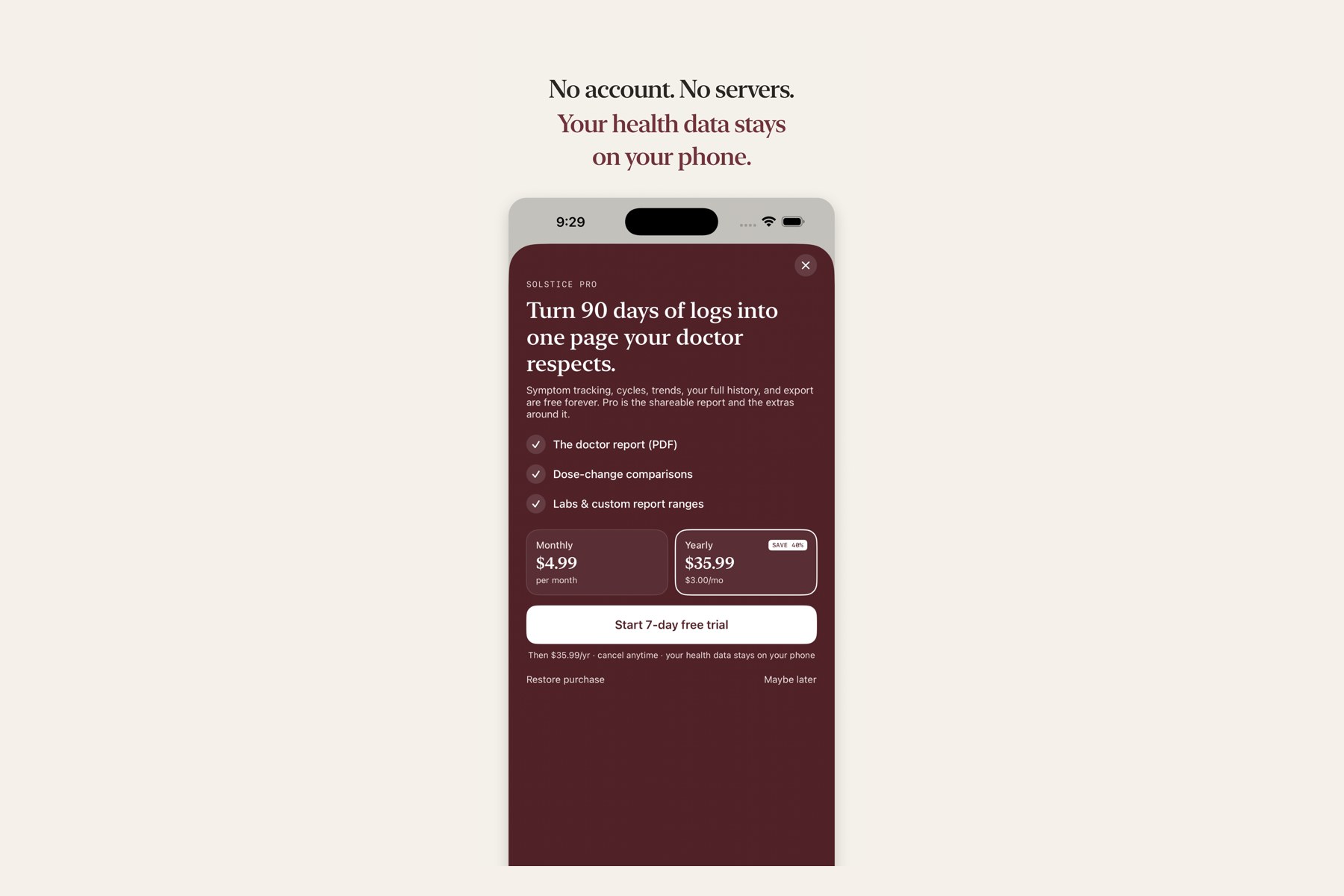
Monetization runs on RevenueCat: a pro entitlement with monthly ($4.99) and yearly ($35.99, 7-day free trial) packages in the default offering. Pro gates only the shareable report and comparison extras — logging, history, trends, and export are free forever. RevenueCat is the only third-party SDK in the app, and it never touches health data; the App Store privacy label is simply Purchases, not linked to you.
Challenges
- Honesty over features. Every credible menopause questionnaire (MRS, Greene) is licensed, and the one free option was authored by a competitor. Instead of inventing a fake "perimenopause score," v1 ships as a pure tracker, and every analysis is labeled as a descriptive record — not a diagnosis.
- Getting the math right for this audience. Counting an open cycle in the median, or comparing partial calendar months, silently produces numbers that look authoritative and are wrong. Both are enforced by tested types, not UI code.
- Privacy copy is a legal surface. "No data ever leaves your phone" is false the moment you buy a subscription. Every claim in the app is scoped to what we actually control.
What I learned
The moat in women's health isn't more content or an AI chatbot — it's being trustworthy and taking women seriously. Building the thing I wanted in the exam room turned out to be the whole strategy.
What's next
Apple Health sleep/heart-rate import, lab logging, optional iCloud backup (off by default), and a licensed validated instrument if the terms make sense.

Log in or sign up for Devpost to join the conversation.