Inspiration
When the land begins to change, knowing what to do next becomes increasingly difficult.
In the drylands of northern Chile, drought is not simply a lack of rainfall. It affects how people cultivate the land, manage limited resources, and imagine the future of their communities.
Yet environmental information does not always translate into practical guidance. Maps, forecasts, and indicators can describe a landscape, but they do not necessarily tell someone what deserves attention during their next visit.
That gap inspired Solquira.
I wanted to explore how technology could help growers and agricultural advisers better understand environmental conditions and prepare meaningful next steps, without replacing their experience or local knowledge.
The idea grew from a simple question:
What should I look for when I return to the land?
Although inspired by Chile, Solquira addresses a challenge shared by dryland communities around the world.
What it does
Solquira helps turn environmental information into a clearer plan for observing and caring for the land.
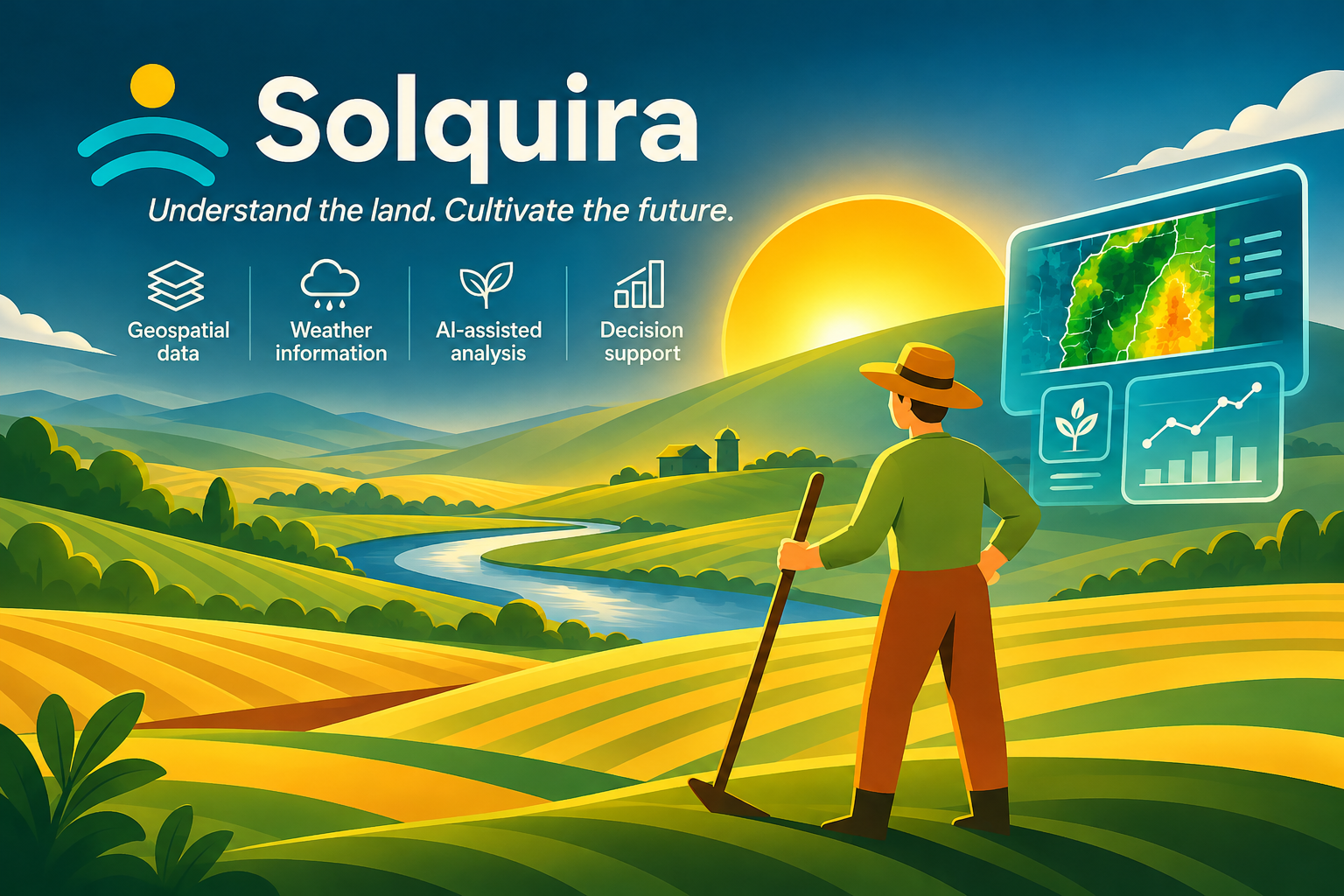
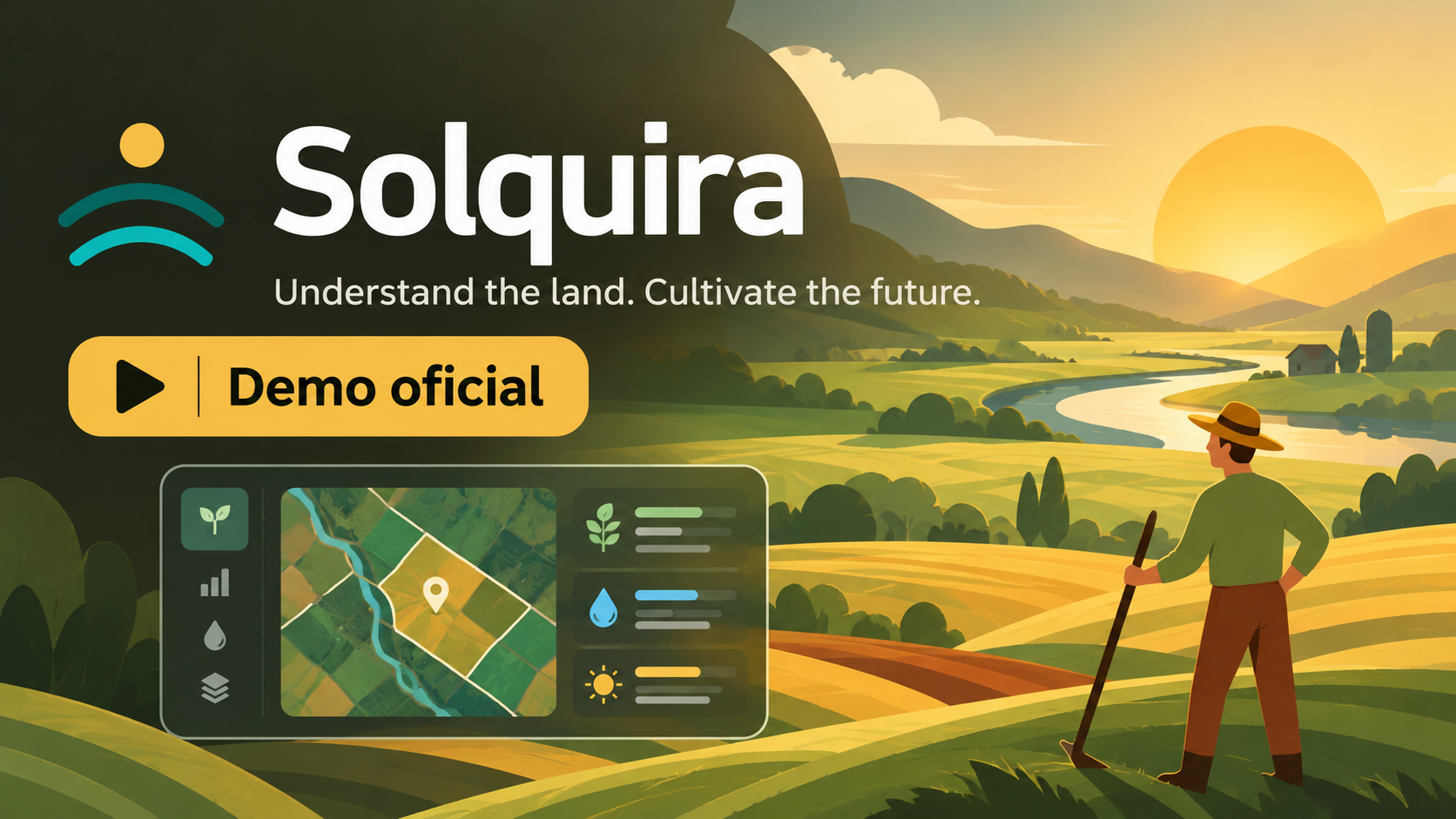
It brings together interactive maps, reference environmental scenarios, and AI-assisted guidance in a mobile-friendly experience.
A user can explore a landscape, compare soil and water conditions, and see how field priorities change between a dry period and a scenario in which rainfall returns. Optional satellite imagery and weather forecasts provide additional context.
Solquira then prepares a field brief: a practical summary of what to observe, which actions deserve attention, and what to consider before the next visit.
Rather than simply presenting information, the platform helps organize it around a useful question: What should I check next, and why?
The experience also makes its limitations visible. The current soil profiles are illustrative scenarios, not actual measurements from a selected property. They allow users to explore different conditions while the project progresses toward incorporating field observations and quantitative environmental data.
How I built it
I developed Solquira with a guiding principle: technology should make environmental information easier to understand, without presenting uncertainty as certainty.
The application combines a responsive interface built with React and TypeScript, interactive geographic tools, and a Python backend that calculates reference indicators and organizes field priorities.
For the AI component, I integrated NVIDIA Nemotron 3 Nano through Nebius Token Factory.
Instead of asking AI to independently assess agricultural conditions, Solquira uses it to make selected field actions easier to understand. The underlying calculations and priorities remain governed by defined rules.
This distinction is central to the project. AI contributes to how guidance is communicated, but it does not determine the environmental assessment.
I also designed the experience to remain useful when AI is unavailable. A complete field brief can still be produced, and users can inspect how its guidance was assembled.
The result is a working public preview that brings together environmental exploration, structured guidance, and transparent AI assistance.
Challenges I faced
One of the greatest challenges was finding the right balance between useful guidance and responsible communication.
Environmental decisions depend on context. A suggestion that sounds reasonable may still be inappropriate when important field information is missing.
During development, I found that AI-generated explanations could introduce assumptions beyond the information provided. I addressed this by narrowing the model's role and keeping its contributions within established boundaries.
Another challenge was distinguishing between different kinds of information: illustrative soil conditions, optional weather forecasts, and guidance generated by the application.
I wanted those differences to remain understandable to someone exploring the platform for the first time.
Finally, building a public experience with limited computing resources required careful choices about simplicity, reliability, and what genuinely needed AI.
Accomplishments I'm proud of
My most meaningful accomplishment is bringing Solquira from an environmental concept into a working application that people can explore.
The current preview connects four contrasting landscapes, interactive geographic context, changing environmental scenarios, and practical field-visit guidance.
It also demonstrates live NVIDIA Nemotron integration through Nebius Token Factory, while preserving the core experience when generative AI is unavailable.
I am particularly proud of the effort to make the system's reasoning more visible. Users can inspect where the guidance comes from rather than receiving an unexplained recommendation.
Solquira is not yet a field-validated agricultural advisory system. It is a functioning foundation for exploring how environmental information and carefully bounded AI can support better-informed observations.
What I learned
Building Solquira changed how I think about useful artificial intelligence.
More AI does not necessarily mean better guidance.
In environmental applications, the ability to explain where information comes from, acknowledge what remains unknown, and continue functioning when AI is unavailable can be just as important as generating a sophisticated response.
I also learned that building something technically functional is only one part of the challenge. Making it understandable, accessible, and worthy of further field validation is equally important.
The experience reinforced a belief that now guides this project: technology is most valuable when it strengthens people's ability to understand their surroundings and make informed decisions.
What's next
The next step is to bring Solquira closer to real agricultural conditions.
I plan to incorporate quantitative soil and environmental datasets, improve how uncertainty is communicated, and explore collaboration with agricultural advisers and farming communities.
Future development will also focus on field observations, records across visits, and opportunities for community-led monitoring.
The long-term ambition is to help people follow changes in their landscapes over time and connect environmental knowledge with practical care for the land.
Solquira — Understand the land. Cultivate the future.
Built With
- akamai-cloud
- cesiumjs
- cloudflare-tunnel
- fastapi
- nasa-gibs
- nebius-token-factory
- nvidia-nemotron
- open-meteo
- pydantic
- python
- react
- sqlite
- tailwindcss
- typescript
- vercel
- vite


Log in or sign up for Devpost to join the conversation.