Inspiration
Small businesses are silently punished by modern payment systems. Every time a $1 or $0.50 transaction happens, a large fixed fee from systems like Stripe eats into profit, making micro-commerce practically unsustainable. At the same time, we saw new infrastructure like Solana prove that value transfer can be nearly instant and almost free. The idea of SolPOS came from combining these two realities: remove financial friction and make small-scale commerce actually viable again.
What it does
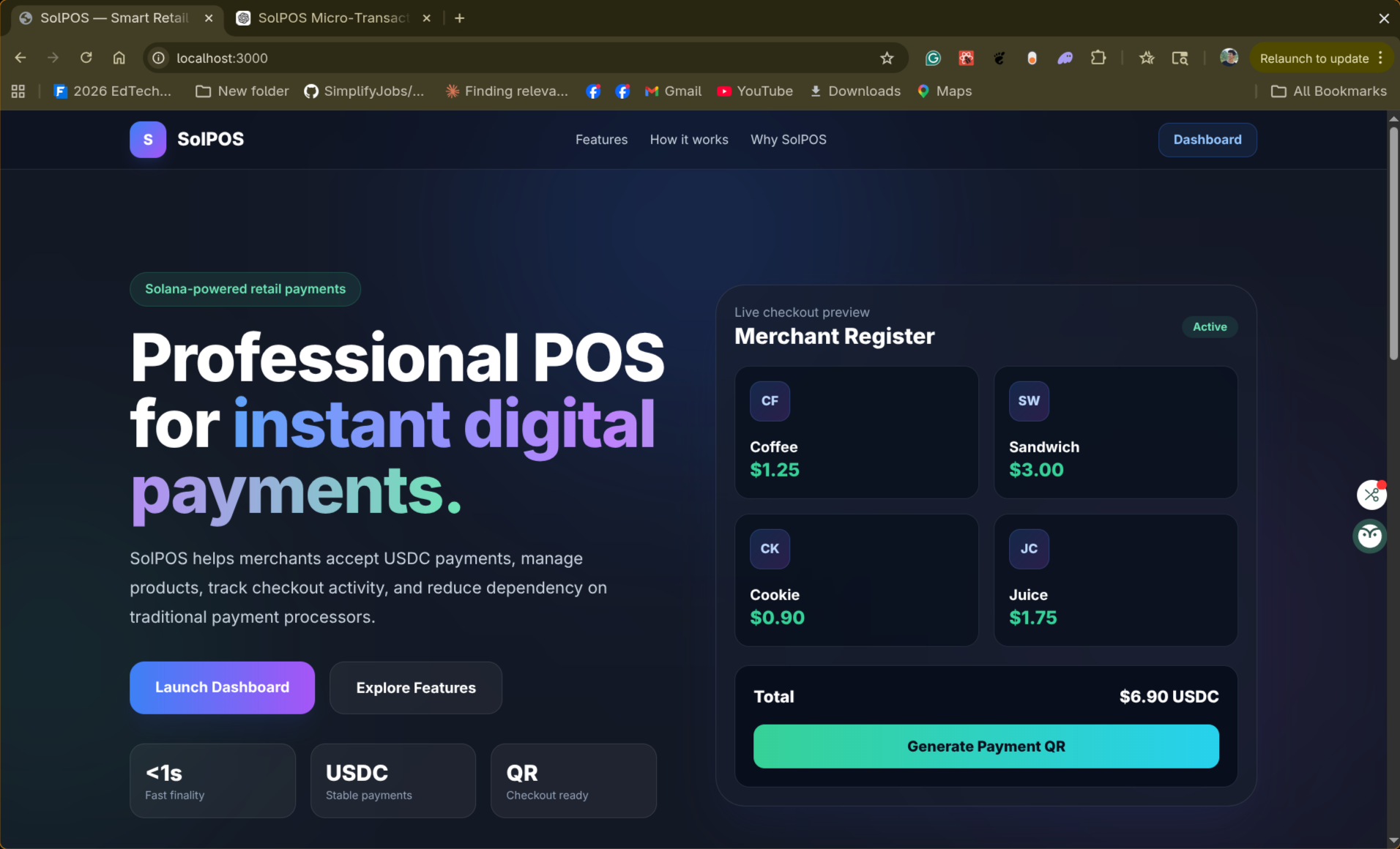
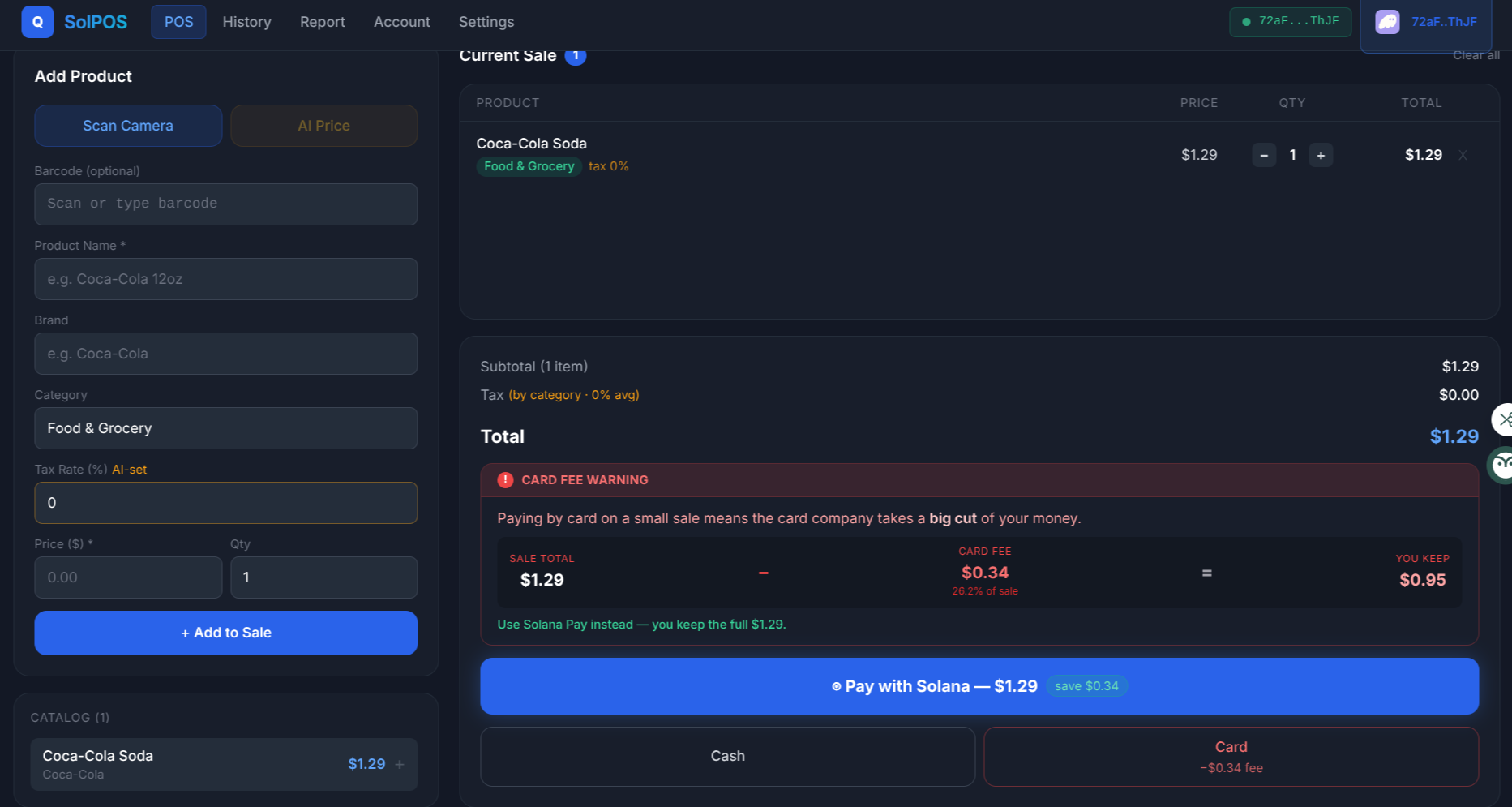
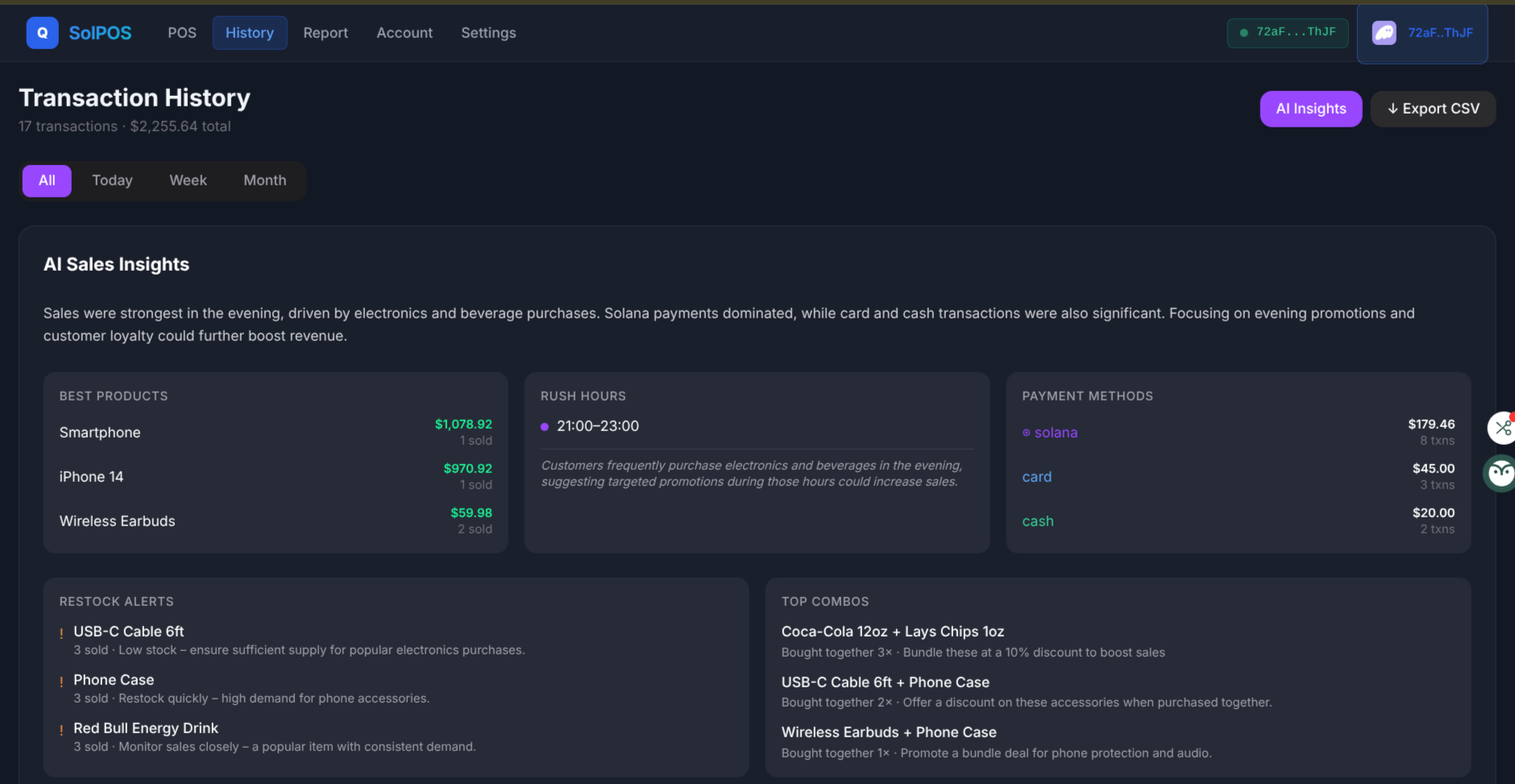
SolPOS is a smart point-of-sale system that enables instant, low-cost payments using Solana and settles transactions in USD Coin to avoid volatility. It replaces traditional checkout systems with a fast QR-based flow where customers pay in seconds. On top of that, it uses Google Gemini to automatically detect products via camera, generate product entries, and eliminate manual data input. It also provides real-time analytics, fee comparisons, refunds, and AI-generated business insights.
How we built it
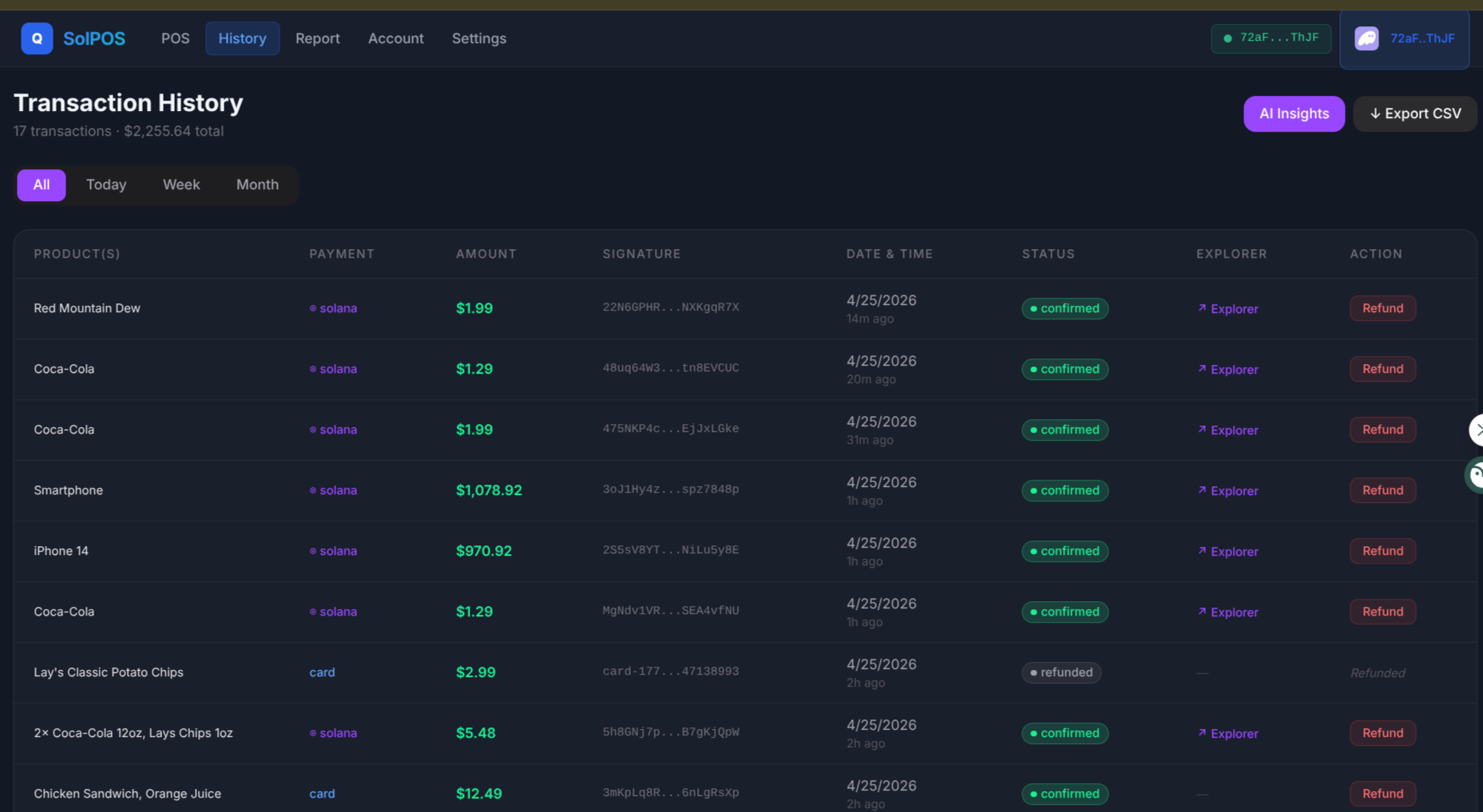
We built SolPOS as a full-stack web application integrated with the Solana ecosystem. The payment layer handles wallet-based QR transactions, while the backend processes transaction history, analytics, and refund logic. The AI module uses Gemini for image-based product recognition and auto-populates product data into the cart. We designed a dashboard that combines POS functionality with intelligent reporting so merchants can operate everything in one place.
Challenges we ran into
The biggest challenge was balancing speed, usability, and blockchain complexity. Handling wallet connections, transaction confirmation states, and error recovery in real time required careful design. Another challenge was integrating AI product detection in a way that felt instant and reliable in a checkout flow. We also had to design around real-world merchant behavior, ensuring the system stays simple even though the backend is technically complex.
Accomplishments that we're proud of
We successfully built a system where micro-transactions become economically viable again due to near-zero fees on Solana. We integrated AI-driven product entry that removes manual checkout friction entirely. We also created a unified dashboard that combines payments, analytics, and business intelligence in one system. Most importantly, we proved that a POS system can be both financially efficient and intelligently automated.
What we learned
We learned that the real problem in payments is not just speed—it’s structural cost per transaction. Even small fixed fees completely break micro-commerce. We also learned how powerful AI becomes when it is embedded directly into workflows instead of being a separate tool. Finally, we gained deeper understanding of how blockchain systems like Solana can reshape real-world commerce when applied correctly.
What's next for SolPOS
Next, we plan to add offline transaction support, advanced inventory management, and smarter AI pricing suggestions. We also want to expand mobile-first features so street vendors can operate entirely from a phone. Long term, SolPOS aims to become a full intelligent commerce layer for micro-businesses, where payments, analytics, and automation all merge into one seamless system.
Built With
- fintec
- geminiapi
- javascript
- phantomwallet
- solana


Log in or sign up for Devpost to join the conversation.