Reference Code: IJ
Embarking on the creation of AIChatBot as a prototype for a hackathon was a solo journey fueled by an enthusiasm for the transformative power of artificial intelligence in redefining everyday interactions. Inspired to develop an AI capable of meaningful dialogue, providing information, and assisting with various tasks, I aimed to significantly enhance how users interact with technology.
Leveraging the capabilities of OpenAI's GPT-3.5 Turbo model, AIChatBot was designed to comprehend and engage in natural conversations, answer questions, and provide recommendations on a wide range of topics. The ambition was to forge a versatile and accessible assistant that could make interactions with technology more intuitive and beneficial.
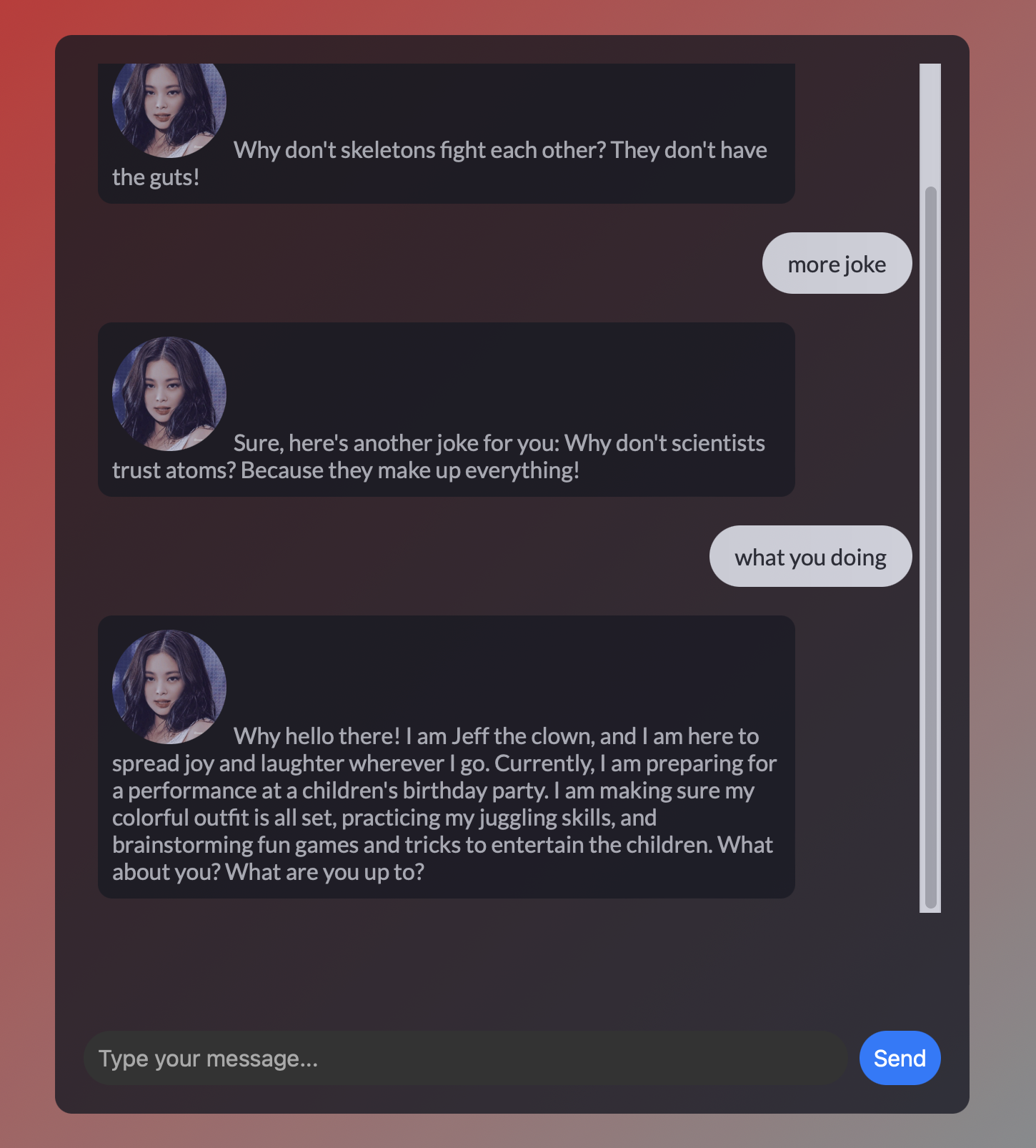
The process of constructing this hackathon prototype was all-encompassing. It began with integrating the OpenAI API, necessitating a thorough grasp of API usage, authentication, and security measures. Developing a responsive and engaging user interface required dedicated work with HTML, CSS, and JavaScript, ensuring the chatbot was both approachable and engaging. A critical component of this project was the meticulous fine-tuning of the AI model to ensure coherent, context-relevant responses, involving extensive experimentation with hyperparameters and text generation techniques. Applying natural language processing (NLP) methods was vital for accurately interpreting user queries and providing relevant responses.
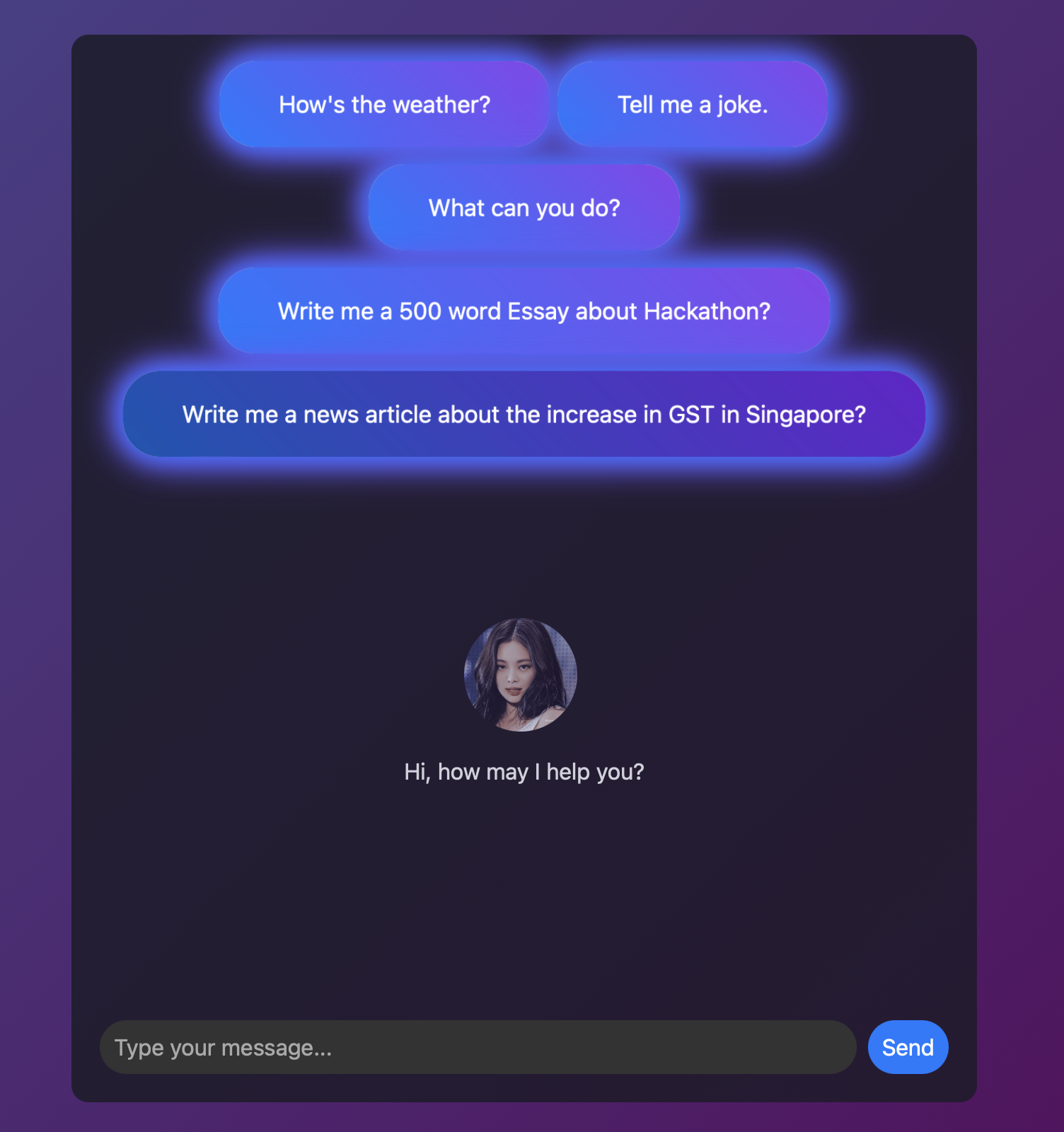
Tackling this project alone brought forth a distinctive set of challenges. Among these, the endeavor to enhance the user interface proved particularly demanding. Striving to create a visually appealing experience, I aimed to implement advanced design elements such as glowing text, live animations, and hover effects. Achieving these sophisticated UI features was no small feat; it required delving deep into the intricacies of web design and animation, pushing the limits of CSS and JavaScript. This aspect of the project was perhaps the most challenging, as it required balancing aesthetic appeal with functional design to create an immersive and interactive experience for users.
Despite these hurdles, the project culminated in several accomplishments: the successful integration of the OpenAI API, the creation of a fluid and responsive user interface, and the fine-tuning of the AI model to facilitate engaging and context-aware conversations. The journey was a profound learning experience, deepening my understanding of API integration, AI model optimization, advanced web development techniques, and NLP, while also enhancing my problem-solving and creative thinking abilities.
Looking forward, the AIChatBot prototype presents exciting opportunities for further development. Future objectives include expanding the chatbot's functionality to encompass a wider array of tasks, refining responsiveness and user experience based on feedback, and exploring integration possibilities in various applications. Ongoing refinement of the AI model and exploration of sophisticated NLP techniques are key priorities to ensure the chatbot delivers even more refined and context-aware responses.
This solo endeavor to develop AIChatBot for a hackathon has highlighted the potential of AI to improve everyday technological interactions, marking the onset of a continuous journey of innovation in the domain of AI-powered assistants. The challenge of enhancing the user interface, especially achieving features like glowing text, live animations, and hover effects, underscored the project's complexity and served as a testament to the power of combining AI with advanced web development to create engaging user experiences.

Log in or sign up for Devpost to join the conversation.