-
-
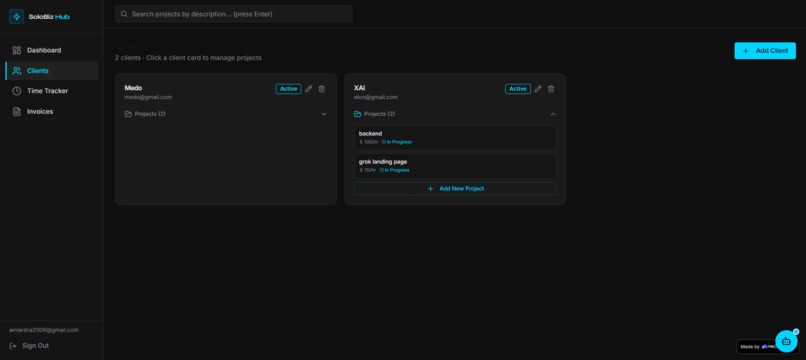
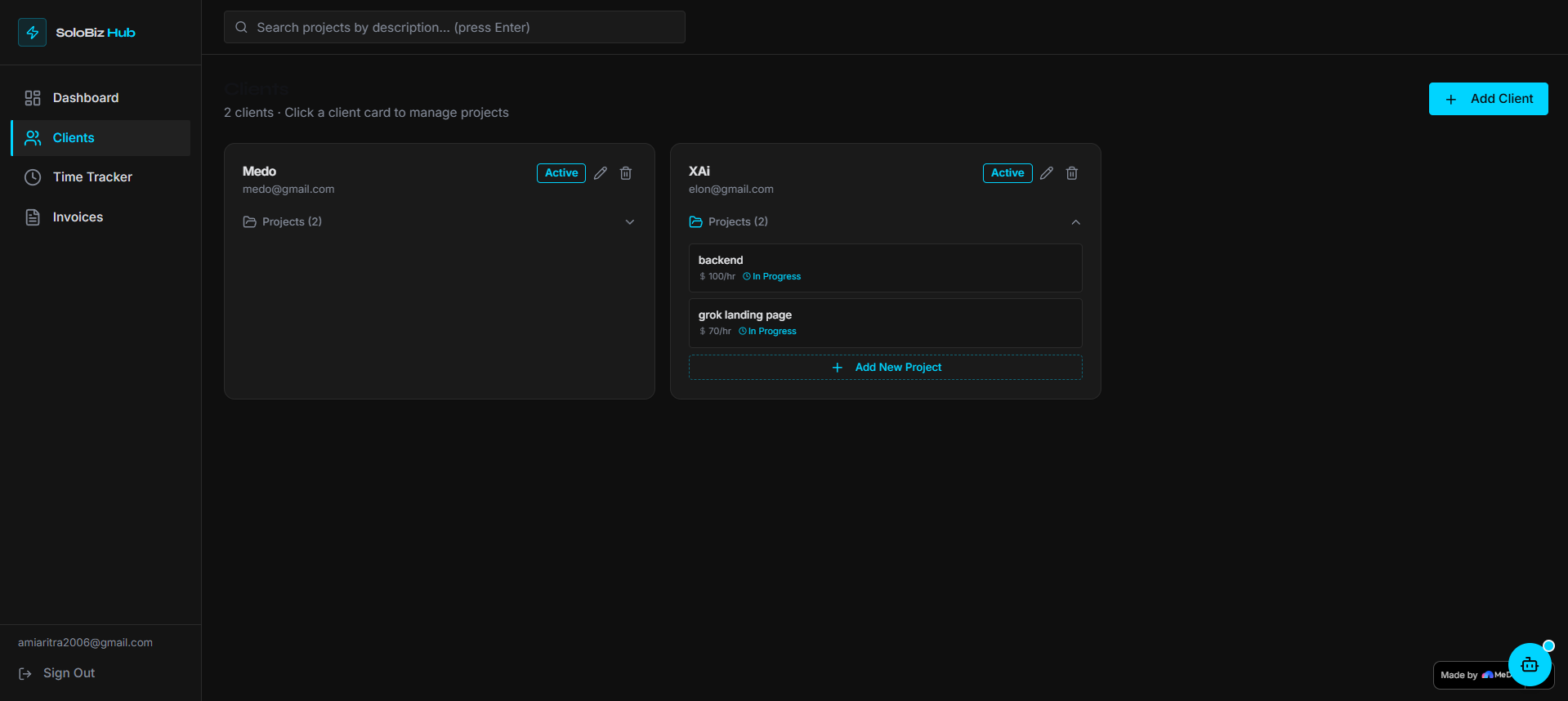
Client
-
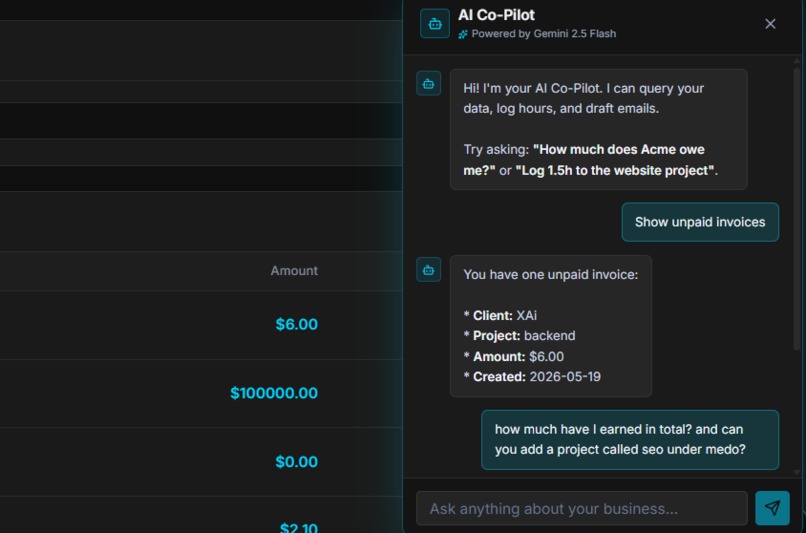
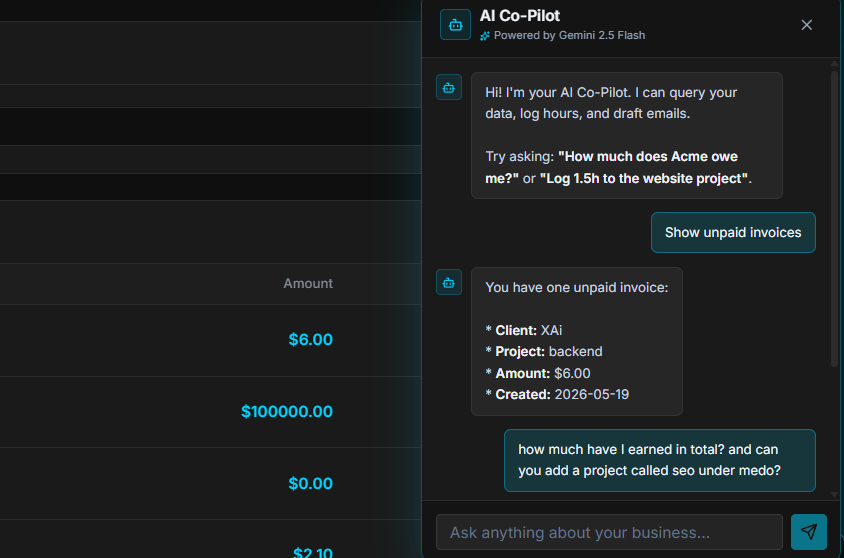
AI Chatbot
-
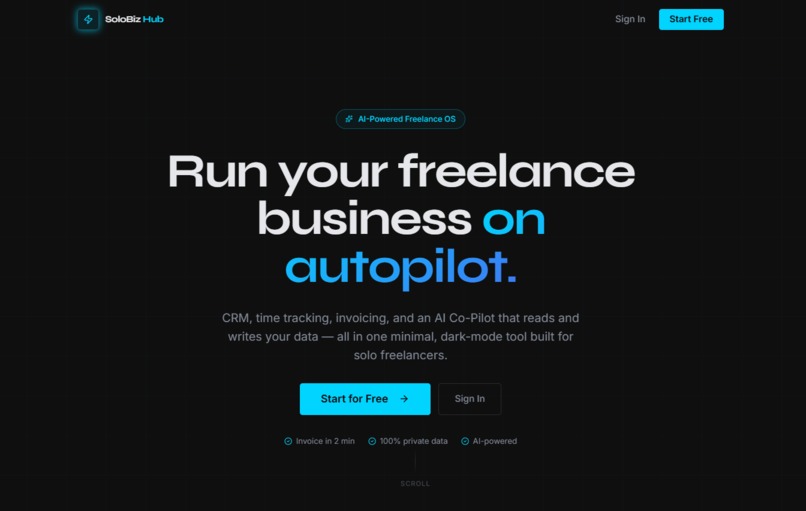
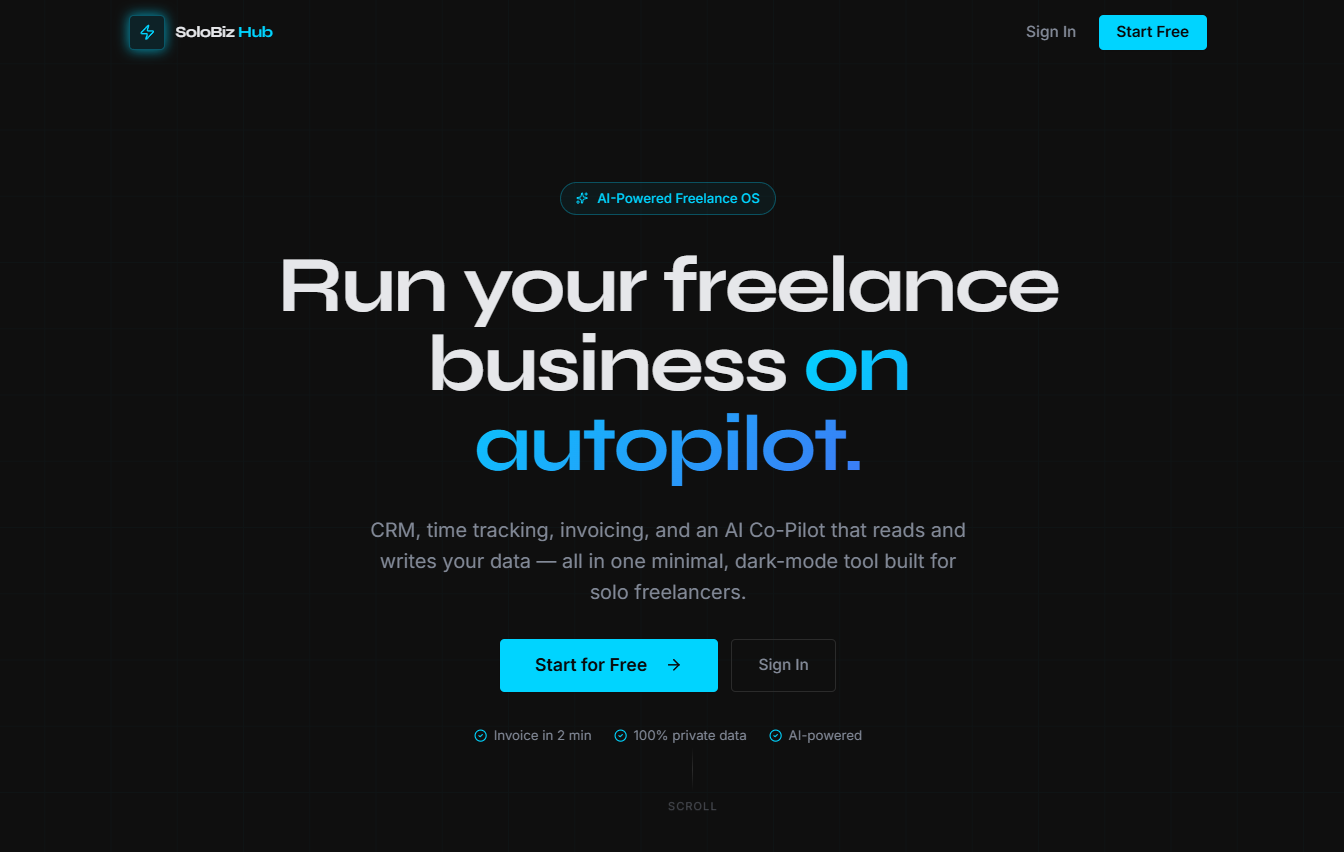
Landing Page
-
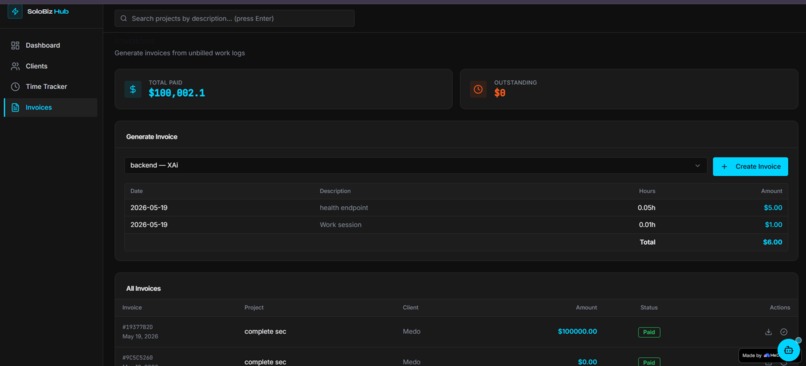
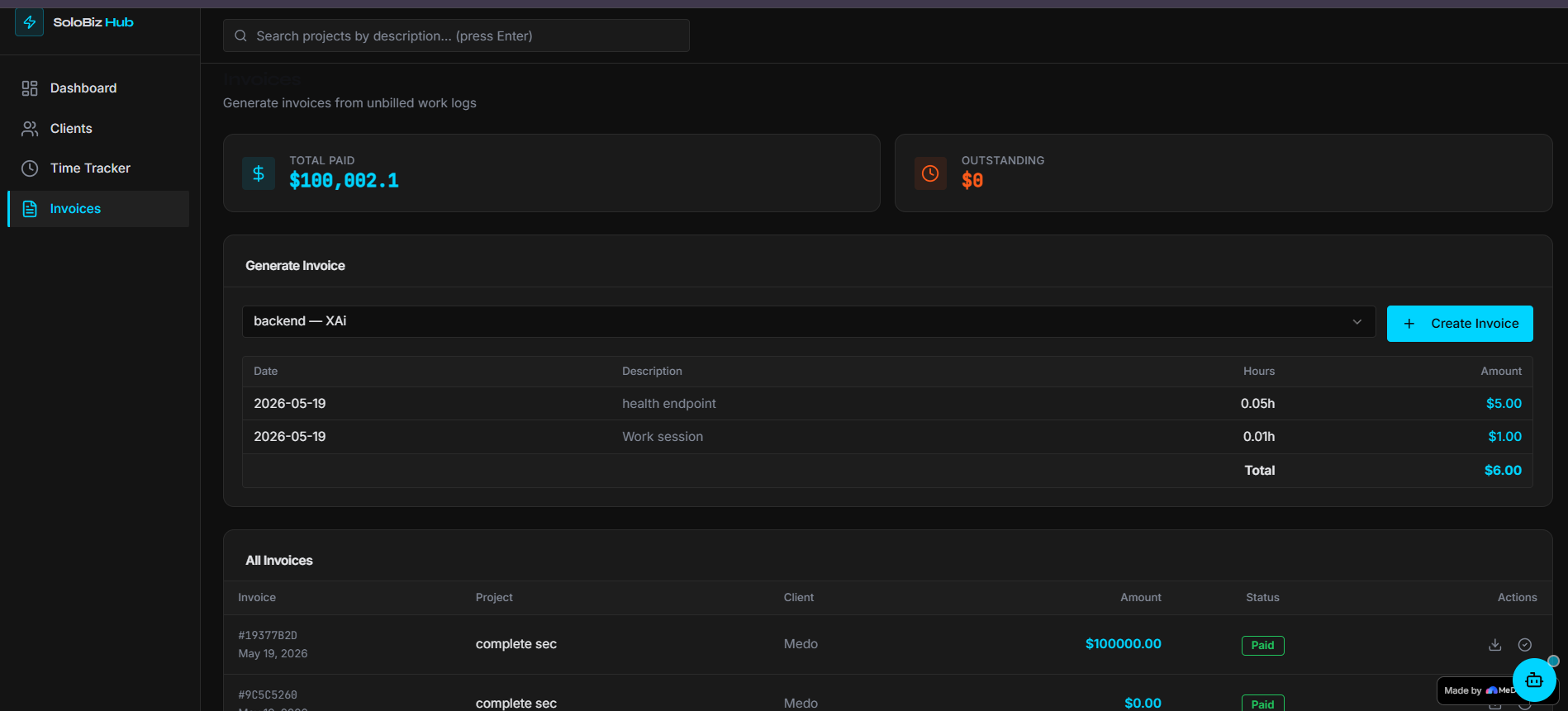
Invoices
-
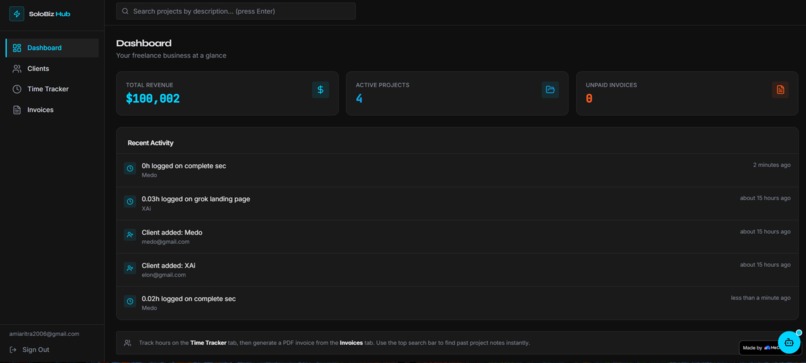
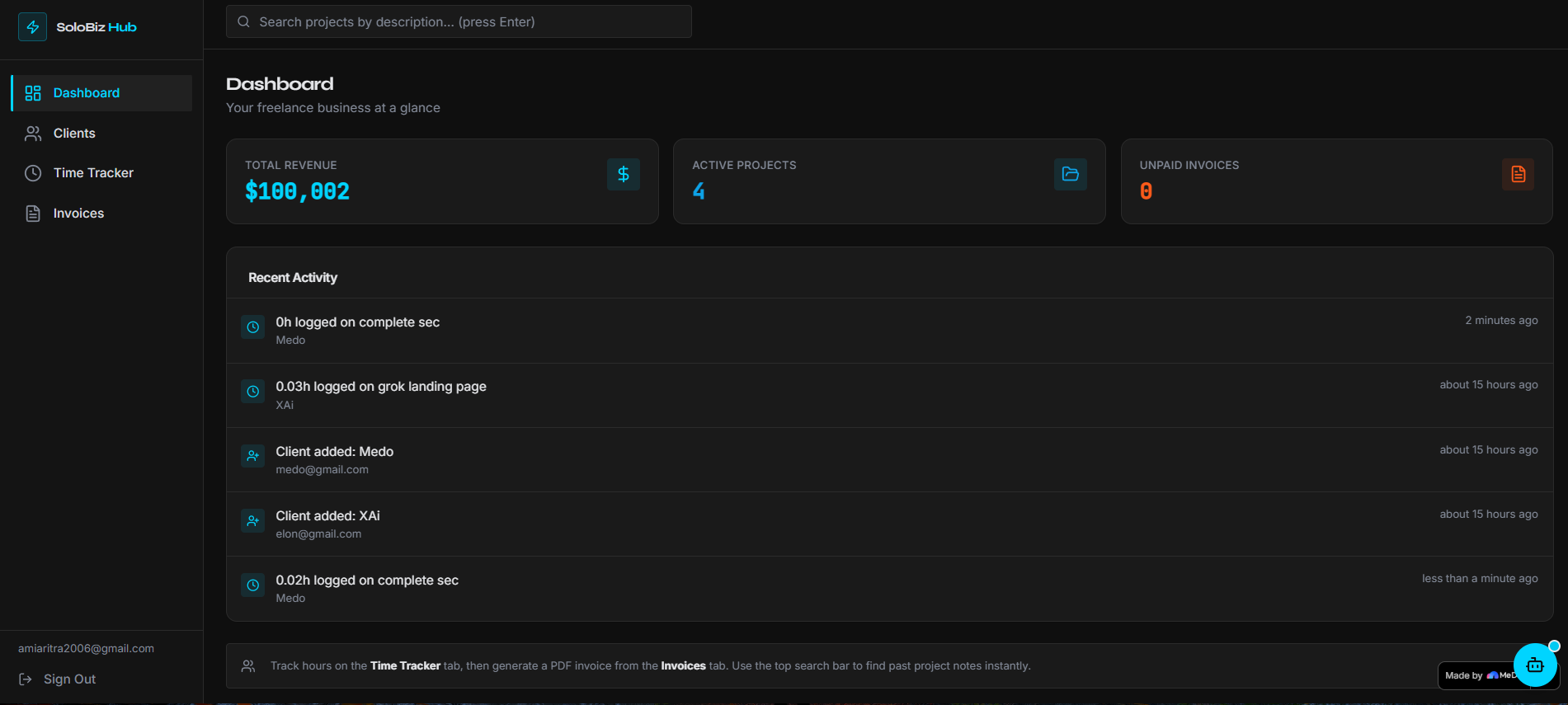
Dashboard
-
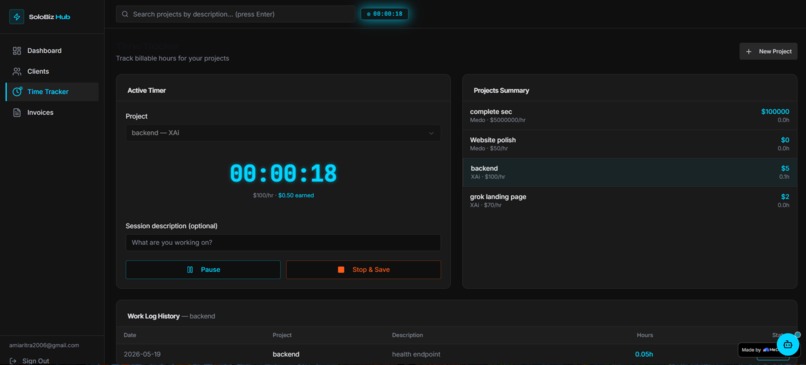
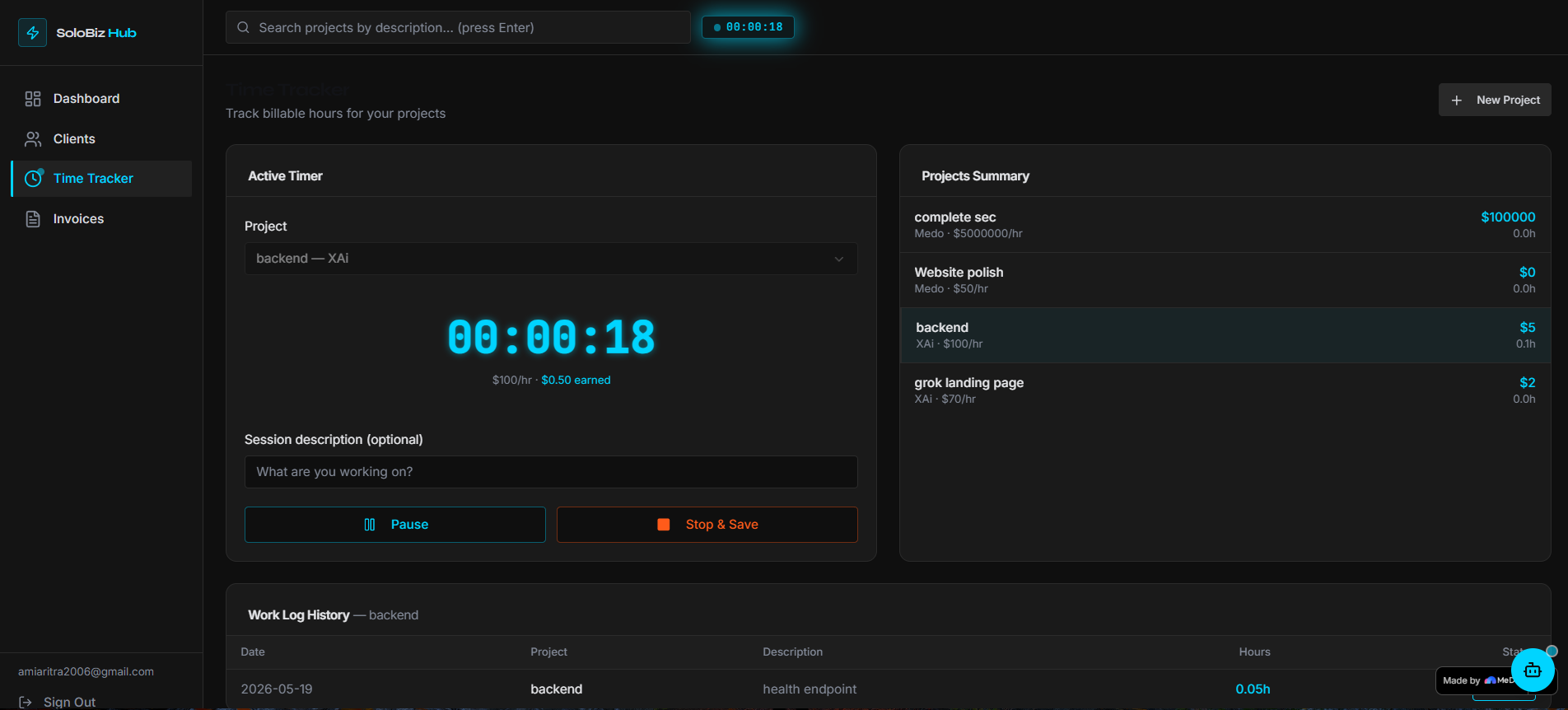
Time Tracker
What Problem SoloBiz Hub Solves & Why It Was Built
Solo freelancers frequently lose billable time and revenue due to "administrative friction"—the tedious task of jumping between fragmented, expensive tools for client management, time-tracking, and manual invoicing. This context switching often leads to unlogged hours, double-billing mistakes, and delayed payments.
SoloBiz Hub was built to eliminate this friction entirely. It serves as a lightweight, comprehensive, and automated freelance back-office. Wrapped in a sleek, dark-mode interface with crisp neon accents, it brings together a client CRM, a global state-persisted stopwatch, and automated PDF invoice generation into a unified workspace.
How Conversations with MeDo Were Structured
Building a fully integrated, full-stack application in a fast-paced environment required an incremental, highly structured prompting strategy. The build process was divided into four logical milestones:
- Schema & Shell Definition: The conversation began by feeding MeDo a strict relational database schema layout (Users, Clients, Projects, WorkLogs, and Invoices) to ensure clean foreign key mapping and data integrity right out of the gate.
- UI & Animation Framework: Next, MeDo was prompted to build the frontend layout using React + Vite and Tailwind CSS. Precise instructions were given to integrate GSAP (GreenSock) animation sequences to smoothly stagger elements on the Dashboard upon mounting.
- Ironing Out Edge Cases: Instead of letting the AI guess the business logic, explicit boundaries were dictated to handle data risks—such as lifting the timer state into a global React Context to survive page navigation, and enforcing database protection to prevent the deletion of clients with active financial history.
- Bug Squashing & Theme Alignment: The final leg of the conversation focused on hyper-targeted micro-fixes, matching the authentication modals and the floating AI widget to the exact slate-and-cyan aesthetic of the core app.
The Most Impressive Feature MeDo Helped Create
The absolute showstopper of SoloBiz Hub is the Agentic AI Co-Pilot. Rather than deploying a generic, text-only chatbot wrapper, MeDo successfully built a contextual virtual teammate equipped with function-calling agency.
Because the workspace was initialized with direct relational database access rules, users can interact with the floating chat widget using natural language to perform complex database mutations. If a user types, "Log an hour and a half of UI design work under Aritra's website project," the Agentic Co-Pilot parses the intent, handles the mathematical time calculation, and directly executes the SQL INSERT mutation into the WorkLogs table, updating the user interface in real-time.
How Plugins and API Integrations Extended Functionality
To elevate SoloBiz Hub from a simple CRUD dashboard to an enterprise-grade AI system, two powerful integrations were implemented:
- The
pgvectorSemantic Search Plugin: Instead of relying on rigid keyword matching, the top-bar global search converts natural language strings into vector embeddings. It queries thenotes_embeddingcolumn in the database using a cosine similarity formula, allowing freelancers to search scattered, historical project notes contextually (e.g., searching "authentication issues" instantly returns a project noted with "troubleshooting login portals"). - Automated PDF Invoicing Pipeline: A dedicated backend service queries unbilled work logs (where
invoice_id IS NULL), calculates the total amount dynamically relative to project hourly rates, structures a pristine printable invoice layout, and outputs a downloadable PDF binary stream—all while executing an atomic database update to mark those specific logs as "billed."
Built With
- css3
- gemini
- gsap
- html5
- javascript
- node.js
- pgvector
- supabase

Log in or sign up for Devpost to join the conversation.