-
-
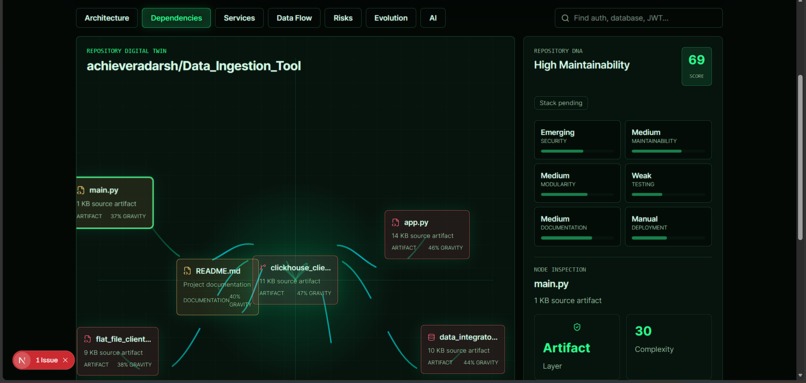
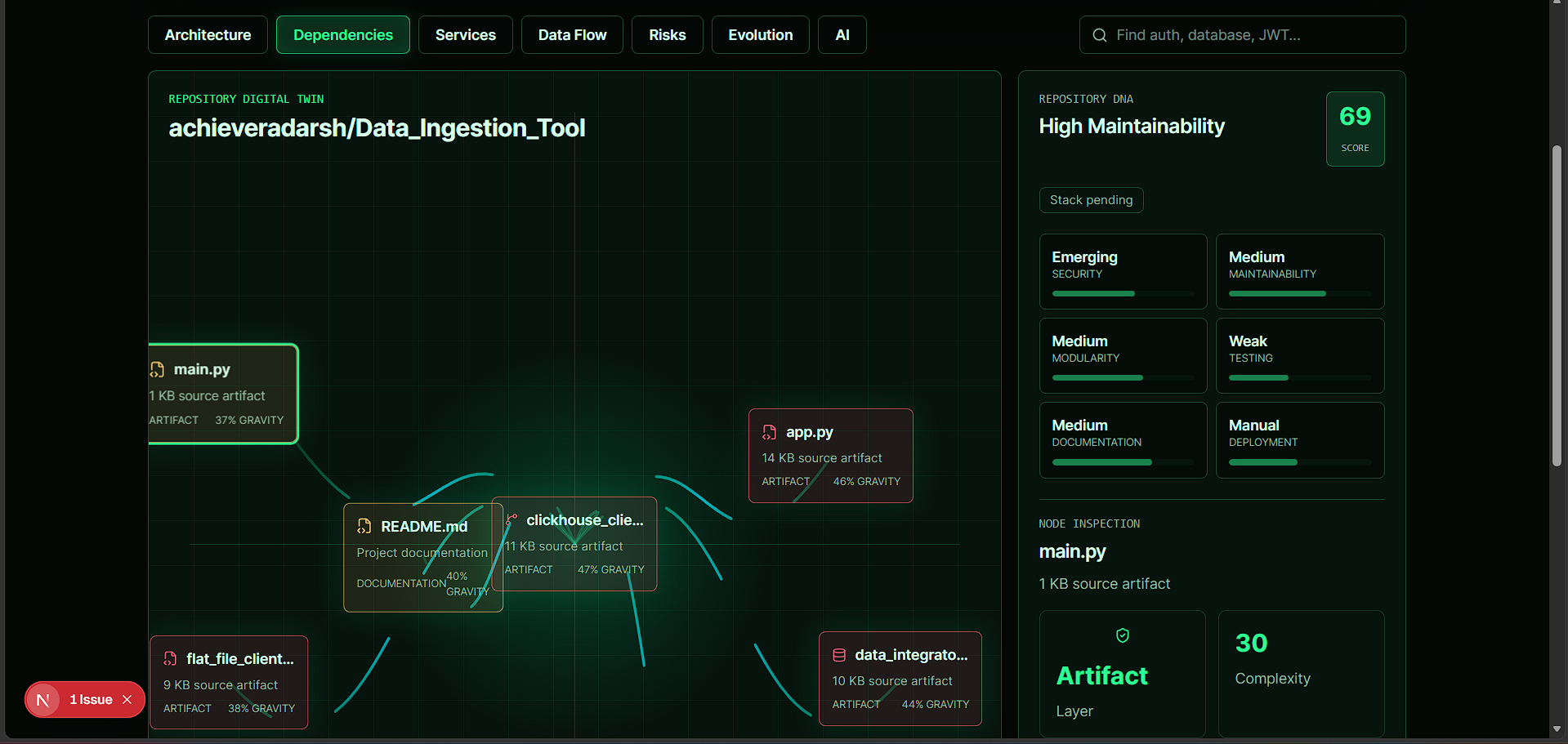
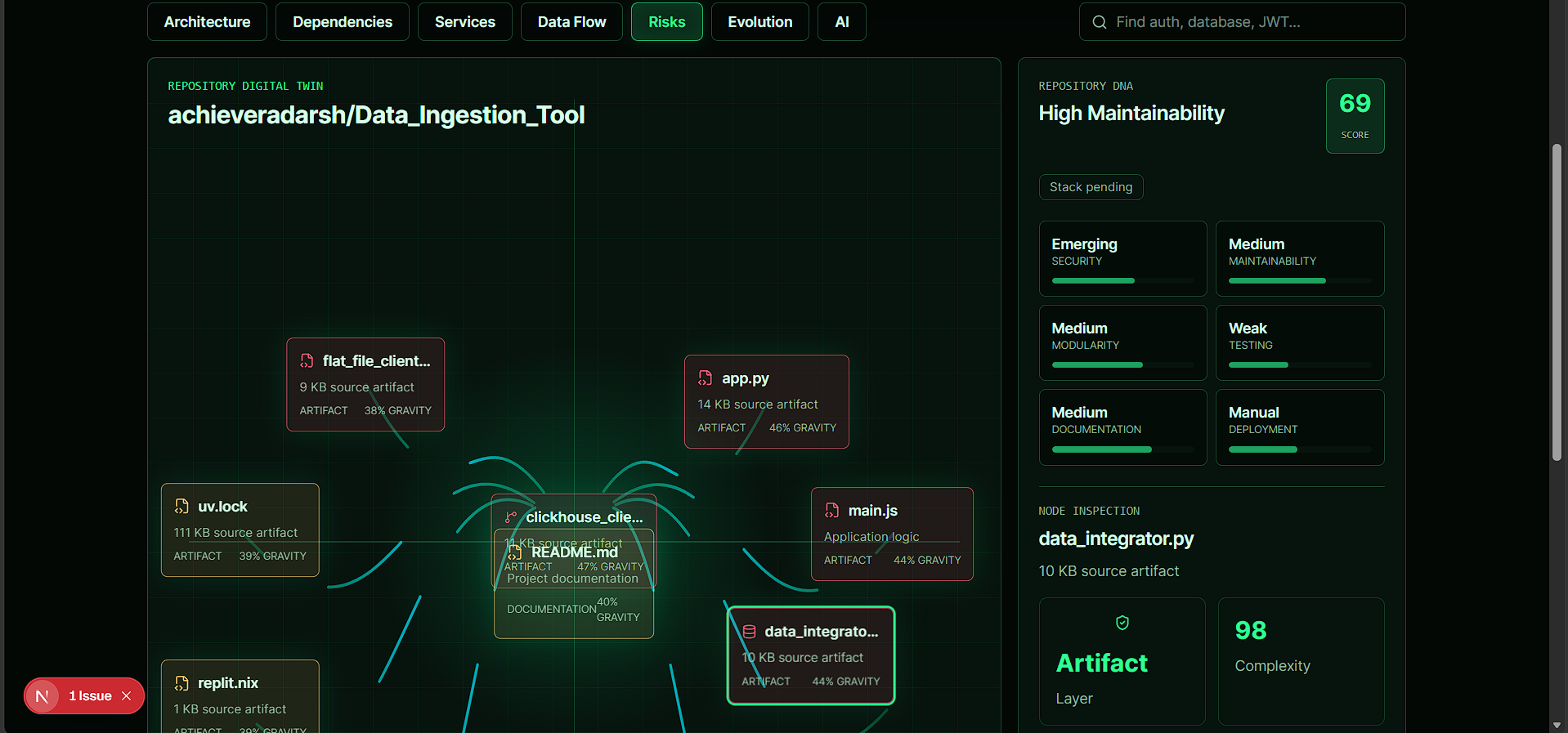
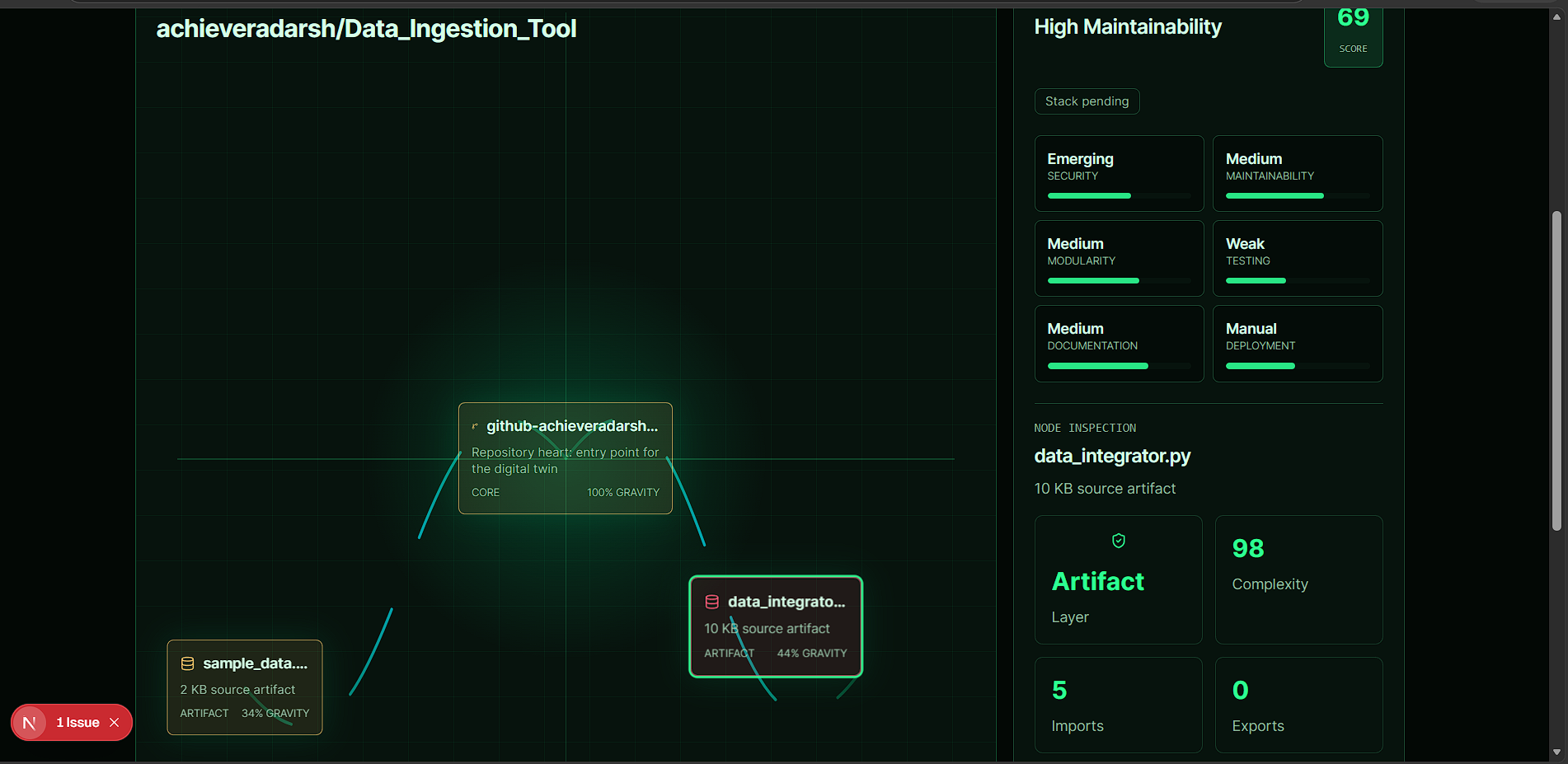
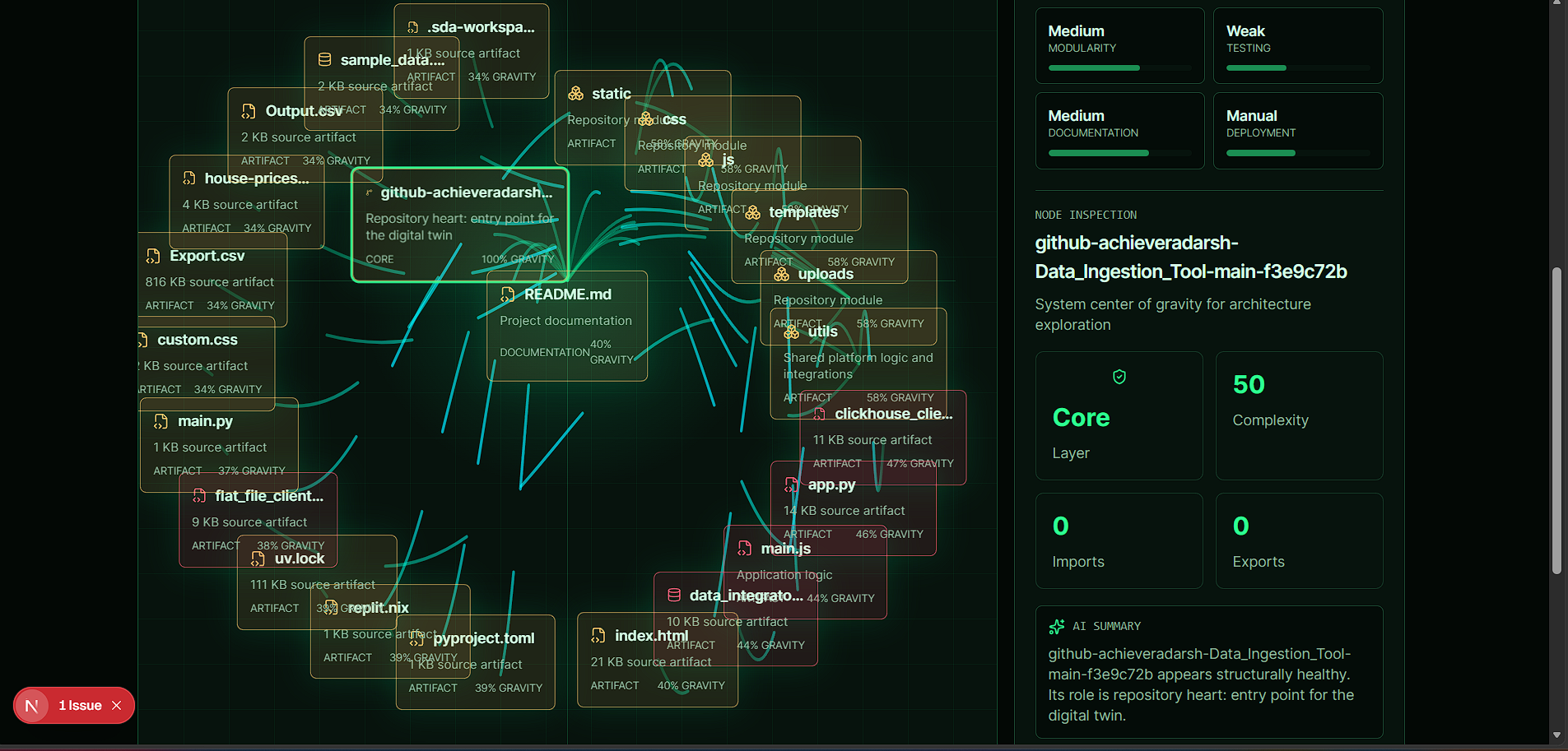
Dependency around the file
-
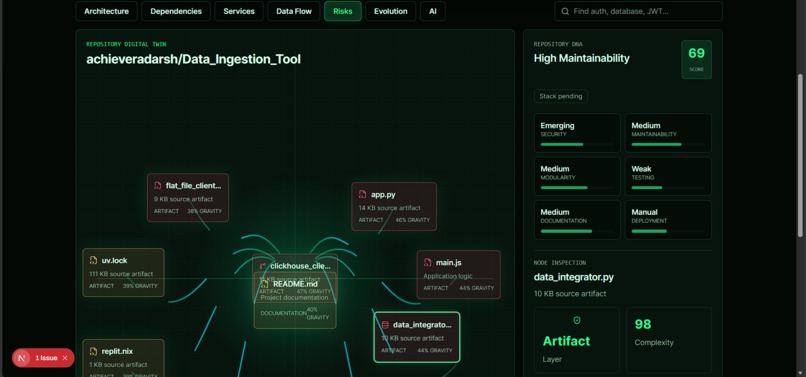
Loom Showcase
-
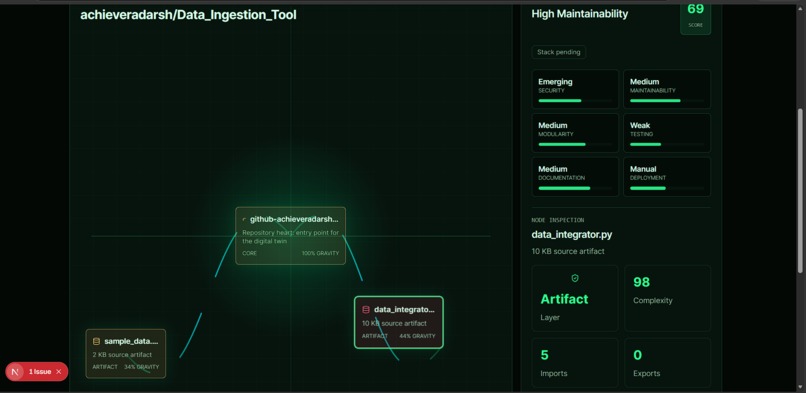
Deatiled Documentation Review
-
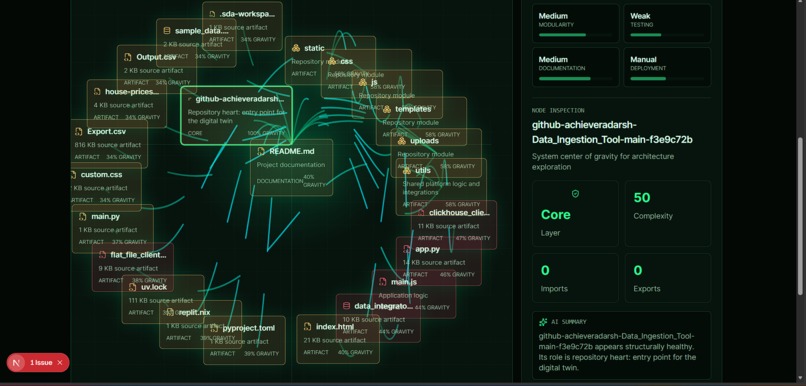
APP Structure
Inspiration
Modern AI can generate code faster than ever, but understanding, validating, and trusting an unfamiliar codebase still takes hours. Whether you're joining a new project, reviewing an open-source repository, or preparing for a hackathon, developers often have to combine multiple disconnected tools for architecture analysis, security scanning, testing, documentation, and production readiness.
As a solo developer, I wanted to build a single platform that transforms any GitHub repository or ZIP archive into an understandable, validated, and production-ready engineering workspace. That vision became Solo Developer Arsenal—an AI-powered repository intelligence platform designed to help developers spend less time understanding code and more time building great software.
What it does
Solo Developer Arsenal is an AI-powered repository intelligence and engineering validation platform.
Developers can simply connect a GitHub repository or upload a ZIP archive, and the platform automatically:
- Builds a Repository Digital Twin to understand the application's architecture.
- Explains modules, dependencies, project structure, and engineering patterns using AI.
- Runs multiple engineering validation engines covering build quality, security, architecture, and production readiness.
- Generates executive-grade reports in PDF, HTML, Excel, JSON, Markdown, and SARIF formats.
- Produces actionable engineering insights instead of overwhelming developers with raw scanner output.
Instead of switching between multiple developer tools, Solo Developer Arsenal provides one unified engineering workspace for repository intelligence, validation, reporting, and decision-making.
How we built it
Solo Developer Arsenal is built using Next.js, TypeScript, Node.js, React, PostgreSQL/Neon, Better Auth, and modern AI technologies.
The platform combines several independent services into a single engineering workflow:
- GitHub repository ingestion
- ZIP repository extraction
- Repository Digital Twin generation
- AI-powered repository understanding
- Multi-engine engineering validation
- Executive report generation
- Interactive dashboards
- Secure authentication
- Modular backend services
During OpenAI Build Week, GPT-5.6 and Codex were used as AI engineering assistants throughout development.
Codex assisted with:
- Backend implementation
- GitHub OAuth integration
- Repository ingestion improvements
- ZIP extraction workflows
- Scan engine implementation
- Executive report generation
- TypeScript refactoring
- Debugging and troubleshooting
- Build validation
- Test workflow improvements
- Code review and optimization
GPT-5.6 was used for engineering discussions, architecture refinement, product planning, documentation, and user experience improvements.
The overall product architecture, feature prioritization, integration strategy, and final implementation decisions remained under developer control.
Challenges we ran into
One of the biggest engineering challenges was designing a validation pipeline capable of working consistently across repositories with completely different structures, dependencies, and build systems.
Another challenge was transforming raw scanner output into executive-friendly reports that developers, engineering managers, and technical stakeholders could all understand.
Building a modular architecture that combines repository intelligence, AI explanations, validation engines, dashboards, reporting, and secure authentication into one seamless developer experience required continuous iteration and refinement throughout the project.
Accomplishments that we're proud of
We're proud of building an end-to-end engineering platform that unifies repository understanding, AI-assisted analysis, engineering validation, and executive reporting into a single workflow.
Highlights include:
- Repository Digital Twin
- AI-powered repository understanding
- Multi-engine engineering validation
- Executive-grade branded reports
- GitHub repository support
- ZIP archive analysis
- Interactive engineering dashboards
- Enterprise-inspired developer workflow
Most importantly, we're proud that Solo Developer Arsenal demonstrates how a solo developer can build enterprise-quality engineering tooling using modern AI-assisted development practices.
What we learned
This project reinforced that AI delivers the greatest value when it augments engineering rather than replacing it.
GPT-5.6 and Codex significantly accelerated implementation, debugging, testing, documentation, and iteration, allowing more time to focus on architecture, user experience, and product design.
We also learned that combining AI reasoning with deterministic engineering validation creates a more trustworthy workflow than relying on either approach independently.
Finally, we discovered that repository intelligence becomes dramatically more valuable when AI explanations, engineering validation, and executive reporting work together instead of existing as isolated tools.
What's next for Solo Developer Arsenal
Our roadmap includes expanding Solo Developer Arsenal into a complete AI engineering companion.
Upcoming capabilities include:
- AI-powered code review recommendations
- Intelligent regression analysis
- Automated remediation suggestions
- CI/CD pipeline integrations
- Multi-repository portfolio analysis
- Repository health trends
- Cloud deployment monitoring
- Team collaboration features
- Additional engineering validation engines
- AI-assisted production readiness recommendations
Our long-term vision is to build an intelligent engineering platform that supports developers throughout the entire software development lifecycle—from repository onboarding to production deployment.
Built With
- ai
- automation
- better-auth
- ci-cd
- codex
- developer-tools
- devsecops
- engineering
- executive-reporting
- github
- gpt-5-6
- jest
- neon
- nextjs
- node.js
- openai
- playwright
- postgresql
- react
- repository-analysis
- security
- testing
- typescript
- vitest

Log in or sign up for Devpost to join the conversation.