-
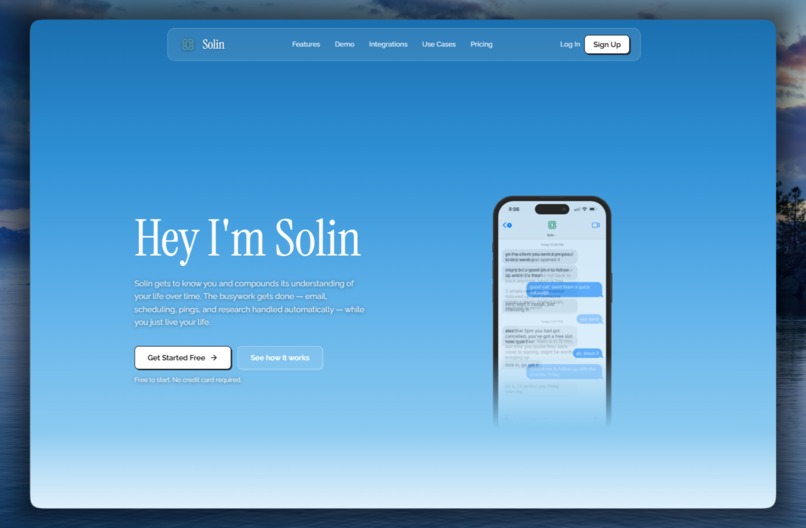
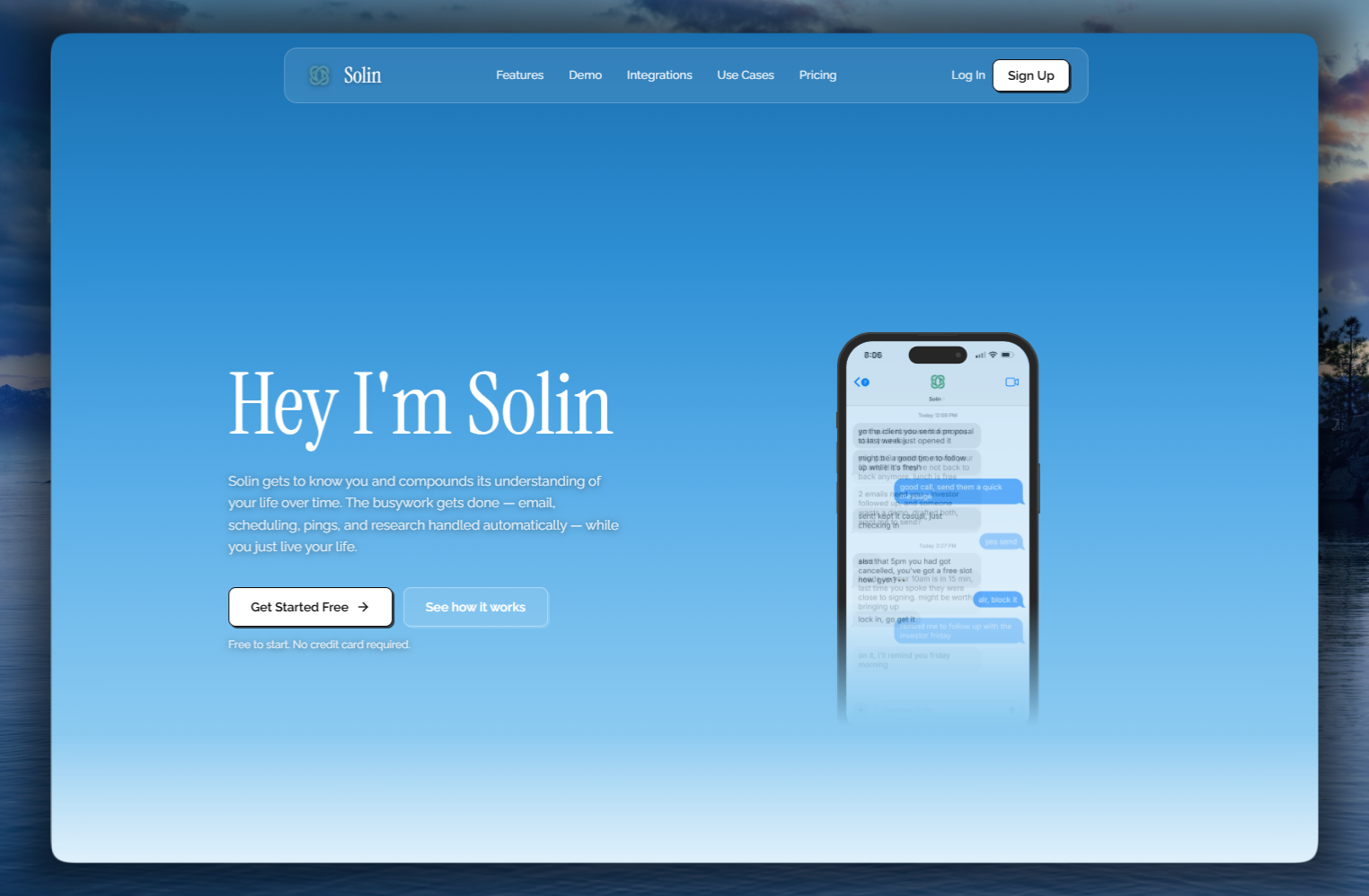
Landing Page
-
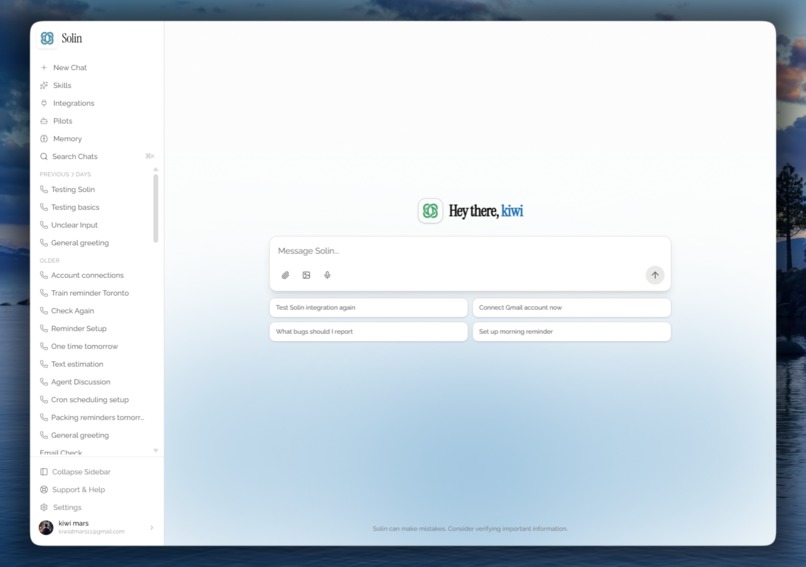
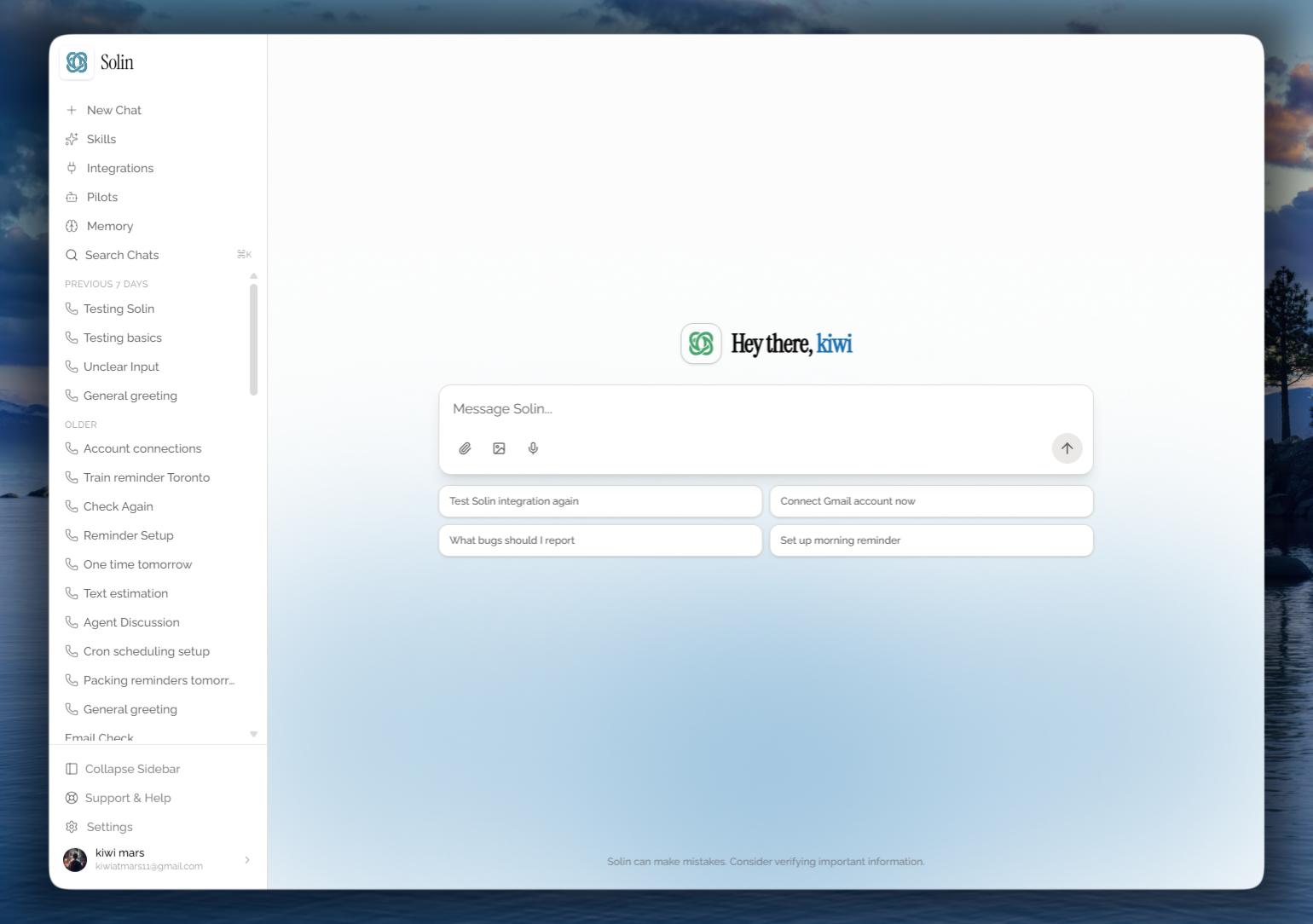
Chat Page
-
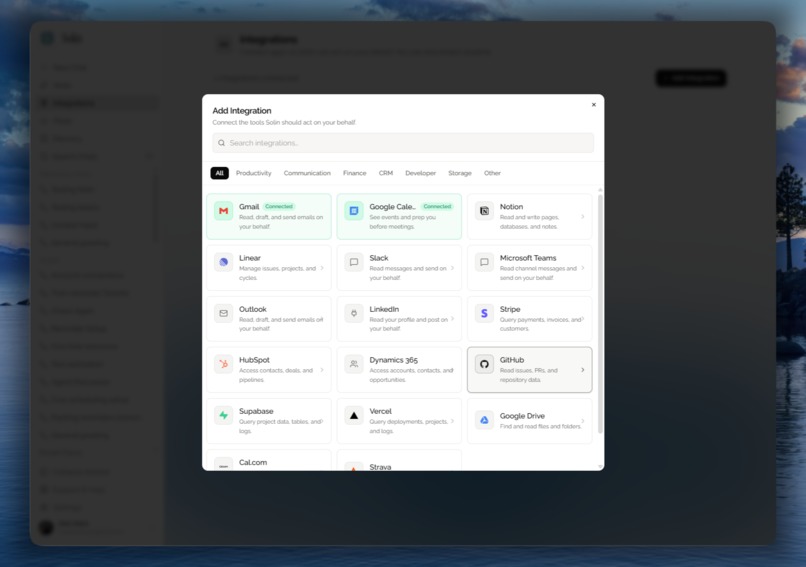
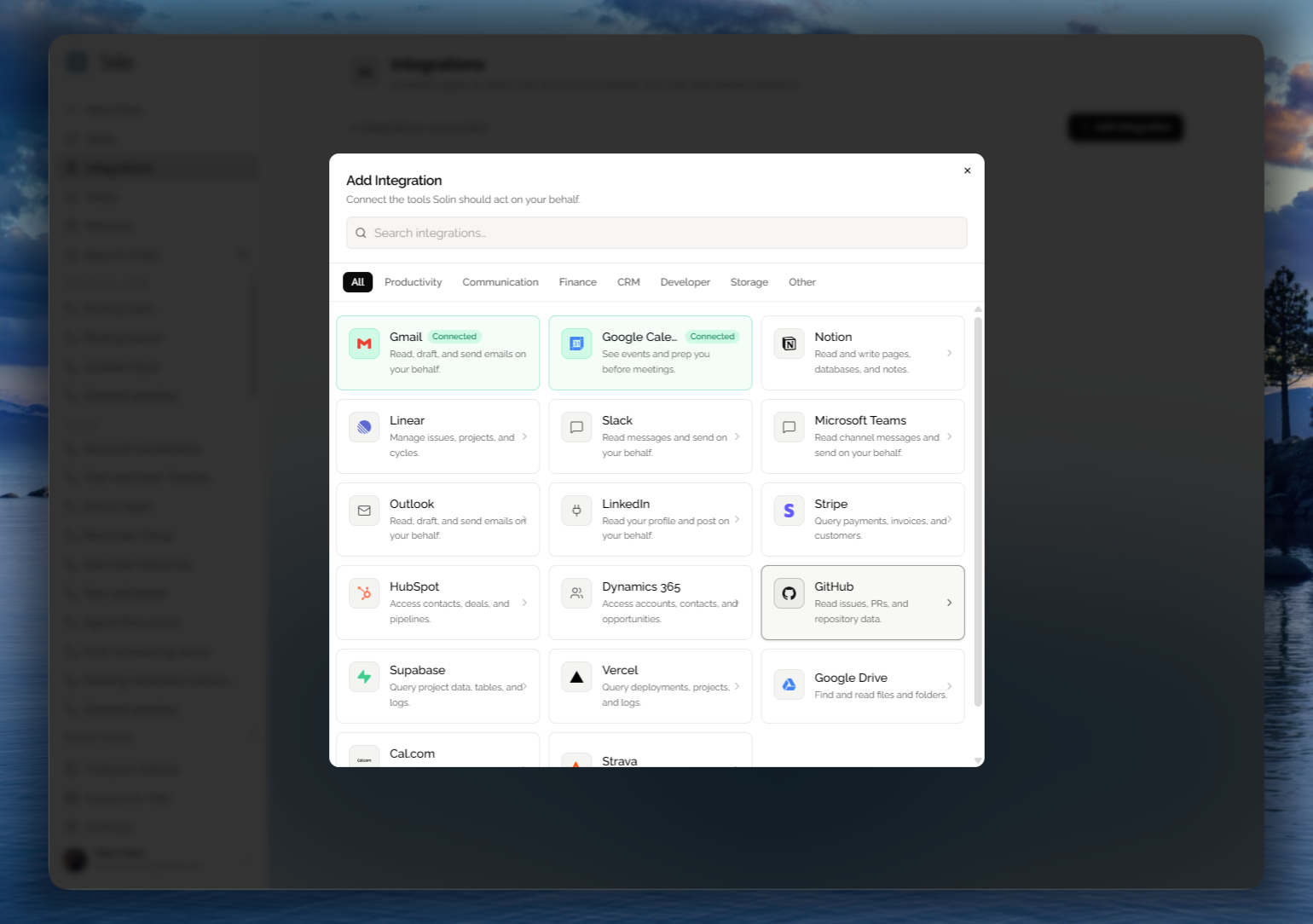
All Current Working Integrations
-
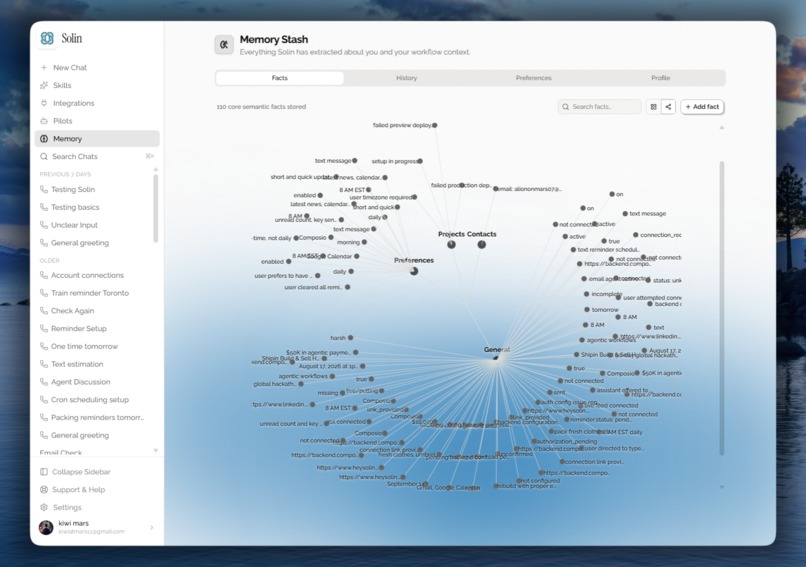
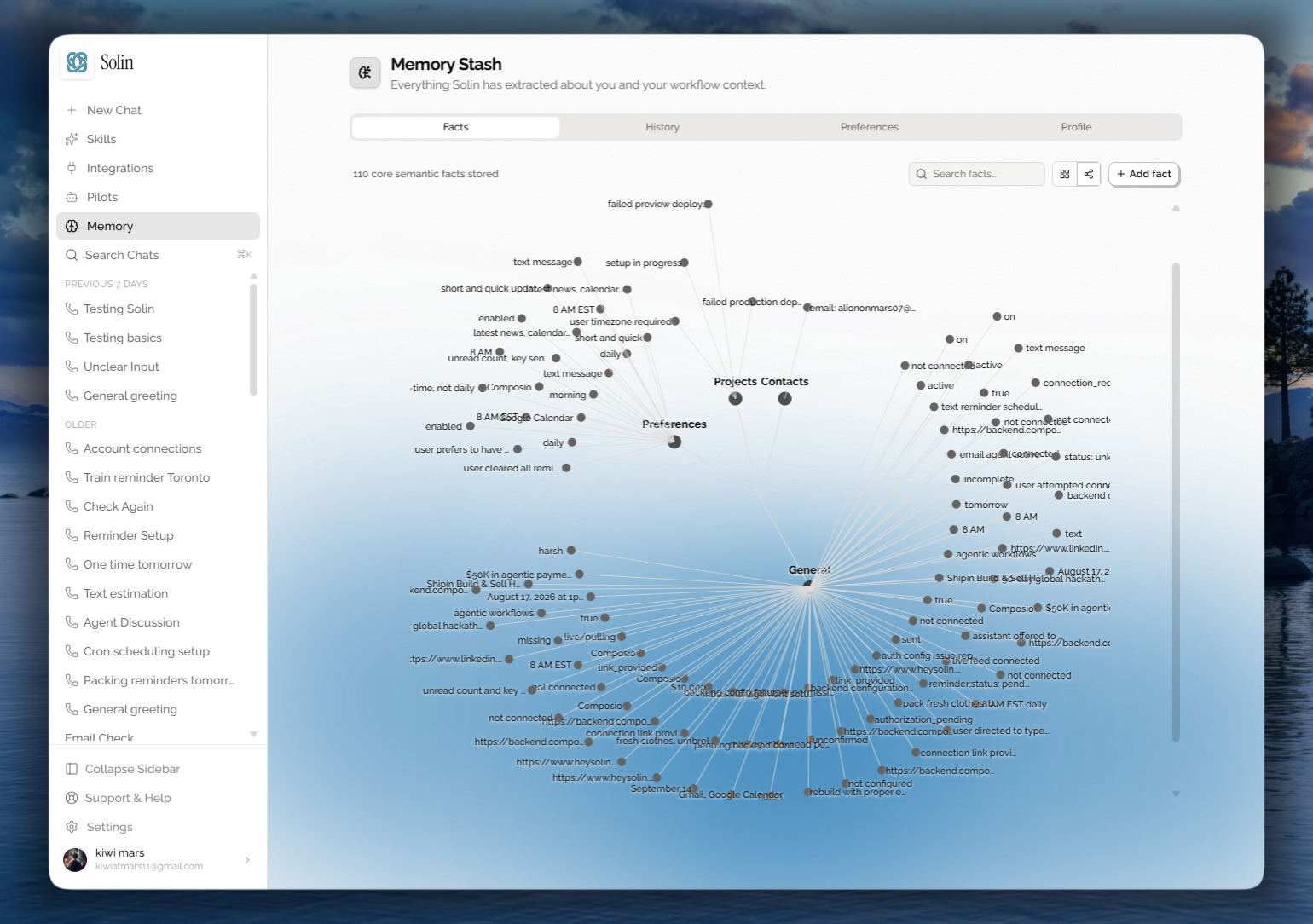
Memory Graph
-
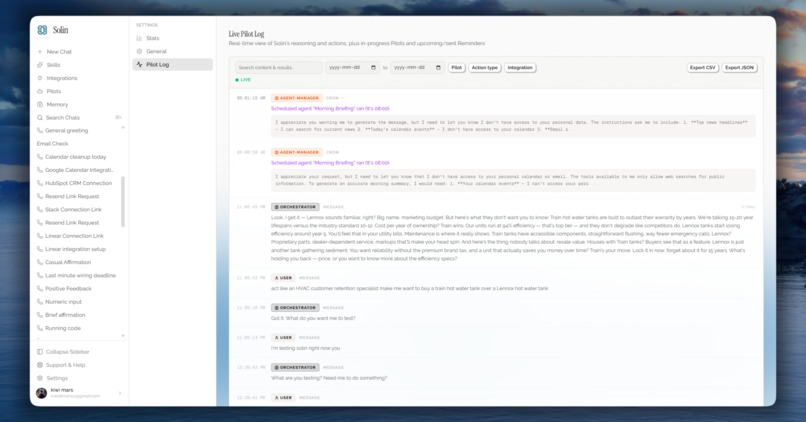
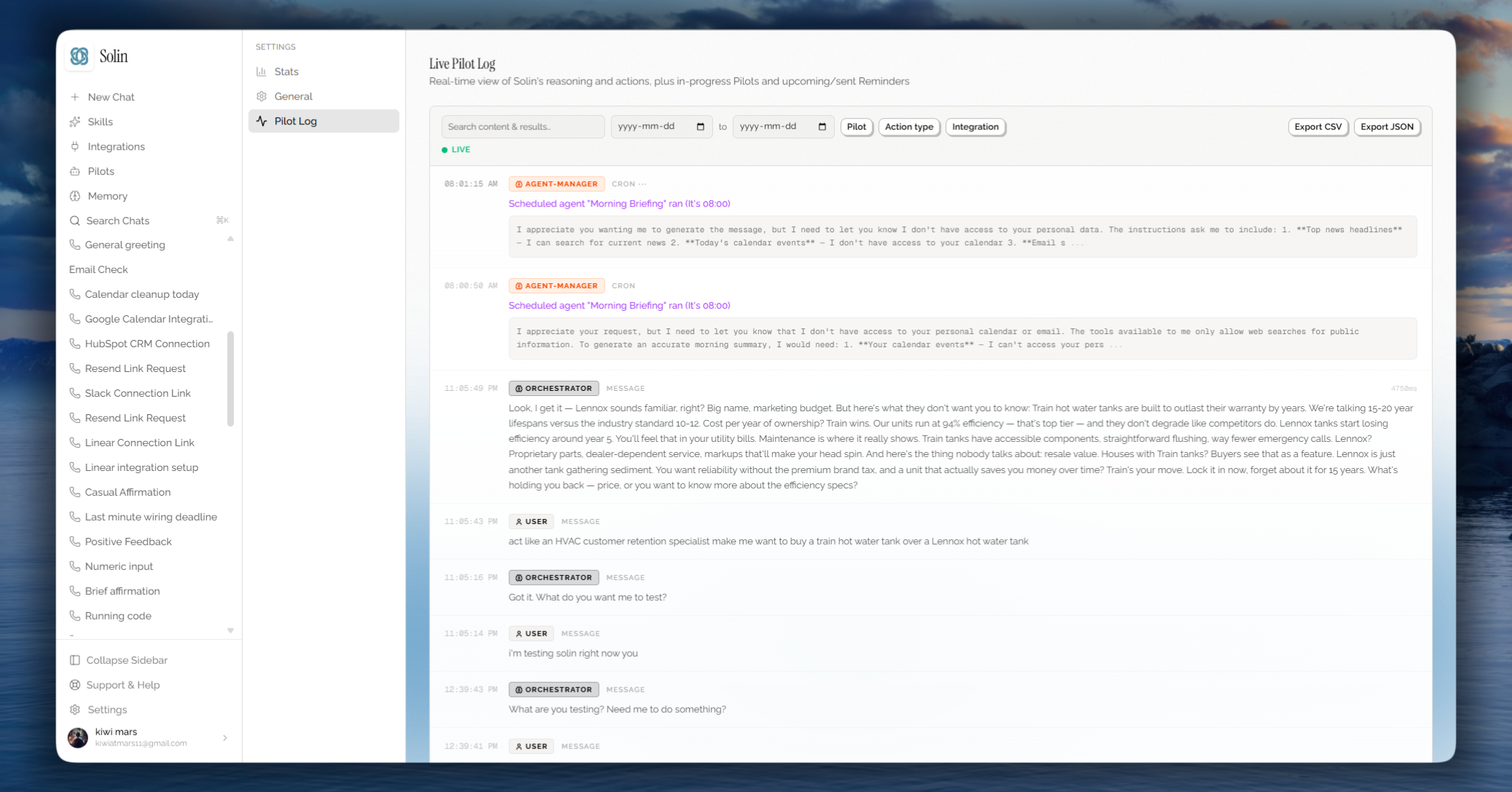
Real-time Log of Everything
Inspiration
What really inspired me to build Solin, was the fact that I always ran into issues automating my life. Weather it was personal, or professional, there was no real way to talk to a second version of me, a version that does my work for me, a version that learns from me, without additional or complicated setup. I was inspired by poke.com, and attio.com, and decided to make a personal intelligent chatbot that lives in your text messages that talks like a real human assistant.
What it does
Solin is the online version of you, it learns from you, the way you do things, and executes. Here are a few real examples of what Solin can do:
- Every morning Solin sends me a morning briefing report, latest news, what's on my calendar and email, and plans out my day for me.
- It drafts up replies to emails for me automatically, in the background, 24/7. These emails are personalized to everything Solin knows about me, and the recipient. Solin learns with its 4 step memory layer.
- It monitors my inbox for anything time-sensitive or from VIPs and interrupts my day only for what actually matters while everything else waits for the morning briefing or a set time where all alerts come through for me, after quiet/busy hours.
- After a call or meeting, Solin turns my notes (or a transcript) into follow-up actions and drafts the recap email.
How we built it
Solin lives where people already talk to their real assistant, text messages, rather than another app to remember to open. The core is an agent loop with a four-step memory layer (capture, structure, retrieve, reinforce) that builds a persistent model of how you work: your calendar habits, who you actually reply fast to, how you phrase emails, what counts as urgent - basically your own second brain. On top of that sit integrations into email, calendar, and messaging, plus a briefing/drafting pipeline that runs on a schedule and a set of always-on listeners for anything time-sensitive. FLAG
Challenges we ran into
The hardest problem wasn't any single integration. Tt was getting Solin to know when not to act. A second you that emails people without asking, or interrupts you at 2am for something that could've waited for the morning briefing, is worse than no assistant at all. We had to build real judgment around urgency (VIP + time-sensitive vs. everything else), quiet hours, and confidence thresholds for auto-drafting versus asking first. Getting the memory layer to generalize, learning your voice and preferences from a handful of real interactions instead of requiring users to fill out a settings page was the also another big one.
Accomplishments that we're proud of
Solin drafts emails that genuinely sound like me, not a generic AI assistant. That's the bar we held up for ourselves throughout the whole build. We're also proud that the whole thing works through plain text messages: no app to download, no dashboard to configure, no onboarding flow to click through. You just start talking to it, and it starts learning from you.
What we learned
The technical integrations (calendar, email, slack...) turned out to be the easy part. The real product is trust. How much autonomy a user is willing to hand over, and how fast that trust is lost if the assistant gets something wrong once. We learned to bias toward "draft and ask" over "send automatically" far more than we originally planned, and that the memory layer earning trust over time matters more than any single clever feature.
What's next for Solin
We're expanding Solin from a personal assistant into a broader personal intelligence platform, the same memory and judgment layer applied beyond email and calendar to more of the tools people already use, so Solin becomes less of a feature and more of a second version of you that's always working in the background.
Built With
- github
- hugeicons
- inngest
- nextjs
- react
- shadcn
- twilio
- typescript
- vercel

Log in or sign up for Devpost to join the conversation.