-
-
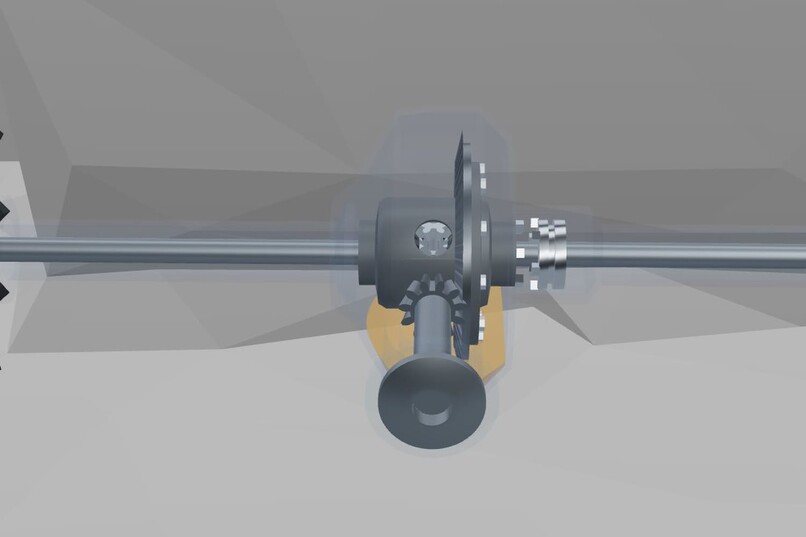
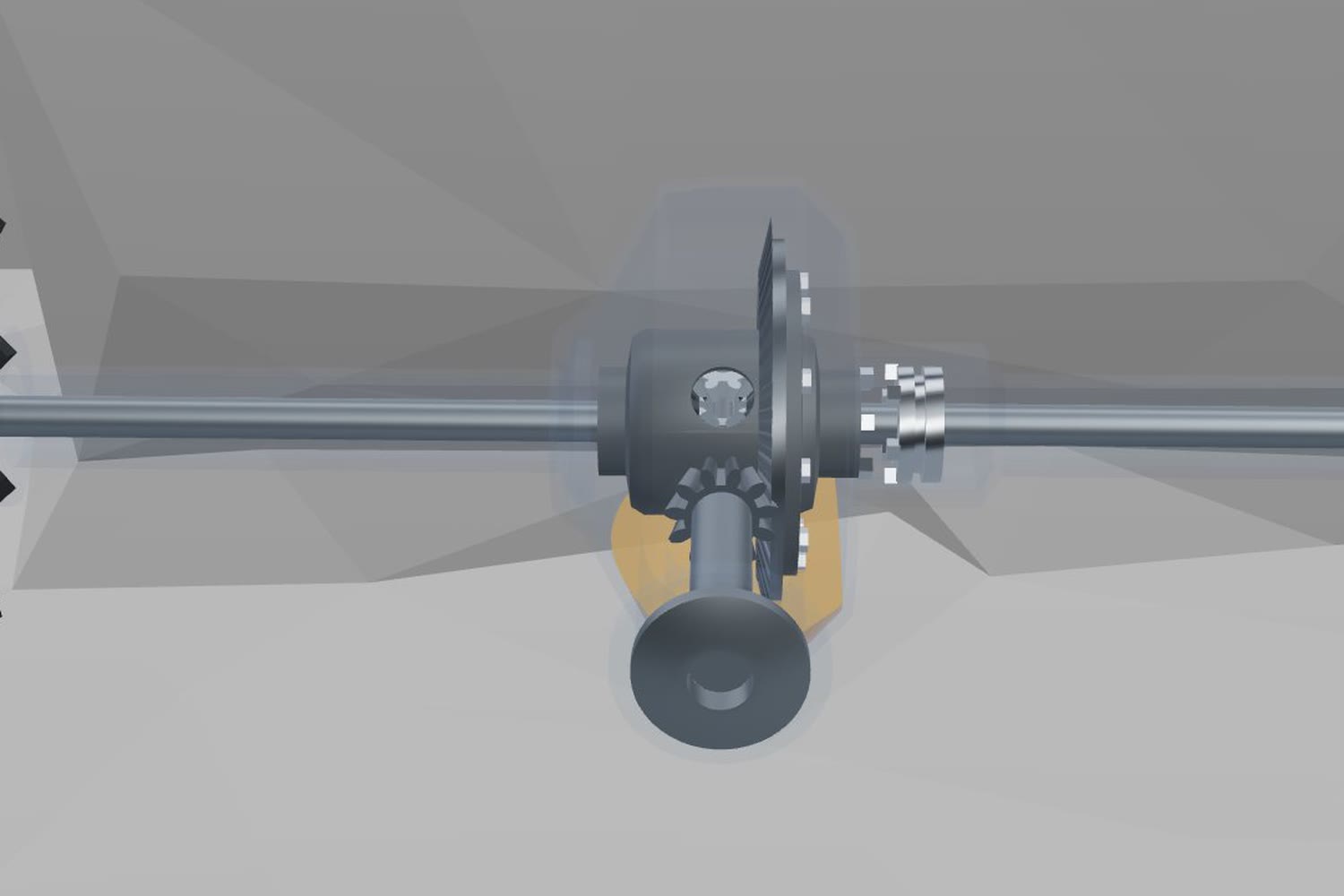
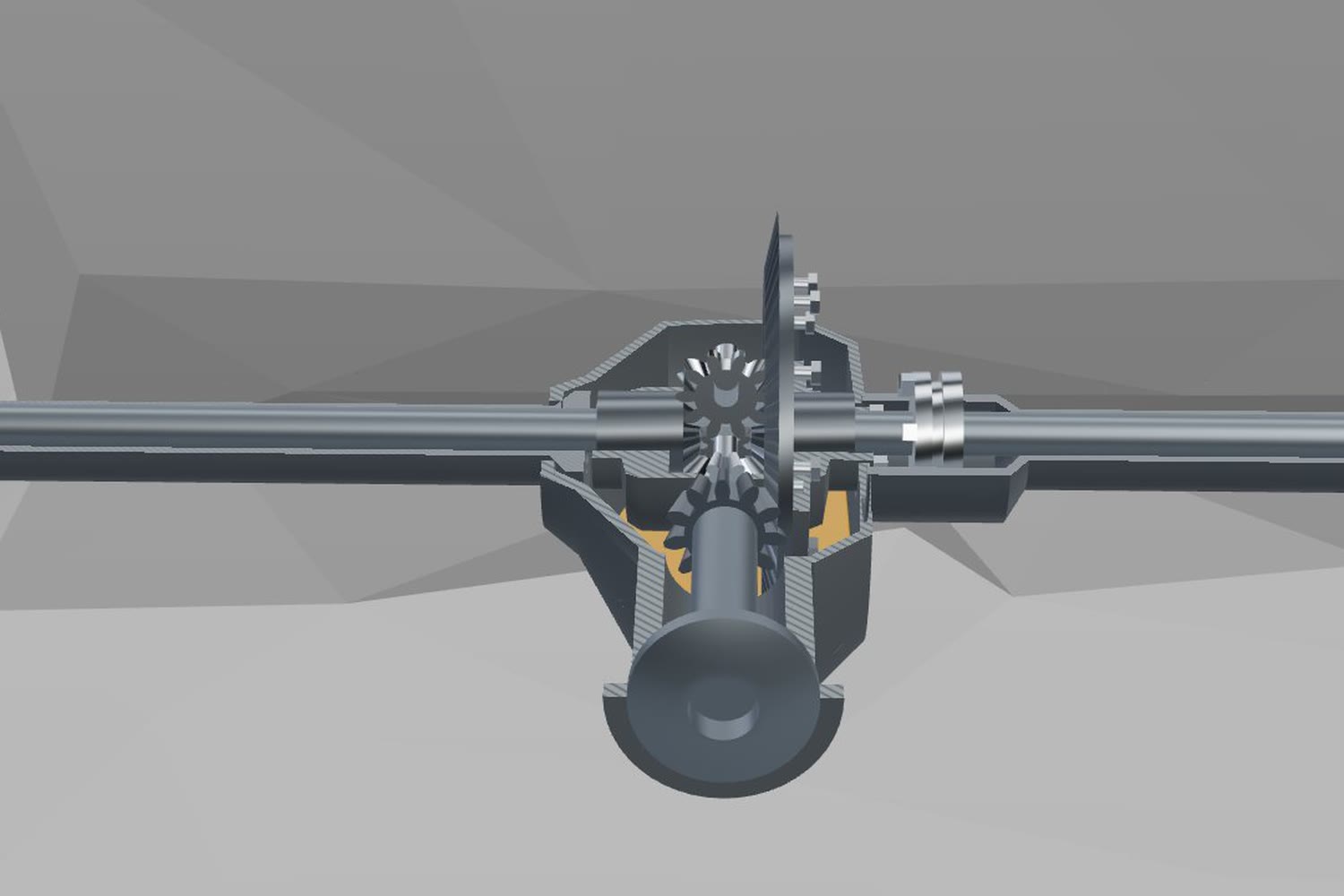
Headset: differential X-rayed, close up
-
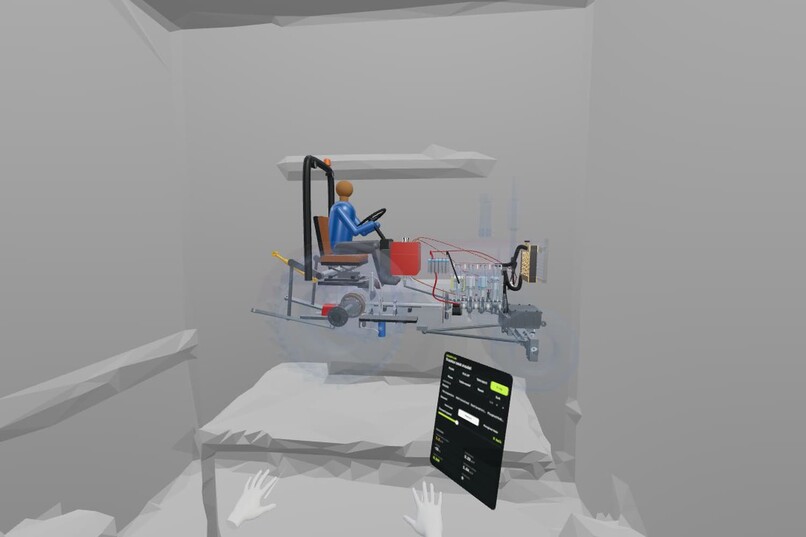
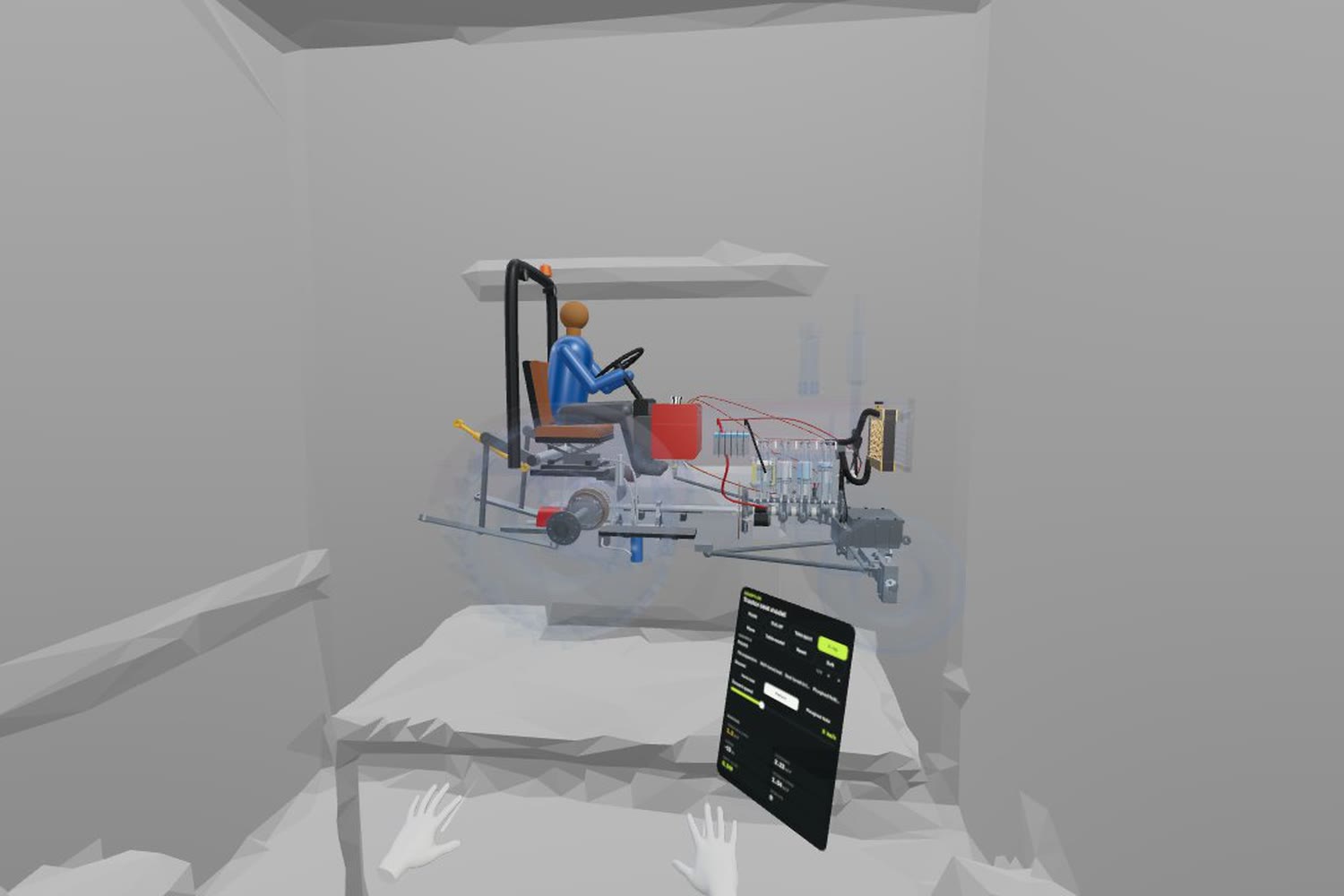
Headset: tractor X-rayed
-
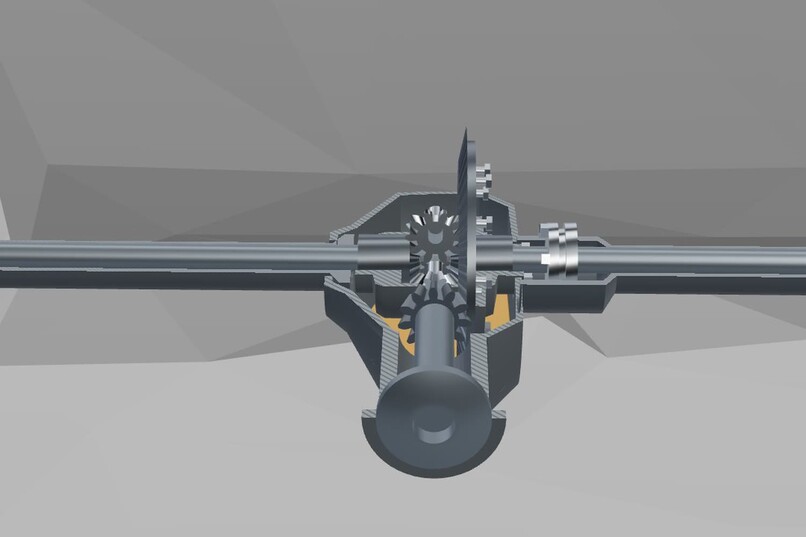
Headset: differential cut open and running
-
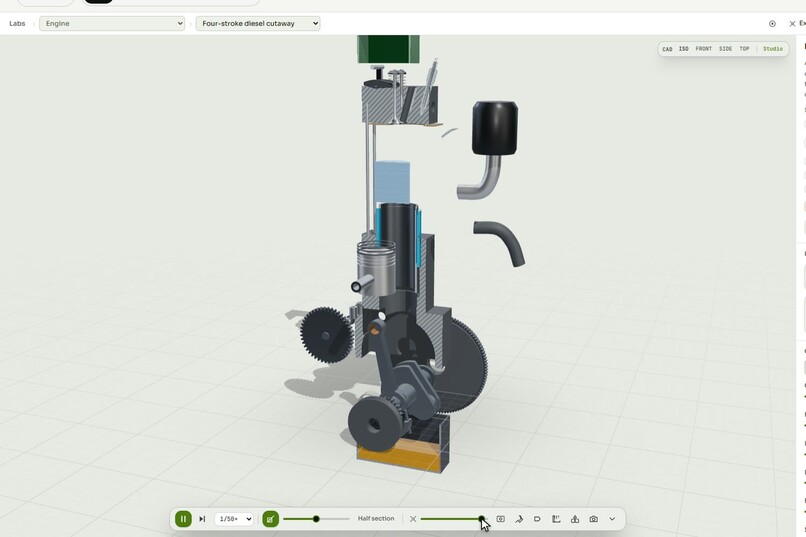
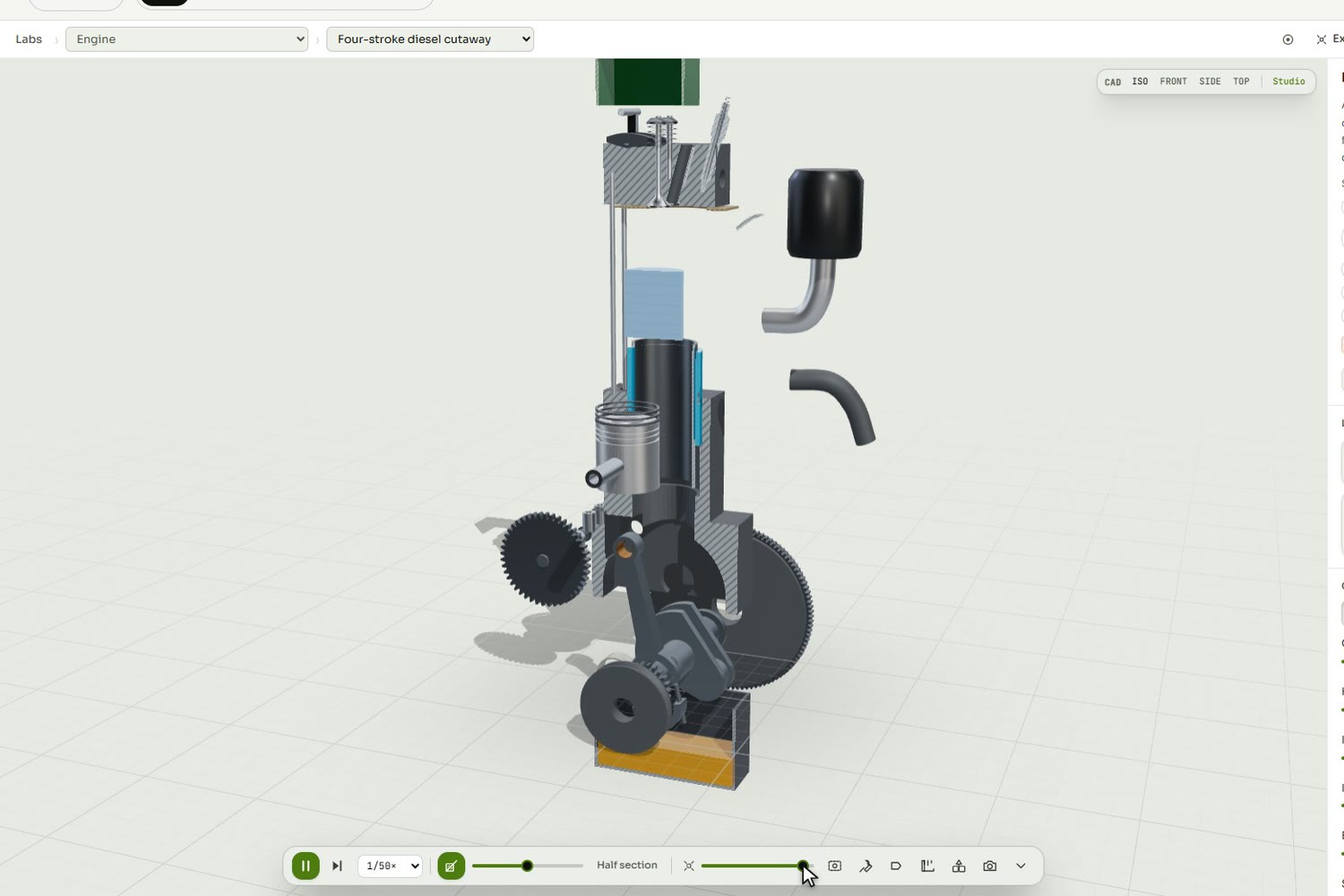
Diesel engine taken apart
-
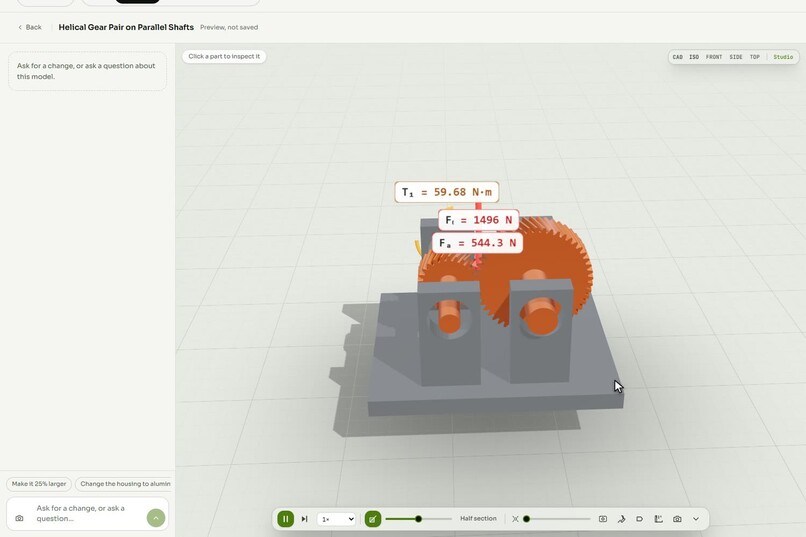
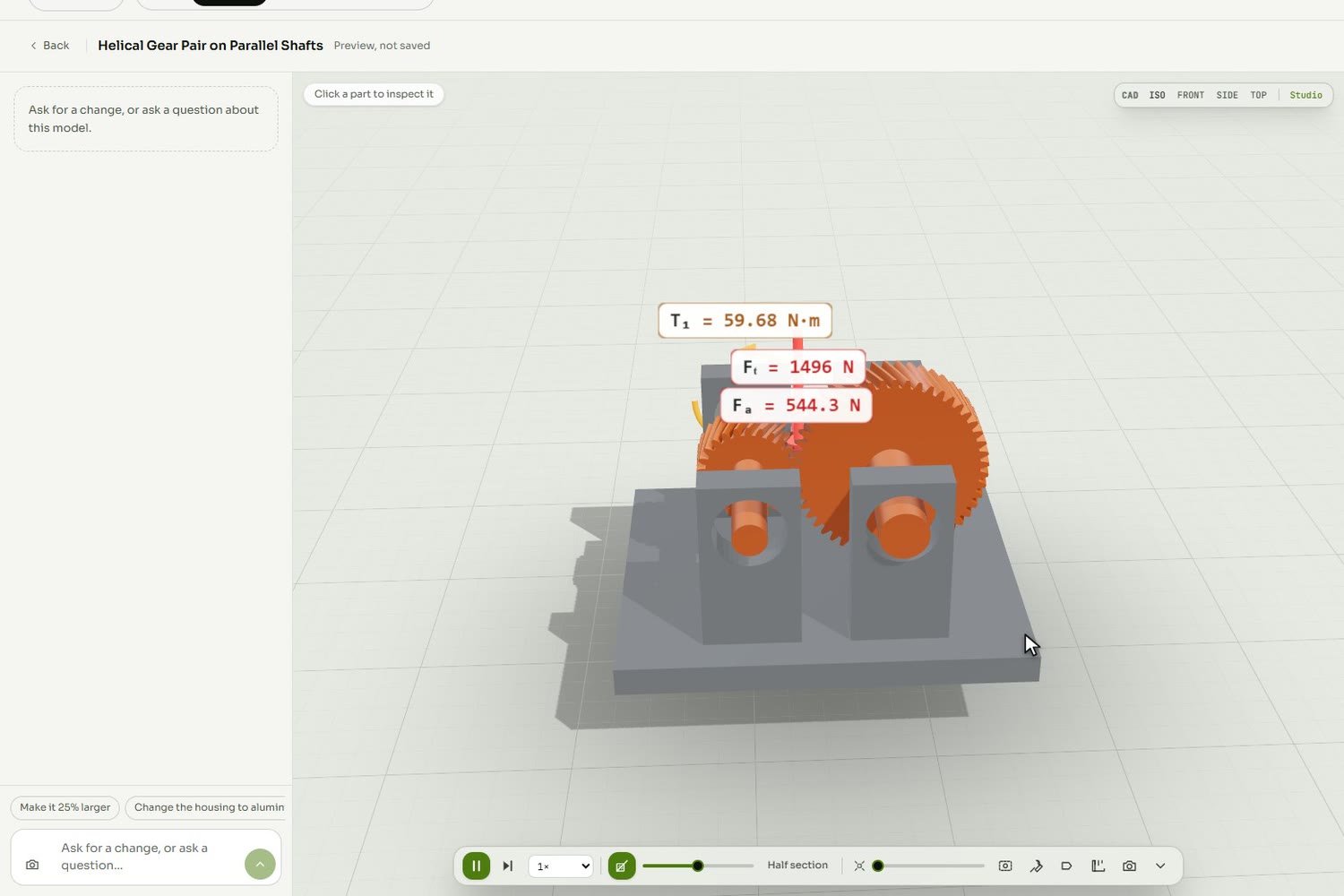
Generated gear model with its loads shown
-
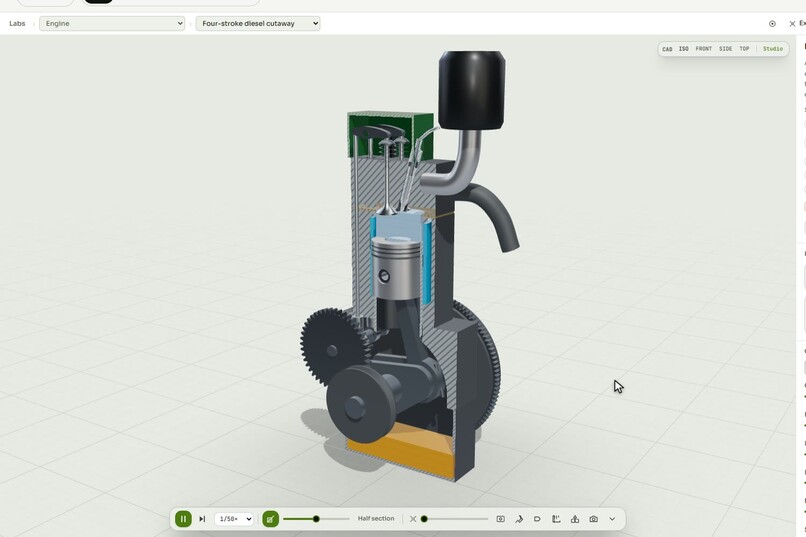
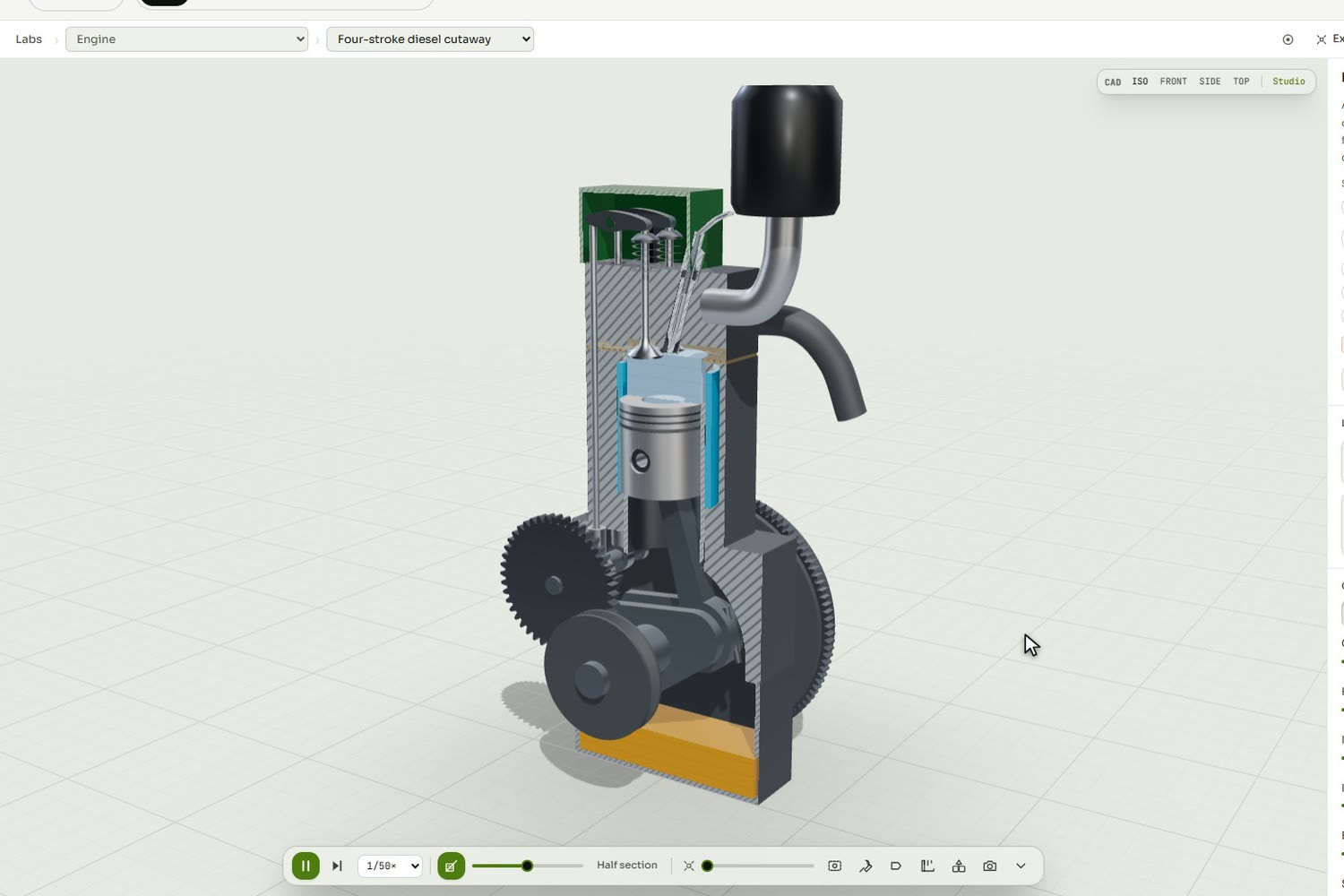
Diesel engine cut open, running
-
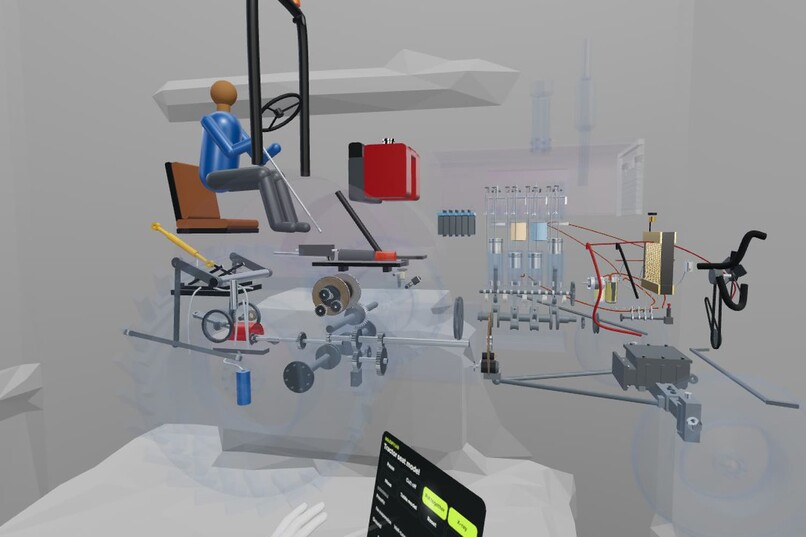
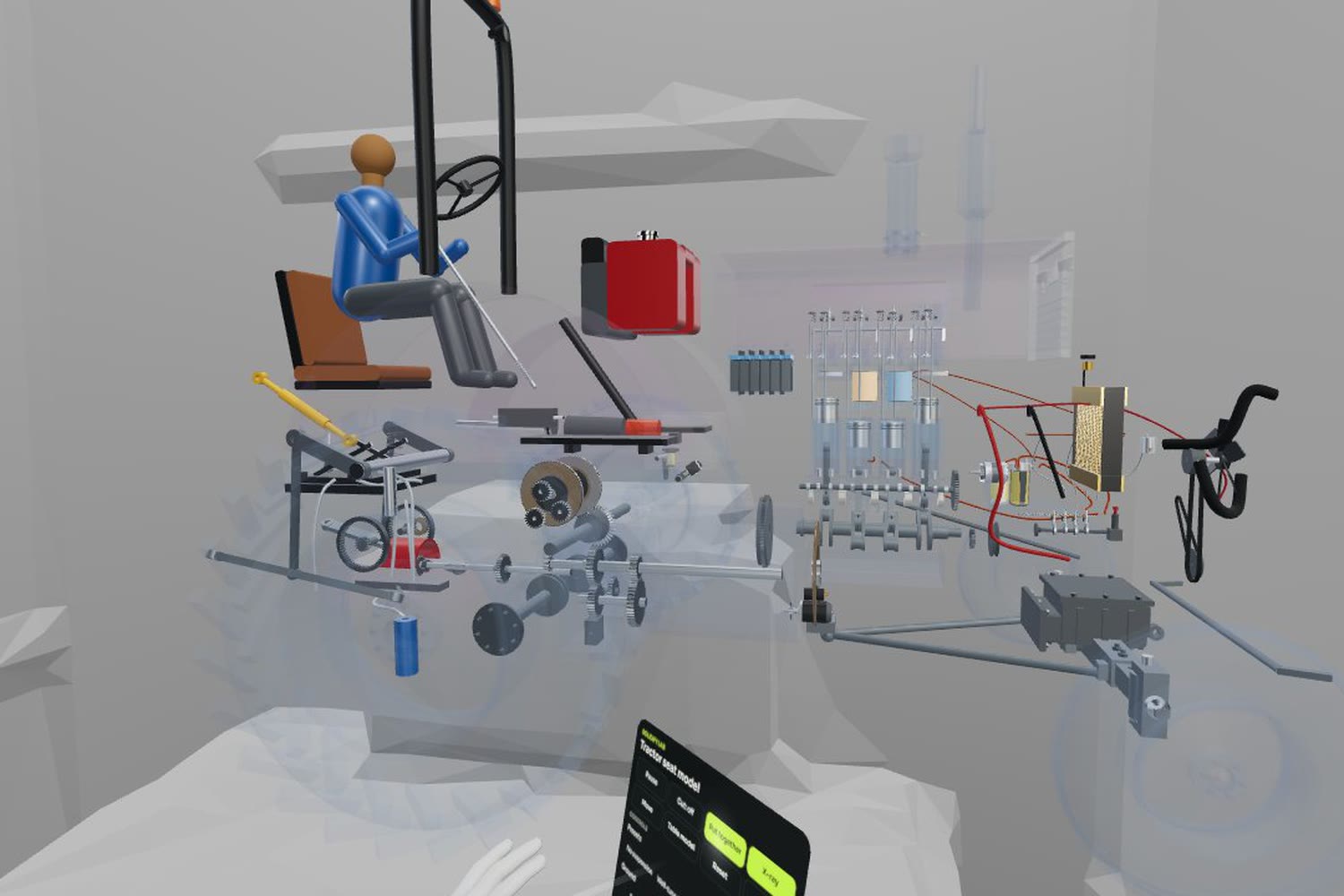
Headset: tractor taken apart
-
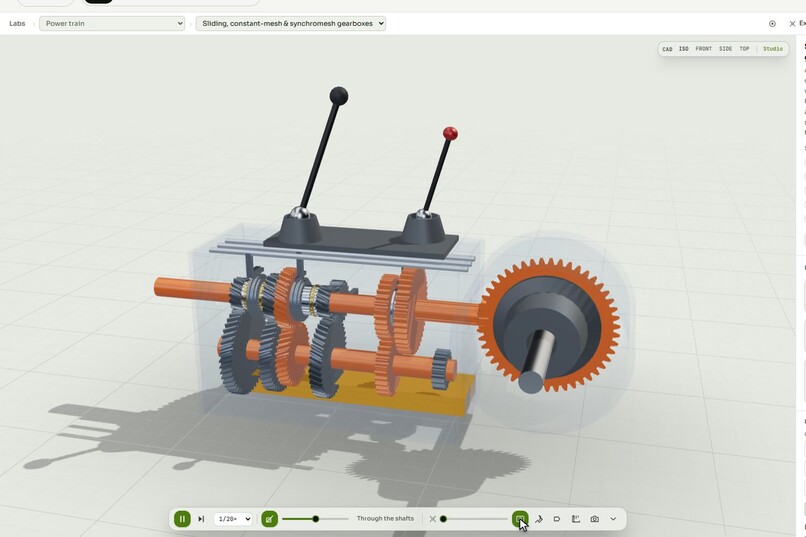
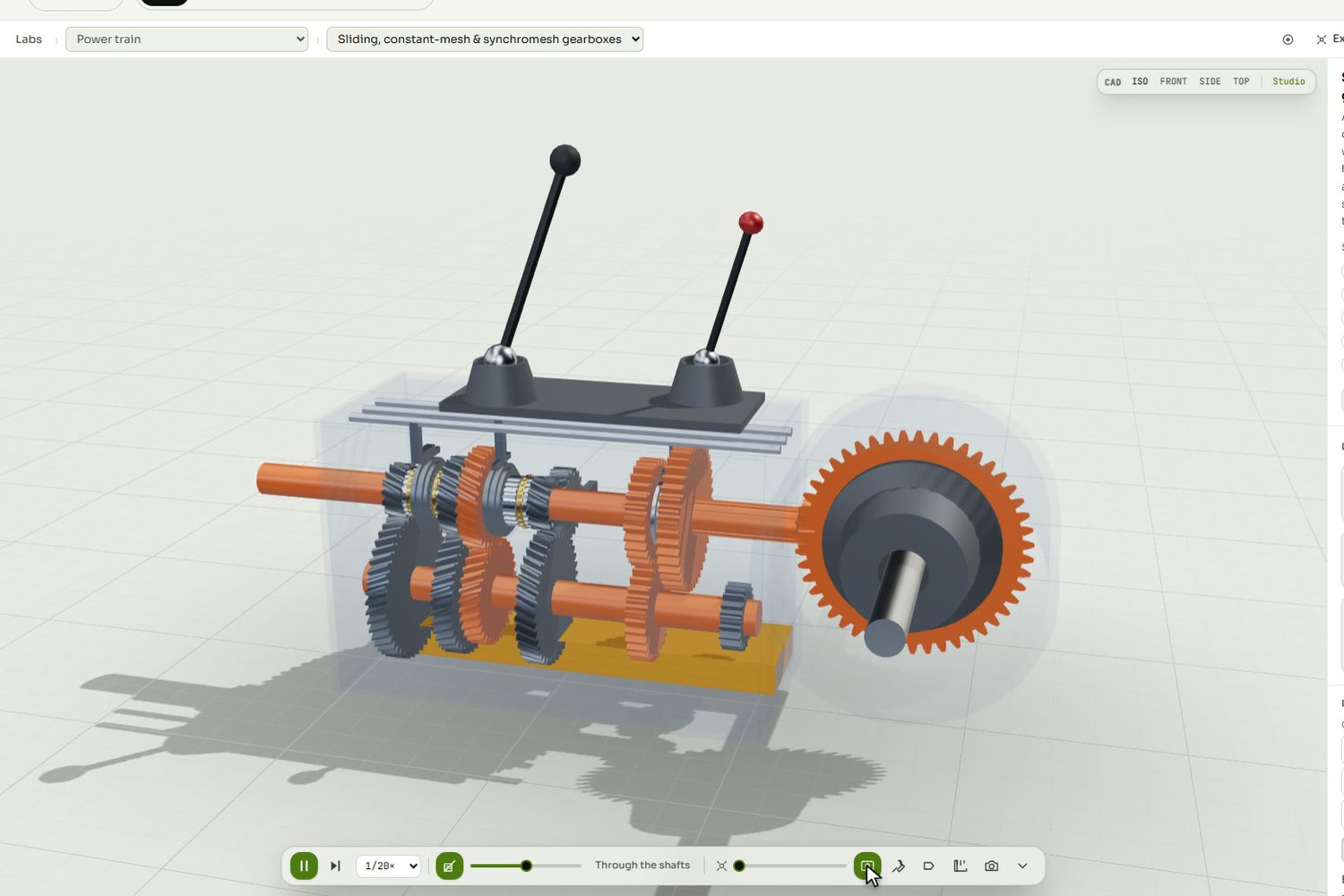
Gearbox X-rayed
-
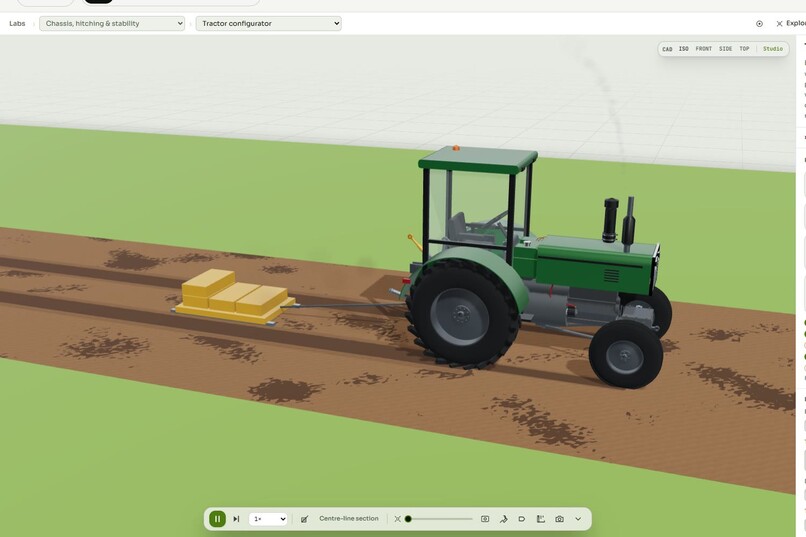
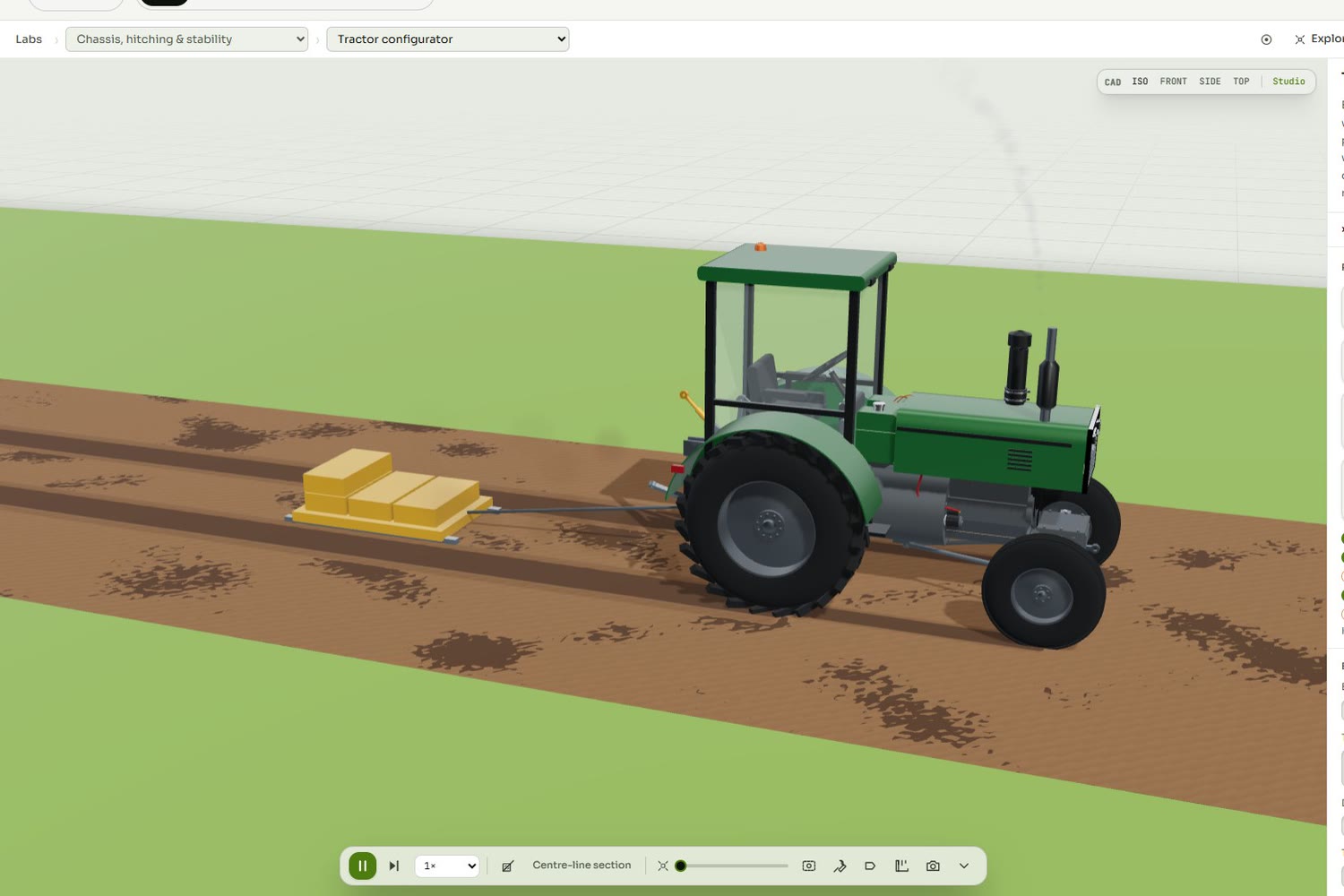
Tractor configurator at work in the field
-
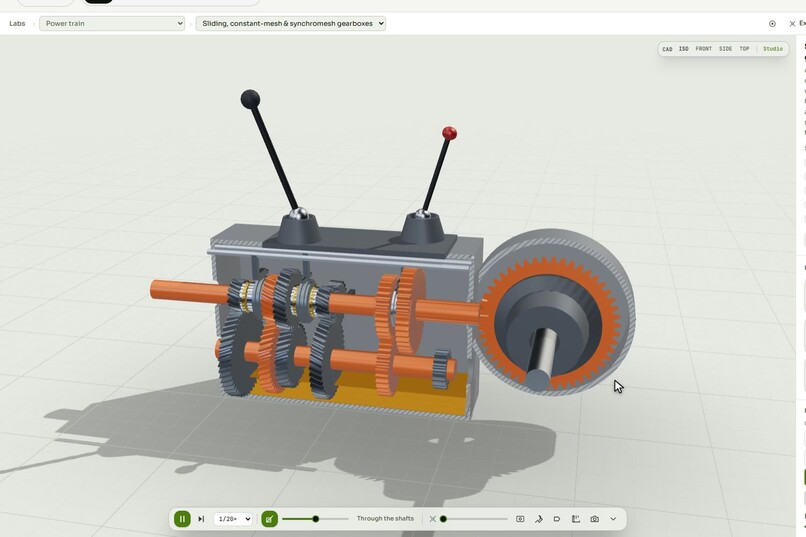
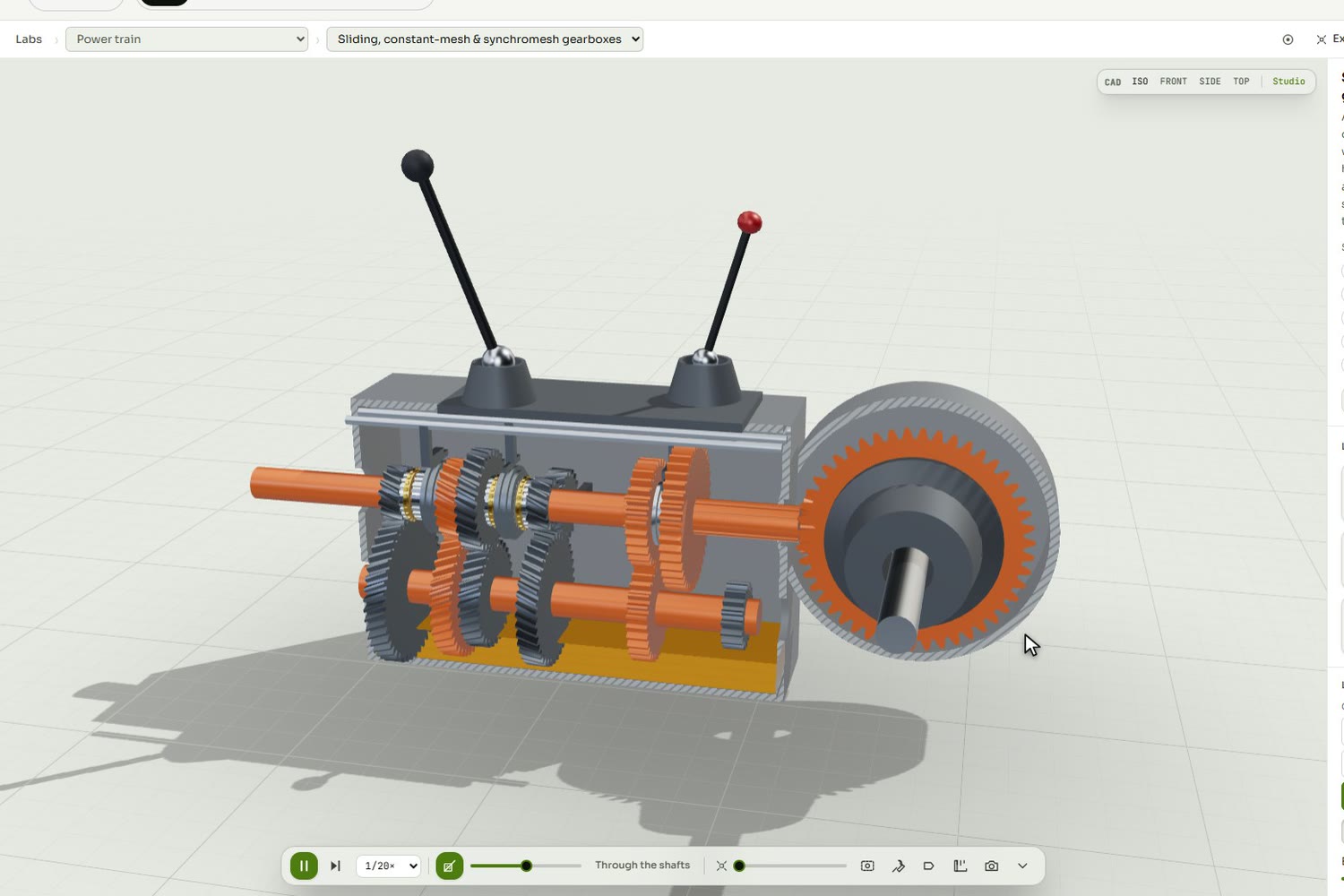
Gearbox cut through its shafts, power path in orange
## Inspiration

Engineering students learn machines from flat diagrams: a cut-away gearbox in a textbook, a P–V curve on a whiteboard. Most never get to stand next to a real tractor and take it apart. Solidify started as a way to see the machines from my agricultural engineering coursework in 3D, and grew into a question: what if any machine could stand in front of you, run on its own physics, and come apart in your hands?

## What it does

**Labs that run.** 95 hand-built rigs across 16 systems: a four-stroke diesel, a 16-speed synchromesh tractor gearbox, a differential, hydraulics, mechanisms, strength of materials, thermal plant, and a whole tractor at work. Every rig runs on live physics: cut it open at any angle (cut faces are hatched by material while moving parts stay whole), take it apart, X-ray the casing, and read the numbers as they change.

**Hands-first on Meta Quest.** Any lab opens through WebXR straight from the Quest browser, with nothing to install. Built for Quest 3 passthrough: small rigs stand on your real desk, while big ones (like a tractor) stand beside you at 1:1 on the floor, or shrink to a table model with one tap on the panel. Everything works seated, controller-free, within arm's reach: pinch or poke the floating control panel, pinch-drag the green turntable ring to turn the machine, and touch any part to pop up its card right beside it. Persistent anchors remember your desk spot between visits, and running tractors stay on the spot so they never drive out of your room.

**Create in 3D and the open `.slfy` format.** Describe a machine or upload a photo, and Gemini plans the parts and how each one is held; the app assembles them by relation ("this gear meshes with that one", "this pin goes in that bore") and runs a full-cycle motion check before anyone sees it. The result opens in the headset like any lab. Every model saves as plain `.slfy` JSON with a public specification and schema.

## How I built it

- **3D and physics:** React Three Fiber on three.js, parametric parts, `three-bvh-csg` boolean cutaways in a web worker, a kinematic drive-graph solver, and typed engineering formulas backed by over 1,400 tests.
- **Headset:** WebXR via `@react-three/xr` with surface hit-testing, persistent anchors, hand tracking (including thumb-and-index pinch assembly in Build mode), automatic sizing (desk or floor), enclosed-part hiding and scenery culling for smooth Quest frame rates.
- **Create in 3D:** Gemini on Vertex AI behind a Hono API on Cloud Run, with Firestore and Firebase Auth. Outputs are cleaned, validated and scored against serious faults (floating parts, collisions in motion, invalid loads), with automatic repair.

## Challenges I ran into

- **Developing WebXR without a physical headset.** Without a Quest 3 on hand, every spatial bug is harder to spot on a flat screen. I built my test setup on Meta's Immersive Web Emulation Runtime (`iwer` and `@iwer/sem`): hit-test placement against captured room environments, true 1:1 room-metre scaling, fallback placement when no surface is found, and articulated hand poses with the index fingertip placed on panel controls and parts. Scripted head and hand poses on a frame-stepped clock let me reproduce bugs exactly and record the demo, and part of the work was telling app bugs from emulator artifacts.
- **Language models are bad at coordinates.** Static checks missed floating parts and gears running through each other. Switching to relation-based assembly, plus a full-cycle BVH surface check of every moving part, caught them and repaired them.
- **Real size in a room.** In the emulated room, big machines first stood 2.6 m away, past the table, and running tractors drove out through the wall. Placement now keeps full-size rigs within reach, falls back sensibly when no floor is found, and runs moving rigs in place.
- **Sizing a machine by what it is.** The diesel engine's fuel-flow particles (one unit sphere per instance) made it measure 2 m wide, so the headset stood it on the floor like a tractor. Machines are now measured by their parts, not their effects.
- **Readable cutaways.** Slicing casings without cutting the moving gears, and putting gears back whole when switching cut presets, took several iterations.

## Accomplishments I'm proud of

- Walking around a full-size tractor, X-raying it to watch the engine run, and taking it apart with bare hands, all from a Quest browser link.
- All 95 labs open in a headset from the same link as on the desktop: no separate VR build.
- Generated machines have to pass a motion check before anyone sees them.

## What I learned

Decide structure before geometry. Having the model plan "what holds what" first, and point to named parts rather than guessed numbers, makes generated assemblies far more reliable.

## What's next

Flagship machines with guided walk-throughs (starting with a wind turbine), two-handed manipulation in the headset, and shared sessions so a lecturer and class can gather around the same rig.
Built With
- firebase-authentication
- firestore
- gemini
- google-cloud-run
- hono
- json-schema
- katex
- meta-quest
- netlify
- node.js
- playwright
- react
- react-three-fiber
- react-three-xr
- tailwindcss
- three-bvh-csg
- three-mesh-bvh
- three.js
- typescript
- vertex-ai
- vite
- vitest
- webxr
- zustand