Inspiration
The crisis generated by SARS-CoV-2 have deepened the isolation problem of two vulnerable groups in Romania: the elders and the victims of domestic violence.
The population ageing is a known problem in Romania. In 2017, 60 years old people or older represented 24.7% of the entire population, with an increase of 1.3% from 2014. Also, the rural population of Romania is more affected by this ageing process. A significant number of older people live alone or in isolated rural areas, without having a younger relative close by.
The domestic abuse happening in many Romanian households is a serious problem. Considering the current restrictions imposed to flatten the spread of the SARS-CoV-2 virus, the number of victims has increased at a global scale, let alone in Romania. The global domestic abuse problem was addressed by the UN Secretary-General António Guterres in an urgent call to governments, asking to put women’s safety first as they respond to the pandemic.
Considering the fragile environments these two vulnerable groups are exposed to, we were inspired to try and break this barrier and create a platform where they could easily add their help request and the best match would be found based on a few key criteria.
Solution
A platform that helps the members of these vulnerable groups having their needs tackled and resolved through a matchmaking process between their requests and volunteers, organisations or suppliers of goods and services. Members of vulnerable groups will be able to launch a help request for groceries, medication, counselling or domestic abuse, via different channels: create a request directly in the platform or via a call to a dedicated line, available 24/7. The victims of domestic violence will be able to request help through a hidden method, that will not leave traces for the abuser to see.
The other side of this two-way communication channel, the volunteers, organisations or suppliers, will receive requests matched with them based on the type of request, proximity and availability and will be able to accept and solve the requests, while also having a direct communication channel with the person that requested help, to discuss more details regarding the request.
What and how we built during the hackathon
Having started with a much broader idea, during this hackathon we managed to better identify our target groups and narrow it down to their specific problems.
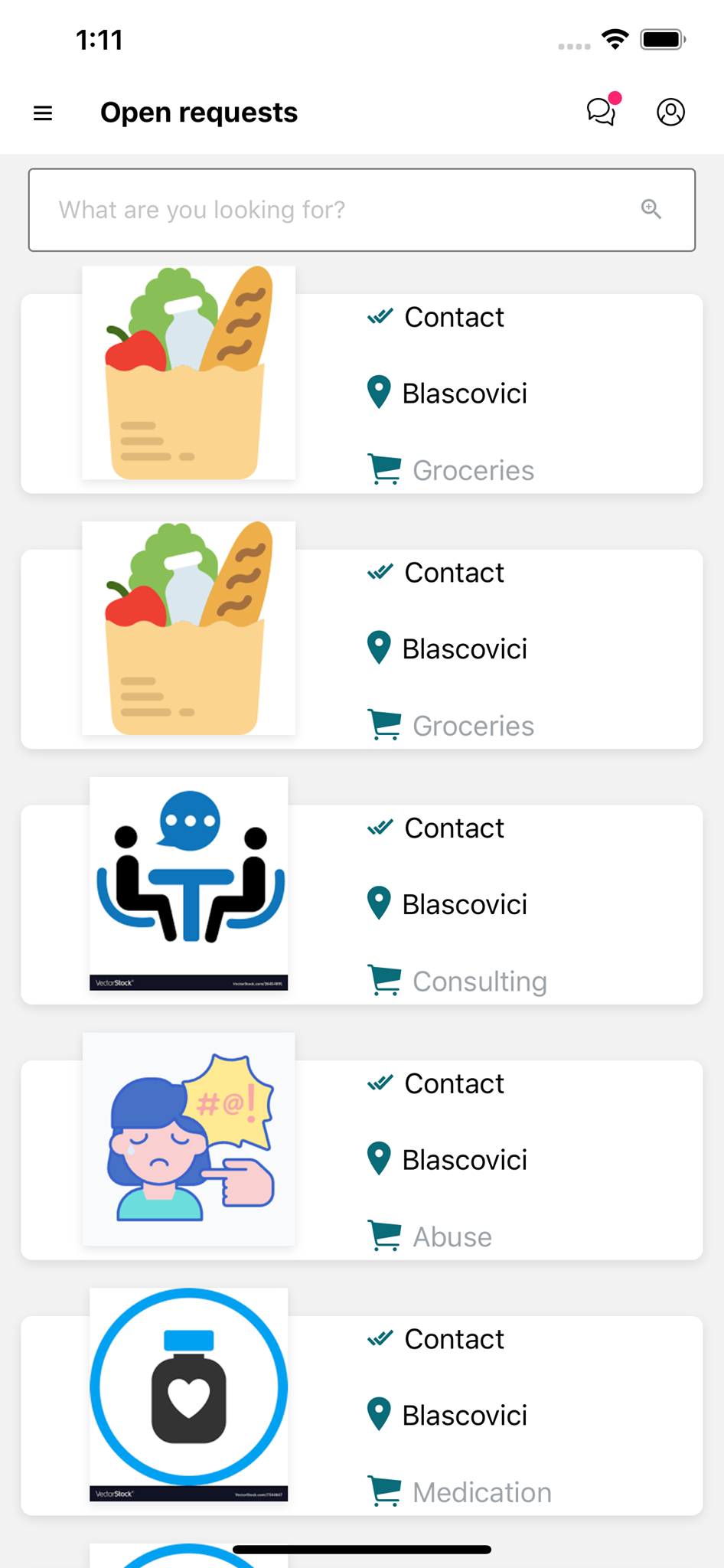
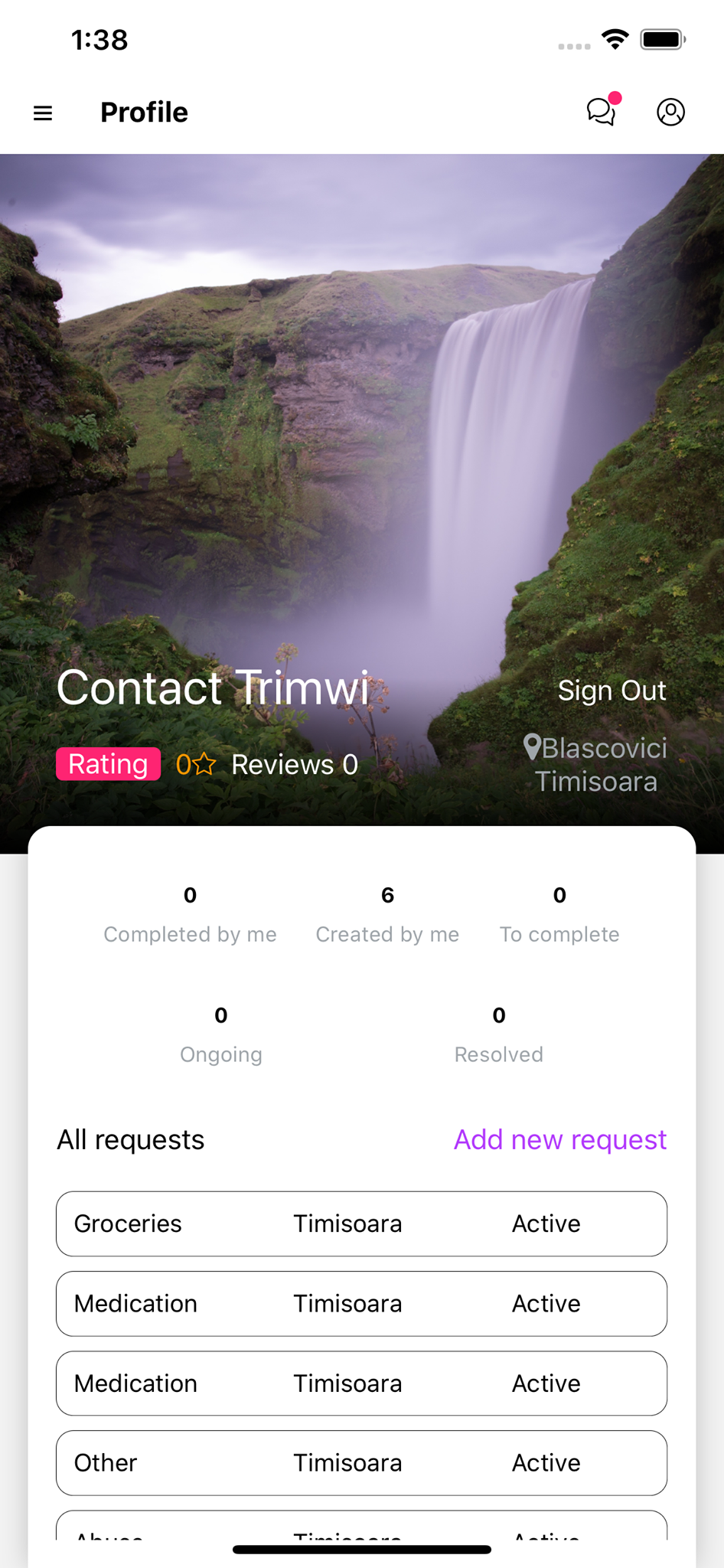
The idea was started from scratch during this hackathon and we managed to create an MVP mobile application using cross platform mobile development, where users can:
- create an account
- add requests and see their status
- see matched requests based on proximity
- have conversations with the user at the other side of the request (creator or solver)
Challenges we ran into
- adjusting our initial idea, to narrow it down to 1-2 specific problems
- how to differentiate from other solutions
- through which channels we are going to reach our users
What are we proud of
- being involved in such a cool and of impact event
- getting out of our comfort zone
- having "met" great minds, mentors and other participants
What we learned
- to think big, but to be specific and start small
- to be open and to adjust based on the feedback received
What's next for Solidarity
- launch a pilot project to a small group in our local community
- partnerships with entities of interests: NGOs, authorities, municipalities
- a dedicated support line to register requests
- many improvements and probably adjustments based on the outcome of the pilot project


Log in or sign up for Devpost to join the conversation.