-
-
Community-driven orders, 1.0.1
-
Life is better when you pool!

Stores that sell food and essential items are facing 9 to 12 months of social distancing measures
Radical restriction is the new norm.
Stores can’t let too many customers inside at once, adding long queues to an already somber shopping experience.
They are also afraid for their workers and want to take care of their customers, including those who might be isolated or have difficulty coming to the store such as the elderly or those with vision impairment or reduced mobility.
Online shopping is an obvious choice for these times, however many stores can’t keep up with delivery demands. Stores in areas hard hit by the virus have suspended deliveries, while others are facing delivery saturation limits with delays of up to three weeks.
Through pool.farm, businesses can respect social distancing, increase delivery distribution and support social cohesion and social inclusiveness
By encouraging neighbourhood communities to form groups and buy together, businesses can serve more people in one transaction.
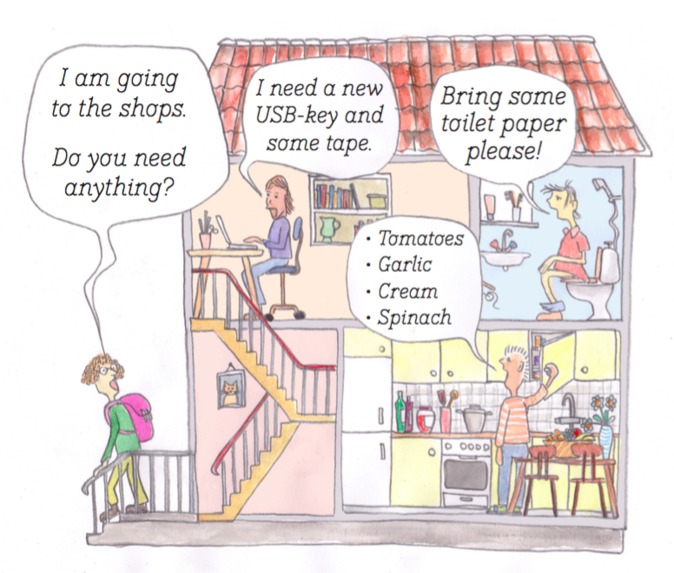
This idea isn’t new, it happens every day in families who pronounce these words: "I'm going to the shop, can I get you something?"
We’ve just made it easier to expand the practice to include neighbours and local friends.
When one person visits a store to purchase for a group, this reduces in store foot traffic. When multiple orders are combined and delivered to one address, delivery optimization is achieved. When groups buy together, they reinforce community bonding and can take advantage of group knowledge to make purchasing decisions. At risk individuals can also be incorporated in local groups, increasing social interactions for people that may otherwise remain isolated.
Our platform, pool.farm, is a dashboard where neighbours and friends can organise group orders and buy together from businesses.
When just a few people decide to buy together, this can be done through a text message. But as the buying group gets bigger and orders grow, there is a lot of data to manage, which can be prohibitively time-consuming.
This is why we created pool.farm. It’s a project based on an IT platform, which saves an incredible amount of time for members of purchasing groups. The platform makes collaboration easy, managing group purchases with data moderation and maps features. It allows an easy cut and paste feature to import store products and prices and user friendly checklists for managing distribution.
The platform empowers
- citizens to crowd-source community-driven orders of food and essentials
- organizations (municipalities, governments, non-profits, NGOs, local associations) to moderate information
- businesses to deliver to fewer addresses yet serve more customers while supporting local communities and building positive brand experiences, which lowers the cost of logistics and makes businesses more sustainable
It has been beta tested for two years in Sweden and has managed over 200 group orders, serving an average of 10 individuals per group.
EUvsVirus Hackathon helped pool.farm pivot user focus towards helping businesses
During the hackathon, we revisited the business model and repositioned pool.farm to better serve stores and their communities in the new Covid-19 environment.
Prior to this weekend, while shops also created accounts, pool.farm's primary focus was on individual users creating community collectives to self organize purchases, as can be seen here: pool.farm - Buying as a group
Through the power of group intelligence and mentor insight, we were able to identify that this platform was already prepared to serve a Covid-19 induced business need, that of mitigating in-store contact and addressing the explosion of delivery demands through decentralized delivery for the last mile of the distribution supply chain.
Additionally, we studied making pool.farm available for businesses and how to make this a self-funding operation.
Businesses and communities working together can have a powerful impact on moving towards normality in the era of Covid-19
We think this is a unique initiative in that it creates collective bargaining between individuals and businesses, benefiting them both.
Currently, on the customer side one use case shows 10 people pooling cheese orders twice a month, saved drivers 15km in transport, 4 kg of CO2 emissions, 3 hours of time and 92€ collectively for the group. On the other side, the cheese business saved on delivery costs, time spent attending 1 person versus 10 people, invoice management, etc
If pool.farm were implemented at scale, the 10 people going to a store and benefiting 100 people, would translate into a 10x effect. Stores could deliver to 1000s of people who each distributed to 10 people in their local community. Multiply this times as many stores as there are serving as many countries as there are and it is mind boggling the savings that could be achieved.
At it's most simple level pool.farm can
- help keep your favorite businesses alive
- help you stay safe by decreasing contact with others outside of your local community
- serves local communities and collectives
- decreases the impact of transport
It is an infinitely scalable project, able to be used by both small and large businesses, small and large collectives and readily transferable (after language localization) across cultures and countries.
Beyond the crisis, pool.farm will continue to promote sustainability and community building
The new habits we incorporate during Covid-19 can have positive lasting effects that we will continue to use in our lives post virus.
Modern consumption is very much defined by individualistic behaviours, such as, ordering single items online, or driving to the store alone, which use more transport and packaging than we need.
We at pool.farm think that this is a huge waste of resources and want to address it together.
Our solution is to change our behavior by buying as a group rather than as individuals, like carpooling, but for purchases. This can have a significant impact on the CO2 footprint that we generate as consumers.
When you buy as a group from small and local producers, it has the added benefit of supporting the local economy and helping make those local businesses more competitive.
We want to encourage the adoption of sustainable, community driven projects that are good for business, good for our environment and good for our hearts.
What's next for pool.farm?
In addition to the following listed areas, we have one beta project with a university campus advancing currently and hope to advance an additional similar project in a second country soon.
Business: further develop financial side of business model (external funding, revenue streams)
Product: improve the platform onboarding making it super simple for companies and their customers to sign up
Community development: connect with other community-building initiatives to inspire collective-buying in their neighbourhoods.
Legal: confirm that platform complies with all GDPR requirements and explore Zero Knowledge Protocol technology
Marketing: update website with store side value proposition and information


Log in or sign up for Devpost to join the conversation.