Inspiration
Solid deformation is a fascinating phenomenon that we can observe in everyday life. A football changes shape when it is kicked, a desk bends slightly when someone sits on it, and in a car accident we can see large deformation in materials such as aluminum. These examples inspired us to visualize how solid structures deform under external force and load, so people can better understand what is happening in real-world physical scenarios.
What it does
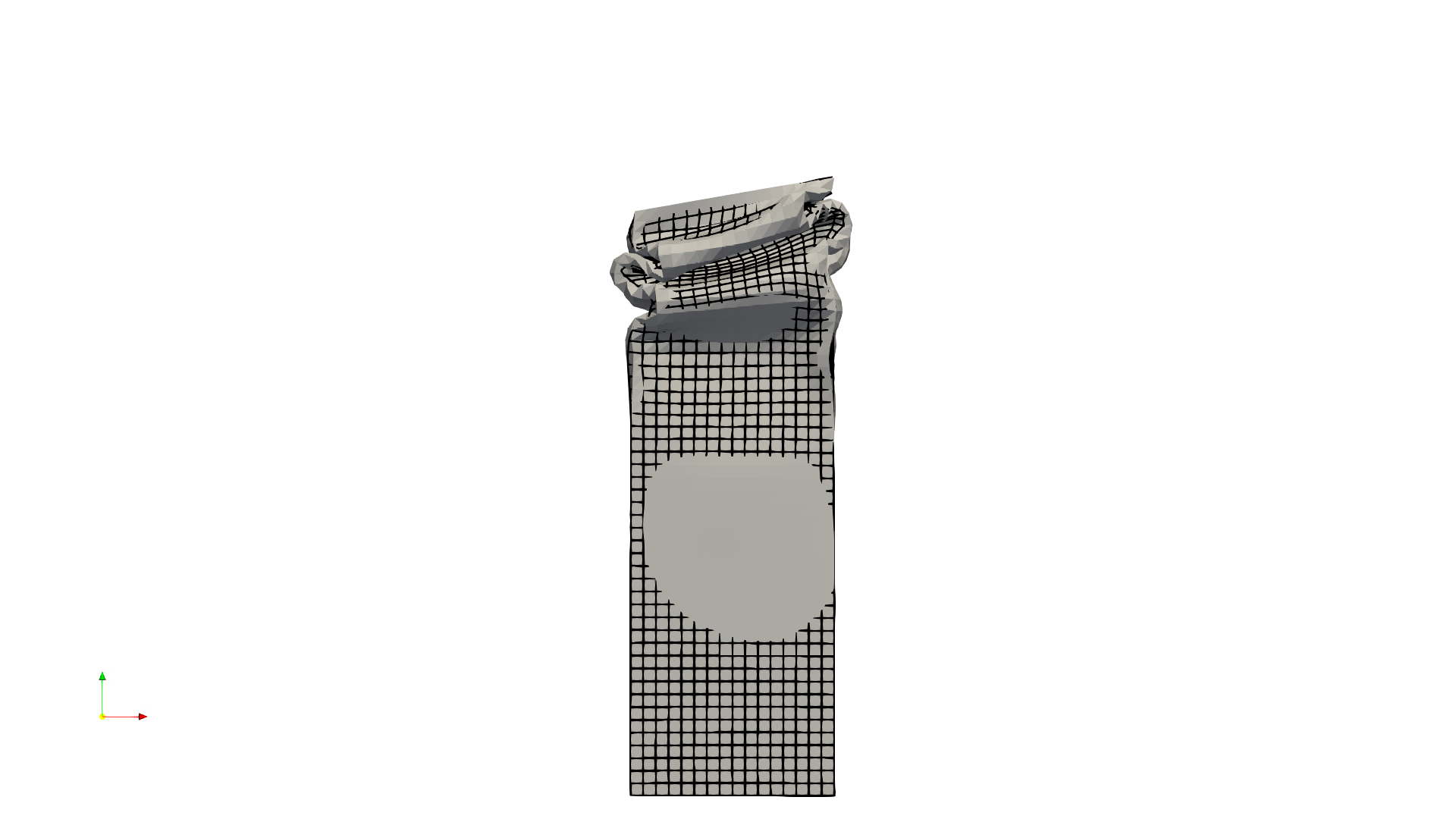
Solid Deformation Viewer visualizes how simple solid objects, such as balls and square tubes, deform under external force. It tracks the motion of key points on the object and shows how the shape changes over time. Our goal is to make deformation behavior easier to observe, understand, and learn from.
How we built it
We built this project using Python and geometric point-cloud data. The system represents objects with points and simulates how those points move during deformation. To improve efficiency, we also explored using machine learning methods to reduce the number of points while still preserving the most important geometric information.
Challenges we ran into
One of the main challenges was balancing detail and efficiency. A simple object can require many points to describe accurately, but too many points make the system heavier and slower. We needed to find a way to simplify the representation without losing key deformation information. Another challenge was making the deformation process clear and visually understandable.
Accomplishments that we're proud of
We are proud that we were able to combine physics-inspired deformation visualization, point-cloud representation, and machine learning ideas into one project. We also successfully built a system that can help people see how solid objects deform under force in a more intuitive way.
What we learned
Through this project, we learned more about deformation modeling, point-based object representation, and the tradeoff between visual detail and computational efficiency. We also gained a better understanding of how physics, visualization, and machine learning can work together in one application.
What's next for Solid Deformation Viewer
In the future, we want to support more object types and more complex deformation scenarios. We also hope to improve the accuracy of the simulation, make the visualization more interactive, and further reduce the number of points while preserving important structural information.

Log in or sign up for Devpost to join the conversation.