-
-
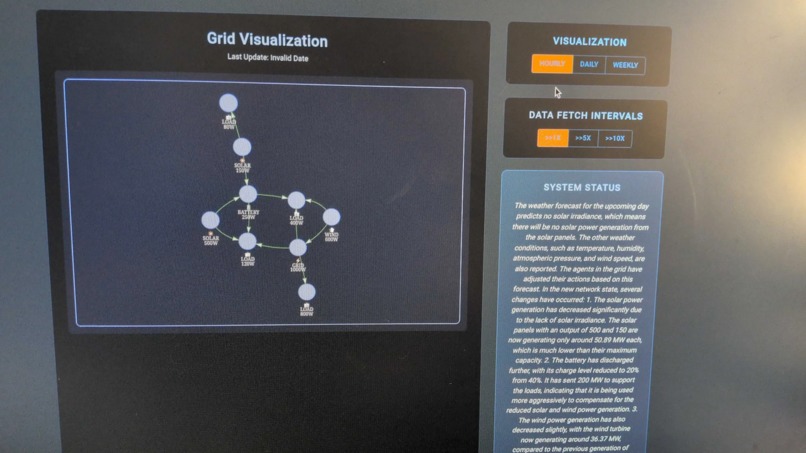
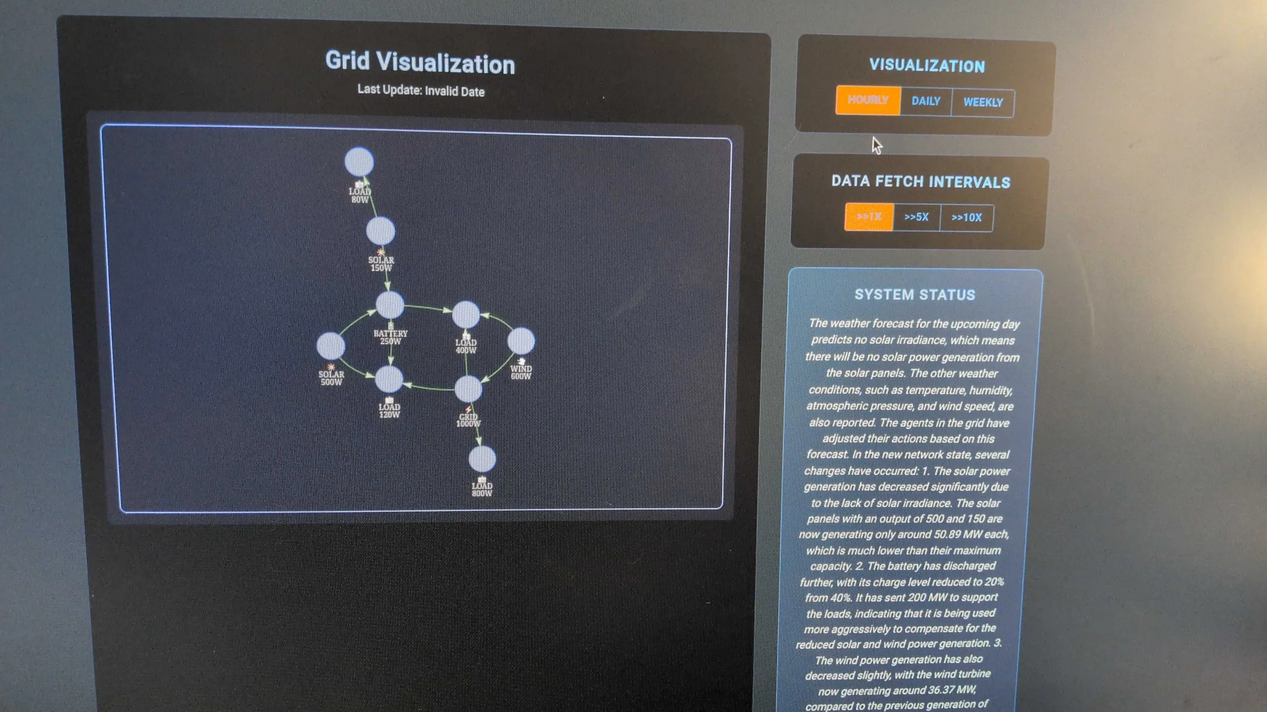
Hourly Prediction
-
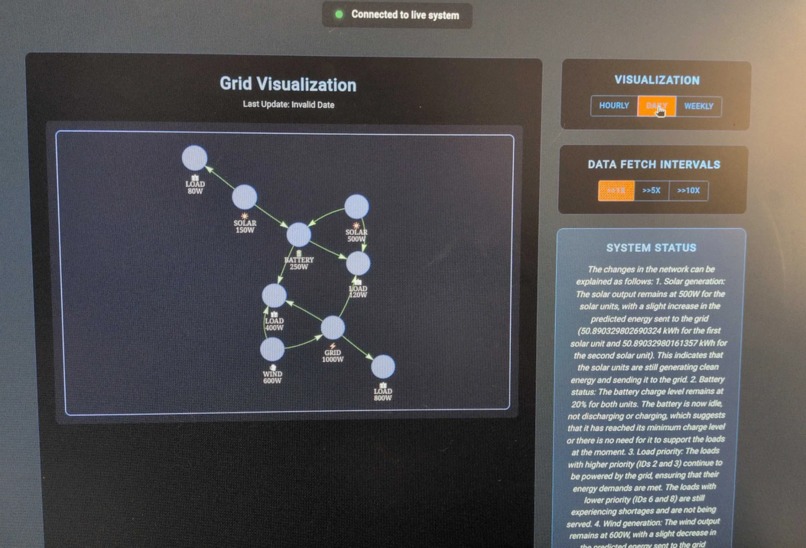
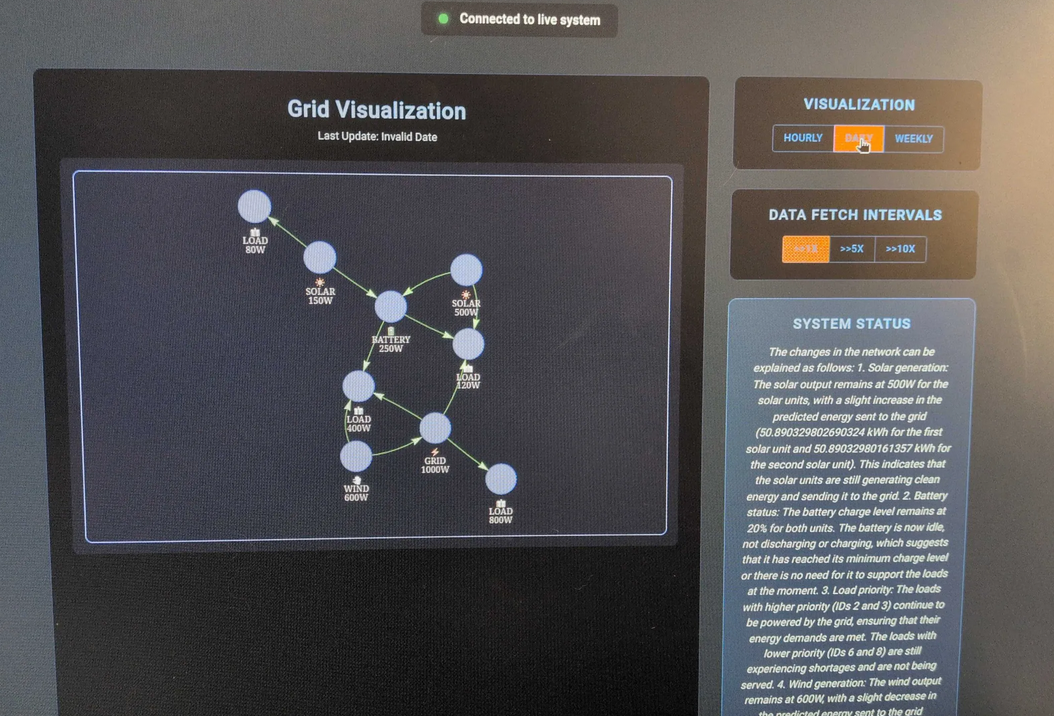
Daily Prediction
-
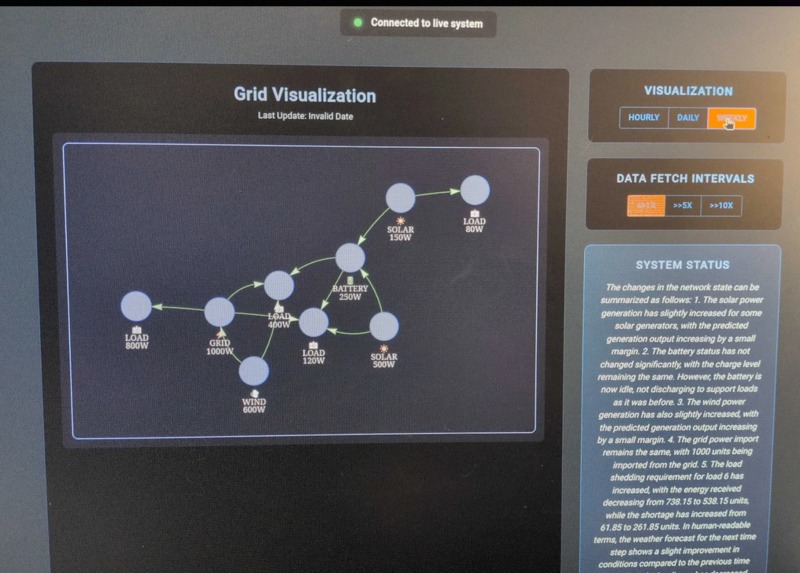
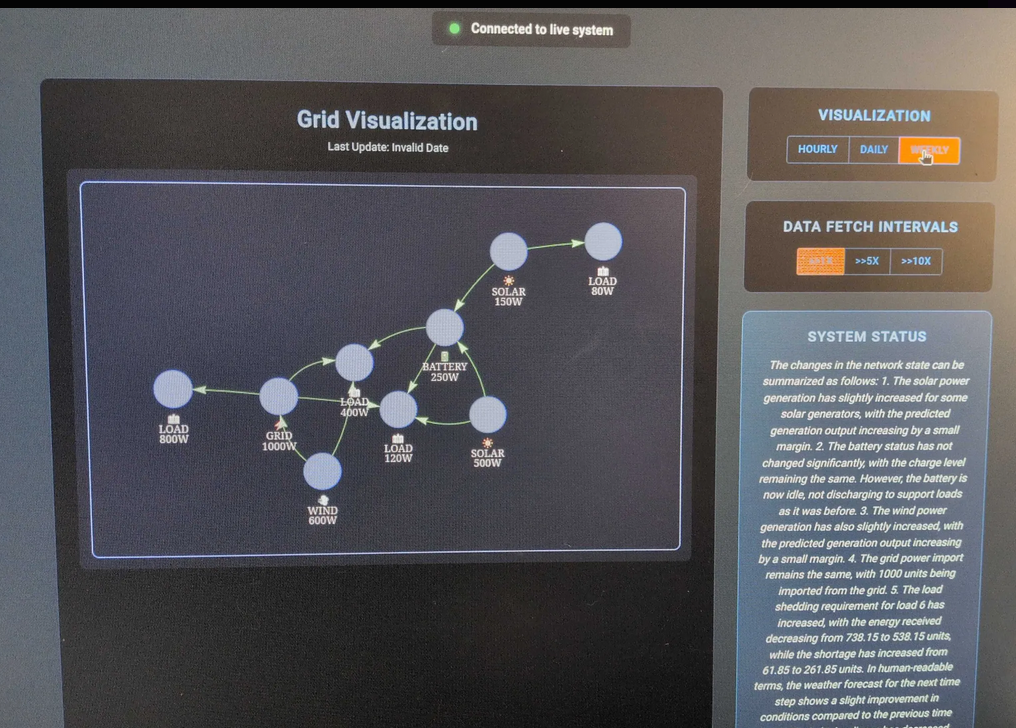
Weekly Prediction
-
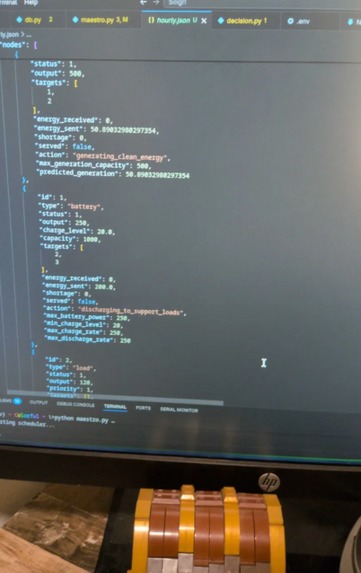
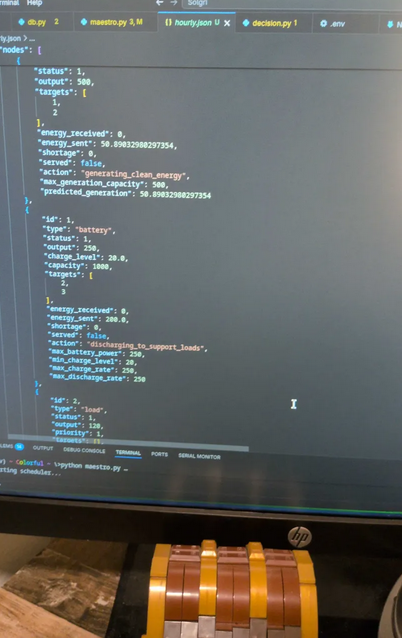
Sample Network output
-
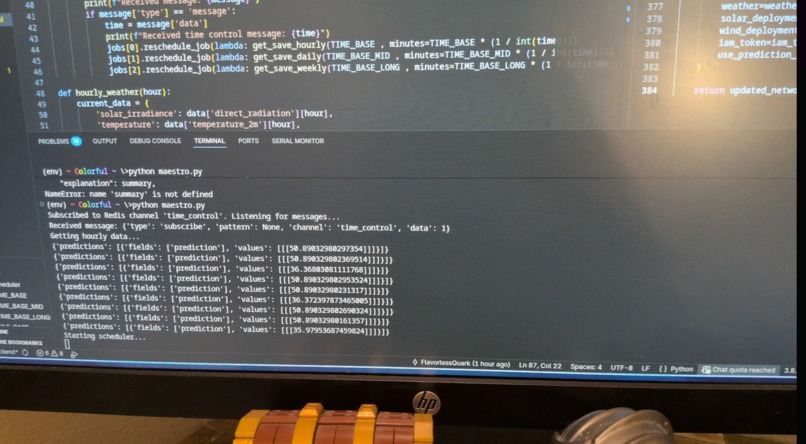
It's seeing the future ...!!
Inspiration
We heard about "micro grids", which is something prevalent in the Netherlands and Germany, as well as in New York. Micro grids are community owned grids, usually powered by solar infrastructure. These grids can disconnect from the main grid or supply it with power.
We wanted to write something make the usage of micro grids more efficient both to the planet the city and the communities that own them
What it does
This project leverages AI to decide the best next state of the micro grid network (should it disconnect from the grid, fro example if it detects that most of the energy provided by the grid is unclean ? Should it help power the grid with renewables if there is an excess of energy in the system? Should it store energy to prepare for upcoming bad weather or catastrophes? Which nodes should be prioritizes?) This accomplished 3 UN sustainability goals : SDG 7 , Affordable and Clean Energy : Optimizes the use of local solar power / battery stored energy over expensive and unclean grid power SDG11, Sustainable Cities : Helps neighborhoods manage and share power, reducing reliance on unclean power and protecting critical infrastructure when the grid is less available. SDG 13, Climate Action : Reduce reliance on unclean power, optimizes the use of power for critical infrastructure.
How we built it
AI Backend :
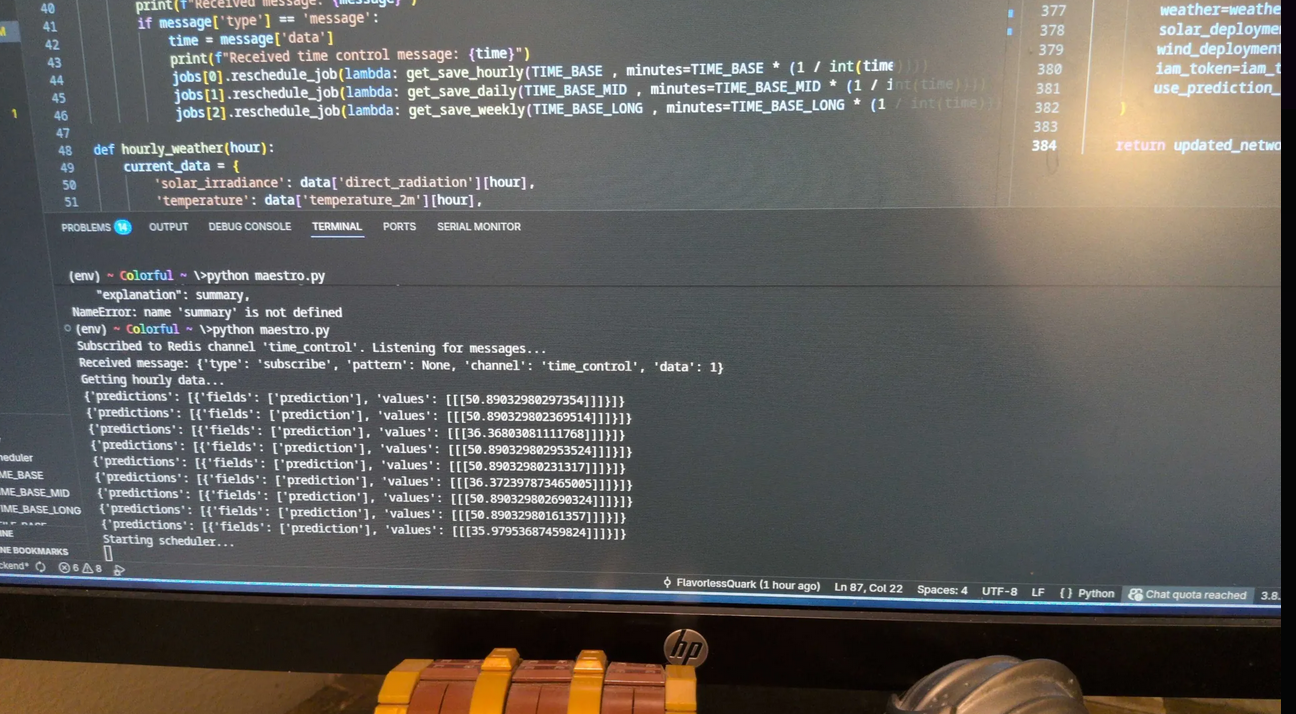
- The AI backend is where all the predictions are made, and where the new network is devised. This aggregates data from the weather, grid carbon output and the current node network to predict the best state for the network, 1 hour, a day and a week in advance.
We use watsonx to make predictions, Llama to translate these predictions into an explanation, and cloud storage to store all of the data, and IBM IoT to keep track of our nodes ( or we would have if it worked)
Prediction strategy:
Standard prediction: 24hr
- Schedule a day ahead
- Decide if we disconnect from the grid or not
- How much should batteries be charged by EoD
- How much energy can we send to the grid
- How much energy will X neighbourhood need Micro : 60mins
- Balance the grid for the next hour
- Where should energy be sent
- Making sure critical infrastructure remains useable Future: 7 days
- Look ahead 7 days to inform daily and micro results
- Eg: if hurricane, batteries should be x% at EoD Different states will enable different decision trees Use confidence thresholds before taking an action If a big change must be made, the signals that would prompt this must have been valid for some
Data Backend The data backend is a python websocket backend that fetches the data generated by the AI backend and sends it to the frontend. Frontend: Displays a graph of the network's best calculated state and additional weather data
Challenges we ran into
Some of the IBM tech requires paid accounts, and some of the IAM stuff wasn't super easy to figure out Since I use ARCH BTW, my install is always half broken , and this time it was hard to record a video since screen recording did not work
Accomplishments that we're proud of
It all works and the visualization is really cool! We managed to train the Ais, write not one but TWO whole backends AND a frontend, It was a lot of work for 36 hours. We planned what we were going to do really well and wrote a design document before starting to code
What we learned
I finally figured out why everyone uses Redis. I learned how easy it is to use a model with featherless I also learned that watsonx is also fairly easy to use
Built With
- featherless
- ibm
- ibm-cloud
- ibm-watson
- python
- react
- redis
- typescript

Log in or sign up for Devpost to join the conversation.