-
-
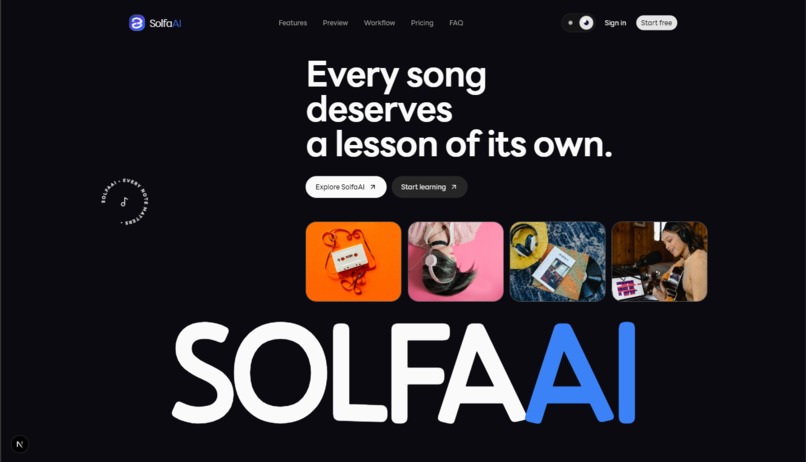
Landing Page Dark
-
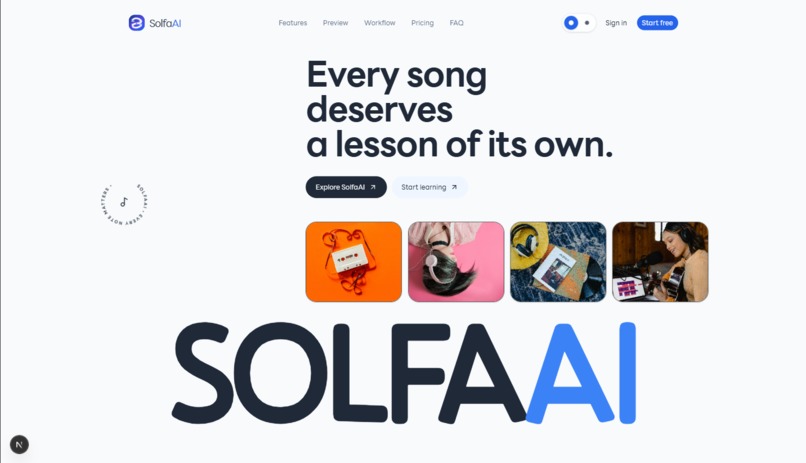
Landing page Light
-
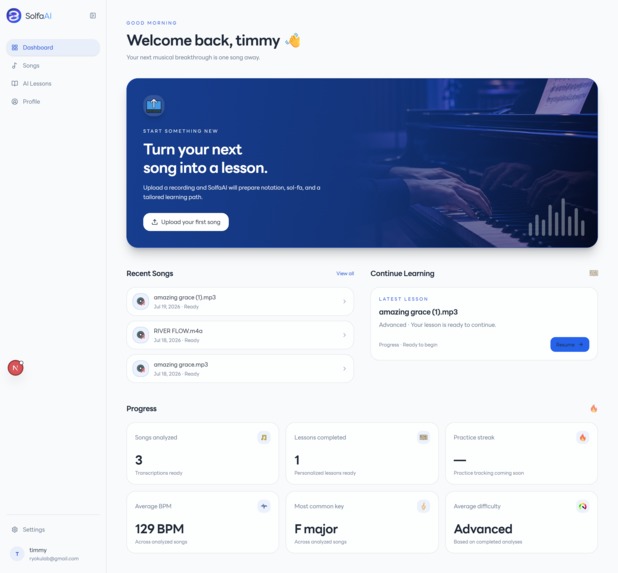
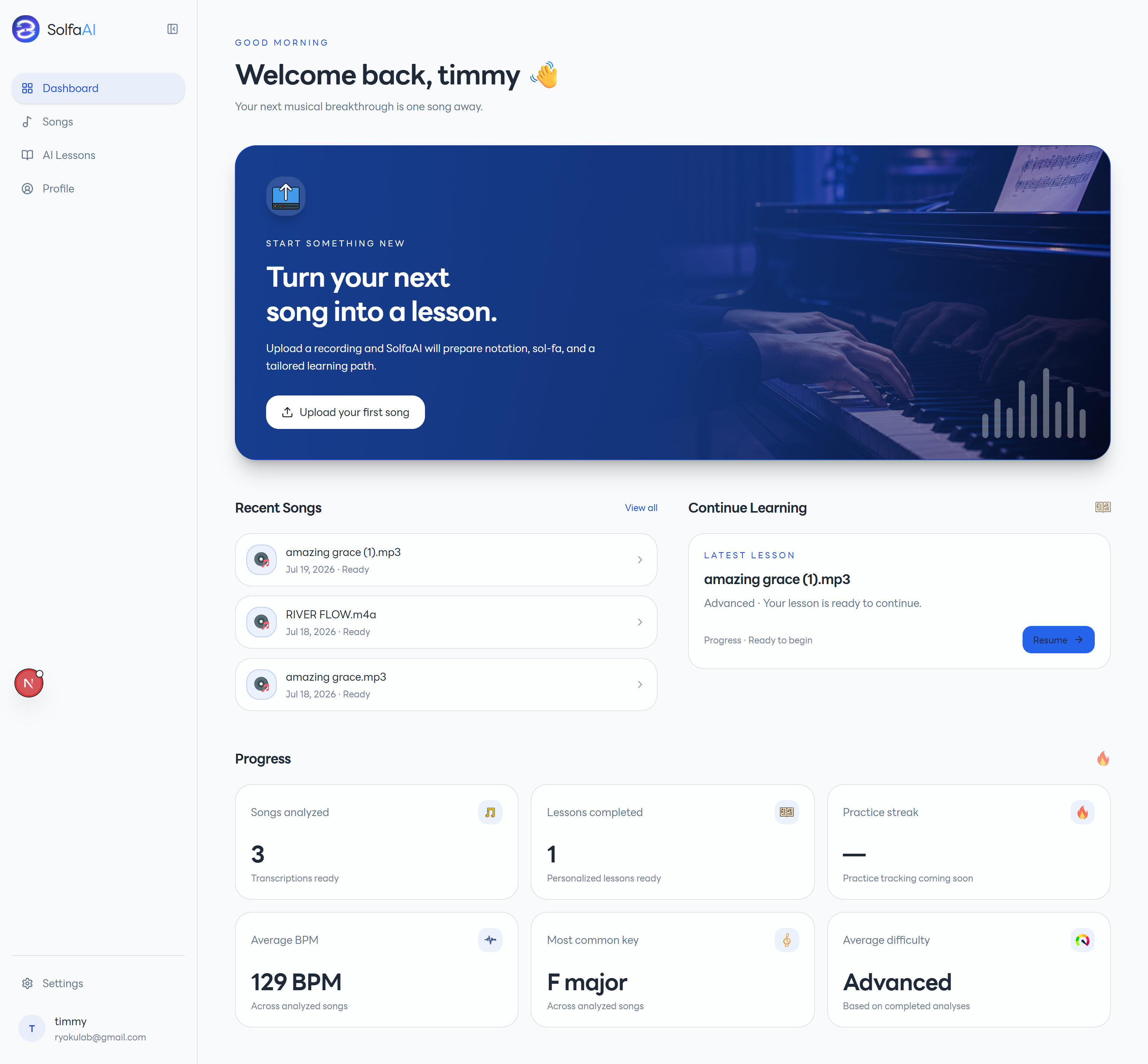
Dashboard
-
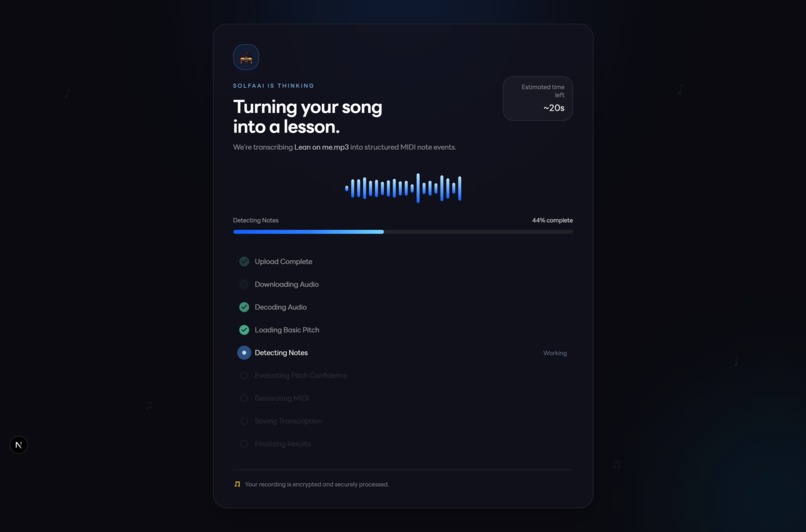
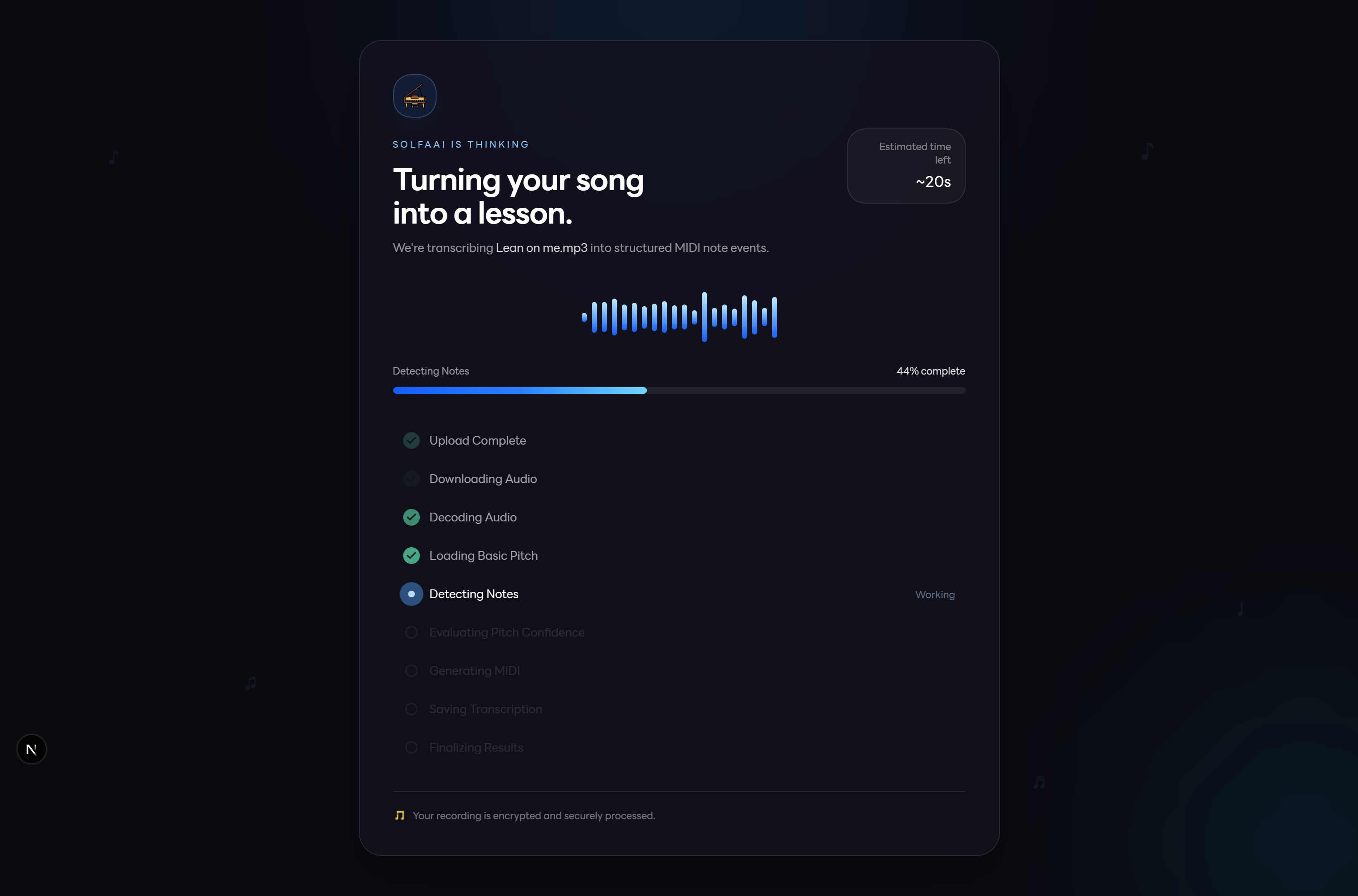
Processing page
-
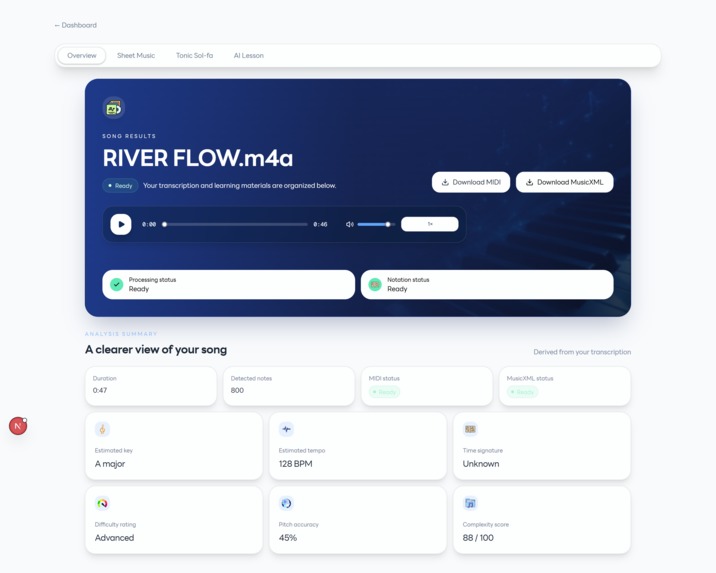
Result Page
-
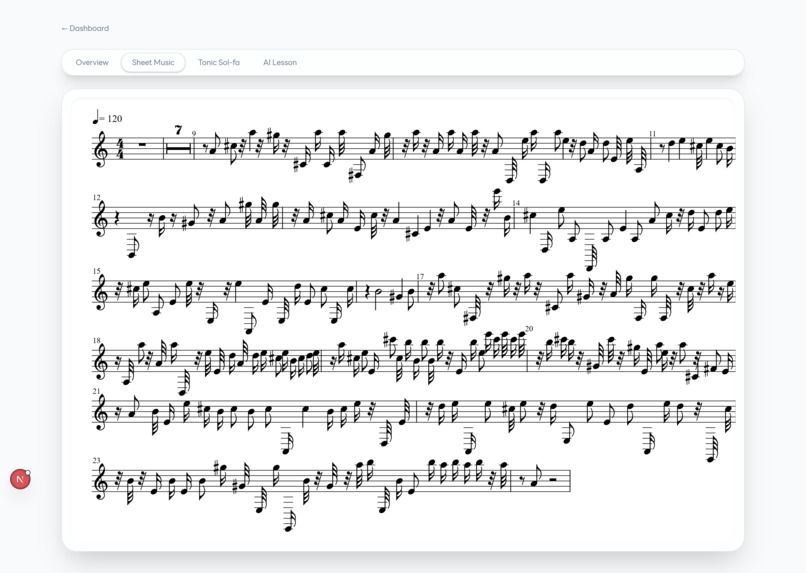
Sheet Music
-
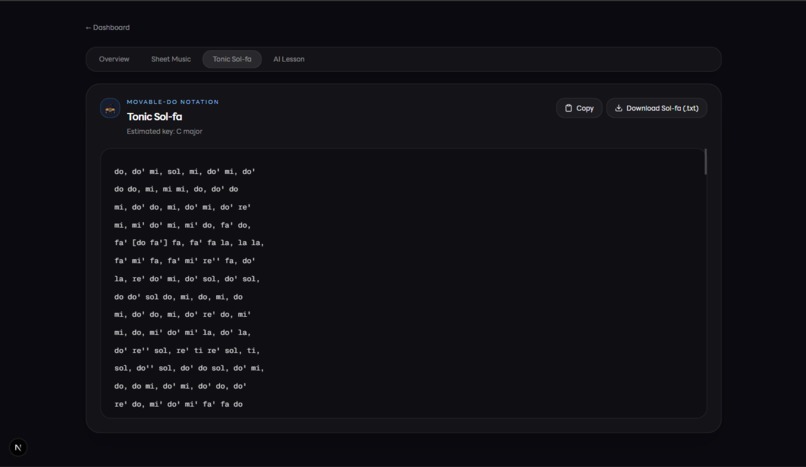
Tonic-solfa
-
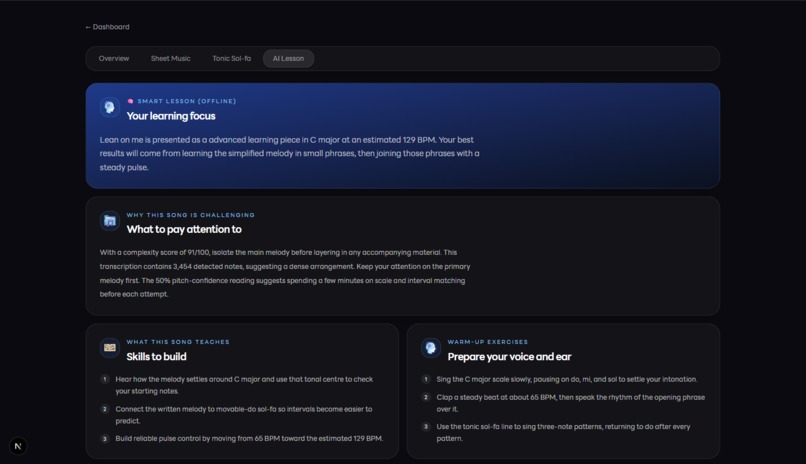
Ai Lesson page
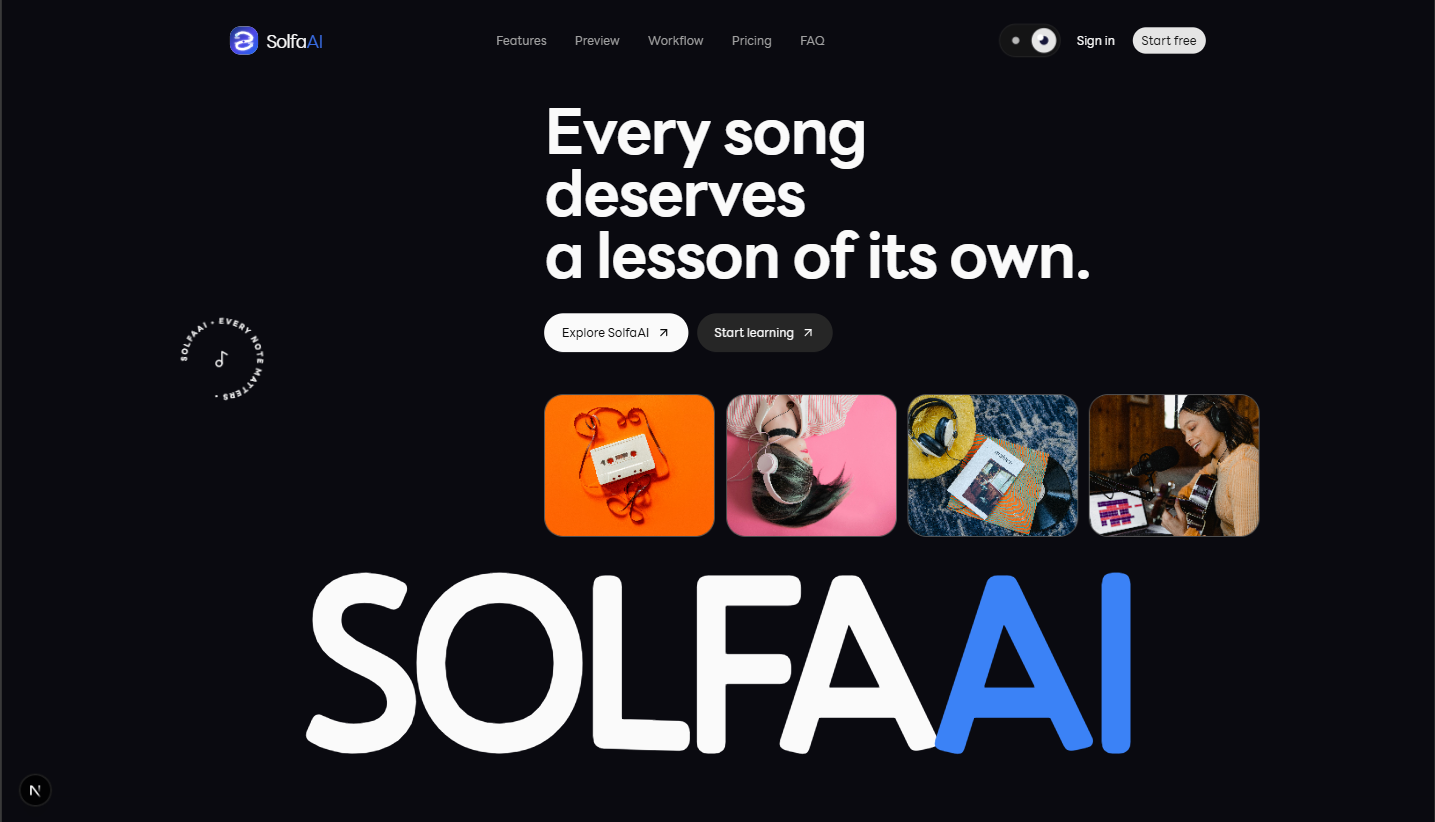
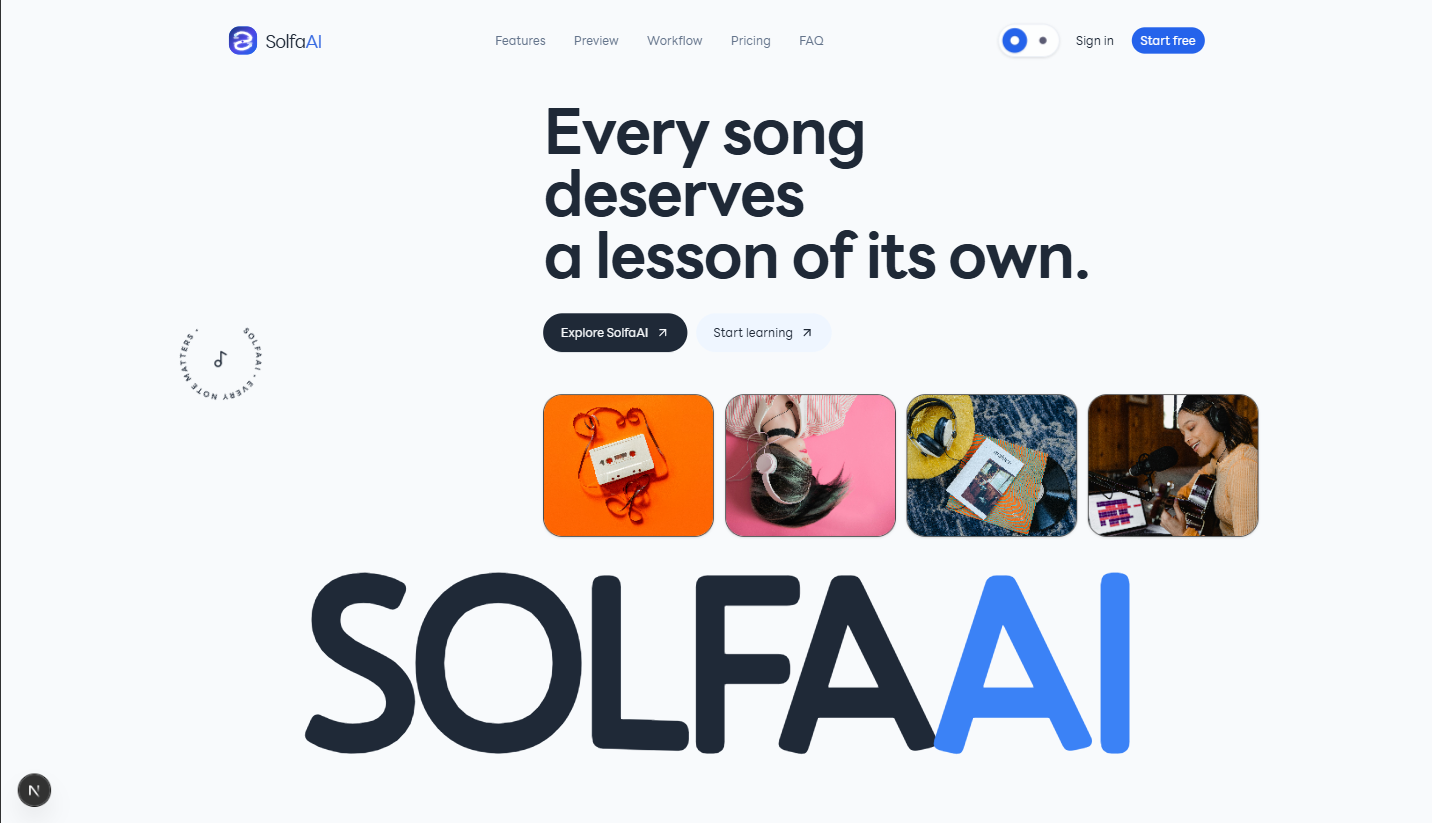
Inspiration
As someone who plays the piano, I've often wanted to learn songs by converting them into tonic sol-fa. Finding accurate sol-fa for many songs online is surprisingly difficult, and the AI tools I tried couldn't reliably generate it either.
That experience inspired me to build SolfaAI, an application that helps musicians turn audio recordings into sheet music, tonic sol-fa, musical analysis, and AI-generated learning material. While it's still a work in progress and there are areas I want to improve, this project is the first step toward making music learning more accessible and automated.
What it does
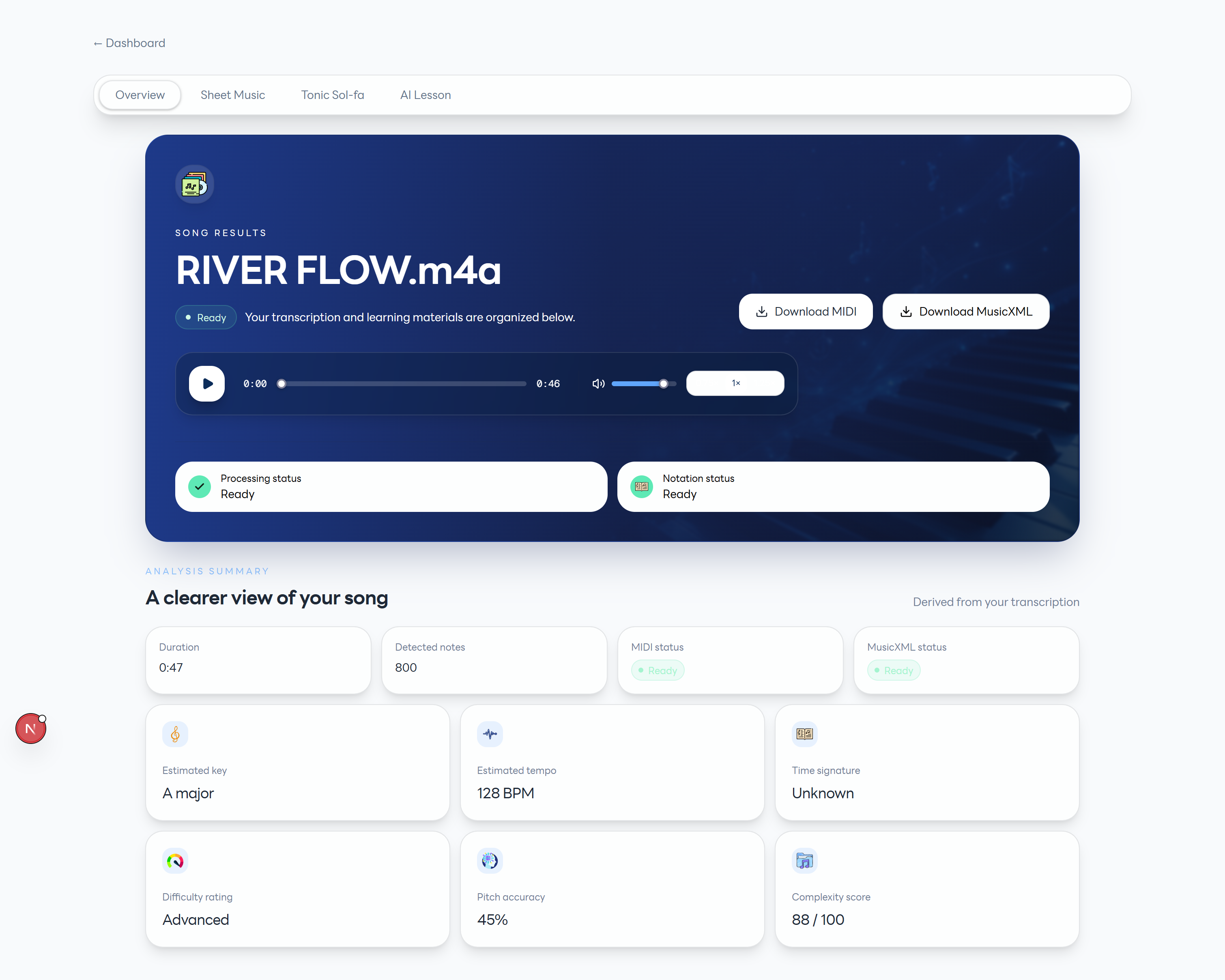
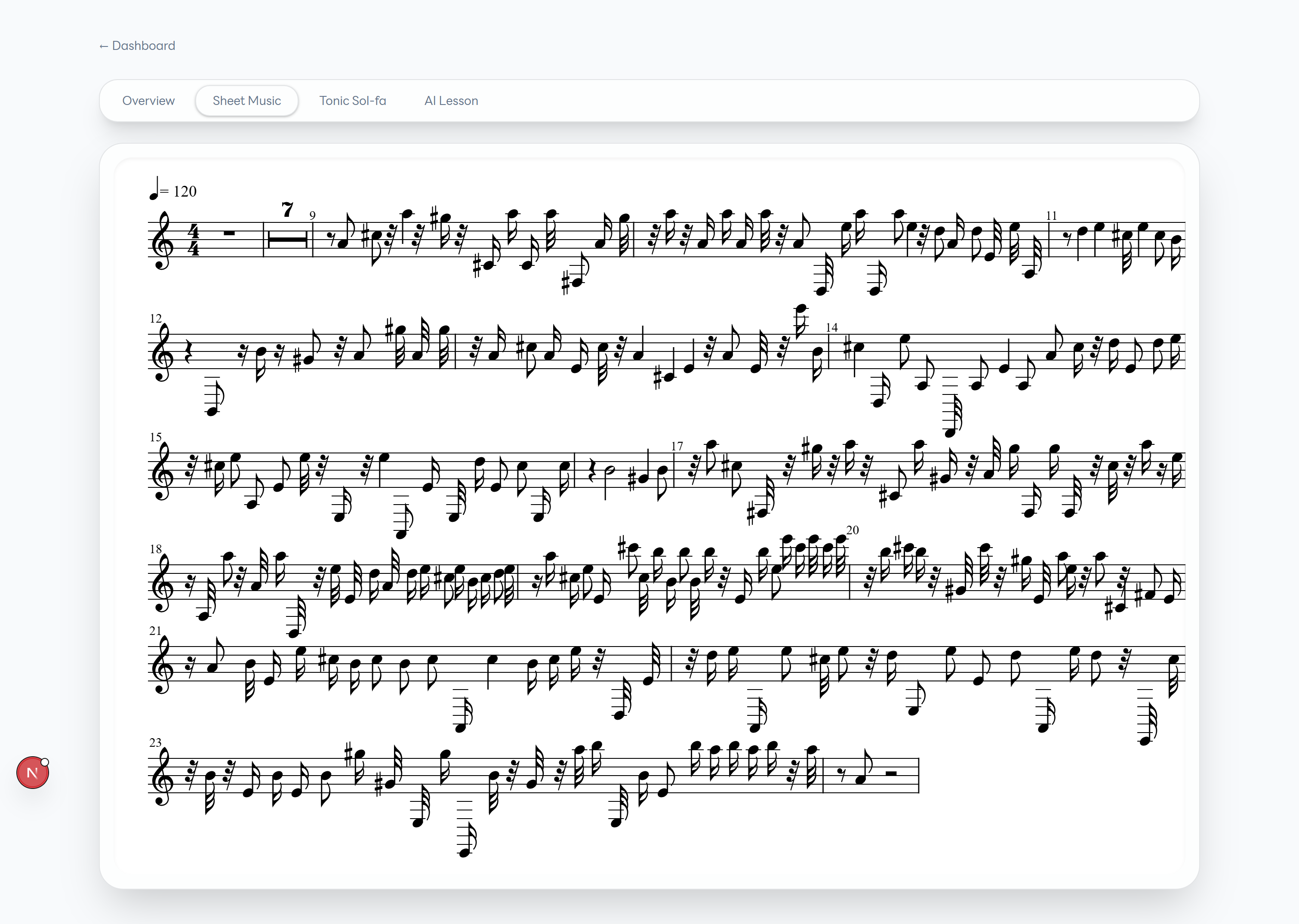
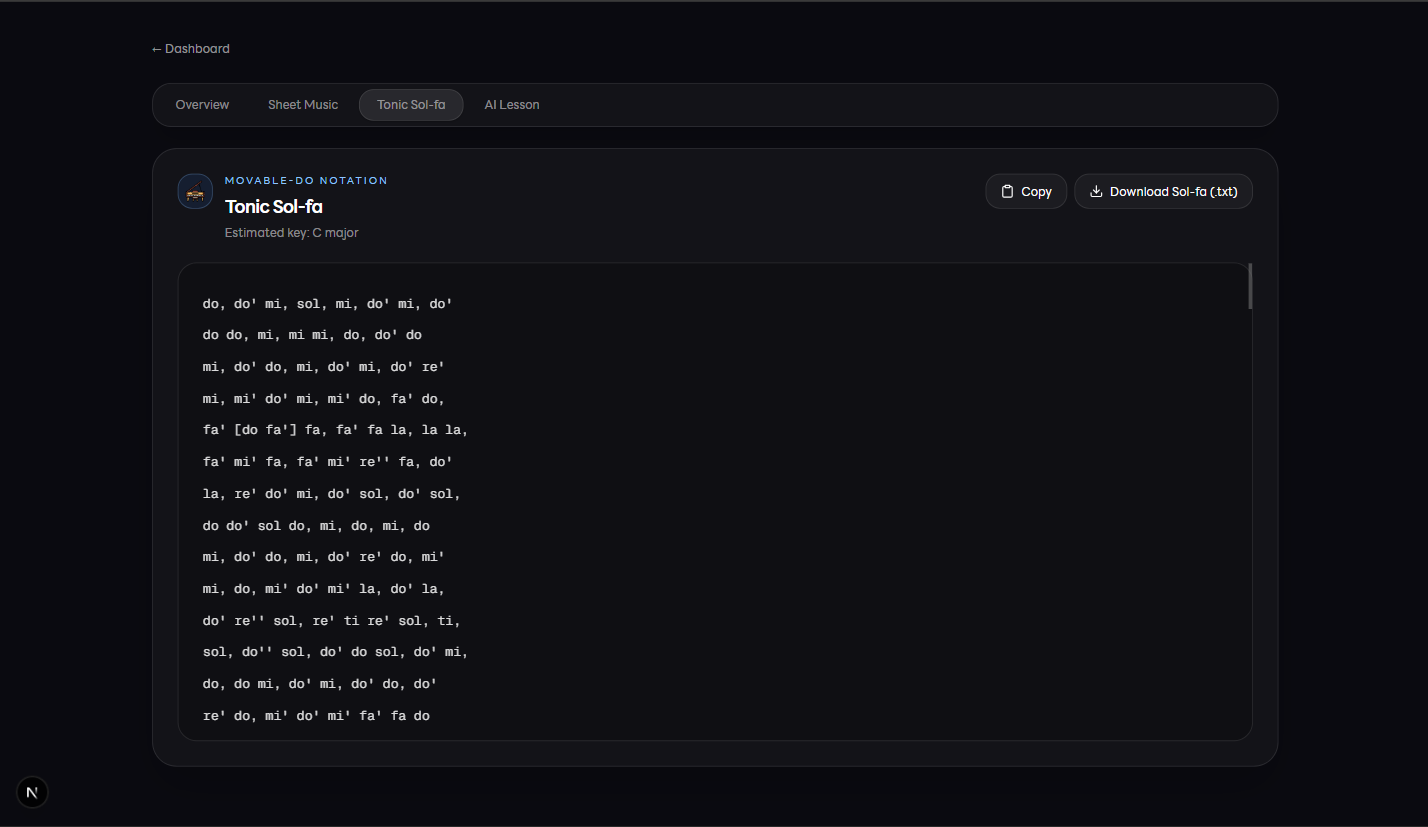
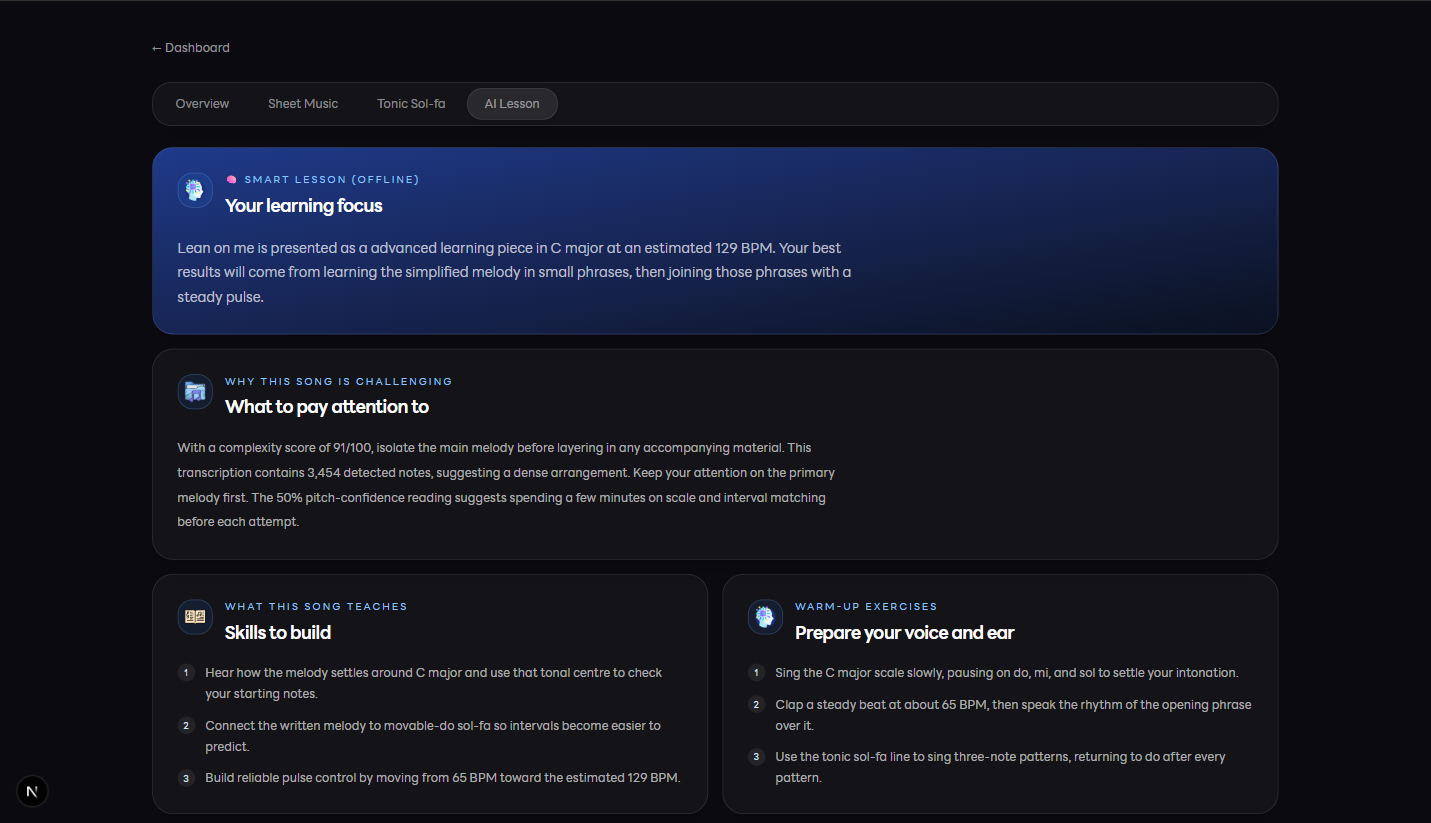
SolfaAI is an AI-powered music learning platform that transforms audio recordings into structured learning materials. Users can upload a song, and SolfaAI automatically transcribes it into MIDI, generates sheet music (MusicXML), converts the melody into tonic sol-fa, analyzes musical characteristics such as key and tempo, BPM, and creates an AI-powered lesson to help users understand and practice the piece. The platform is designed to reduce the time and effort required to learn songs by ear, making music education more accessible for students, teachers, instrumentalists, choirs, and anyone interested in learning music.
How i built it
SolfaAI was built using Next.js, React, TypeScript, and Tailwind CSS for the frontend, with Supabase handling authentication, the database, and file storage.
When a user uploads an audio recording, the file is securely stored in Supabase Storage before being processed by Spotify Basic Pitch to extract musical notes and generate MIDI data. From this transcription, SolfaAI generates MusicXML for sheet music, converts the melody into movable-do tonic sol-fa, performs musical analysis such as key and tempo detection, and creates an AI-powered lesson that helps users understand and practice the piece.
Throughout development, GPT-5.6 and Codex played an important role in accelerating the implementation. They were used to assist with designing and refining the transcription pipeline, authentication, MusicXML generation, AI lesson generation, responsive user interfaces, debugging, testing, deployment, essentially everything. Every feature was reviewed, tested, and integrated into the application before becoming part of the final product.
Challenges i ran into
One of the biggest challenges was building a reliable music transcription pipeline. Converting an uploaded audio recording into accurate sheet music and tonic sol-fa required integrating multiple processing steps while keeping the output consistent. Another challenge was creating a smooth user experience. I implemented secure authentication, file uploads, processing states, responsive interfaces, and an AI lesson generation pipeline while ensuring the application remained stable and easy to use. Although the current version works well as a prototype, improving transcription accuracy and key detection for a wider variety of songs remains an area i plan to continue refining.
What I learned
Building SolfaAI taught me that developing AI-powered applications is about much more than integrating AI models. I learned how to combine multiple technologies into a complete workflow, from user authentication and cloud storage to music transcription, MusicXML generation, and AI-powered lesson creation. Throughout the project, I also learned how to collaborate effectively with GPT-5.6 and Codex. They helped me accelerate development, debug complex issues, and iterate on features more quickly. Most importantly, I learned that building a useful product requires continuous iteration. Every challenge and improvement brought SolfaAI closer to the vision I have for making music education more accessible.
What's next for SolfaAI
My next goal is to improve transcription accuracy, key detection, and tonic sol-fa generation so the platform can support a wider variety of songs more reliably. I also plan to add support for importing songs directly from streaming platforms, provide richer music theory explanations, expand the AI lesson experience, and build features that can make SolfaAI more useful for music teachers, choirs, schools etc.
Built With
- musicxml
- nextjs
- node.js
- openai
- postgresql
- react
- supabase
- tailwind
- typescript


Log in or sign up for Devpost to join the conversation.