-
Solemate
Inspiration
Chronic inflammation in diabetic patients is a leading cause of preventable amputations, largely because patients with neuropathy cannot feel initial tissue damage occurring. Current temperature-only monitors are prone to constant false alarms because they don't understand the patient's physical context. We wanted to build a clinical-grade wearable that fuses thermal anomalies with gait mechanics to accurately predict tissue breakdown before the skin ever tears.
What it does
Solemate is a predictive monitoring system embedded directly into an insole. It continuously cross-references real-time plantar temperature variations with IMU-tracked shear friction and movement. When the onboard machine learning model detects a sustained high-risk state—like heavy walking while the foot is acutely inflamed—it updates a live clinical dashboard and instantly triggers an automated Twilio phone call instructing the patient to sit down and rest.
How we built it
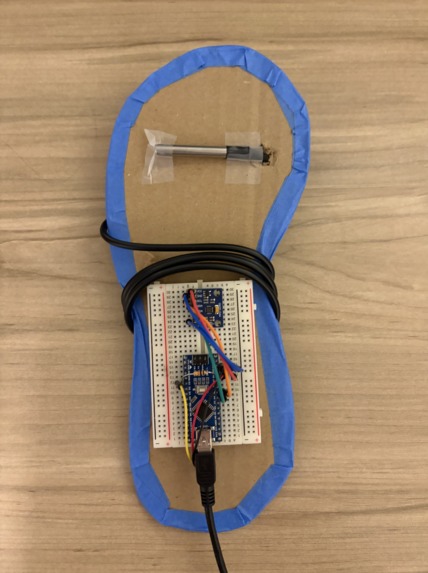
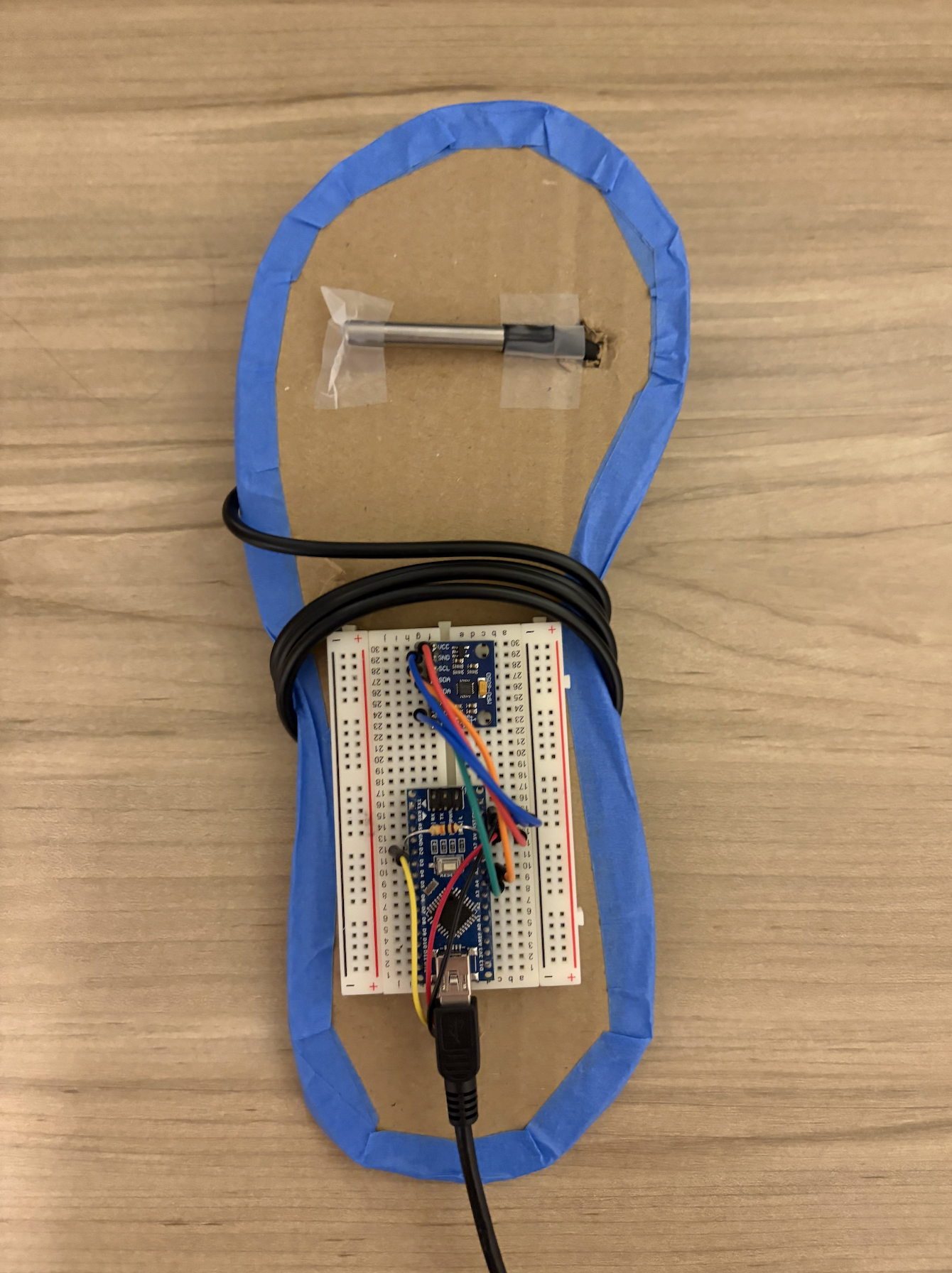
We wired an Arduino Nano with an MPU-6050 accelerometer and a DS18B20 temperature probe to capture live physical data. We generated a synthetic clinical dataset to train a scikit-learn Random Forest Regressor on temperature deltas and friction states. The live hardware data streams over Serial into a custom Streamlit dashboard, which auto-calibrates to the patient's baseline, feeds the data into the frozen ML model, and executes the Twilio voice API if the critical threshold is sustained for 5 seconds.
Challenges we ran into
We initially struggled with hardware communication, discovering that standard Adafruit libraries often fail to recognize makerspace-clone IMUs. We had to write low-level I2C C++ code to bypass the library and pull raw acceleration data directly from the chip's registers. We also had to manage macOS serial port hijacking and implement strict software debouncing to ensure our high-speed data stream didn't accidentally spam the Twilio API with duplicate phone calls.
Accomplishments that we're proud of
We are incredibly proud of realizing that raw temperature thresholds fail in the real world, leading us to dynamically calibrate the system to analyze temperature deltas instead. Additionally, most of our team were beginners attending their first hackathon, and we're proud of creating a fully working MVP in 36 hours with no prior hardware experience.
What we learned
We learned how to debug low-level I2C data lines and manually wake up sensor registers without relying on bulky abstraction libraries. We gained deep experience in synthesizing targeted time-series data to train anomaly detection models using scikit-learn. Most importantly, we learned that medical context requires sensor fusion—a temperature spike is only dangerous if you know exactly what the physical body is doing at that exact moment.
What's next for Solemate
Our immediate next step is miniaturizing the hardware into a fully wireless, flexible insole using a Bluetooth Low Energy (BLE) microcontroller. We also plan to replace our synthetic training data with real-world clinical datasets from hospital partners to refine our Random Forest model. Ultimately, we want to run pilot tests with early-stage diabetic patients to validate the automated voice-alerting workflow in everyday life.


Log in or sign up for Devpost to join the conversation.