-
-
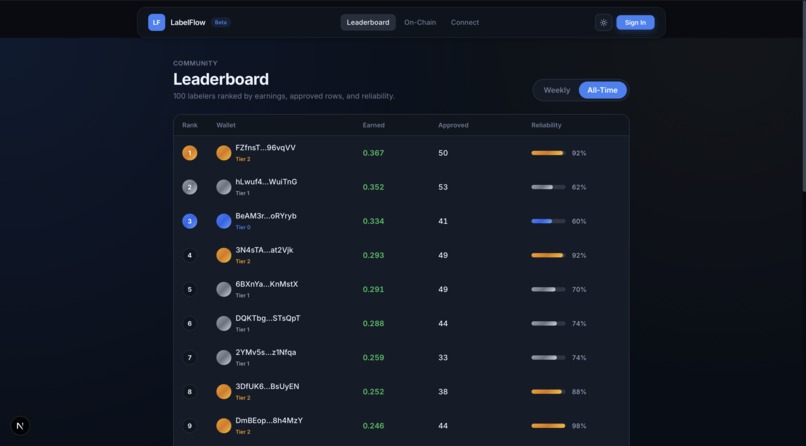
Leaderboard
-
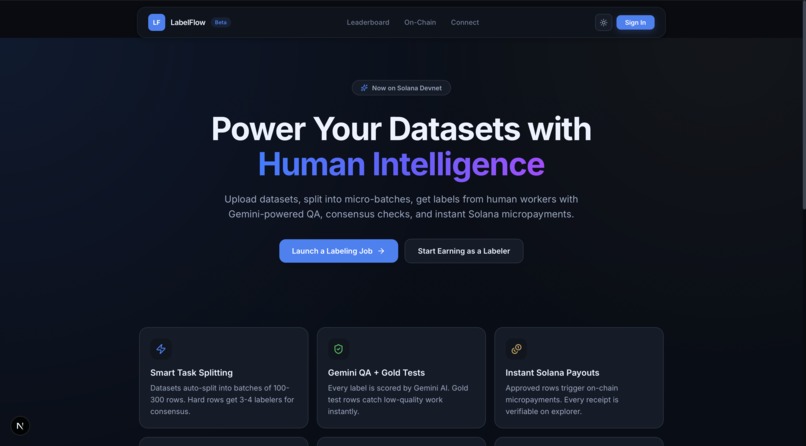
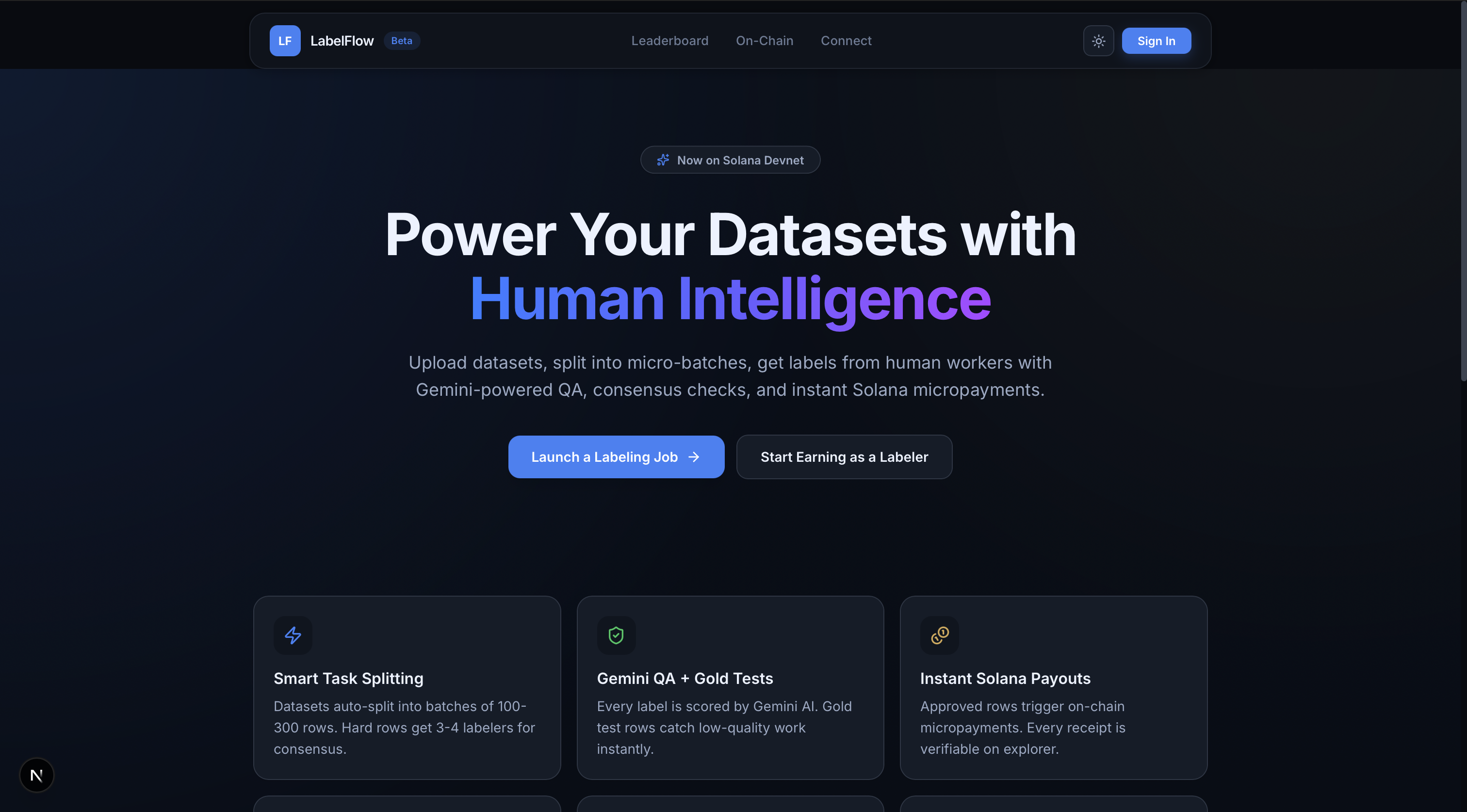
Home Page
-
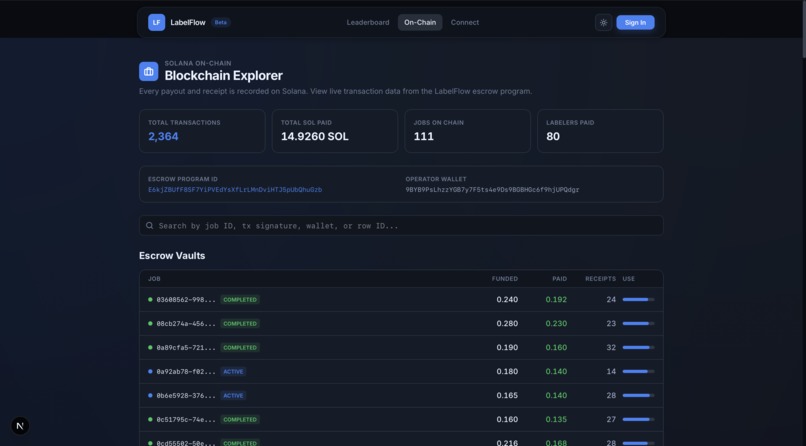
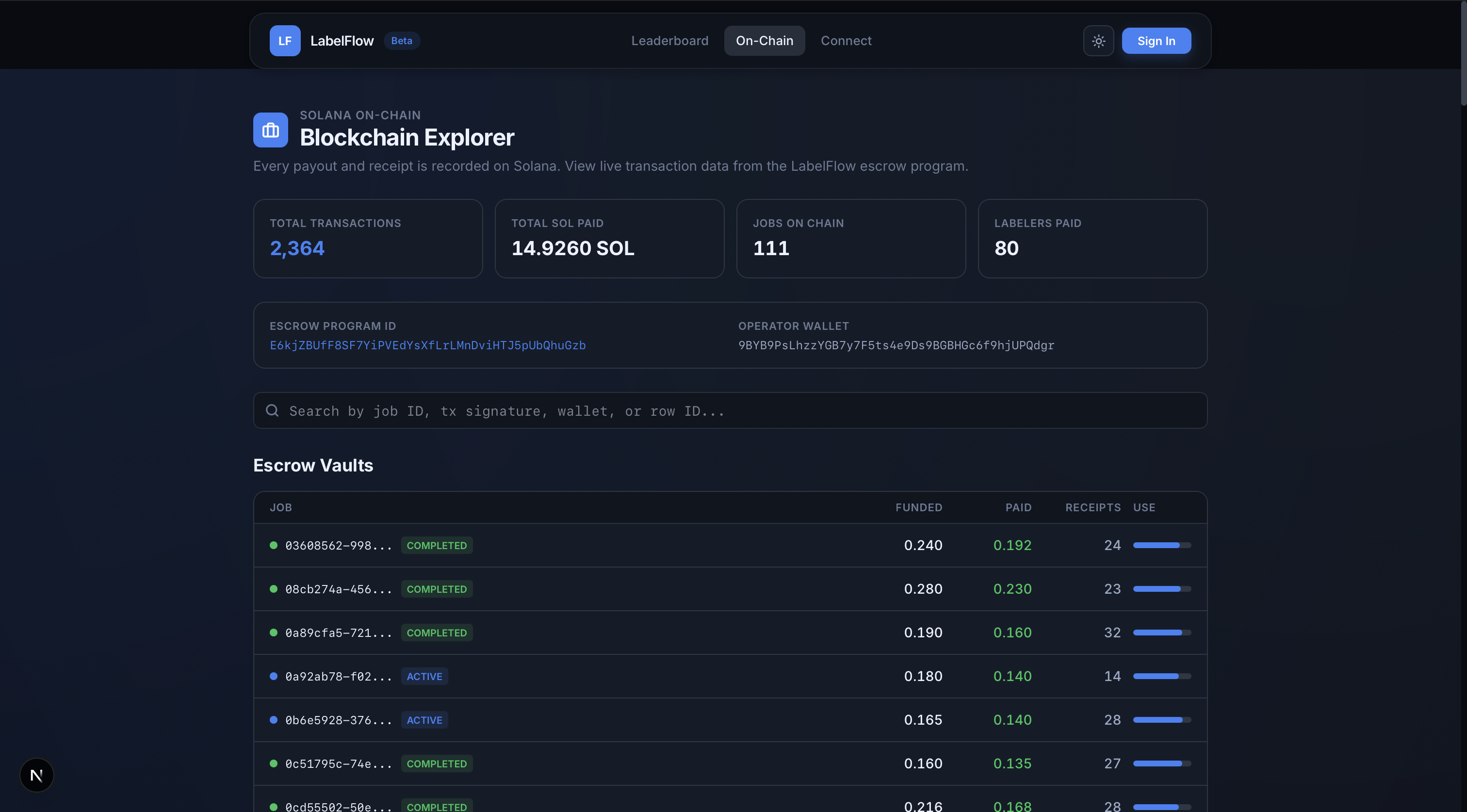
On-Chain Explorer
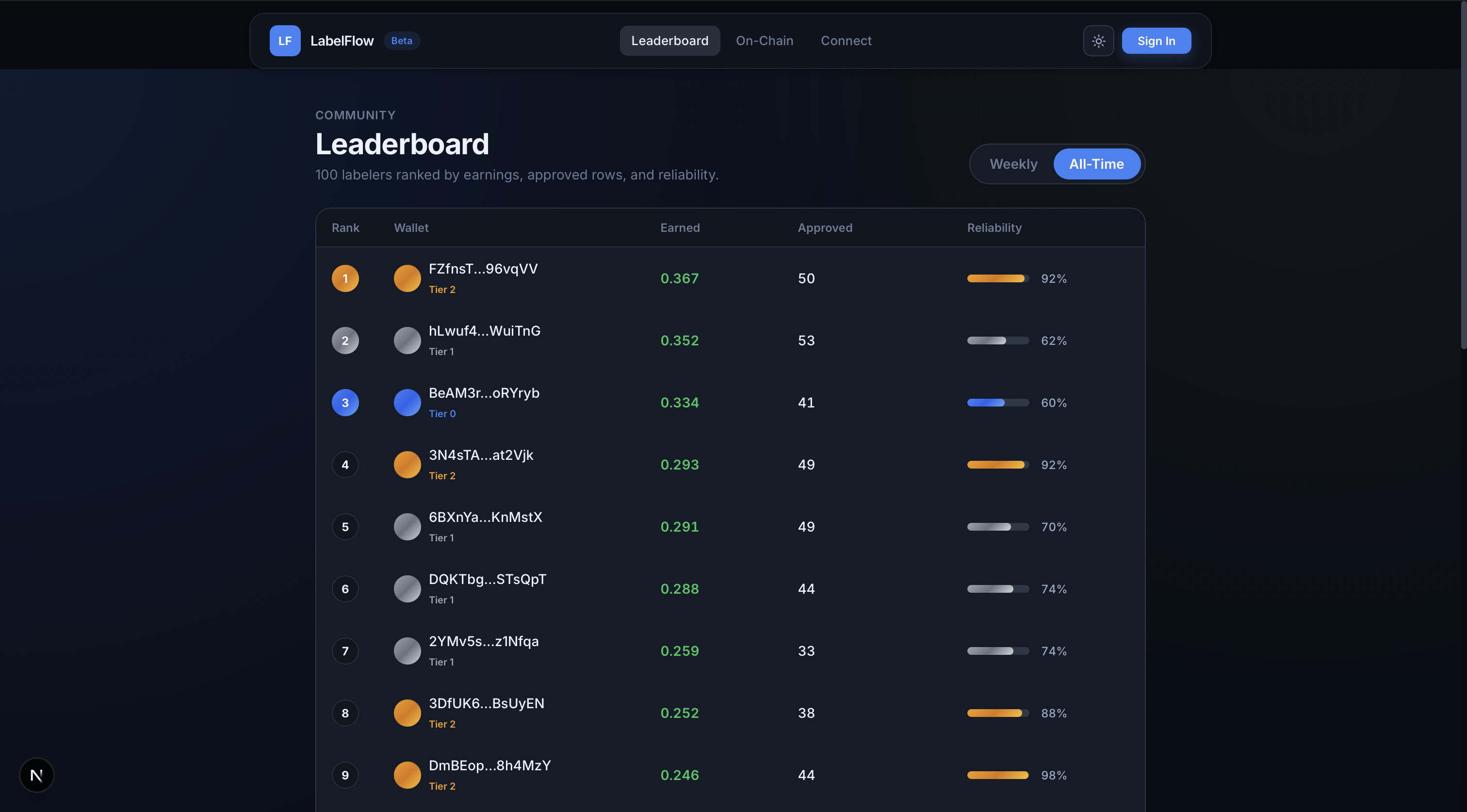
SOLabel
Inspiration
Data labeling today is slow, inconsistent, and often untrustworthy. AI models depend heavily on clean, high-quality labeled data, yet the current systems lack transparency and proper incentives for honest contributors. We were inspired to rethink this process. With SOLabel, labeling becomes transparent, AI-verified, and fairly rewarded through micropayments.
What it does
SOLabel uses AI to review human labeling tasks and verify their accuracy. Each submission is evaluated, and a dynamic trust score is assigned based on performance. Verified users are rewarded, while suspicious or bot-like behavior is penalized. Micropayments are issued through Solana, ensuring fast and low-cost transactions. The reward system scales with trust, meaning higher-quality contributors earn more over time.
How we built it
We built the frontend using Next.js, TypeScript, and Tailwind CSS to create a clean and responsive interface. The backend was developed with FastAPI and SQL to manage data storage, trust scoring, and fraud detection logic. Gemini AI was integrated to review labeling submissions and calculate verification results. Solana was used to implement the micropayment system, connecting blockchain-based rewards with our backend trust engine.
Challenges we ran into
Implementing Solana was challenging due to faucet instability and devnet RPC issues. Transactions were unreliable during testing, which slowed development. To ensure a stable demo, we shifted to a local blockchain setup. Designing a fair trust system was also complex, as we needed to balance AI verification confidence with fraud prevention while avoiding over-penalizing users.
Accomplishments that we're proud of
As freshmen, we successfully built a functional full-stack web application that combines AI verification, backend trust modeling, and blockchain micropayments. We connected multiple technologies into a working system with real-world potential. Creating a secure, transparent reward mechanism and seeing it operate end-to-end was a major achievement for our team.
What we learned
We learned how different layers of a web application interact, from frontend state handling to backend APIs and blockchain integration. We gained experience with AI verification logic, trust modeling, and Solana’s network environment. This project taught us how to connect Web2 systems with Web3 infrastructure in a meaningful way.
What's next for SOLabel
We plan to further refine SOLabel’s UI, improve the trust algorithm, and enhance privacy protections. Future updates may include stronger fraud detection, scalable payment batching, and a more advanced reputation system. Our goal is to evolve SOLabel into a secure, efficient, and user-friendly platform for trustworthy data labeling.
Built With
- css
- fastapi
- geminiapi
- javascript
- next.js
- pydantic
- python
- rust
- solana
- sql
- sqlite
- sse
- tailwind
- typescript
- uvicorn


Log in or sign up for Devpost to join the conversation.