-
-
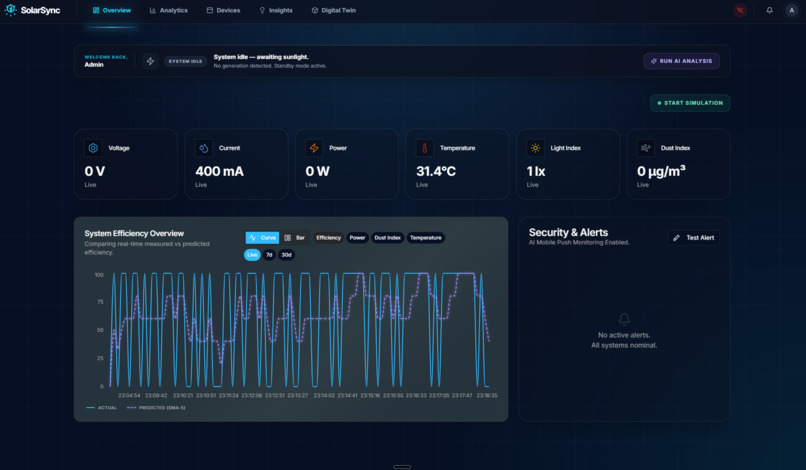
FULLY DEPLOYED SITE
-
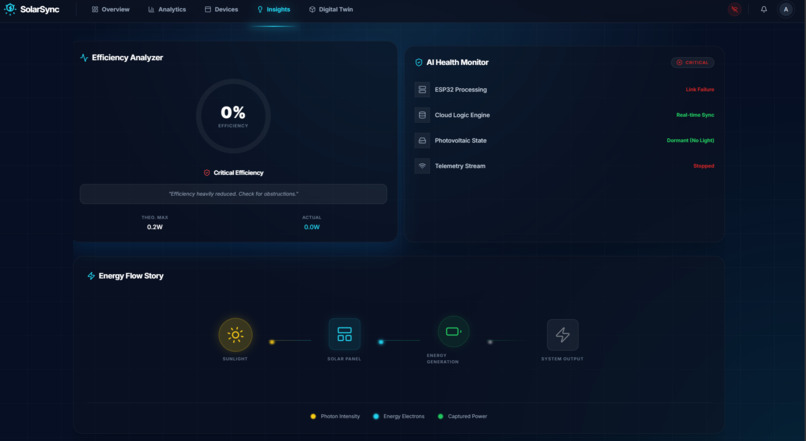
CAPTURING REAL TIME INFORMATIONS
-
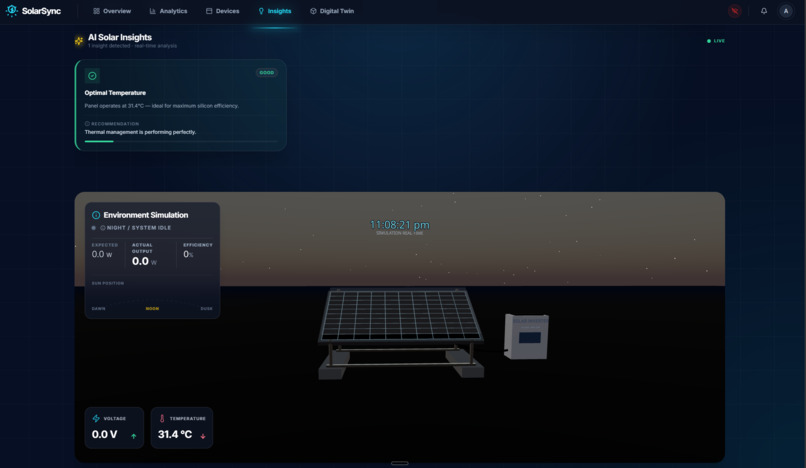
MORE FEATURES AND NAVIGATION
-
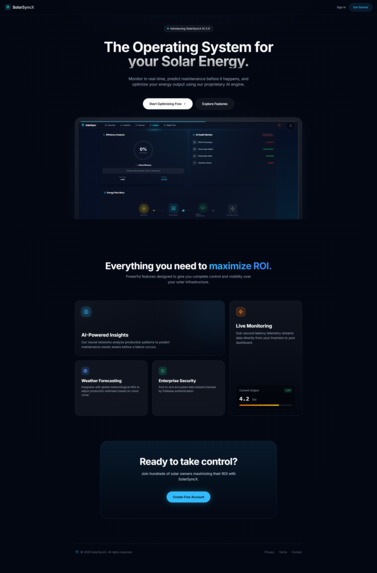
OVERALL
-
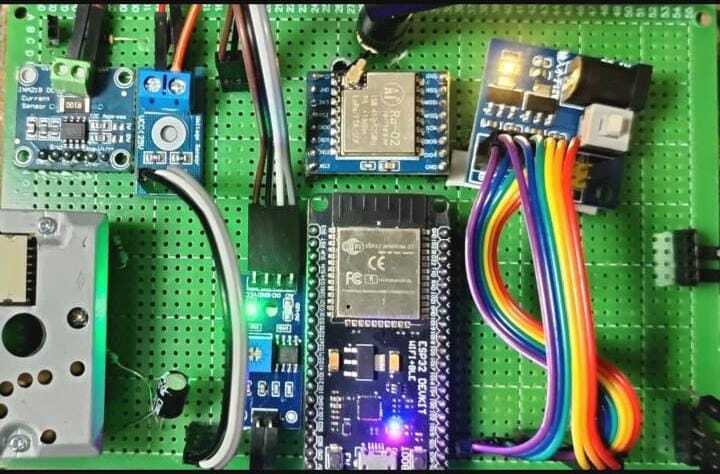
SYSTEM HARDWARE
-
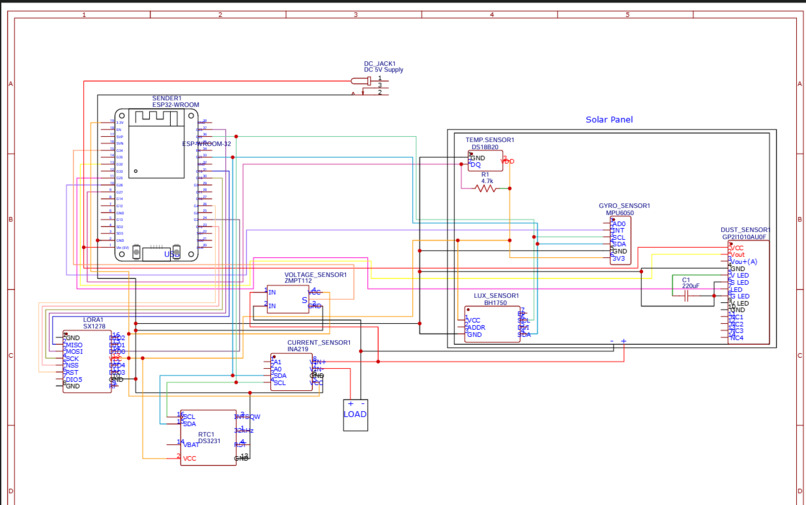
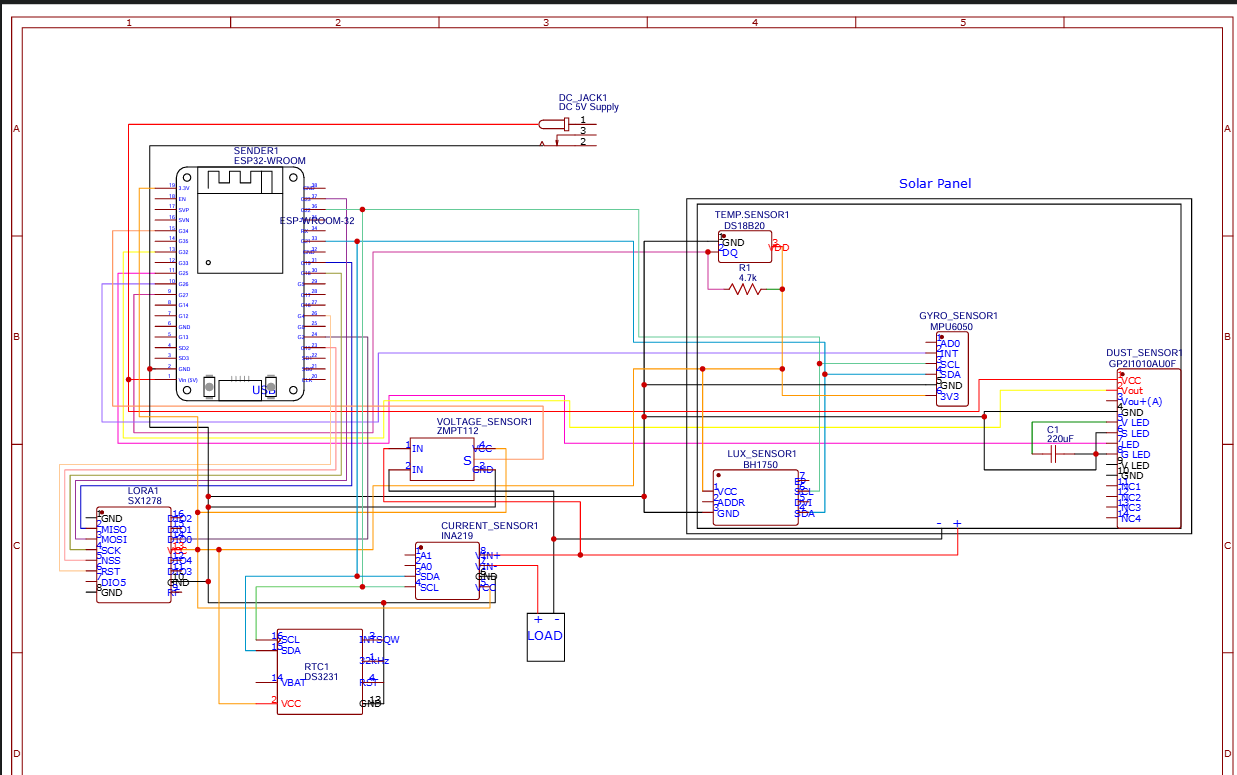
SENDER NODE ARCHITECTURE
-
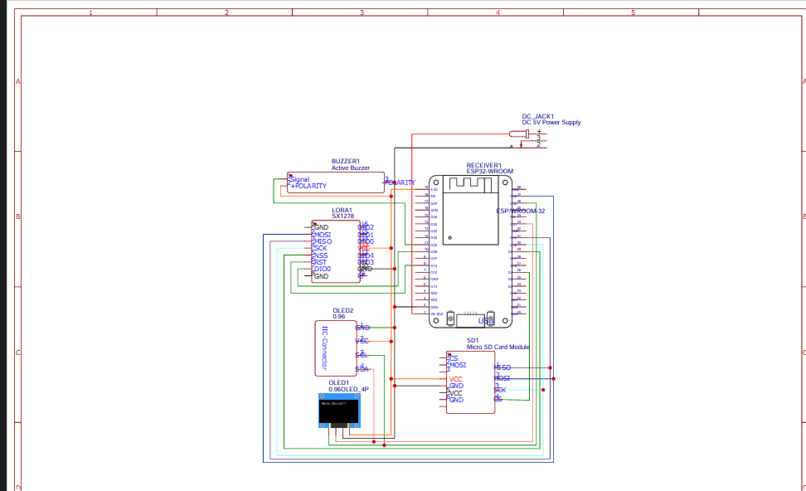
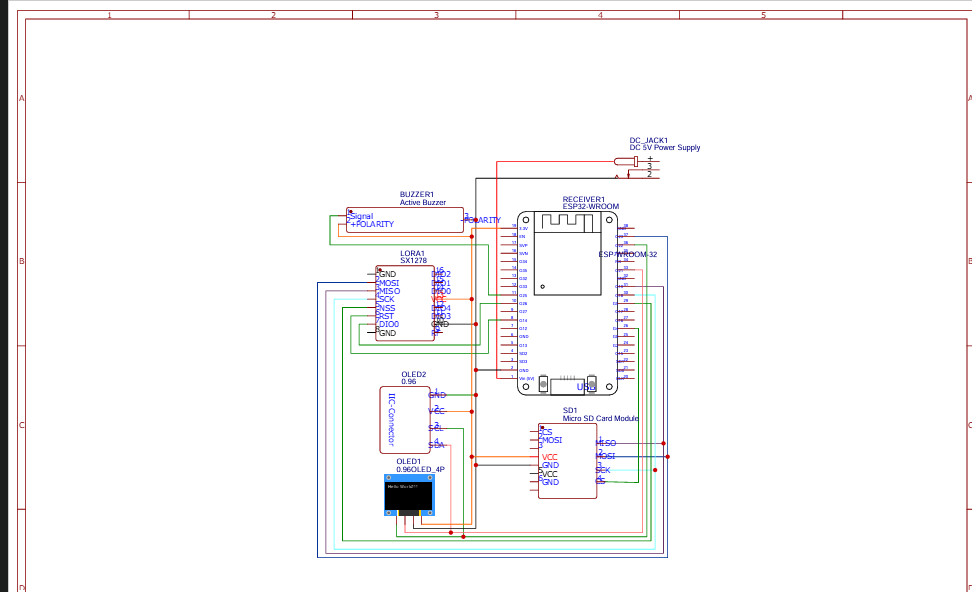
RECIEVER NODE ARCHITECTURE
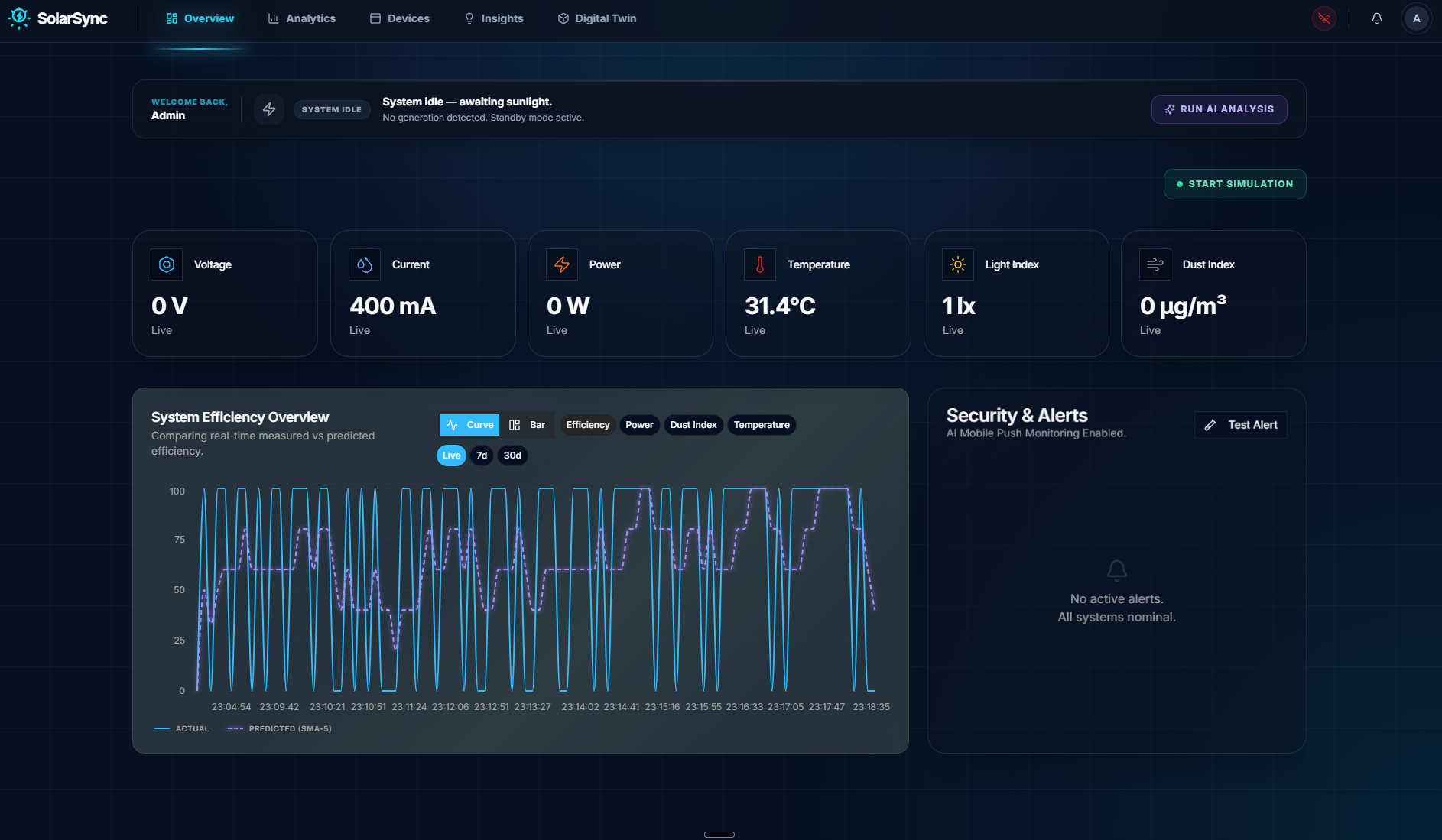
SolarSyncX
Curating Climate Data & Environmental Monitoring
Problem
Solar panel performance can be affected by dust accumulation, temperature variations, changing sunlight intensity, and other environmental conditions. These factors may reduce energy generation and increase maintenance requirements. Users need a convenient way to monitor these parameters, understand performance changes, and identify potential problems before they result in prolonged energy losses.
Solution
SolarSyncX is an AI-powered solar monitoring and efficiency-optimization platform that combines environmental monitoring, electrical measurements, cloud-based data management, and intelligent analytics.
The system is designed around an IoT sensing layer that collects solar and environmental measurements, a communication layer for transferring readings, a cloud layer for storing and processing data, and a web application for visualization and analysis.
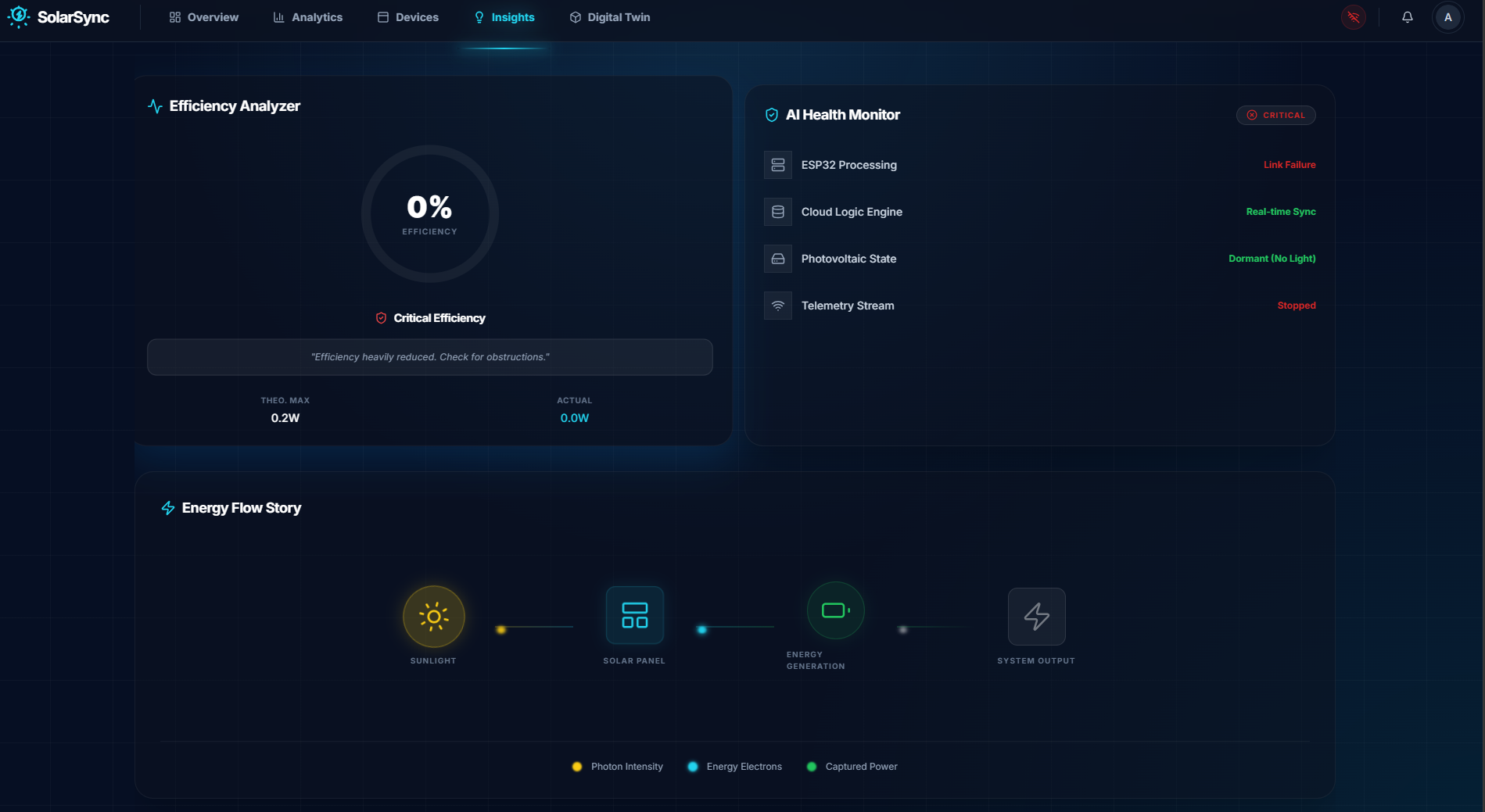
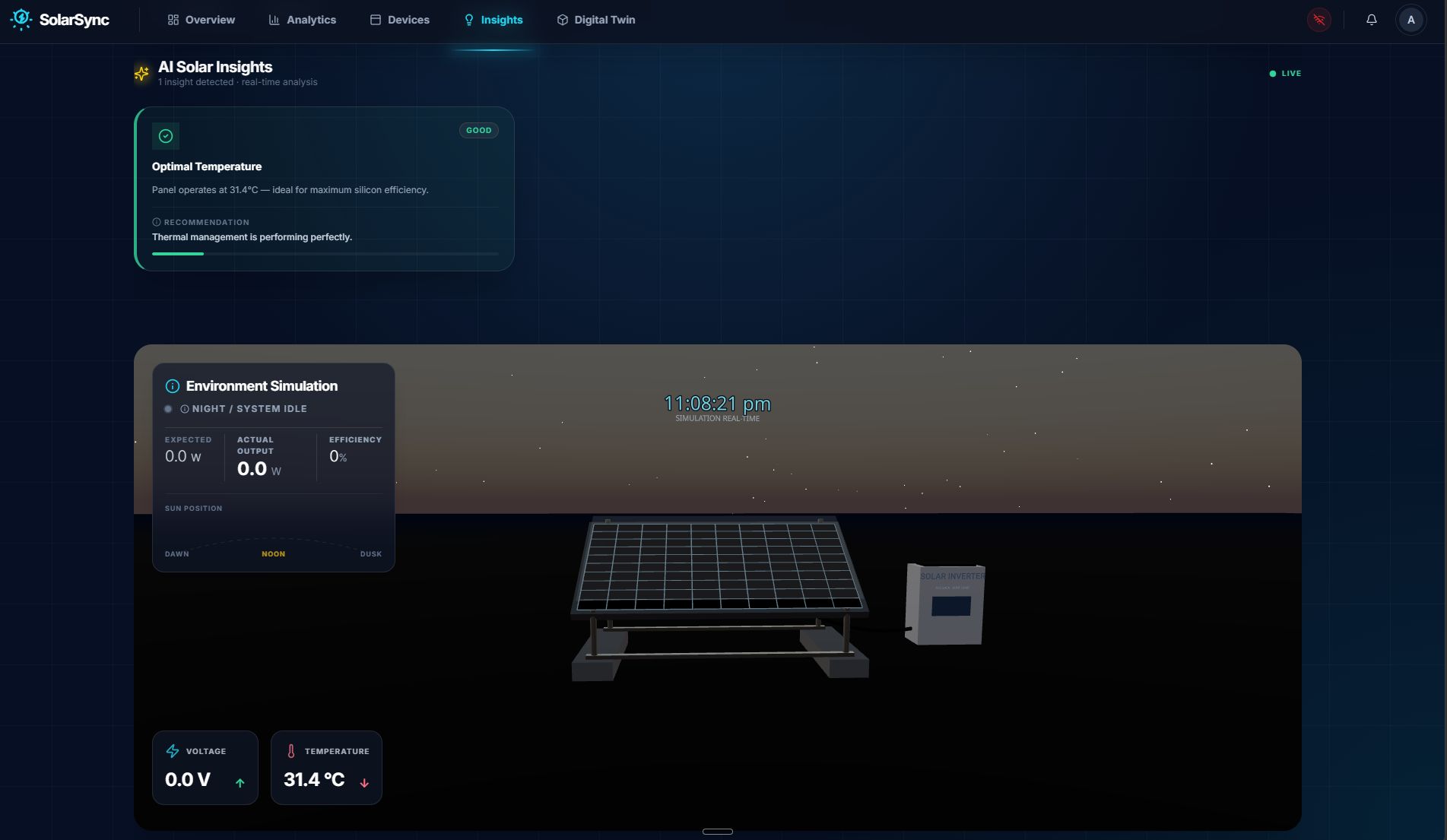
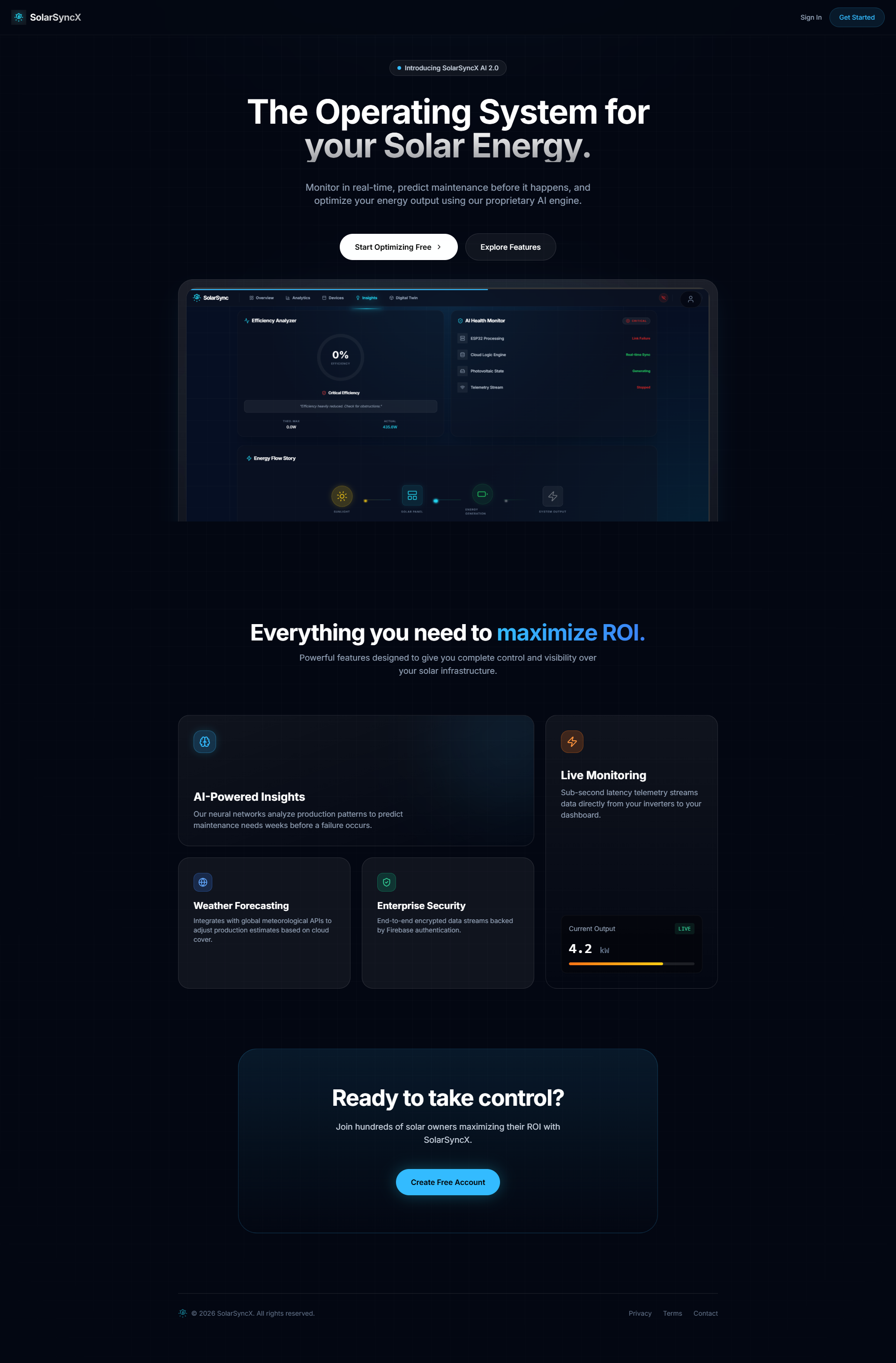
The SolarSyncX web platform provides solar performance dashboards, historical trends, AI-assisted insights, efficiency forecasting capabilities, potential anomaly analysis, and a 3D digital-twin visualization of solar infrastructure. These features are intended to help users interpret available data and make informed maintenance and operational decisions.
Target Users
- Residential solar panel owners who want better visibility into their systems' performance.
- Commercial buildings and institutions operating rooftop solar installations.
- Solar installation and maintenance companies responsible for system performance.
- Solar farm operators who need centralized monitoring across multiple installations.
- Researchers and energy-management teams studying solar output and environmental conditions.
Scalability
SolarSyncX follows a modular approach that separates data collection, communication, storage, analytics, and visualization.
Our implementation strategy is to begin with a small solar installation, validate the monitoring and analytics workflow, and then expand to additional panels and sites. A centralized platform can help consolidate readings and performance information from multiple installations.
Future scaling can include device-level identification, multi-site analytics, more robust forecasting, improved anomaly detection, and additional integrations. Larger deployments would require appropriate device provisioning, secure access controls, reliable connectivity, and cloud-capacity planning.
Ease of Adoption
SolarSyncX provides a web-based interface that brings solar measurements and available analytical insights together in one place. Instead of requiring users to interpret raw readings manually, the platform is designed to present understandable metrics, historical trends, and relevant recommendations.
The deployment can be adapted to different solar installations according to their sensor requirements, electrical configurations, communication coverage, and existing infrastructure.
Expected Impact
SolarSyncX aims to improve visibility into solar system performance, help users identify potential inefficiencies, and support more informed maintenance decisions. By combining environmental data with electrical measurements and AI-assisted analysis, the platform has the potential to support more efficient operation of renewable energy installations.
Public GitHub Repository:
https://github.com/MACRO72/solar_sync_x
Live Deployed Application:
https://solar-sync-x.vercel.app/
The SolarSyncX repository contains the source code and project documentation for our AI-powered solar monitoring and optimization platform.
The project uses Next.js and React for the web application, Firebase for backend data services, Google Gemini for AI-powered analysis, and Three.js-based technologies for interactive 3D visualization.
The repository provides access to the application structure, dependencies, configuration, setup instructions, and documented features. The deployed application allows judges to access the SolarSyncX interface directly.
The source code and documentation are intended to help reviewers understand the system architecture, inspect the implementation, and evaluate the project's approach to solar performance monitoring and optimization.
Sensitive credentials, private API keys, and service-account secrets must remain outside the public repository. SolarSyncX is available as a deployed web application and a public source-code repository.
Live Prototype:
https://solar-sync-x.vercel.app/
GitHub Repository:
https://github.com/MACRO72/solar_sync_x
SolarSyncX: AI-Powered Solar Monitoring and Efficiency Optimization
Inspiration
Solar energy is one of the most promising sources of renewable energy, but solar panels do not always operate at their maximum efficiency. Dust accumulation, temperature variations, changing sunlight intensity, and other environmental conditions can reduce their power output. Without continuous monitoring, these issues may remain unnoticed, resulting in energy losses and delayed maintenance.
We built SolarSyncX to address this challenge by combining IoT-based environmental monitoring, solar performance analytics, and AI-powered insights in a unified platform.
What It Does
SolarSyncX is an AI-powered solar monitoring and efficiency-optimization platform that collects solar-panel and environmental measurements, visualizes performance, identifies potential inefficiencies, and provides actionable insights.
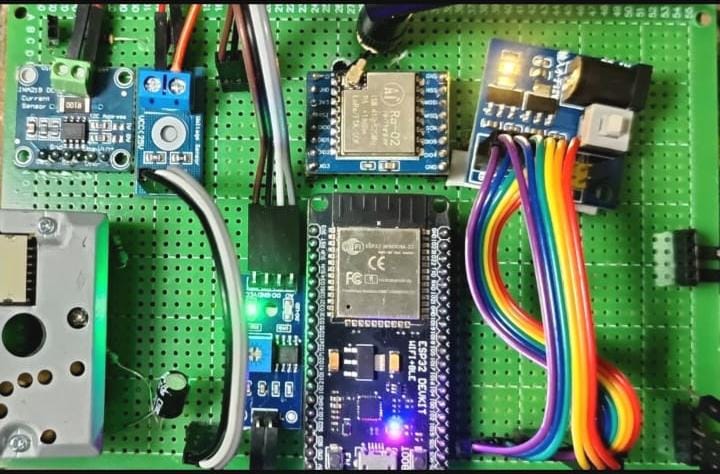
The system monitors parameters such as voltage, current, power output, light intensity, temperature, and dust levels. Sensor readings are transmitted through ESP32-based hardware using LoRa communication, received by a gateway, and stored in Firebase Realtime Database for visualization and analysis through a web dashboard.
The platform is designed to help users understand not only how their solar panels are performing, but also why their performance may be changing and what corrective actions may be appropriate.
For example, electrical power can be calculated from voltage and current:
$$ P = V I $$
where (P) is electrical power in watts, (V) is voltage in volts, and (I) is current in amperes.
Where a reliable reference or baseline is available, performance changes can also be expressed as a relative difference:
$$ \Delta P(\%) = \frac{P_{\text{baseline}} - P_{\text{measured}}}{P_{\text{baseline}}} \times 100 $$
This value is meaningful only when the baseline and measured readings are taken under comparable operating conditions.
How We Built It
We designed the system around four major components:
- IoT sensing layer: ESP32-based hardware collects electrical and environmental measurements using appropriate sensors.
- Communication layer: SX1278 LoRa modules transmit sensor readings from the sensing unit to the receiver.
- Cloud and intelligence layer: Firebase Realtime Database stores readings, while the AI and analytics layer processes available data to generate performance insights, identify potential anomalies, and support efficiency analysis.
- Visualization layer: A Next.js web application presents available metrics, historical trends, alerts, performance analytics, and AI-generated recommendations.
The web application uses Next.js and React, with Firebase for data integration and Gemini-based AI capabilities. The architecture is designed to support future expansion to multiple panels, larger solar installations, and additional monitoring locations.
What We Learned
Through this project, we explored the integration of IoT hardware, wireless sensor communication, cloud databases, web application development, and AI-assisted data analysis. We also learned the importance of reliable sensor readings, consistent data formats, real-time data synchronization, and separating measured values from predicted values.
We learned that useful monitoring depends on more than collecting data: measurements must be presented in context, and recommendations should be based on available evidence rather than unsupported assumptions.
Challenges We Faced
Some of our major engineering challenges involved integrating multiple sensors, maintaining reliable LoRa communication, synchronizing live readings with Firebase, and developing meaningful insights from changing environmental conditions.
We approached these challenges by separating the sensing, communication, data-storage, and visualization layers. This modular design makes the system easier to test, maintain, and extend. Sensor calibration, communication reliability, and data quality remain important considerations for any deployment.
Impact and Future Scope
SolarSyncX aims to make solar monitoring more accessible, proactive, and data-driven. By bringing electrical and environmental measurements into one interface, the platform can help users investigate performance changes, identify potential maintenance needs, and make better-informed decisions.
Future development can include more robust forecasting, improved anomaly detection, multi-site monitoring, and recommendations tailored to individual installations. The system can begin with a small solar installation and expand to additional panels and sites through a modular sensing architecture and centralized cloud platform.
Our long-term vision is to develop a scalable solar intelligence platform that supports the transition toward cleaner and more efficient energy systems.
Built With
- artificialintelligence
- datavisualization
- esp32
- firebase
- firebaserealtimedatabase
- generativeai
- googlegemini
- iot
- javascript
- lora
- machine-learning
- nextjs
- predictivemaintenance
- react
- renewableenergy
- sensormonitoring
- solarenergy
- sx1278
- three.js
- typescript

Log in or sign up for Devpost to join the conversation.