-
-
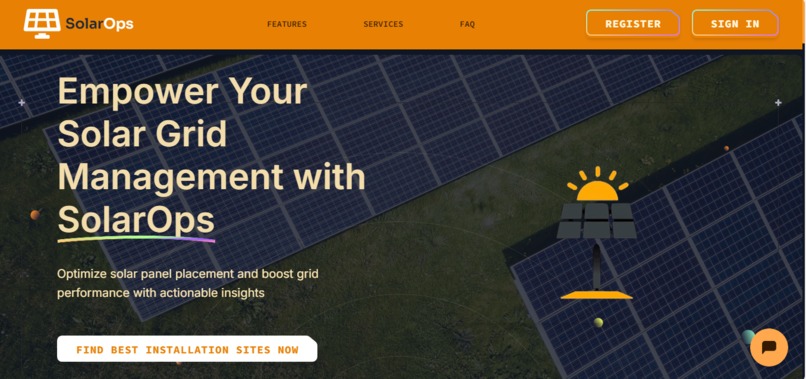
landing page
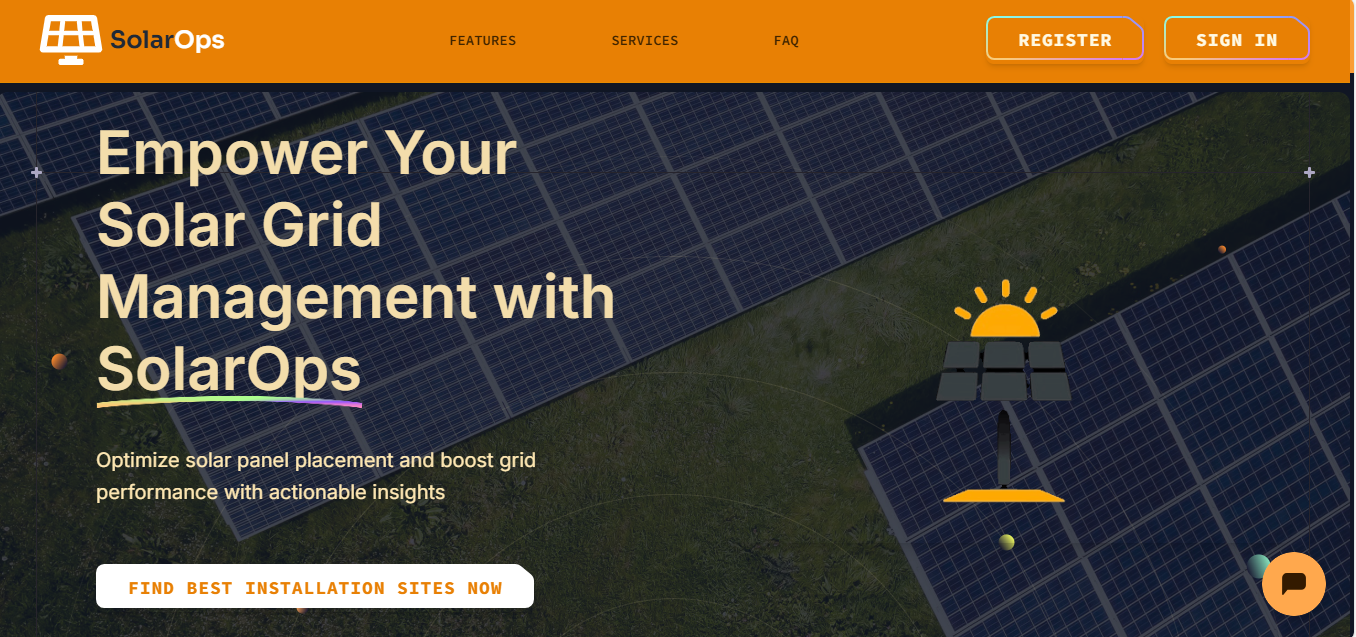
Inspiration 💡
The idea for SolarOps came from the growing need for smarter, more efficient solar grid management. As countries shift towards renewable energy, especially solar power, one of the biggest challenges is determining where to place solar panels for maximum energy generation. We wanted to create a solution that could help grid workers assess, monitor, and optimize solar installations, making solar energy more efficient and accessible to everyone.
What it does 🌞
SolarOps is an AI-driven platform designed to help solar grid workers make better decisions. It uses machine learning algorithms and real-time weather data to:
- Identify optimal locations for installing solar panels.
- Detect faults in solar panels through image uploads.
- Predict solar energy production based on weather patterns.
- Provide real-time monitoring insights for solar grid performance.
In short, SolarOps empowers grid operators to manage solar grids more effectively and harness solar energy to its fullest potential.
How we built it 🛠️
Building SolarOps was a collaborative effort that involved combining different technologies:
- Machine Learning Models: We used Convolutional Neural Networks (CNNs) and Gradient Boost Algorithm to detect faults in solar panels and forecast energy generation.
- Real-time Data Integration: We pulled in weather data from meteomatics API to help predict solar energy output and assess the best locations for solar panels.
- Interactive Heatmaps: Using the data we gathered, we created heatmaps that visually display the best areas for solar panel placement.
- Web Platform: We built an easy-to-use web interface where grid operators can track performance, upload images for fault detection, and get insights into energy production.
Challenges we ran into 🚧
Like any project, SolarOps had its challenges:
- Data Accuracy: Ensuring real-time weather data was accurate enough for reliable forecasting was a challenge.
- Model Training: It took time to fine-tune our machine learning models to be accurate and efficient in both fault detection and energy prediction.
- User Experience: Creating a simple, intuitive interface to present complex data in a way that was easy for grid operators to understand was a tricky task.
Accomplishments that we're proud of 🎉
We’re incredibly proud of what we accomplished with SolarOps:
- The ability to generate accurate energy forecasts based on real-time data.
- Successfully detecting faults in solar panels from images with a high degree of accuracy.
- Building an interactive and user-friendly web platform that grid workers can use with ease.
- Creating a project that not only uses cutting-edge technology but also helps drive sustainability.
What we learned 📚
Working on SolarOps was a huge learning experience:
- We gained hands-on experience with machine learning and model deployment.
- We learned how to integrate real-time data into a system for practical, real-world applications.
- We got deeper insights into the challenges of renewable energy and how technology can help overcome them.
What's next for SolarOps 🚀
The future for SolarOps is exciting! We plan to:
- Expand the platform to include more data sources and improve forecasting accuracy.
- Introduce mobile support so grid workers can access SolarOps on the go.
- Continue enhancing machine learning models for even better performance predictions and fault detection.
- Explore partnerships with solar companies and energy providers to bring SolarOps to a larger audience and make a bigger impact in the world of renewable energy.
Built With
- cnn
- fastapi
- gradient-boost-algorithm
- mern
- meteomatics
- mongodb
- mvc-architecture
- railway
- tailwindcss
- vercel
- vite


Log in or sign up for Devpost to join the conversation.