-
-
Solaris: Above the Abyss
Inspiration
Solaris has been a meaningful story for me since childhood. My father read the novel to me, and its atmosphere of mystery, tension, and emotional depth stayed with me ever since. Later, watching both film adaptations only strengthened that connection the quiet unease, the philosophical weight, the way the story explores memory and the unknown.
As I develop my skills as a creator using AI tools, I wanted to return to this world and reinterpret it through my own lens. The idea was to imagine a modern teaser something a major studio might release today that captures the essence of Solaris: the loneliness of space, the pull of unresolved memories, and the living ocean that reflects what we carry inside.
What it does
This short teaser recreates the emotional core of Solaris through a series of cinematic moments. We follow an astronaut aboard an orbiting station as he confronts memories the ocean-planet pulls from his mind. The video moves between the cold, metallic corridors of the station and the deeply personal fragments of his past a photo of his family, a vision of his wife offering him a flower, and a dreamlike city shaped from his subconscious.
As the ocean begins to manifest these memories into physical, shifting landscapes, the astronaut is forced to navigate collapsing environments, rising water, and a haunting sense of longing. The teaser captures the tension between reality and imagination, showing how the planet reaches into his thoughts and recreates the most vulnerable parts of his inner world.
How I built it
I created the teaser by combining several tools and building each scene step by step. Visuals were generated in Midjourney and later refined and upscaled with Magnific to reach a cinematic level of detail. Kling was used to animate key shots from the drifting station corridors to the surreal, water-filled dream sequences.
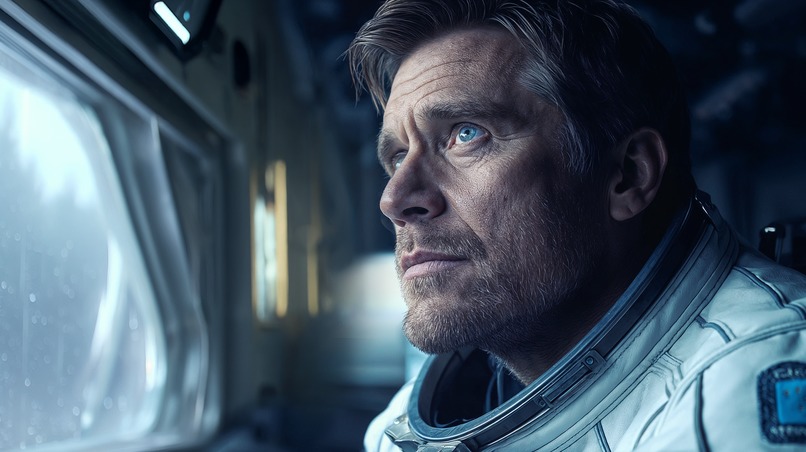
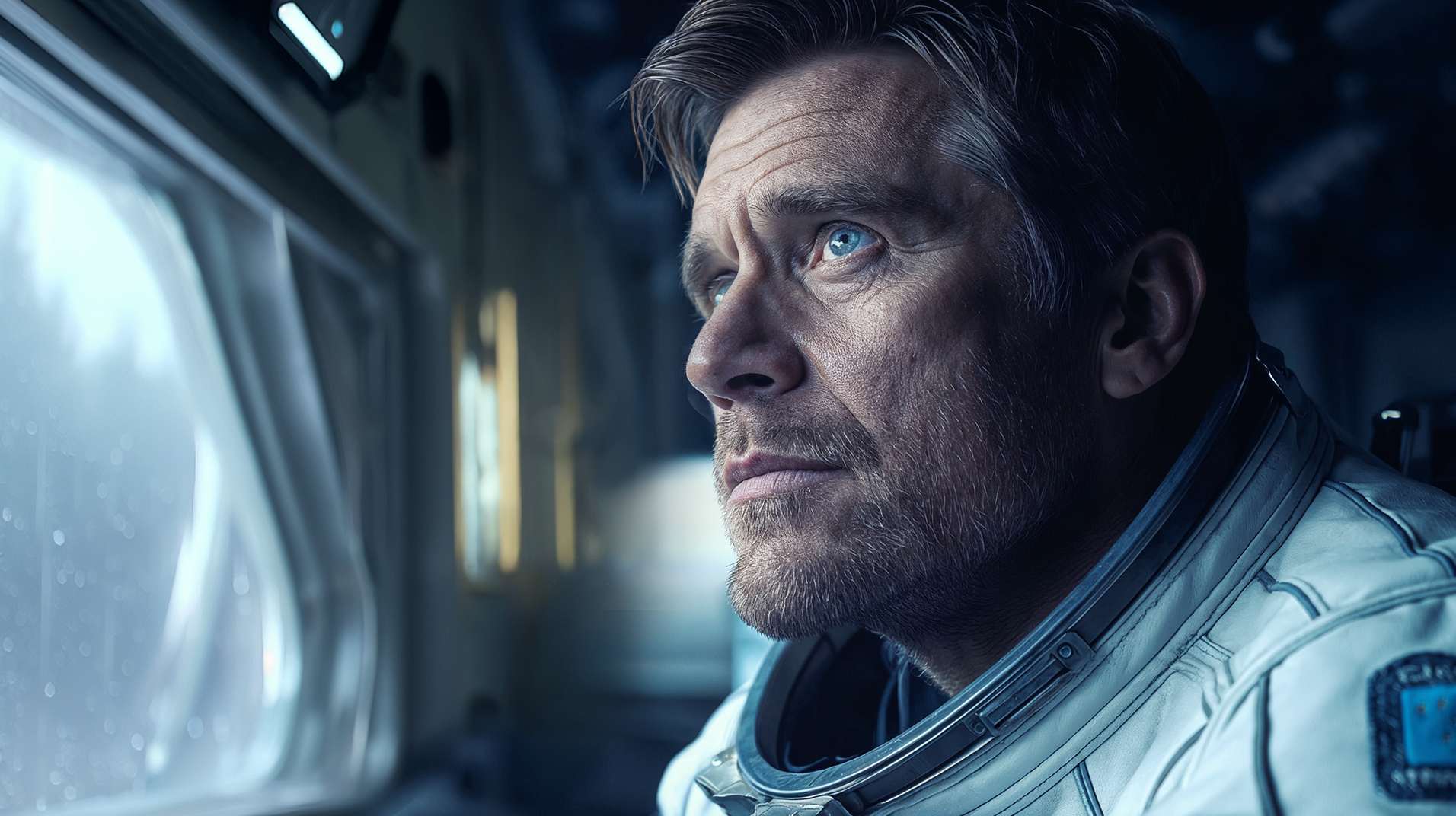
Some elements required manual assembly: the ocean-planet’s massive waves were built from multiple Photoshop layers and then animated to feel alive and overwhelming. The astronaut’s look was crafted through many iterations to strike a balance between the actors from the two classic Solaris films.
CapCut brought everything together in editing matching shots, adjusting pacing, color, and transitions to create a cohesive, film-like teaser that feels both modern and faithful to the original atmosphere of Solaris.
Challenges I ran into
Creating the ocean-planet was a major technical and artistic hurdle. The neural networks struggled to render enormous, believable waves, so I built the ocean textures in Photoshop from multiple layered elements and then animated them a manual process that took many iterations to make the sea feel both violent and mysterious.
Designing the main character was equally difficult. I needed him to read like a real actor, carrying echoes of the protagonists from the two classic Solaris films (the Soviet and the American versions), so his face and presence required dozens of refinements to keep the intended image and emotional weight.
Translating the planet’s thought-made world into a convincing environment was another challenge: the dream-city had to sit as a realistic island among separate, towering waves and still feel coherent and grounded in the astronaut’s memories. Keeping the spacecraft visually consistent across shots, and ensuring its motion (takeoff, acceleration, turns) followed a logical trajectory demanded careful planning and repeated adjustments.
Nothing came out right on the first try. Most scenes required hours of work; a single frame could take 3–5 hours, and I often needed to step away and return with fresh eyes. The hardest single shot the astronaut leaping into his ship as a wave slams the hatch shut behind him took an enormous number of generations and refinements before it finally achieved the cinematic effect I wanted.
Accomplishments that I'm proud of
I’m proud that I managed to bring a deeply personal vision of Solaris to life not as a quick experiment, but as a fully crafted cinematic teaser. I recreated the ocean-planet, the astronaut, the dream-world city, and every environment with intention and persistence, even when the tools couldn't give me what I needed on their own.
I'm proud that I solved problems one by one: building an ocean manually from layered textures, shaping the protagonist to carry the essence of two different film interpretations, maintaining visual continuity of the spacecraft, and constructing complex sequences that required hours of iteration.
Most of all, I’m proud that I didn’t give up on the hardest scenes. The final shot the astronaut diving into the ship as waves crash around him felt almost impossible at times, yet it became one of the most cinematic moments of the entire piece.
This project pushed my skills forward and proved to me that I can create ambitious, film-level storytelling on my own.
What I learned
This project taught me more than any previous work. It was my first serious attempt at creating close-up shots of a human protagonist where every detail mattered the realism of facial features, the subtle movement of the eyes, the quiet emotions behind them. I tested several models, and ultimately discovered that Kling was the most capable for bringing the character to life in a believable way.
I learned how to handle large-scale environments that couldn’t simply be blurred into the background: oceans, cities, spacecraft interiors - each one had to feel real, textured, and connected to the story. Building the ocean manually from layered wave textures became a lesson in patience and visual problem-solving.
This was also my first time working seriously with high-quality upscaling. Iterating with Magnific taught me how much clarity and depth can be recovered when the base idea is strong, and how to push an image to a truly cinematic level.
Most importantly, I learned what it means to stay dedicated to a vision to revisit scenes, rework frames for hours, and refine details until they finally aligned with the feeling I wanted. This experience gave me confidence for the larger work ahead.
What's next for Solaris: Above the Abyss
After creating the first AI teaser, I want to continue developing this project as a series. My plan is to produce 15-20 minute episodes that tell the full story of Solaris in a format suited for AI animation. I’m keeping the core idea of Lem’s world, but expanding the setting. Instead of focusing only on the space station, I want to show more of the ocean-planet itself. This gives the story more movement and makes better use of AI-generated visuals. The goal is build on the teaser and turn Solaris into a small, consistent AI-driven series.
Built With
- capcut
- klingai
- magnific
- midjourney
- photoshop

Log in or sign up for Devpost to join the conversation.