-
-
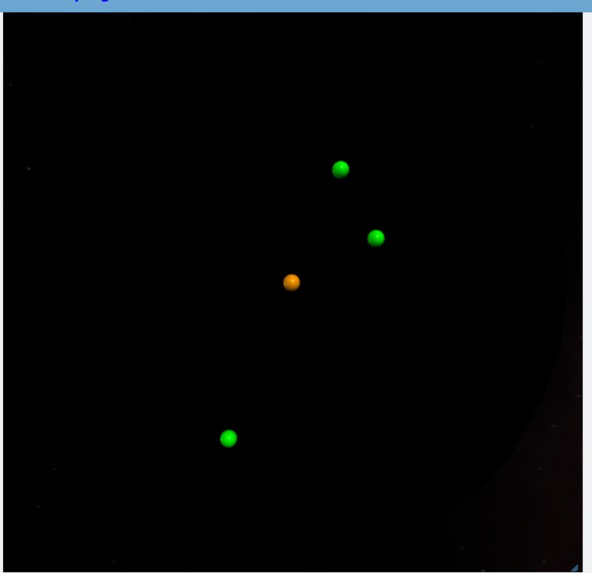
Screen capture from mid-development
-
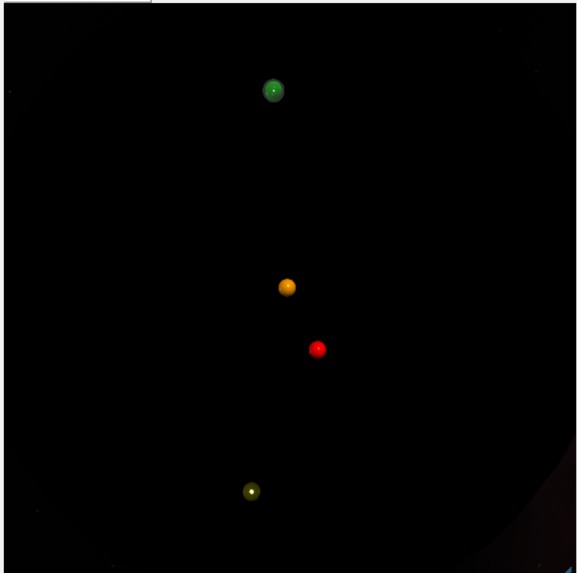
Screen capture after a bug was fixed which turned every planet the same color
-
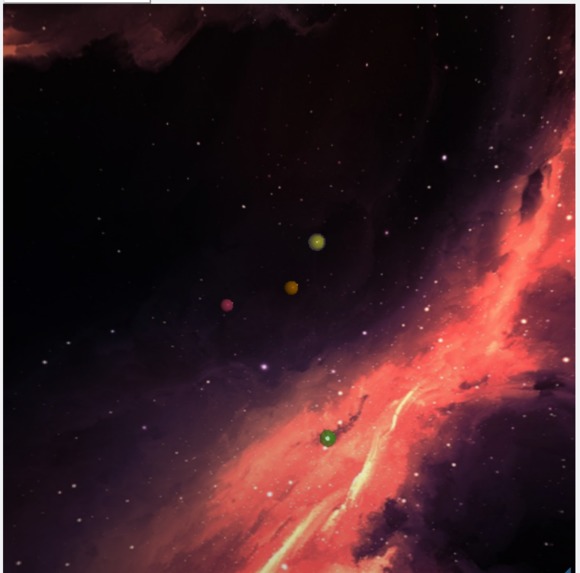
Final product


The inspiration for Solar System Simulator came from Flash simulators that were embedded on websites our schools used to teach us about astronomy. These Flash applications would show the user a basic view of planetary interactions or similar topics, but we felt that we could use vPython in order to create a 3D version of this basic concept with customizable planets for extra fun.
We all wanted to create a program dealing with space for our Hackathon entry. So we began brainstorming some ideas and we came up with an idea of creating your own solar system. We knew that we also wanted to have some sort of user input to allow for some creativity and personalization within our program.
We then needed to find a language that everyone on the team could work with. We all knew how to use Python, but we needed a specific version called Visual Python in order to easily create the 3D graphics we wanted for the project. Essentially, we had to learn a new language for a new and complex program using interstellar math. It was certainly tough having to learn a new language in a few hours, but launching off of resources like official documentation and helpful videos allowed us to make new things without spending too much time learning the basics of the language or retaking physics.
We as a team were proud of how we managed to meet up over Discord and work for over half a day straight to complete our project. Team members hailed from two different countries, but we worked like we were in the same room. Even when the going was tough, we got going.
One challenge that we were not able to solve was the ability to leave a trail behind the planets as they orbit. Performance issues and inconsistencies between the online and offline versions of vPython ended up scrapping the trails, unfortunately. A challenge that we were successful in solving was merging two projects into one. The team split to work on the planet customizer and simulation code separately, with the intention of merging them back together when they were done to save a lot of time. Hours of work later, both halves of the project were merged perfectly.
Overall we are very satisfied with how our program turned out. The Solar System Simulator is everything we had hoped it would be 17 hours ago, and we learned a lot making it.
Built With
- vpython


Log in or sign up for Devpost to join the conversation.