Inspiration
Inspired by the growing excitement around space exploration, we wanted to make learning about the solar system interactive, visual, and engaging—turning curiosity into real exploration.
What it Does
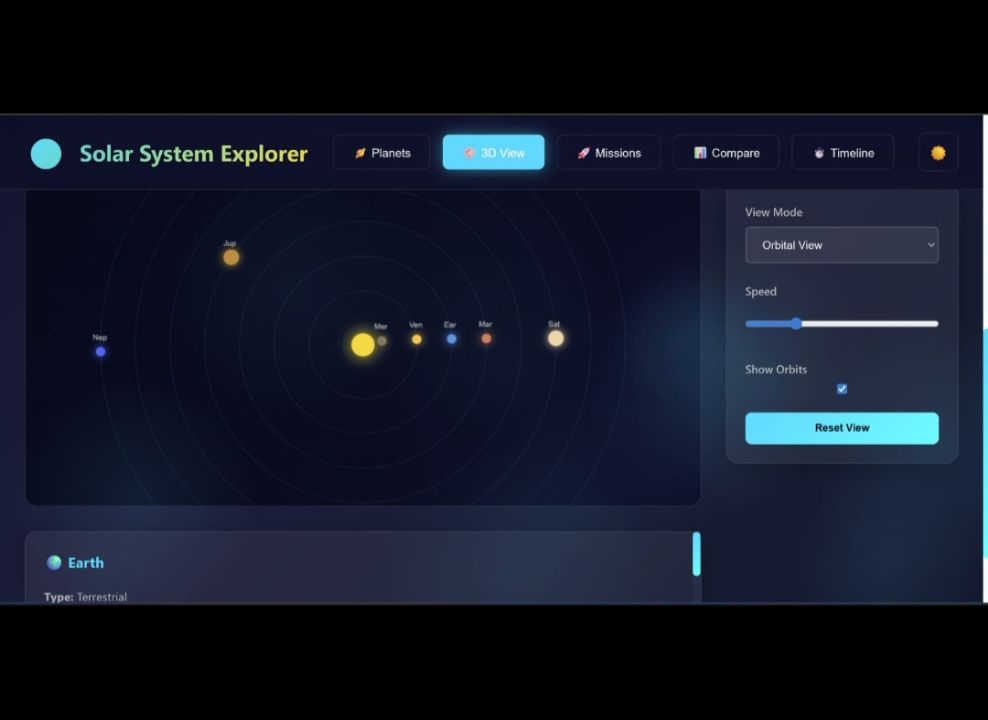
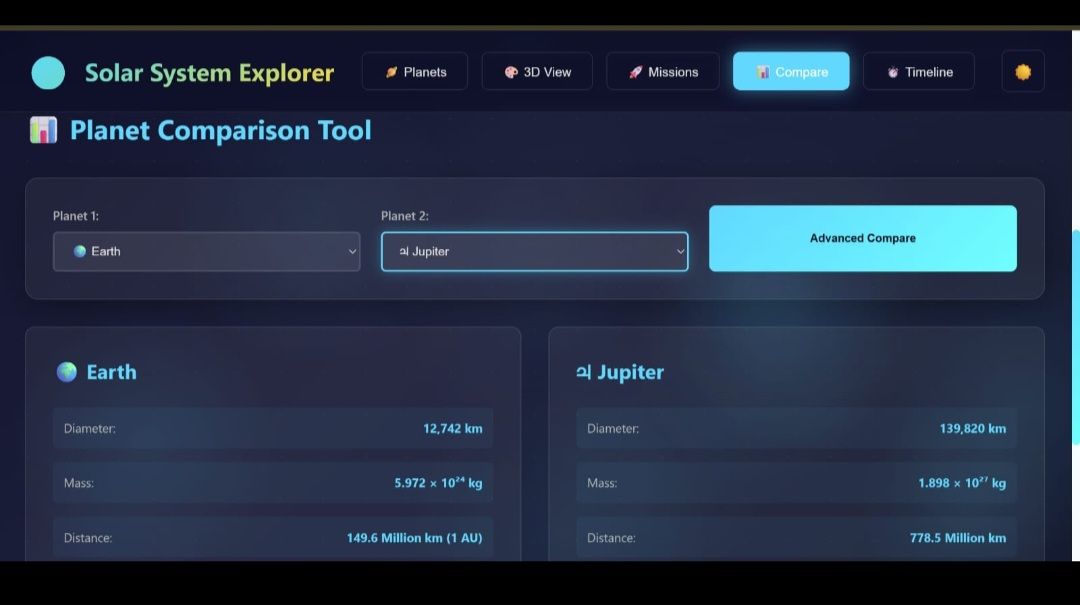
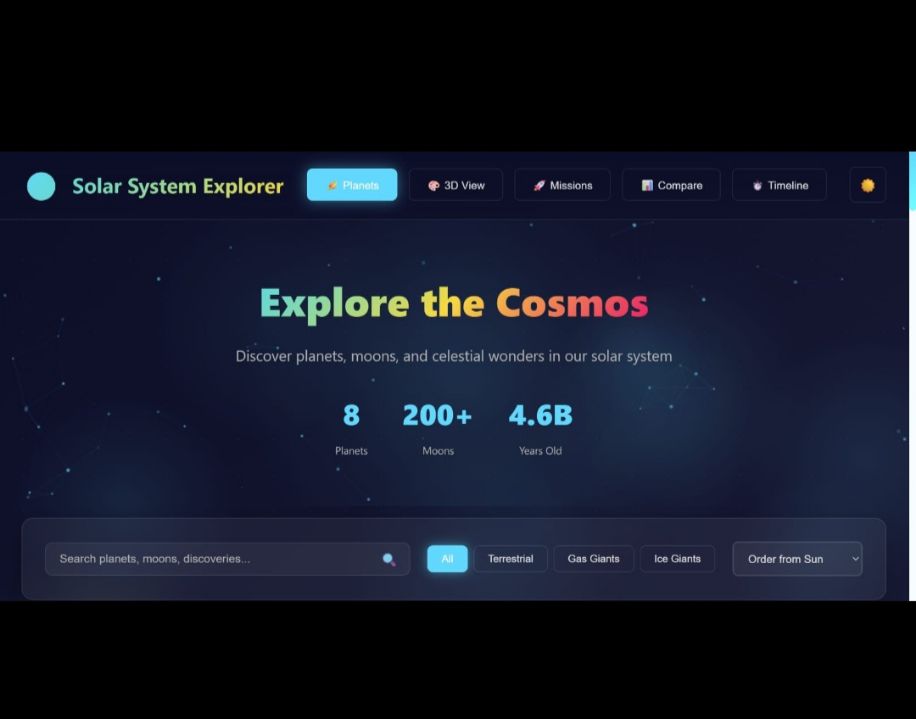
solar System Explorer lets users explore planets, moons, and space missions through an interactive interface with search, filters, 3D visualization, and comparison tools—making space learning engaging and easy.
How we built it
We built Solar System Explorer using HTML, CSS, and JavaScript, with structured JSON data for real space information. We designed an interactive UI, added dynamic rendering, filters, comparisons, and a canvas-based 3D visualization for an immersive experience.
Challenges we ran into
We faced issues with handling large datasets, fixing JavaScript errors, and managing dynamic UI updates. Building smooth 3D visualization and ensuring performance across devices was challenging, along with debugging integration between multiple features.
Accomplishments that we're proud of
We built a fully interactive Solar System Explorer with dynamic UI, real data integration, 3D visualization, and comparison tools. Successfully combined multiple features into a smooth, user-friendly experience that makes space learning engaging and impactful.
What we learned
We learned how to build scalable web apps, manage real-world data, debug complex JavaScript issues, and create smooth UI/UX. We also gained experience in performance optimization and turning ideas into impactful user experiences.
What's next for Solar System Explorer
Next, we plan to add real-time space data, advanced 3D visuals, and an AI assistant for interactive learning. We’ll improve performance, add mobile optimization, and expand features like quizzes and personalized exploration to make it even more engaging.
