-
-
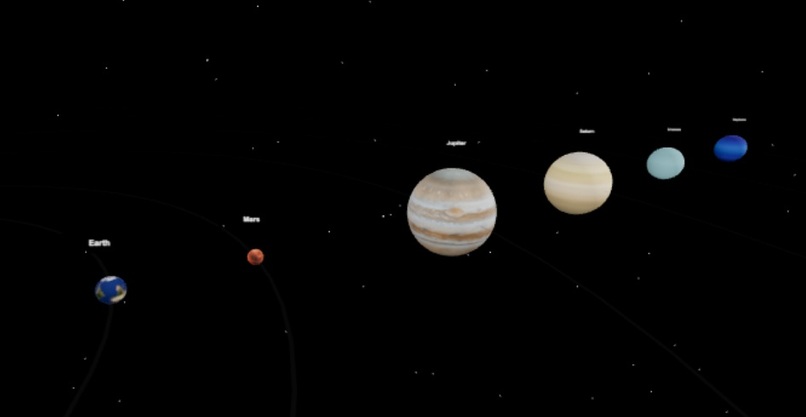
space journey
-
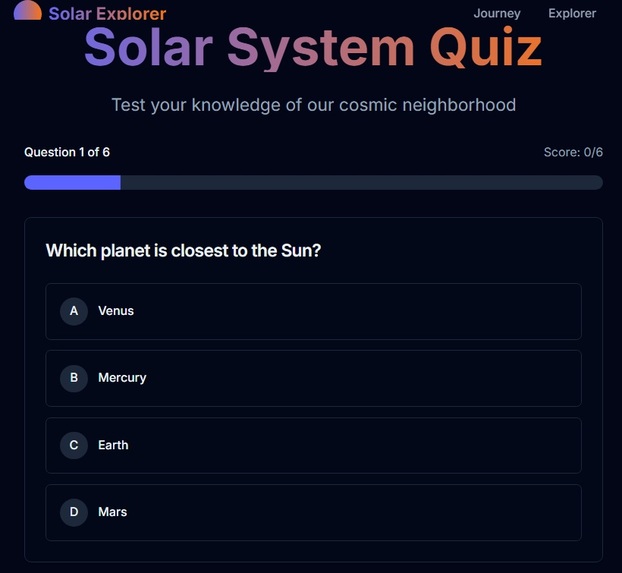
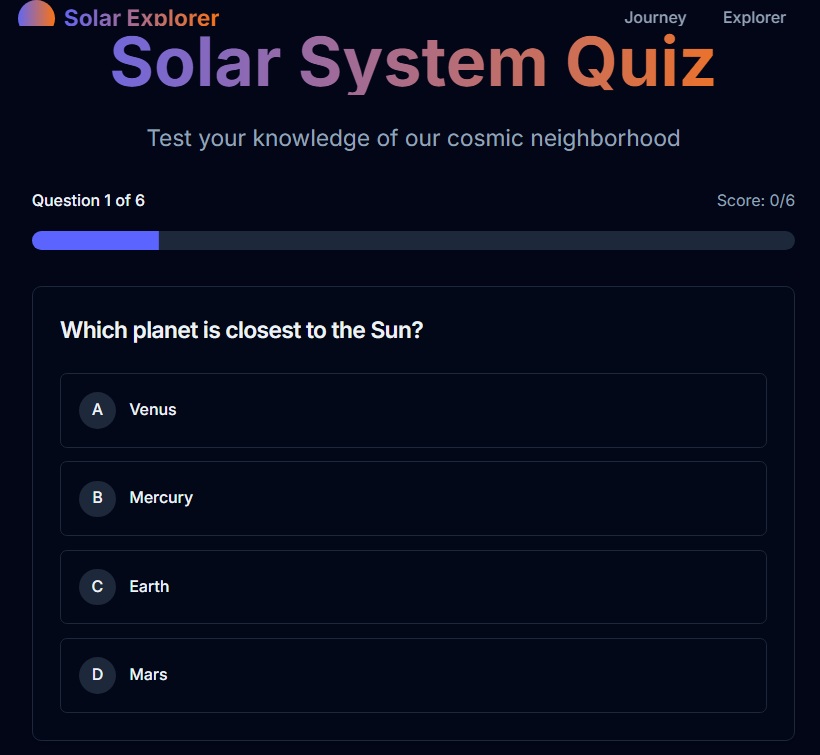
Take a quiz
-
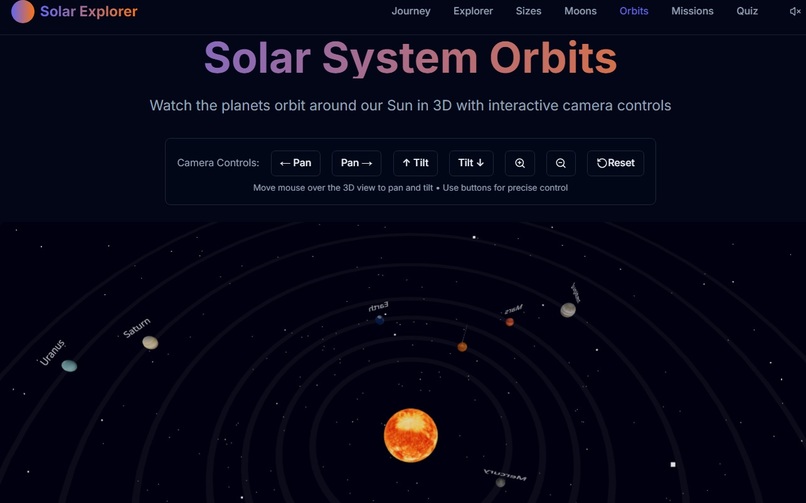
See planets orbiting Sun
-
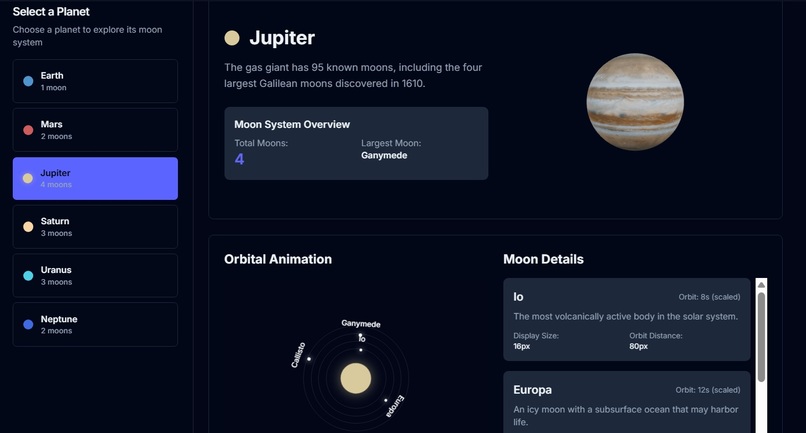
Learn about planetary moons
-
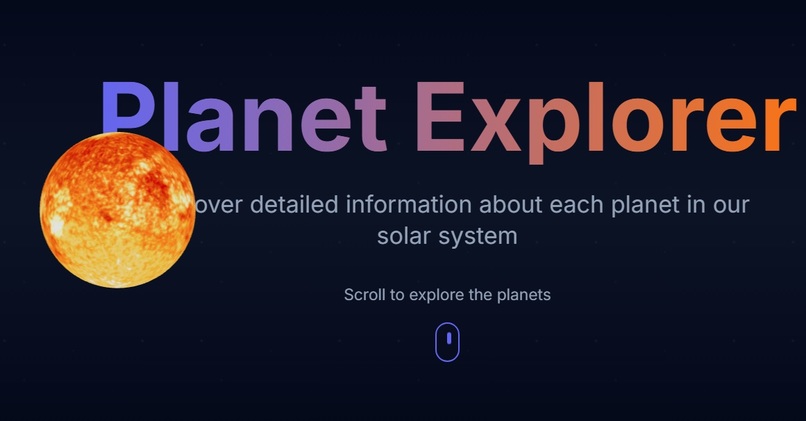
Explore planets
-
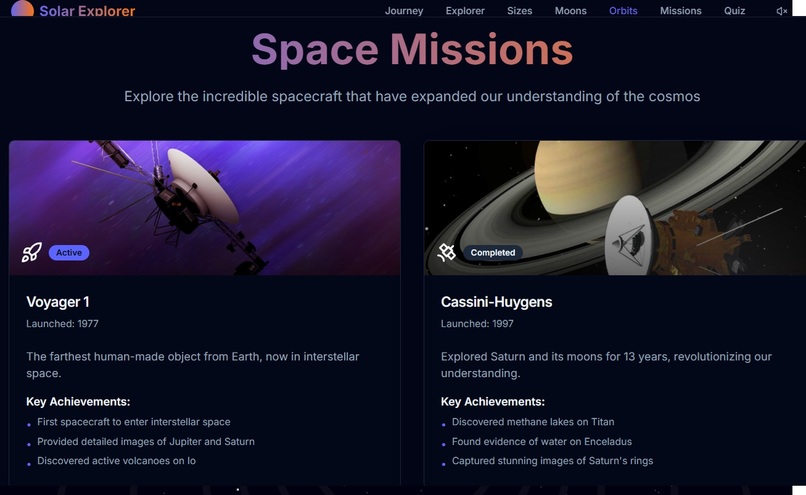
Explore space missions
🌌 Solar System Explorer — Project Story
🚀 Inspiration
We set out to make space feel closer than ever. Textbooks and static diagrams don’t spark curiosity the way immersive 3D can. Our goal: an interactive, visually rich web app that lets anyone explore the solar system from their browser—fun, accessible, unforgettable.
✨ What it does
Solar System Explorer combines stunning 3D visuals with interactive learning tools:
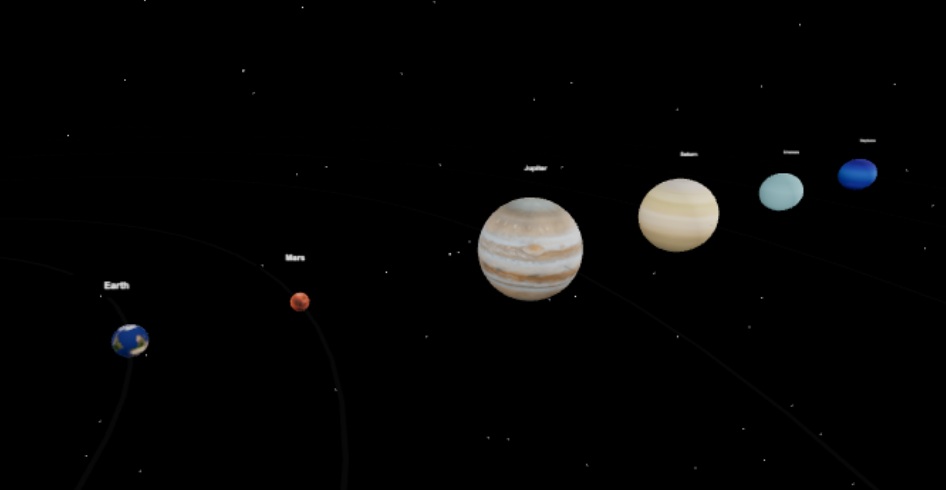
- Journey Mode — Fly through a scaled solar system with intuitive camera controls.
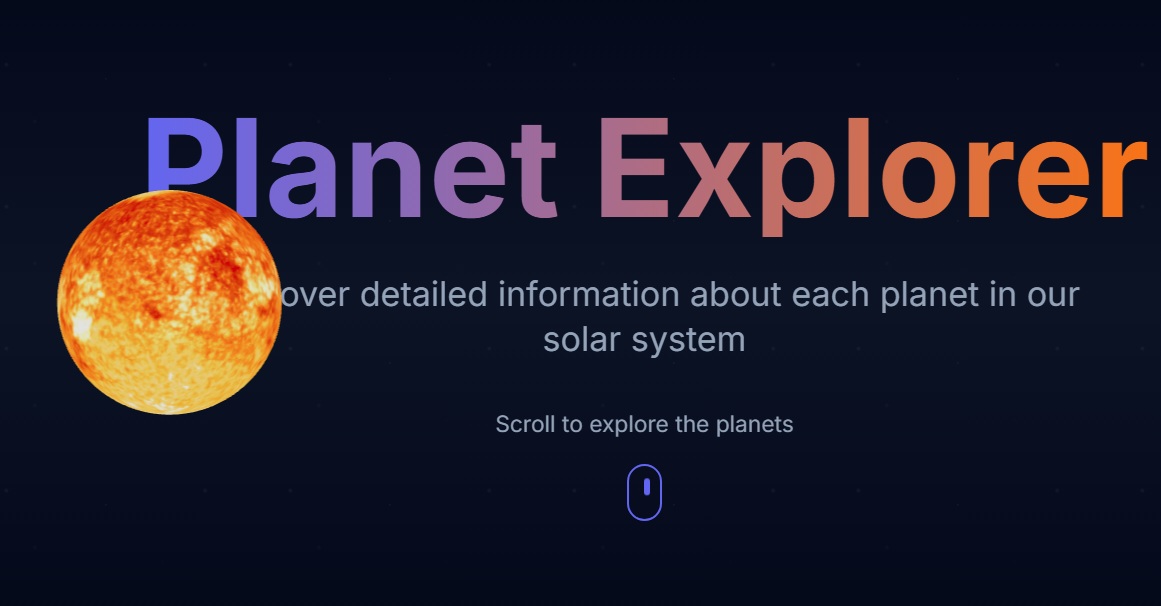
- Planet Explorer — Inspect high-res planet models alongside fast facts.
- Size Comparison — Grasp scale differences with a simple slider.
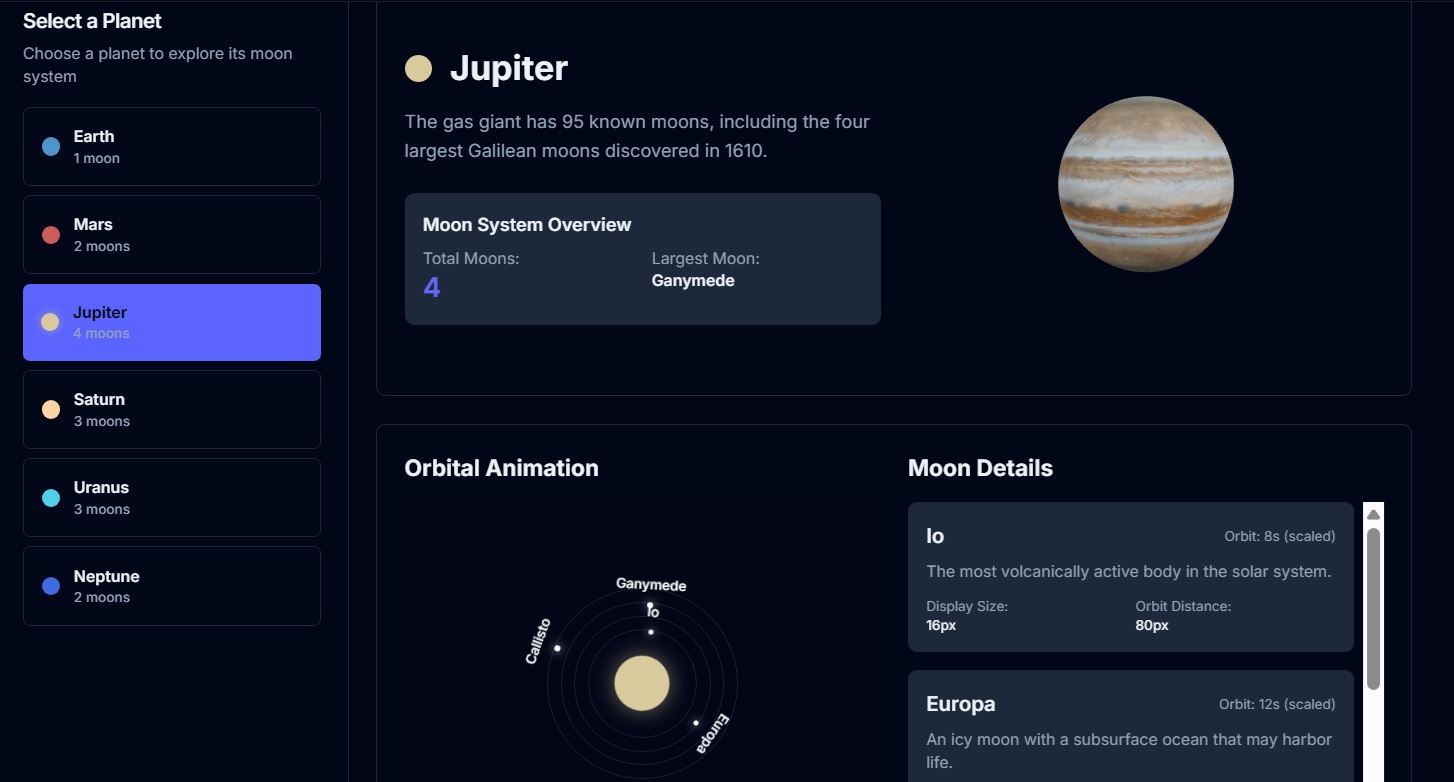
- Moons View — Watch real-time satellite orbits.
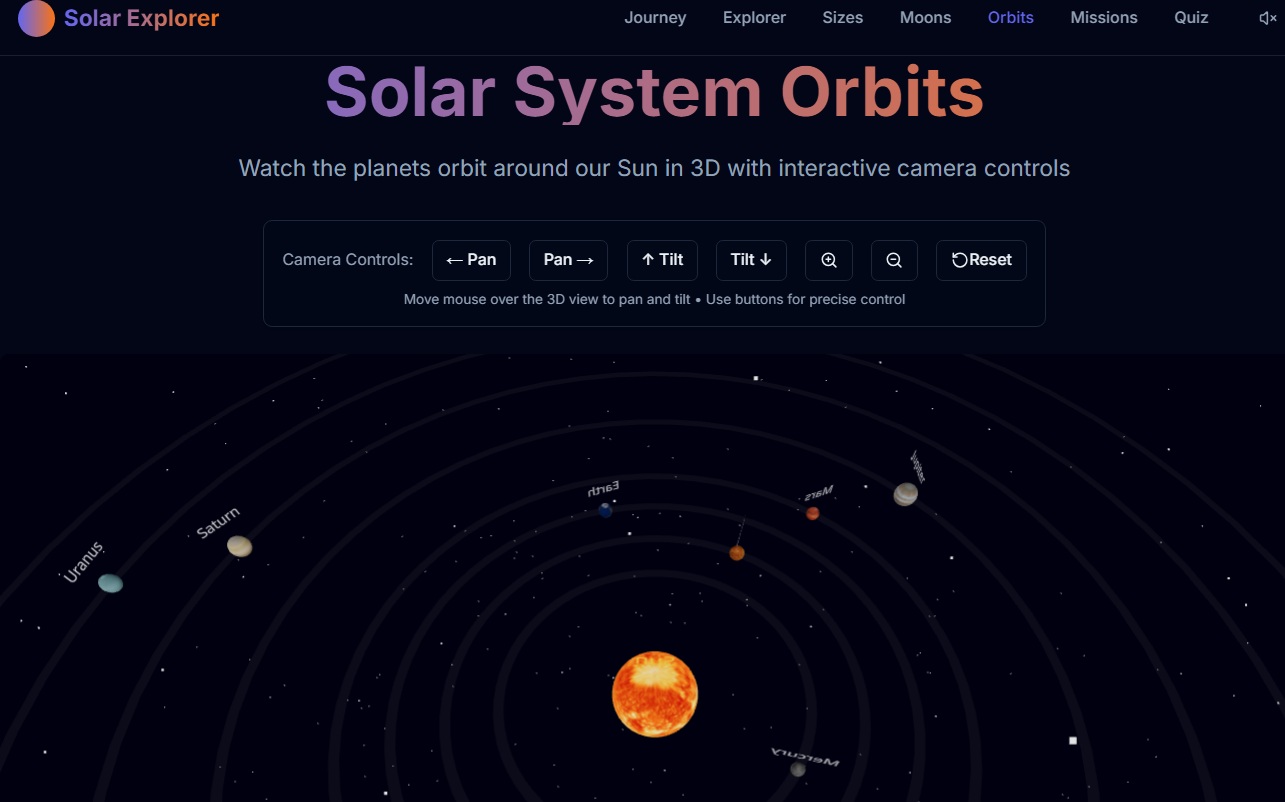
- Orbit Simulation — Experience the planets' dance around the Sun.
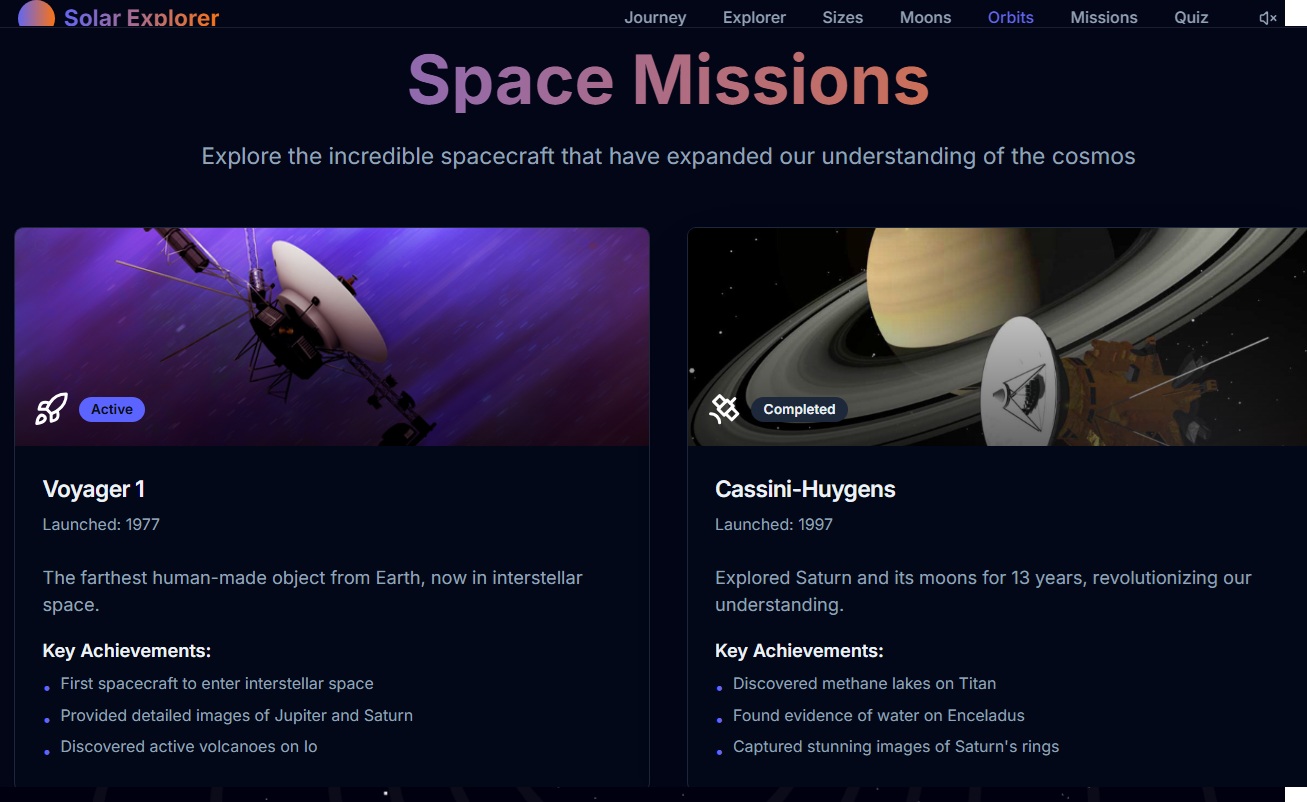
- Spacecraft Gallery — Browse iconic missions.
- Quiz Mode — Test your space knowledge with instant feedback.
Built-in space audio, dark mode, and full mobile responsiveness round out the experience.
🛠️ How we built it
We used:
- Next.js 14, React 18, TypeScript — scalable frontend foundation
- Three.js, @react-three/fiber, drei — performant WebGL 3D visualisations
- Tailwind CSS — rapid, space-themed UI styling
- Framer Motion — smooth transitions and micro-interactions
- PWA setup — installable, offline-first access
- All planet textures, models, and audio stored locally for fast, reliable loading.
⚔️ Challenges we ran into
- Optimising 3D performance across devices, especially lower-end phones
- Keeping camera controls intuitive in vast 3D space
- Balancing scientific scale with visual clarity—astronomy is big, but our canvas is limited
- Ensuring all routes and interactions felt cohesive despite complex visuals
🏆 Accomplishments that we're proud of
- Seamless, high-frame-rate 3D journey across devices
- Realistic planet scales without overwhelming the scene
- Smooth camera, orbit, and size comparison interactions
- Full PWA support—installable with offline functionality
- Built entirely with local assets, no external dependency for content
🎓 What we learned
- How to optimise scene management and asset loading for high-performance 3D
- The importance of single-canvas design for memory efficiency
- Balancing scientific accuracy with user engagement
- Creating micro-interactions that make complex data approachable
🌠 What's next for Solar System Explorer
- Add dwarf planets, rings, and notable exoplanets
- Introduce physics-based orbit perturbations
- Integrate VR/AR for a fully immersive space experience
- Expand educational content with more interactive storytelling
The universe is vast—this project is just our launchpad.
Built With
- bolt
- javascript
- netlify
- three.js


Log in or sign up for Devpost to join the conversation.