-
-
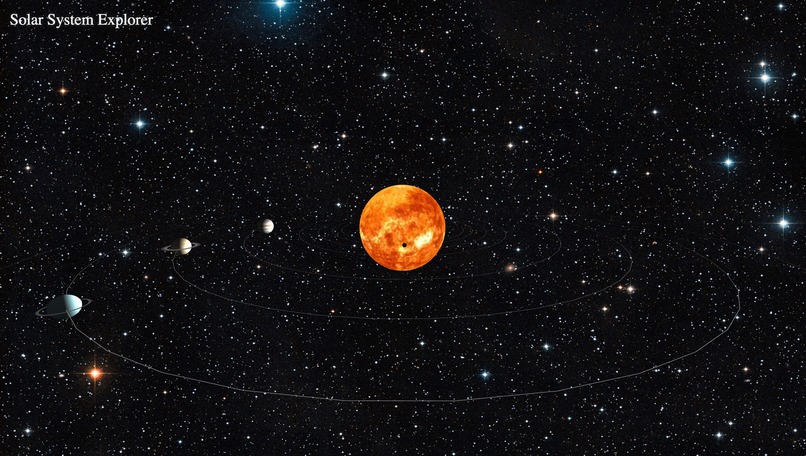
Solar System Explorer

🌌 About the Project
Inspiration
We came together as a team with a shared goal: to improve our coding skills while working on a meaningful project. When we found out the theme was space, we decided to create something that could not only help us grow as developers but also be beneficial to a wider audience. Thus, Solar System Explorer was born—a 3D interactive platform that makes learning about the Solar System both accessible and engaging.
What We Learned
As a team, we gained invaluable insights and skills through this project:
- Collaborative Development with Three.js: Working with Three.js was a new experience for many of us. We learned how to collaborate on 3D modeling and rendering, managing complex animations, lighting, and textures to make each celestial body come to life.
- Effective Communication and Problem-Solving: Throughout the project, we relied heavily on effective communication and shared problem-solving. Whether it was brainstorming solutions for realistic animations or coordinating the music toggle feature, teamwork was key to overcoming challenges.
- Enhanced JavaScript and Web Development Skills: By working together on the interactive elements—such as planet clicks, dropdown navigation, and background music controls—we deepened our understanding of JavaScript event handling, user experience design, and performance optimization.
How We Built It
Solar System Explorer was a collaborative effort built with:
- Three.js for creating realistic 3D models, animating planetary orbits, and managing scene elements.
- HTML, CSS, and JavaScript for structuring the user interface, creating responsive design, and managing interactivity.
- GitHub for version control and project management, ensuring smooth collaboration among team members and tracking changes efficiently.
- Netlify for hosting, which allows us to share the application with anyone online for a seamless, high-performance experience.
We divided tasks based on each team member’s strengths, allowing one group to focus on 3D modeling and animations, while others worked on UI design, user interactions, and backend deployment. Together, we created true-to-scale orbits, textured planetary surfaces, and added background music to enhance the immersive experience.
Challenges We Faced
Working as a team on such a complex project presented its own unique challenges:
- Coordination in 3D Modeling: Ensuring that each celestial body looked realistic and accurate required close collaboration. We had to regularly synchronize our work to make sure that textures, lighting, and animations were cohesive and optimized.
- Complex Camera and Controls Setup: Designing smooth, intuitive camera transitions that allow users to zoom to each planet took significant effort. We worked together to find the right balance between usability and user freedom.
- Performance Optimization Across Devices: With multiple objects, textures, and animations, maintaining smooth performance across various devices was challenging. We collectively optimized assets, fine-tuned lighting, and managed animations to ensure consistent performance, even on slower systems.
Solar System Explorer is a testament to what a passionate team can accomplish together. We’re proud to bring the Solar System to life, accessible to anyone with a web browser, and look forward to expanding it with new features and more celestial bodies in the future.
Built With
- css
- github
- html
- javascript
- netlify
- visualstudiocode

Log in or sign up for Devpost to join the conversation.