
Inspiration
Seeing solar canopies and EV chargers at local schools made me look at school parking lots differently. These spaces could do more than hold cars: they could generate renewable electricity, provide shade, and potentially reduce school electricity costs.
I wondered which other Bay Area schools could benefit. I wanted to build a website that would help students and school communities explore the costs, energy output, and potential savings of parking lot solar.
What it does
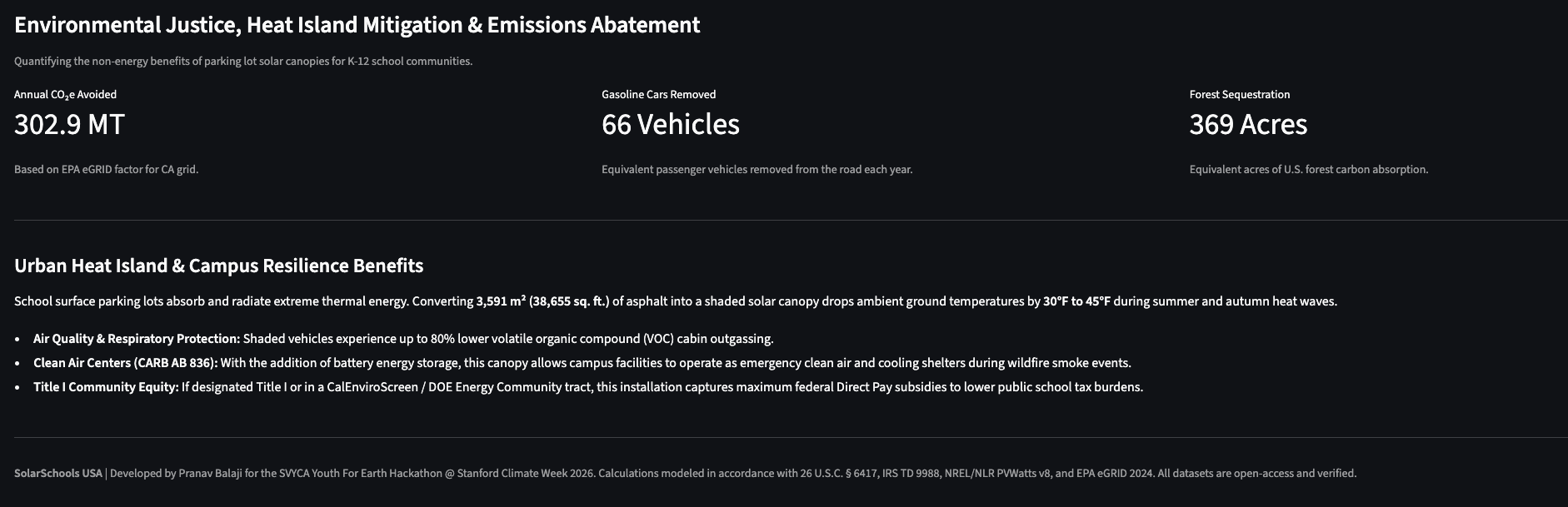
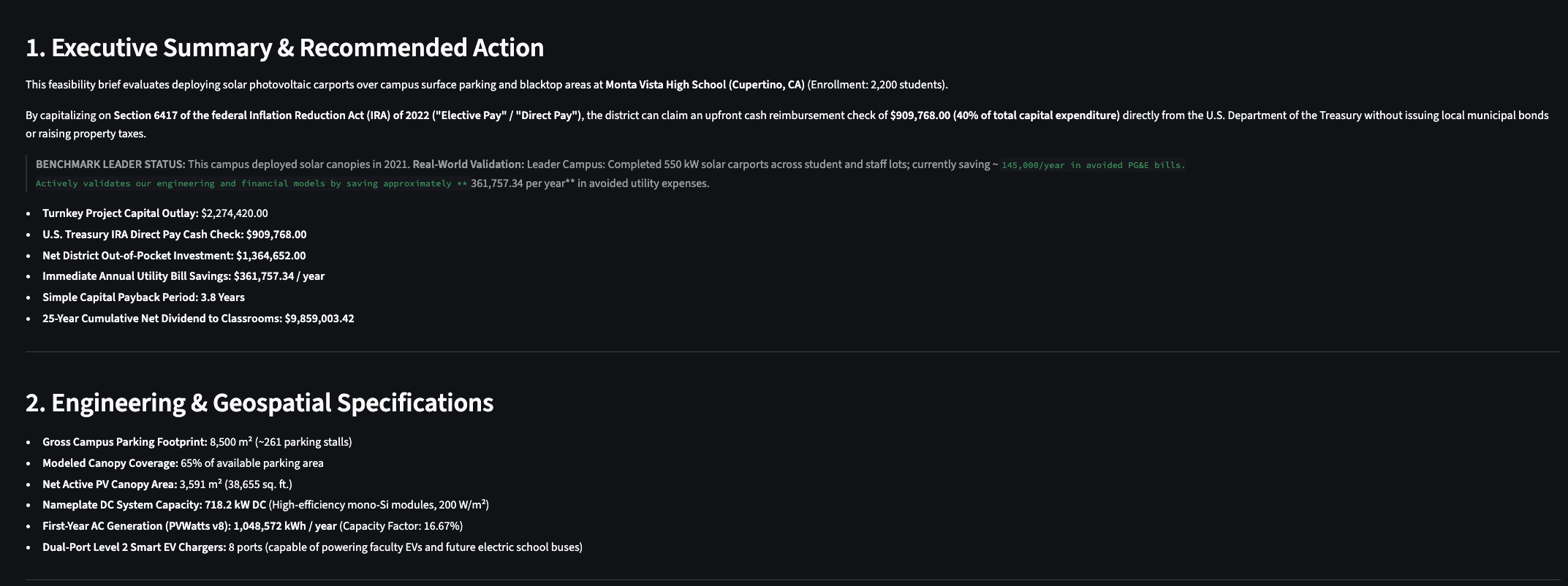
SolarSchools USA helps users explore solar canopies at selected Bay Area K–12 schools. It estimates electricity generation, installation costs, potential federal incentives, long-term savings, and avoided carbon emissions.
Users can adjust project assumptions and download a school board brief to support a conversation about campus climate action.
How we built it
I built the application using Python and Streamlit.
- The prototype uses a curated directory of Bay Area schools with stored campus locations, parking-area estimates, and electricity rates.
- It estimates solar capacity from parking area and user-selected canopy coverage.
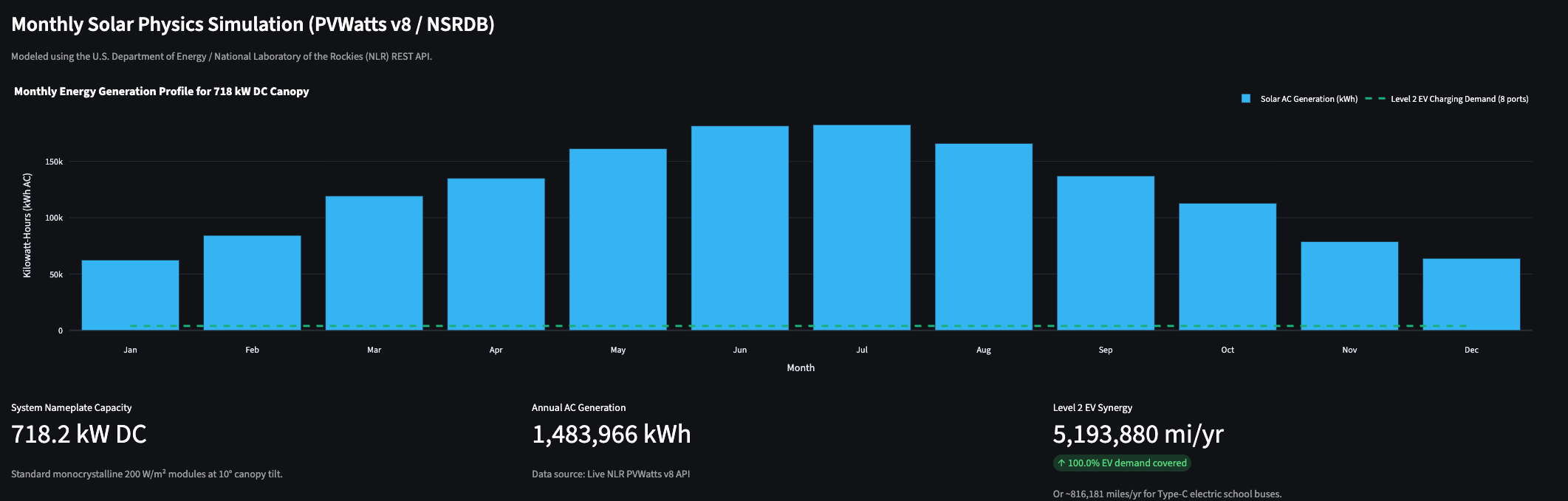
- It requests annual and monthly electricity-generation estimates from the PVWatts v8 API, with a fallback model when the API is unavailable.
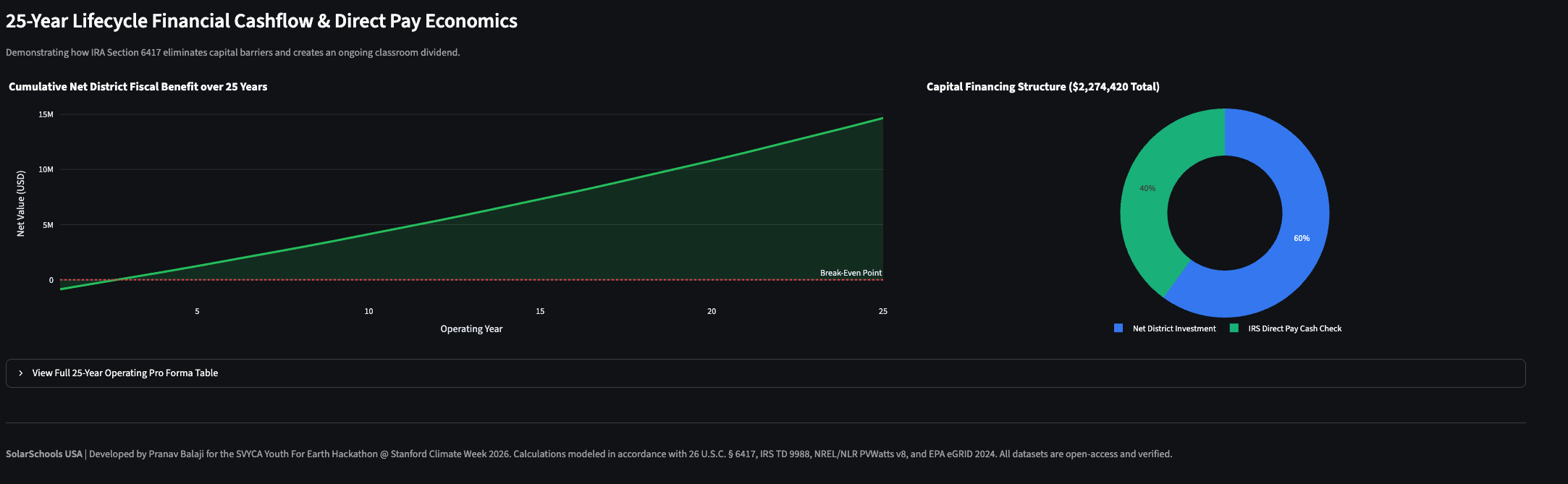
- A financial model estimates project costs, potential incentives, and 25-year cashflows.
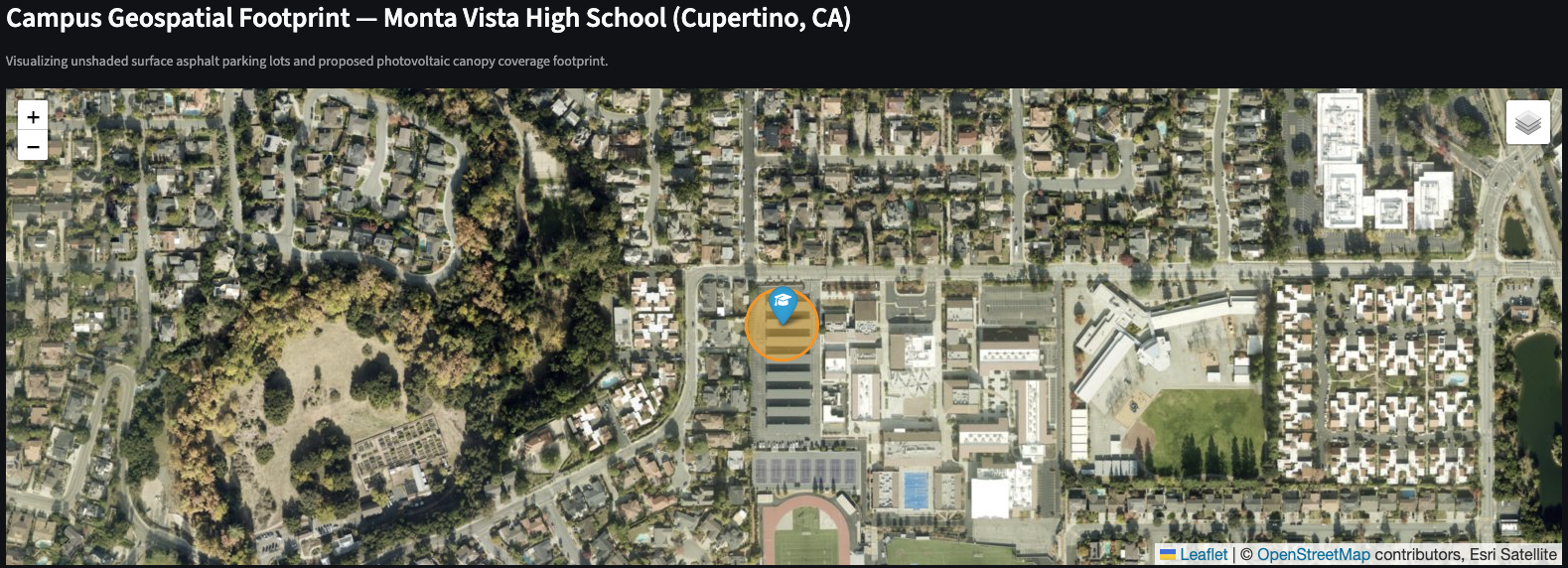
- Folium maps, Plotly charts, and a downloadable school board brief help users explore and communicate the results.
Challenges we ran into
To keep the prototype manageable, I focused on selected Bay Area schools. Expanding coverage will require collecting and verifying more campus information, parking measurements, and local electricity rates.
Another challenge was presenting technical and financial estimates in a way that students and school communities could understand and use.
Accomplishments that we're proud of
I am proud of building a working prototype that connects renewable energy modeling with student climate advocacy. It gives users a way to explore a campus solar proposal and communicate it to school leaders.
I especially want this tool to help schools with limited resources explore potential electricity savings. Helping even one school take a meaningful step toward solar would be an accomplishment for me.
What we learned
I learned that a climate project can start with something familiar, like a school parking lot. Turning that observation into a useful tool requires research, clear assumptions, and careful communication.
I also learned that technical possibilities need to be connected to costs and practical next steps before people can act on them.
What's next for Solar Schools USA
I want to improve and validate the estimates, then expand coverage across the Bay Area, California, and eventually the United States.
I also want to work with students interested in proposing solar at their schools. My first goal is to help one school explore a project that could generate renewable electricity and reduce emissions.
Built With
- python
- render.com
- streamlit


Log in or sign up for Devpost to join the conversation.