Inspiration
The pressing question of how to efficiently transition to renewable energy sources led me to this project. I was inspired by the urgent need to combat climate change and the realization that, despite abundant solar resources, many countries have not fully exploited this clean energy. My project is driven by the ambition of a solar-powered future where every nation realizes its full solar energy production potential, fostering a sustainable and eco-friendly energy environment.
What it does
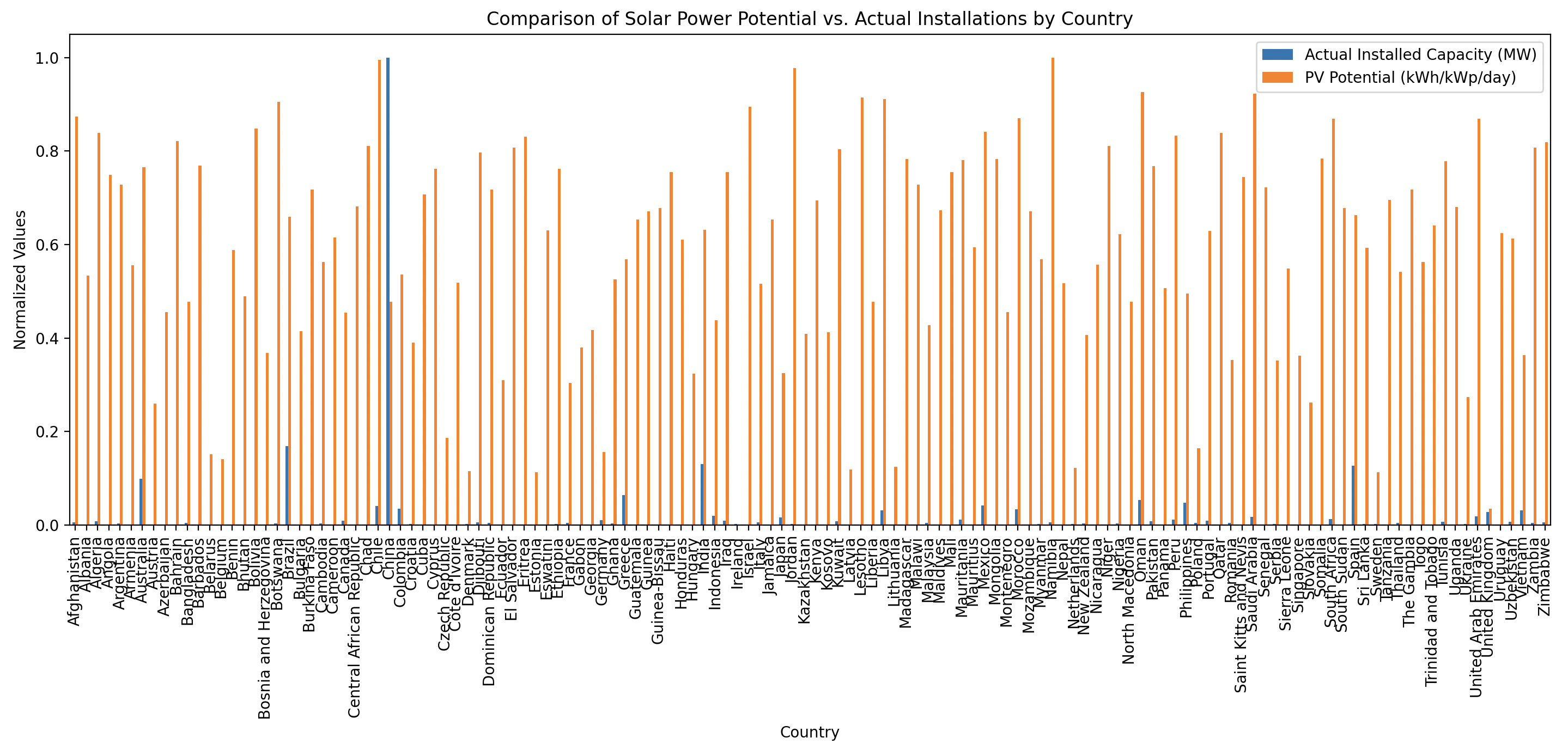
My project aims to reveal the untapped potential of solar energy across the globe by comparing the theoretical solar power potential of countries with their actual solar installations. By integrating the Global Photovoltaic Power Potential dataset with the Global Energy Monitor's Solar Power Tracker, we focus on projects over 20 MW to analyze disparities and highlight opportunities. This comparison not only identifies areas with significant solar resources that are yet to be harnessed but also showcases regions that have made remarkable strides in solar adoption. Our project is crucial for stakeholders in the energy sector, providing a clear picture of the solar landscape, guiding policy development, and encouraging investment in areas with high solar potential but low actualization, all while navigating the complexities of geography, infrastructure, and economic factors.
How I built it
I dove into data analytics, combining and cross-examining two essential datasets: the Global Photovoltaic Power Potential and the Global Energy Monitor's Solar Power Tracker. Through data cleaning, normalization, and statistical analysis, I translated complex datasets into an insightful visual story, converting intricate information into understandable and actionable insights for decision-making in solar energy initiatives.
Challenges I ran into
A significant challenge was aligning different datasets with distinct measurements of solar power potential and real installations. Moreover, grappling with the myriad of factors—from geographical limits to economic considerations—added layers of complexity to my analysis. Maintaining data precision and reliability while scaling the project to encompass a worldwide dataset was a demanding process that sharpened my analytical abilities.
Accomplishments that I'm proud of
I am particularly proud of my success in distilling large, complex datasets into a clear, interactive tool that illustrates the discrepancy between potential and actual solar power solutions. My project is an example of how data visualization can effectively communicate sophisticated information and act as a catalyst for change in renewable energy policies globally.
What I learned
Through this endeavor, I've deepened my knowledge of the global energy framework, the nuances of solar power potential, and the socio-economic and environmental factors that impact renewable energy adoption. I've refined my technical proficiency in data analysis and visualization and have come to understand the significance of cross-disciplinary collaboration in tackling global issues.
What's next for this project
Looking ahead, I see my project evolving into a real-time updating platform that incorporates live data streams from solar installations and potential assessments. I plan to introduce predictive analytics to project future solar energy trends, providing guidance for reaching global sustainability targets. This tool will act as a decision-support system for policymakers, investors, and environmentalists, propelling the advancement of solar energy on a global scale.

Log in or sign up for Devpost to join the conversation.