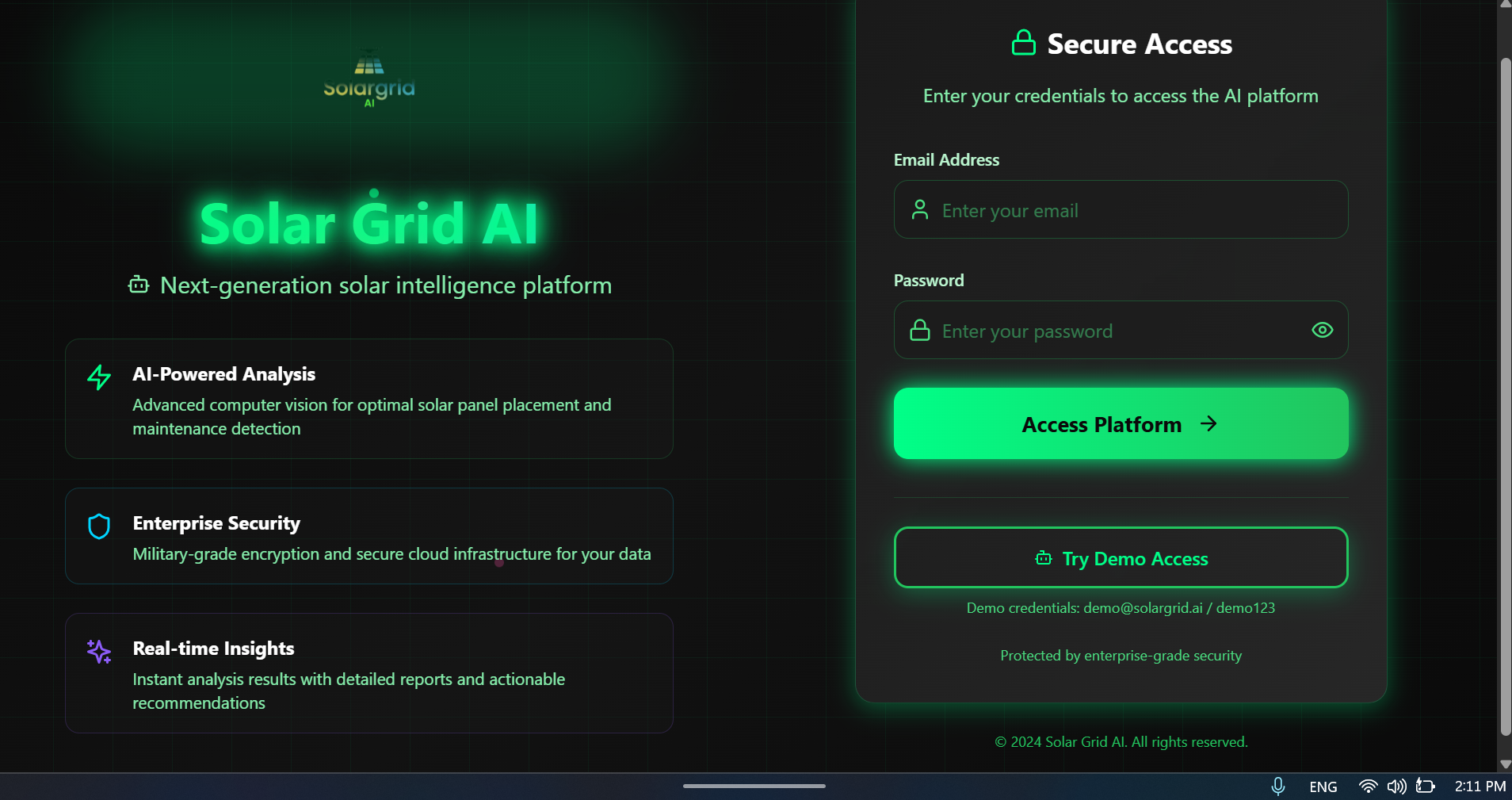
Inspiration : As the world shifts rapidly toward renewable energy, rooftop solar installations are becoming a key driver in decentralized power generation. However, two major bottlenecks hinder their full potential: Suboptimal panel placement due to architectural constraints, shading, and inefficient planning. Performance degradation caused by dirt and debris accumulation on panels — a silent but major loss factor. We were inspired to build a solution that combines AI and aerial imaging to intelligently automate solar panel planning and maintenance — making solar adoption smarter, faster, and cleaner.
What it does : Solar-Grid AI is a web-based platform that enables solar system planners, facility managers, and maintenance teams to:
a. Optimize Solar Panel Placement Upload a rooftop image and get instant recommendations on optimal panel zones — based on shadow detection, orientation, and spacing. The system overlays ideal placement areas and provides energy yield estimates.
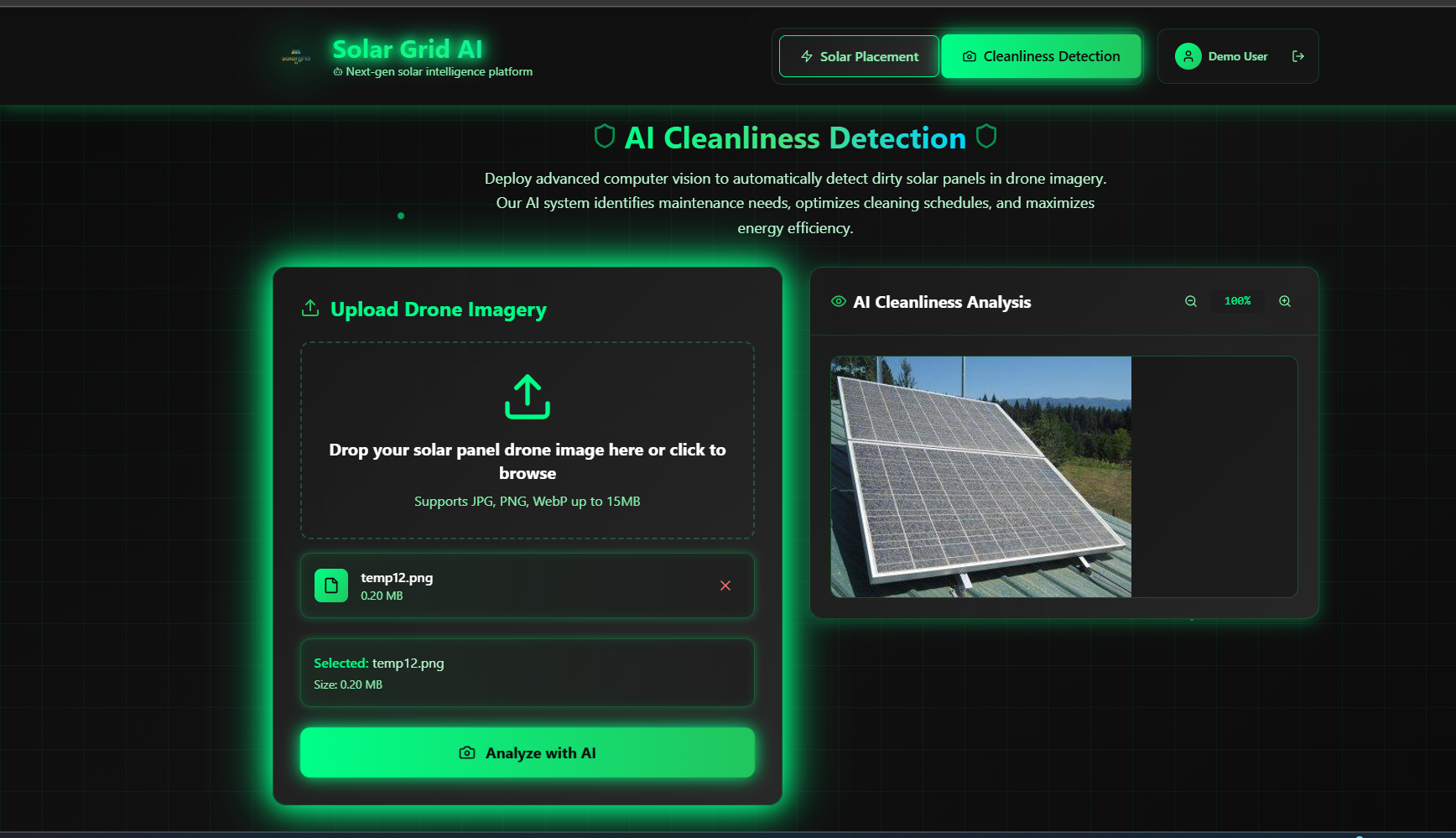
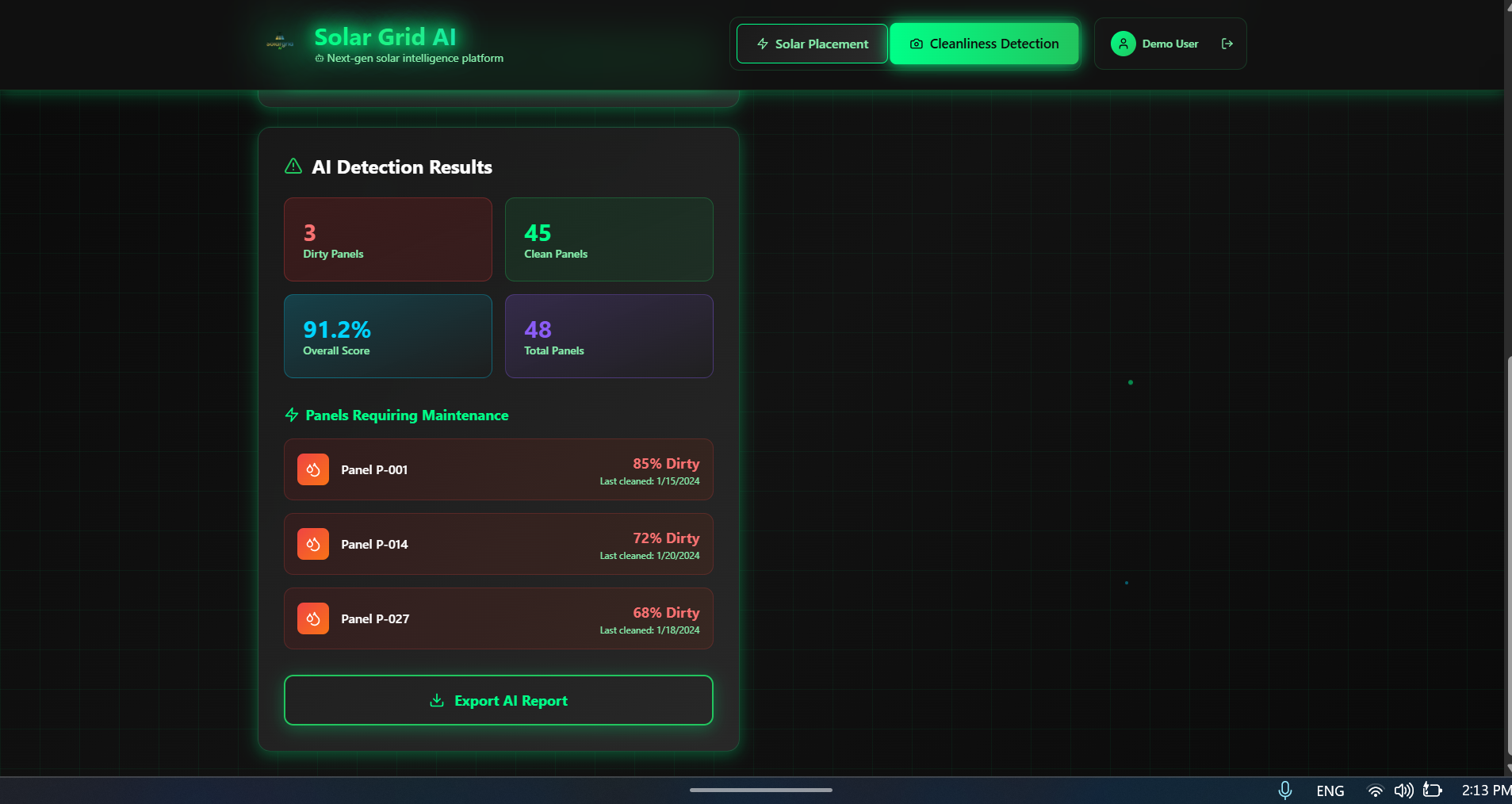
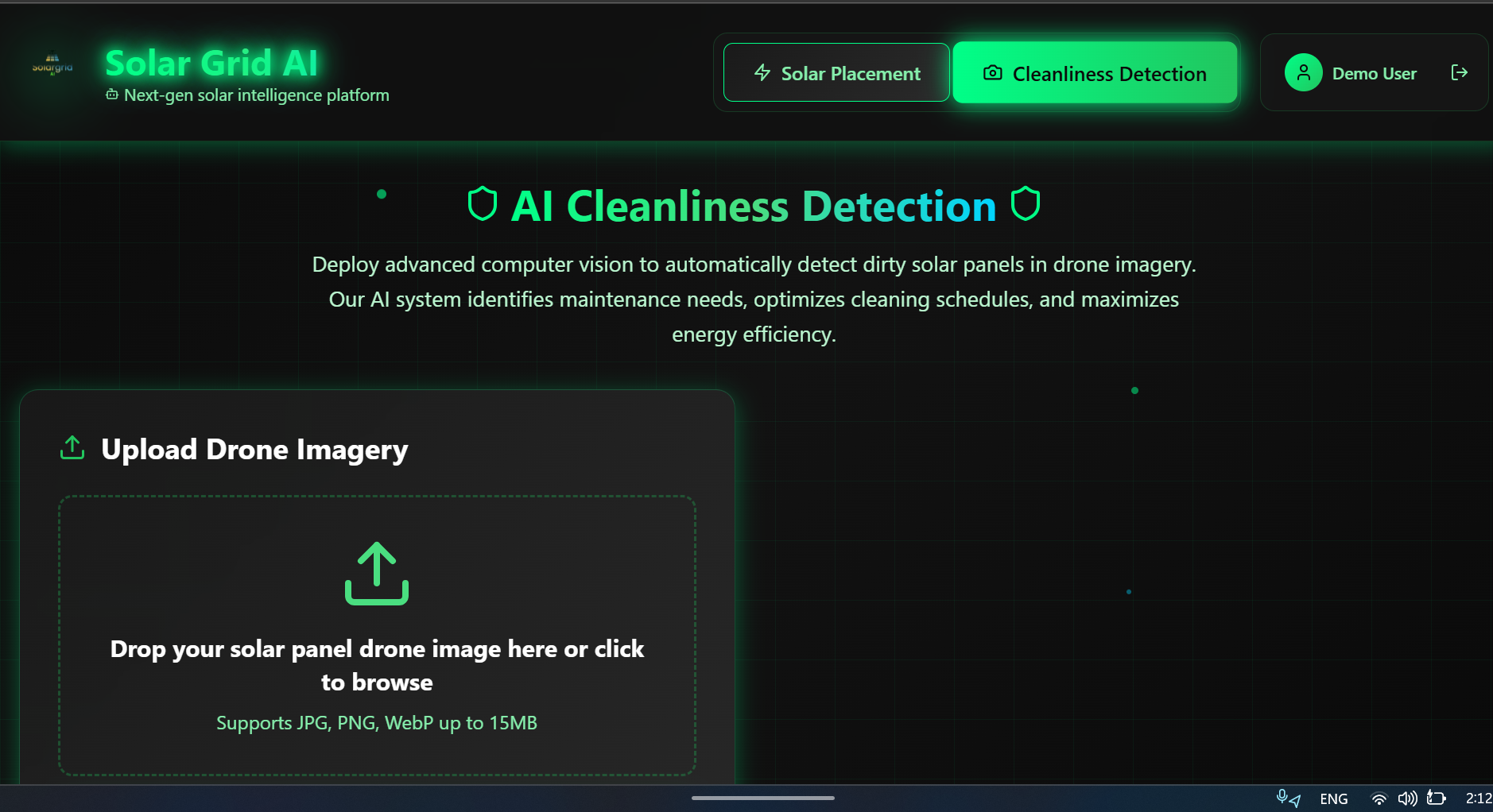
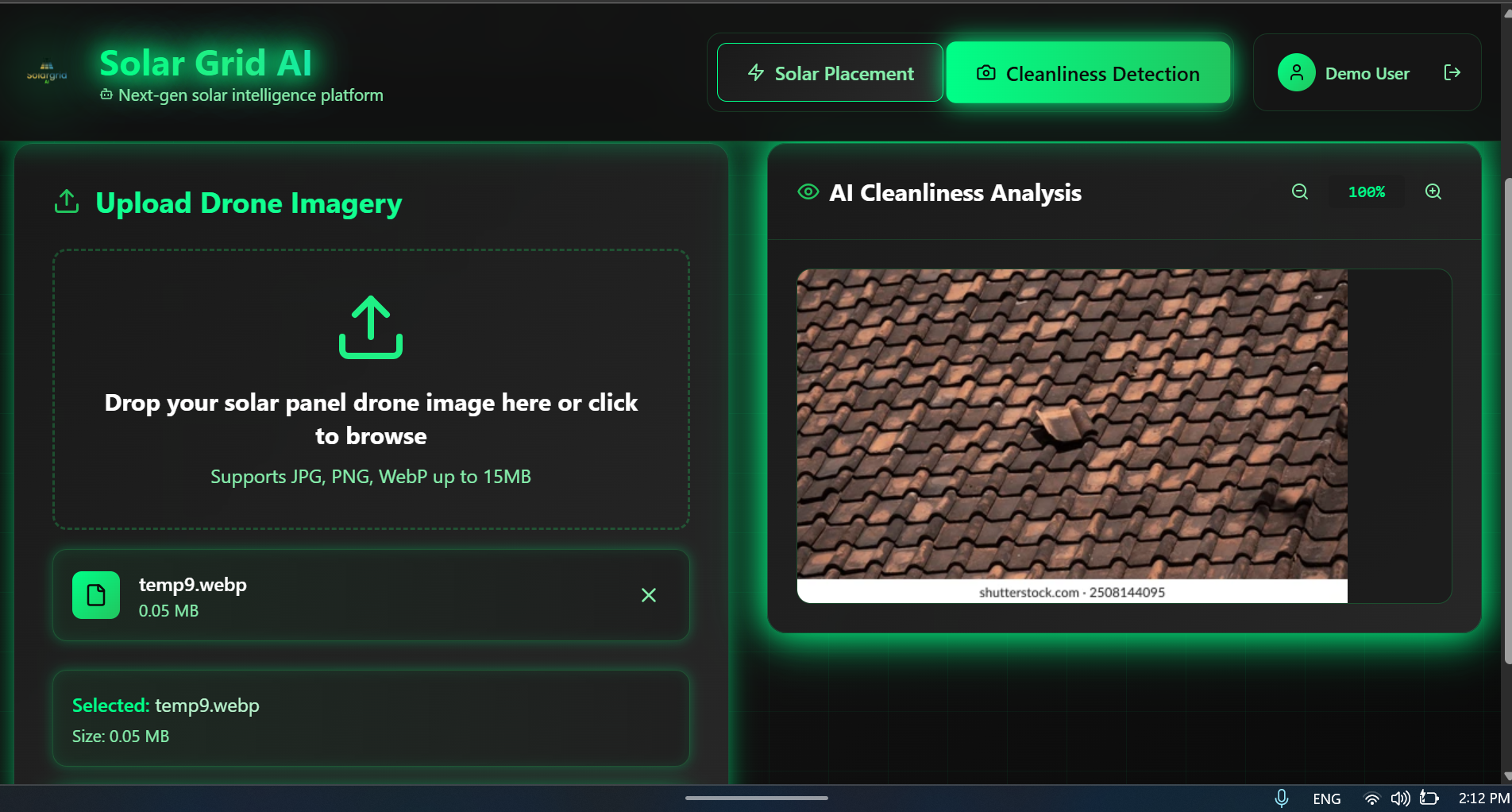
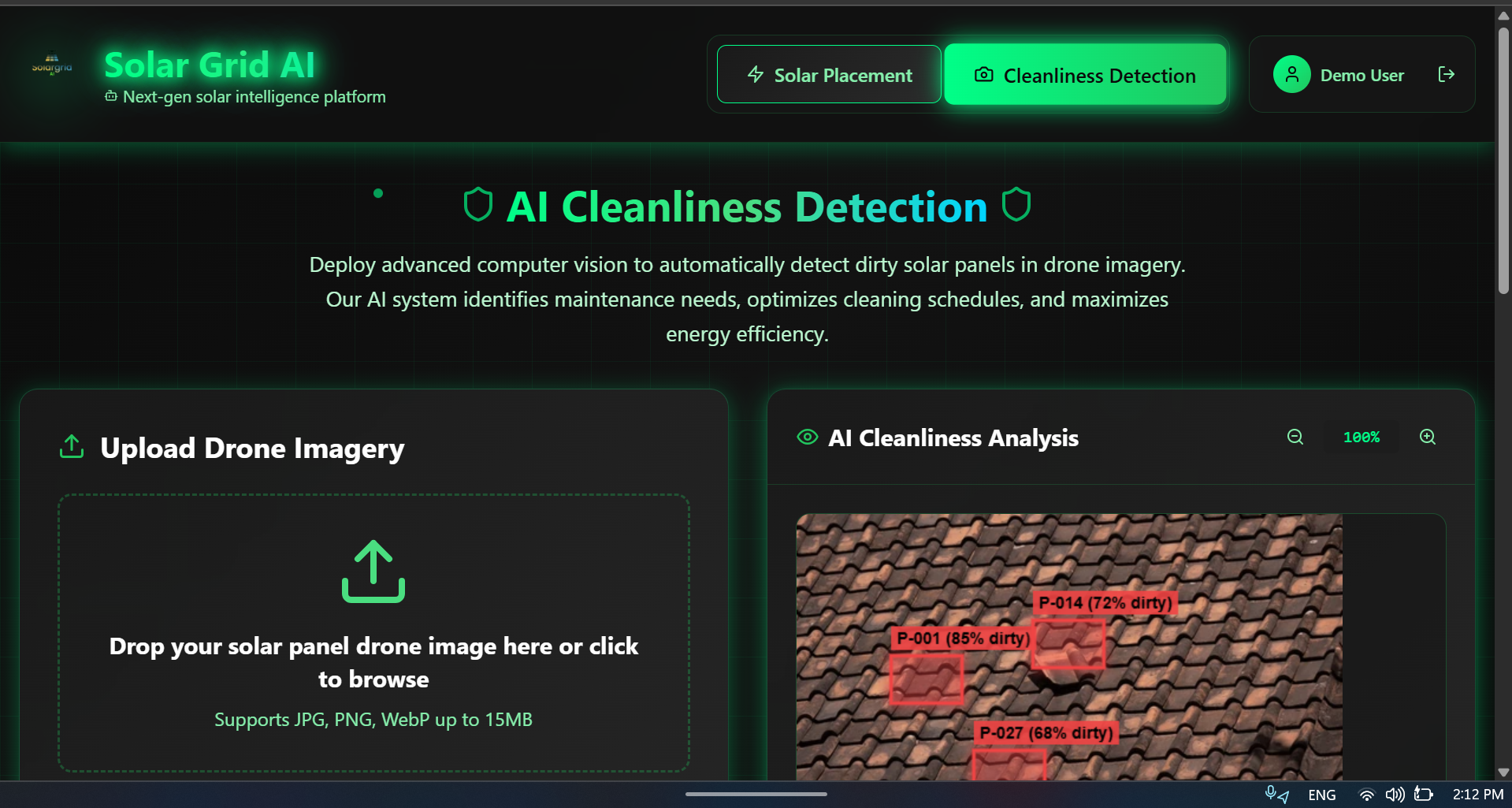
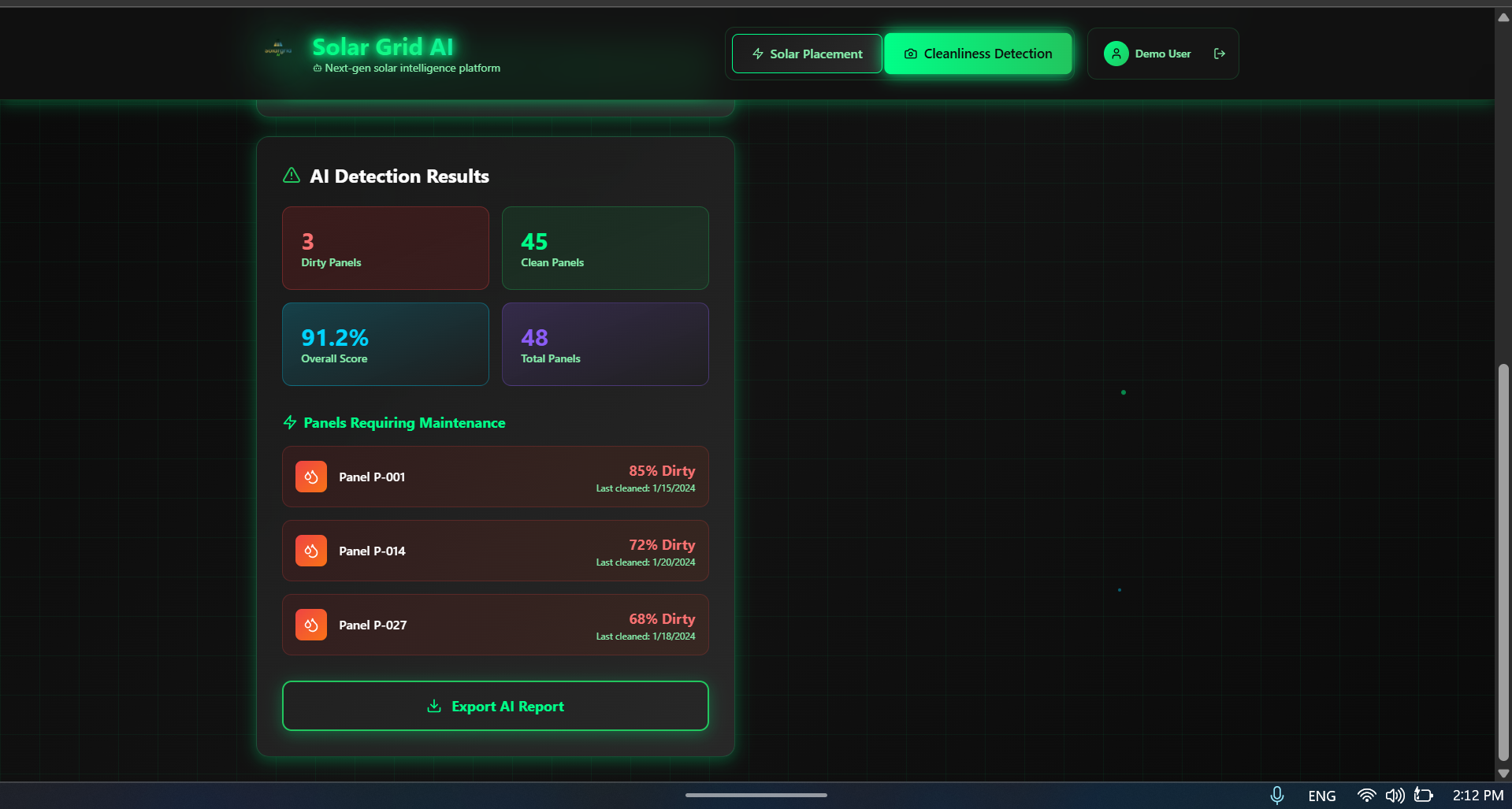
b. Detect Dirty Panels from UAV Images Upload drone images of existing solar setups, and the system automatically flags panels needing cleaning. Dirty panels are visually marked, and a report is generated with panel IDs and estimated dirt levels. The platform is simple, fast, and requires no technical setup — perfect for field teams or sustainability engineers.
- How we built it : a. Frontend: Built with React and Tailwind CSS for a clean, responsive UI. Key components include tabbed views for Placement and Detection, image upload preview, overlay canvas, and result export. Backend: Powered by FastAPI with:
b. /analyze-rooftop: Simulated placement logic using image processing heuristics.
c. /detect-dirt: Simulated dirty panel detection using randomized inference and bounding box overlays.
d. Mock ML Logic: Emulates AI analysis with delay and sample outputs to showcase end-to-end flow.
e. Image Overlay: Used canvas-based visualization for rendering both placement zones and dirty panels.
Challenges we ran into : a. Real-world data scarcity: Without access to live drone feeds or detailed rooftop datasets, we had to simulate real inputs while ensuring the UX remained realistic. b. Overlay accuracy: Aligning image coordinates across upload, analysis, and display layers required precise handling. c. Frontend-backend integration: Managing large file uploads and asynchronous results smoothly across the stack took some fine-tuning.
Accomplishments that we're proud of : Built a fully functional, full-stack web platform within the hackathon time window. Created a highly visual, intuitive interface that simulates real-world solar panel workflows. Developed modular backend logic that can be extended with real ML models post-hackathon. Delivered a design and brand identity (Cognify) that feels production-ready.
What we learned Implementing AI simulation flows with delayed inference to replicate ML behavior for demos. Best practices for building image overlay tools in React using canvas and image metadata. How to design systems where the same UI works seamlessly for planning (before install) and maintenance (after install). Importance of clear UX for data-heavy tasks like energy optimization and image annotation.
What’s next for Solar-Grid AI : Integrate real ML models (YOLOv11/CNNs) for dust detection and shadow segmentation. Drone flight path simulation to plan coverage and automate rooftop scanning. Add location-based solar angle APIs to tailor placement per region. Build analytics dashboard with KPIs like panel uptime, cleaning frequency, and energy loss estimates. Full deployment on cloud with persistent storage, team accounts, and multi-site support.
Built With
- bolt
- css
- html
- postcss
- react
- renderforest
- tailwind
- typescript

Log in or sign up for Devpost to join the conversation.