-
-
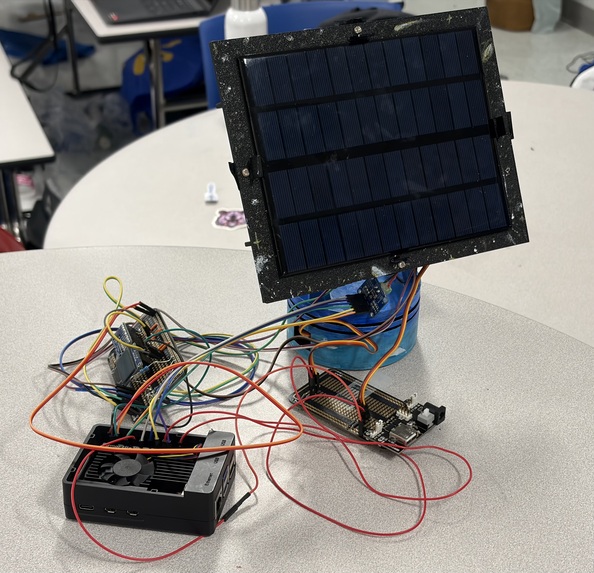
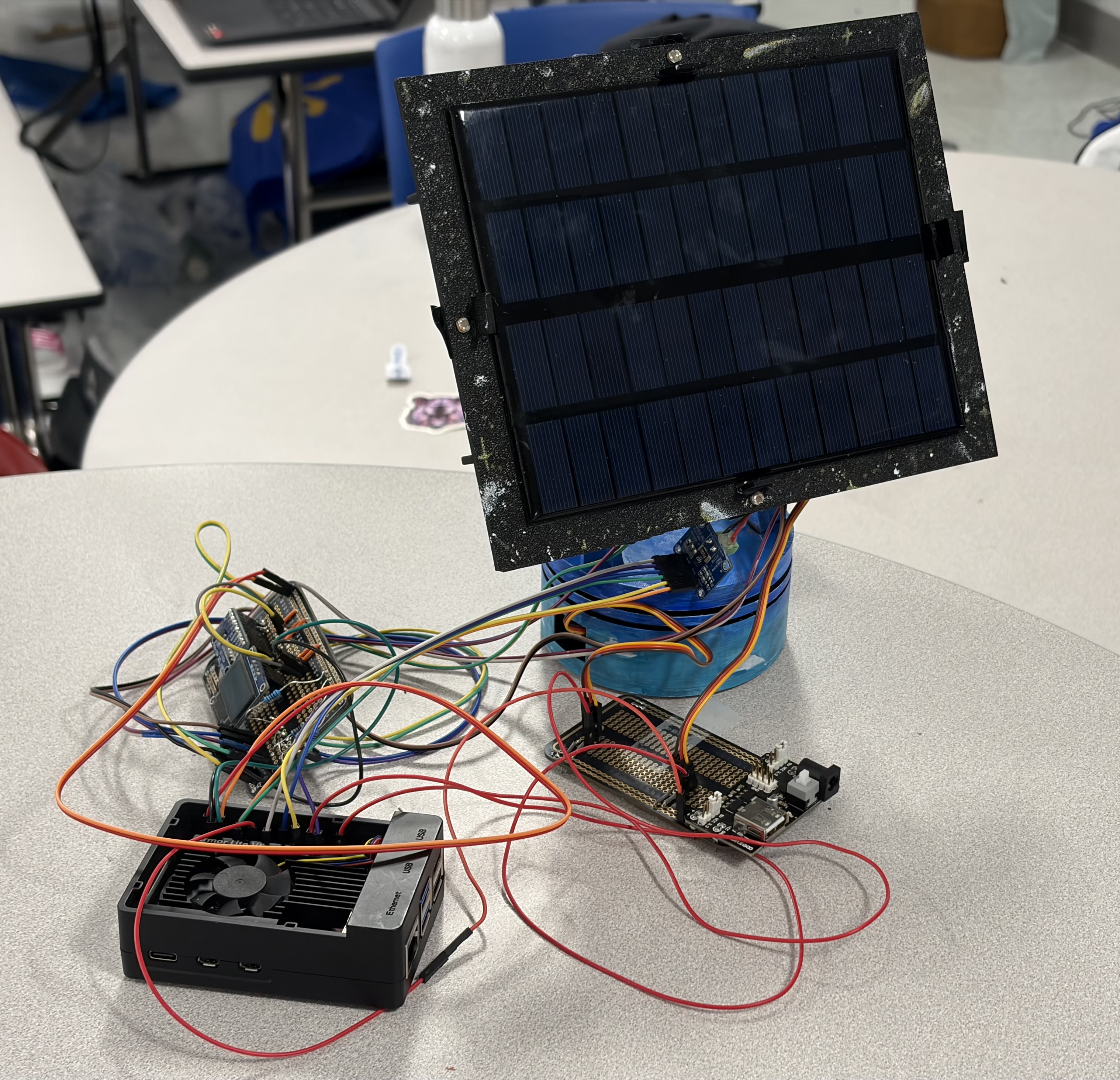
this is a front view of our solar tracker, Helios, showing the components and soldered perfboards
-
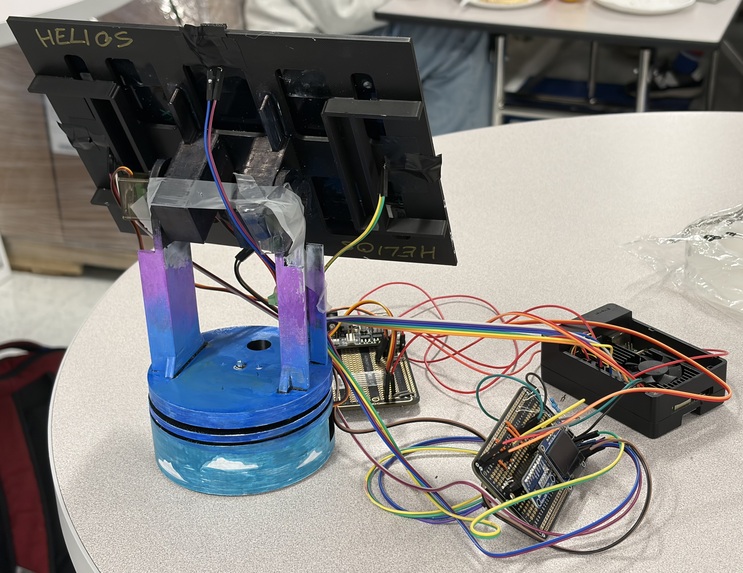
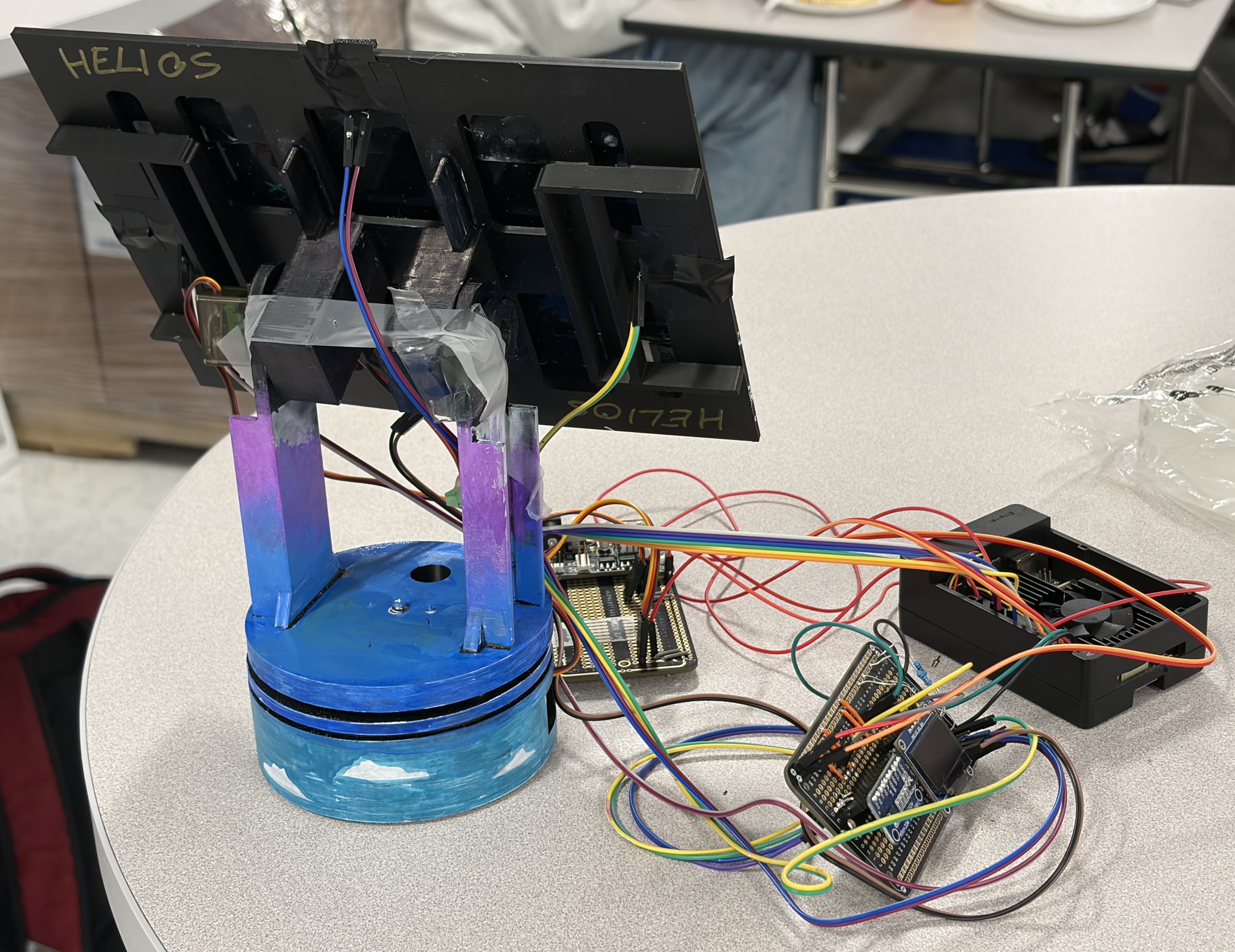
this is a back view of Helios, showing the sky themed design as well as the tilting mechanism
-
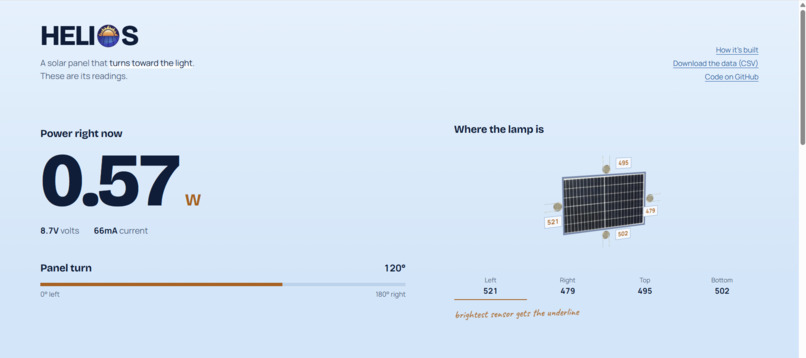
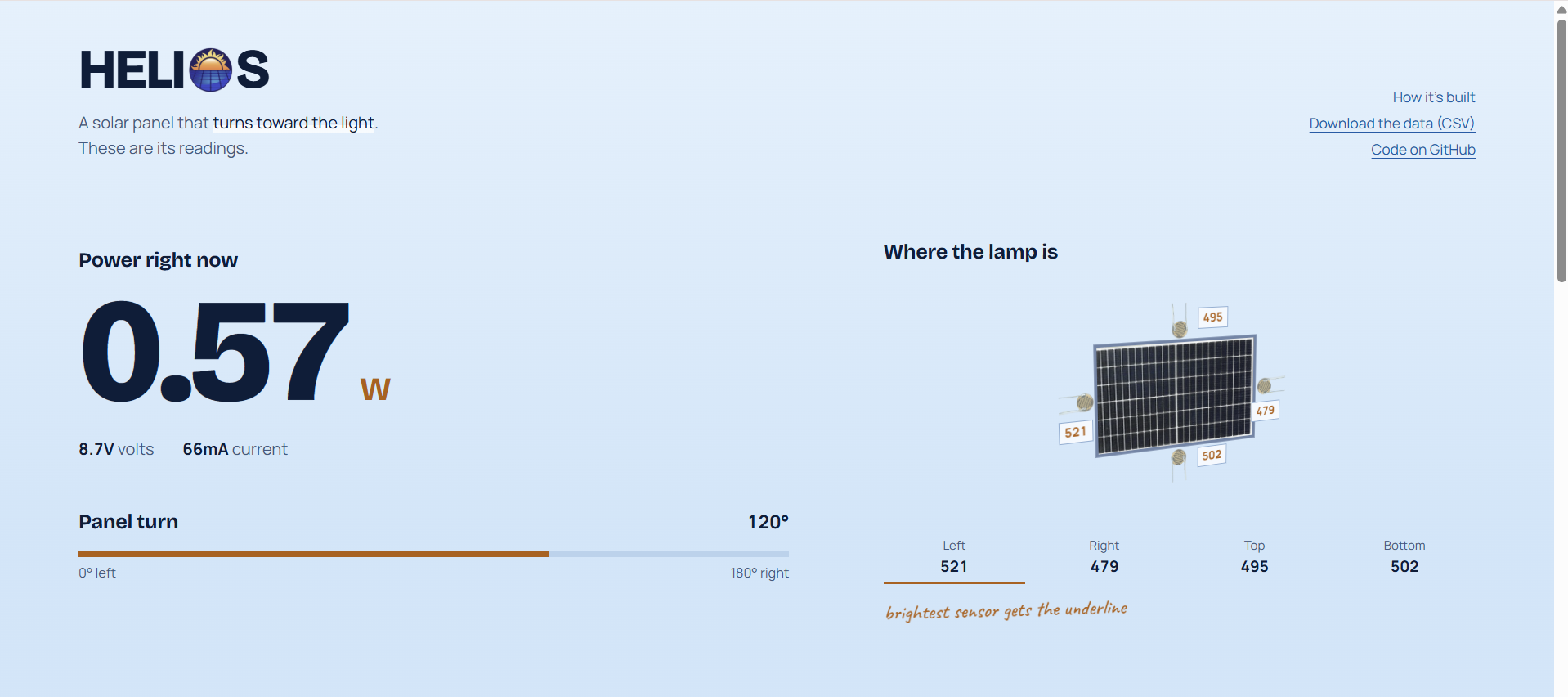
a home page displaying the solar power currently being generated and a 3d render of the solar panel
-
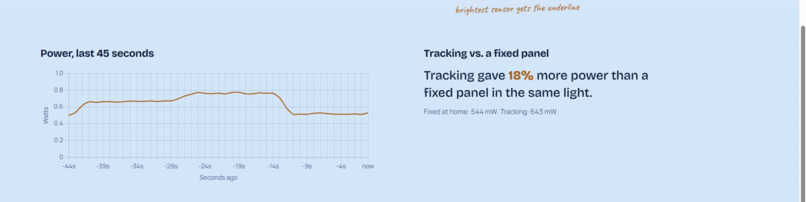
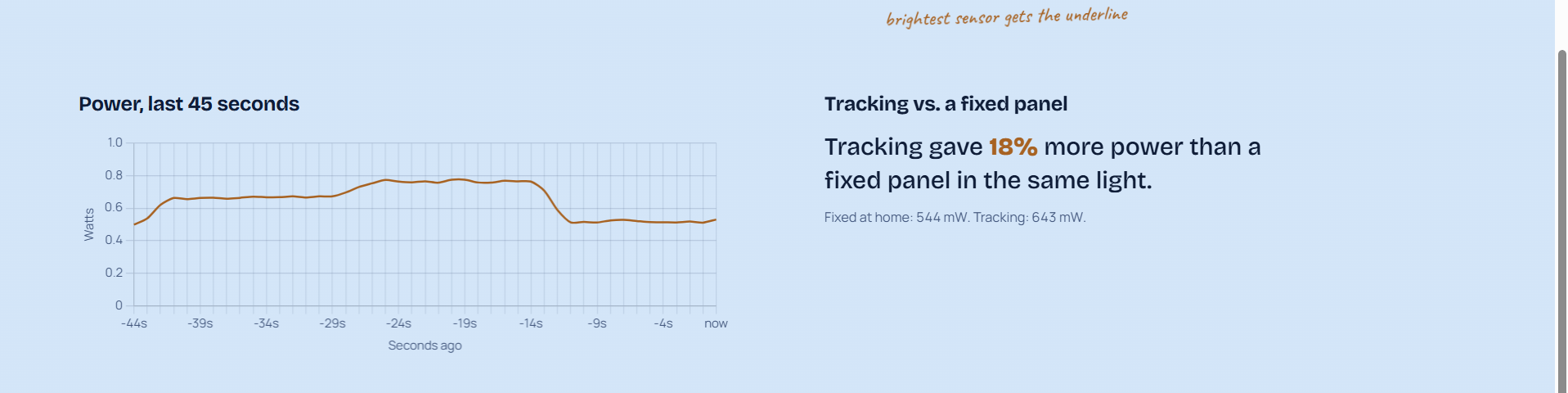
a chart showing the solar power generated by the solar panel over the last 45 seconds and a statistic about tracking panels
-
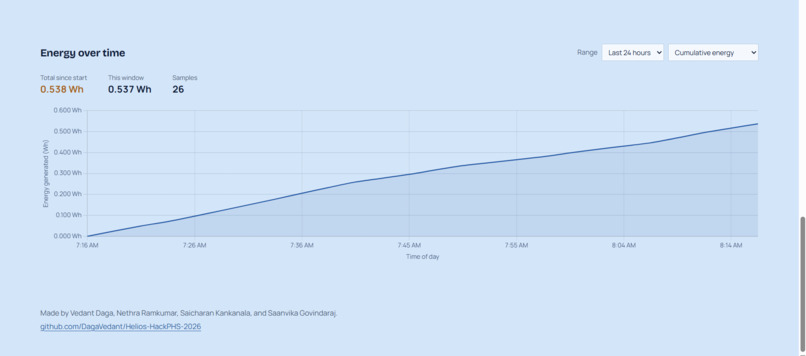
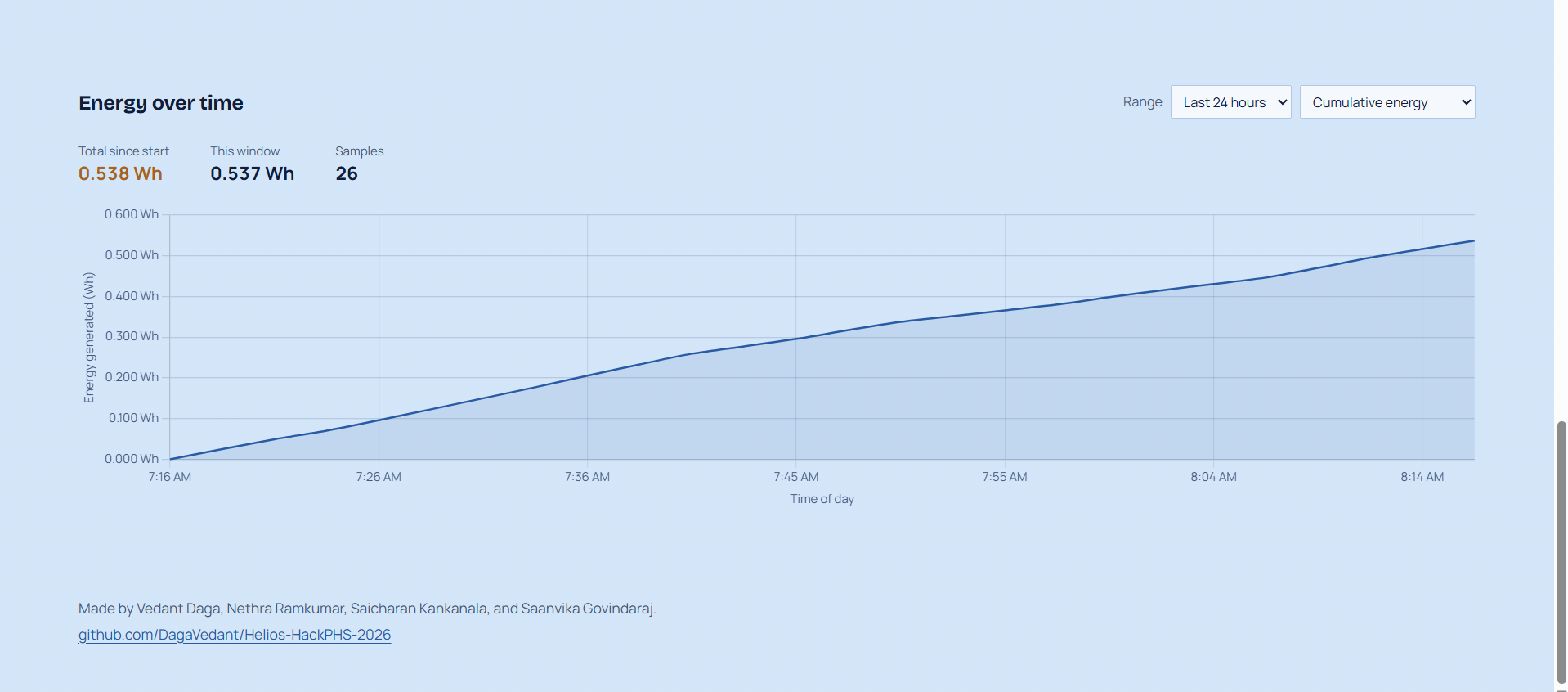
a chart showing the solar energy generated in Wh (watt-hours)
-
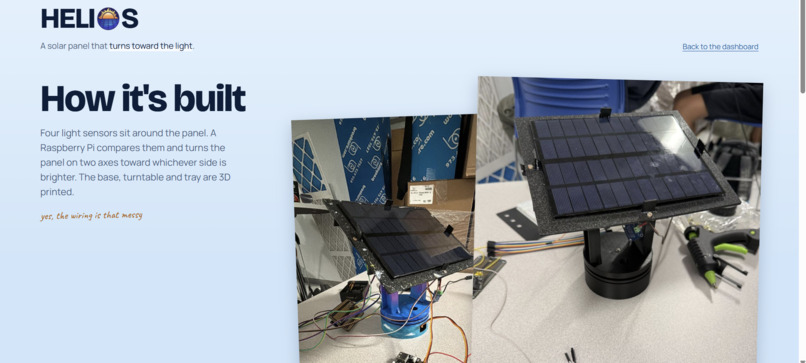
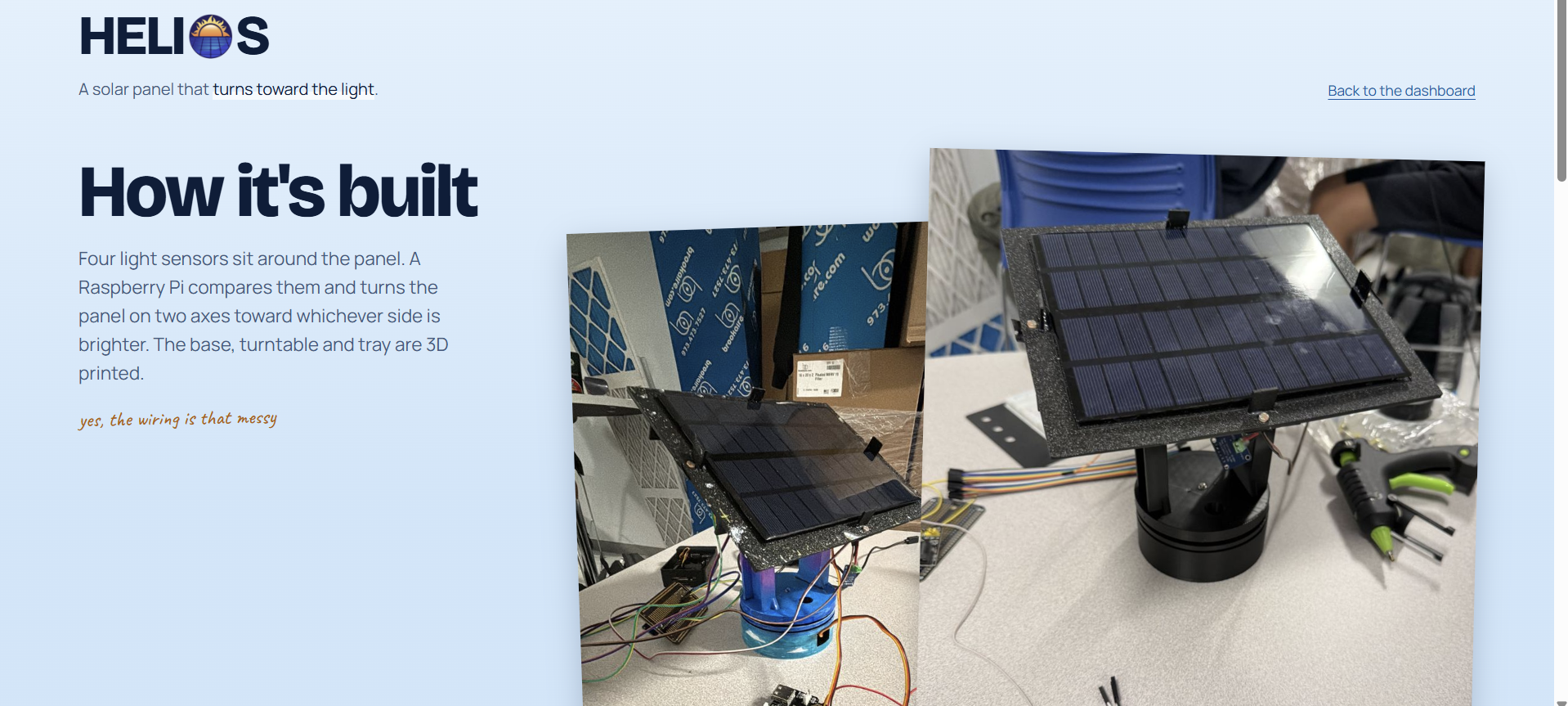
a group of pictures on our "how it's built" page showing the progression of Helios
-
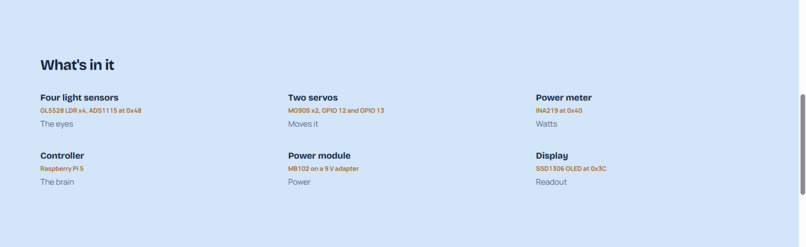
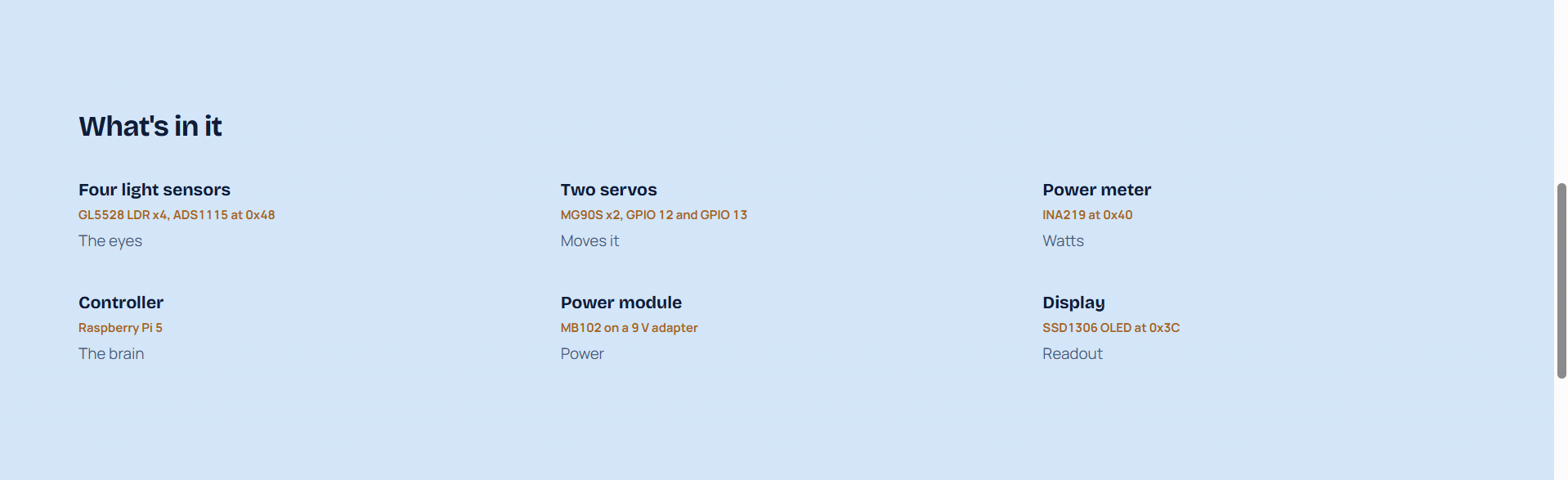
a list of the electrical components used for the solar panel and their purpose
-
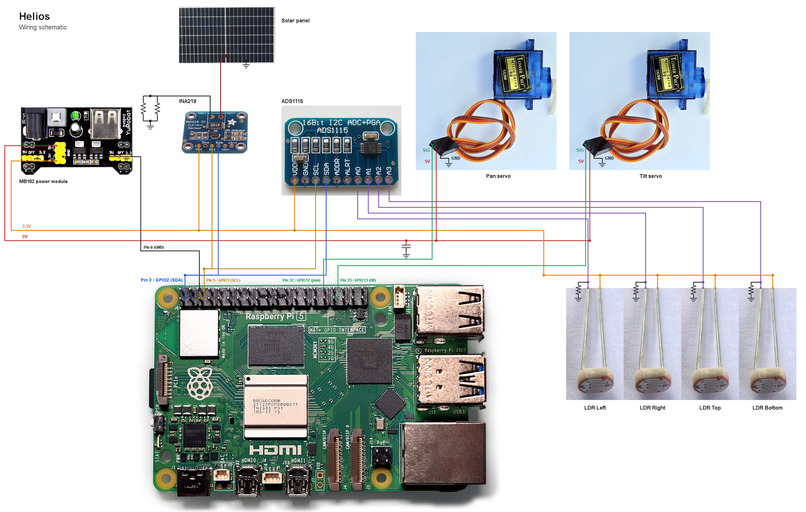
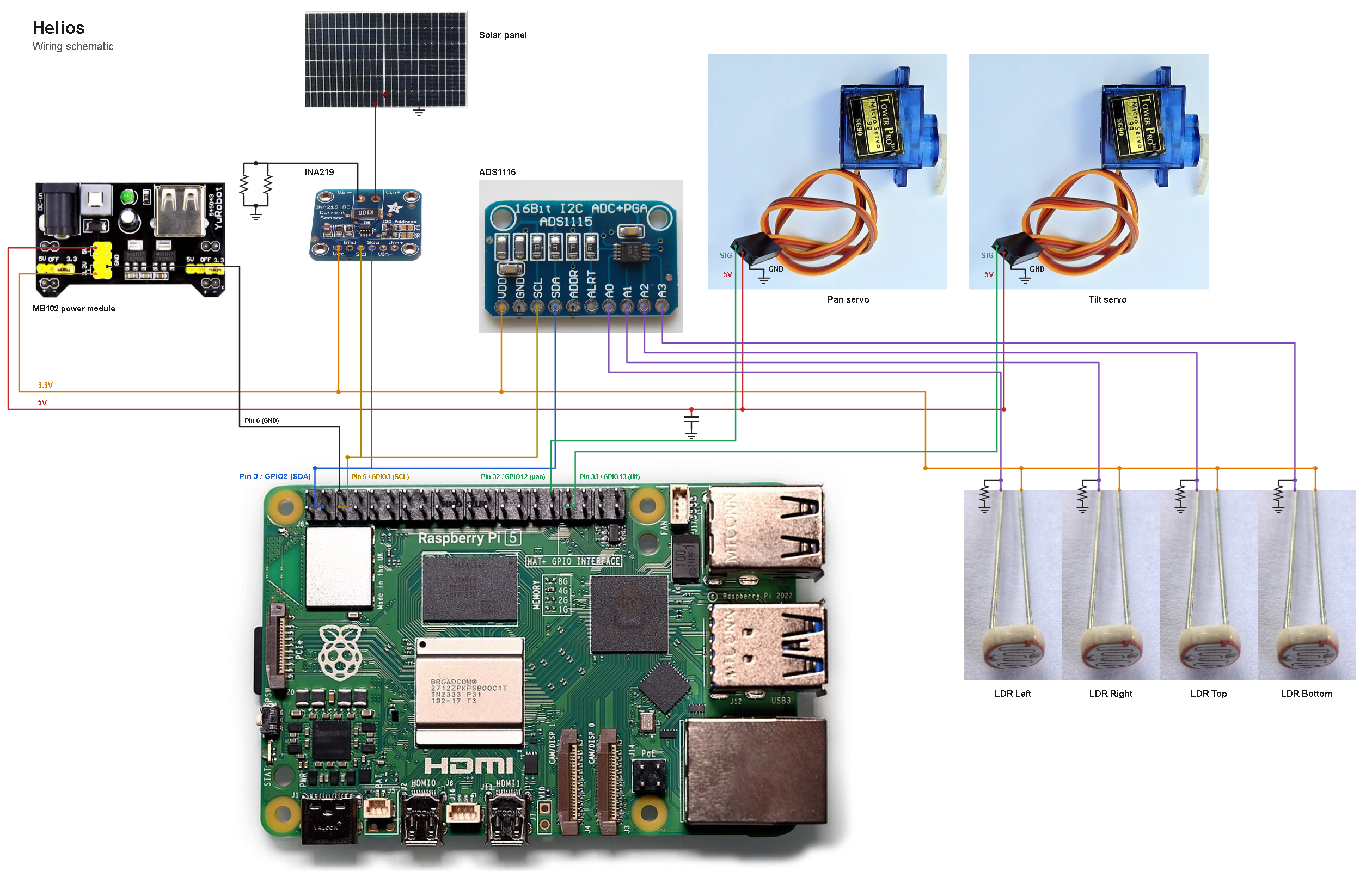
a schematic of the circuit used to power the tracking panel
Inspiration
As people become more environmentally conscious, we see more Teslas on the road and solar panels on rooftops. Even on our way to this hackathon, we started thinking about how we could make these sustainable technologies even more efficient. Looking at Tesla’s solar production graphs, we noticed how energy generation rises throughout the morning, peaks around midday, and then falls as the sun moves across the sky. We had previously worked on a school solar cooker project, where we used a servo-powered mechanism to rotate the cooker as the sun’s position changed. This got us wondering if we could capture more solar energy if panels adjusted their position to follow the sun, and we realized we could apply that same concept to the solar panels. That connection inspired us to create Helios, a solar tracking system designed to follow the sun and help panels generate more power from the sunlight available.
What it does
Helios is a miniature solar tracking system that adjusts a solar panel’s position to follow the sun and improve its energy output. Using LDRs (light-dependent resistors) and a Raspberry Pi 5 microcontroller, the system detects differences in the light hitting different areas of the assembly and moves the panel with two servos, one for the x-axis and one for the y-axis, to find the brightest direction. We measure the panel’s electrical output to see whether the adjustments actually help it generate more power.
How we built it
We built Helios by combining mechanical design, electronics, and programming. We adapted our existing project materials and repurposed parts from a solar cooker to create our tracking mechanism. We then worked on integrating the panel, light sensors, servos, and control electronics so that the system could respond to changes in light. Given a difference in the light reading between each of the sensors, the motors will make micro adjustments to align it to the Sun (or related light source). The adjustment is guided by a Raspberry Pi 5. Finally, we focused on demonstrating that the panel’s electrical output changes as the tracker adjusts its position.
Challenges we ran into
One of our biggest challenges was that we did not have access to a 3D printer when we needed one. Originally, when we had been discussing ideas, we were brainstorming under the impression that we would have a 3D printer. Unfortunately, those became unavailable. Instead of giving up on our original idea, we adapted an existing school project and repurposed parts from the solar cooker and garden lamp we found in our part bin. Because these parts hadn’t been designed for our project, we struggled to get the different components to fit together properly. We had to improvise with the tools available, including carefully sanding parts using a screwdriver, to make the assembly work, rather than sandpaper. During the hackathon, we faced some more challenges. For one, working in an environment with a lot of preexisting artificial light created a problem as it interfered with the testing of our solar panel’s movement. We worked around this by using a large blanket to mostly block out ceiling lights directed at the solar panel, as seen in our video. Another setback we faced occurred at around 8:30, right after dinner. A monitor we were using fell off the table, and our product came crashing down with it as they were connected. While we did face many challenges, the setbacks taught us that engineering often requires adapting your original plan rather than expecting everything to work perfectly the first time.
Accomplishments that we're proud of
We are especially proud that we repurposed existing 3D-printed parts and materials from a solar cooker instead of relying on an entirely new set of components. We had to rethink our original design and work together to make the available parts fit our needs. We are also proud that we kept working through unexpected limitations and turned an initial concept into a physical prototype. Helios represents our ability to adapt, collaborate, and apply engineering principles to a real-world sustainability problem.
What we learned
We learned that building a prototype is very different from planning one on paper. Even when an idea seems straightforward, component compatibility, available tools, and mechanical fit can create unexpected problems. We also learned the value of repurposing materials and adjusting our approach when our original plan is not possible. Most importantly, we learned that a successful engineering solution is not always the one that follows the original design exactly. It is the one that solves the problem with the resources available.
What's next for Helios
Our next goal is to scale Helios from a small prototype to a system capable of tracking a full-sized solar panel, and for commercial use. We would improve the mounting structure, test the mechanism under different weather and lighting conditions, and measure how much additional energy tracking produces compared with a stationary panel. In the long term, we would explore commercial applications for balconies and other spaces where people have limited room for renewable energy systems. We want to help make solar power more practical and efficient without requiring users to install a larger panel.



Log in or sign up for Devpost to join the conversation.