
Inspiration
The idea behind Solace comes from a very personal experience. I went through one of the most difficult periods of my life, where I had no one to talk to. That experience made me realize how isolating loneliness can be and how difficult it is to ask for help. I created Solace for people who feel alone and need someone to listen, offer guidance, or simply remind them that they are not alone. It is not a replacement for professional mental health care, but rather a supportive first step for those who may be scared or hesitant to reach out.
What it does
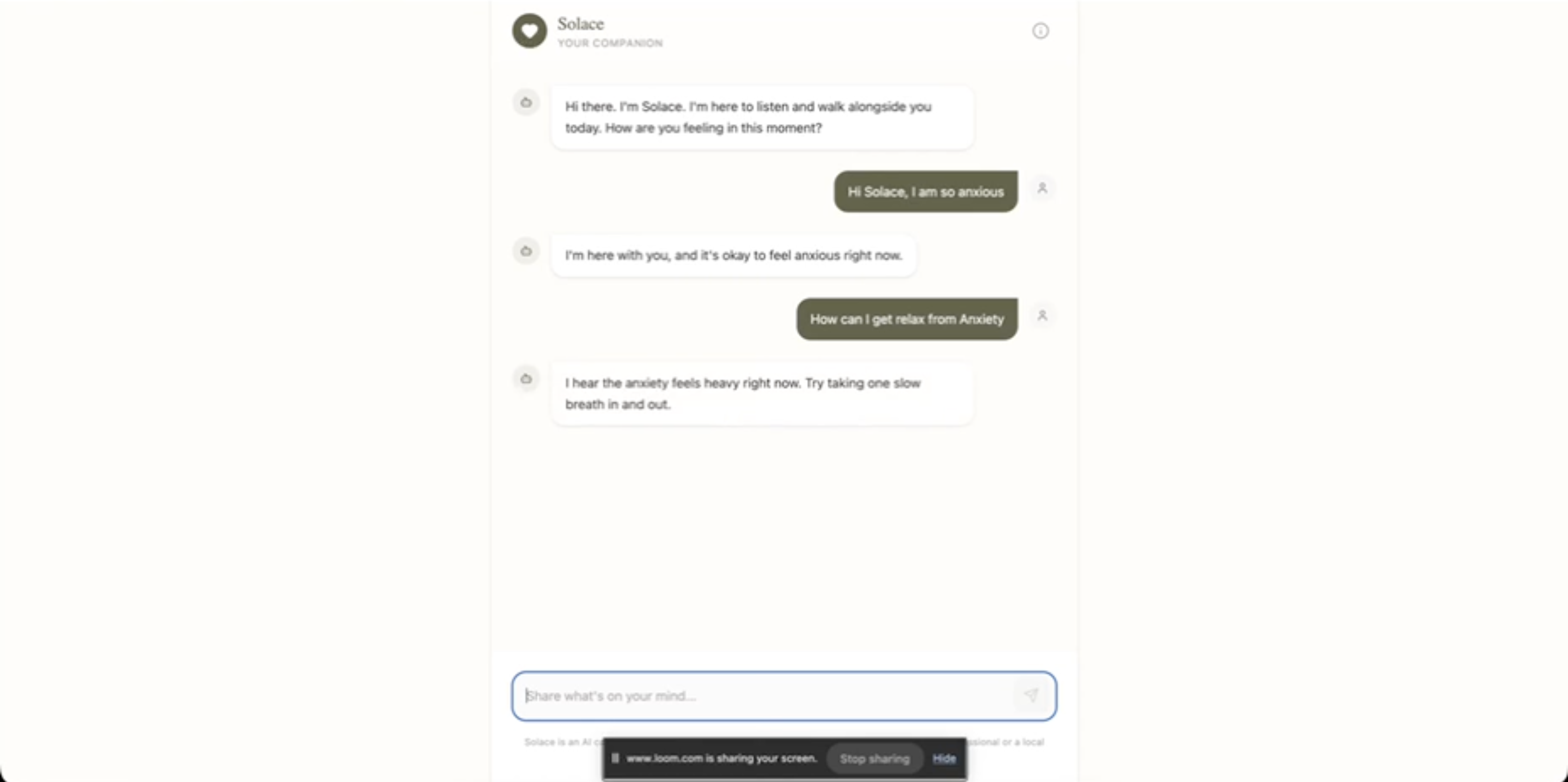
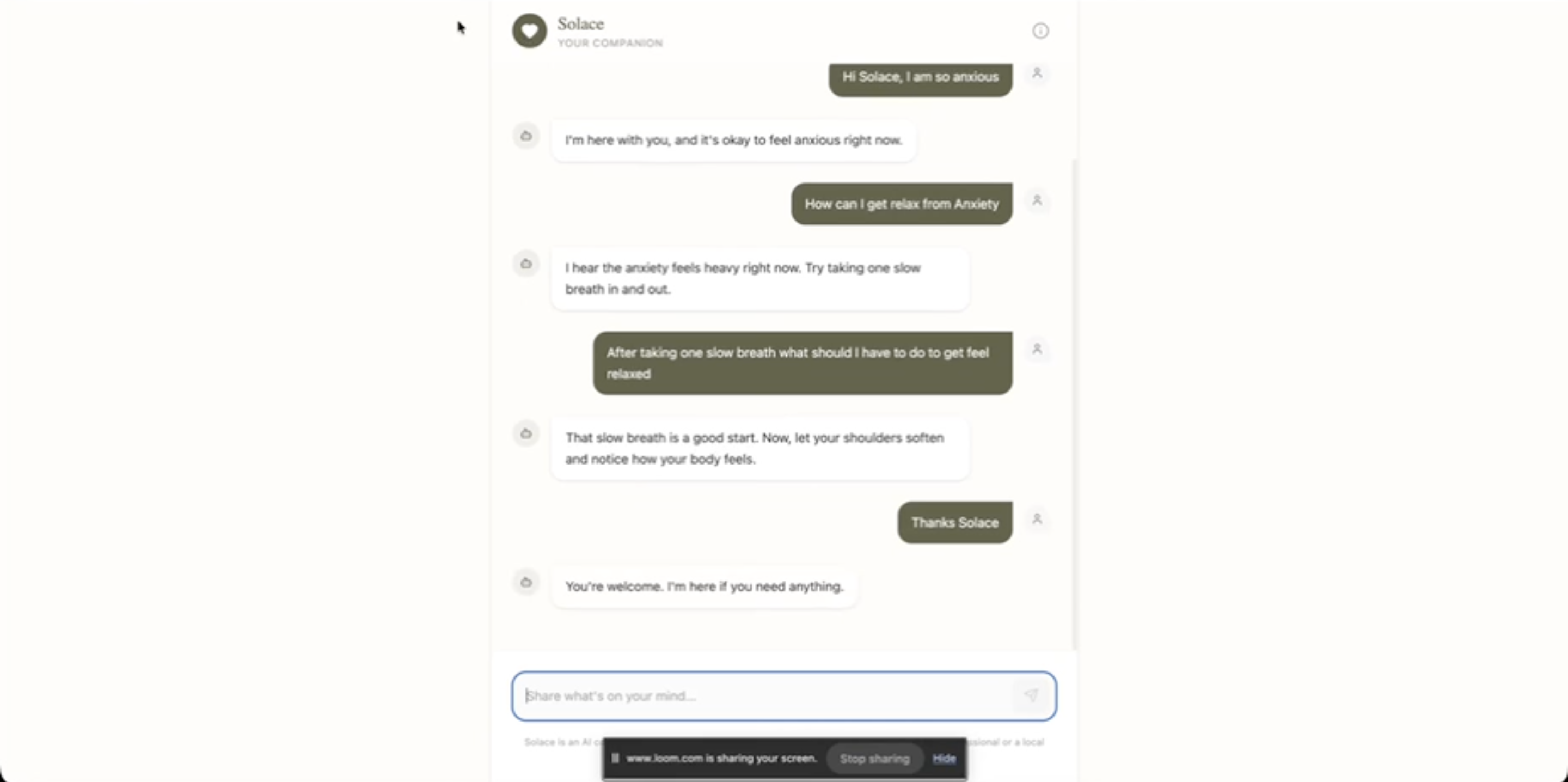
Solace is an AI-powered chatbot designed to provide emotional support through meaningful conversations. It listens to users, offers encouragement and guidance, and promotes healthy coping strategies. Whenever appropriate, it encourages users to seek support from trusted people or mental health professionals.
How I built it
I built Solace using JavaScript, along with HTML and CSS, to create an interactive web-based chatbot. I focused on designing a simple and accessible interface that allows users to have supportive conversations in a comfortable environment. The chatbot was carefully programmed to provide empathetic and responsible responses while avoiding misleading or unreliable information. Throughout development, I continuously tested and refined the conversation flow to make interactions feel as natural and supportive as possible.
Challenges I ran into
One of the biggest challenges was testing the chatbot repeatedly. I wanted to ensure it would not provide answers it was unsure about or generate unnecessary information. This required extensive debugging, testing different scenarios, and continuously refining the response logic.
Accomplishments that I'm proud of
I am proud of creating a chatbot that approaches conversations with empathy and responsibility. I successfully built a system that prioritises user well-being, avoids unreliable responses, and encourages people to take the first step toward seeking help when they need it.
What I learned
This project strengthened my JavaScript programming skills and taught me the importance of testing, debugging, and building software responsibly. I also learned how important it is to design technology with empathy, ensuring that every response is thoughtful, supportive, and encourages users to seek help when needed. Most importantly, I discovered that even a simple conversation can make someone feel heard and supported.
What's next for Solace
In the future, I hope to expand Solace by making conversations more natural, adding personalised support features, improving its ability to understand emotions, and integrating it with additional resources that can guide users toward professional help when needed.
