-
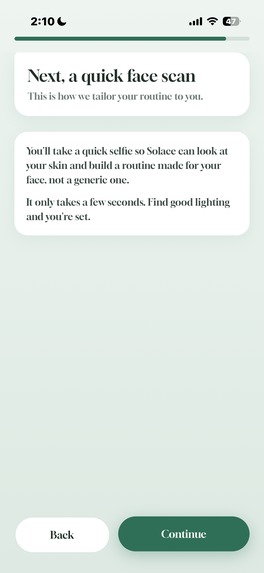
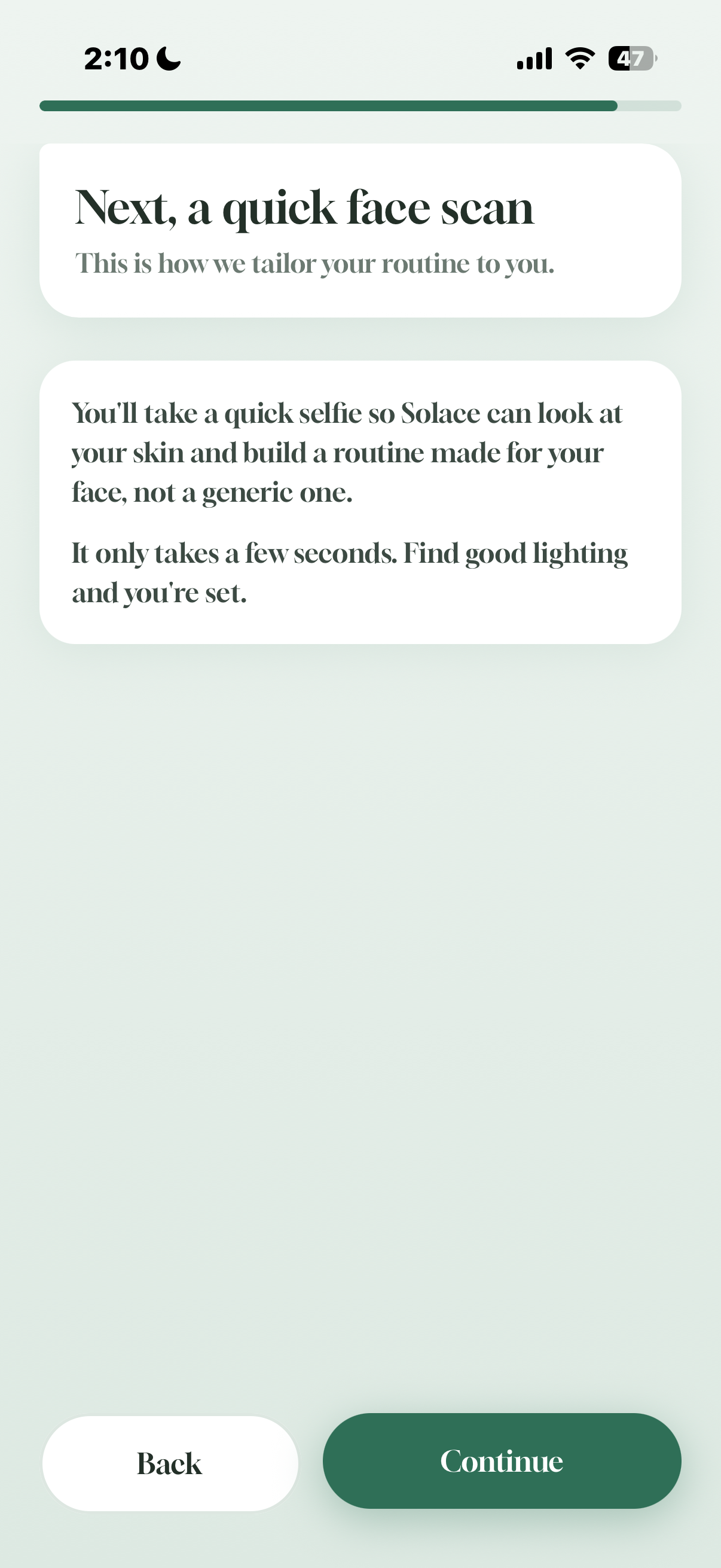
Getting ready for the face scan and accepting the terms
-
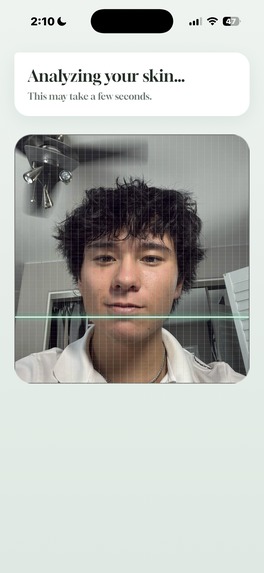
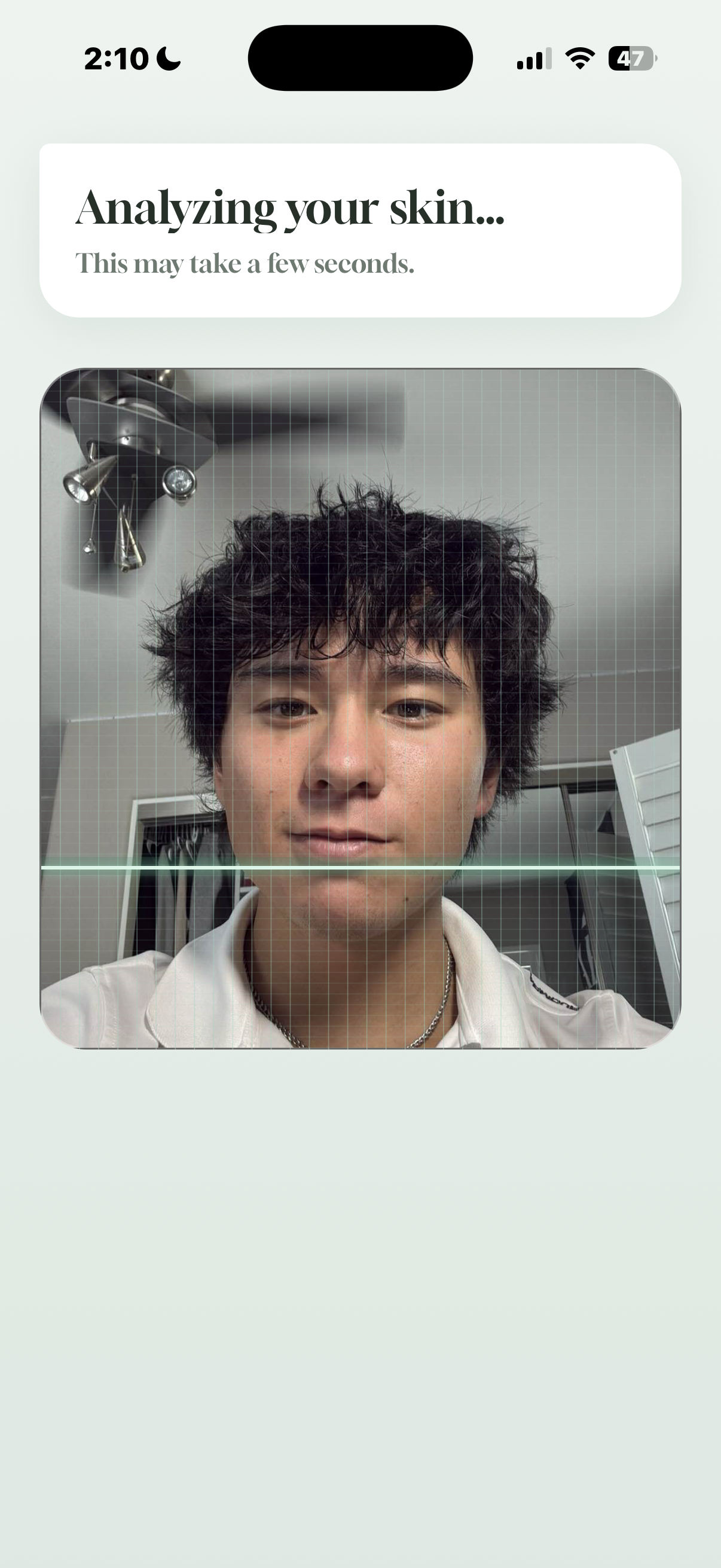
The user's face scan
-
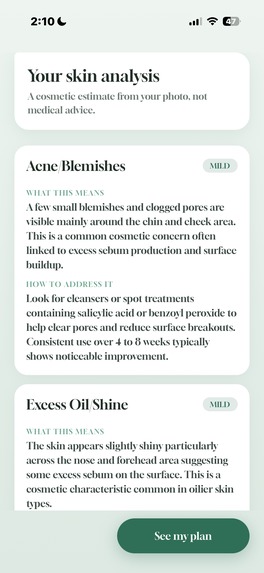
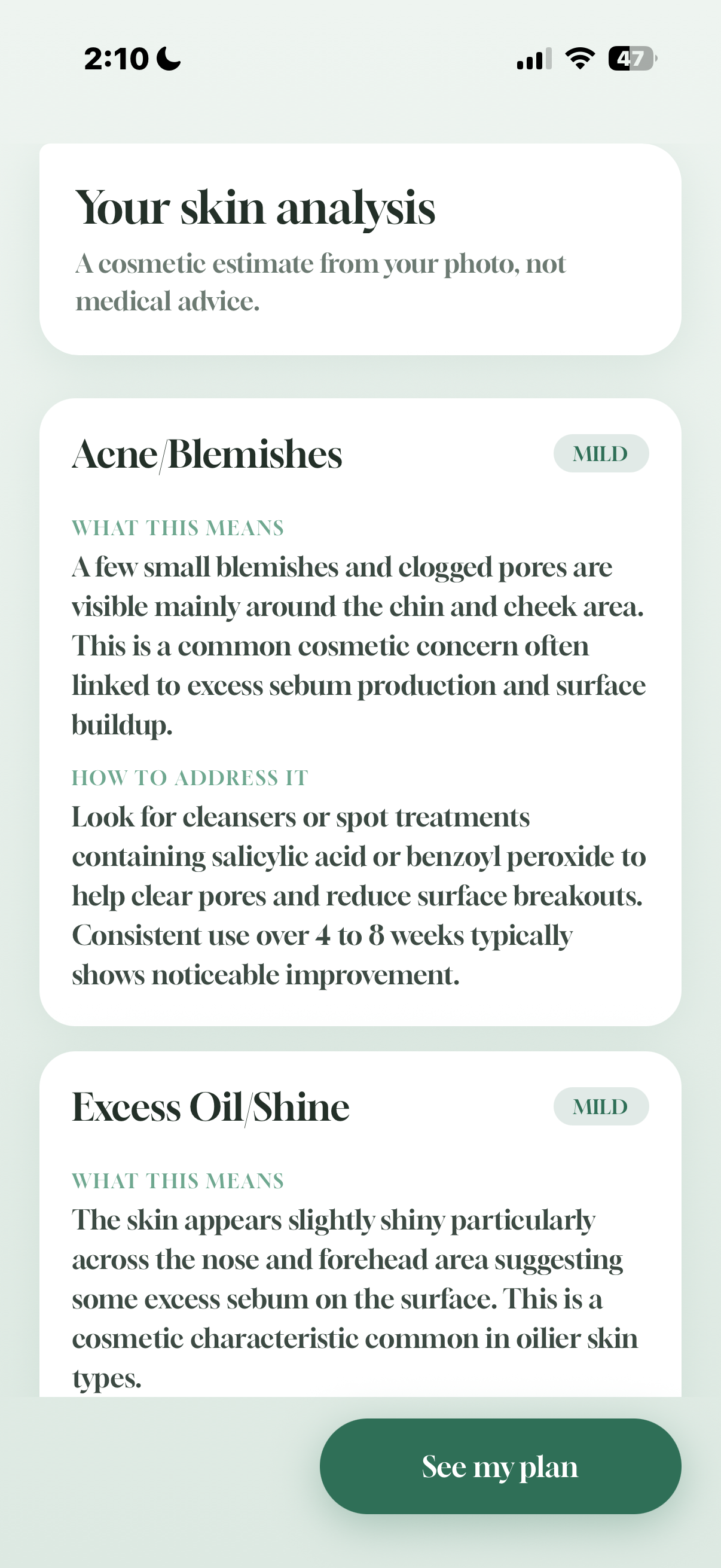
Showing the review of the face scan
-
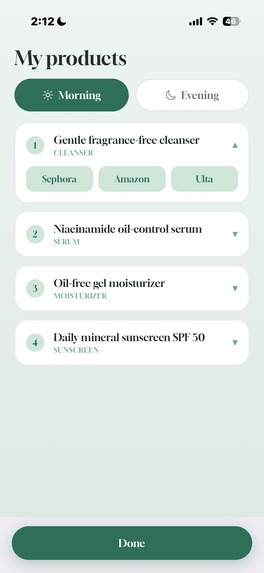
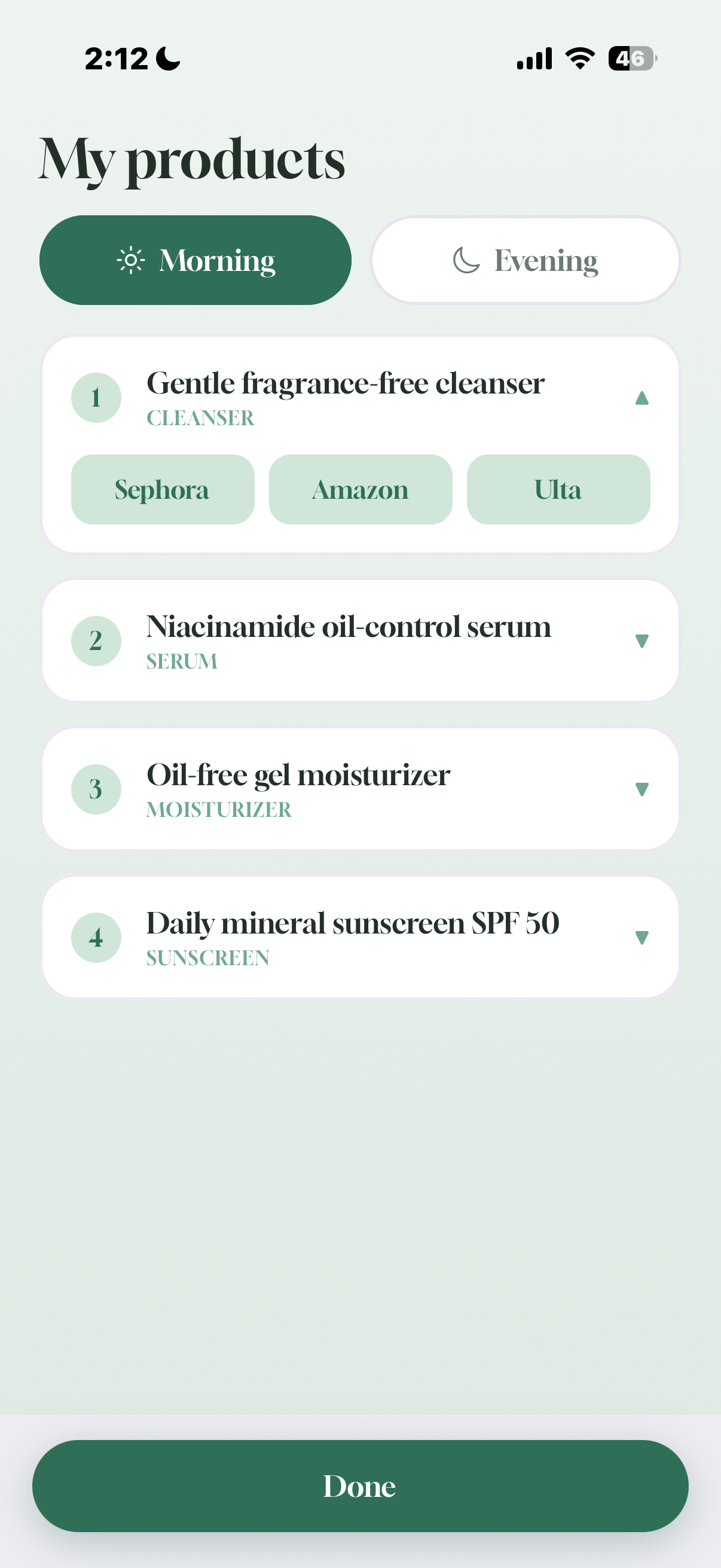
The users recommended products to buy with product links.
-
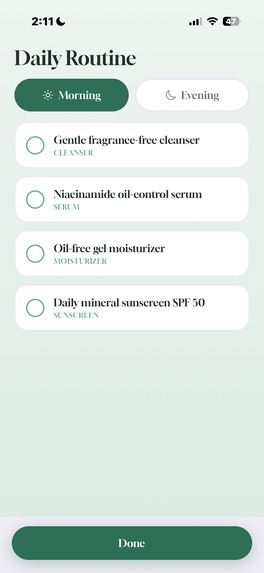
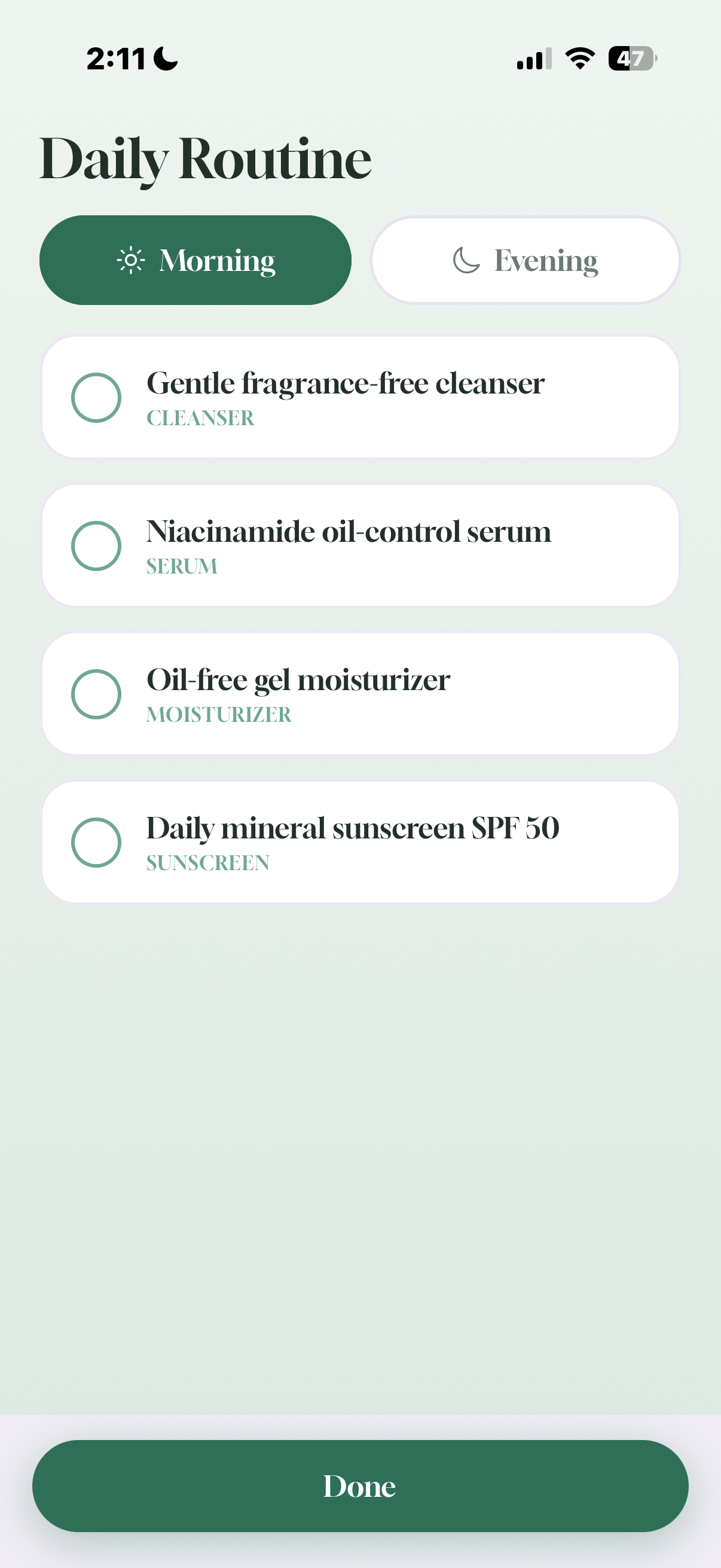
The user's morning routine checklist
-
Inspiration
I was a tri-sport athlete in high school with acne who was sweaty every day and breaking out every day. For years, my routine was a graveyard of half-used bottles. I'd buy whatever was advertised on social media by a famous influencer, use it for a week, and then give up when nothing changed. The main problem I found was not the actual product, but the fact that it wasn't built specifically for me and my skin. There was no data, no skin review, and no way to know what I actually needed. That's the problem that every guy has: there are roughly 219 million young men worldwide wasting their money on skincare products simply because they're advertised by popular people on the internet. They need something that's built specifically for their skin. I built Solace because I was tired of guessing and because nobody was customizing my products the way I needed it to be.
What it does
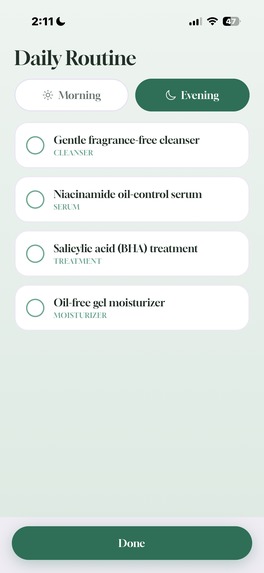
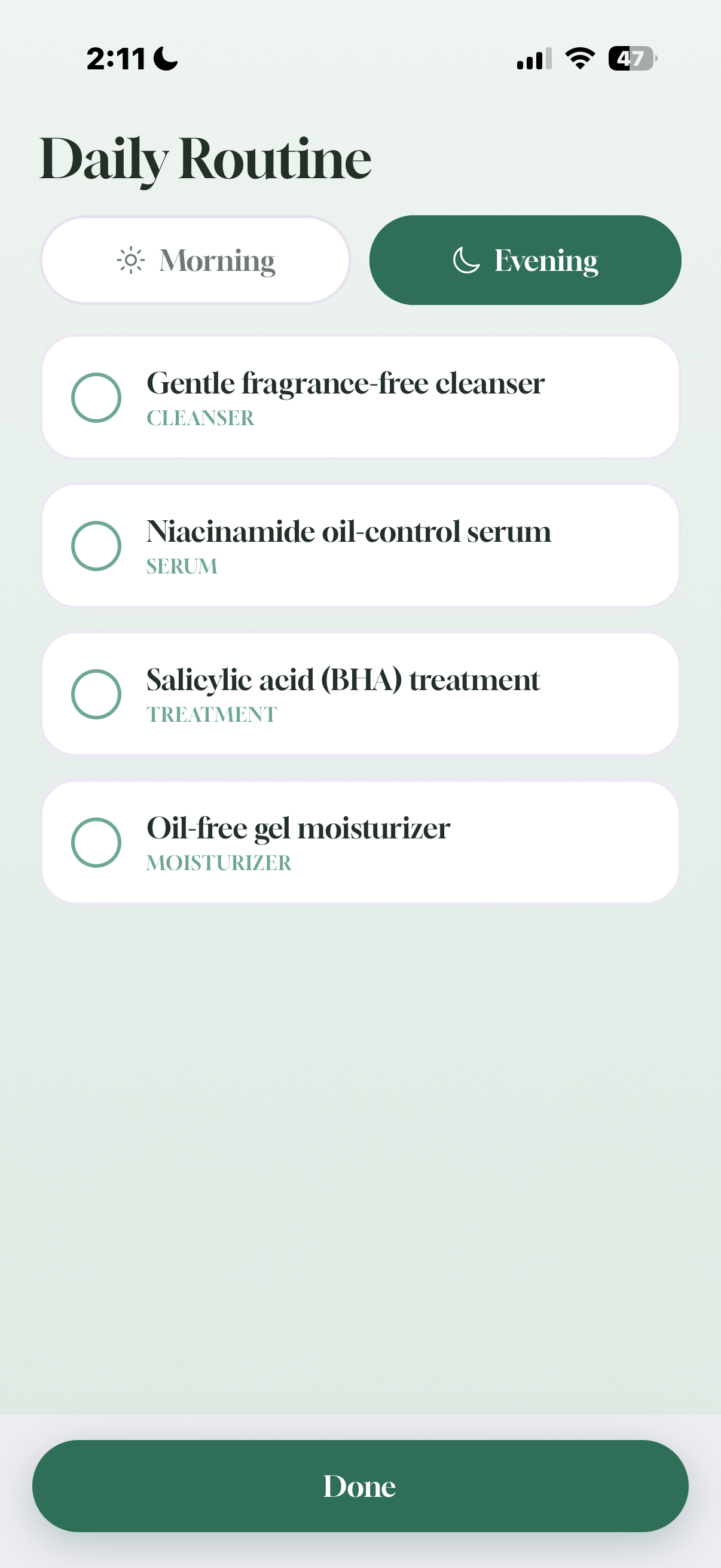
Solace scans your skin and gives you a review on it, then builds you a custom routine based off the review. For the scan, you take a selfie in good lighting. The scan reads your face, analyzes visible characteristics of your skin tone, texture, areas of oiliness, dryness, and other aspects of your skin. It combines that with your onboarding answers from the questionnaire you filled out before about your environment, goals, and any personal conditions. It generates you a custom routine of morning and evening checklists with recommendations for products based off your skin, so you know exactly what to buy. There are bi-weekly check-in scans to make sure you're staying on track and also options to update your skincare routine. The most important part about us is that we are product agnostic. We do not sell the bottles, and we do not take any commission off of affiliate links, so there is no commercial reason to recommend anything unless it actually fits the user's skin. Solace is solely a personalization tool, and we simply provide advice based off of your current position and public information to make sure we get you the best products.
How we built it
For the app, I use Claude to turn my 15 pages of documents and templates for the app that I typed out myself into code that I then paste into Visual Studio. After that, I shipped it into the App Store using Supabase for backend authentication and storage, Postgres for user profiles, scan history, and generated routines, and Supabase auth for accounts and storage for scanned images. For skin analysis, I used an AI Vision API to read the selfie and return a structured analysis recommendation, which is merged with the user's onboarding answers before the routine is generated.
Challenges we ran into
It was hard getting the AI to give the same answer twice. A vision model will automatically return a different read of the same face on two consecutive runs. It was also hard to produce a stable, structured, trustworthy analysis because I had to constrain the output format of the results and make sure the models read the onboarding data and not pull any information from anywhere else. The photo was also very important to make sure that got right and fix all the bugs with lighting angles and different dark places that would affect what the model sees. Most of the work went into the capture experience to ensure a smooth user experience and a simple yet effective scan. I had to also make sure we had specific disclaimers in terms of not getting on the wrong side of the medical line and making sure there were no ethical concerns based off of the review that we were providing.
Accomplishments that we're proud of
Solace launched on the App Store on July 19th during this hackathon, so it is not just a prototype or a demo build. It is a live product, and we already have eight paying customers and around $160 in revenue with zero ad spend and no launch push, coming solely from organic content. Everything was built by me as well, along with the social media presence on the various different apps and creating organic content to post.
What we learned
What I learned is that it's better to just ship a product fast and worry about fixing all the little user experience designs, because the information and feedback that I'll get from users is actually what's going to drive the most important changes that I need to make. Also, AI is only good as the constraints and the prompts and instructions it is given. It cannot just simply do exactly what you say on the first prompt. It needs to be fully and deeply customized. Another thing that I learned is that once you have a working app, that doesn't mean you're going to make money. Distribution and marketing is the most important thing, and you need to know how to market, film, edit, script, and make organic content. Being an app developer is only half of the skill set required.
What's next for Solace
Solace's future goals are just to focus on distribution and marketing through organic short-form content to split test different formats of ads and then start paid ads. We want to also focus more on routines that can more naturally adapt to the climate season and how a user's skin actually responds over time, and make the face scans and check-ins as accurate as possible as time goes on. By the end of Q1 of 2027, we want to have our 8 users grow to 8,000 users.
Built With
- ai
- appstore
- claude
- ios
- rest-api
- supabase
- visual-studio


Log in or sign up for Devpost to join the conversation.