-
-
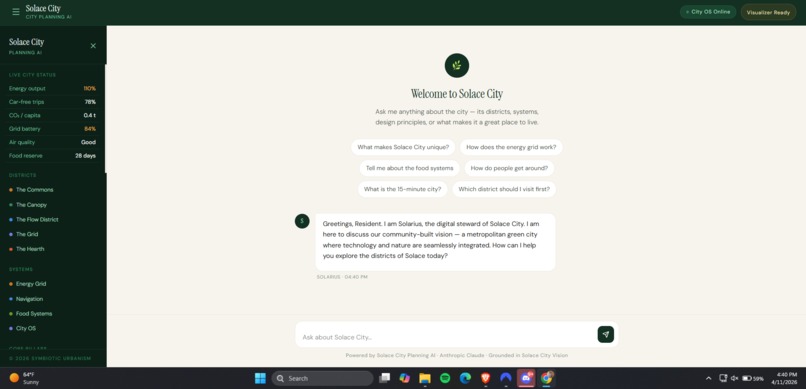
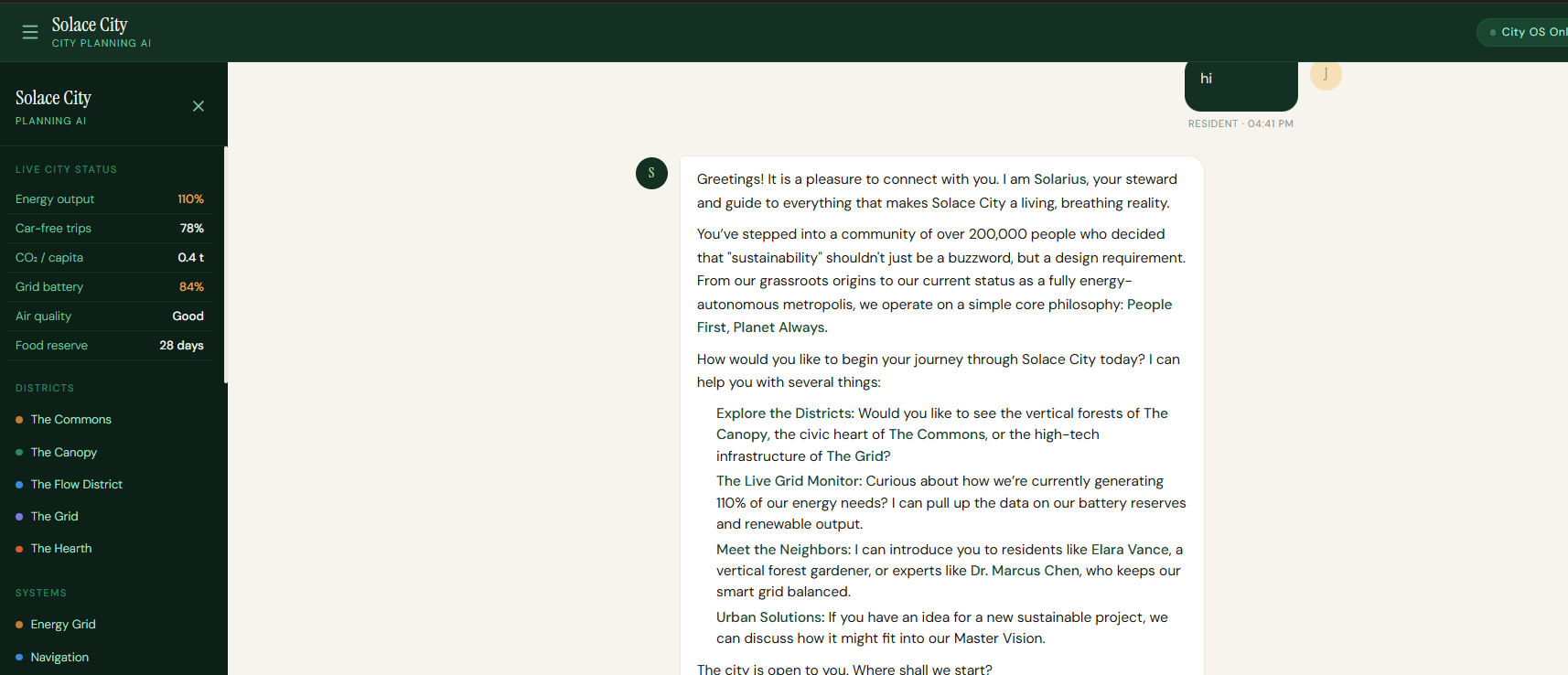
Opening interaction with chat
-
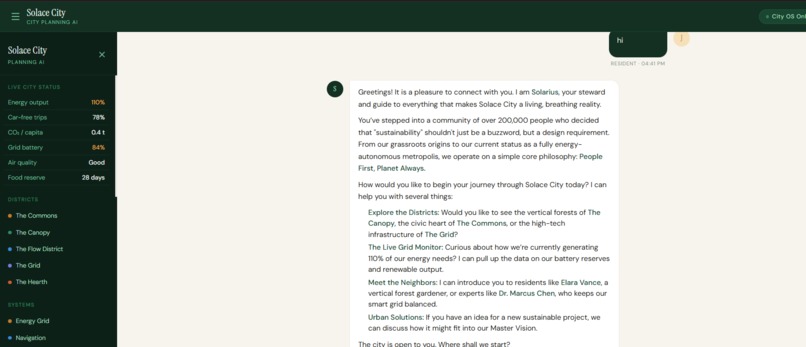
Responses`
-
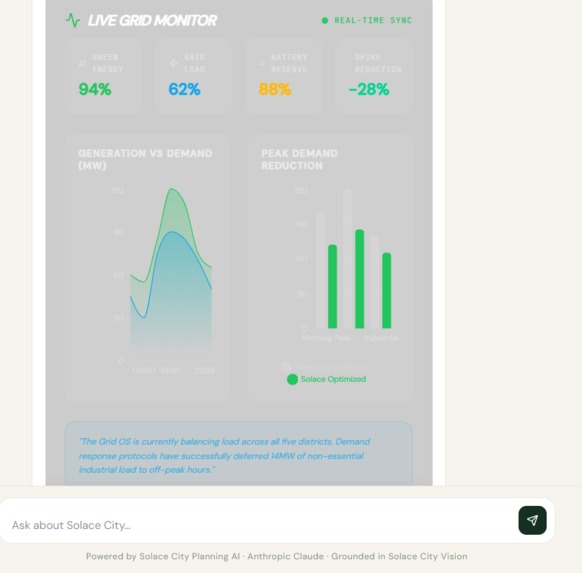
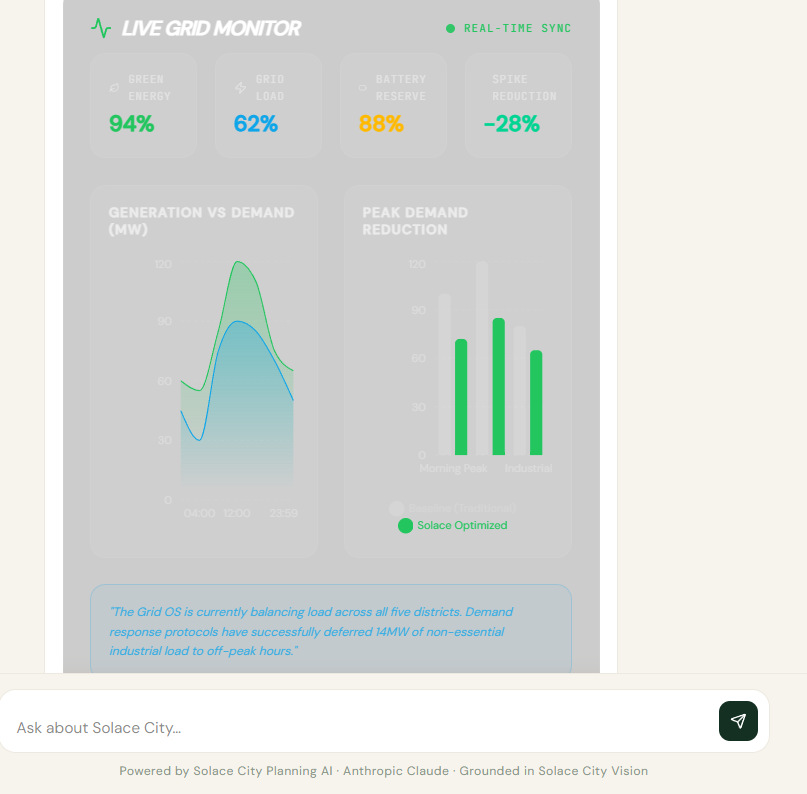
Interactive data dashbaord
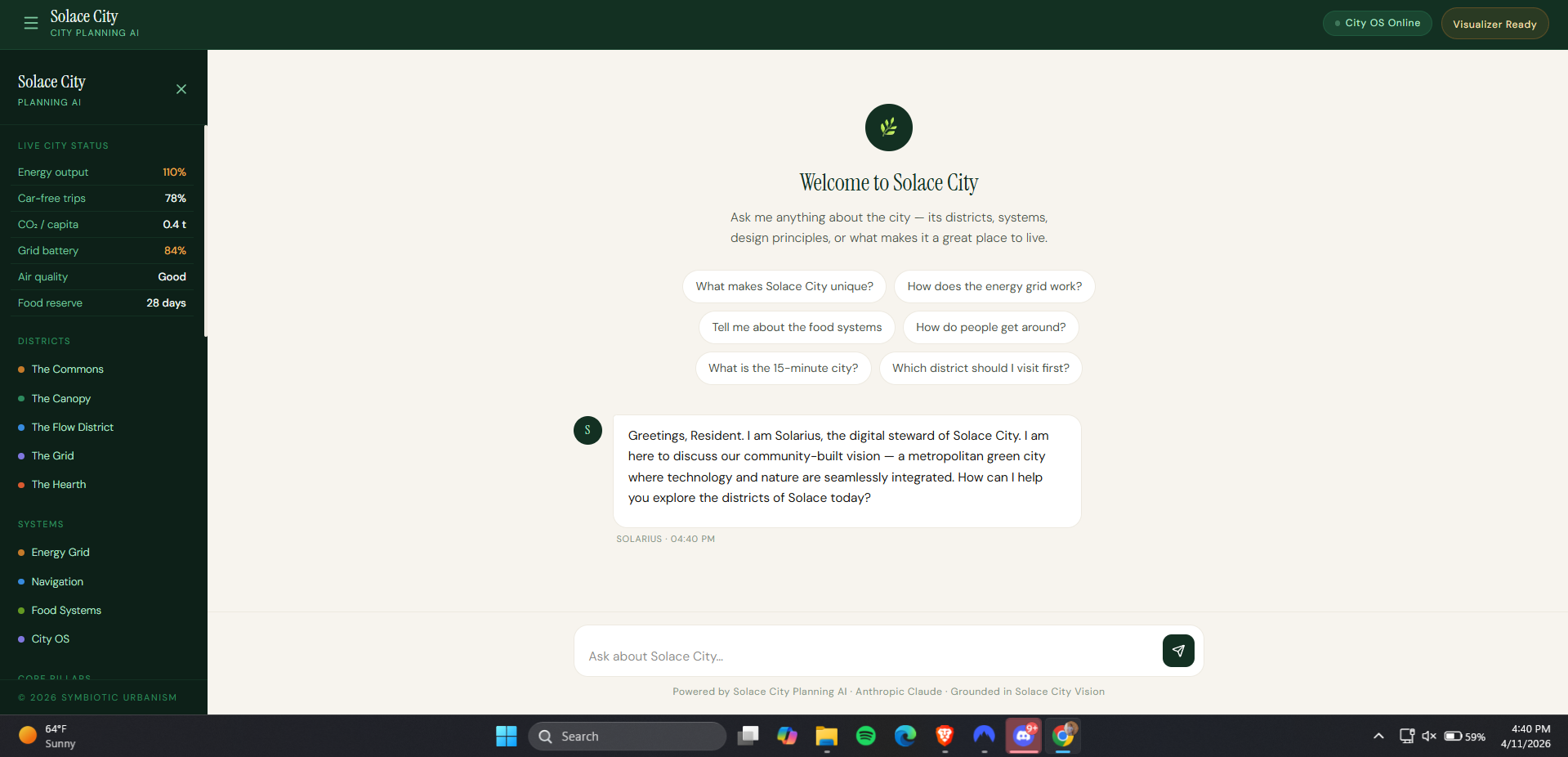
Inspiration
Solace City Bot Promoter was inspired by the idea that city planning information should be easier to explore, understand, and imagine. Too often, plans for smarter, more sustainable metros stay trapped in long documents, disconnected systems, or as ideas people talk about but never really see brought to life. I wanted to build something that could show how AI and RAG can turn city data, planning documents, and policy information into an interactive experience that helps people visualize what a better future city could look like. I was also inspired by the idea that, in the future, a bot backed by a well-defined RAG system could advocate for your ideas on your behalf when you cannot always be present or responsive, such as when engaging with a journalist, community member, or political representative. My goal was to create something that not only answered questions, but also helped inspire others to see that these kinds of systems are possible and worth building.
What it does
Solace City Bot Promoter is a city planning AI chatbot concept powered by a RAG pipeline. It is designed to retrieve information from planning documents, city data, and related materials so users can ask natural language questions and get grounded, conversational insights. Instead of forcing someone to dig through dense reports or static dashboards, the bot helps surface useful answers about city planning, infrastructure, sustainability, and future development in a more accessible way. The broader purpose is not just to inform, but to promote a vision of a smarter, more connected, and more human-centered city.
How we built it
This project was built under heavy time pressure as essentially a one-person effort with just under four hours to put everything together. To move quickly, I used multiple AI models as part of the workflow, including ChatGPT, Claude, and Gemini, to help coordinate ideation, writing, structuring, and development support. That let me act like a one-man team with multiple assistants, using each model where it could best help accelerate progress. The project centered around designing the master document and retrieval structure for a RAG-based chatbot that could connect city planning information into a conversational system. Because of the limited time, the focus was on building a strong concept, a clear structure, and a compelling direction for how the bot would work.
Challenges we ran into
The biggest challenge was time. Starting late meant I had to make quick decisions about scope, priorities, and what would be realistic to complete. There were a lot of exciting directions the project could go, including visualizations, sub-agents, and richer data integrations, but with such a short build window, I had to stay focused on the core concept. Another challenge was balancing ambition with clarity. I wanted the idea to feel visionary without becoming vague, and practical without feeling too limited. As a solo builder, I also had to juggle planning, writing, technical thinking, and presentation all at once, which made coordination and time management a major part of the challenge.
Accomplishments that we're proud of
One accomplishment I am especially proud of is being able to turn a broad idea into a structured project in such a short amount of time. Even with limited hours, I was able to shape a clear concept around a RAG-based city planning assistant and give it a strong purpose beyond just being a chatbot. I am also proud of the way I used multiple models together to support the build process, effectively creating a fast-moving workflow as a one-person team. Most importantly, I am proud that the project aims to do more than showcase technology. It tries to communicate a bigger vision of what AI could do for cities and communities if applied in a thoughtful, grounded way.
What we learned
This project reinforced how powerful RAG can be for real-world use cases where context, source grounding, and accessibility matter. I learned that even a strong idea needs a clear story in order to connect with people, especially in a challenge setting where vision matters just as much as technical implementation. I also learned a lot about building under pressure, including how important it is to narrow scope, prioritize the core value of the project, and keep momentum instead of getting stuck trying to perfect every detail. On top of that, using multiple AI models in one workflow showed me how different tools can complement each other and help speed up solo development.
What's next for Solace City Bot Promoter
The next step for Solace City Bot Promoter is to expand it from a strong concept into a more complete and interactive smart-city assistant. That could include integrating richer city planning datasets, adding map-based or visual outputs, and creating specialized sub-agents for things like zoning, sustainability, infrastructure, or resilience planning. I would also want to improve the retrieval pipeline so responses are more transparent, source-grounded, and tailored to different types of users, whether they are residents, planners, or city leaders. Ultimately, the long-term vision is to evolve Solace City Bot Promoter into a tool that not only helps people access planning knowledge, but also helps communities better imagine, discuss, and build the future of their city.

Log in or sign up for Devpost to join the conversation.