Inspiration
Solace AI was inspired by the growing need for accessible mental health support. Many people struggle to express their emotions or can’t easily access therapy due to cost, stigma, or availability. I wanted to create a simple, AI-powered companion that helps users track their feelings, practice calming exercises, and find comfort through empathetic conversations.
What it does
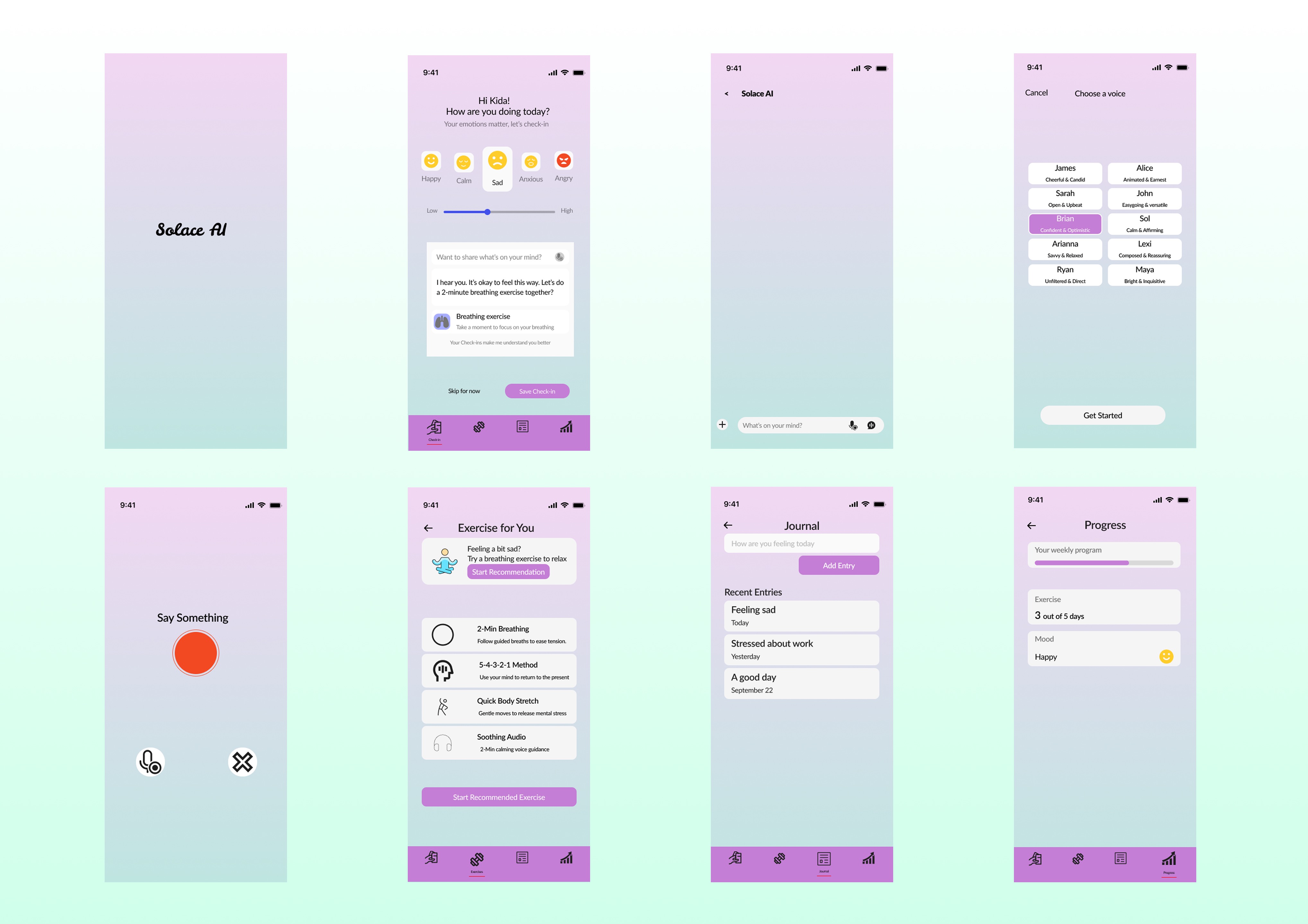
Solace AI helps users check in with their emotions through simple mood tracking, guided exercises, and journaling. It also features an AI-powered chatbot that listens like a therapist, with options for soothing AI voice calls to provide comfort and support anytime.
How we built it
I designed Solace AI entirely in Figma, focusing on clean layouts, responsive screens, and intuitive navigation. I applied auto layout, constraints, and resizing behavior to make the design flexible and accessible across devices.
Challenges we ran into
One major challenge was simplifying the design so it feels supportive without being overwhelming. Balancing accessibility features with a clean interface also required a lot of iteration and testing in Figma.
Accomplishments that we're proud of
I’m proud of creating a design that blends empathy with accessibility, ensuring users can easily express emotions and find comfort. Building a seamless flow from check-ins to exercises and AI therapy calls was a big win.
What we learned
I learned how important it is to design with empathy, focusing on both usability and emotional impact. I also strengthened my Figma skills, especially in using auto layout and constraints to create responsive designs.
What's next for Solace AI
Next, I plan to collaborate with developers to bring the design to life, integrate AI models for deeper emotional understanding, and expand accessibility features so Solace AI can support even more people globally.
Built With
- figma


Log in or sign up for Devpost to join the conversation.