-
-
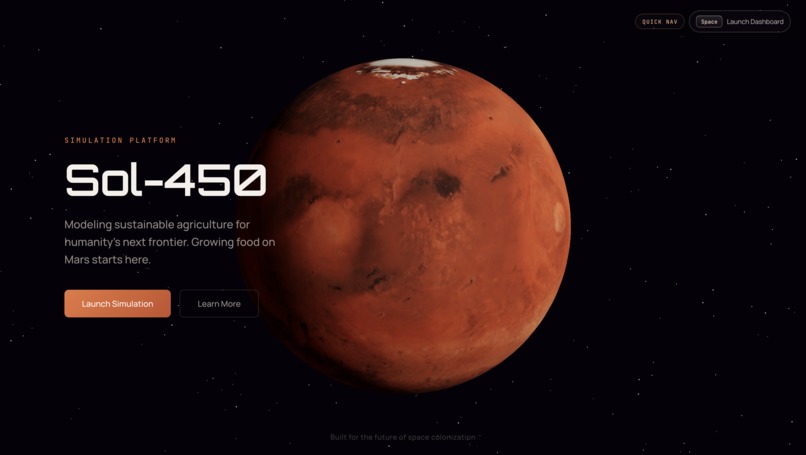
Landing Page
-
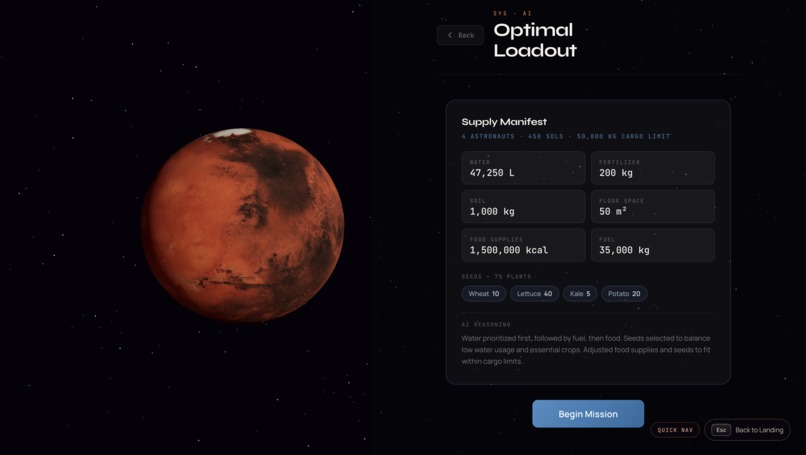
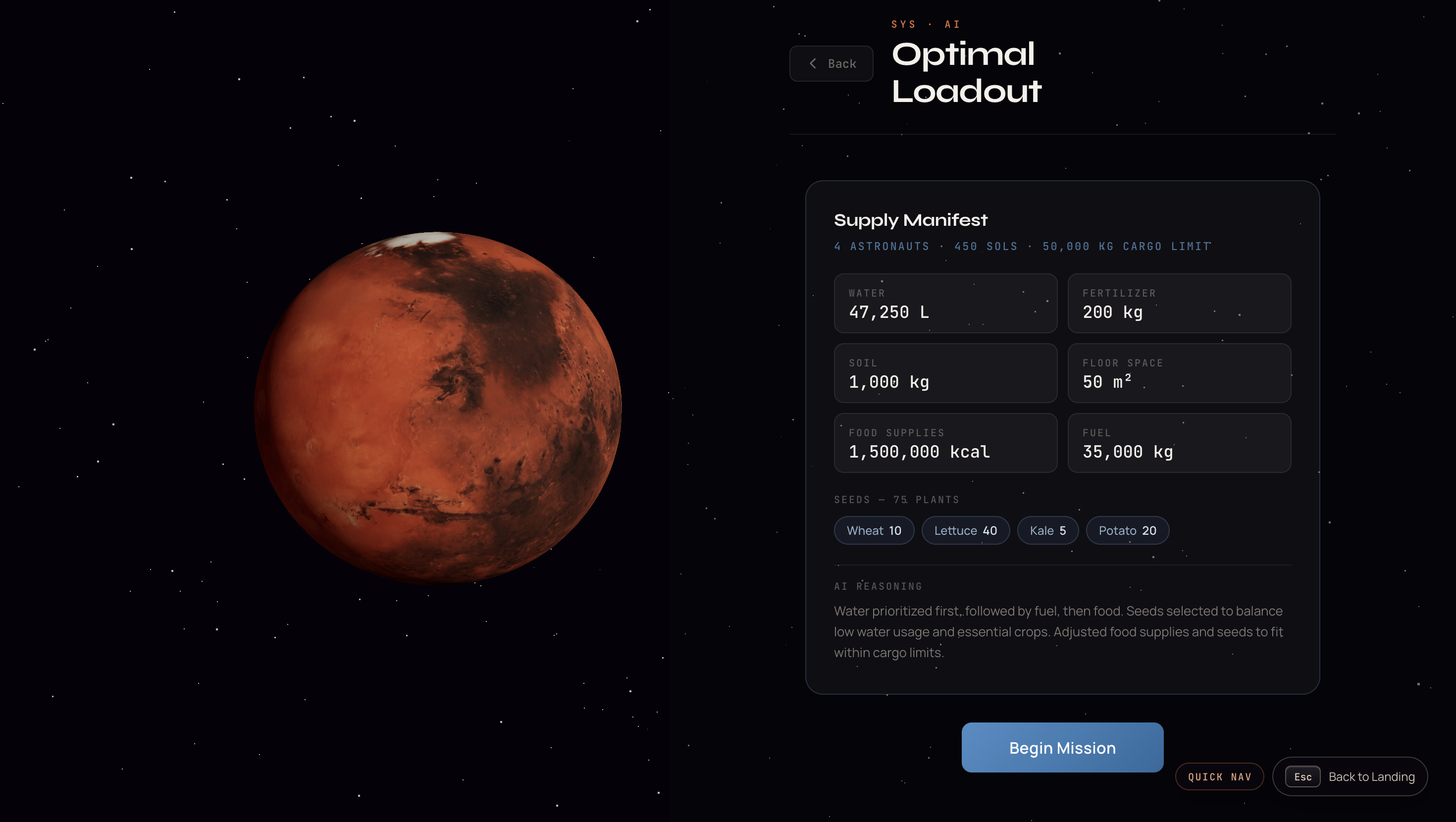
AI optimised setup
-
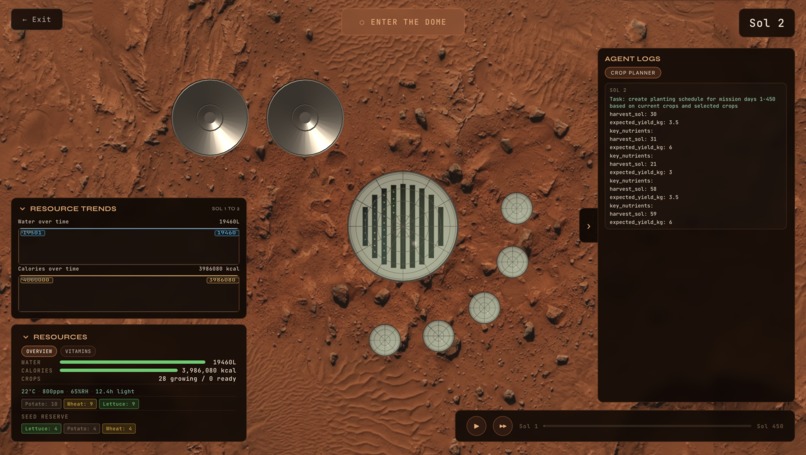
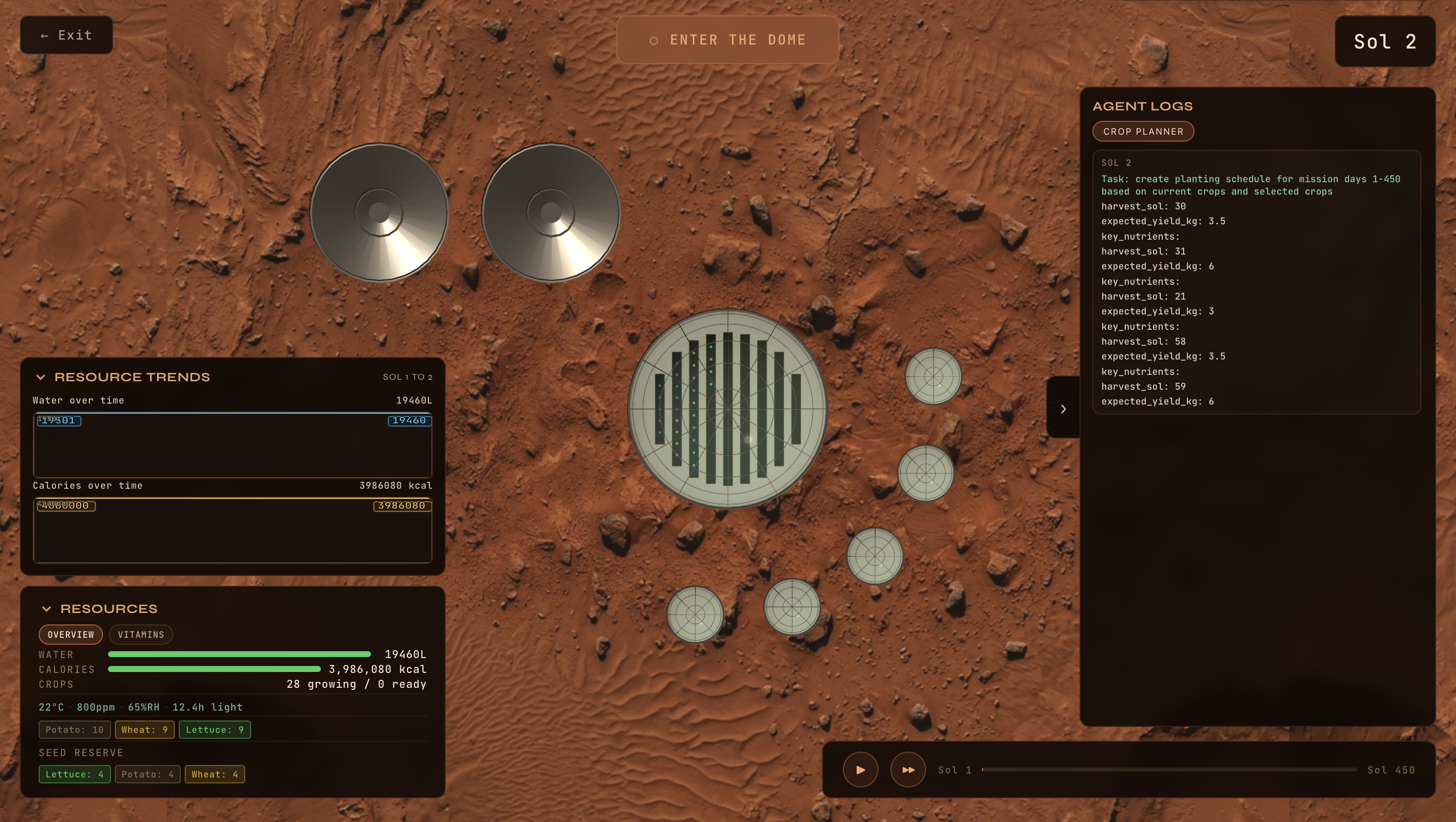
Dashboard
-
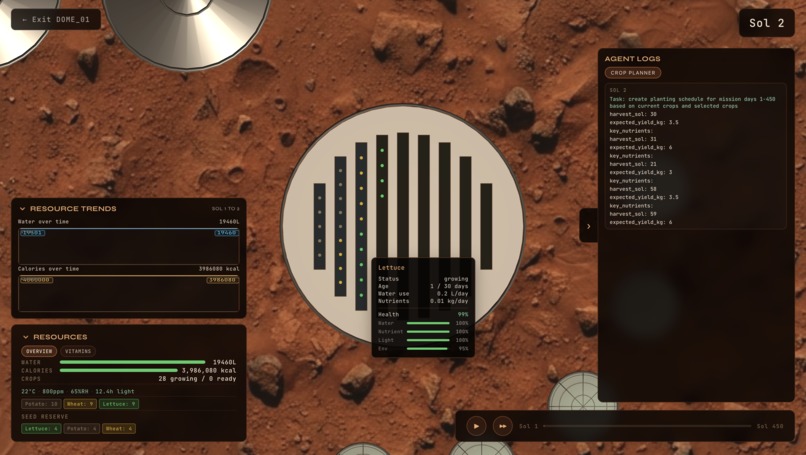
Inside the dome
-
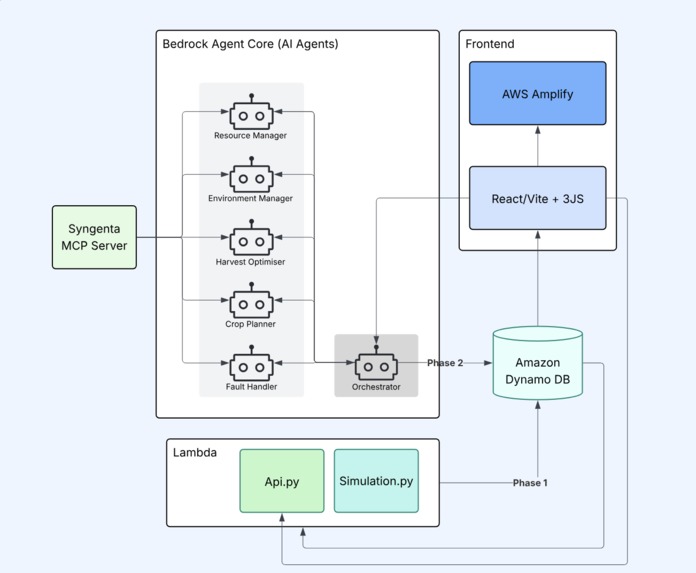
System architecture diagram
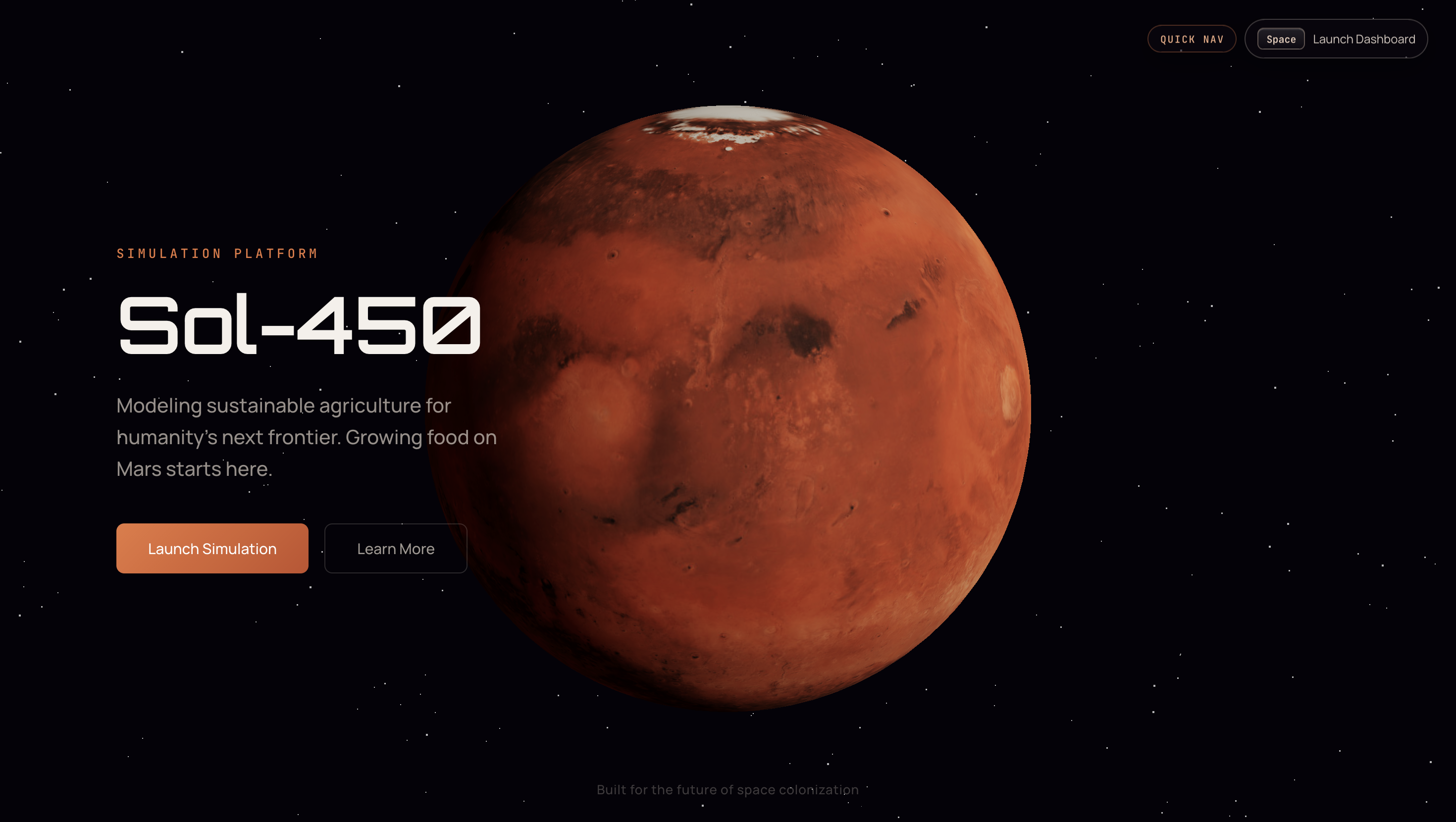
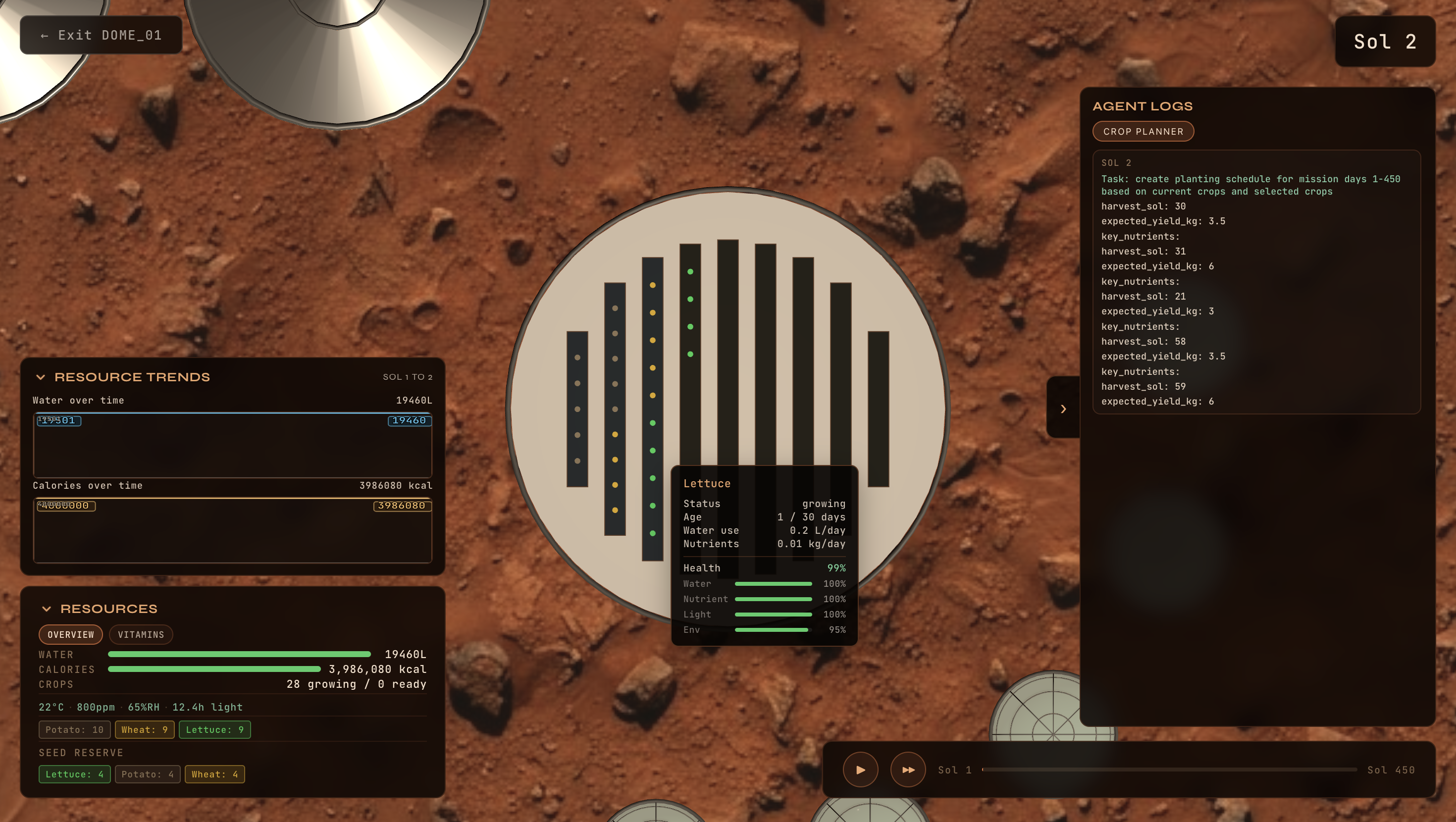
Sol-450 is a web-based simulation for managing crops and resources during a 450-sol mission on Mars. It runs day by day, with a central autonomous AI agent system coordinating five specialised agents to make decisions and handle changing conditions in a Martian greenhouse.
The system models a full mission lifecycle, focusing on sustaining food production and astronaut health under strict environmental and resource constraints unique to Mars.
The frontend uses React and Three.js to show a real-time 3D greenhouse and a live dashboard. This dashboard tracks astronaut health, crop status, and key resources like water, nutrients, fuel, and calories, helping monitor and control the environment (temperature, humidity, light, water) to maintain optimal growing conditions.
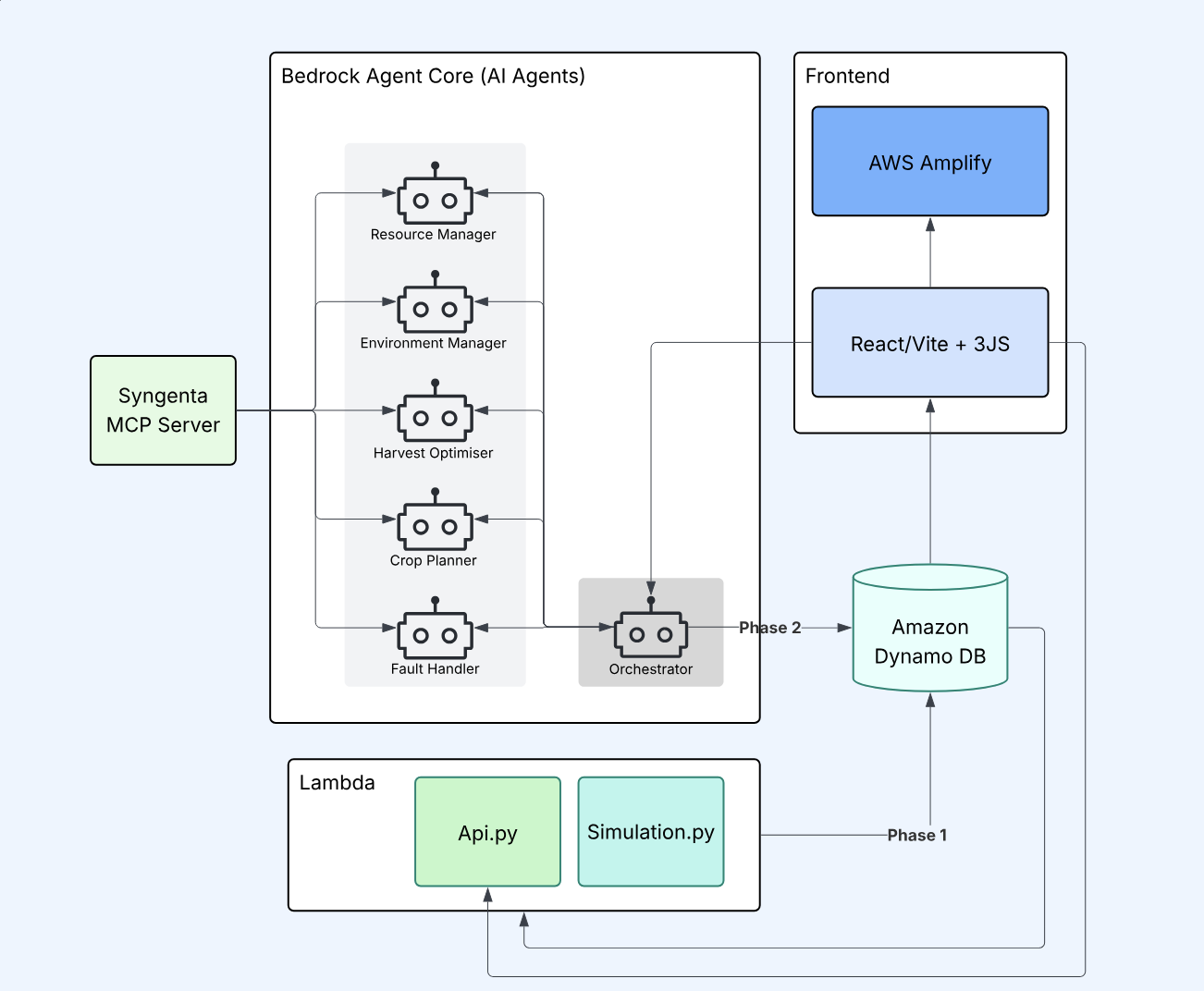
A FastAPI backend hosted on AWS Lambda runs the simulation and coordinates the agents, while mission data is stored in DynamoDB so each session stays consistent over the full mission.
At its core, the system uses a multi-agent AI architecture built with the Strands framework on Amazon Bedrock.
Each day, the orchestrator AI reviews the full state of the mission and assigns tasks such as crop planning, harvesting, resource management, environmental monitoring, and fault handling. These agents analyze conditions, detect and respond to plant stress, and return structured actions that are applied in a predictable and explainable way (e.g., planting, adjusting nutrients, or modifying climate conditions).
The simulation engine itself is separate from the AI and models crop growth, resource usage, spoilage, harvesting, and replanting.
Mission data is stored in DynamoDB, ensuring each simulation session remains consistent and stateful across the entire 450-sol mission.
Agents also query an MCP server as a Mars agriculture knowledge base via Bedrock, enabling data-driven and adaptive decision-making based on farming constraints and astronaut nutritional needs.
The system includes random events like dust storms and CO₂ fluctuations, requiring agents to dynamically adapt and optimize for growth under uncertainty.
Users can start missions manually or leverage an optimization agent to plan efficient resource allocation within strict cargo limits.
The UI surfaces agent decisions in real time, making the system transparent and allowing users to understand how and why actions are taken.
Overall, Sol-450 combines a structured simulation with an autonomous, explainable multi-agent system to manage a complex extraterrestrial crop environment, continuously learning and adapting to achieve resilient and efficient food production on Mars.
Built With
- amazon-bedrock-agentcore
- amazon-dynamodb
- amazon-nova
- amplify
- fastapi
- react
- typescript