-
-
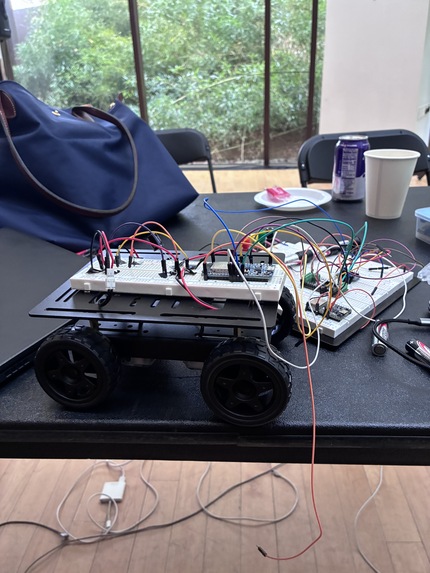
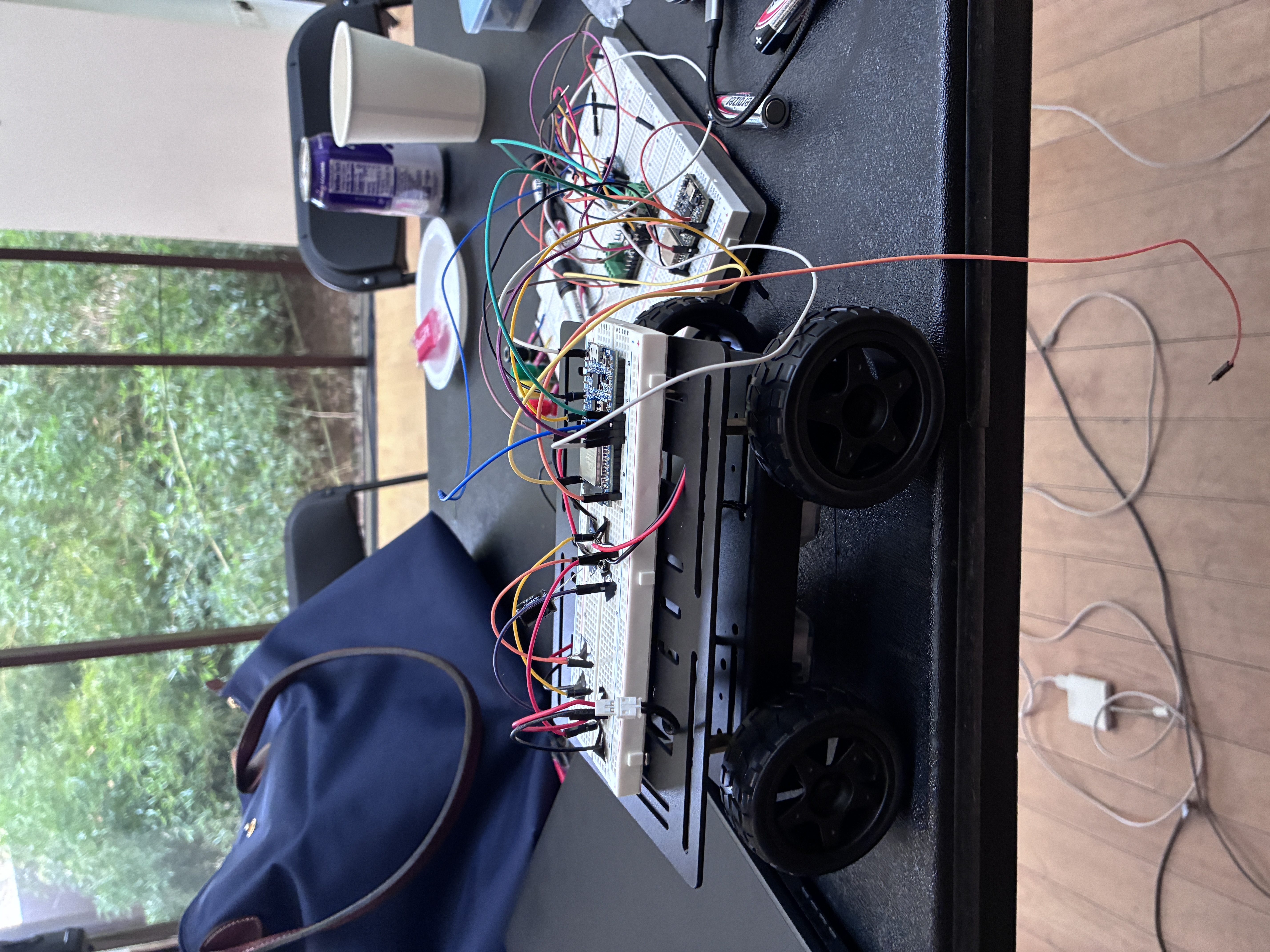
Rover: side view
-
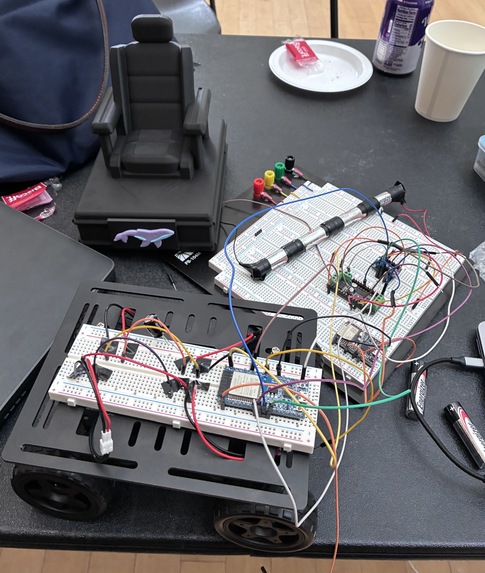
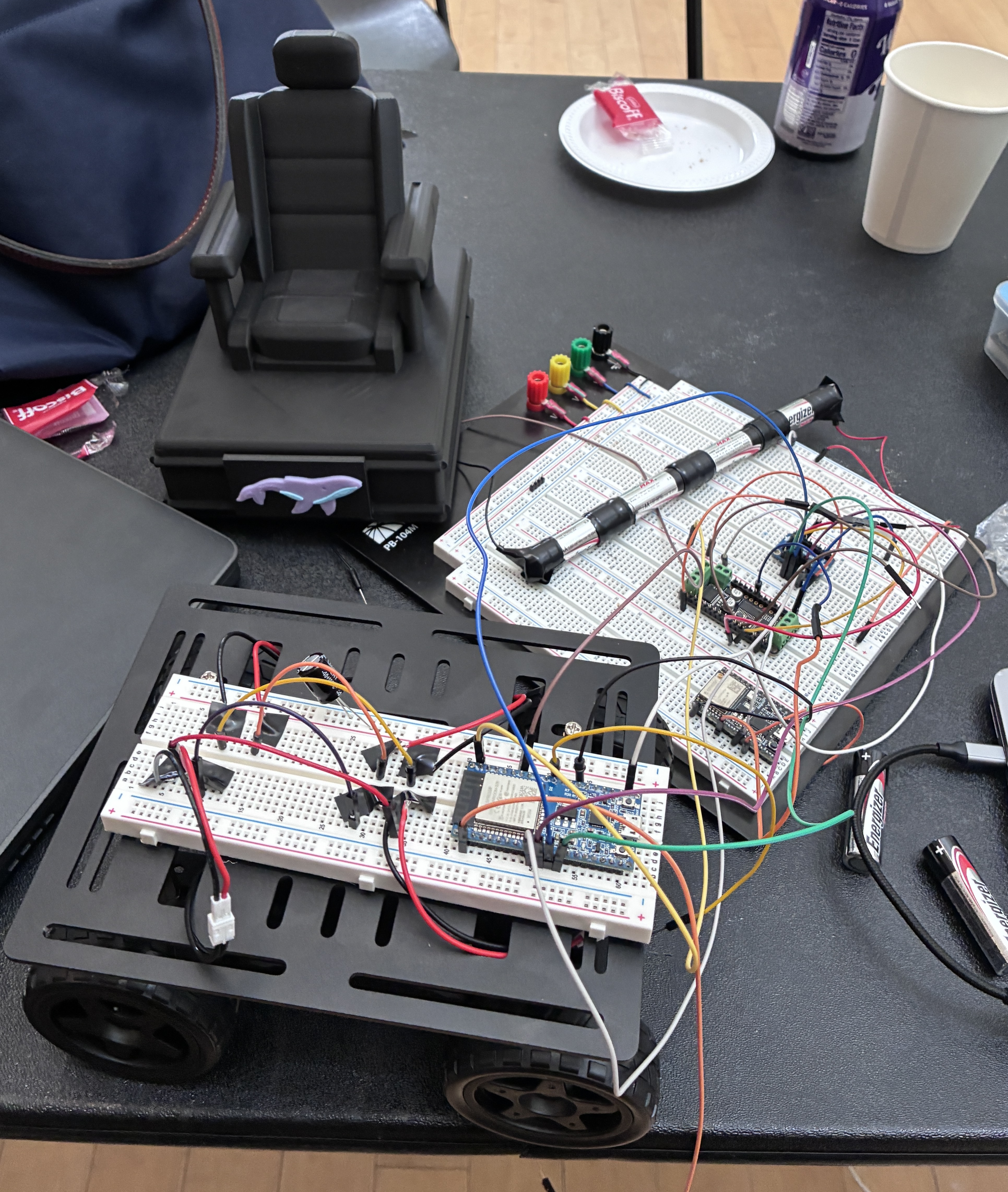
Rover: birds-eye view
-
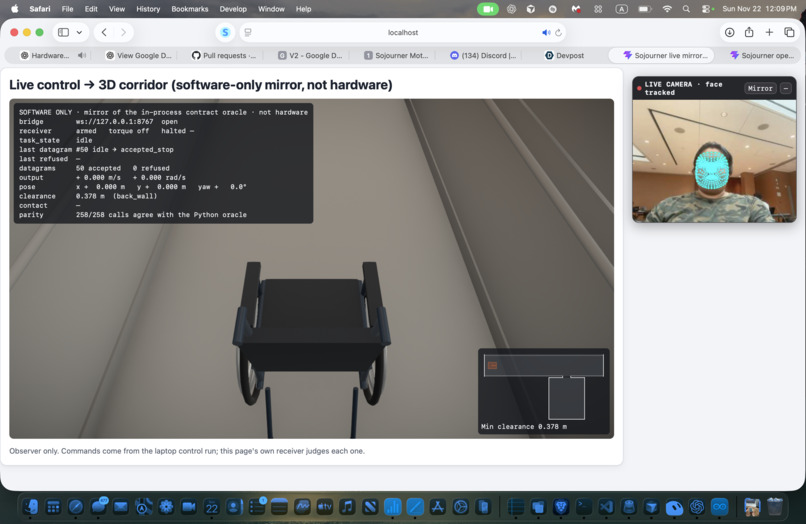
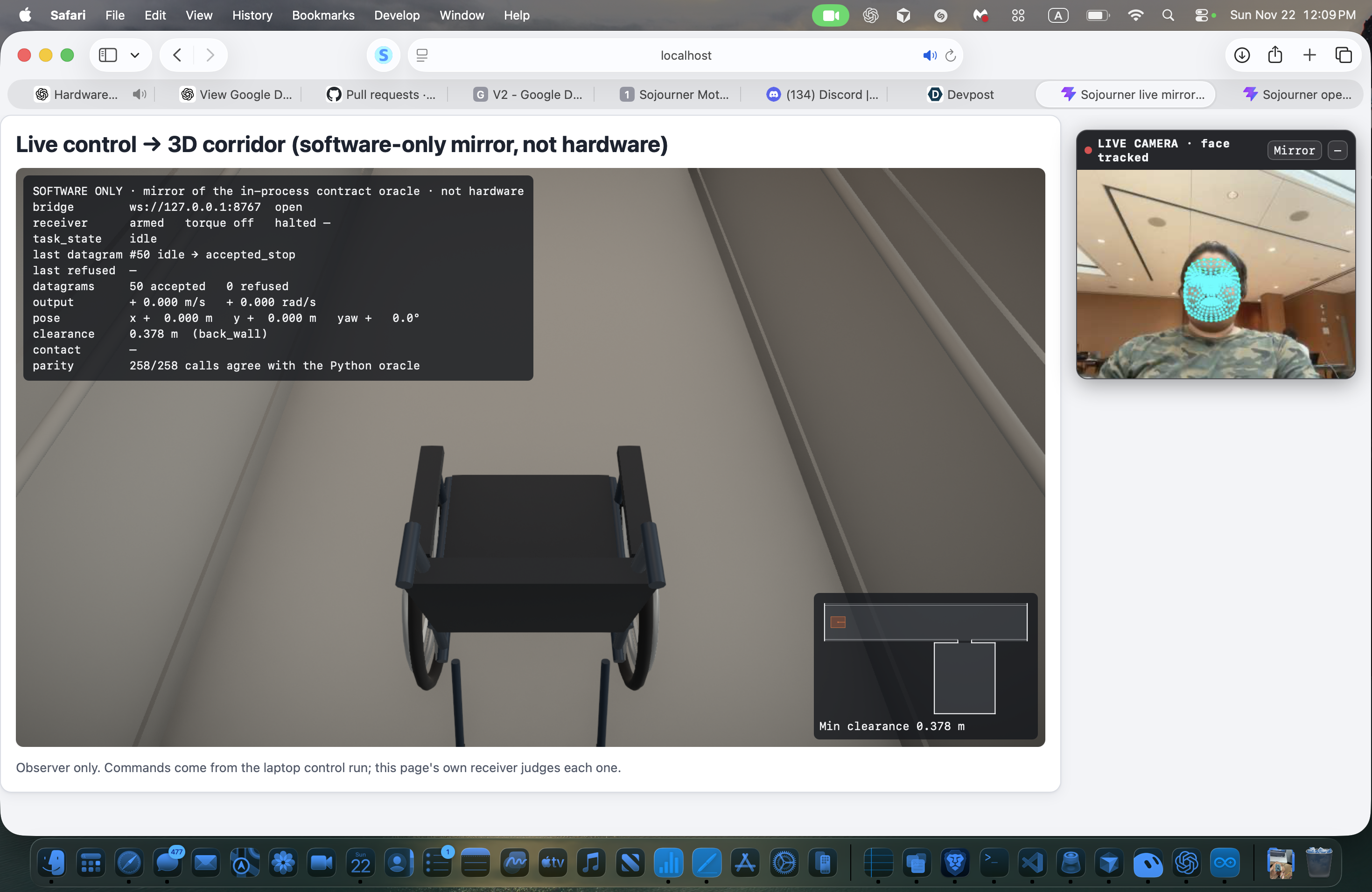
Dashboard + simulation + facemesh
-
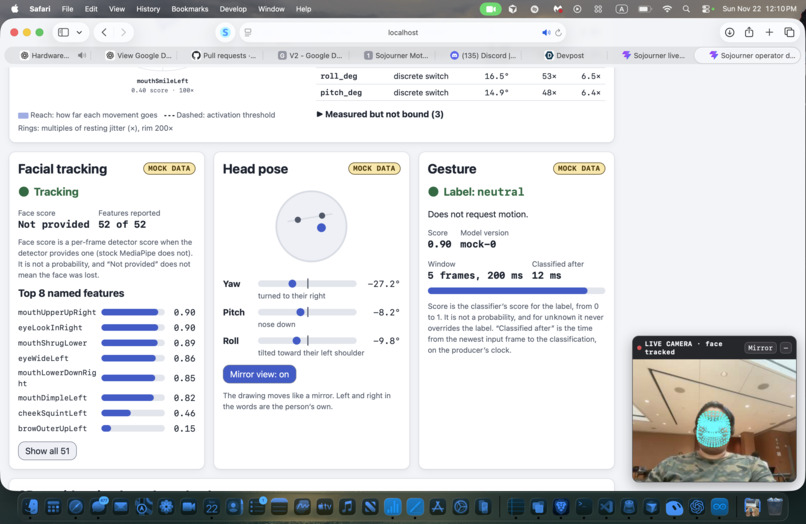
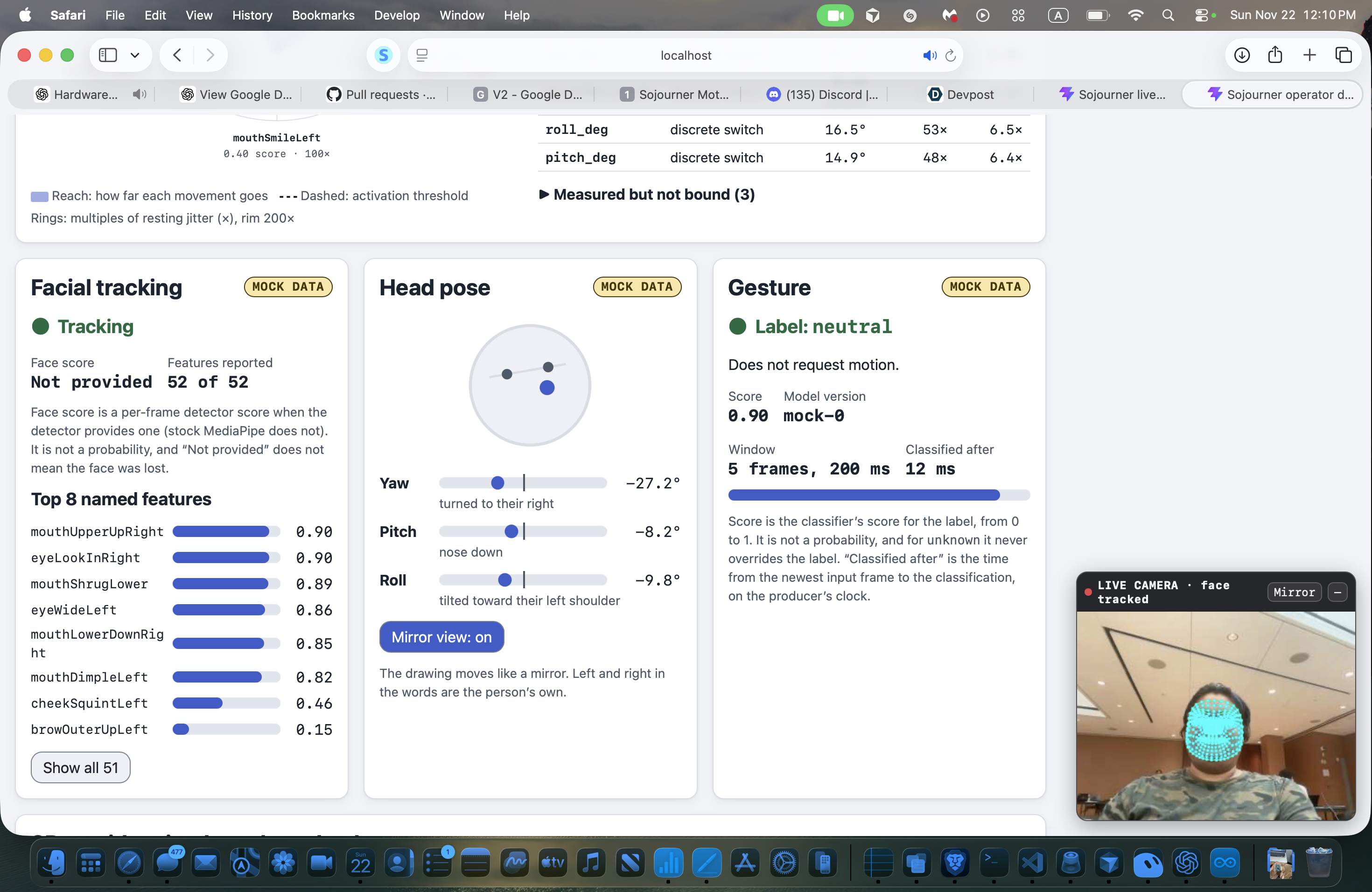
Dashboard + facemesh
-

1 TigerData write + query across two measured sessions, end-to-end proof
-

3 TigerData write + query across two measured sessions, end-to-end proof
-

2 TigerData write + query across two measured sessions, end-to-end proof



Inspiration
As employees at disability center in Boston, our team members saw a need for adaptive, hands-free control system for wheelchair users. Not only are specialized wheelchairs expensive, but they need to be manually recalibrated for each user, a slow and fussy process. Properly calibrated wheelchairs are so highly personalized that it can only serve one user at a time. Furthermore, as a person's condition progresses and their range of motion changes, the physical cues that once worked stop working. Users had to adapt to their wheelchairs. We believe that dynamic should be reversed.
What it does
Sojourner operates in the following layers:
- A camera, mounted to the wheelchair, detects user movement. For the demo, we used a physical rover (ESP32 with four motors, emergency stop button) as a proxy for the wheelchair and a laptop stands in for the camera.
- A perception layer detecting facial features and head pose.
- An ML model we trained overnight classifies facial movements and interprets them as motor commands for the rover.
- A (mock) 3D clininal simulation visualizes the motor command, drawn in the browser.
- The backend stores profiles and session and command logs in the cloud.
How we built it
Development was done on Cursor and the Grok Bot was used to manage Github merge conflicts and pull requests.
The backend is a FastAPI service running on a Vultr cloud server behind HTTPS. Pushing to GitHub triggers tests, builds a container, and deploys it to Vultr automatically, with a rollback if the new version fails its health check. Data is stored in TigerData (TimescaleDB), which suits our time-series signals and lets us compute per-session summaries as continuous aggregates.
We developed a facial-gesture recognition pipeline using MediaPipe Face Landmarker, which extracts 52 facial blendshape scores and 3D head-pose measurements (yaw, pitch, and roll) from live webcam footage. Our ML model draws from data we collected ourselves (2490 labeled training windows from two participants) and two public databases. We trained a standardized, class-balanced logistic regression classifier with L2 regularization to distinguish three gestures: neutral, mouth opening, and eyebrow raising. We also implemented an experimental baseline-relative normalization approach to account for differences in individuals' resting facial expressions. Testing the model on two test participants never-before-seen by the model yielded an 84.86% accuracy rate at its highest and ~70% at the mean. The model proved significantly more adept at detecting to eyebrow raises from a neutral expression. For firmware, the rover runs on an ESP32, with a hardware emergency stop button to ensure the user has a safety override.
Challenges we ran into
- Handling sensitive data well. We designed consent gating, deletion, and anonymized public views from the start, and don't collect raw video or other identifying data.
- Hardware. The rover was functional until the motor driver became fried.
- Self-teaching new tools on the fly and incorporating them productively into our workflow.
Accomplishments that we're proud of
- Training an ML model with impressive accuracy in a limited time.
- Building a working end-to-end path: a camera, perception, classified command, rover and simulator, plus a live cloud API.
- A live, auto-deployed HTTPS API on Vultr with token authentication and consent-based deletion.
- Real measured sessions from our own camera stored in TigerData, and a query comparing one movement channel across two sessions. It shows the pipeline captures changes between sessions, which is not a clinical measurement but could be used to track changes in range of motion (potentially correlated with the progression of a disability).
- Safety by design: a hardware stop, a cloud service that cannot drive the motors so the cloud being down would not affect motor commands.
What we learned
- From the backend: privacy and consent are far easier to build in from the outset. A deploy pipeline needs to be tested against sample data locally and against the cloud server.
- How to integrate an end-to-end pipeline.
What's next for Sojourner
- Refine ML accuracy with more testing and larger datasets.
- Expand the list of gestures that our model can classify.
- Incorporate ASL / hand gesture recognition in addition to facial features.
- Test on a real wheelchair, with proper safety review, before any real-world use.
Built With
- claude
- cursor
- grok
- mediapipe
- postgresql
- python
- tigerdata
- vultr
