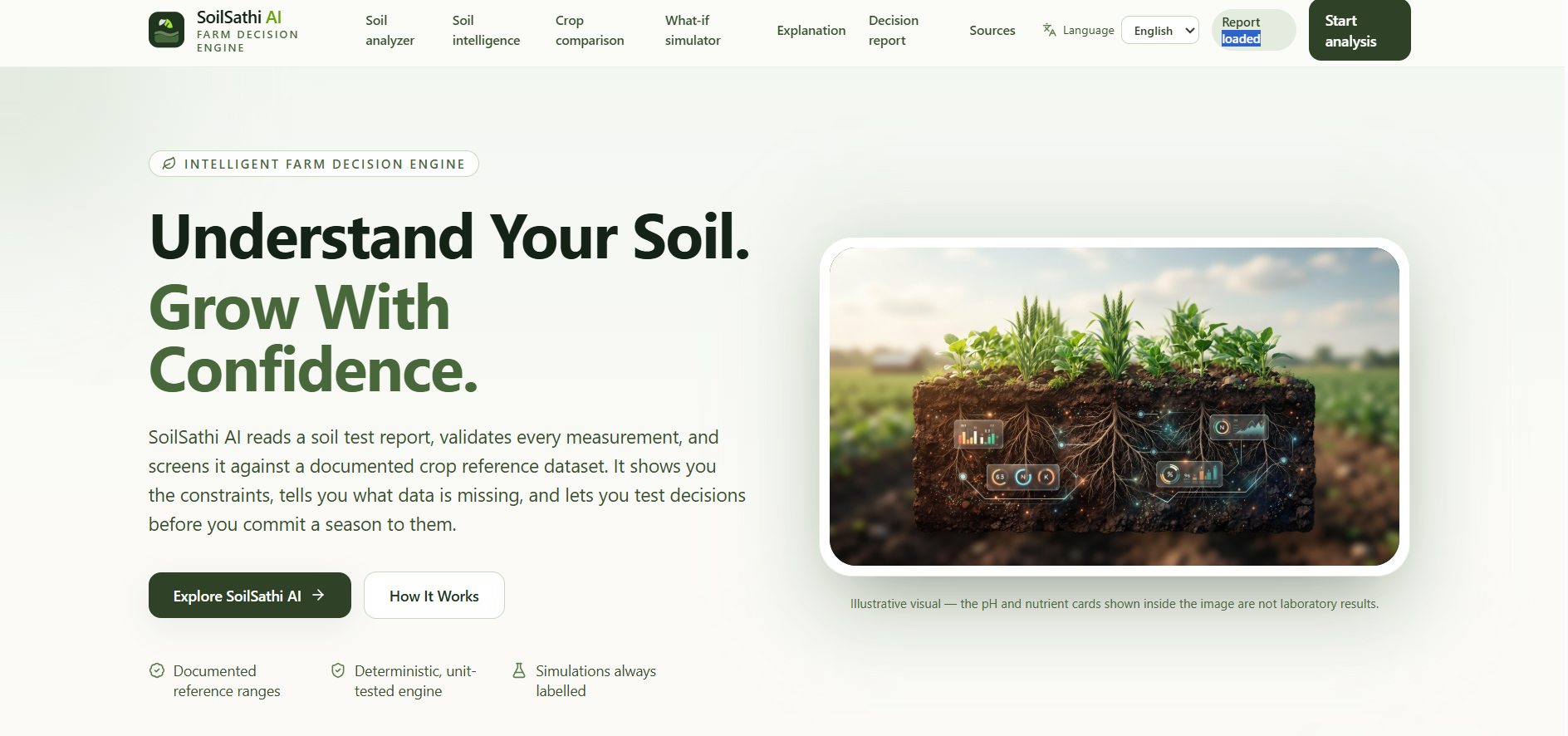
🌱 SoilSathi AI — Understand Your Soil. Grow With Confidence.
The Problem
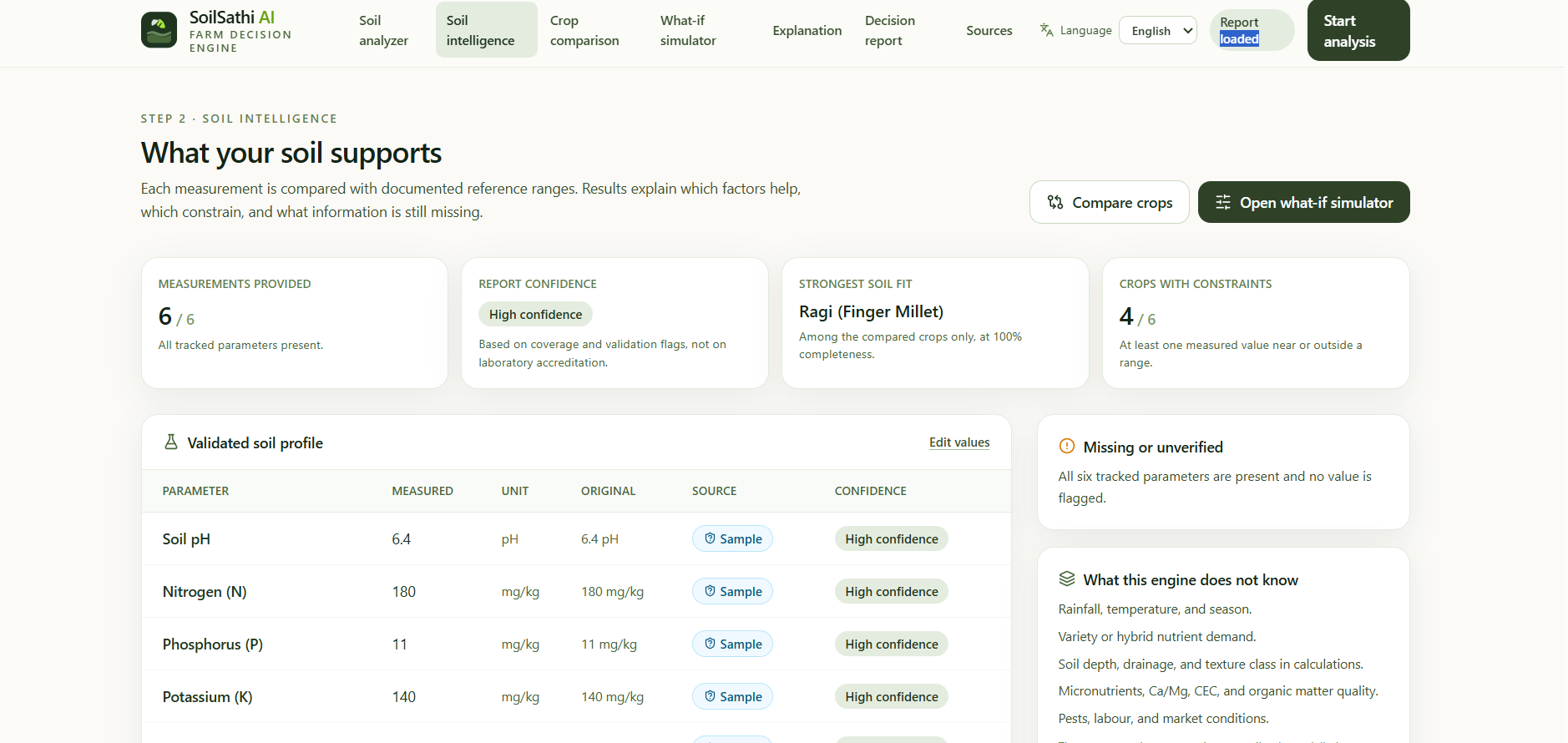
Soil test reports contain valuable information about pH, nitrogen, phosphorus, potassium, organic carbon and salinity. However, interpreting these measurements and understanding which crops may suit a particular soil can be difficult.
Farmers and users often need to interpret technical reports, compare multiple crop requirements and understand how changing soil conditions could affect crop suitability.
SoilSathi AI aims to make that process more understandable, transparent and accessible.
💡 Our Solution
SoilSathi AI is an intelligent farm decision-support platform that transforms soil test measurements into structured soil insights, crop comparisons and hypothetical scenario simulations.
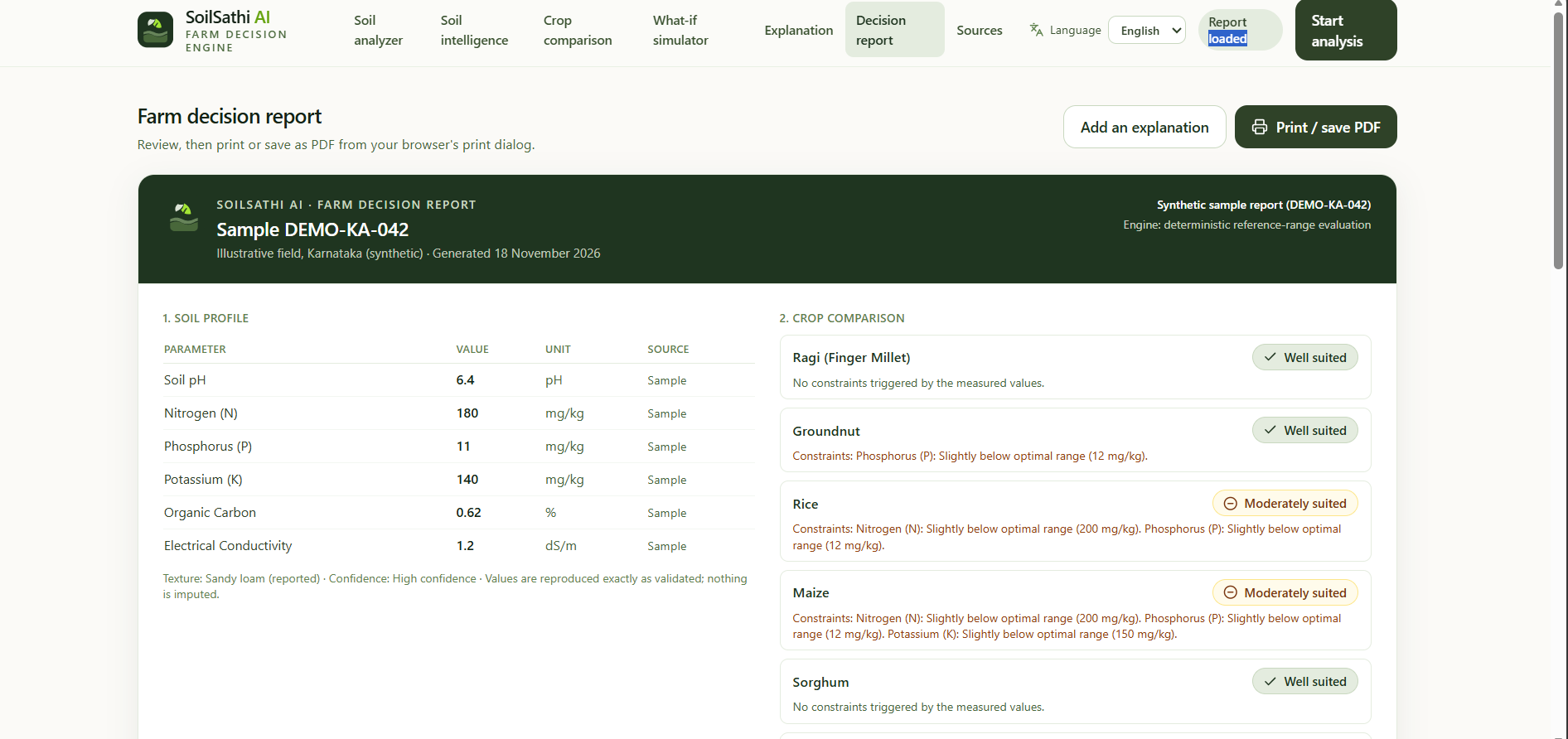
Instead of simply displaying numbers, it helps users understand what the measurements indicate, which parameters may constrain crop suitability and where information is missing.
⚙️ How It Works
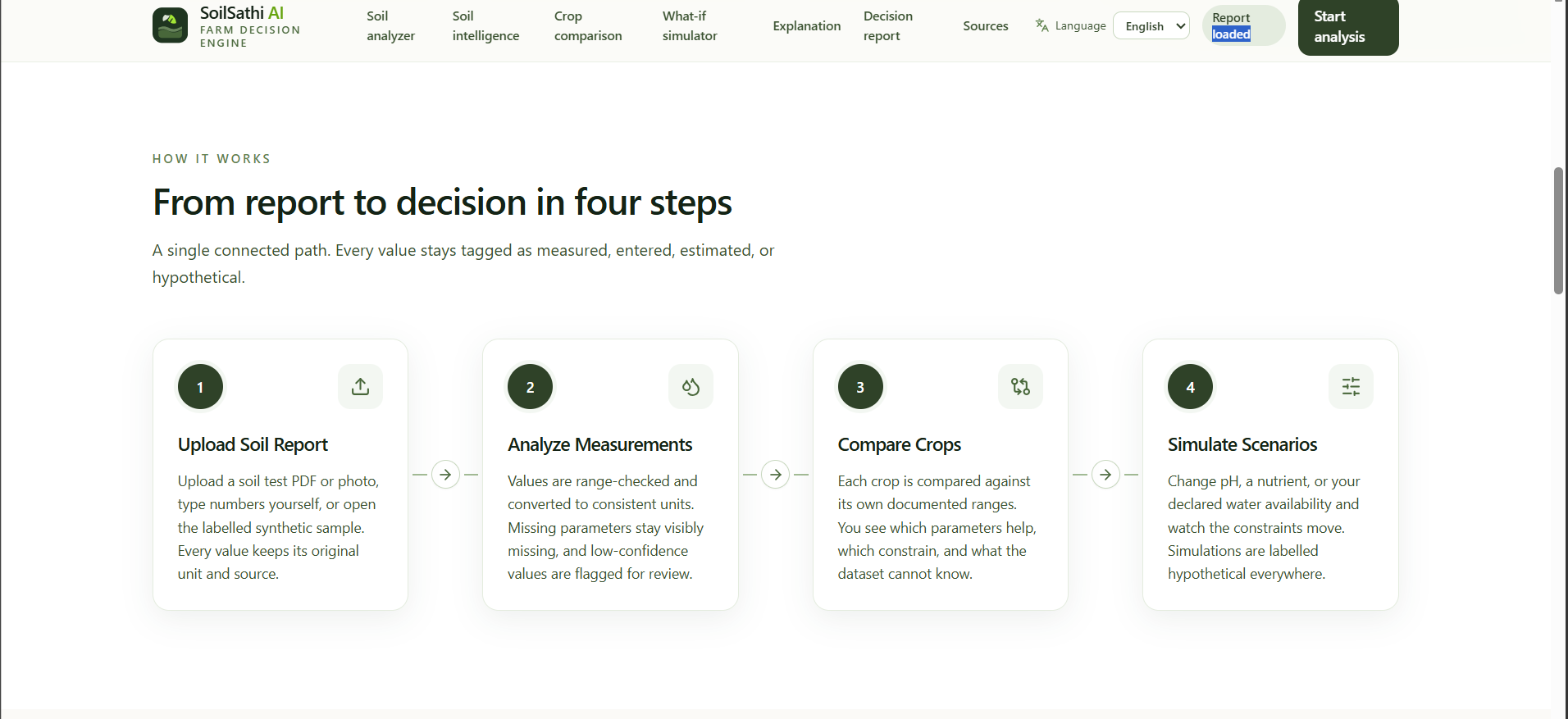
1. Upload a Soil Report
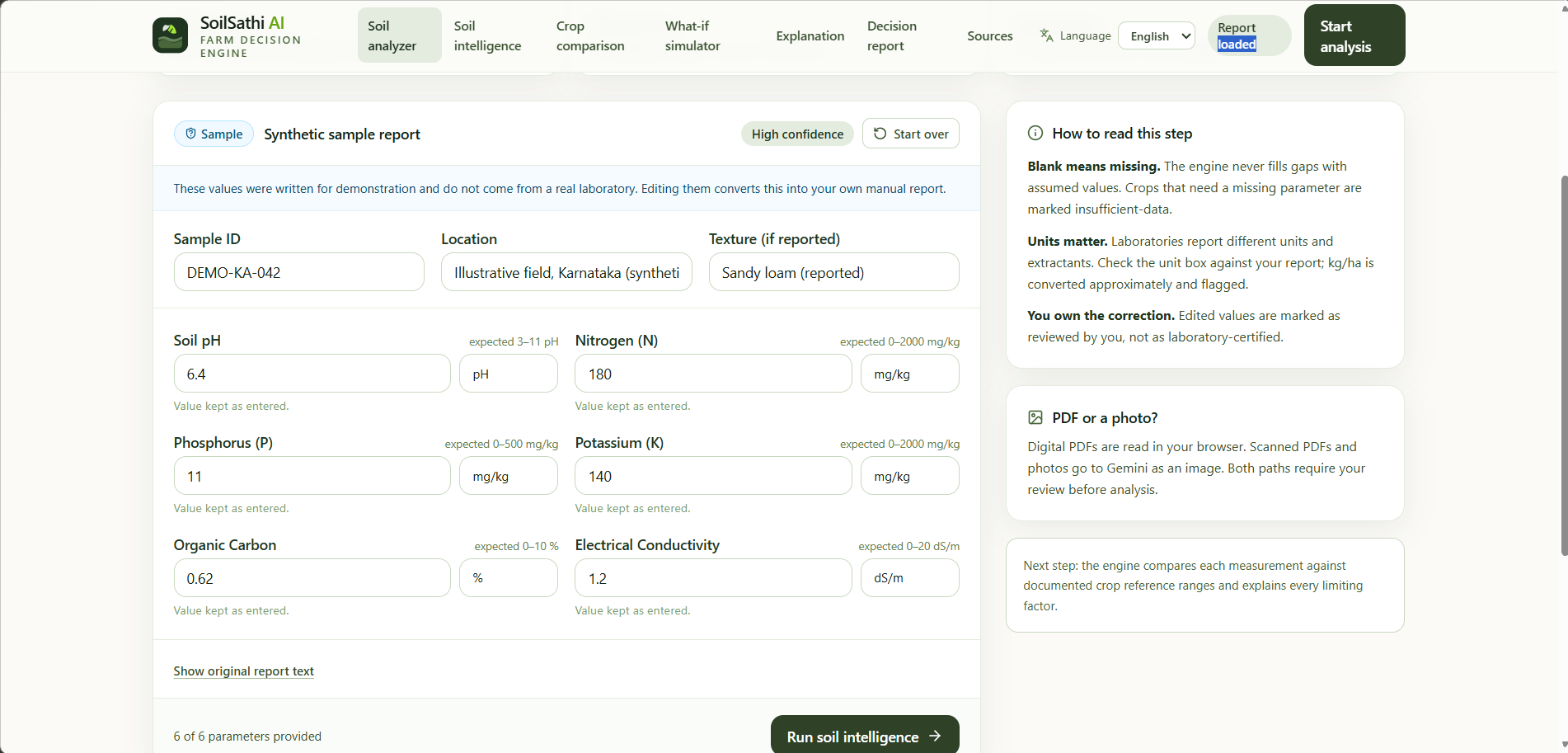
Upload a soil test PDF or image, enter measurements manually, or explore a clearly labelled synthetic sample. Extracted values retain their original units and source information.
2. Analyze Soil Measurements
Measurements are validated, range-checked and normalized into consistent units. Missing values remain visible, and low-confidence extracted measurements are flagged for review.
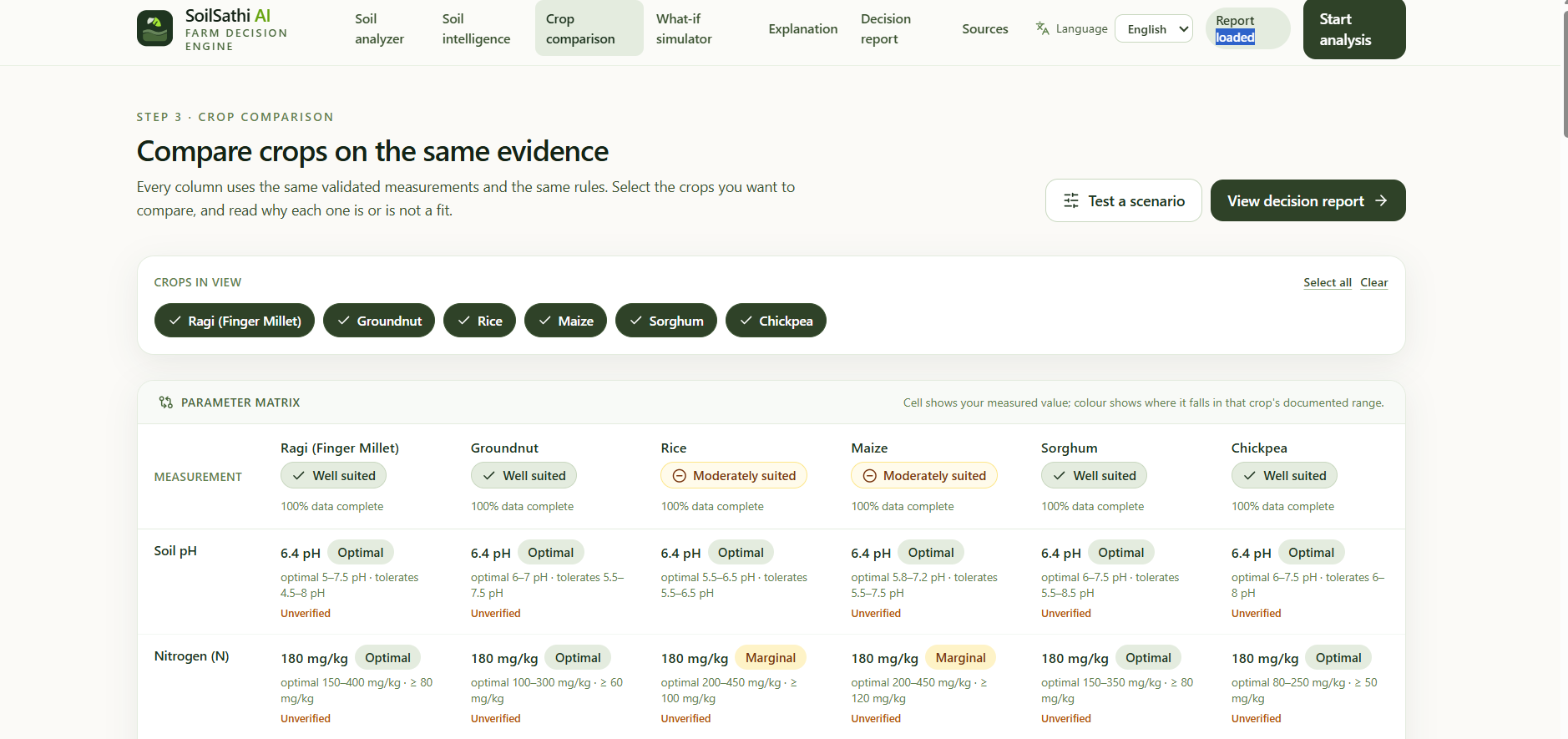
3. Compare Crop Suitability
The platform compares soil measurements against crop-specific reference ranges. Users can explore favourable parameters, limiting factors and missing information through a structured comparison.
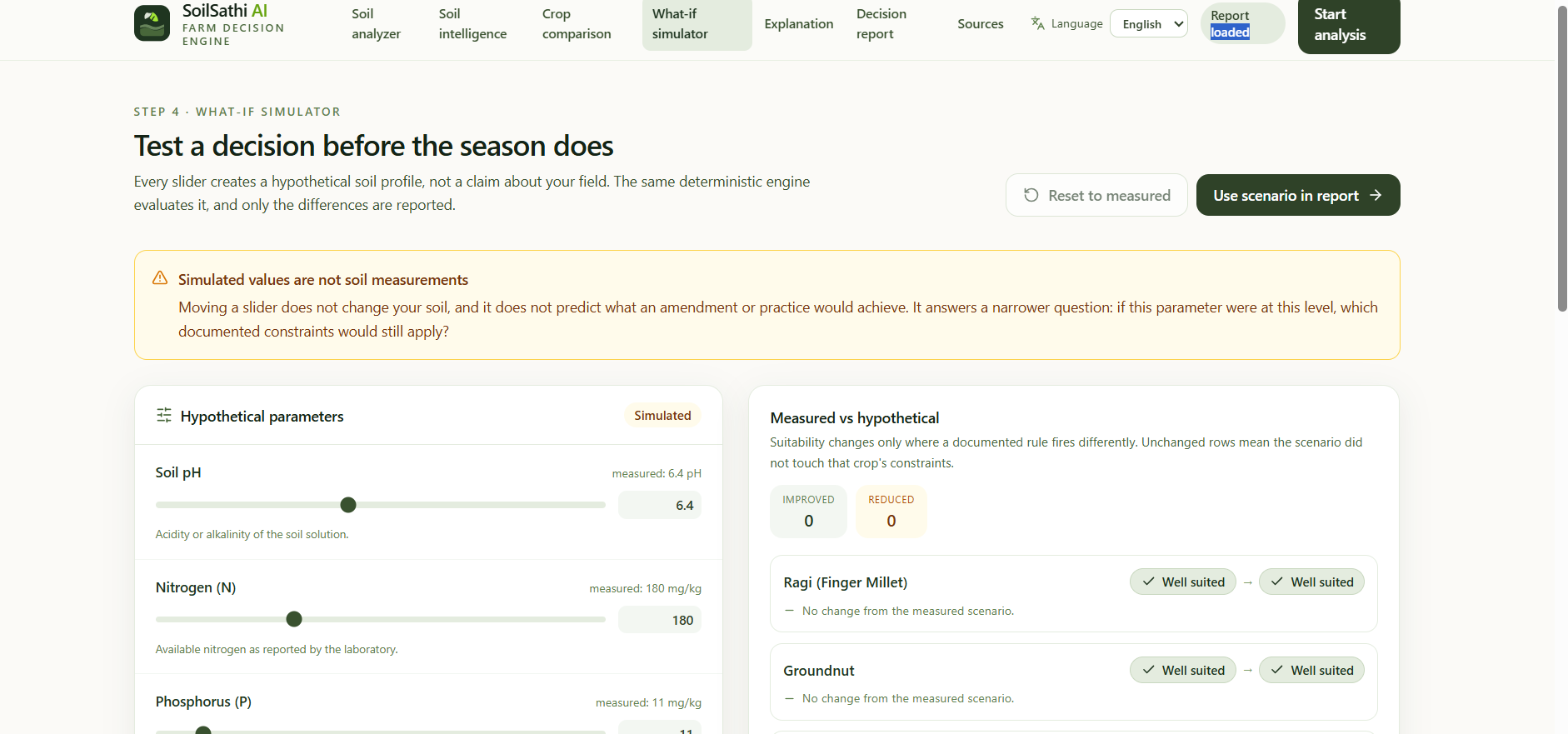
4. Simulate What-If Scenarios
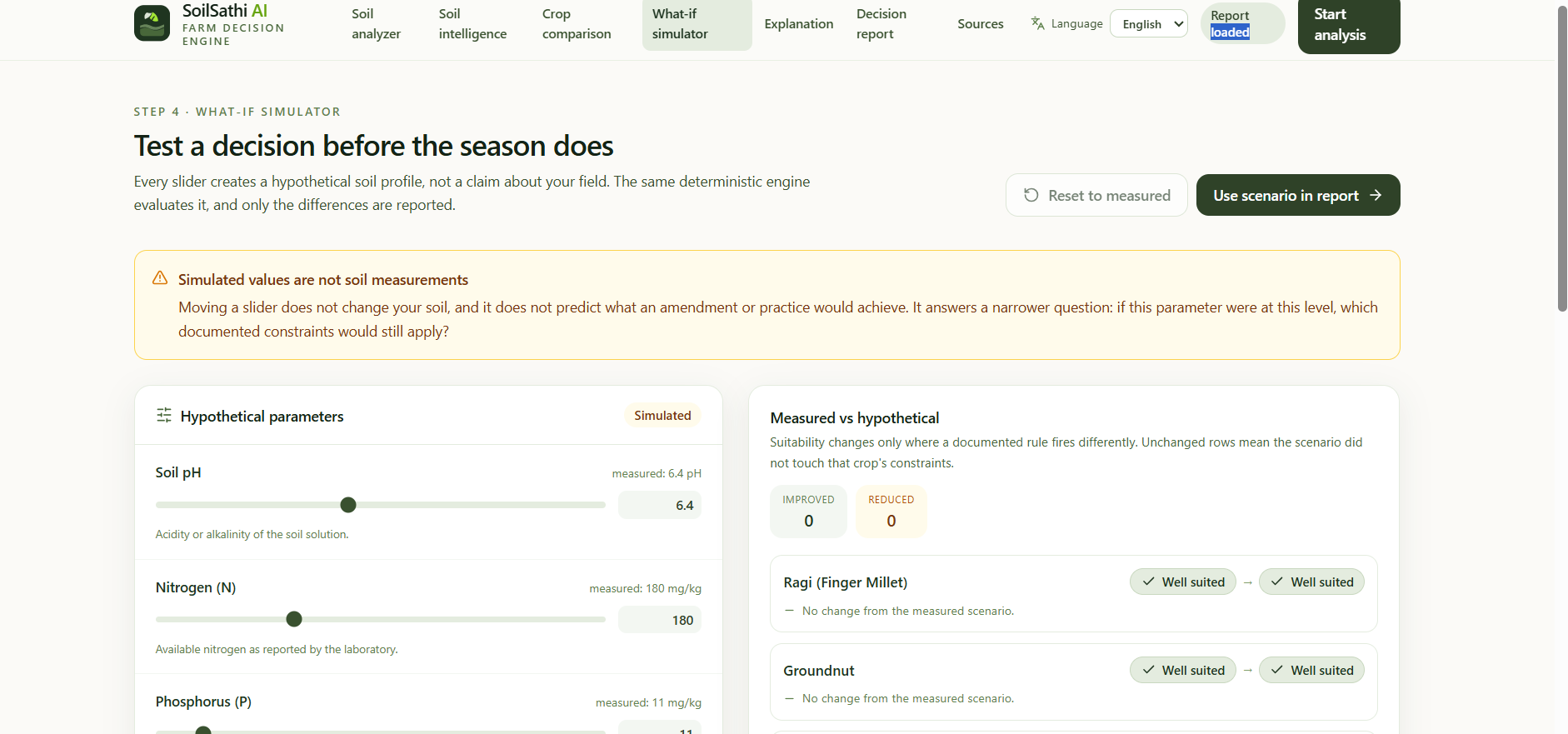
Users can change selected soil parameters and declared water availability to explore how hypothetical conditions affect crop assessments. Simulated results remain clearly separated from measured soil data.
🧠 AI and Technical Implementation
SoilSathi AI combines deterministic agricultural assessment logic with a Gemini API integration.
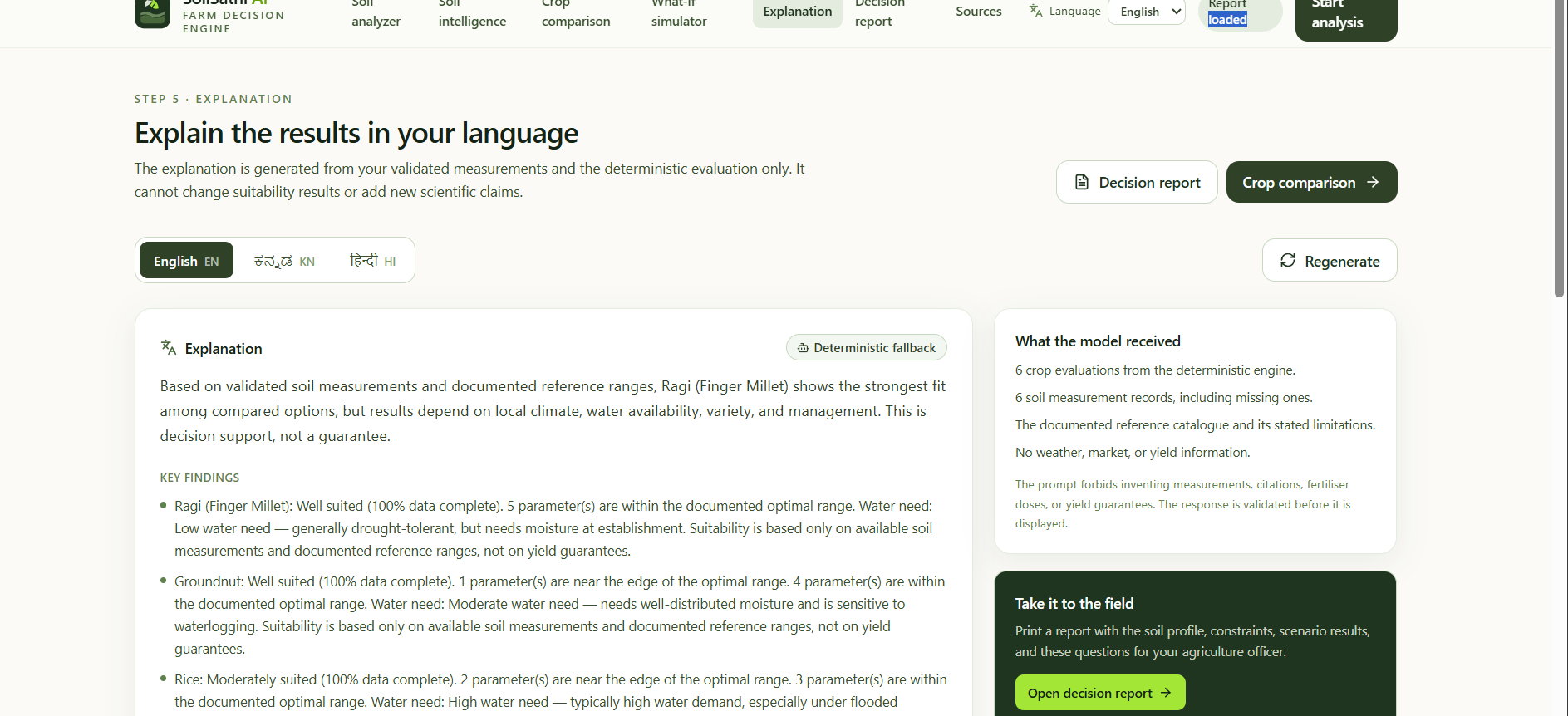
- Gemini integration: Supports AI-assisted extraction of measurements from image-based soil reports and localized explanations when configured.
- Deterministic evaluation engine: Applies structured validation and crop-reference comparisons rather than allowing generated AI responses to determine crop verdicts.
- Unit normalization: Converts supported measurements into consistent units while retaining their original source information.
- Scenario simulation: Evaluates hypothetical changes independently without overwriting measured values.
- Structured validation: Uses Zod schemas to validate AI responses and incoming data.
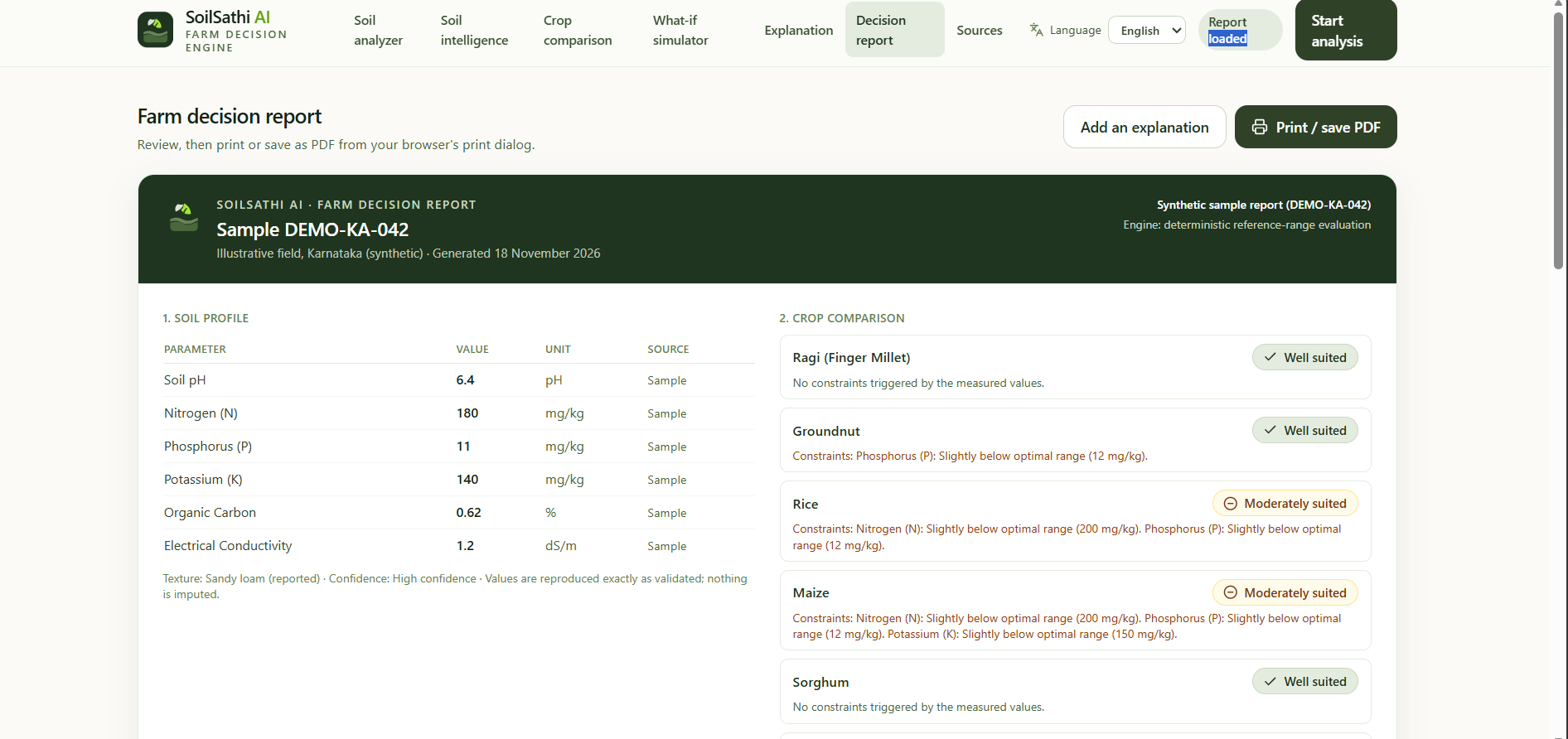
- Transparent reporting: Presents evidence, missing parameters, limitations and expert questions in a printable report.
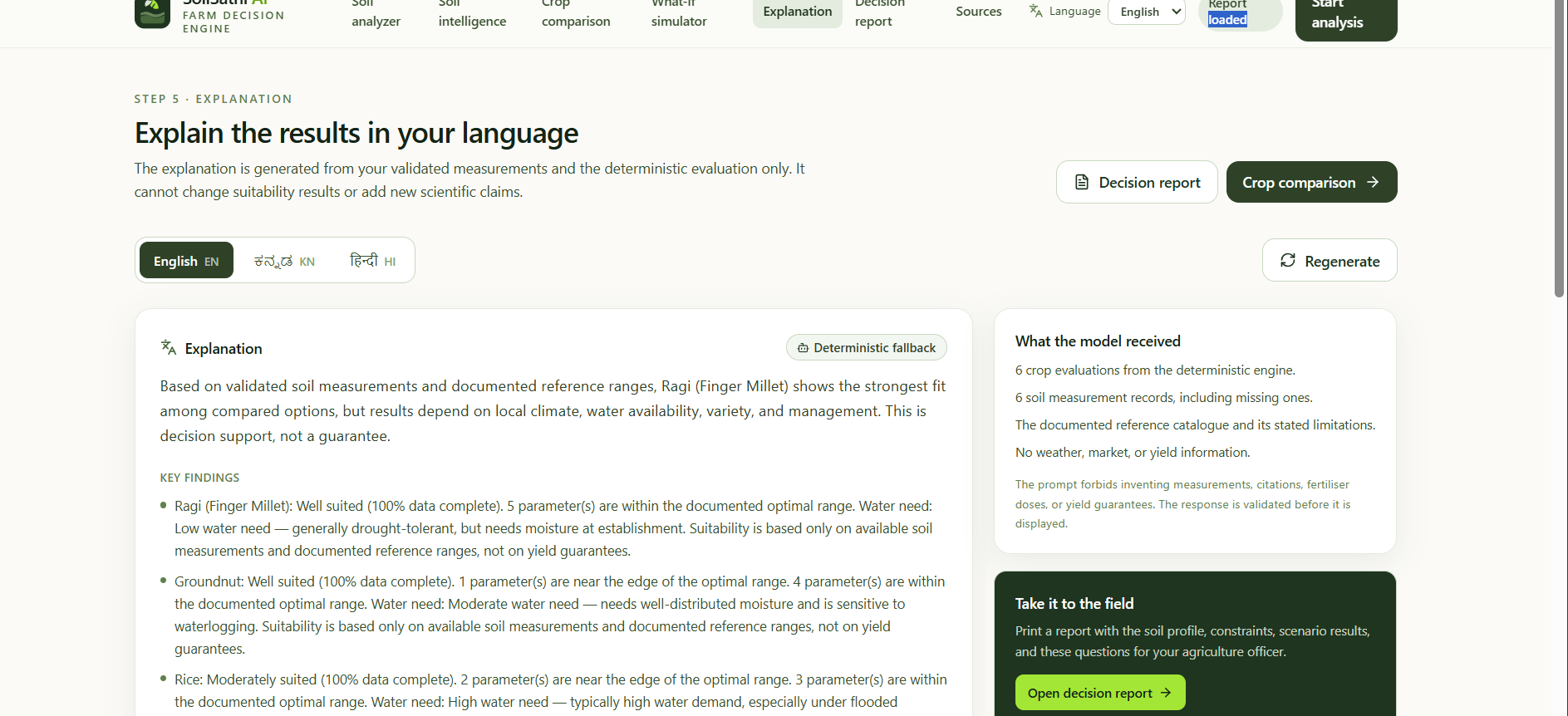
The platform also includes a deterministic fallback for explanation workflows when Gemini is not configured. Live Gemini API calls must be enabled with an API key before demonstrating AI-assisted functionality.
🛠️ How We Built It
We built SoilSathi AI using Next.js, React, TypeScript and Tailwind CSS.
The application separates soil validation, unit normalization, crop evaluation, scenario simulation and explanation logic into dedicated modules. This separation makes the assessment engine more predictable, testable and maintainable.
We also created a source documentation system to distinguish verified reference ranges from indicative project ranges. This is important because agricultural thresholds can vary with soil-testing methods, local conditions and crop varieties.
🚧 Challenges We Faced
One major challenge was avoiding misleading agricultural recommendations.
Not every soil parameter has an equally well-established crop-specific reference range in our current dataset. We therefore distinguish verified sources from indicative values, show missing information and avoid presenting uncertain assessments as scientific guarantees.
Another challenge was ensuring that hypothetical simulations never overwrite actual measurements. We designed the simulation workflow to keep observed and hypothetical conditions separate.
🌍 Impact and Future Scope
Our goal is to make soil information easier to understand and help users explore crop suitability with greater transparency.
Future improvements could include region-specific agricultural calibration, additional soil parameters, seasonal and climate context, local agricultural datasets and feedback from agricultural experts.
SoilSathi AI is a decision-support tool, not a replacement for soil laboratories or local agricultural expertise. It does not guarantee yield or prescribe fertilizer doses.
🌿 Our Vision
We believe better agricultural decisions begin with better understanding.
SoilSathi AI — Turning soil data into clearer decisions.
