-
-

Soil Story Application Icon
-
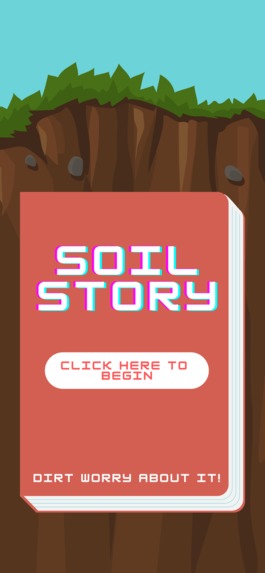
Application Launch Screen
-
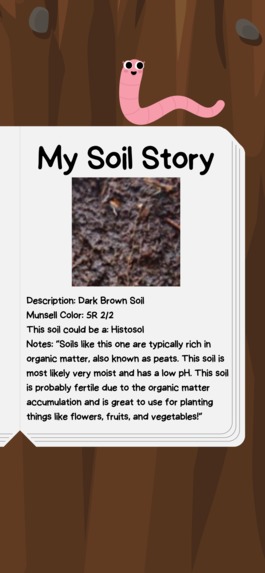
Soil Analysis
-
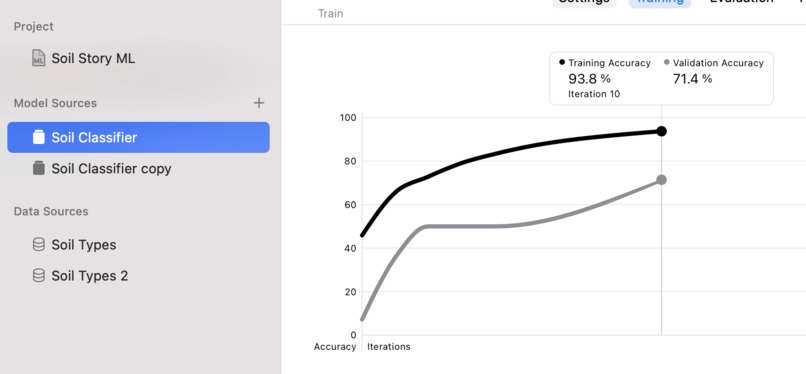
Machine Learning Graph (CoreML)
-
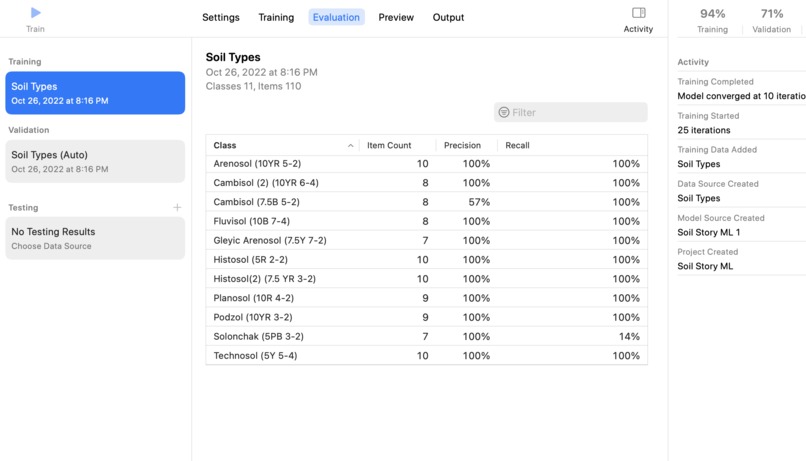
Testing Data Accuracy ML



Inspiration
In soil lab, we learned about Munsell soil color and how color as a property is indicative of different traits, such as color, mineral content, drainage, and fertility. In the field, soil scientists typically use soil color charts to identify soil color. However, these charts come with several drawbacks. Munsell soil color charts can get dirty easily in the field and they are also incredibly expensive to replace. Additionally, it can be a hassle to carry physical books when doing fieldwork. We also realized that the general population, especially children, could benefit from an application that teaches them about soil science. Teaching the community about soil science could help the greater effort of educating people about sustainability and climate change.
What it does
Soil Story is an application that takes in a photo of a soil sample provided by the user and then harnesses the power of machine learning and artificial intelligence to output the correct Munsell soil color value. The user interface is easy for people of all ages to understand and use.
How we built it
We used XCode and CoreML to create an iOS application and machine learning algorithm to identify Munsell color values from photos provided by the user. To create an appropriate data set to properly train the algorithm, we used photos from the soil profile gallery and assigned each photo the correct Munsell color value. We used 11 variations of soil color to train our algorithm.
Challenges we ran into
We faced some challenges onboarding every team member and making sure there were enough computers running the appropriate software to build the project. Once we did get started, we ran into some errors implementing the photo upload feature to our applications and also making sure that our buttons were functional. We were able to use YouTube tutorials to learn how to fix our errors and code in Swift.
Accomplishments that we're proud of
We are proud of the data set we created on our own and the fact that team members who had little knowledge about soil science had exposure to a new discipline of study through this project. This application also gave everyone on the team the opportunity to not only learn a new language but also the chance to build valuable friendships and team-building skills.
What we learned
Though every member of the team had a substantial understanding of programming fundamentals, not every member of the team had knowledge about soil and water sciences. We learned about soil properties and the importance of those properties in finding conclusions about the land we use. We also had the opportunity to learn about a new programming language, Swift, as well as how to create and implement a machine learning algorithm.
What's next for Soil Story
If given the opportunity to improve Soil Story, we would start by expanding our data set and making our algorithm train for more types of colors and soil samples. We would also consider using PyTorch and TensorFlow to improve the performance of our algorithm. Additionally, we would expand some of the features of our application. We would consider adding features for the user to save their past soil inputs as "journal pages" and we would provide more information about each soil sample they input. We could also include features to share the user's findings on popular social media sites, such as Facebook and Twitter, to allow them to share their identifications and spread awareness about soil science, sustainability, and climate change.
Acknowledgements
Dr. Heather Enloe: Soil, Water, Ecosystem Sciences Dr. James Bonczek: Soil, Water, Ecosystem Sciences Dr. Mark Clark: Soil, Water, Ecosystem Sciences Dr. Laura Castro Cruz: Computer and Information Science and Engineering Dr. Joshua Fox: Computer and Information Science and Engineering Dr. Diego Alvarado: Computer and Information Science and Engineering Dr. Sanethia Thomas: Computer and Information Science and Engineering NVIDIA Queensland Government Soil Department PhotoSoil Database
Built With
- avfoundation
- codeml
- createml
- swift
- xcode


Log in or sign up for Devpost to join the conversation.