-
-
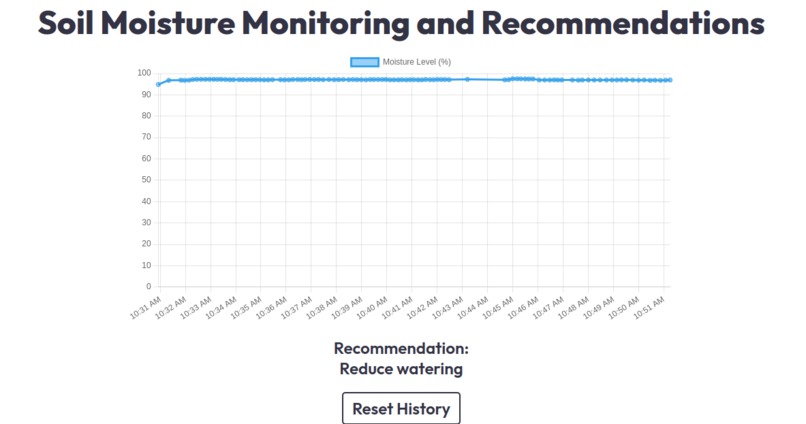
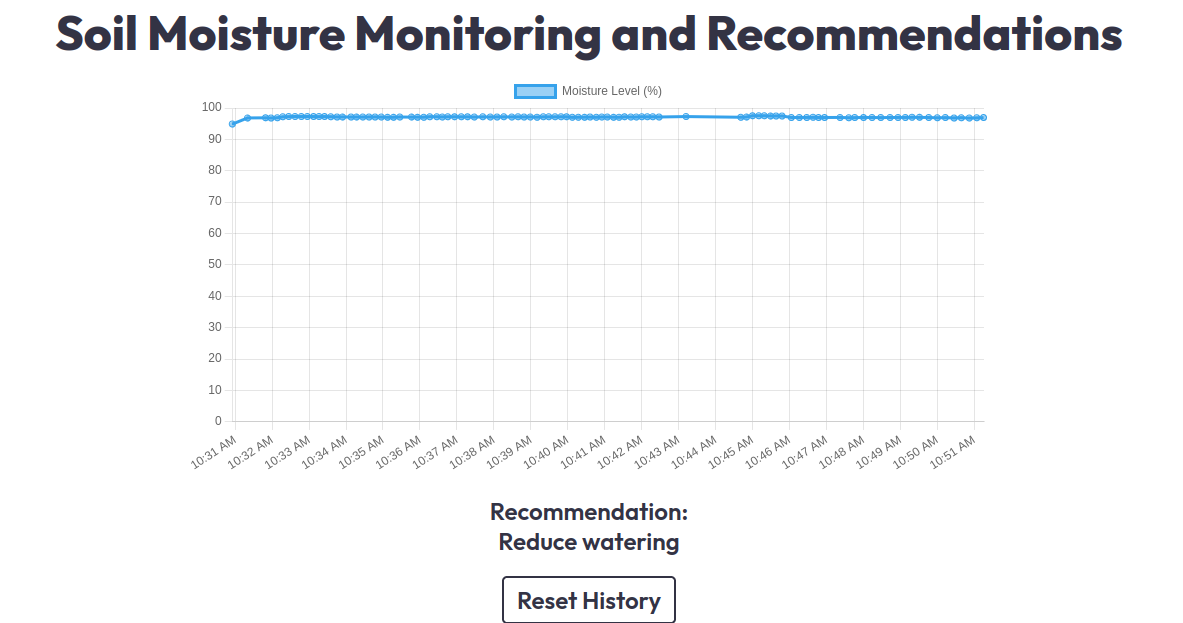
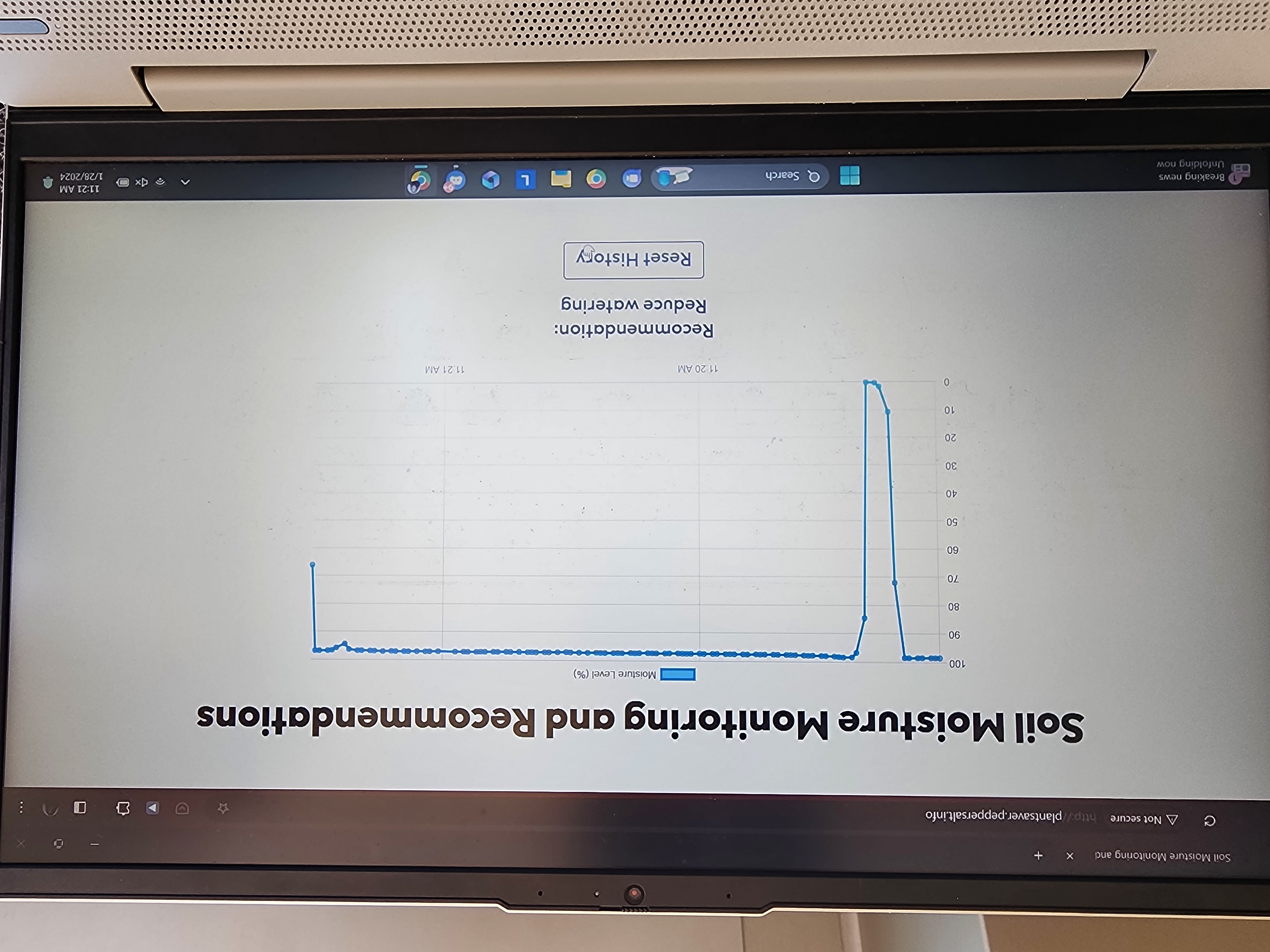
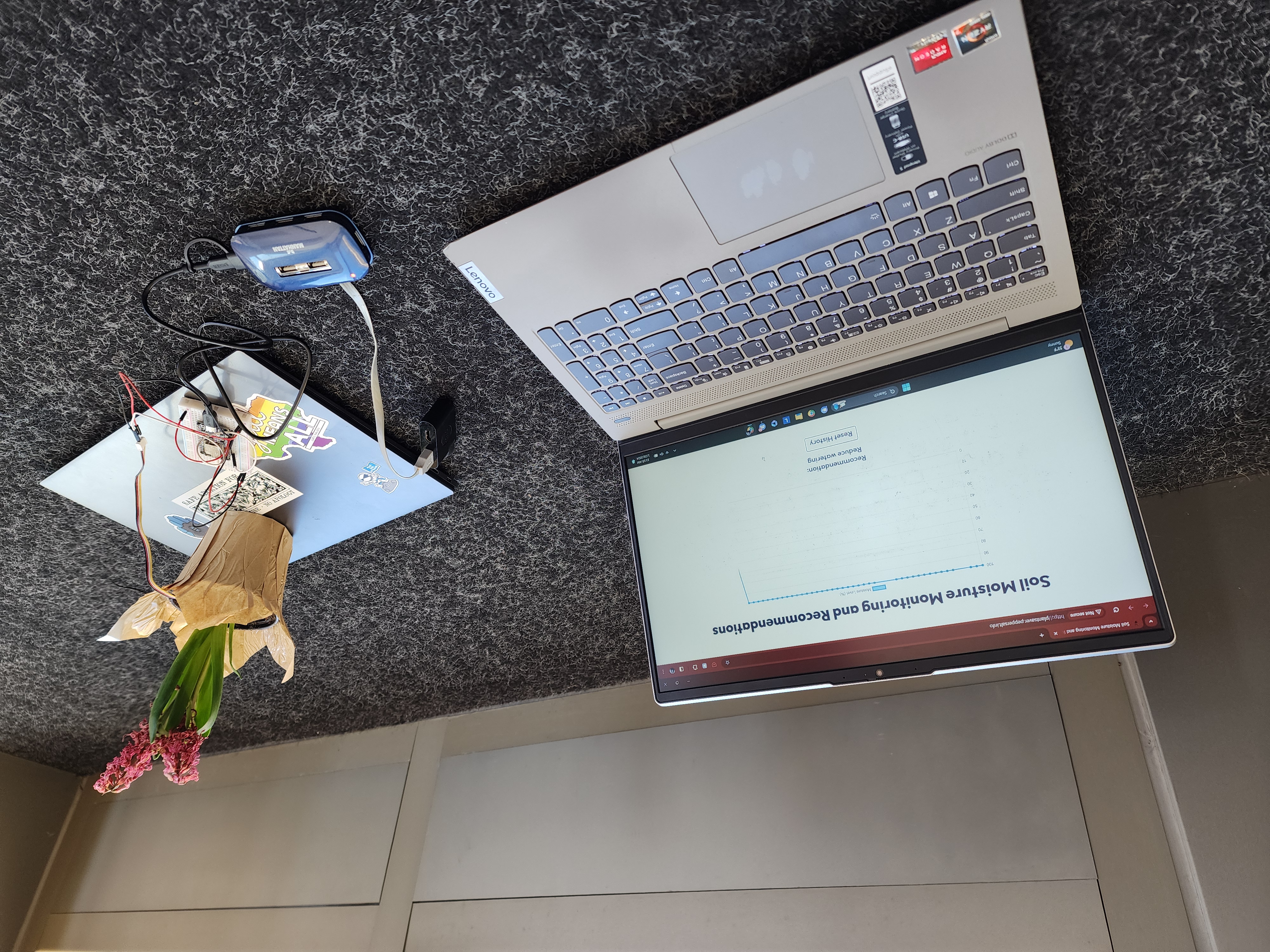
website screen capture
-
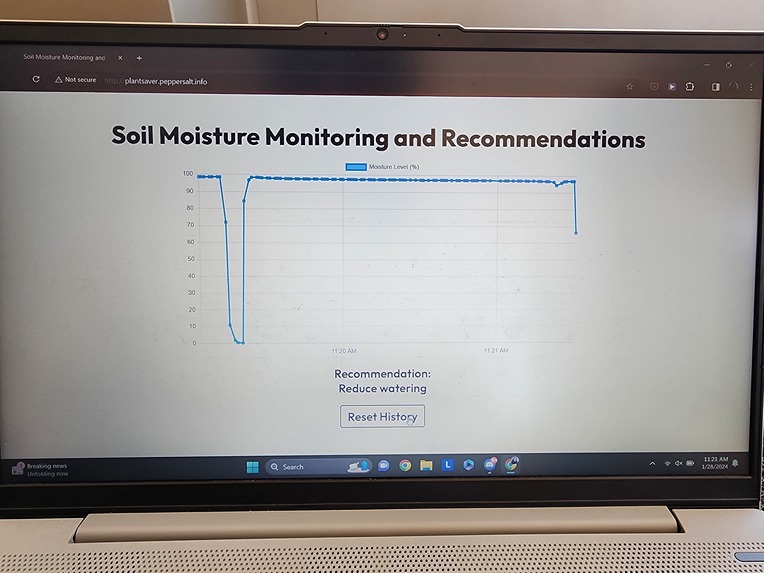
website
-
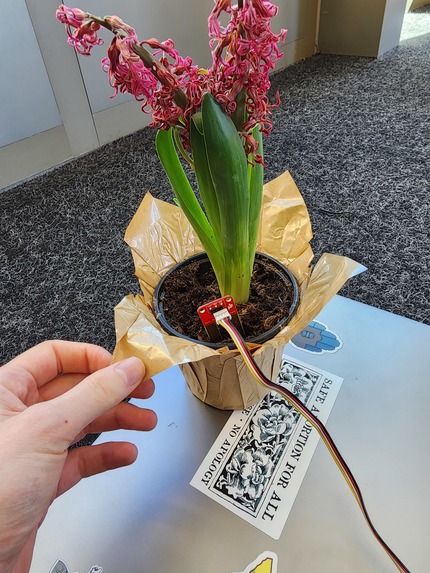
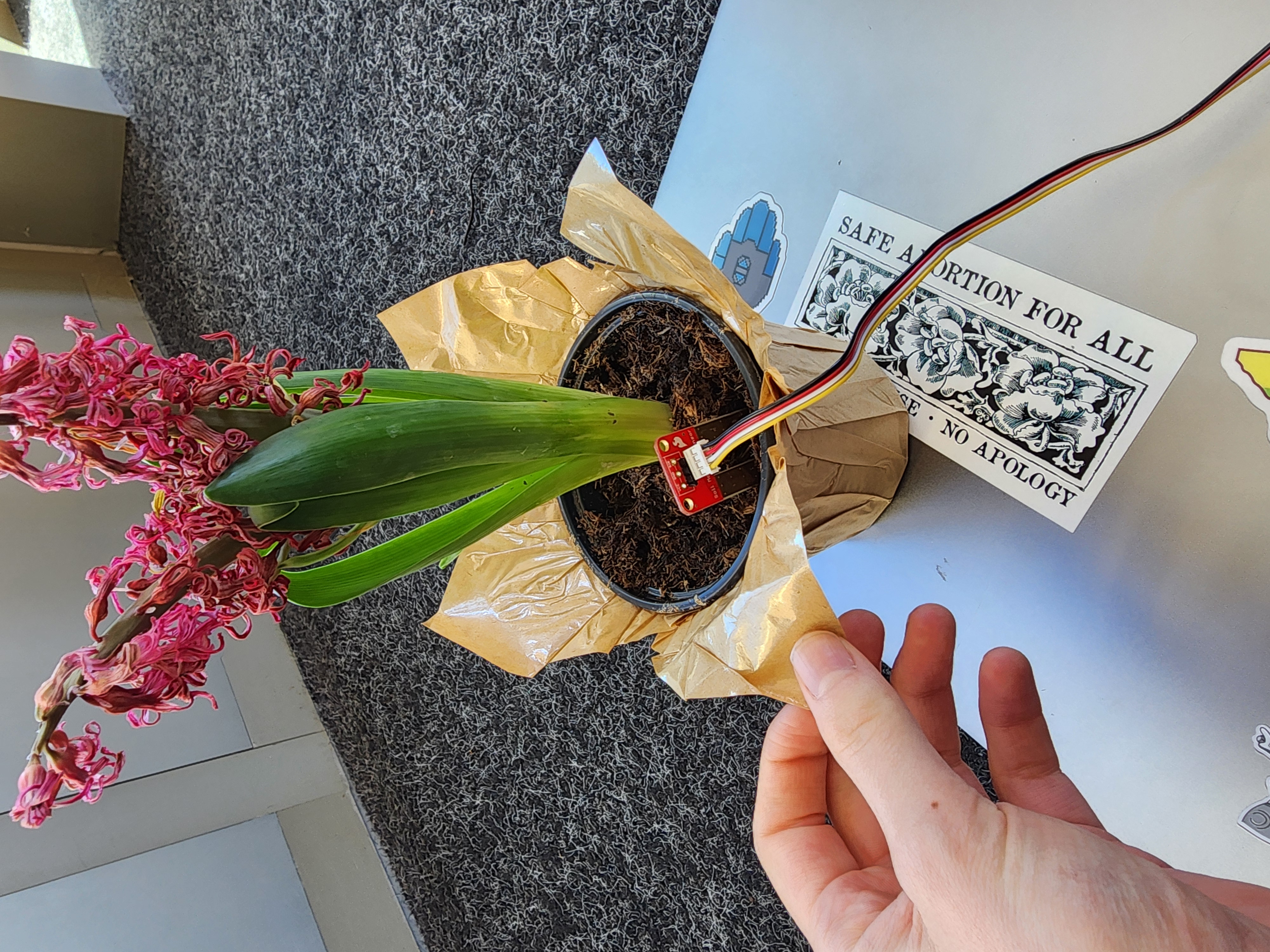
sensor in action!
-
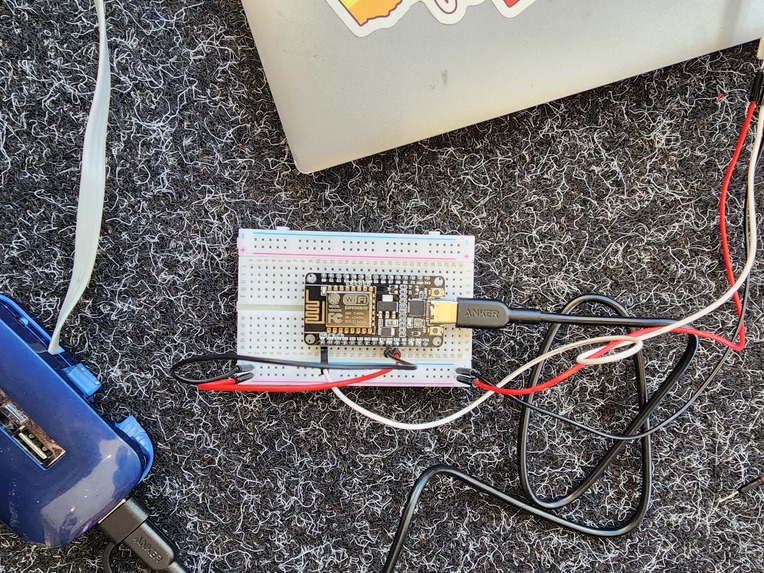
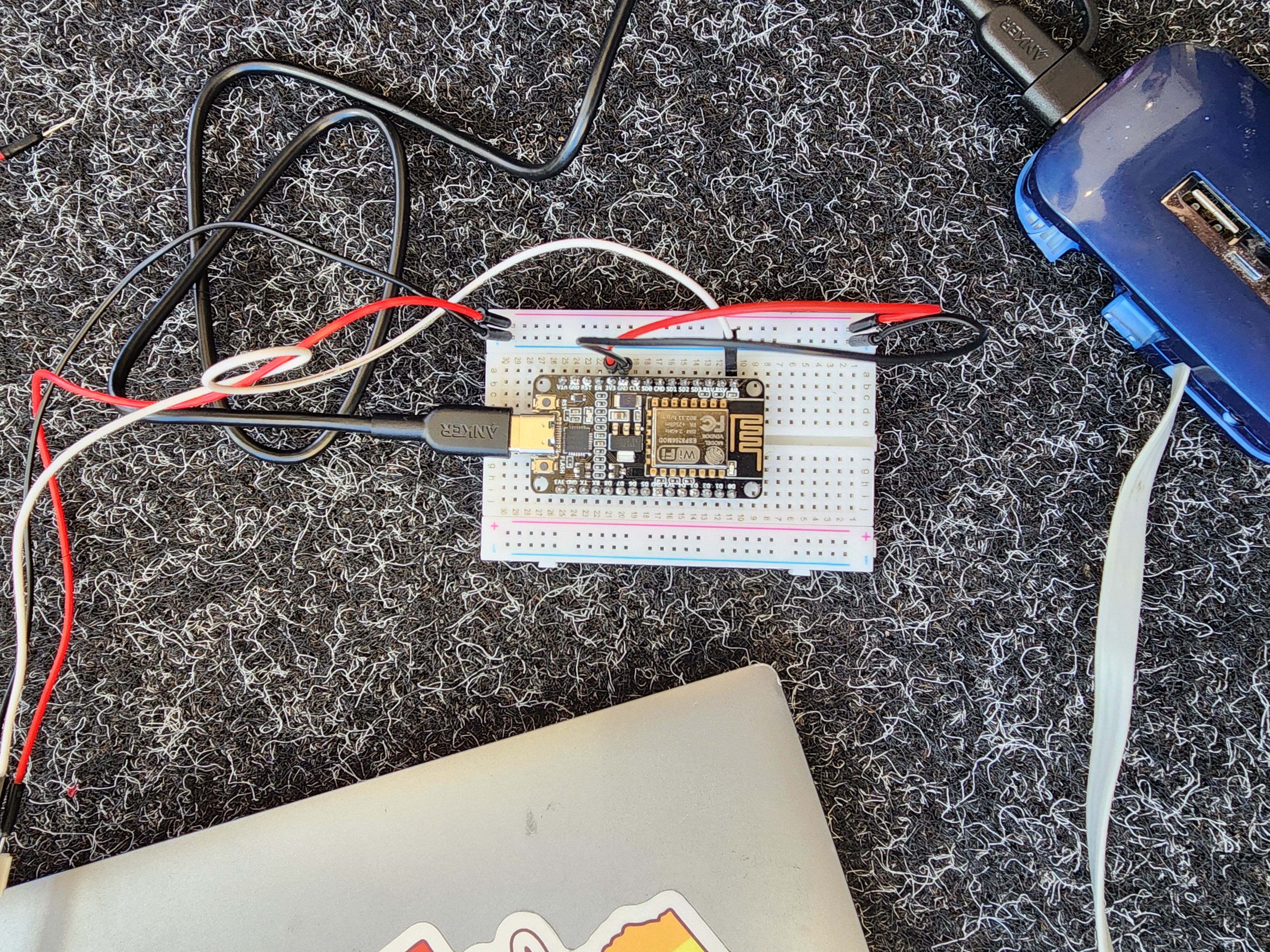
circuitry up-close
-
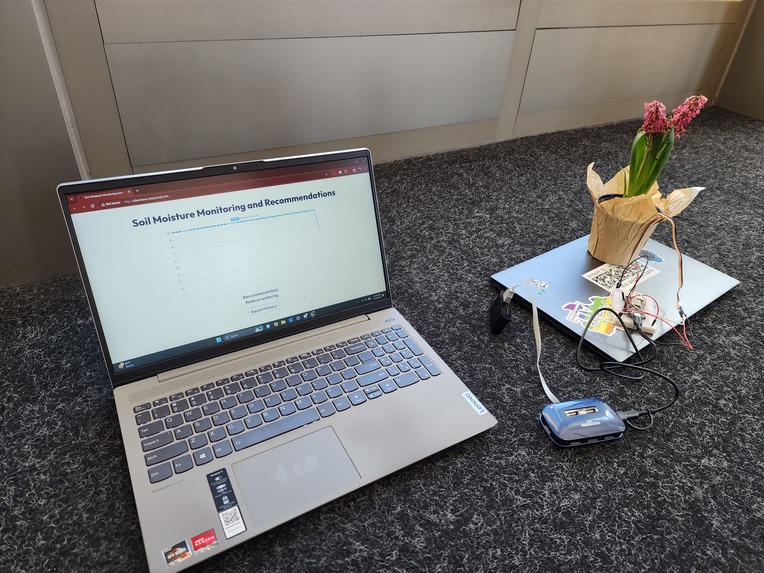
full system
TAMUHack X Project Summary: Remote Plant Care System
Inspiration
The inspiration for our overnight project at TAMUHack X stemmed from our shared passion for sustainable agriculture and the desire to create a solution that empowers individuals to monitor and care for their plants remotely. We recognized the importance of soil hydration levels in plant health and aimed to develop a system that provides real-time data and actionable recommendations for optimal plant care.
What We Learned
Throughout the hackathon, our team gained valuable insights into various technologies and programming languages. We deepened our understanding of frontend development by using JavaScript, HTML5, and CSS3, incorporating interactive visualizations with Chart.js. On the backend, we honed our skills in Python with Flask, implementing a robust server to process data and deliver recommendations. Additionally, working with the ESP8266 microcontroller exposed us to C++ programming for hardware control, expanding our knowledge in embedded systems.
Building the Project
Frontend
We started by designing an intuitive user interface using HTML5 and styled it with CSS3 to ensure a visually appealing and user-friendly experience. JavaScript was employed to integrate Chart.js, enabling dynamic and responsive soil hydration level visualizations. The frontend was crucial for users to easily interpret the data collected by the system.
Backend
The Python backend, powered by Flask, served as the brains behind our project. It received and processed data from the soil hydration sensor, performed calculations, and generated personalized recommendations for plant care. Flask's simplicity and flexibility allowed us to quickly set up an API to communicate between the frontend and backend seamlessly.
Hardware Integration
To gather real-time soil hydration data, we utilized an ESP8266 microcontroller programmed in C++. The microcontroller interfaced with the soil moisture sensor, ensuring accurate measurements using analog input signals. The integration of hardware and software was a key aspect of our project, requiring a collaborative effort to synchronize data flow and maintain system reliability.
Challenges Faced
One significant challenge was the tight time constraints of the hackathon. Overnight development meant we had to prioritize tasks, make quick decisions, and iterate rapidly. Additionally, coordinating between frontend and backend development, along with ensuring smooth integration with the hardware, presented its own set of challenges. Debugging and troubleshooting were constant companions, but the experience helped us refine our problem-solving skills.
Conclusion
Our TAMUHack X project successfully culminated in a Remote Plant Care System, highlighting the synergy of frontend and backend technologies with embedded systems. The project allowed us to explore new technologies, enhance our teamwork and problem-solving skills, and contribute to the hackathon's spirit of innovation. We are proud to have created a solution that promotes sustainable plant care and fosters a connection between technology and nature.

Log in or sign up for Devpost to join the conversation.