-
-
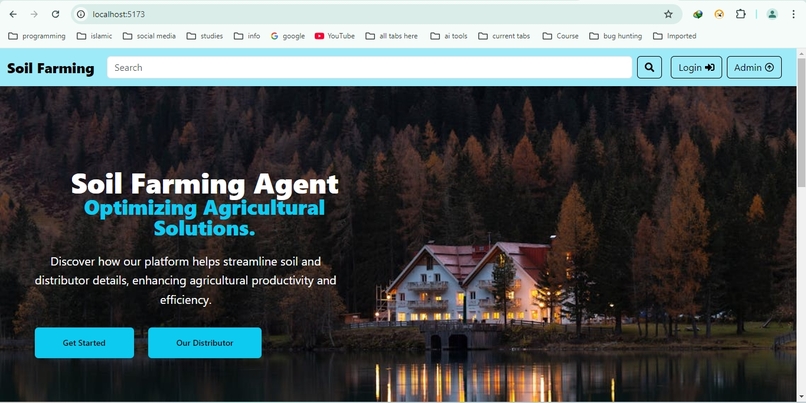
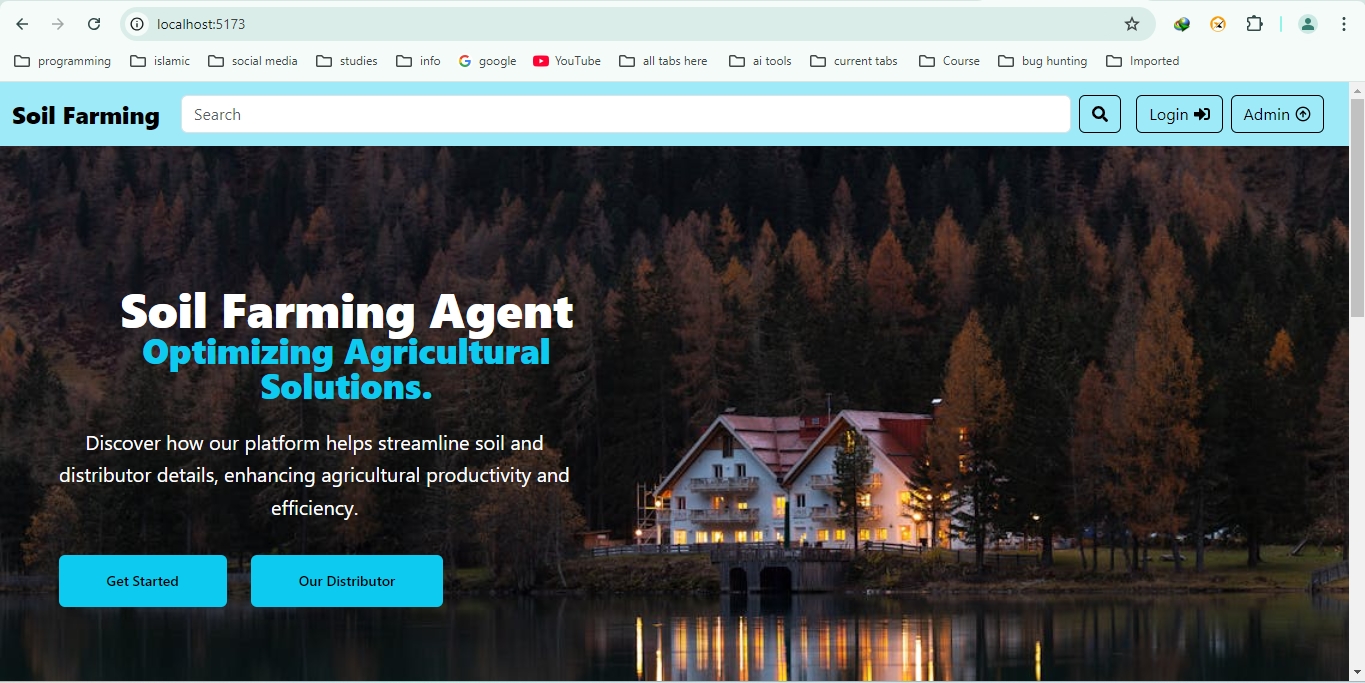
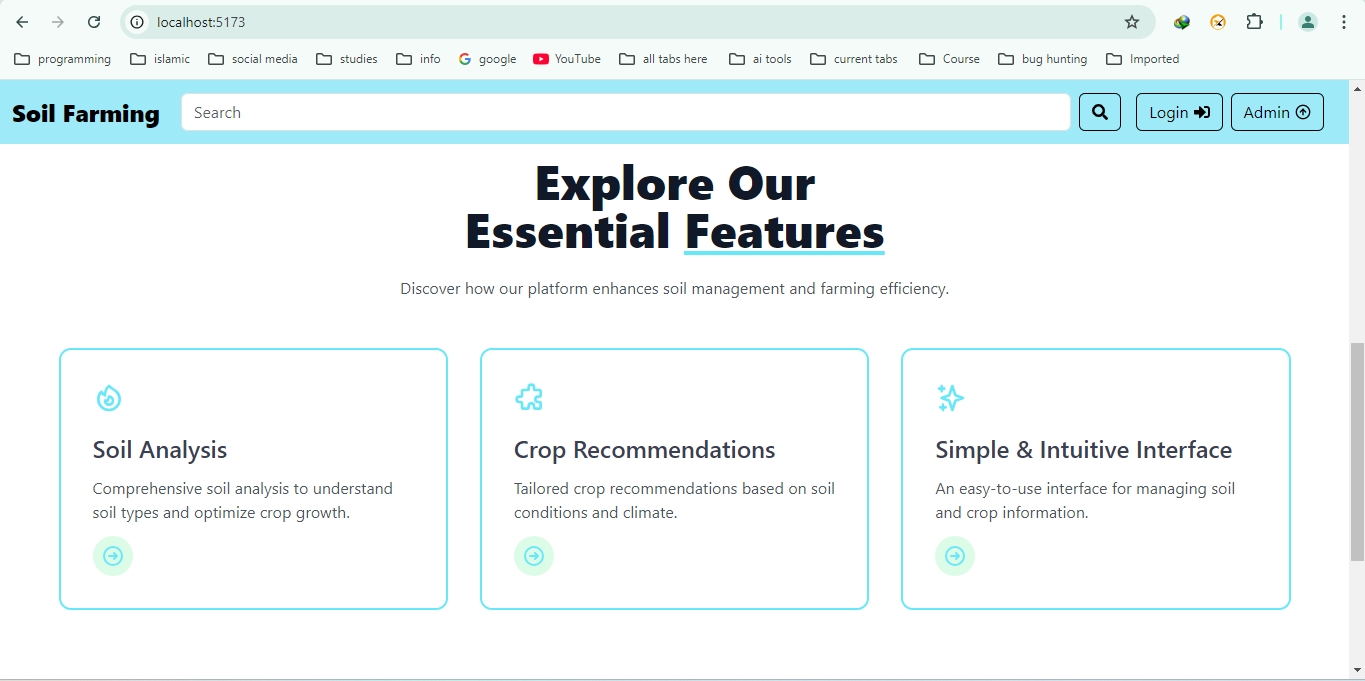
Home/Landing Page
-
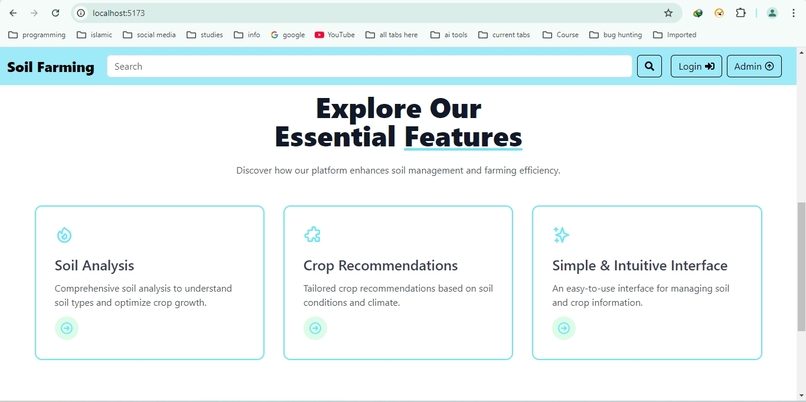
FeatureSection
-
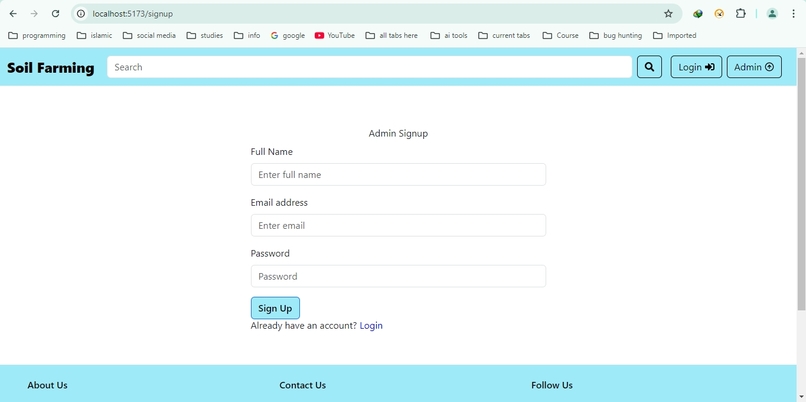
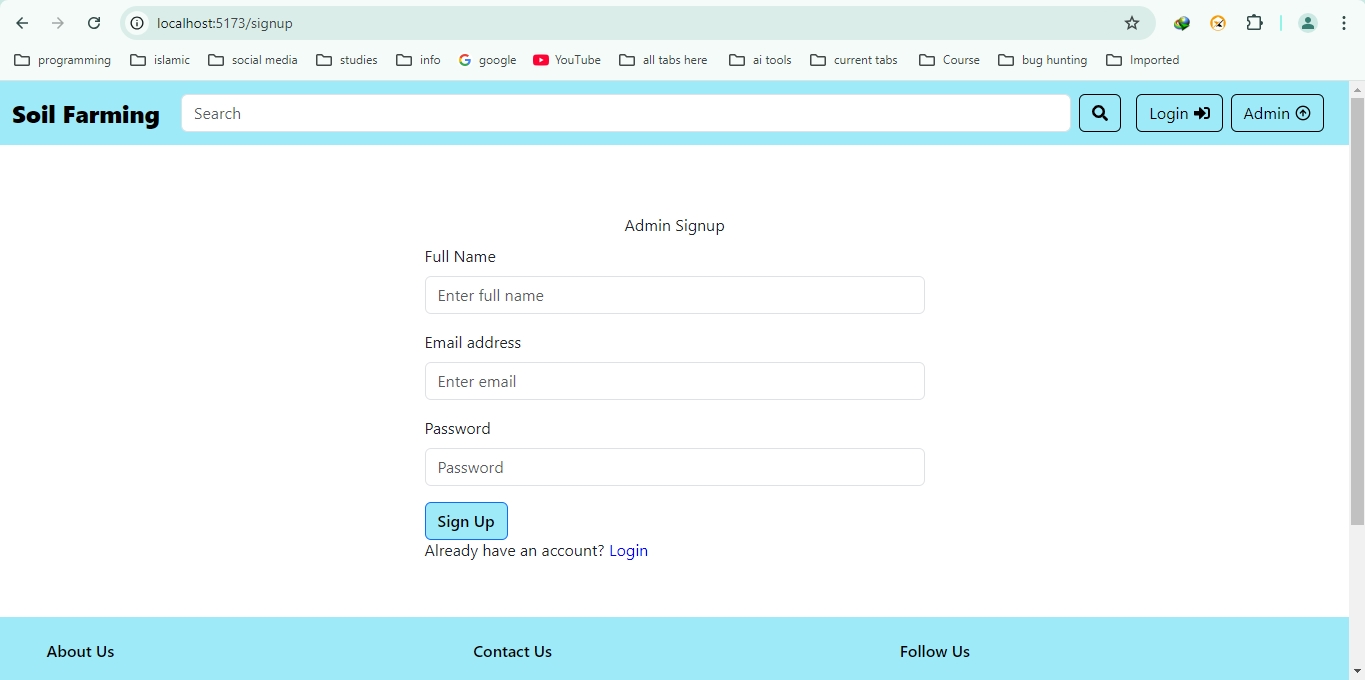
Signup Page
-
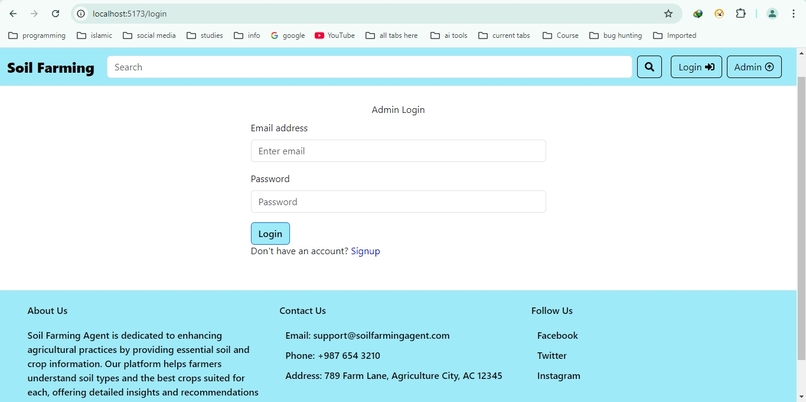
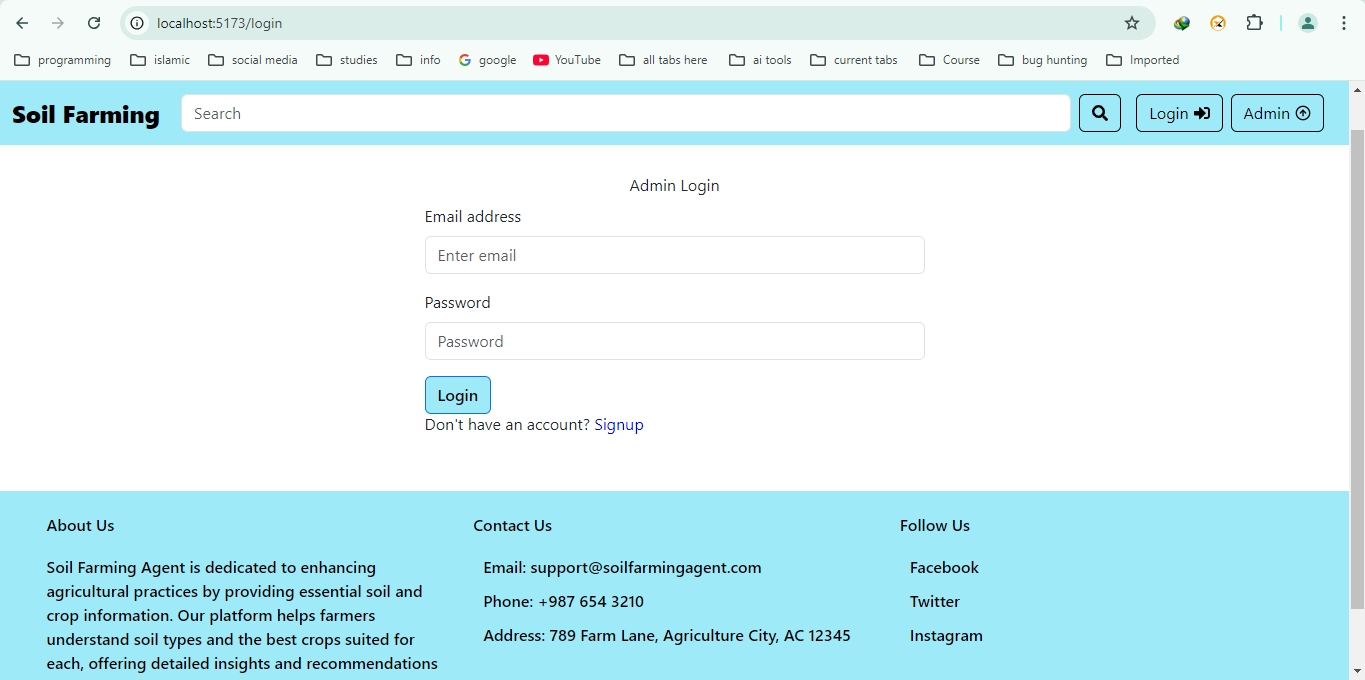
Login Page
-
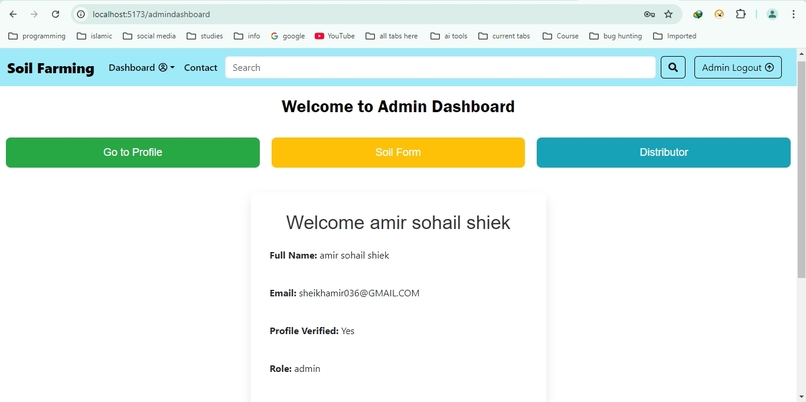
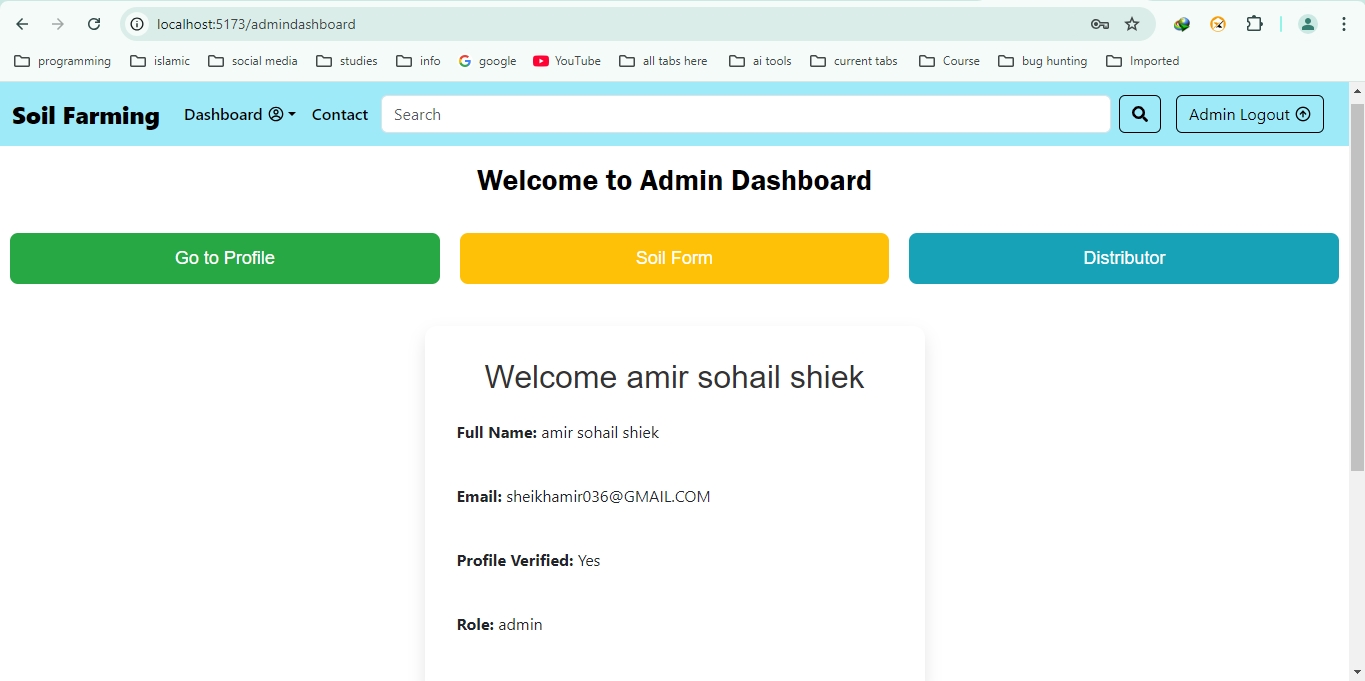
Admin Dashboard Page
-
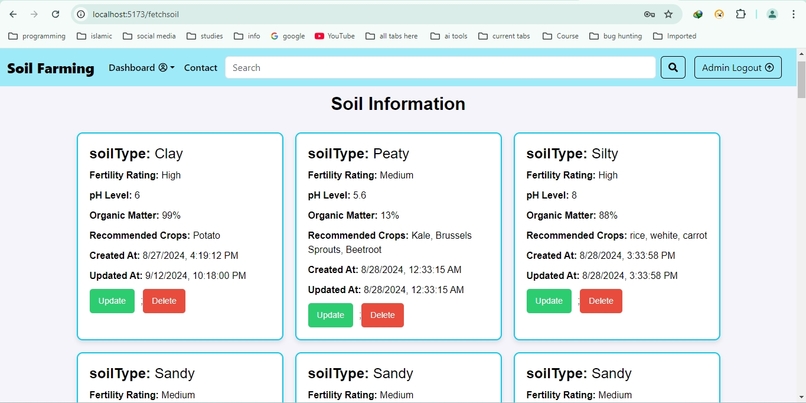
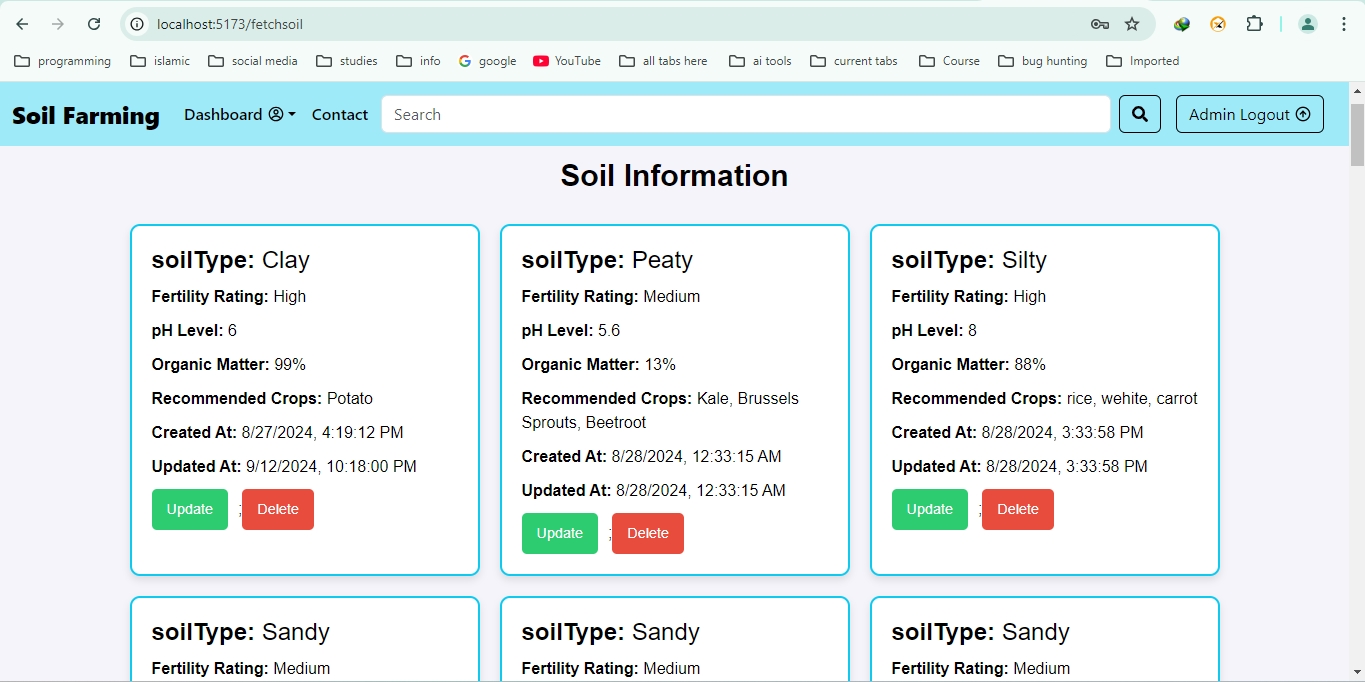
Soil Detail Management Page for Admin
-
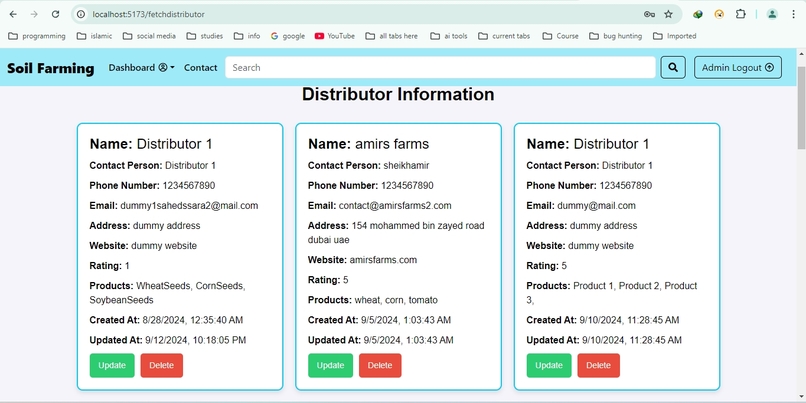
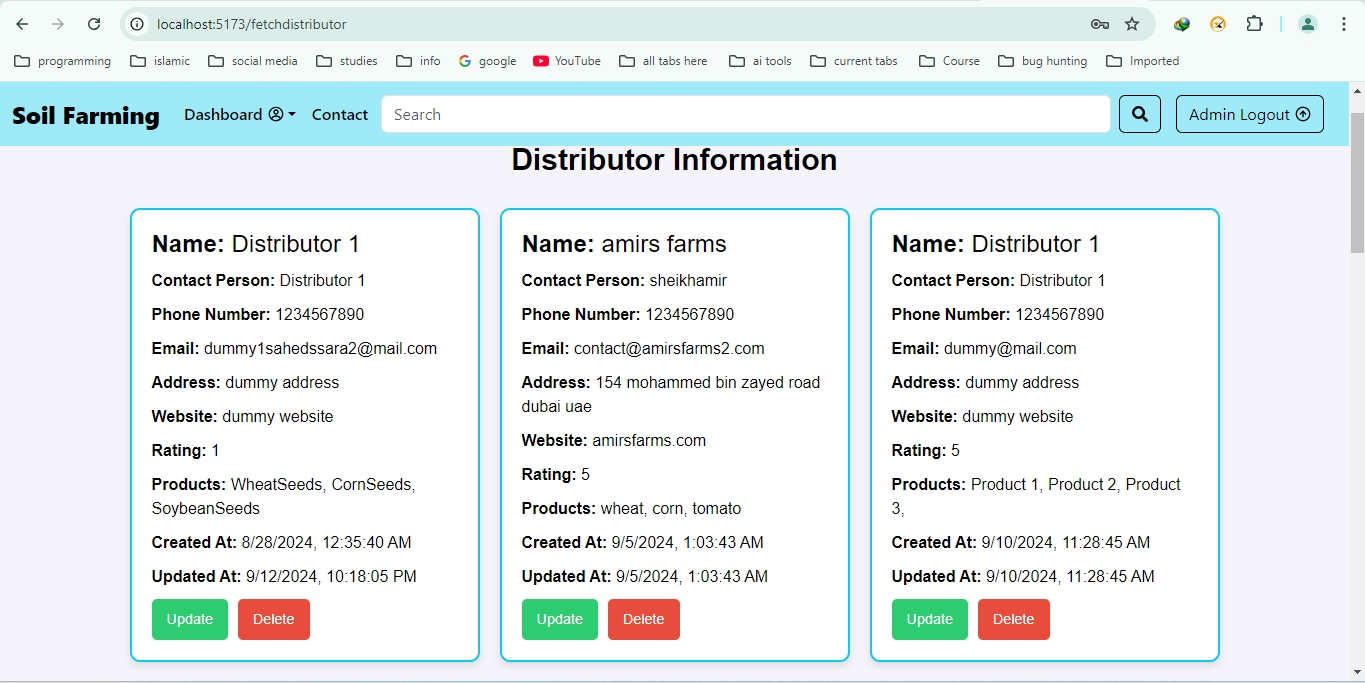
Distributor Detail Management Page for Admin
-
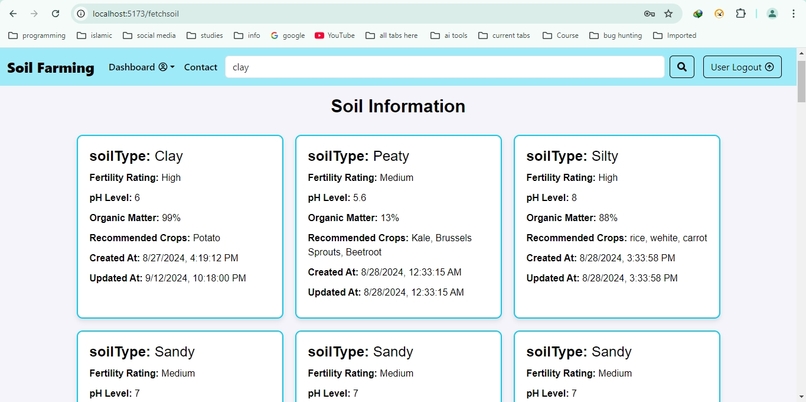
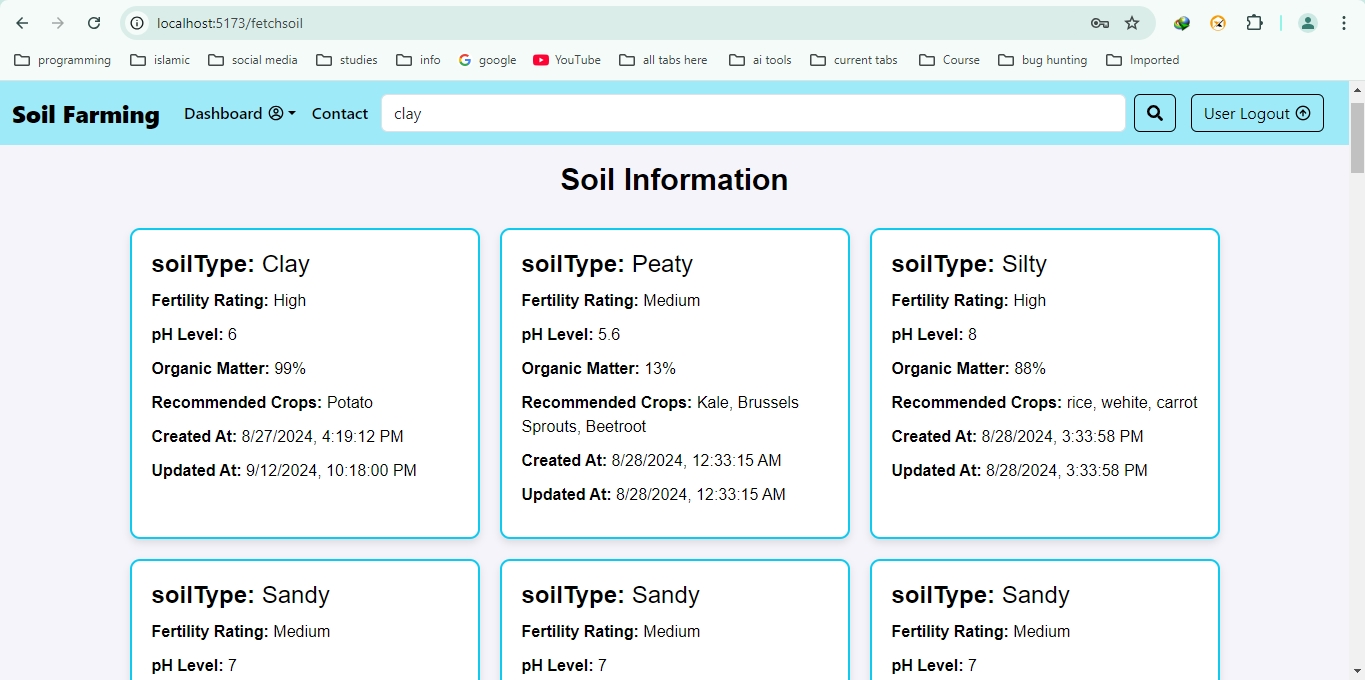
User Can View Soil Details
-
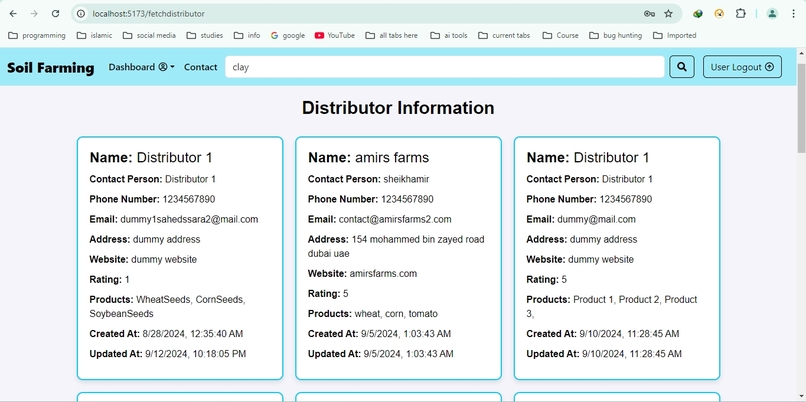
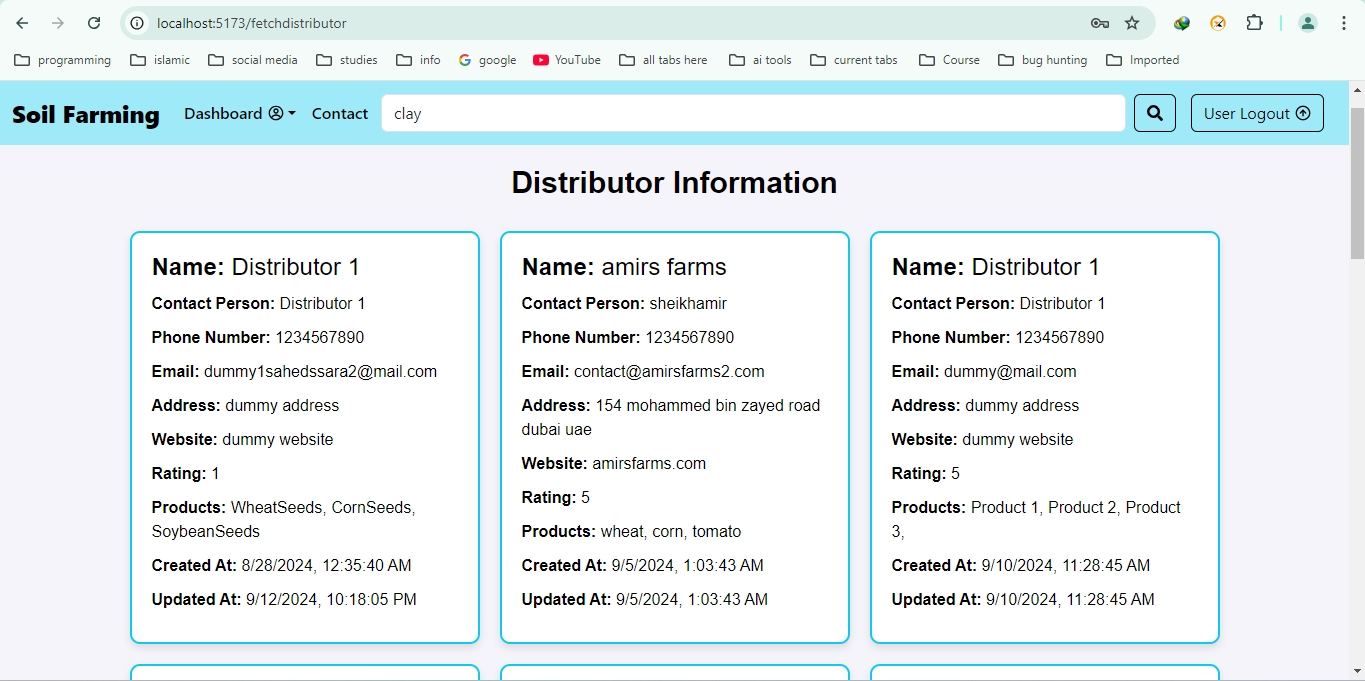
User Can View Distributor Details
-
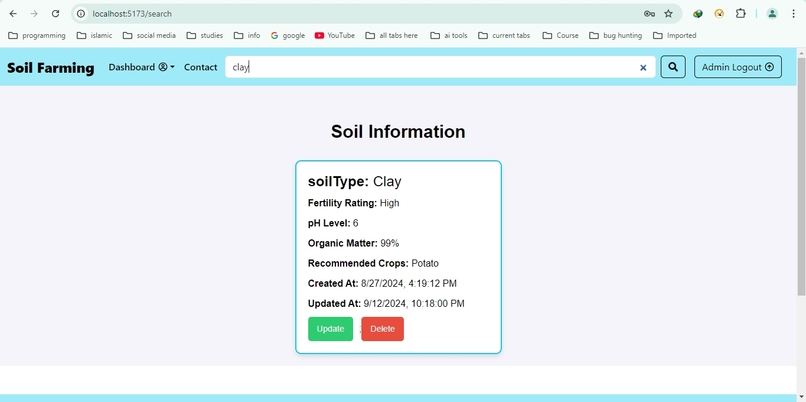
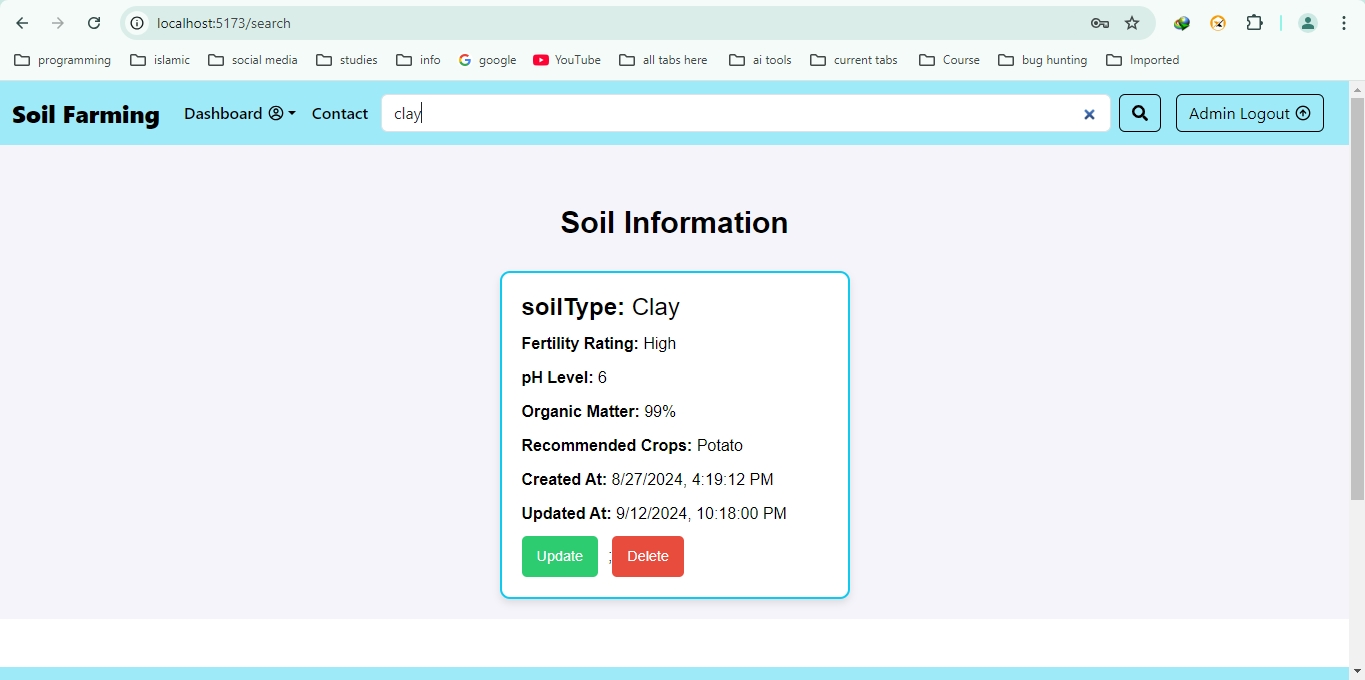
Search Function for Admin/User
-
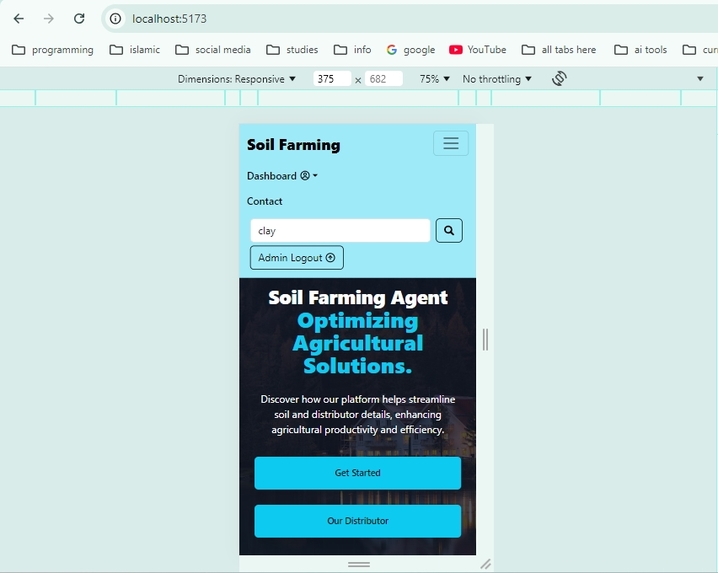
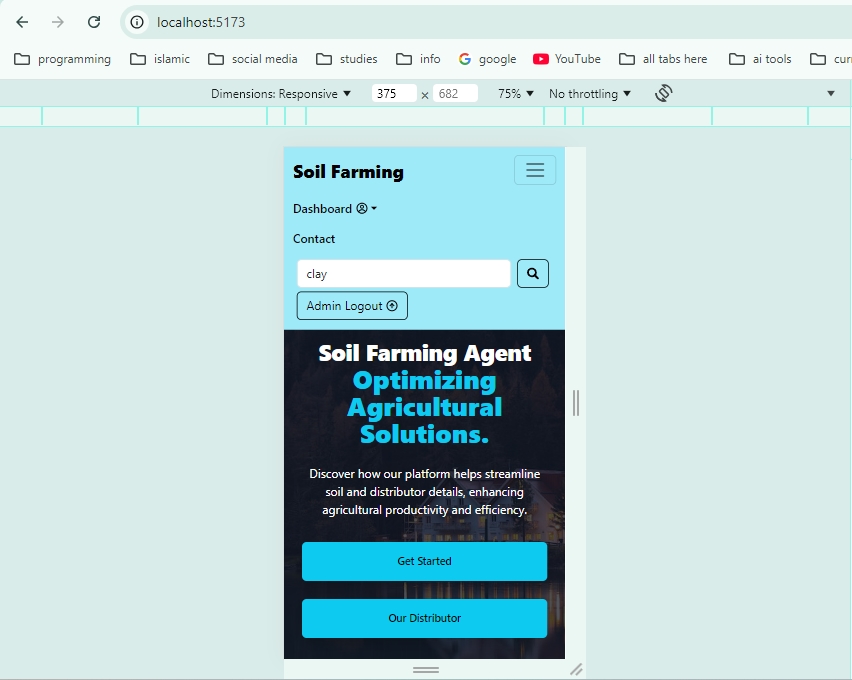
Farming Soil Agency is Fully Responsive User Friendly web Application
Inspiration
The inspiration for the Soil Farming Agency project came from a desire to support sustainable agriculture. Many farmers struggle with understanding the soil conditions of their land, which can lead to poor crop choices and wasted resources. I wanted to create a platform that simplifies this process by providing users with comprehensive information on soil types and suitable crops.
Throughout the development, I learned a lot about full-stack development, particularly how to implement role-based authentication and ensure a seamless user experience.
How I Built the Project
The project was built using a combination of React.js for the frontend and Node.js with Express.js for the backend. MongoDB was chosen for the database due to its flexibility in handling diverse data types, which is crucial for managing various soil and crop information.
One of the main challenges was implementing secure authentication to ensure that only authorized users could access admin functions. I overcame this by utilizing JWT for user sessions and developing middleware to verify user roles. Additionally, I focused on making the site responsive, which required extensive use of CSS frameworks like Bootstrap and Tailwind.
Challenges we ran into
Role-Based Authentication: Ensuring secure access for admins was tricky, but implementing JWT and middleware provided a solid solution. User Experience: Creating intuitive search and filter functionalities required iterative testing and feedback from potential users. Responsive Design: Ensuring the site looked great on all devices was challenging but rewarding, and using Bootstrap and Tailwind helped streamline the process.
Accomplishments that we're proud of
What we learned
Through the development of the Soil Farming Agency, we gained valuable insights into both technical and practical aspects of building a full-stack application.
User-Centric Design: We learned the importance of designing an intuitive user interface. Gathering feedback from potential users was crucial in refining the search and filter functionalities, ensuring that the platform meets their needs.
Authentication and Security: Implementing role-based authentication deepened our understanding of security practices in web development, especially the use of JWT and middleware to protect sensitive areas of the application.
Responsive Development: Working with CSS frameworks like Bootstrap and Tailwind taught us how to create responsive designs that enhance accessibility across devices, making our platform usable for a wider audience.
Testing Best Practices: The necessity of thorough testing became clear as we implemented unit tests and end-to-end tests, reinforcing the reliability of our application.

Log in or sign up for Devpost to join the conversation.