-
-
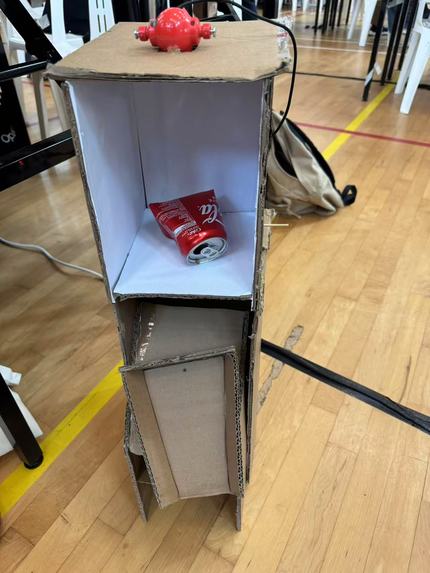
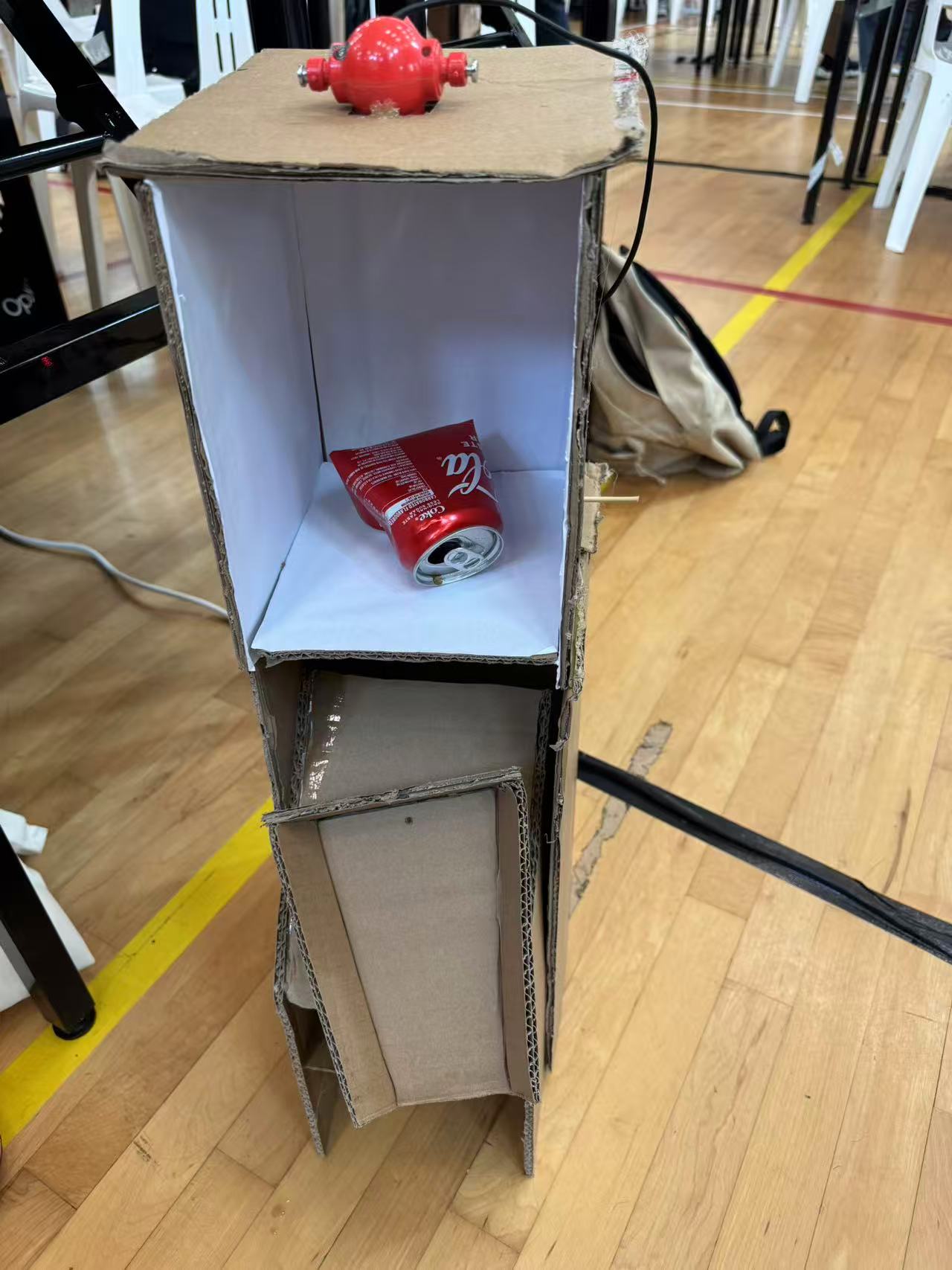
Sortify AI prototype( made of Chagee Cardboard) front view
-
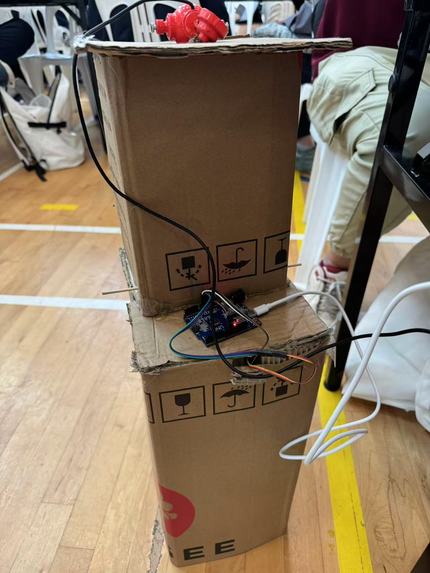
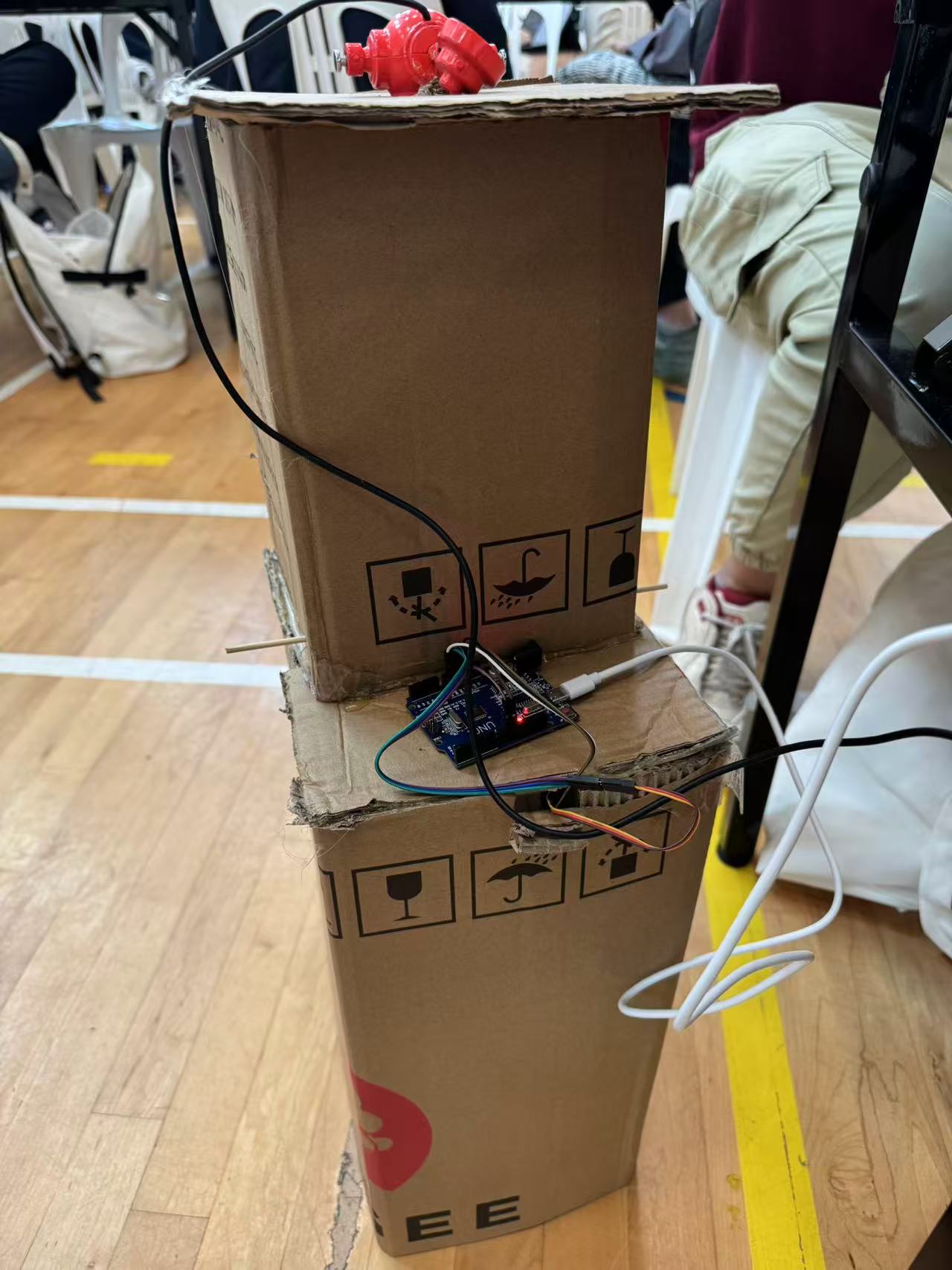
Sortify AI prototype( made of Chagee Cardboard) backward view
🗑️ About the Project
💡 Inspiration
Up to 40% of recyclable materials still end up in landfills due to improper sorting. Seeing overflowing bins filled with mixed waste in everyday spaces made us realise that human error and low awareness are major bottlenecks in recycling systems. We wanted to remove the guesswork from waste sorting and build a solution that makes recycling effortless, accurate, and accessible.
🔍 What the Project Does
Our Smart Garbage Classification and Sorting System automatically identifies and sorts waste into five categories:
glass, metal, paper, plastic, and general trash.
Users simply place an item in front of a camera. The system:
- Uses AI-powered computer vision to classify the material in real time
- Displays classification confidence via a web interface
- Physically sorts the item into the correct bin using a dual-servo Arduino mechanism
This creates a fully automated, end-to-end recycling workflow from vision → decision → action.
🛠️ How We Built It
- AI Model: We trained a YOLOv8 classification model on a curated 5-class waste dataset for accurate material recognition.
- Backend & Interface: A Flask backend powers a browser-based web interface with live camera feed, confidence scores, and system status.
- Hardware System:
- A dual-servo Arduino setup handles physical sorting:
- Servo 1 positions the sorting arm at precise angles (0°–180°) aligned with different bins
- Servo 2 controls a flap mechanism to release items
- Integration: The AI system communicates with Arduino in real time, with automatic port detection and reconnection, ensuring smooth operation without manual setup.
⚙️ Challenges We Faced
Our biggest challenge was reliable servo control and timing coordination:
- Initial failures were caused by memory constraints and pin conflicts on the Arduino
- We optimized the Arduino code, reassigned pins, and implemented proper servo detach/reattach sequences
- Synchronizing AI predictions with mechanical motion required careful timing to prevent mis-sorts
- Fine-tuning servo angles took multiple iterations to ensure accurate bin alignment
These issues pushed us to deeply understand embedded system limitations and real-time hardware behavior.
✅ Results
We successfully built a fully functional automated waste sorting system that:
- Achieves high classification accuracy across five material categories
- Reliably sorts items into the correct bins
- Provides a smooth user experience with real-time visual feedback
- Operates consistently with automatic Arduino connection and recovery
We’re especially proud of bridging AI decision-making with physical robotic action in a robust and user-friendly way.
📚 What We Learned
- How to integrate machine learning models with hardware systems
- The importance of hardware constraints in embedded environments
- Advanced Arduino servo control, memory optimization, and timing management
- Designing real-time systems where software and mechanics must stay perfectly synchronized
This project taught us how much precision and coordination is required to move from AI predictions to real-world impact.
🚀 What’s Next
Future improvements include:
- Expanding to finer-grained material categories (e.g., plastic types, metal alloys)
- Adding IoT capabilities for remote monitoring and analytics
- Integrating weight sensors to improve classification confidence
- Developing a mobile app for system control
- Scaling the design for industrial recycling facilities
- Implementing feedback loops so the model improves continuously with real-world data
We believe this system demonstrates how AI and robotics can meaningfully improve sustainability at scale.


Log in or sign up for Devpost to join the conversation.