Inspiration
There have been reports of people having an emergencies in a public places, who did not receive help, even though they are obviously in danger. This is because of the "bystander effect", the phenomenon where people don't feel responsible when someone is in need of assistance, because "somebody else will take care of it".
What it does
The device will connect to an app and is worn on the upper body. Using machine learning, it can be detected if the user falls down. If that happens, the Phone will play a prerecorded message, commanding explicitly everything that needs to be done to help the person. For a person with a known heart condition, the instructions would be to call an ambulance immideatly. If the person has epillepsy, the instructions might be to remove anything from the vicinity of that person, that he might hit during a seizure.
How we built it
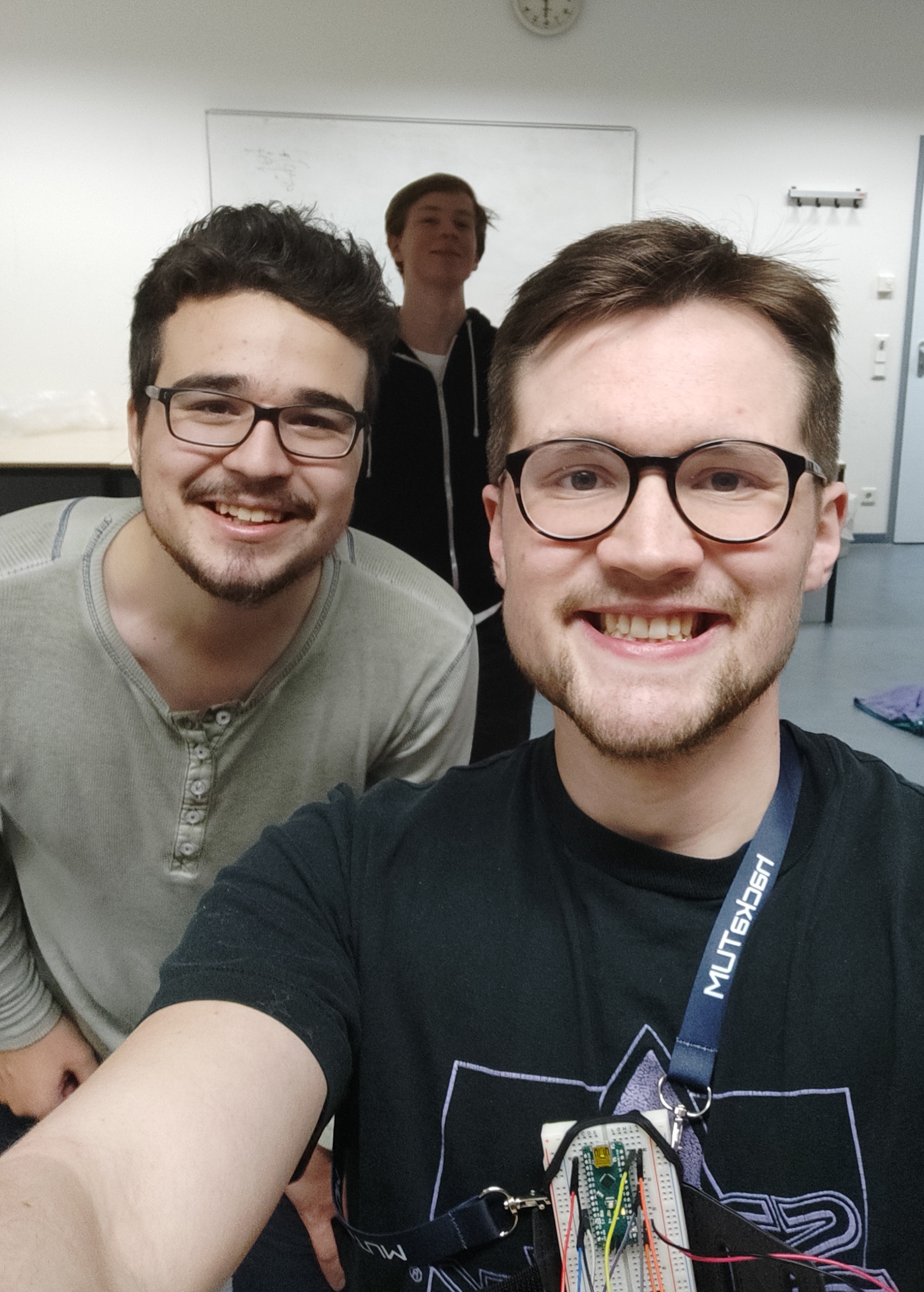
An Arduino will constantly transmit data from a gyroscope and an accelerometer via bluetooth. The app then determines whether a fall has occurred, using a model made with machine learning. This will trigger the app to make a loud noise, followed by instructions.
Challenges we ran into
Finetuning the machine learning algorithm was very hard as nobody in the team has used machine learning techniques before. (Thanks Eric!) Also, programming the arduino bluetooth module was new territory to us all.
Accomplishments that we're proud of
We each learned something completely new to us. Machine learning, programming hardware controllers and managing bluetooth connections
What's next for Soft n' Fuzzy
We want to achieve a more friendly UI and add different profiles for different disabilities

Log in or sign up for Devpost to join the conversation.