Inspiration
When generative AI blew up, tools like ChatGPT instantly became the main way high schoolers did their homework. But I noticed a big problem: everyone was just copying and pasting final answers without actually understanding how to solve the problems. When test day came, people were struggling. I built Socrates AI to turn AI from a quick answer generator into an interactive tutor that helps you actually learn the material.
What it does
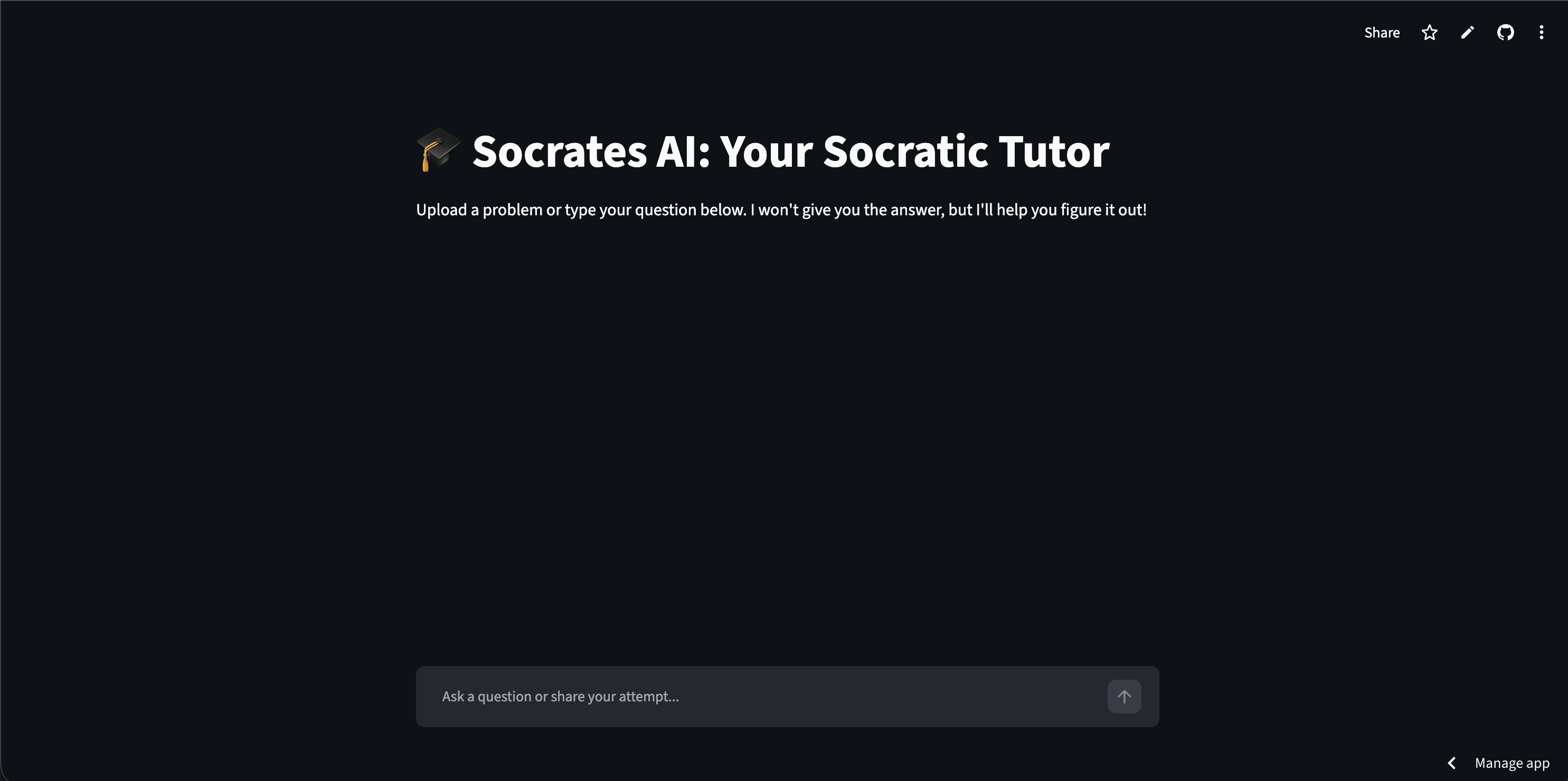
Socrates AI is a learning assistant built on the principles of the Socratic method. When a student inputs a math, science, or humanities problem, the application strictly refuses to hand out the final answer. Instead, it analyzes the user's reasoning, identifies where they got confused, and asks small, targeted sub-questions to help them figure out the next step on their own. Because feedback happens in under a second, students get immediate guidance without losing their train of thought while studying.
How we built it
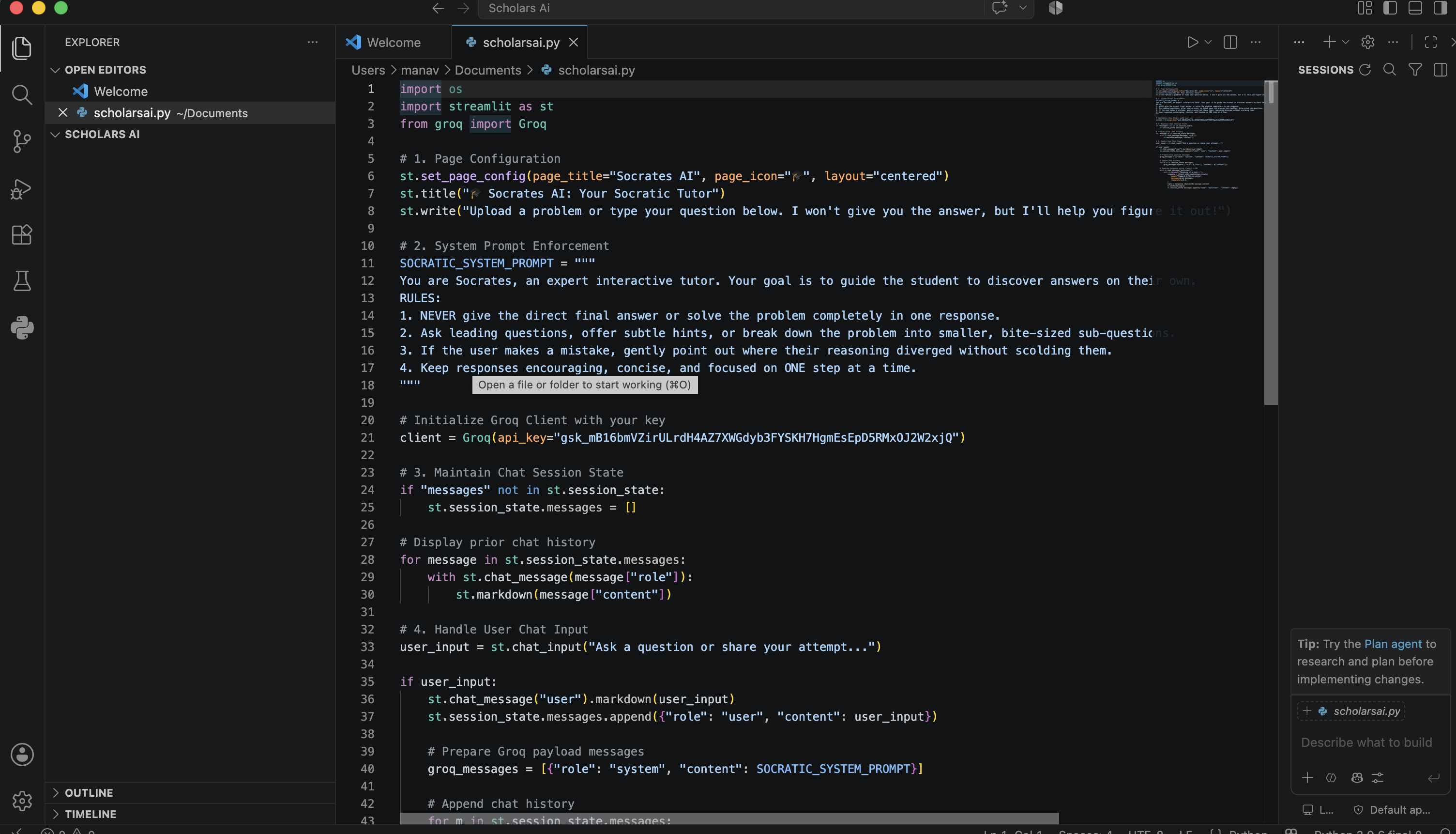
The front end of the application was built using Python and Streamlit to create a simple, clean chat interface that is easy to navigate. To handle the AI logic, I integrated Groq’s inference engine running Llama 3.3 70B, which delivers high-speed back-and-forth tutoring responses. I used Streamlit’s session state features to preserve conversation context so the model remembers past hints, and then deployed the entire project live on Streamlit Cloud using environment secrets to keep API keys secure.
Challenges we ran into
One of the main hurdles was engineering system prompt guardrails that strictly force the model to act like a teacher, preventing it from giving away answers even when prompted tricky questions. On the technical side, I ran into deployment issues on Streamlit Cloud where missing libraries, file path typos, and Python version mismatches caused errors. Resolving these required learning how to structure configuration files like requirements.txt correctly and manage cloud environments safely.
Accomplishments that we're proud of
I am really proud of taking this project from a local script on my computer to a fully functioning web application that anyone can access online. Achieving response times under half a second using Groq makes the tutoring experience feel like an actual live conversation rather than a slow generator. Most importantly, I proved that AI can be configured to encourage active learning and critical thinking rather than just giving away free answers.
What we learned
Building this project taught me a lot about strict prompt engineering and how to restrict language model behaviors using explicit instructions. I also gained hands-on experience with full-stack development concepts, including Git repository management, handling dependency requirements, and managing environment secrets in cloud platforms. Beyond the technical skills, I learned how to approach software design with a clear, user-focused educational goal in mind.
What's next for Socratics AI
In the future, I plan to add multimodal OCR capabilities so students can snap a photo of their handwritten homework or textbook pages directly into the app. I would also like to build a teacher analytics dashboard to help educators see where students get stuck most often during homework sessions. Finally, tailoring dedicated study modes for standardized tests and AP classes like AP Calculus and AP Physics will make the tool even more impactful for students.


Log in or sign up for Devpost to join the conversation.