Inspiration
We wanted to reimagine how people prepare for high-stakes moments — job interviews, public speeches, and learning new concepts. Traditional practice tools give generic feedback after the fact. We asked: what if an AI coach could read your body language in real time and adapt its teaching style the way a great human mentor would?
What it does
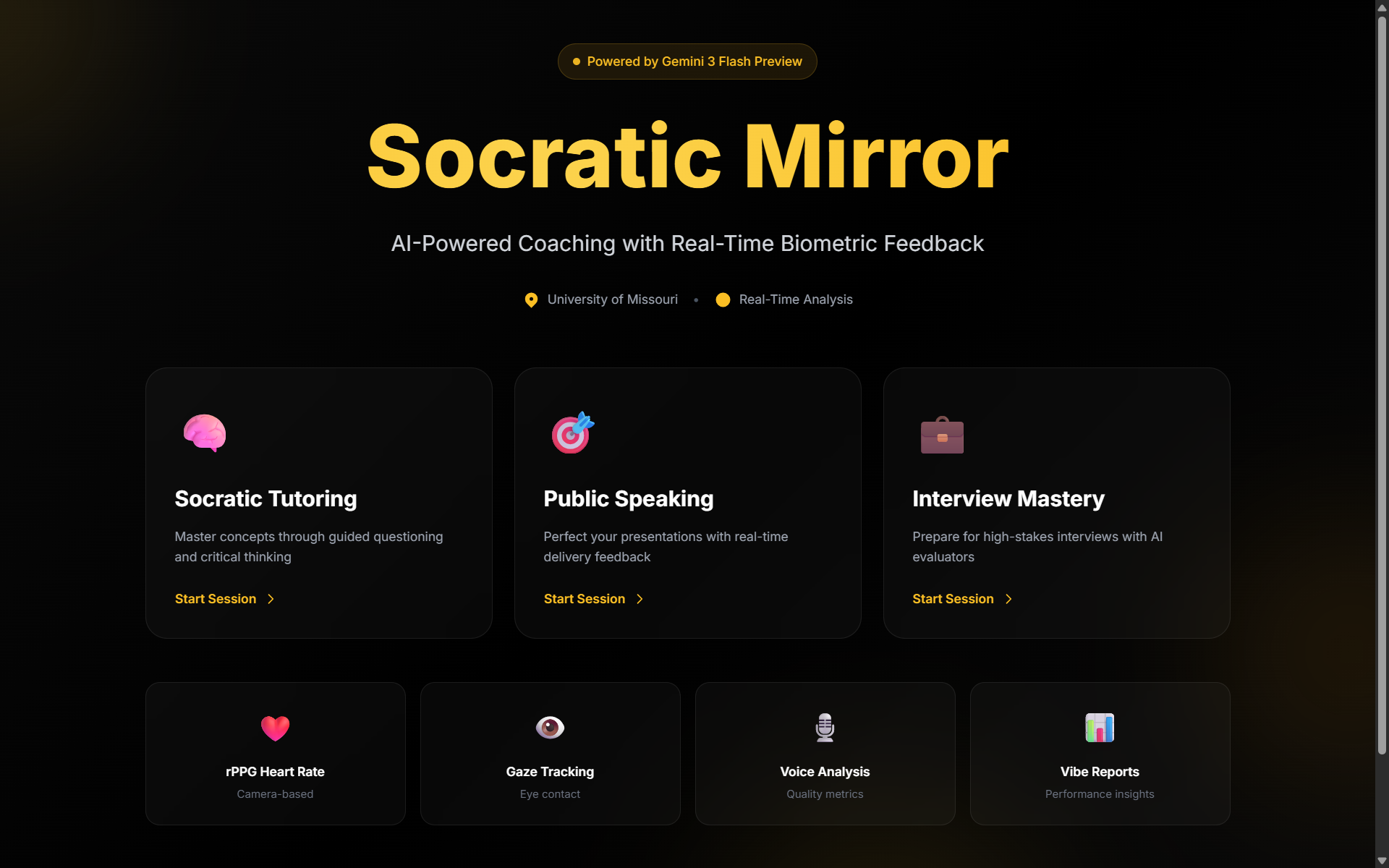
The Socratic Mirror Agent is a multimodal AI coaching system with three modes:
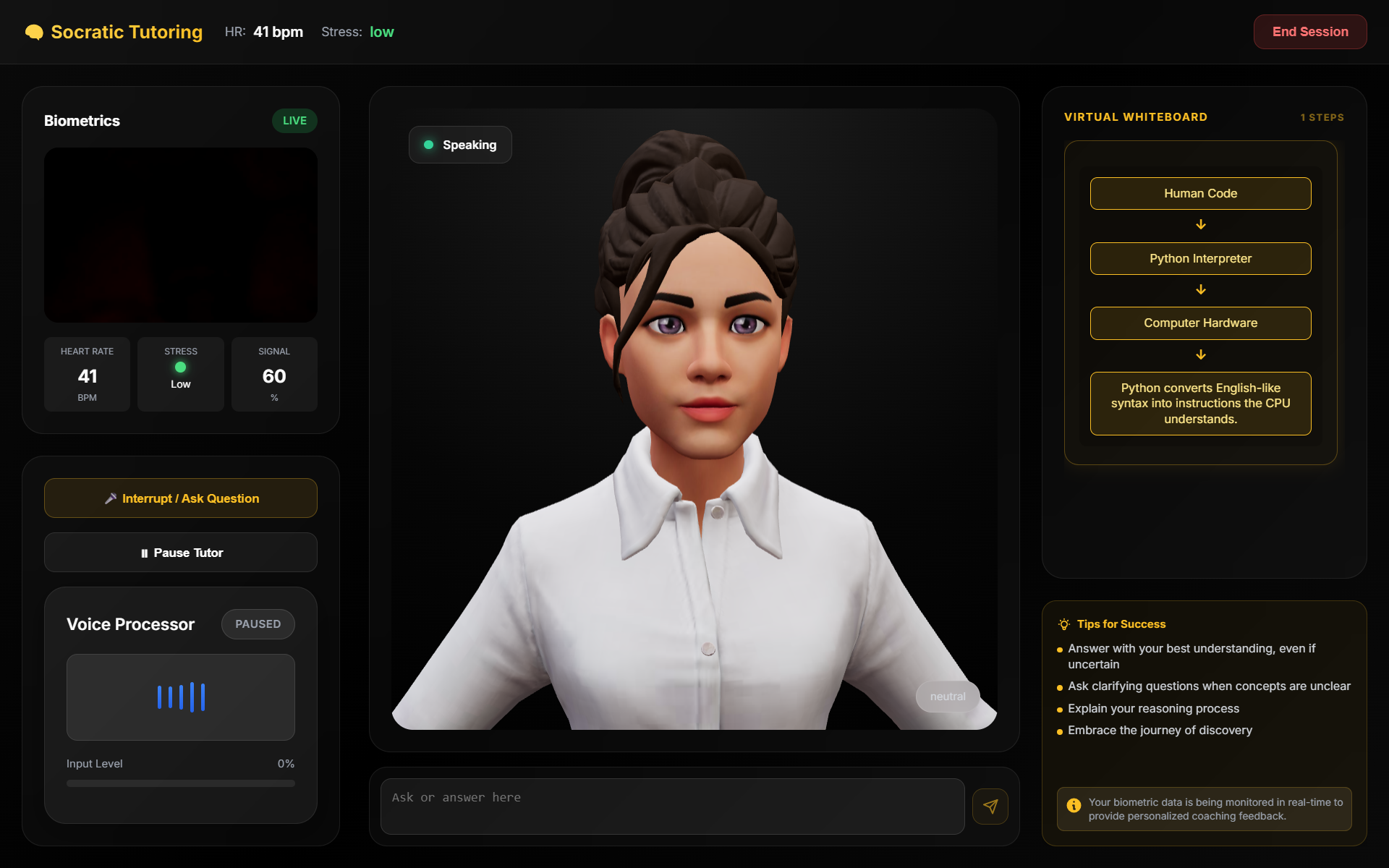
- Socratic Tutoring — Type any topic and the AI teaches through guided questioning, never giving direct answers. A live whiteboard renders equations, diagrams, step lists, and tables as the lesson progresses.
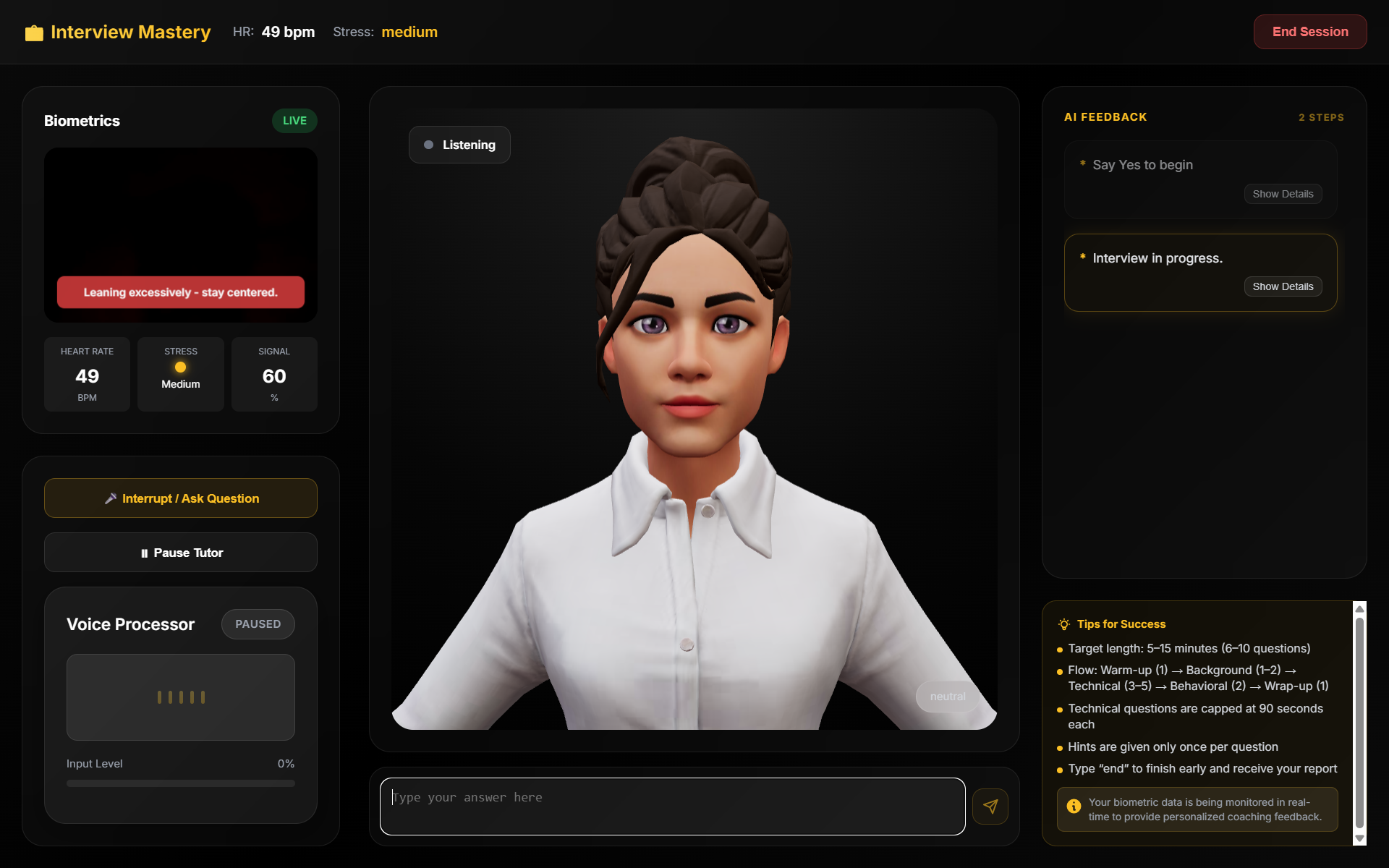
- Interview Preparation — Paste a job description and upload your resume. The AI conducts a structured mock interview cycling through background, technical, and behavioral questions with real-time evaluation.
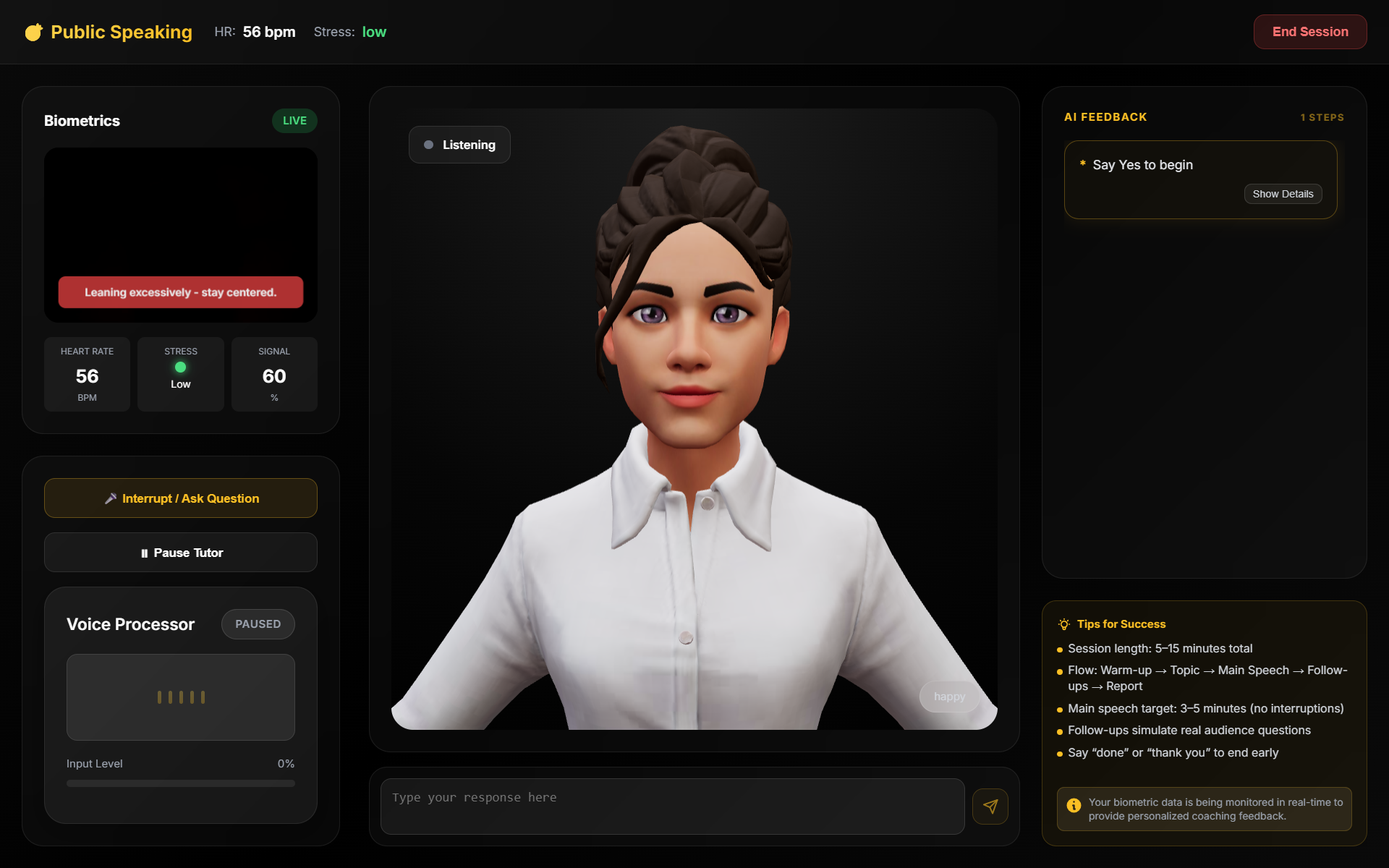
- Public Speaking — Choose a speech type, enter your topic, and practice delivering it. The AI tracks filler words, pauses, and pacing, then provides structured feedback.
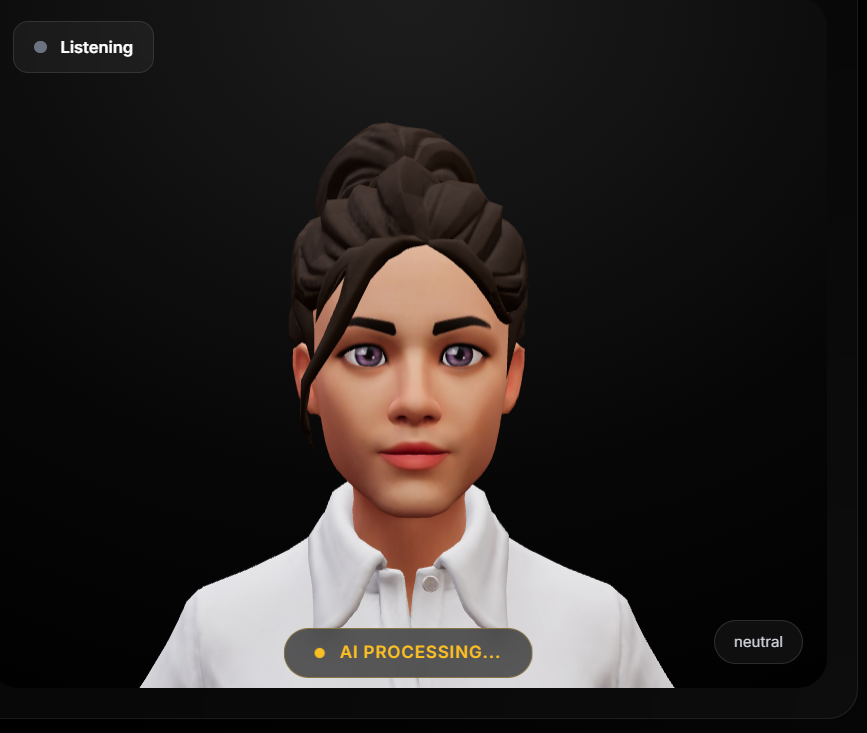
Across all modes, a 3D avatar with procedural lip-sync, gestures, and facial expressions responds naturally. A webcam-based biometric monitor tracks heart rate and stress level. If the system detects excessive filler words, high stress, or gaze deviation, it triggers a barge-in — interrupting with corrective coaching feedback. After each session, a Vibe Report summarizes your performance with scores, strengths, and areas for improvement.
How we built it
- Frontend: Next.js 14 with TypeScript. The 3D avatar uses React Three Fiber with a Ready Player Me
.glbmodel, custom bone rigging for gestures (explaining, pointing, greeting, idle), and procedural lip-sync driven by speech energy. KaTeX renders math on the whiteboard. Voice input uses the Web Speech API; voice output uses browser SpeechSynthesis. - Backend: Python FastAPI server communicating over WebSocket for real-time bidirectional messaging. The coaching engine manages mode-specific state machines (interview question flow, tutoring step progression, public speaking stages).
- AI: Google Gemini API with automatic multi-model fallback (flash for real-time responses, pro for deep analysis). Structured JSON prompts ensure consistent output across tutoring steps, interview evaluations, and speech feedback.
- Biometrics: rPPG (remote photoplethysmography) algorithms extract heart rate from webcam video using green channel analysis and Butterworth bandpass filtering. Stress detection uses hysteresis with a 20% threshold and 5-second persistence.
- Testing: Property-based tests with fast-check validate signal processing invariants across 100+ random inputs.
Challenges we ran into
- Real-time coordination: Synchronizing voice recognition, TTS narration, avatar animation, biometric capture, and WebSocket messaging without race conditions required careful state management and a narration queue system.
- Barge-in timing: Detecting when to interrupt the user mid-speech without being annoying meant tuning multi-modal thresholds across filler word counts, stress levels, and gaze deviation.
- Gemini output consistency: Getting the AI to return well-structured JSON reliably across different models required robust parsing with multiple fallback strategies (fenced blocks, brace matching, raw text).
- Avatar expressiveness: Making the 3D avatar feel alive with only morph targets and bone transforms meant building a procedural animation system for breathing, gestures, expressions, and lip-sync from scratch.
What we learned
- Browser-native APIs (Web Speech, SpeechSynthesis, getUserMedia) are surprisingly capable for building multimodal applications without external services.
- Property-based testing with fast-check catches edge cases in signal processing that unit tests miss entirely.
- Gemini's multi-model ecosystem lets you optimize cost and latency by routing different tasks to different model tiers.
What's next
- Wire the real rPPG pipeline into the live biometric monitor (currently using simulated data for demo reliability).
- Add Gemini's native audio streaming for lower-latency voice interaction.
- Expand coaching modes with collaborative whiteboard editing and multi-user sessions.
Built With
- fastapi-(python)
- frontend
- gemini
- gemini-api-(generative-ai)
- jest
- nextjs
- ready-player-me-(avatars)
- rest
- tailwind-css
- websocket

Log in or sign up for Devpost to join the conversation.