-
-
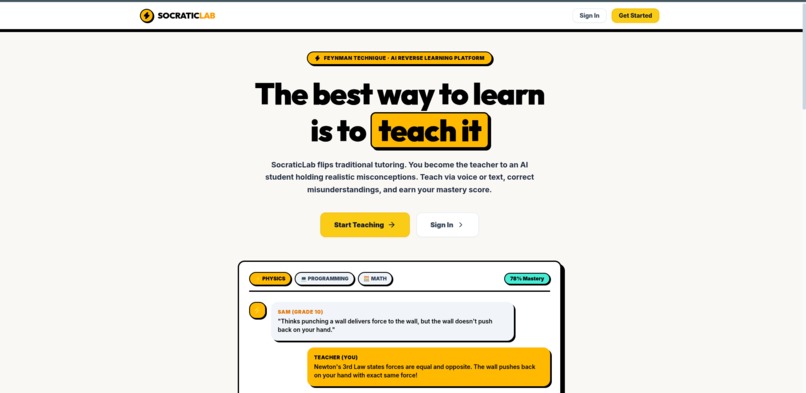
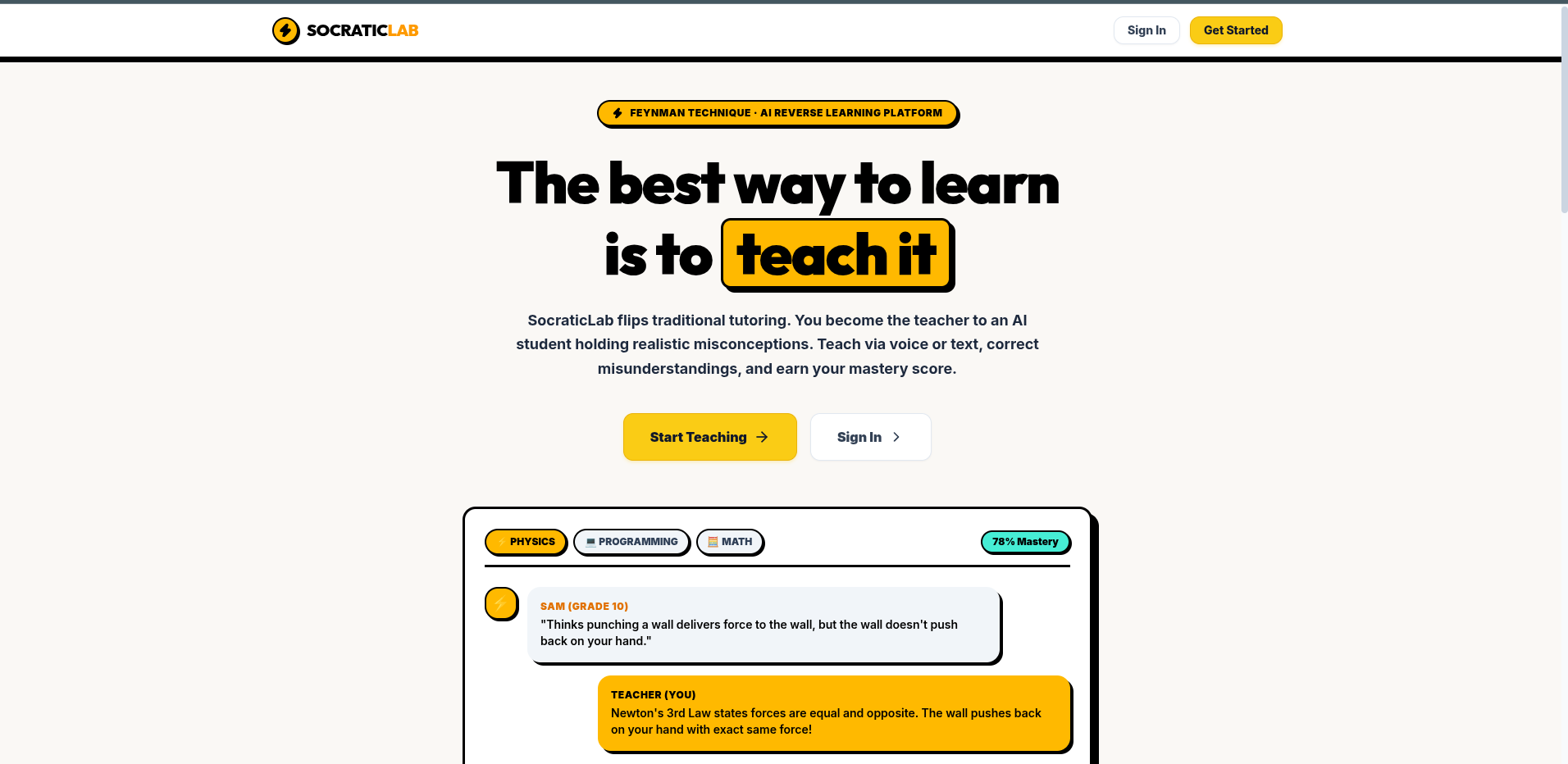
Landing page
-
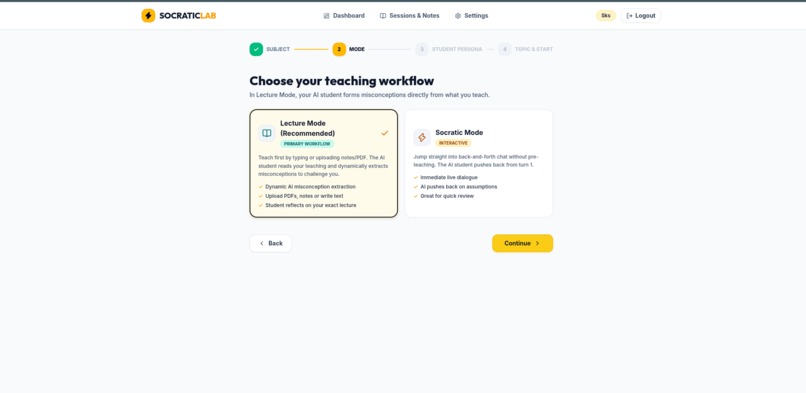
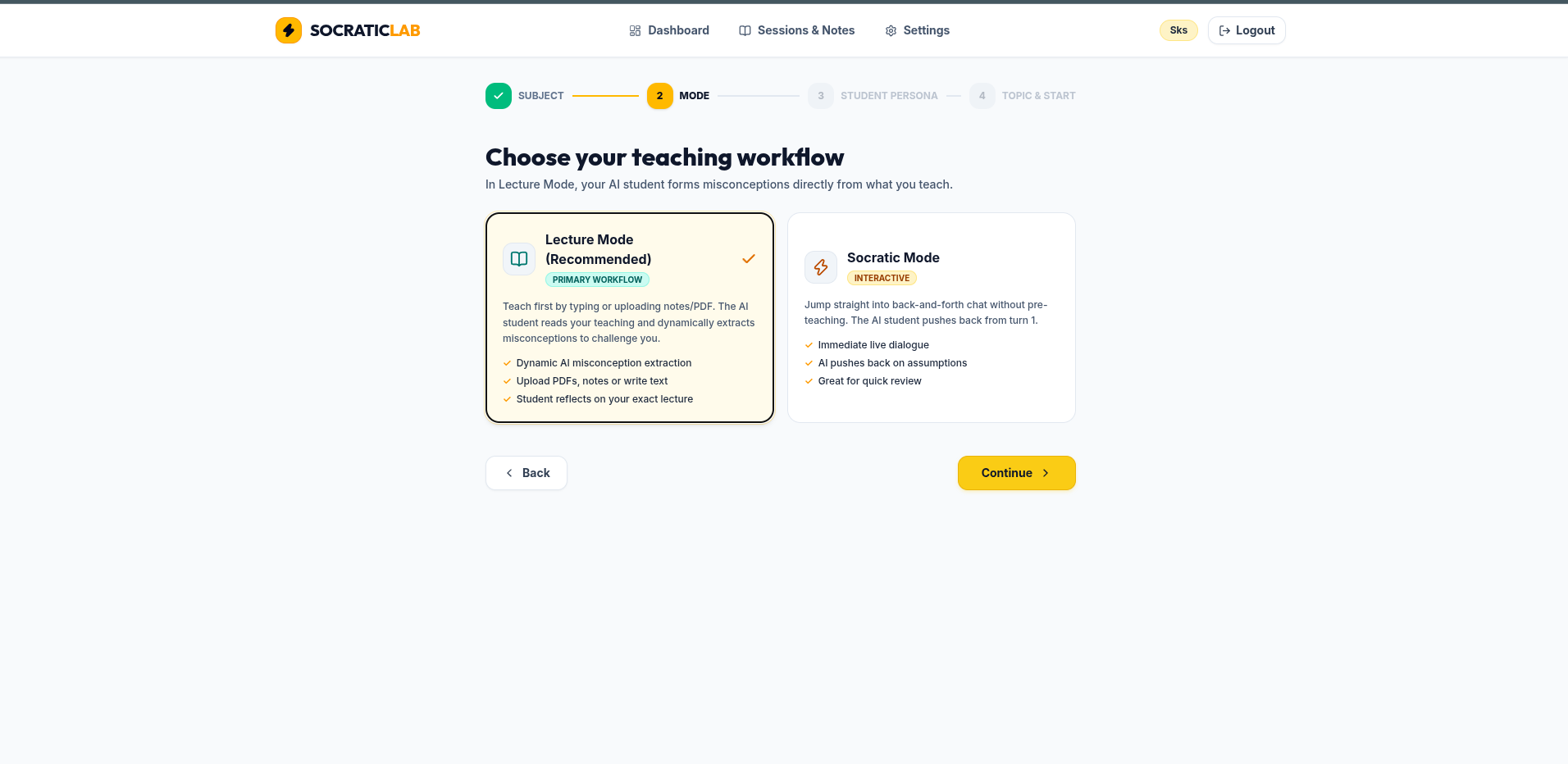
Teaching modes
-
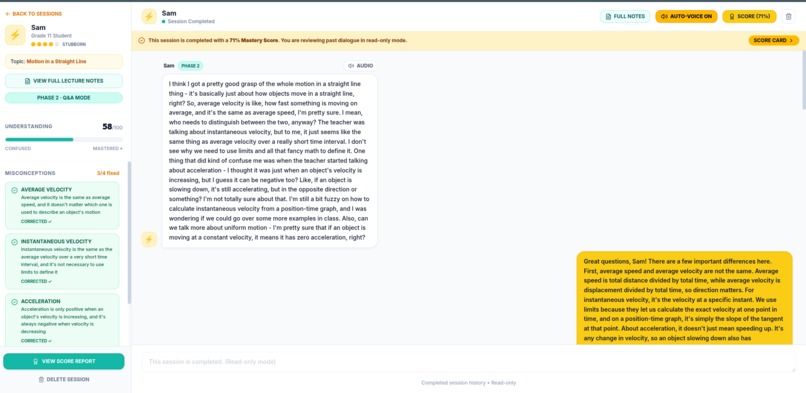
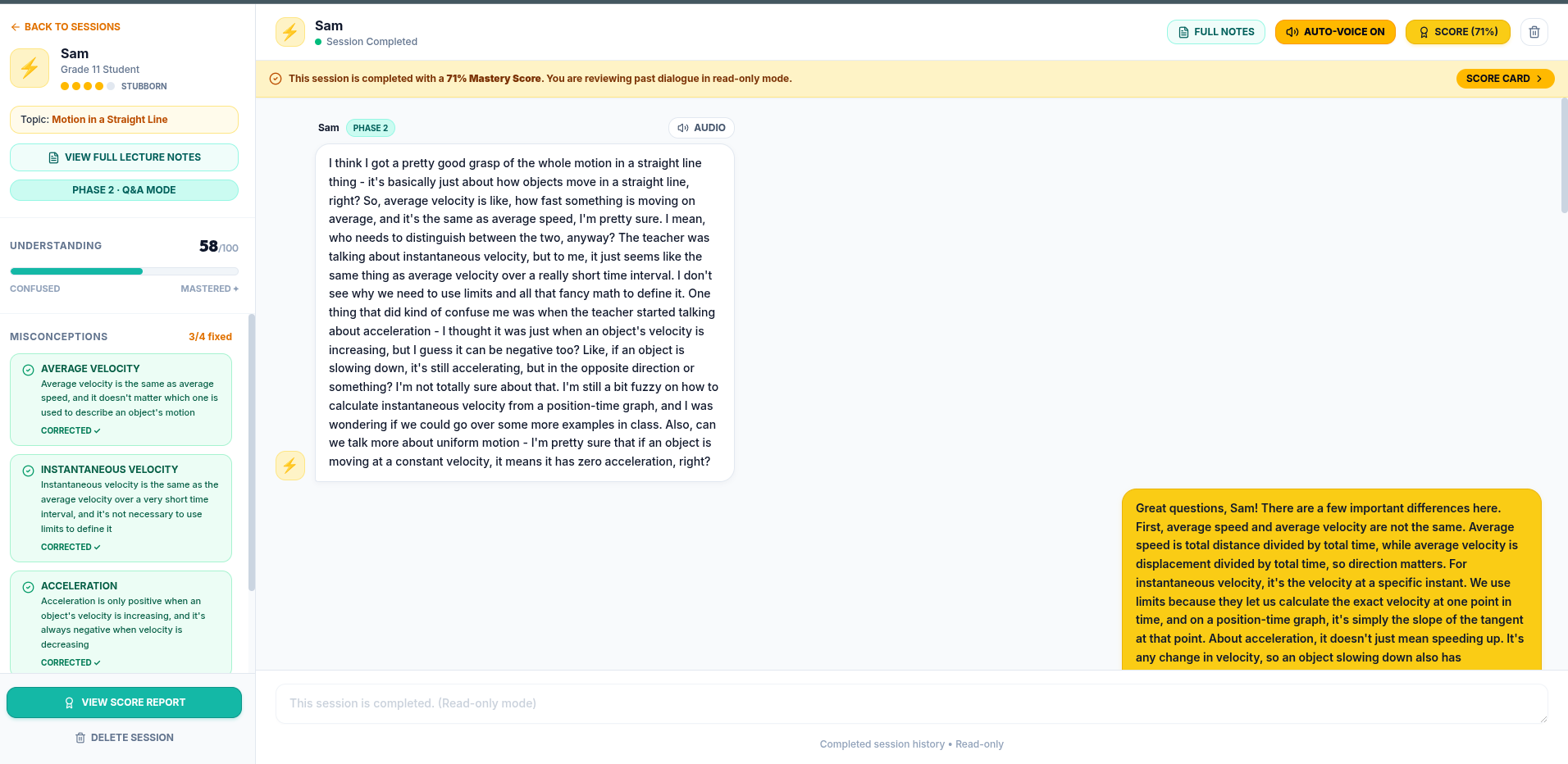
Teaching page
-
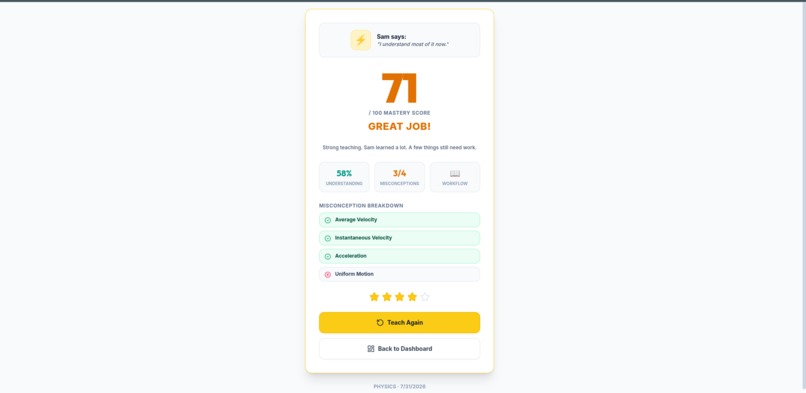
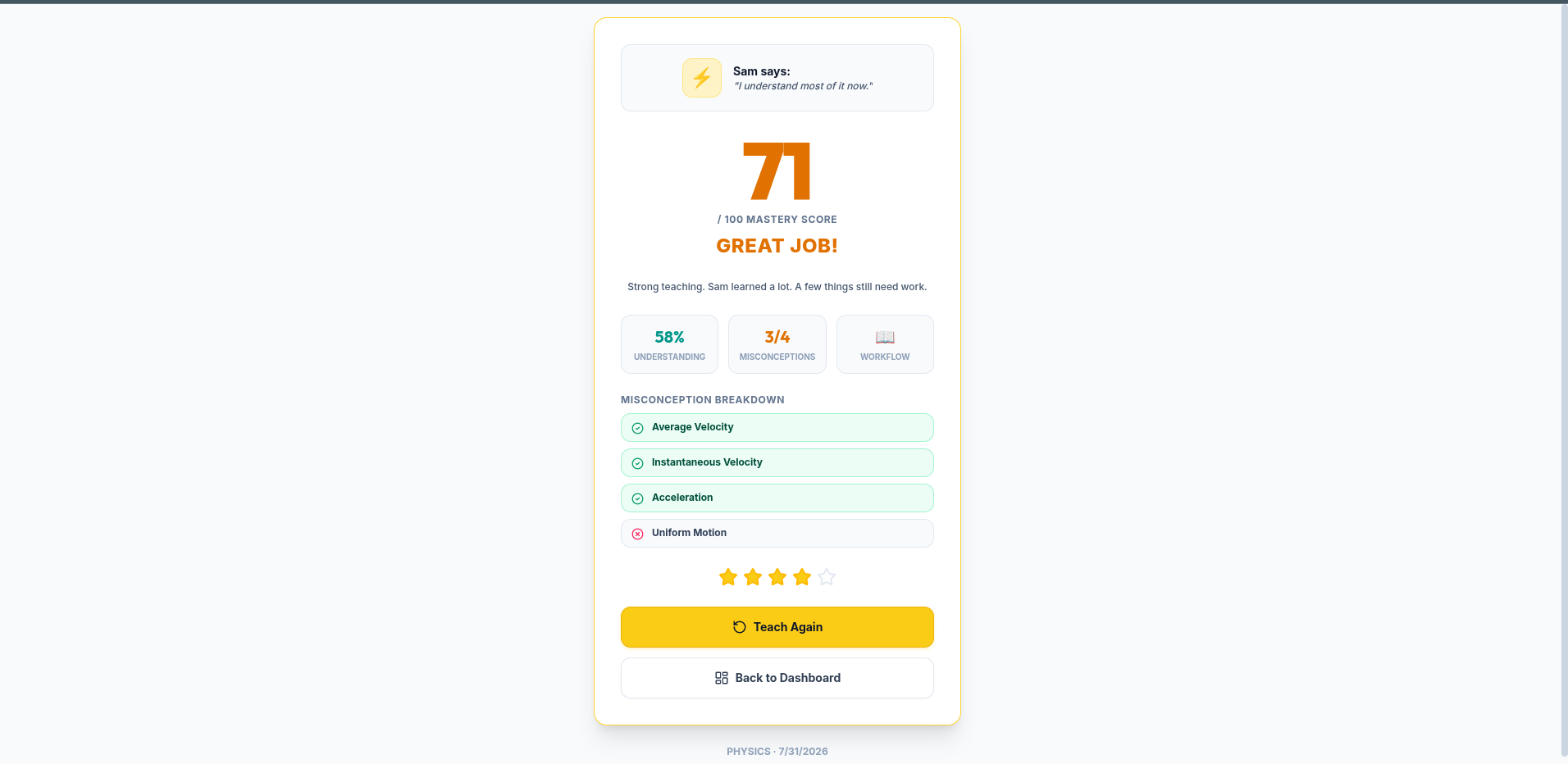
Mastery score card
Inspiration
Traditional AI learning tools are excellent at answering questions, but they also make it incredibly easy to become a passive learner. Students often copy solutions, skim explanations, and move on without truly understanding the material. We wanted to flip that experience on its head.
Our inspiration came from the Feynman Technique, which says that the best way to learn something is to teach it. Instead of asking an AI to explain concepts, we asked a different question:
What if the AI became the student, and the human became the teacher?
That simple idea became Socratic Lab—an AI-powered reverse-learning platform where users deepen their understanding by teaching realistic AI student personas that ask questions, hold misconceptions, and challenge explanations until they truly understand.
What it does
Socratic Lab is an AI-powered reverse-learning platform built around the Feynman Technique and Socratic questioning.
Users choose a subject, topic, and AI student persona with a specific grade level, background, and personality. Instead of receiving explanations, they teach the AI student.
The platform supports two learning modes:
Lecture Mode – Users write or upload lecture notes (PDF/DOCX). The AI analyses the material, generates realistic misconceptions, writes a first-person reflection describing what it understood, and then begins an interactive question-and-answer session based on the uploaded content.
Socratic Mode – Users immediately begin a live teaching conversation where the AI student asks questions, challenges assumptions, and gradually updates its understanding as the lesson progresses.
To make the experience more natural, Socratic Lab also includes:
- Browser-based speech-to-text for hands-free teaching
- Text-to-speech so the AI student speaks naturally
- Real-time evaluation after every explanation
- Dynamic misconception tracking
- AI-generated student personas across multiple education levels
- Subject-aware model routing for mathematics, physics, chemistry, programming, and writing
- Session history and reusable teaching notes
Rather than rewarding memorisation, the platform measures how effectively users can teach concepts and resolve misconceptions.
How we built it
The frontend was built using React, Vite, Tailwind CSS v4, and Zustand, providing a fast and responsive user experience. We integrated the browser's native Web Speech API for completely free speech recognition and speech synthesis without requiring paid voice APIs.
The backend uses Node.js, Express, MongoDB Atlas, and Mongoose to manage authentication, AI student personas, sessions, uploaded teaching materials, and progress tracking. PDF and DOCX files are processed using pdf-parse and mammoth before being analysed by the AI.
For AI capabilities, we built a dynamic subject router that selects the most suitable language model depending on the subject being taught. Different models specialize in mathematical reasoning, scientific concepts, programming, and writing tasks. We also implemented streaming responses using Server-Sent Events (SSE) to create a responsive, conversational teaching experience.
One of the core components is our evaluator pipeline, which continuously analyses each explanation, tracks misconception resolution, estimates the student's understanding, and provides live feedback throughout the teaching session.
Challenges we ran into
The biggest challenge was designing an AI student that genuinely behaves like a learner rather than another assistant.
We experimented with different prompting strategies before finding a balance where the AI asks realistic questions, maintains believable misconceptions, and gradually updates its understanding without becoming either unrealistically stubborn or too eager to agree.
Another challenge was generating misconceptions directly from uploaded lecture notes instead of relying on pre-written question banks. We wanted each teaching session to feel unique and personalized to what the user actually taught.
Building real-time evaluation was also challenging. We needed the evaluator to assess explanations continuously without interrupting the conversation, while keeping latency low enough for a smooth teaching experience.
Accomplishments that we're proud of
We're proud that Socratic Lab transforms AI from an answer generator into an active learner.
Some of our favourite achievements include:
- Building an AI student that asks context-aware questions instead of simply providing answers.
- Automatically generating realistic misconceptions from uploaded teaching material.
- Creating a reverse-learning workflow based on educational research rather than conventional AI tutoring.
- Delivering free browser-based voice interaction without additional API costs.
- Implementing real-time understanding evaluation and misconception tracking.
- Supporting multiple education levels through customizable AI student personas.
Most importantly, we created an experience where success is measured by how well the user teaches—not how quickly they can obtain an answer.
What we learned
This project taught us that building educational AI is as much about pedagogy as it is about machine learning.
We learned that effective learning experiences require carefully designed conversations, believable misconceptions, gradual feedback, and opportunities for reflection—not simply accurate AI responses.
We also gained valuable experience building streaming AI systems, designing multi-model routing pipelines, integrating browser-native speech technologies, and balancing prompt engineering with application logic to create more natural interactions.
What's next for Socratic Lab
This hackathon version demonstrates the core reverse-learning experience, but we see much bigger possibilities.
Our roadmap includes:
- Support for diagrams, equations, handwritten notes, and whiteboard teaching.
- Adaptive long-term AI students that remember previous lessons and knowledge gaps.
- Classroom dashboards for teachers to monitor student teaching performance.
- Curriculum-aligned lesson plans and assessment generation.
- Multiplayer peer teaching sessions where students collaboratively teach AI learners.
- Mobile applications for Android and iOS.
- Analytics that identify recurring misconceptions and recommend personalized practice.
Our long-term vision is to make AI a learning companion that strengthens understanding through teaching, helping students move beyond memorization towards genuine mastery.
Built With
- axios
- express.js
- mammoth
- mongodb
- mongoose
- node.js
- openai
- pdf-parser
- react
- tailwind
- vite
- zustand


Log in or sign up for Devpost to join the conversation.