
Inspiration
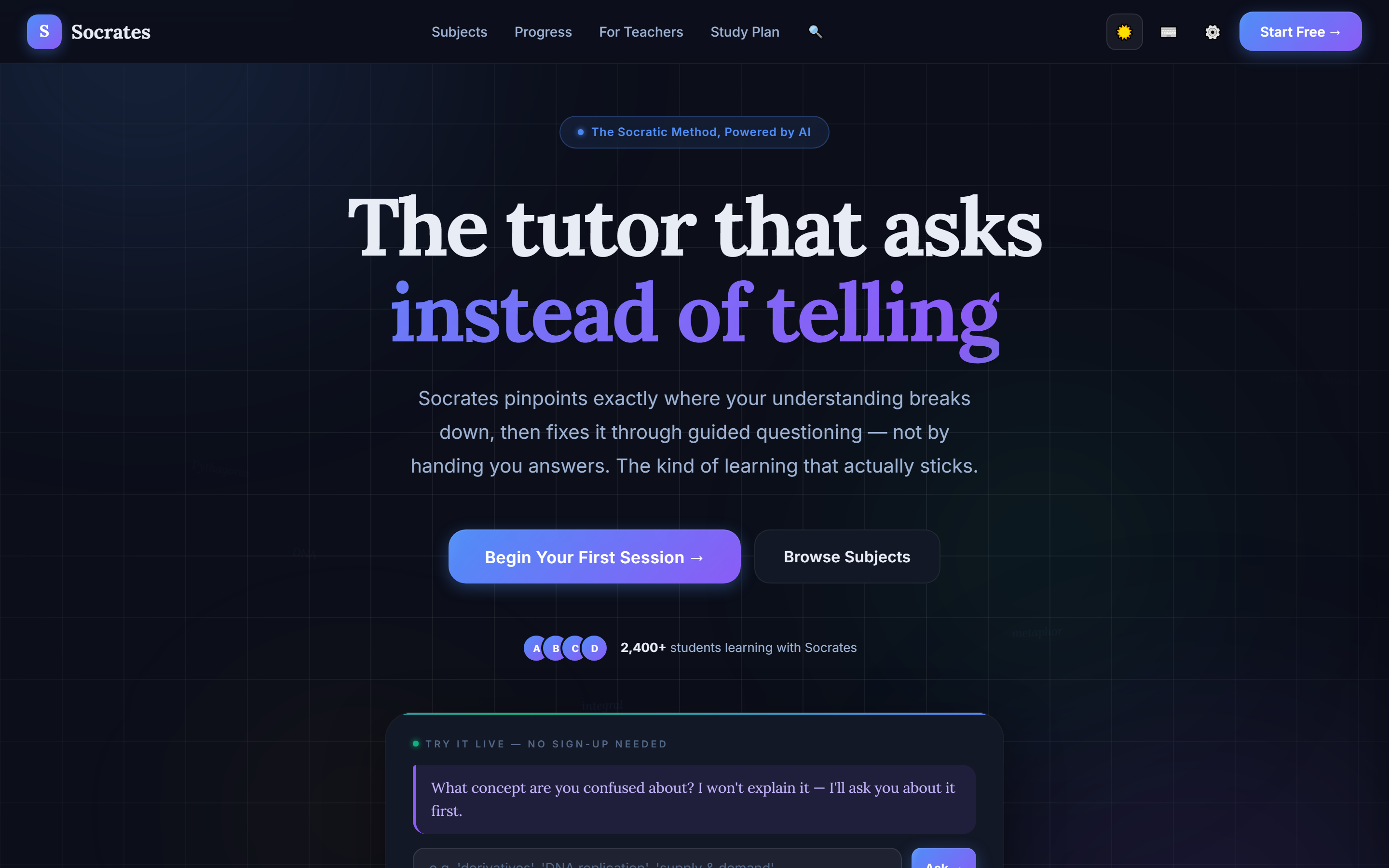
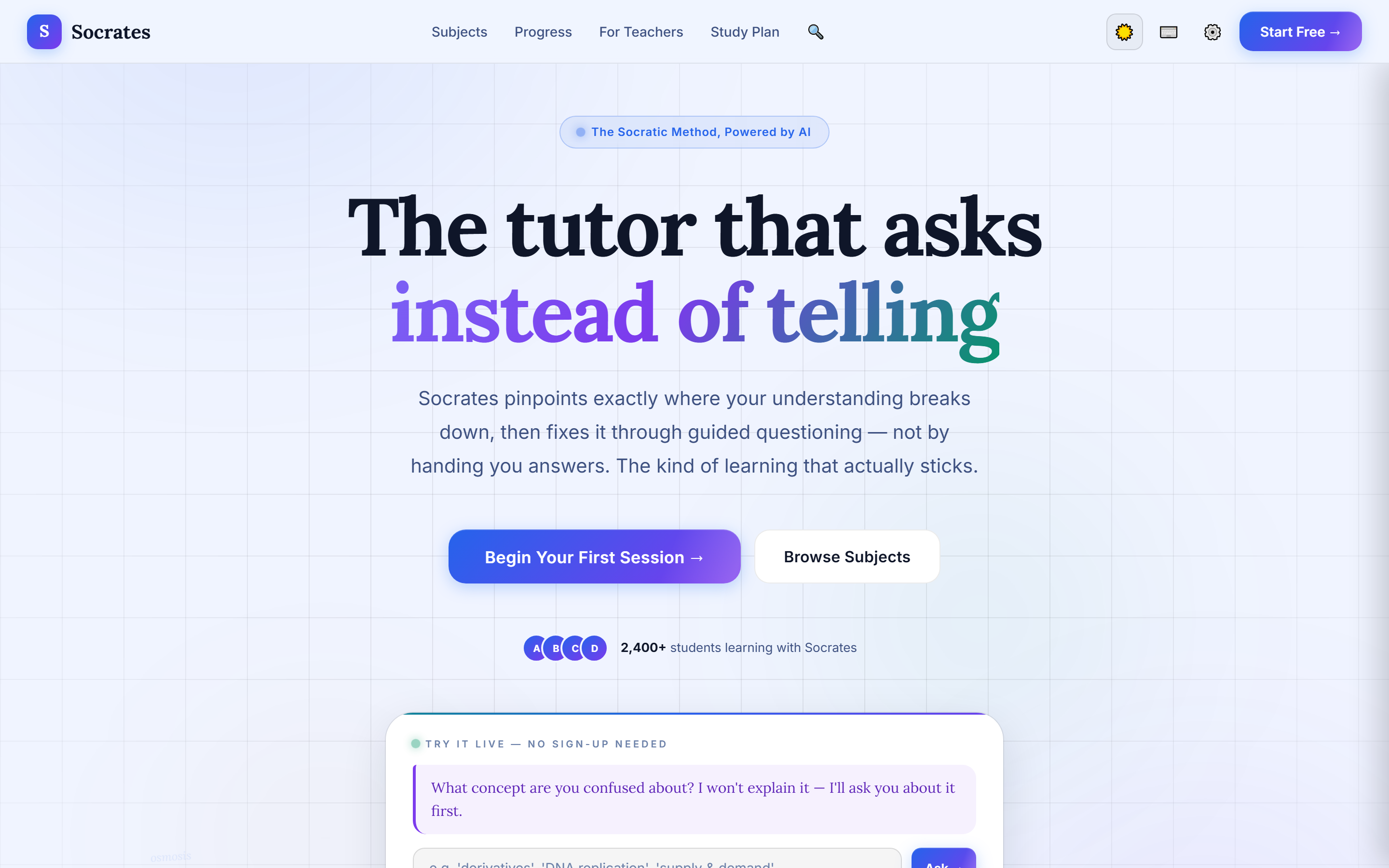
Every AI tool I've seen makes students worse at learning. You type a question, you get an answer, you copy it, you forget it by morning. That's not learning — that's outsourcing thinking.
The best human tutors I've had never told me the answer. They asked me what I thought, found the exact crack in my understanding, and made me fix it myself. That experience sticks. I wanted to build that at scale.
Socrates is named after the Greek philosopher who believed knowledge comes from within — the teacher's job is to draw it out through questioning, not lecture it in. That's the product.
What It Does
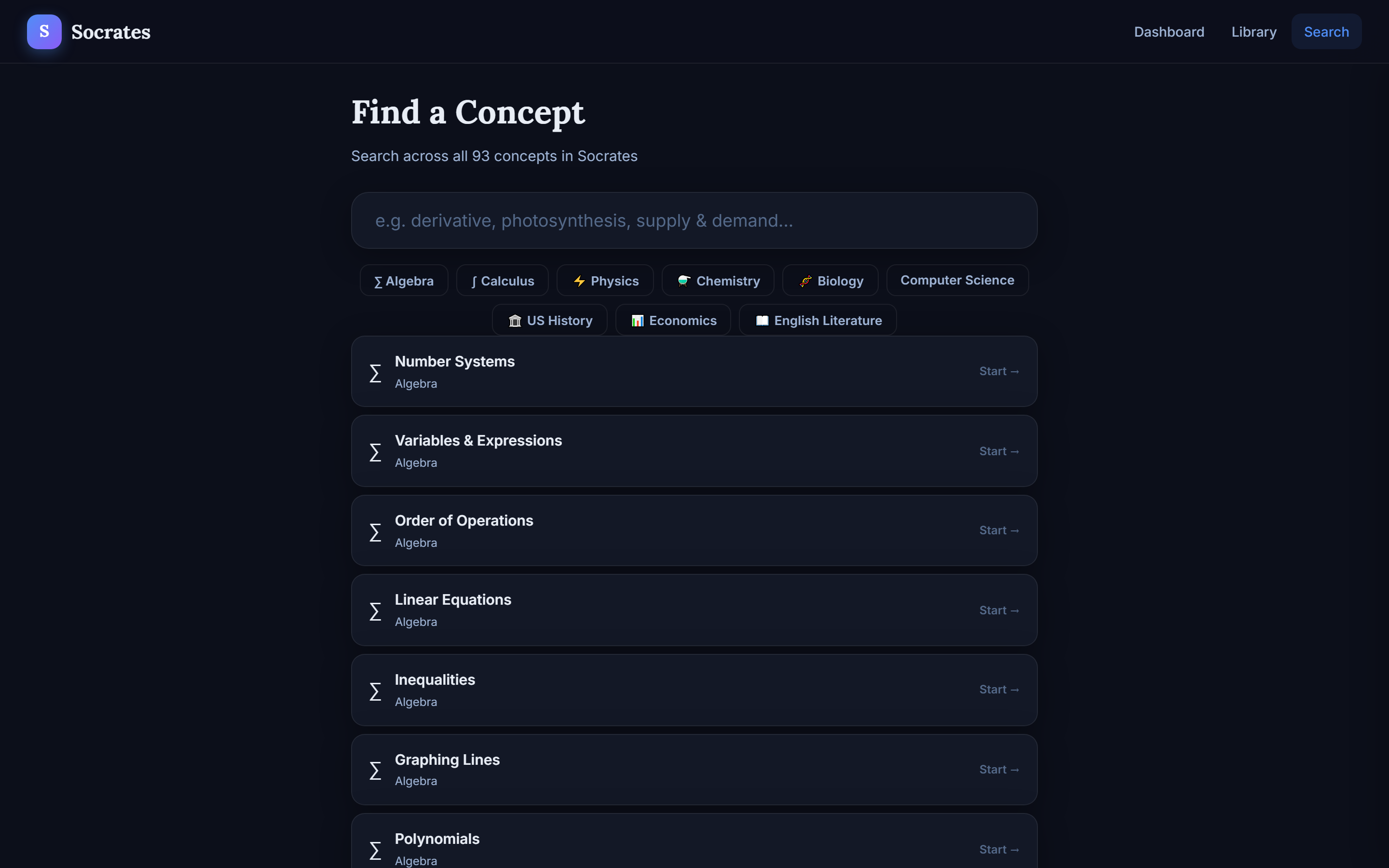
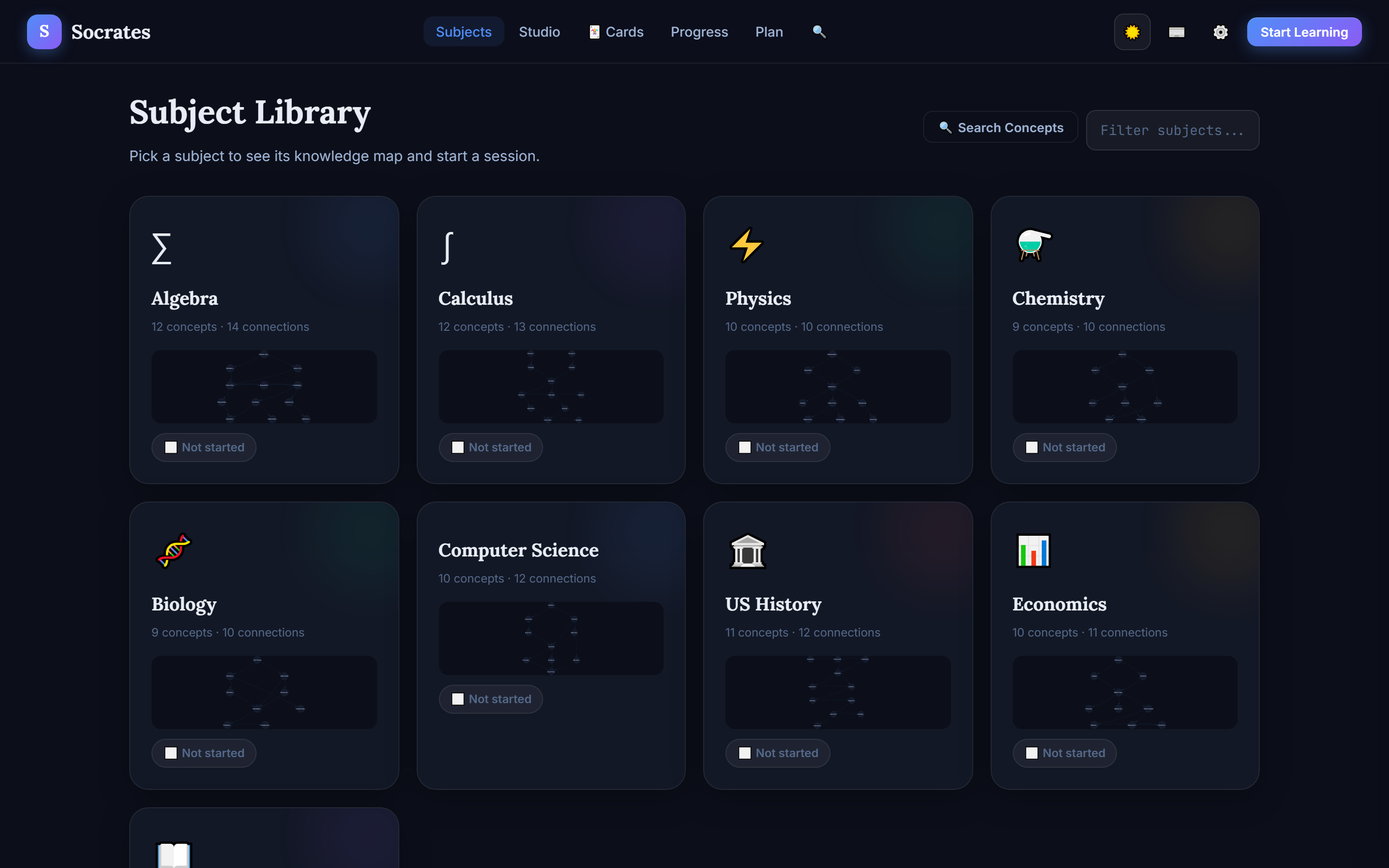
Socrates is a full-stack AI tutoring platform covering 8 subjects and 85+ mapped concepts. Unlike every other AI tool, it refuses to give direct answers. Instead:
- Diagnostic Assessment — 5 branching questions map exactly what you already know before wasting time on things you've mastered
- Socratic Dialogue — The AI finds the precise gap in your understanding and asks one targeted question at a time until you discover the answer
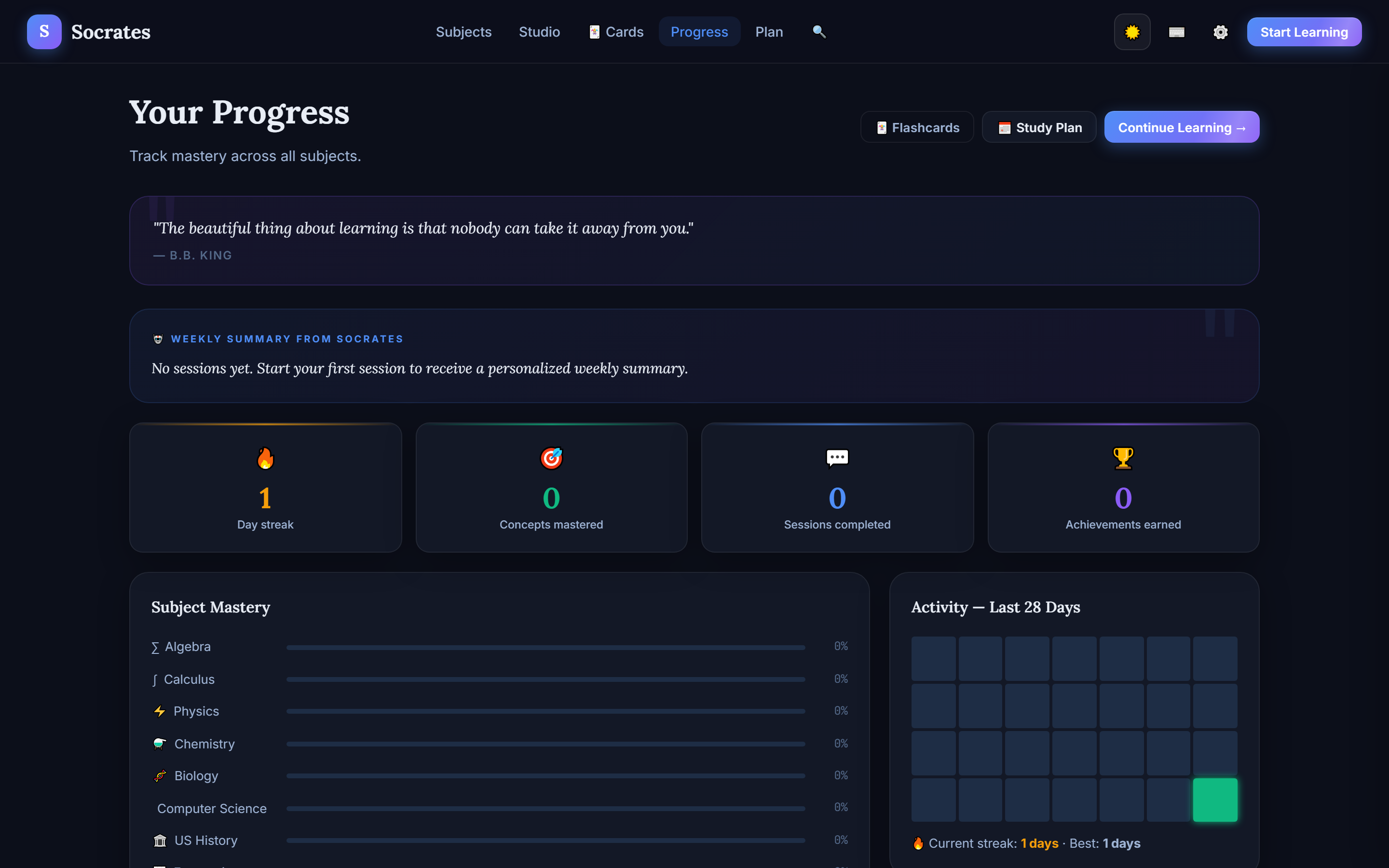
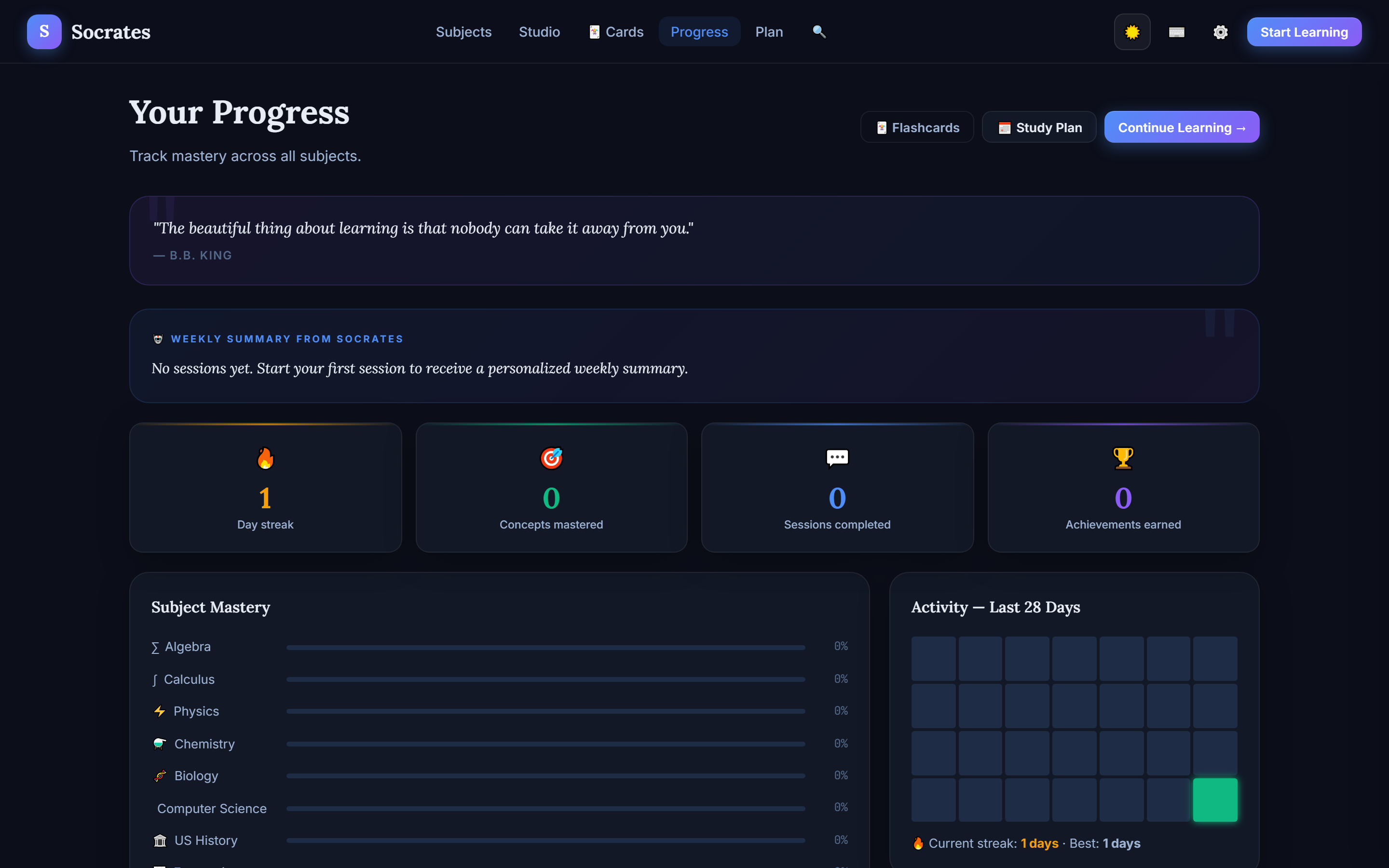
- Live Knowledge Map — An interactive SVG graph shows your mastery in real time. Nodes glow from grey → amber → green as you learn
- Spaced Repetition Flashcards — Full SRS algorithm (4 buckets: New → Learning → Reviewing → Mastered) with 3D flip animations
- Pomodoro Timer — 25/5 work/break cycles with SVG progress ring built into every session
- Session Replay — Every past session is saved so you can re-read the full transcript
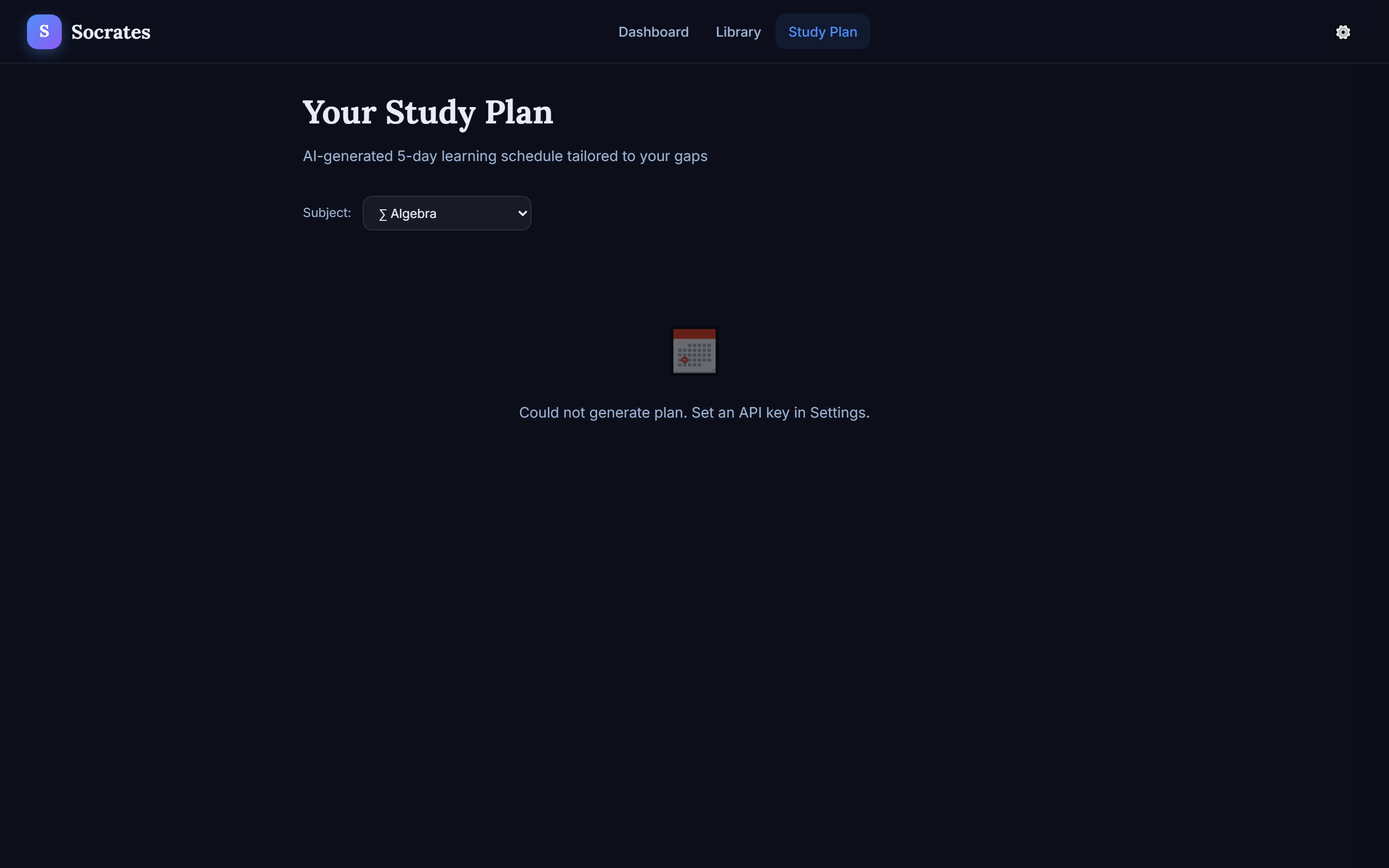
- AI Study Plans — Personalized 5-day plans generated from your actual knowledge gaps
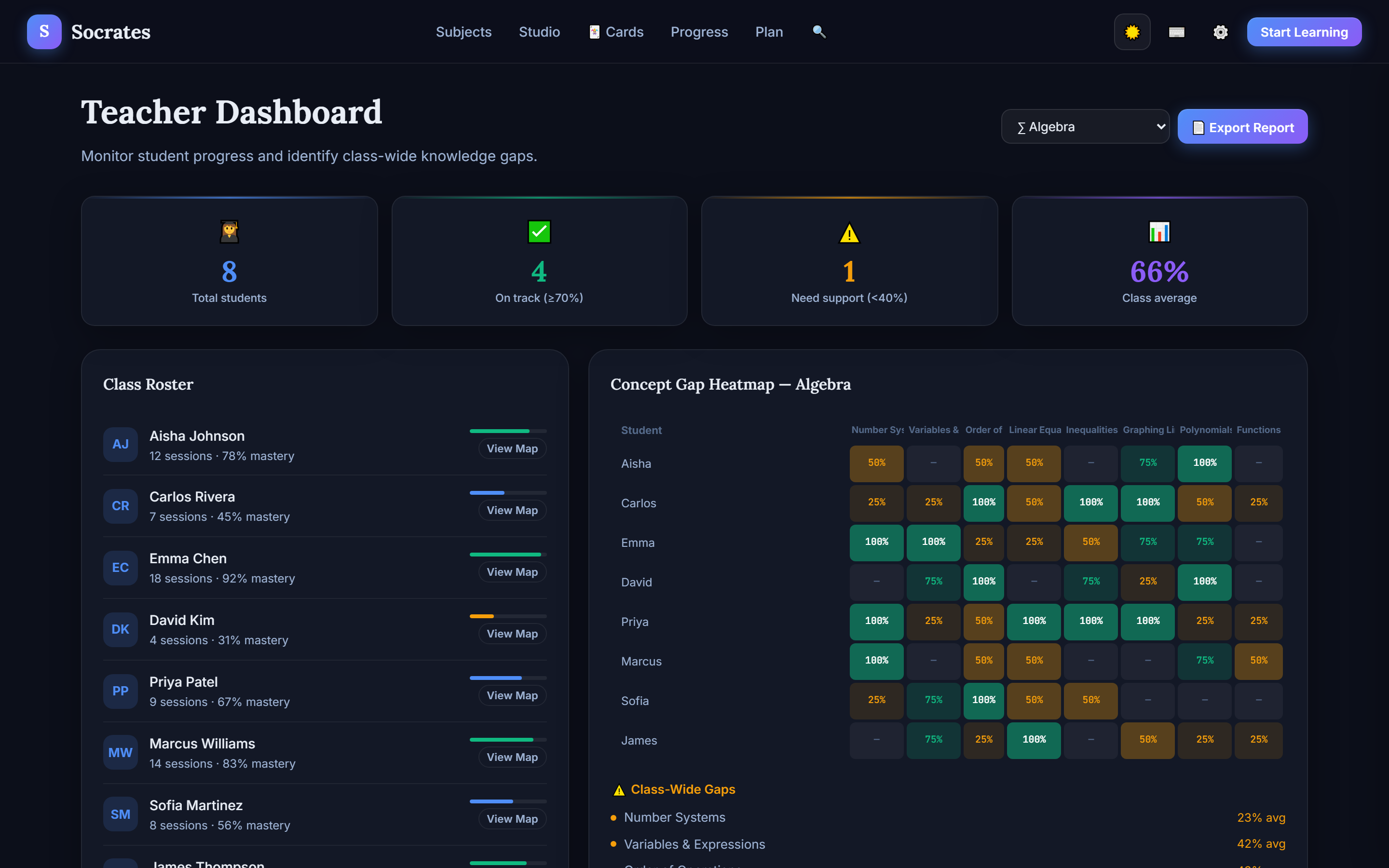
- Teacher Dashboard — Class-wide knowledge heat maps so teachers see exactly what to re-teach tomorrow
How I Built It
No frameworks. No build tools. Pure vanilla JavaScript.
The entire app is a hash-based SPA (#/path?params) with a custom router, all rendered client-side. Data lives 100% in localStorage — nothing is sent to any server except AI calls.
AI layer: Groq's Llama 3.3 70B via a Vercel Edge Function proxy. The edge function keeps the API key server-side; visitors get full AI for free without needing their own key. Responses stream word-by-word via Server-Sent Events (SSE) for the real-time typing effect.
Knowledge graph: Custom SVG renderer with pan/zoom, force-directed-style layout, and click-to-navigate. Each subject has a prerequisite graph (e.g. "derivatives" requires "limits" requires "functions") that lights up as mastery is recorded.
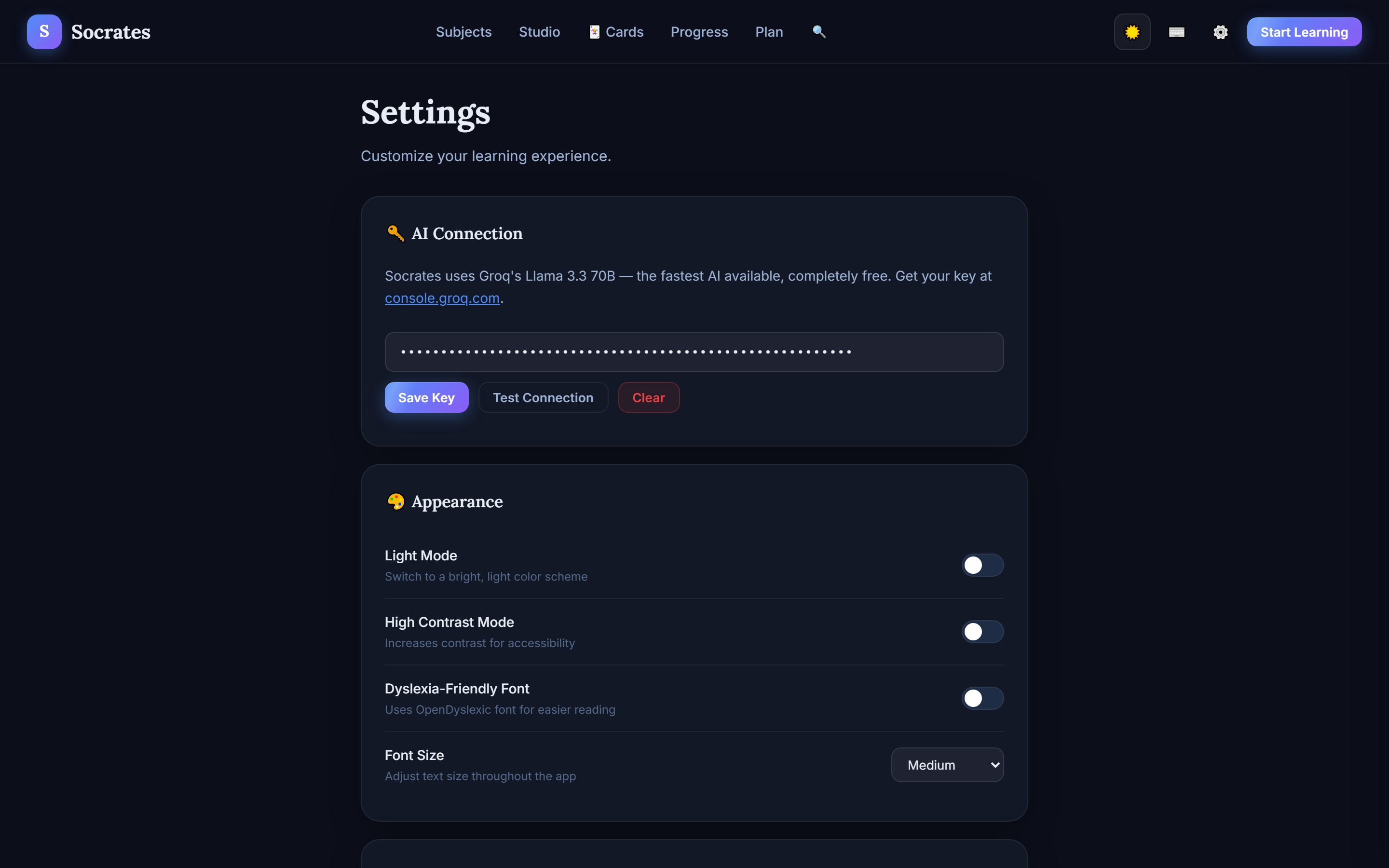
CSS design system: ~1,100 lines of custom CSS variables with full dark/light mode switching, no Tailwind needed. Every color, spacing, and radius token is a CSS variable so themes flip in a single class toggle.
Challenges
The Socratic constraint is technically hard. Getting an LLM to never give a direct answer, while still being helpful and not frustrating, required careful prompt engineering. The system prompt explicitly forbids answer-giving but has nuanced rules for when to "crack" after repeated struggle (so students aren't stuck forever).
The knowledge graph layout was the hardest engineering problem. Manually positioning 85+ nodes across 8 subjects to look good and feel navigable took significant iteration.
API key security — the Groq key can't be in client-side JS. Solved with a Vercel Edge Function proxy that forwards requests server-side. GitHub push protection caught an accidental commit and blocked it.
Performance at load — the window.load event was blocked by external CDN scripts (GSAP, fonts), causing a blank screen on slower connections. Fixed by switching to DOMContentLoaded + async CDN scripts + CSS animation fallbacks so content appears even before GSAP loads.
What I Learned
- The Socratic method genuinely works as an AI interaction model — it's not just a gimmick. Students who can't get a free answer are forced to think, and that thinking is the learning.
- Vanilla JS SPAs are highly capable and much lighter than framework-based alternatives when you control the full design system.
- Edge Functions are the right architecture for proxying third-party API keys in static sites — zero cold start, globally distributed, free tier covers most usage.
- Spaced repetition is deceptively simple to implement but the UX around it (making the rating feel natural, showing progress clearly) is where all the work is.
Built With
- css3
- groq
- gsap
- html5
- javascript
- llama-3.3-70b
- localstorage
- server-sent-events
- vercel
- vercel-edge-functions
- web-speech-api


Log in or sign up for Devpost to join the conversation.