Inspiration
With the rise of AI, students have been cognitively offloading their thinking to LLMs and end up not learning; universities like Brown University and UC Berkeley have reported record levels of cheating involving the usage of LLMs and the trend is only growing as students begin to be more reliant on AI.
In response, tutors have developed education-focused chatbots that aim to teach students the right way, but why use it when ChatGPT or Gemini can just give you the answer? This is why we want to give monetary incentives for students to use AI the way they should be!
What it does
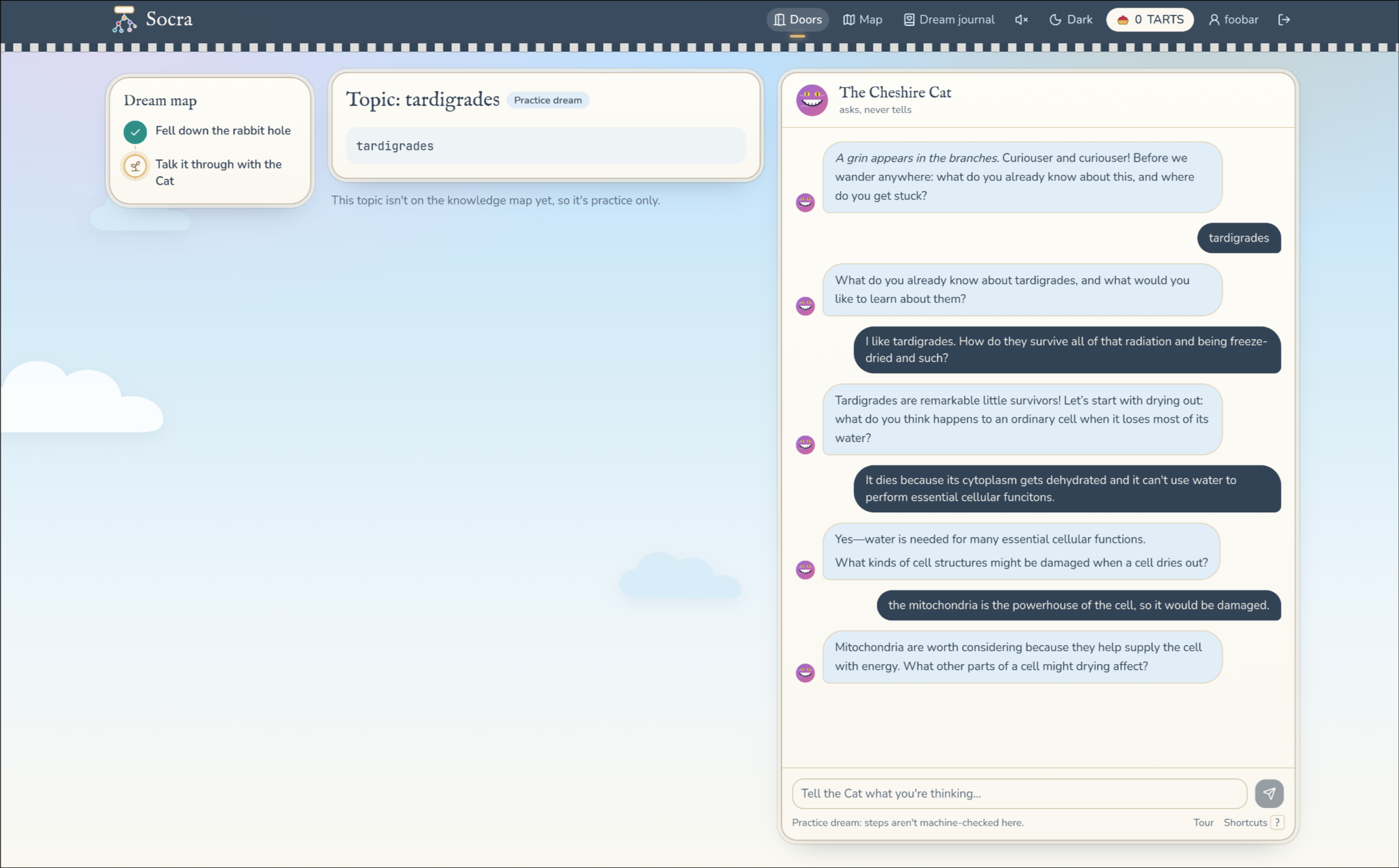
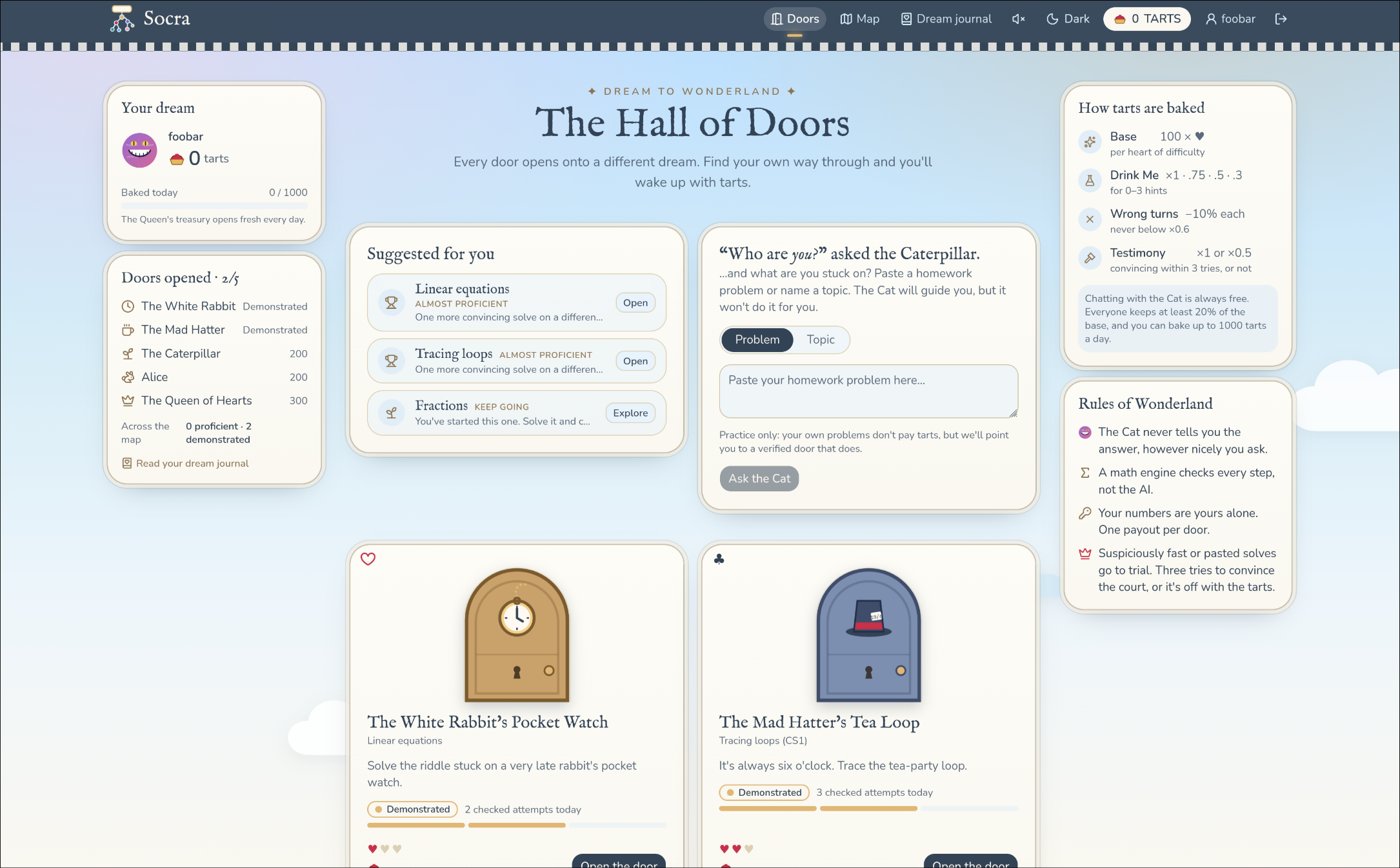
On the surface, Socra looks like just another education-tailored chatbot that follows the same principles as its peers; the biggest differentiator is how it encourages students to actually learn. We reward TARTS, a cryptocurrency, to students who learn and solve problems, either ones approved by Socra or through their own problems they face in real life.
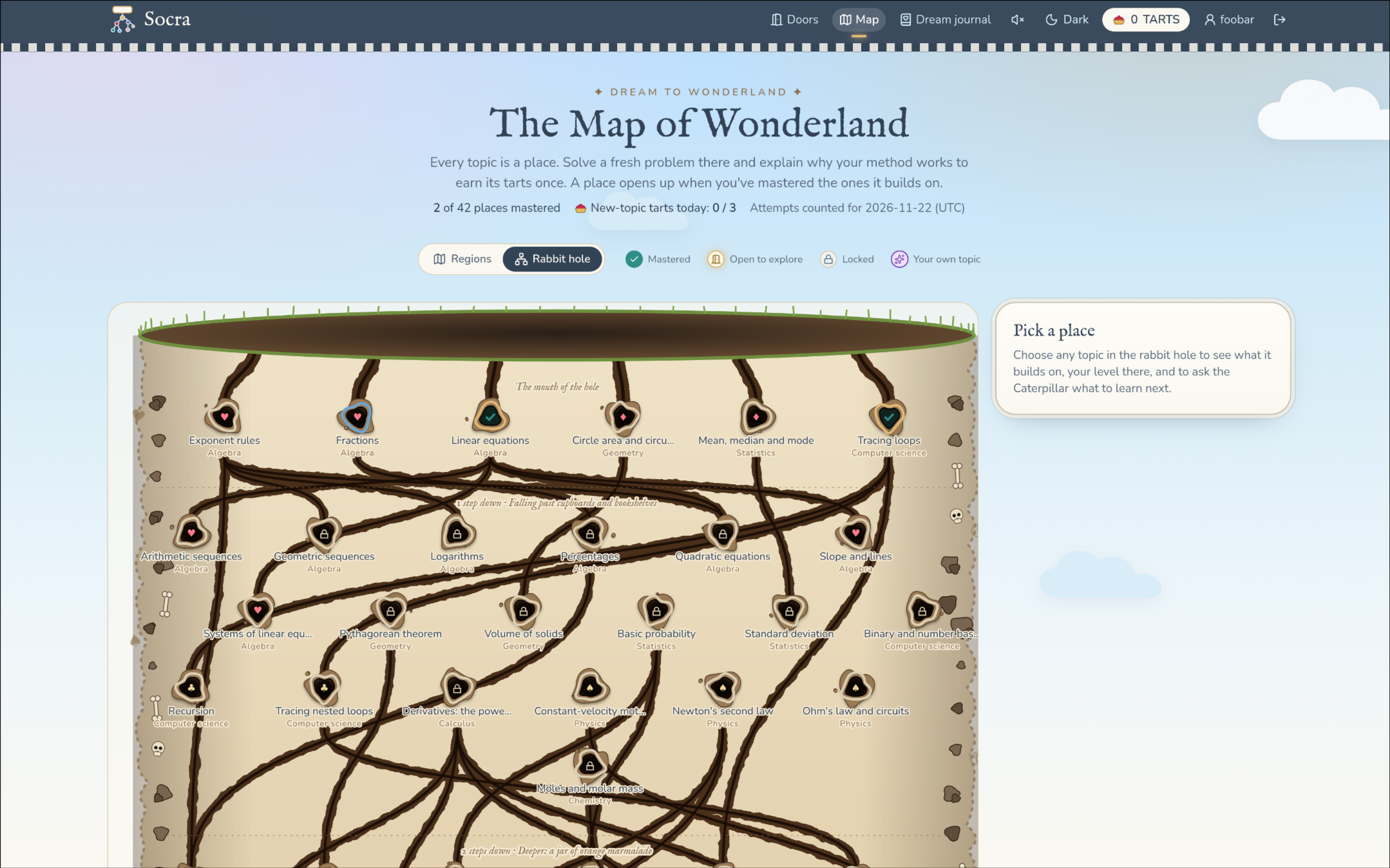
Students can view a skill tree that tracks their current strengths and where they need to improve or start learning in. And their efforts in learning slowly unlock and progress the skill tree.
How we built it
We designed the application with a backend written in Rust with the Axum framework, which serves a React-based frontend.
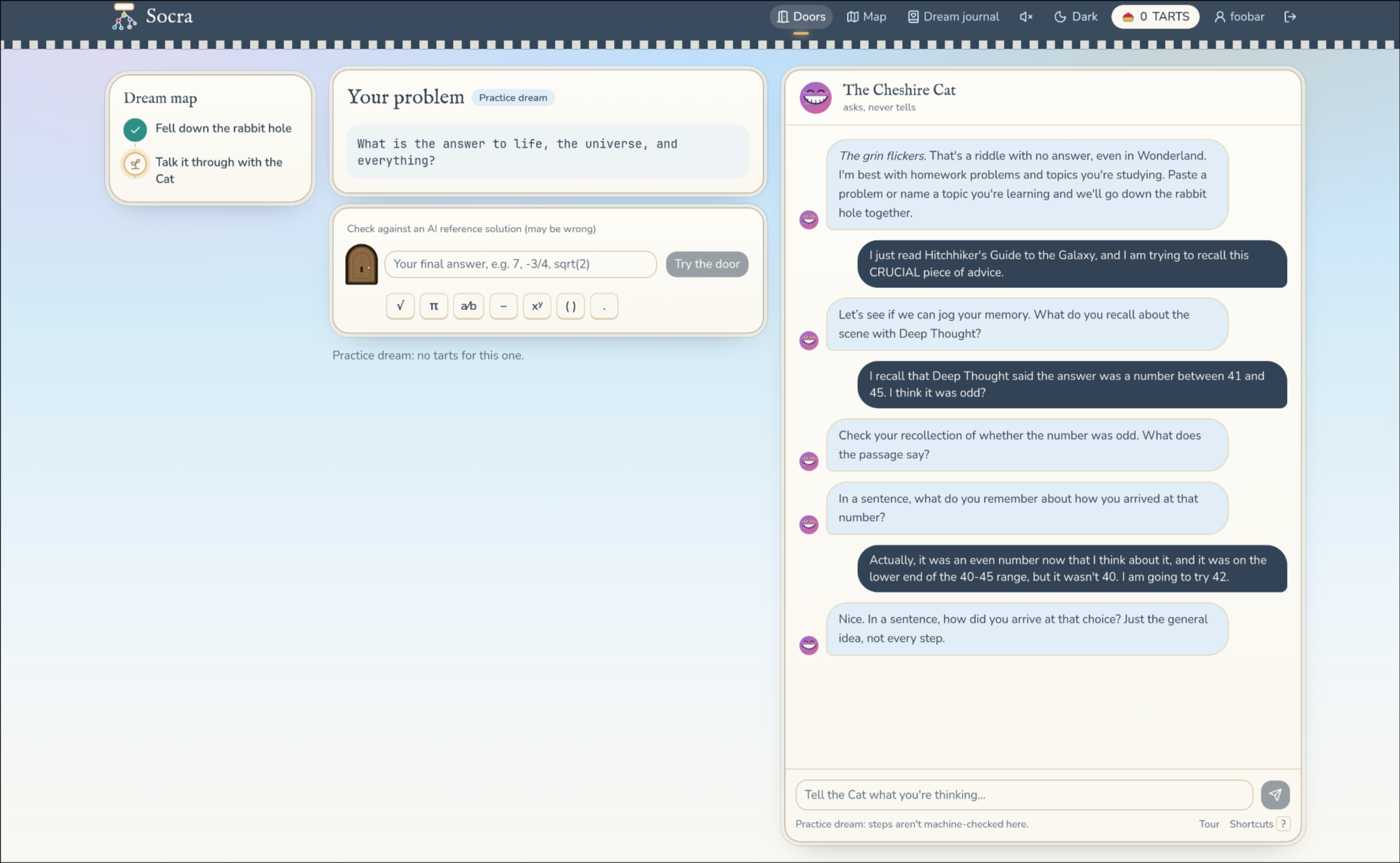
In designing the AI teaching systems, we used research from UC Irvine professor Thomas Yeh that has found the most effective AI-assisted teaching designs: socratic and restrained in giving answers. Instead of giving answers away, we slowly nudge students in the right direction.
For the cryptocurrency-based system, we used Solana to generate a cryptocurrency called TARTS, which various in value like most other cryptocurrencies; we expect that if students use it consistently to learn, the value will increase and may end up becoming a source of income that rewards those willing to learn.
Challenges we ran into
One of the biggest considerations we ran into was whether students could just make up easy questions and topics to farm the cryptocurrency, thereby reducing its value. To combat this, we built the skill tree tracker as a way of tracking what students have already learned; this prevents duplicate awards from being issued for previously solved issues.
Another challenge to take into account was prompt injection. We need to be sure that students don't turn this idea into yet another LLM that happily gives away answers. So in addition to the prompt explicitly warning to never give away answers, we utilize a neuro-symbolic AI pipeline where after responses are given, checks and verifications are made to ensure responses never overstep.
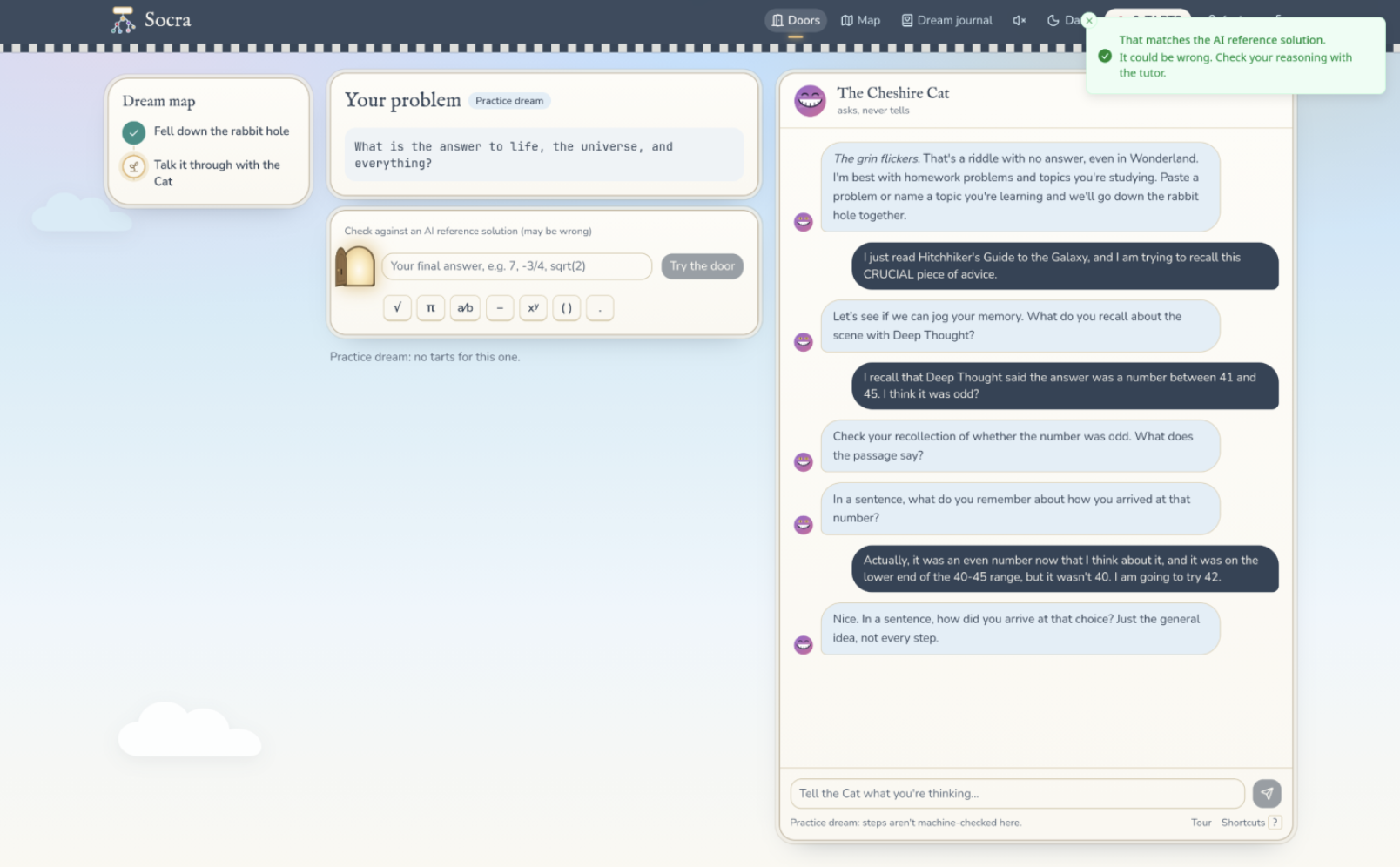
The last struggle encountered we ran into was parsing math correctly; it's easy for the chatbots to confuse answers to questions with non-answers, resulting in delayed responses or even misdirecting students in their learning. To fix this, we heavily modified the math parsing engine in the Rust backend until it achieved near-perfect accuracy.
Accomplishments that we're proud of
As people normally used to 24-36 hour hackathons, we're proud to have built a product in a timeframe that's 1/3rd-1/2rd of the usual.
We also feel like this was our most inspired project as we used our professors' experiences with AI cheating to work on a solution that aims to sooth it. Not to mention it is inspired by our university's research on the matter.
What we learned
We learned how educational chatbots work and resist abuse that turns them into yet another simple AI wrapper. But we also took our own approach with neuro-symbolic AI; the existing methods inspired how we approached the problem.
What's next for Socra
We intend to use Socra as a university research project to find ways to incentivize students to use AI in a productive and meaningful manner rather than as a crutch.
And if it takes off during the research phase, we may implement it as a product available to the general public and bring learning back in the right direction.
