-
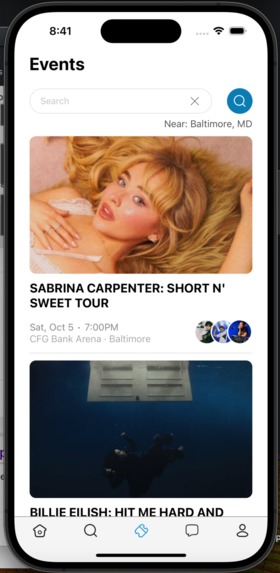
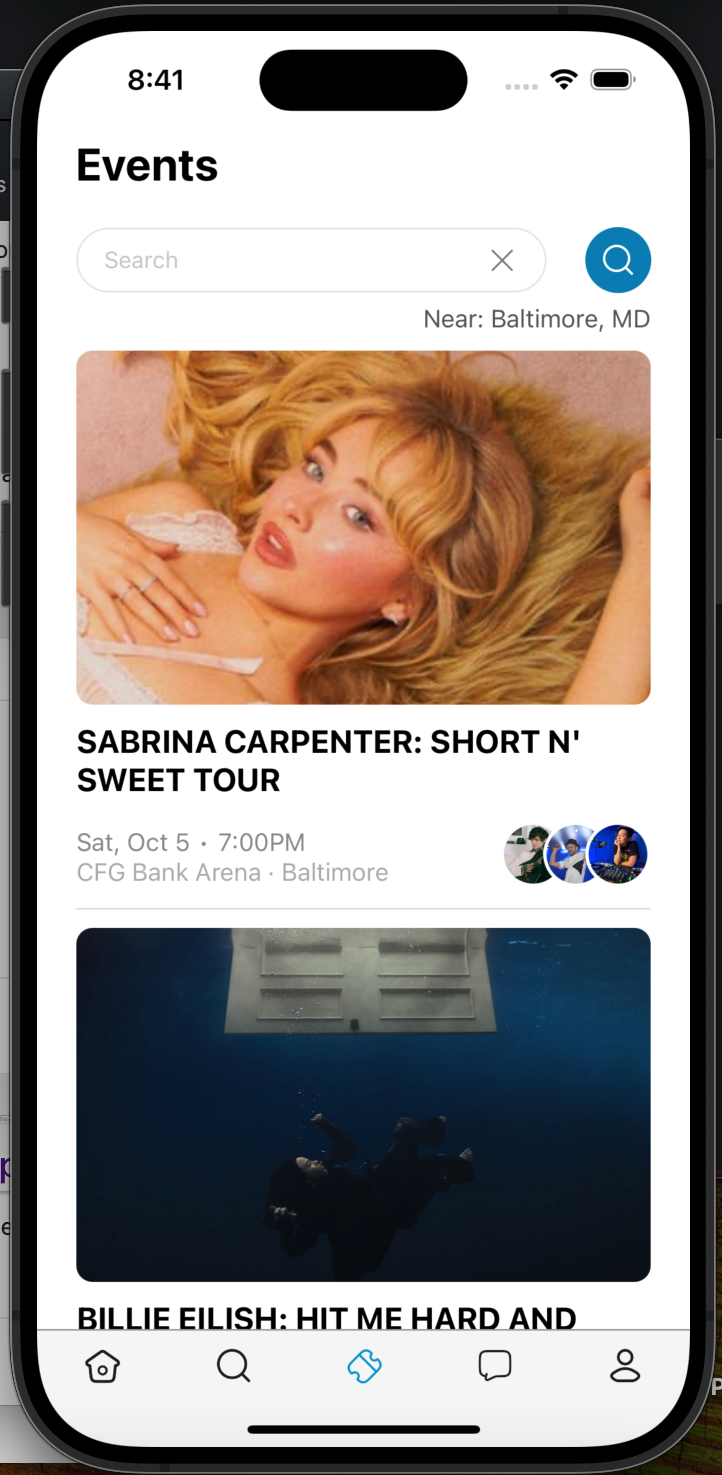
Events tab of app
-
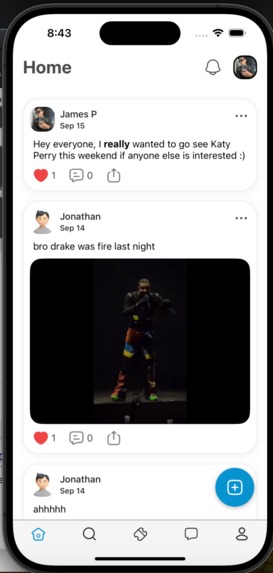
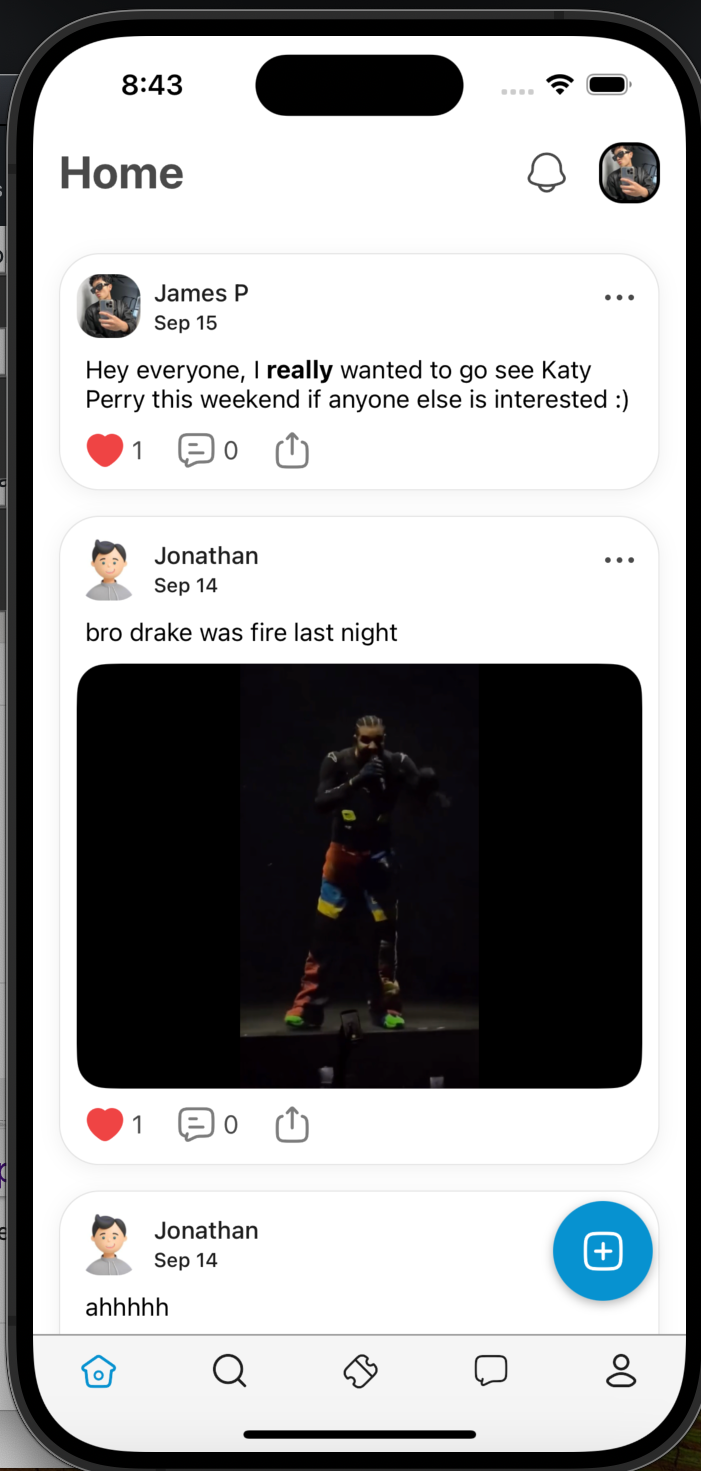
Home Feed tab of app
-
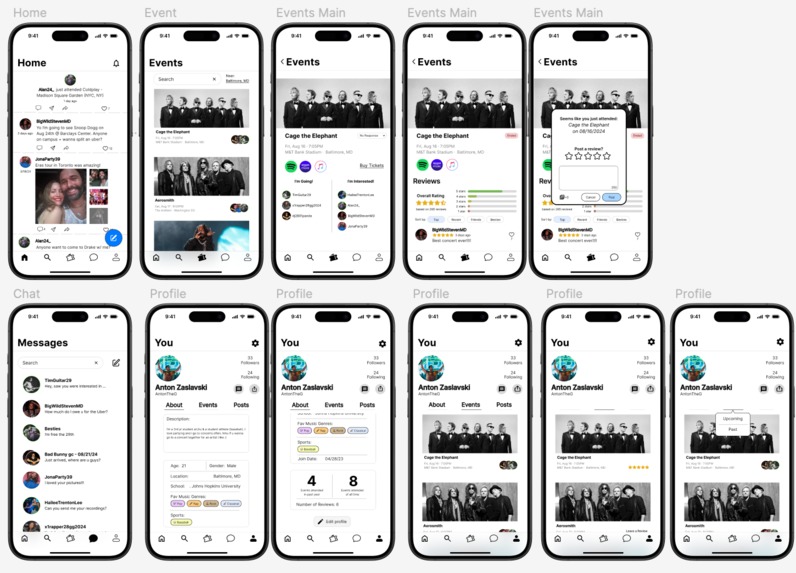
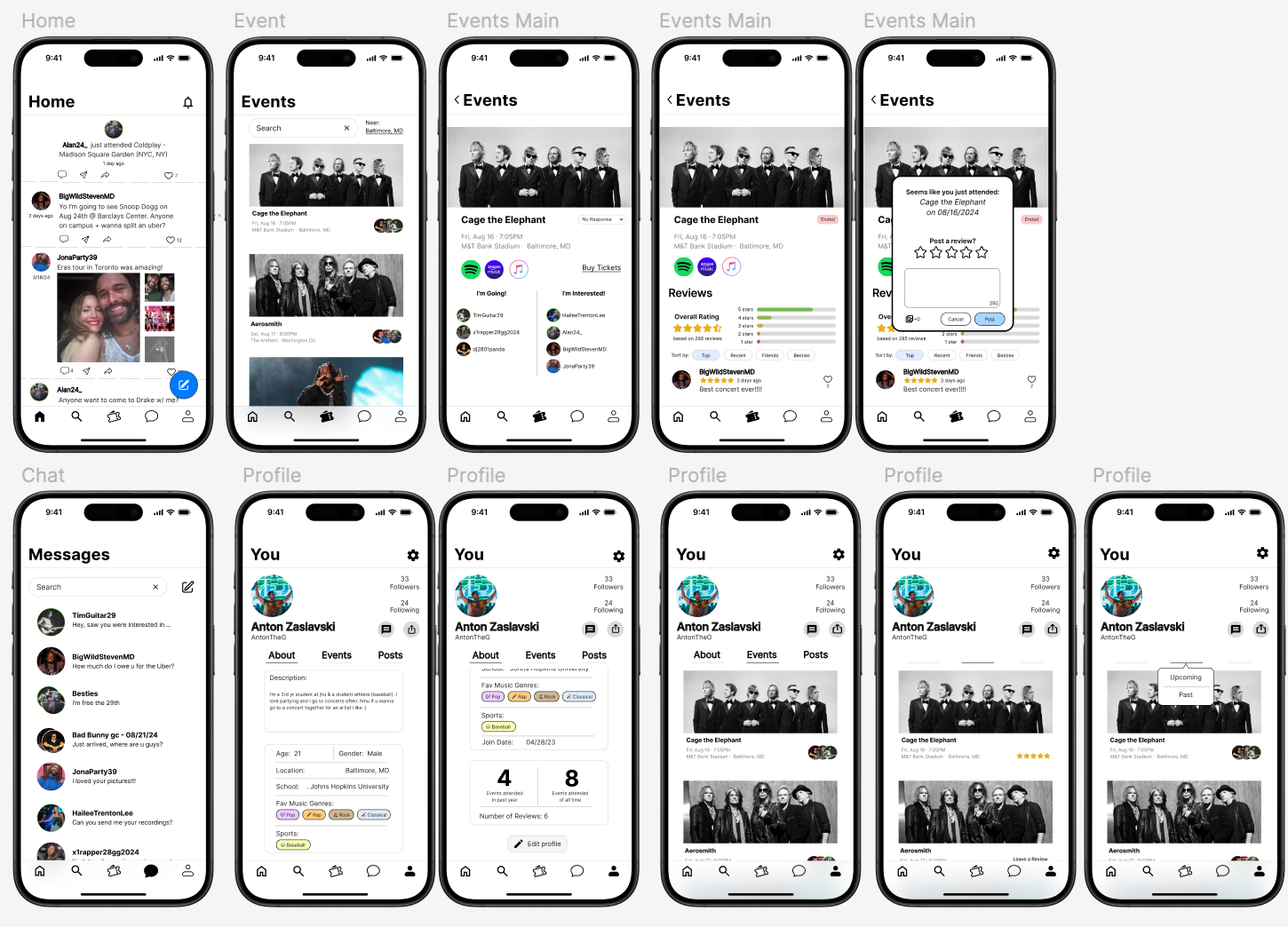
figma design
Inspiration
Over the summer, Jonathan was in NYC and saw a once-in-a-lifetime concert that he really wish to go to. However, he did not know any friends going to the concert and all other social media platforms proved unreliable (as social media is built in a way to target aftermaths of an event rather than an upcoming event). Thus, Jonathan had to make a difficult choice: to go alone to a concert (less enjoyable) or to miss out on this opportunity as a whole. After deciding to purchase a solo ticket and sitting through the entire (but amazing!) concert, Jonathan decided to post a picture of the concert in Instagram. Within a few minutes, Jonathan not only got messages mentioning that there were other mutual friends at the concert, but he also got messages saying that a lot of his friends didn't even know the concert was going and they would have came if they knew! Multiple people face this problem -- wanting to know if anyone they know are going to an event before they decide on buying a ticket. This, in addition to the annoyances of planning out an event (groupchats, splitting uber prices, etc.), makes it hard. This led to the creation of Socius, the perfect social media app to link up with friends, coordinate plans, and share your experiences at concerts, sports games, and more.
What it does
Socius is a social media app which handles a lot of functionalities in order to connect with friends easier and eliminate the pain of organizing event plans. Users can easily find any events around them (concerts, sports games, comedy shows, Broadway shows, conferences etc.) and be able to see if any of their friends are planning or interested in going. This makes it easier for users to find friends to go to events with, buy seats closer together, and much more. Socius also offers a main feed page where users can share their memories from events (text, images, recordings, etc.) with other friends. Furthermore, a chats/messaging page makes it easy for users to coordinate plans (splitting an uber, meeting at a location, picking out seats, etc.) much easier. Lastly, our clean authentication (signin/signup) as well as our detailed profiles makes it easy for users to find each other, keep track of their stats/events, and explore different interests.
How we built it
We used JavaScript, React Native, and Supabase to build our app. VSCode was used as our IDE and emulators from XCode and Android Studio was used to test our app. We relied on many tutorials and documentations to learn the languages and to build this app.
Challenges we ran into
Mobile development (specifically using React Native) is still new to us. Tackling an entire social media app (from user authentication in backend to all the detailed events pages in the frontend) with just two group members is hard to accomplish. Nevertheless, through lots of documentation reading, watching tutorials, and talks, and skimping out on sleep, we were able to get to a point in which we were proud with.
Accomplishments that we're proud of
We are really proud that we were able to come this far into building an entire social media with just two people in such a limited amount of time. We connected with a lot of industry professionals and learned a lot along the way as well. We are also glad that we built an app that we are very passionate about and wish to continue working on.
What we learned
We got a better grasp of mobile development for both an Android and IOS platform. We also got the chance to develop an entire app from scratch and turn it into a functioning product.
What's next for Socius
We have big goals for Socius and we can see its potential. We are deadset in continuing to build this app and we plan on submitting this app to an incubator (and most likely YC) in the near future. Ultimately, we plan to publish this app in the App Store and Google Play Store in which everyone (including JHU students) can use.
Built With
- javascript
- react-native
- supabase

Log in or sign up for Devpost to join the conversation.